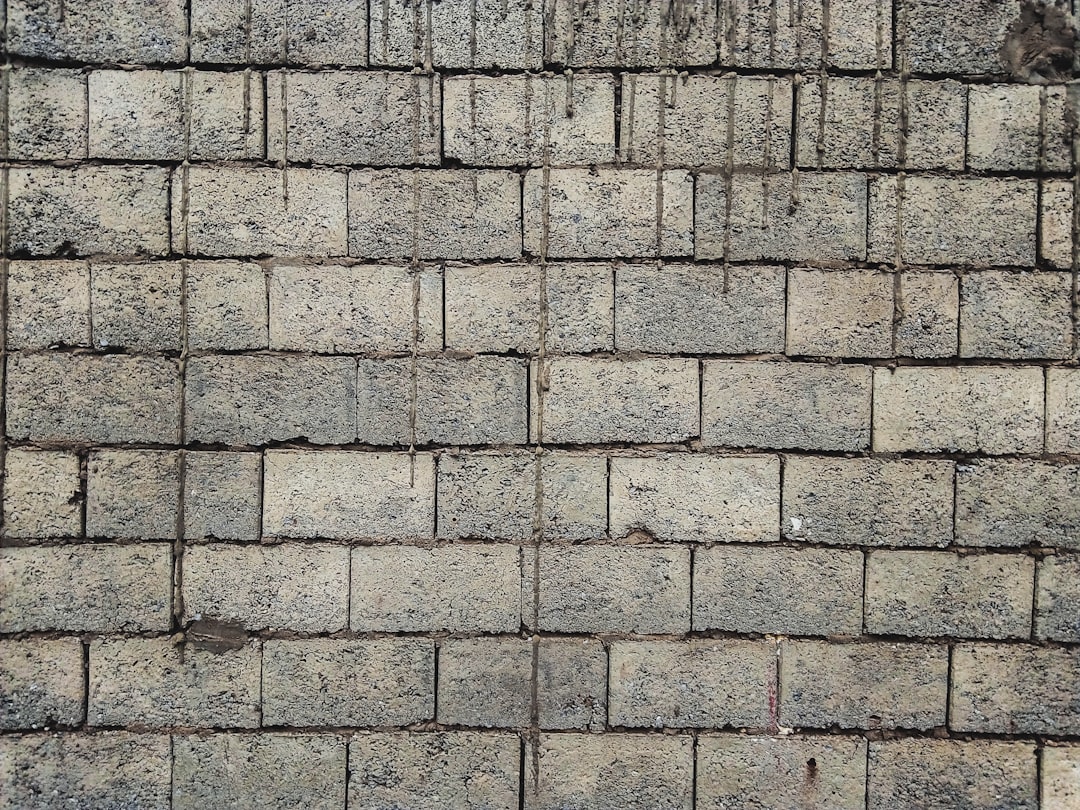
Block walls are a popular choice when it comes to durable and aesthetically pleasing stone structures for your outdoor spaces. Whether you’re thinking about installing a retaining wall or adding charming, freestanding walls to your garden, block walls might be the perfect solution for you. Here’s a quick look at what makes block walls essential:
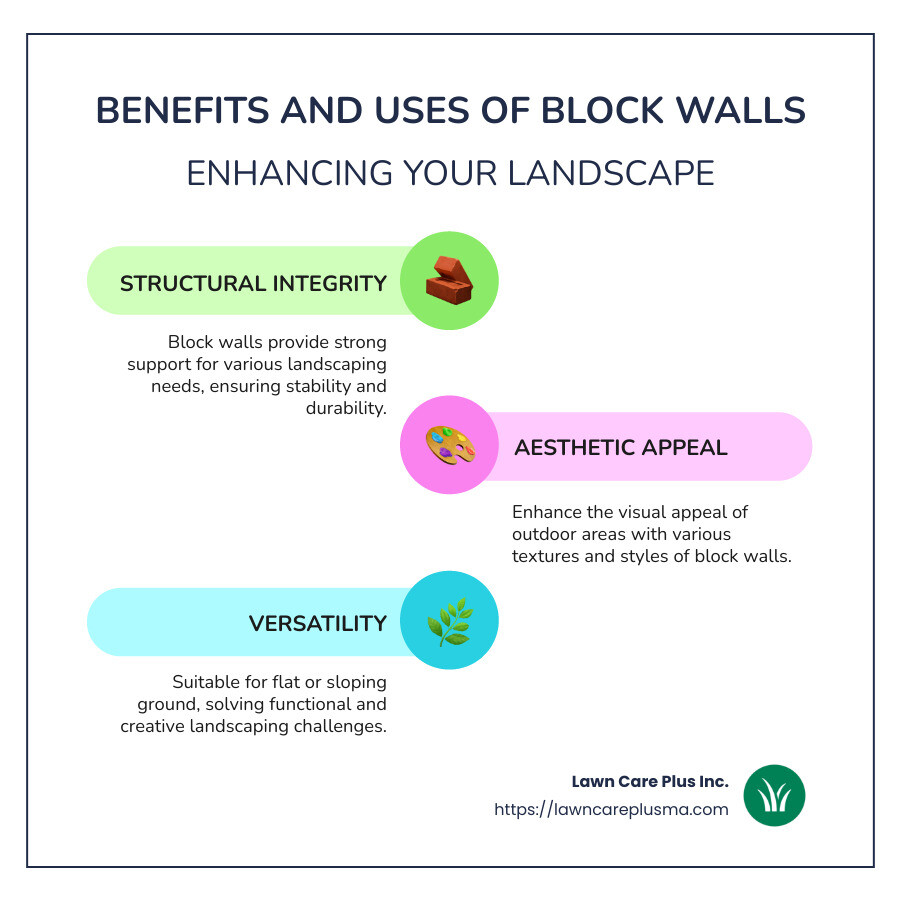
- Structural Integrity: Offers strong support for various landscaping needs.
- Aesthetic Appeal: Improves the visual appeal of any outdoor area with various textures and styles.
- Versatility: Suitable for flat or sloping ground, providing solutions to both functional and creative landscaping problems.
Block walls not only bring beauty but are also crucial for managing soil erosion and creating level planting areas. They serve as a backbone for well-maintained landscapes that homeowners in the Boston Metro-West area appreciate, especially in properties managed by Lawn Care Plus Inc. This premier landscaping company ensures your outdoor spaces are functional and gorgeous all year round, by incorporating high-quality block walls custom to your landscape’s needs.
For busy homeowners or commercial property managers, utilizing the right block walls provides a seamless blend of functionality and style, ensuring your landscape remains pristine through every season.
Understanding Block Walls
What are Block Walls?
Block walls are structures made from individual blocks, typically composed of concrete. These blocks are stacked and sometimes reinforced with steel or other materials to create sturdy walls. The versatility of block walls makes them a go-to choice for both residential and commercial landscaping projects.
- Concrete: The most common material used in block walls. It’s durable, weather-resistant, and provides excellent support.
- Aggregates: These are mixed with cement to form concrete blocks, giving them strength and texture.
- CIP (Cast-In-Place): This technique involves pouring concrete into forms at the site, offering flexibility in design and construction.
Types of Block Walls
Block walls come in various types, each serving different purposes and offering unique benefits. Here’s a breakdown of the most common types:
Freestanding Block Walls
Freestanding block walls are not meant to hold back soil but serve as decorative elements or boundaries within a landscape. They add charm and structure to gardens or outdoor spaces. These walls can be designed with various textures and colors to match the aesthetic of your home or garden.
Retaining Block Walls
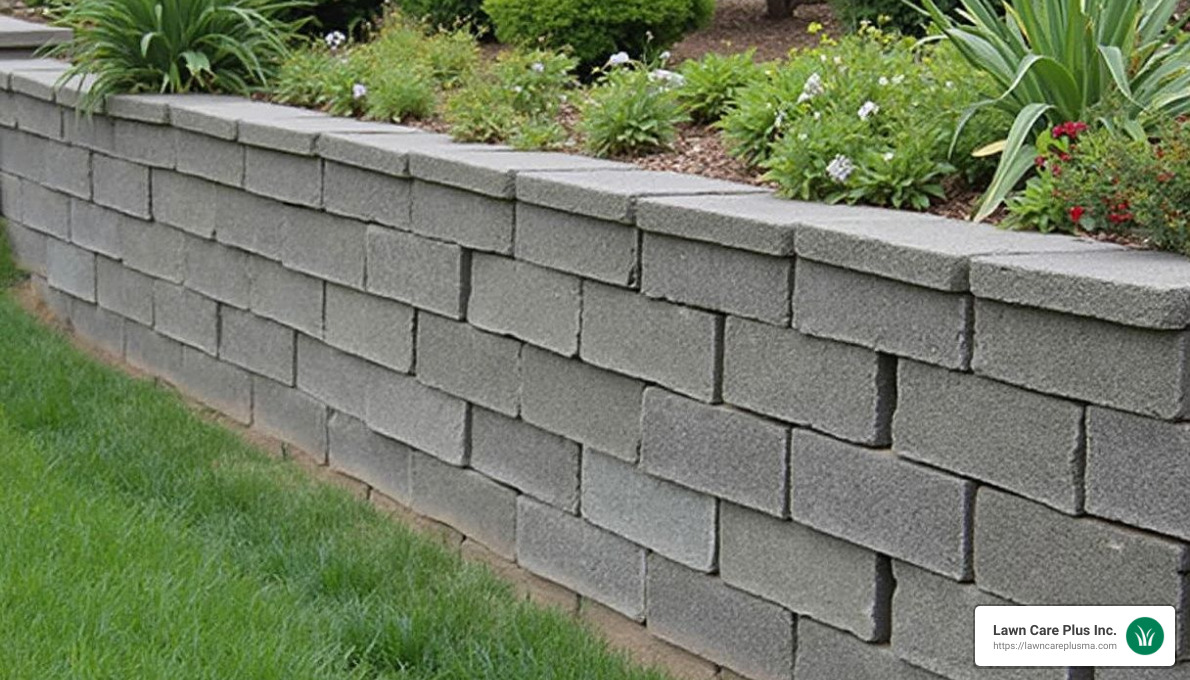
Retaining walls are essential for landscapes with varying elevations. They hold back soil, preventing erosion and creating flat, usable spaces. Retaining walls are crucial in areas with steep slopes or where soil stability is a concern. They can transform a sloped yard into a terraced garden, adding both beauty and functionality.
Usage and Benefits:
- Freestanding Walls: Ideal for creating garden borders, seating areas, or decorative features.
- Retaining Walls: Perfect for soil erosion control, level planting beds, and improved landscape design.
By understanding the different types of block walls, you can choose the right option for your landscaping needs. Whether it’s enhancing your garden with a freestanding wall or stabilizing your yard with a retaining wall, block walls offer a versatile and attractive solution.
With the expertise of Lawn Care Plus Inc., you can ensure that your block wall installation is not only beautiful but also built to last.
Cost Considerations for Block Walls
When planning to build block walls, understanding the costs involved is crucial. Let’s break down the key aspects that influence the budget and explore cost-effective solutions.
Are Cinder Block Walls Cheaper?
Cinder block walls are often touted as a budget-friendly option. Compared to other materials like natural stone or brick, cinder blocks are generally more affordable. They are made from a mix of concrete and coal ash, which keeps costs low.
However, it’s important to consider the long-term expenses. While cinder blocks are cost-effective initially, they may require additional reinforcement, such as rebar or concrete filling, to ensure durability and stability. This can add to the overall cost.
Factors Influencing Cost
Several factors play a role in determining the final price of constructing block walls:
- Labor: The complexity of the wall design and the experience level of the workers can significantly affect labor costs. More intricate designs or taller walls may require skilled labor, increasing expenses.
- Materials: The choice of materials greatly impacts the budget. Options range from economical concrete blocks to more luxurious natural stones. For example, using poured concrete can be more expensive upfront but offers a long lifespan, making it a cost-effective choice in the long run.
- Size: The dimensions of the wall, including height and length, directly influence the amount of material needed. Larger walls require more resources, leading to higher costs.
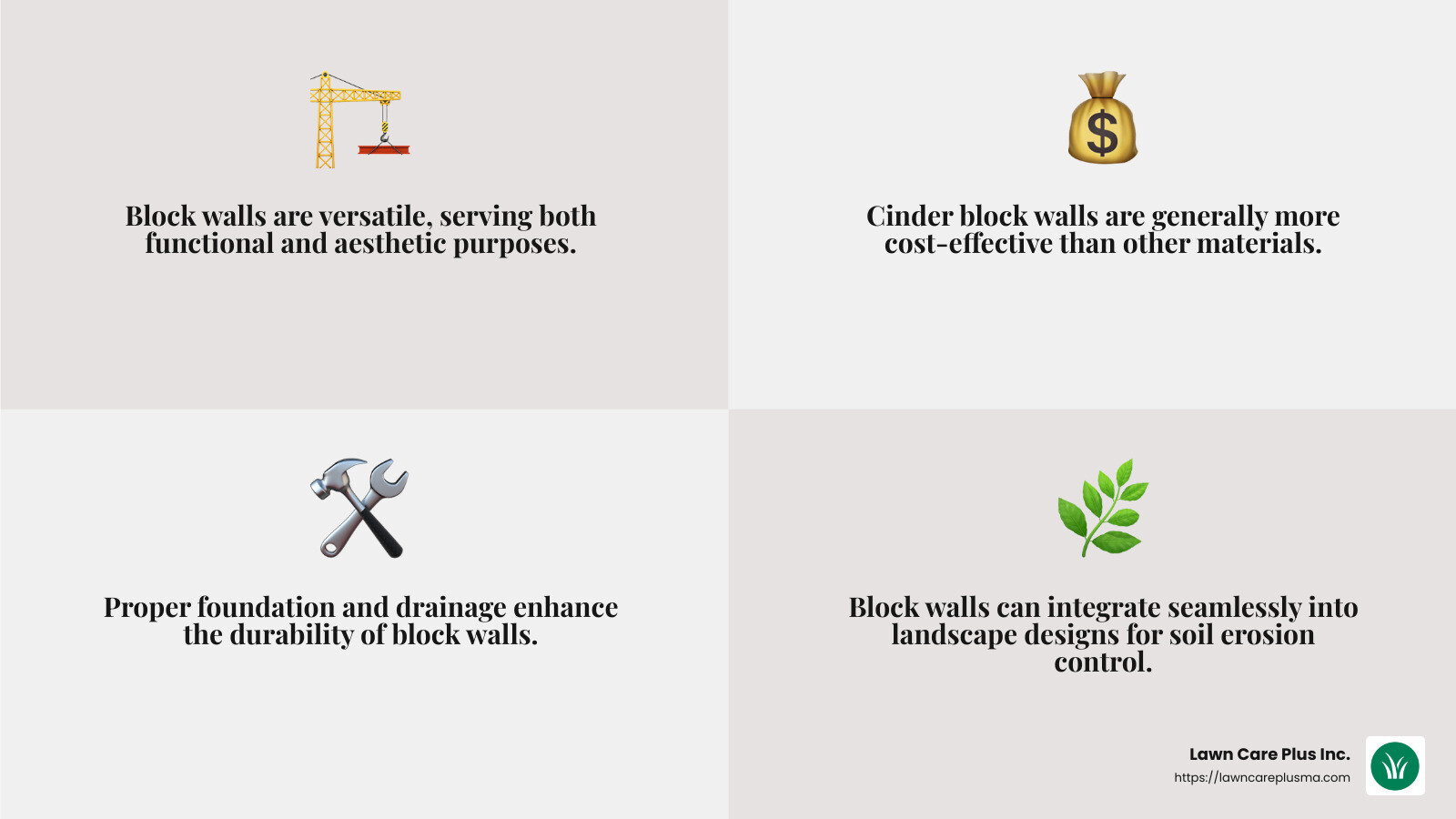
- Foundation and Drainage: Proper foundation and drainage systems are crucial for the stability of block walls. These elements can add to the cost but are essential for preventing future issues like soil erosion or wall failure.
By carefully considering these factors, homeowners can create a realistic budget for their block wall projects. Opting for standard sizes and materials can help keep costs manageable while ensuring the wall meets functional and aesthetic needs.
Lawn Care Plus Inc. can guide you in selecting the best materials and design for your project, ensuring a balance between cost and quality.
Best Practices for Constructing Block Walls
Constructing reliable block walls requires careful planning and execution. Let’s explore the best practices that ensure durability and stability.
What is the Best Base for Block Wall?
A solid foundation is the backbone of any sturdy block wall. The base should consist of granular rock, such as crushed stone or gravel. This material provides excellent drainage, preventing water from accumulating at the base and weakening the structure over time.
- Foundation Preparation: Start by excavating a trench where the wall will sit. The depth should be at least twice the height of the first block row. Fill the trench with granular rock and compact it thoroughly. This creates a stable and level surface for the wall.
- Drainage Considerations: Proper drainage is crucial to avoid water buildup. Install a perforated pipe at the base of the wall, surrounded by gravel. This will channel water away, reducing pressure on the wall and extending its lifespan.
Constructing for Stability
Stability is key to preventing block walls from shifting or collapsing. Here are techniques to ensure your wall remains strong:
- Compaction: Compact the soil beneath the base and each layer of backfill. This minimizes settling and maintains the wall’s alignment over time.
- Alignment: Use a level and string line to keep the blocks straight and even. Misaligned blocks can weaken the structure and reduce its visual appeal.
- Footings: For walls over 24 inches high, incorporate footings. These are wider bases that distribute the weight of the wall evenly, preventing it from tipping over.
By following these best practices, you can construct block walls that are both durable and aesthetically pleasing. At Lawn Care Plus Inc., we emphasize the importance of a strong foundation and proper drainage to ensure your block wall stands the test of time.
Next, we’ll explore how to make design and aesthetic choices that improve the functionality and beauty of your block walls.
Design and Aesthetic Choices in Block Walls
Designing block walls isn’t just about strength and stability. It’s also about creativity, functionality, and appearance. Let’s explore how to choose the right materials and styles to make your block walls both beautiful and practical.
Choosing the Right Materials and Textures
When it comes to aesthetics, the choice of materials can make all the difference. Concrete blocks are a popular choice due to their versatility. They can be molded into various textures and finishes, including those that mimic the look of natural stone. This gives you the flexibility to match the wall with the style of your home and landscape.
- Concrete Options: Concrete blocks are not only durable but also available in a range of colors and textures. This allows you to create a sleek, modern look or a rustic, natural appearance, depending on your preference.
- Natural Stone Look: If you prefer a more traditional or neat look, choose blocks that resemble natural stone. These can add a touch of sophistication and blend seamlessly with your garden or outdoor space.
Integrating Block Walls into Landscape Design
Block walls are not just about holding back soil; they can transform your landscape into a masterpiece. Here’s how to integrate them into your design:
- Terraced Gardens: Use block walls to create terraced gardens. This not only improves the visual appeal of your yard but also maximizes space for planting. Terraced gardens can turn a sloped area into a series of flat, usable spaces.
- Soil Erosion Control: Block walls are excellent for controlling soil erosion. By strategically placing walls, you can prevent soil from washing away, protecting your plants and maintaining the integrity of your landscape.
By choosing the right materials and integrating block walls thoughtfully, you can improve the beauty and functionality of your outdoor space. Whether you’re aiming for a modern look or a rustic feel, the right block walls can make your landscape stand out.
In the next section, we’ll address some frequently asked questions to help you get the most out of your block wall projects.
Frequently Asked Questions about Block Walls
What is the Cheapest Retaining Wall Block?
When it comes to building retaining walls, poured concrete is often the most cost-effective option. It costs less per square foot compared to other materials like natural stone or brick. Poured concrete is not only affordable but also offers durability and easy maintenance. If you’re looking to minimize expenses, this might be the best choice for your retaining wall project.
How to Ensure Longevity of Block Walls?
To make sure your block walls last a long time, focus on regular maintenance and protection against weather. Here are some tips:
- Maintenance: Inspect your walls regularly for any signs of damage. Fix small cracks or chips right away to prevent them from getting worse. Keeping the wall clean and free of debris can also help maintain its appearance and function.
- Weather Resistance: Use weather-resistant materials and sealants to protect the wall from rain, snow, and temperature changes. Proper drainage is crucial to prevent water from pooling behind the wall, which can cause pressure and damage over time.
Can Block Walls Be Customized for Any Landscape?
Yes, block walls can be custom to fit almost any landscape design. With custom designs and modular systems, you have the flexibility to create walls that match your unique needs and aesthetic preferences.
- Custom Designs: You can choose from a variety of block shapes, sizes, and colors to create a wall that complements your landscape. Custom designs allow for creative patterns and layouts, making your wall a standout feature.
- Modular Systems: These offer a versatile solution for landscapes with varying terrain. Modular block systems can be easily adjusted and reconfigured to fit the specific contours of your land, ensuring a perfect fit every time.
With these options, you can confidently incorporate block walls into your outdoor space, knowing they’ll meet both functional and aesthetic demands. Whether you need to manage slopes or add visual interest, block walls offer endless possibilities.
Conclusion
Building block walls is a smart way to improve your landscape, adding both functionality and beauty. From retaining walls that help manage slopes to freestanding walls that create distinct areas in your yard, the possibilities are vast. Choosing the right materials, ensuring proper installation, and maintaining your walls are key to their longevity and effectiveness.
At Lawn Care Plus Inc., we specialize in crafting reliable block walls that stand the test of time. Our team is dedicated to delivering exceptional results, whether you’re looking to improve your property’s value or simply create a more enjoyable outdoor space. We understand the importance of combining creativity with engineering to meet your unique landscape needs.
If you’re ready to transform your outdoor area with expertly installed block walls, contact Lawn Care Plus Inc.. Let us help you design and build a wall that not only meets your functional needs but also improves the beauty of your landscape. Get in touch today to discuss your project and experience the benefits of working with a professional team committed to excellence.