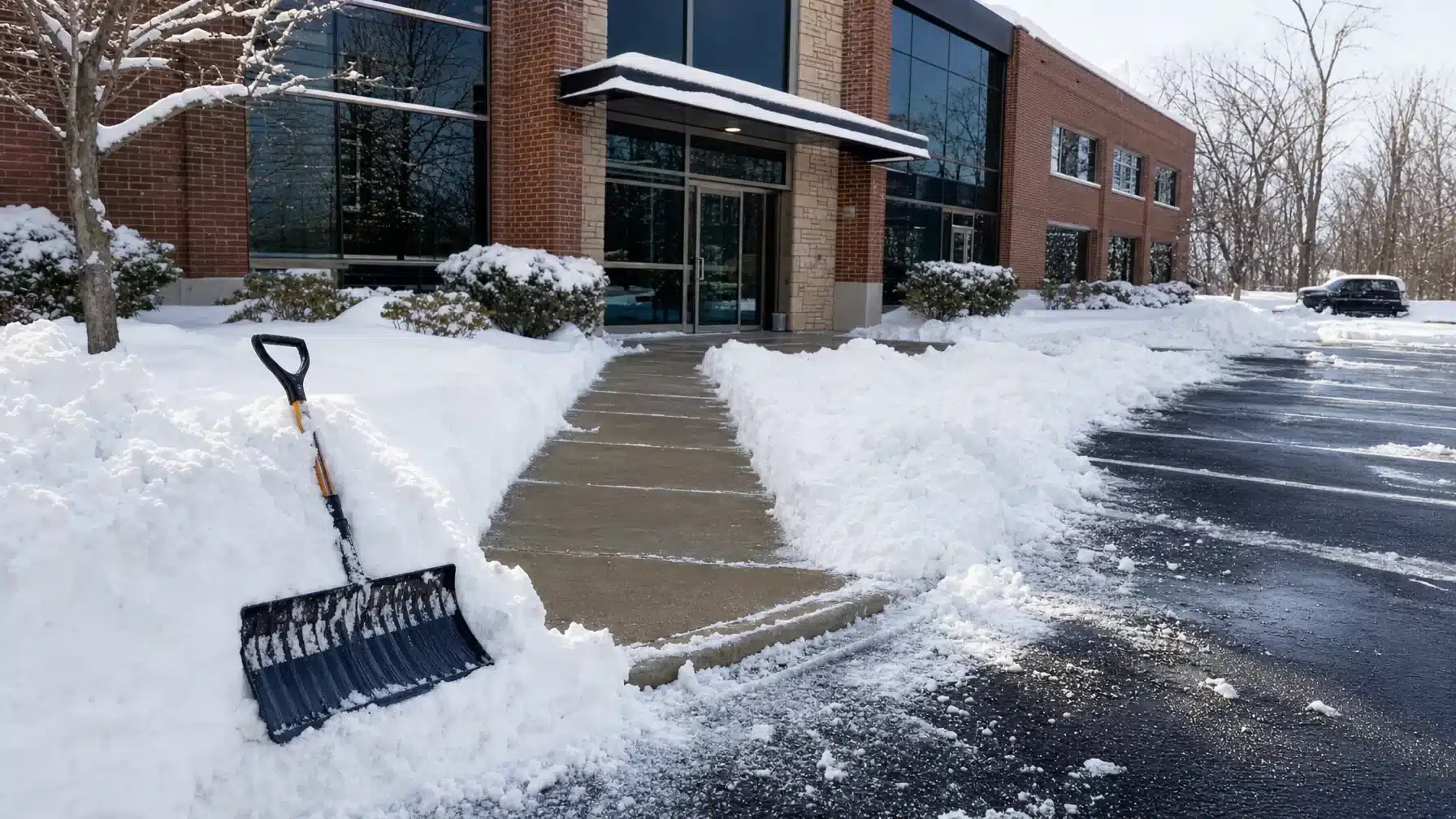
A commercial property snow-removal notice should tell tenants and occupants what is confirmed, what action applies to them, what remains unresolved, and where to get the next update. Its job is to relay accurate property information, not promise snow-free conditions or turn a requested service time into a contractor commitment.
Use a prewinter notice for standing arrangements, an event-specific update for current confirmed information, and a clearly labeled correction when an earlier message is no longer accurate. Keep the underlying service plan separate from these occupant-facing messages.
Decide who needs the notice and where it will appear
Identify affected tenant contacts, on-site employees, reception or security staff, and others who relay information to visitors or delivery personnel. Decide whether management will reach occupants directly or whether tenant representatives will distribute the message within their organizations. Make that handoff explicit.
Choose management-controlled channels appropriate to the property, such as an established email list, tenant portal, or posted notice location. Identify where the current version will be maintained and who will update other copies. Ask recipients to raise communication-format needs privately with management rather than placing personal information in a shared thread.
Separate management decisions from provider confirmations
Management can identify the notice sender, recipient list, question contact, and channels it controls. Details dependent on snow service need to be checked against the current agreement and any subsequent provider confirmations before they become occupant instructions.
- Covered areas and tasks: confirm the exact areas and relevant exclusions. Do not imply that every entrance, walkway, or parking section receives the same service.
- Vehicle relocation: confirm whether movement is needed and the agreed locations, instructions, and timing before asking occupants to move vehicles.
- Service timing: distinguish a requested time, an estimate, and a confirmed commitment. Do not infer arrival or completion from a dispatch message.
- Access changes: verify any proposed entrance, parking, or delivery change with those responsible for the property arrangements and affected service.
- Provider updates: confirm what information, if any, the provider will supply, through which channel, and to which management contact. Do not assume tenants receive contractor alerts.
Keep an internal confirmation note beside the draft: the detail, its source, when it was confirmed, and who will resolve any remaining question. A tenant preference or an old notice is not confirmation of the current service arrangement.
Note Do not use the notice to decide lease obligations, towing authority, legal notice requirements, municipal rules, or liability. Resolve those questions with appropriate qualified sources. Emergency-access and accessibility arrangements also require appropriate property-specific review, not improvised directions in a snow update.
Build the prewinter notice around standing information
Explain the confirmed arrangements occupants need to understand before an event. Use recognizable property-area names that match the service documentation. Include relevant agreed occupant responsibilities, the management contact for questions, and where later notices will appear.
Give unresolved details their own label. State what is awaiting confirmation and who is following up. Do not place a tentative parking or access proposal under “Actions required.” If an occupant instruction depends on an unresolved detail, settle that dependency before issuing the instruction.
Keep event updates specific to what is known
For an event-specific message, identify the property and affected areas, when the information was checked, the confirmed status, and any agreed action recipients need to take. State which standing arrangements still apply rather than copying an old notice without checking it.
If timing is unconfirmed, say so. If the provider supplies an estimate, preserve that qualification instead of presenting it as a deadline. Keep management’s next communication separate from the provider’s service timing: a planned update does not establish when clearing will occur.
Note A report that service occurred is not certification that an area is safe, ice-free, accessible, or ready to reopen. Do not turn a service-status message into an all-clear statement.
Correct earlier information visibly
Label a correction as a correction, identify the earlier notice by its subject and issue time, and name the detail being replaced. State the current confirmed information and whether the recipient’s requested action has changed. Avoid silently editing a notice that people may already have saved or forwarded.
Send the correction through the affected distribution channels, replace outdated posted copies, and ask tenant contacts to relay the revised message where they shared the original. Retain the earlier version internally so management can trace what changed.
Give occupant questions a management contact
Name the management contact for notice clarification, communication needs, and questions about confirmed arrangements. Keep those exchanges separate from provider-facing service concerns. Management can route a reported condition through the established service contact without asking occupants to negotiate scope changes or seek instructions from equipment operators.
Unfilled snow-service notice framework
Use these prompts as an editorial drafting aid, not a Lawn Care Plus form or a legally sufficient notice.
- Notice identity, Type (prewinter information, event update, or correction): ____. Property and affected areas: ____. Issue date and time: ____.
- Confirmed arrangements, Relevant agreed scope, exclusions, or current status: ____. When this information was confirmed: ____.
- Recipient actions, Who needs to act: ____. Confirmed action, location, and applicable timing: ____. Management contact if the action cannot be followed: ____.
- Unresolved details, What is not confirmed: ____. Who is seeking clarification: ____.
- Management contact, Name or role: ____. Established contact method: ____. Questions this contact handles: ____.
- Next update, Management-confirmed update time or trigger: ____. Channel: ____. Location of the current notice: ____.
- Correction fields, if applicable, Earlier notice being corrected: ____. Detail replaced: ____. Current confirmed information: ____. Effect on recipient actions: ____.
Check accuracy before sending
- Can management trace every service detail and requested action to a current confirmation?
- Are estimates, unresolved questions, and confirmed arrangements visibly distinct?
- Does the message avoid unsupported arrival, completion, reopening, and safety assurances?
- Will affected recipients receive consistent information, including any correction to an earlier notice?
- Are the management contact and next-update arrangements clear, without exposing access codes or private occupant information?
Lawn Care Plus, Inc. is based in Roslindale, MA, and provides landscaping and snow management for residential and commercial clients throughout Greater Boston and Metro-West.
Before drafting occupant instructions, bring unresolved service questions to the provider conversation. To discuss snow service with Lawn Care Plus, visit the Snow Management page. For broader property-service information, see the services overview. Keep the occupant notice focused on the arrangements actually confirmed for your property.