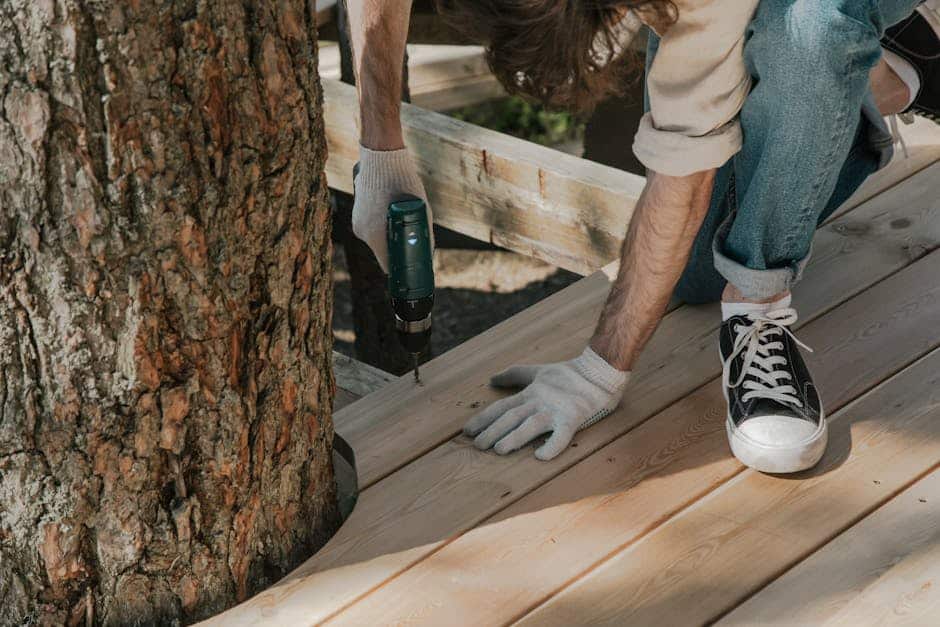
Deck building is a fantastic way to improve your outdoor space, creating an inviting area for relaxation, entertainment, and appreciation of nature. Whether you’re looking to host family barbecues or simply enjoy a quiet evening outside, building a deck can add both beauty and functionality to your home.
For those who are eager to dive into deck building, here are a few key points to get you started:
- Plan carefully: Consider the size, position, and materials for your deck.
- Choose durable materials: Options like composite or pressure-treated wood can extend the life of your deck.
- Gather necessary tools: Ensure you have all the required tools such as hammers, drills, and saws.
- Follow local codes: Check on building permits and local regulations before starting construction.
By keeping these essentials in mind, you’ll be well on your way to changing your outdoor area into a stunning deck.
Planning Your Deck
Before you pick up a hammer, planning your deck is crucial. Think of it as laying the groundwork for a successful project.
Choose the Right Location
The location of your deck can make or break your outdoor experience. Look for a flat, level area that’s easy to access. If your yard is sloped, you might need to grade a level spot or build a retaining wall for support.
Consider Drainage and Soil
Drainage is essential to prevent water from pooling and damaging your deck. Choose a location with good water runoff. If necessary, add gravel underneath to help with drainage. Also, check the soil type. Sandy soil drains well but may require extra support, while clay soil holds moisture and may need special attention.
Take Advantage of Natural Shade
Think about where the sun hits your yard. Placing your deck near trees or shrubs not only provides natural shade but also blends your deck into the landscape. This makes it more enjoyable during hot summer days.
Create Deck Drawings
A rough deck drawing is your blueprint. It should include the size, number, and location of deck posts or footings. Ground-level decks are typically 12 to 30 inches above the ground. Use your drawings to decide between concrete blocks or posts to lift the deck slightly off the ground.
Think About Slope
A slight slope on your deck can aid in water runoff, preventing water from sitting on the deck surface. This is especially important in areas with heavy rainfall.
By considering these factors, you’ll set a strong foundation for your deck building project.
Essential Tools and Materials for Deck Building
Building a deck is like assembling a giant puzzle. You need the right pieces to make it all fit together perfectly. Here’s what you’ll need to get started:
Composite Decking
Composite decking is a popular choice for those who want a low-maintenance and durable deck. Made from a mix of wood fibers and plastic, it mimics the look of wood without the upkeep. It resists rot, splinters, and insects, making it perfect for long-lasting outdoor spaces.
Pressure-Treated Wood
If you prefer a more traditional look, pressure-treated wood is your go-to material. It’s treated to resist rot and insects, making it a sturdy option for deck building. You can stain or paint it to match your style, but regular maintenance is needed to keep it looking its best.
Posts
Posts are the backbone of your deck. They provide the support needed to keep everything stable. Use 6×6 posts for strength, especially if your deck is liftd. Make sure they are properly anchored to prevent any wobbling.
Gravel
Gravel is essential for proper drainage. Spread a layer of gravel under your deck to help water drain away, which prevents pooling and potential damage. It also helps keep weeds at bay.
Concrete Mix
For a solid foundation, you’ll need concrete mix to secure your posts. Pour it into the holes around the posts to create a sturdy base. This step is crucial for the stability and longevity of your deck.
Deck Hardware
Deck hardware includes all the nuts, bolts, and connectors needed to hold your deck together. Use galvanized or stainless steel hardware to prevent rust and corrosion. This ensures your deck remains safe and secure over time.
By gathering these essential tools and materials, you’re well on your way to creating a beautiful and functional deck that will improve your outdoor space.
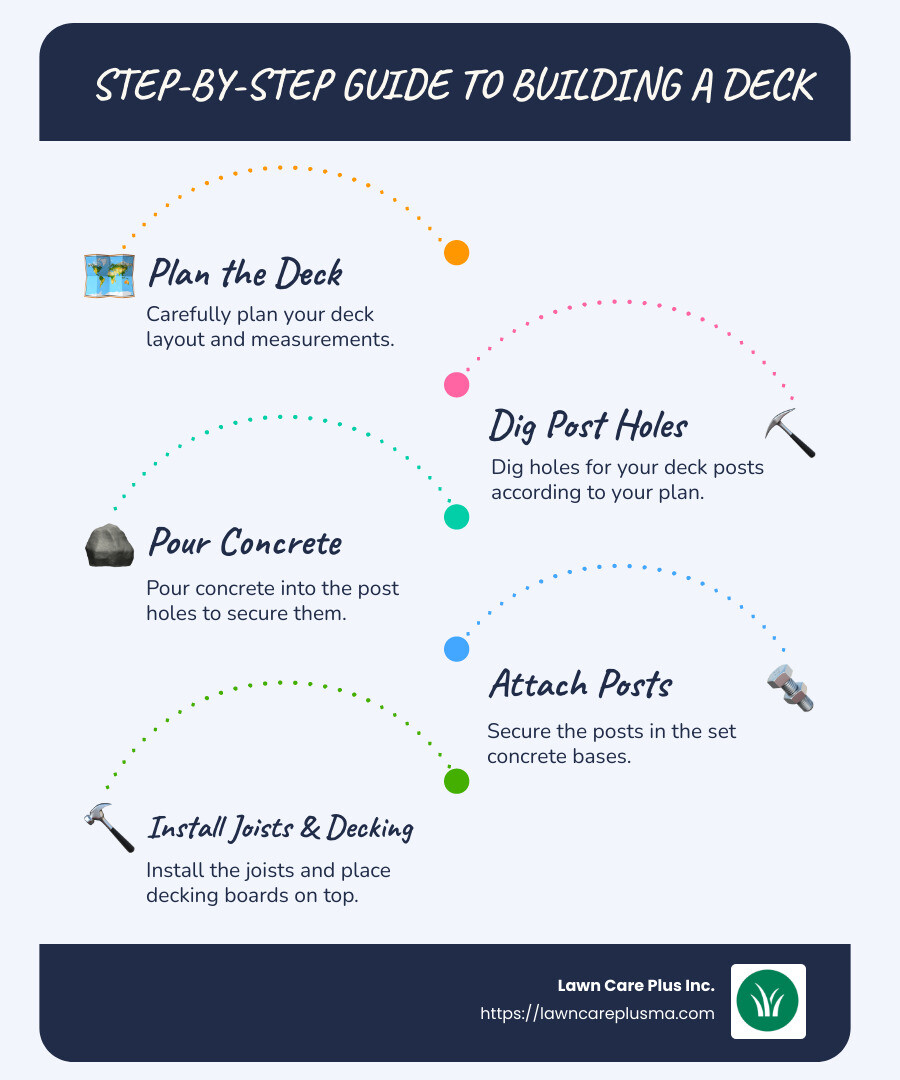
Step-by-Step Guide to Building a Deck
Building a deck might seem daunting, but breaking it down into steps makes it manageable. Let’s walk through the process, ensuring your deck is sturdy, safe, and perfect for your outdoor space.
1. Plan
Start with a solid plan. Consider the location of your deck, keeping in mind water drainage, slope, and soil conditions. A flat, easily accessible area is ideal. Use your deck drawings to determine the size, number, and location of deck posts or footings. Most ground-level decks are 12 to 30 inches above the ground.
2. Dig Post Holes
Once you have your plan, it’s time to dig post holes. Use batter boards and mason’s string lines to outline the deck’s perimeter. This ensures your posts are correctly aligned. Mark the locations for your deck piers or footings using spray paint. Then, dig the holes to the required depth.
3. Pour Concrete
With the post holes ready, it’s time to pour the concrete. Mix your concrete mix according to the instructions and fill the holes around your posts. This creates a solid foundation, crucial for the stability of your deck. Allow the concrete to cure fully before proceeding.
4. Attach Posts
Once the concrete is set, attach your posts to the post bases. Use 6×6 posts for added strength, especially for liftd decks. Ensure they are plumb and level, as they form the backbone of your deck’s structure.
5. Install Joists
Next, install the joists. Joists provide the framework for your decking boards. Attach them to the ledger board, which is secured to your house, and to the beams supported by your posts. Ensure they are evenly spaced and level to create a stable surface.
6. Install Decking Boards
Finally, install your decking boards. Whether you choose composite decking for its low maintenance or pressure-treated wood for a traditional look, lay the boards perpendicular to the joists. Use deck hardware like galvanized screws or hidden fasteners for a clean finish. Ensure the boards are evenly spaced to allow for expansion and contraction.
By following these steps, you’ll be able to create a beautiful, functional deck that improves your outdoor living space. With careful planning and attention to detail, your deck will be a safe and enjoyable space for years to come.
Deck Building Tips and Tricks
Building a deck is more than just laying boards; it’s about creating a lasting, enjoyable space. Here are some deck building tips to ensure your deck stands the test of time and the elements.
Moisture Protection
Moisture is the enemy of any deck. Protect your deck from water damage by using a high-quality wood stain or weather sealer. Apply these products every few years to maintain a strong barrier against rain and humidity.
Also, consider using joist tape. This protective layer prevents water from seeping into the joists, reducing the risk of rot and prolonging the life of your deck.
Shade Options
Adding shade to your deck can make it more comfortable during hot summer days. Consider installing a pergola or an umbrella. These options not only provide shade but can also add a touch of style to your deck. If you prefer something more permanent, a retractable awning might be the perfect solution, offering flexibility and protection from the sun.
Privacy Screens
Privacy screens can turn your deck into a personal oasis. Lattice panels or tall plants can block the view from neighbors while adding charm to your deck. Lattice screens are easy to install and can be customized to fit your style. Alternatively, consider using decorative fence panels for a more solid barrier.
Safety Precautions
Safety should always be a priority when building and using a deck. Here are some key precautions:
- Wear protective gear: Always use gloves, goggles, and ear protection when operating power tools.
- Check local codes: Ensure your deck complies with local building codes, especially regarding railing height and structural integrity.
- Use GFCI-protected power cords: This is crucial when working with power tools outdoors to prevent electrical shocks.
A well-built deck not only adds value to your home but also improves your outdoor enjoyment. With these tips, your deck will be a safe, stylish, and enduring addition to your home.
Frequently Asked Questions about Deck Building
How much does it cost to build a 20×20 deck?
Building a 20×20 deck can vary in cost depending on several factors. The materials you choose play a significant role. Cedar or redwood are more expensive but offer natural resistance to pests and rot. On the other hand, pressure-treated lumber is more budget-friendly but requires regular maintenance. Composite materials are low-maintenance and durable, though they come at a higher initial cost.
Features like built-in seating, planters, or railings can also impact the overall cost. Additionally, whether your deck is on the first or second story will affect the price due to the need for additional structural support for liftd decks.
Can you build a deck for $5000?
Yes, it’s possible to build a deck for $5000, but it requires careful planning and cost-saving strategies. Opting for a basic design using pressure-treated wood can help keep costs down. Doing the work yourself can significantly reduce expenses, as labor costs often make up a large portion of the total budget.
That while you can save money with a DIY approach, it’s important to have the necessary skills and tools to ensure the deck is safe and up to code.
What is the average cost to build a 12×12 deck?
The average cost for a 12×12 deck depends on whether it’s built on the first or second story. A ground-level deck is generally less expensive due to simpler construction and fewer materials required for support.
For a first-story deck, using pressure-treated wood and basic features, you might expect a moderate cost range. However, a second-story deck involves more complexity and cost due to the need for support columns and possibly stairs.
When planning your deck, always consider additional costs for permits, inspections, and any other local requirements. This ensures your deck is not only beautiful but also compliant with building codes.
Conclusion
Building a deck is more than just adding a structure to your home; it’s about creating a space where memories are made and outdoor enjoyment is maximized. At Lawn Care Plus Inc., we understand the value a well-built deck brings to your property. Not only does it improve the aesthetic appeal of your home, but it also provides a functional space for relaxation, entertainment, and family gatherings.
Deck value is not just measured in dollars. It’s about the improvement of your lifestyle. Imagine sipping your morning coffee while enjoying the sunrise or hosting a barbecue with friends and family. These moments highlight the true worth of a deck.
When considering deck building, it’s important to think about how you will use this space. Whether you want a quiet retreat or an entertainment hub, the design should reflect your needs and preferences. Our team at Lawn Care Plus Inc. is here to help you create a deck that perfectly complements your home and lifestyle.
Outdoor enjoyment becomes effortless with a well-designed deck. It serves as a seamless transition between indoor comfort and outdoor beauty. With the right planning and materials, you can create a space that is both durable and visually appealing.
If you’re ready to improve your outdoor living area, consider partnering with us. Our expertise in landscaping and hardscaping ensures that your deck will not only meet but exceed your expectations.
For more information on how we can help you build the perfect deck, visit our Patio Construction page. Let’s make your outdoor dreams a reality!