Driveway crack repair doesn’t have to be complicated or expensive. If you’ve noticed pesky splits and gaps in your concrete or asphalt driveway, addressing them early can save you from bigger headaches down the road. Here’s what you need to know at a glance:
- For hairline cracks less than 1/4-inch wide: A quick fix can often involve applying a simple resurfacing product.
- Deep or wide cracks more than 1/4-inch wide: These may indicate significant issues. A professional opinion might be warranted if these cracks persist.
Cracks in your driveway can form due to a variety of factors like repeated freezing and thawing, heavy vehicle loads, or intrusive tree roots. As these cracks expand, they can lead to more severe problems, impacting the aesthetics and safety of your driveway.
Concrete and asphalt drives each have unique aesthetic benefits and practical considerations. Concrete is known for its durability and can be resurfaced to extend its life, while asphalt requires more frequent maintenance but offers a distinct, smooth finish.
Whether you’re a DIY enthusiast or prefer professional services, understanding the basics of crack repair can keep your driveway in peak condition and maintain your property’s curb appeal.
Quick driveway crack repair definitions:
– asphalt driveway repair
– asphalt patch home depot
– does replacing driveway a good investment
Understanding Driveway Cracks
Cracks in driveways are more than just an eyesore—they’re a signal that something is happening beneath the surface. Understanding the causes of these cracks can help you decide whether a DIY fix will suffice or if a professional repair is needed.
Causes of Driveway Cracks
- Freezing and Thawing: This is a common culprit, especially in regions with harsh winters. Water seeps into small cracks and freezes, expanding and causing the cracks to widen. Repeated cycles of freezing and thawing can exacerbate the problem.
- Heavy Loads: Driveways are designed to withstand a certain amount of weight. However, consistently parking heavy vehicles like trucks or RVs can stress the surface, leading to cracks over time.
- Tree Roots: Trees add beauty to your property, but their roots can be a hidden menace. As roots grow, they can push against the driveway, causing cracks or even lifting sections of the concrete.

Each of these factors can lead to different types of cracks. Identifying the cause is the first step in effective driveway crack repair.
Cracks less than 1/4-inch wide are often cosmetic and can be easily repaired with a resurfacing product. However, cracks larger than 1/4 inch might suggest deeper issues, such as soil movement or significant load stress, which could require professional intervention.
Understanding these causes will help you make informed decisions about how to approach driveway crack repair. Whether you choose to tackle the repairs yourself or hire a professional, addressing these issues early can prevent more significant problems down the line.
DIY Driveway Crack Repair
Repairing cracks in your driveway is a straightforward task that most homeowners can tackle themselves. With the right tools and techniques, you can restore your driveway’s appearance and prevent further damage. Here’s how to get started.
Safety Gear
Before diving into driveway crack repair, ensure you’re equipped with the proper safety gear. Wear rubber gloves to protect your hands from harsh chemicals in crack fillers. Safety glasses are essential to shield your eyes, especially if you’re using a pressure washer or working with concrete dust. Long sleeves and pants will protect your skin during the process.
Cleaning
Cleaning the cracks is crucial for a successful repair. Use a high-power pressure washer to remove dirt, debris, and loose concrete from the cracks. Make sure the area is completely dry before proceeding. This step ensures that the filler adheres properly to the concrete.
Crack Fillers
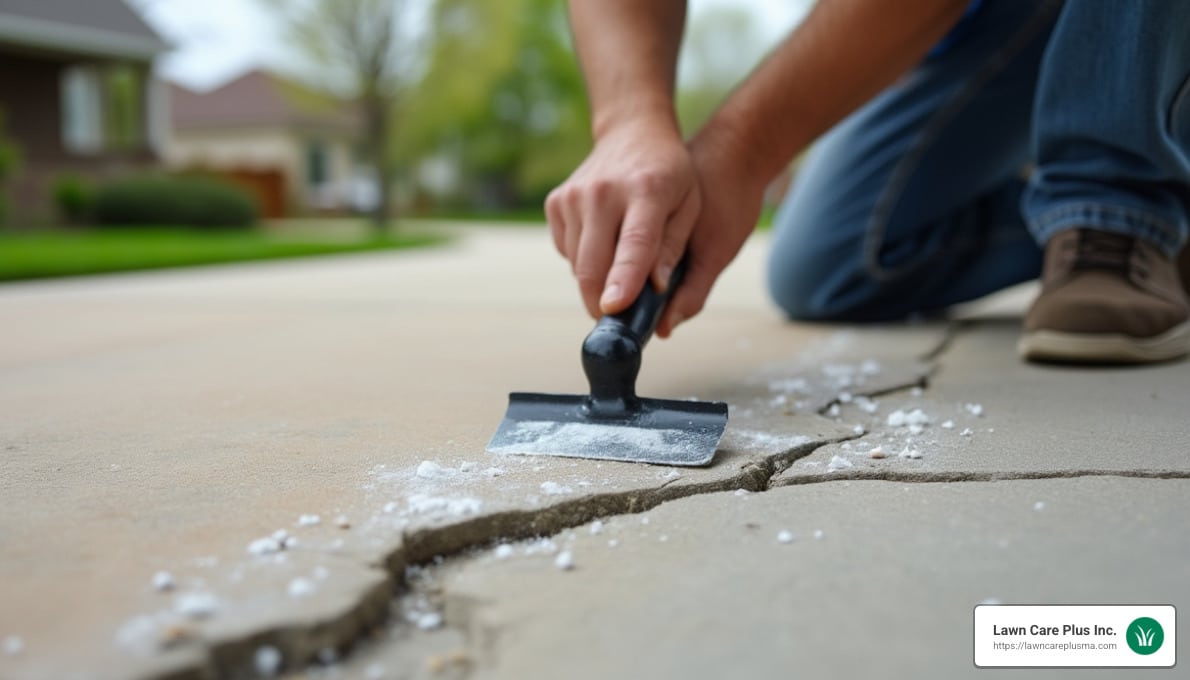
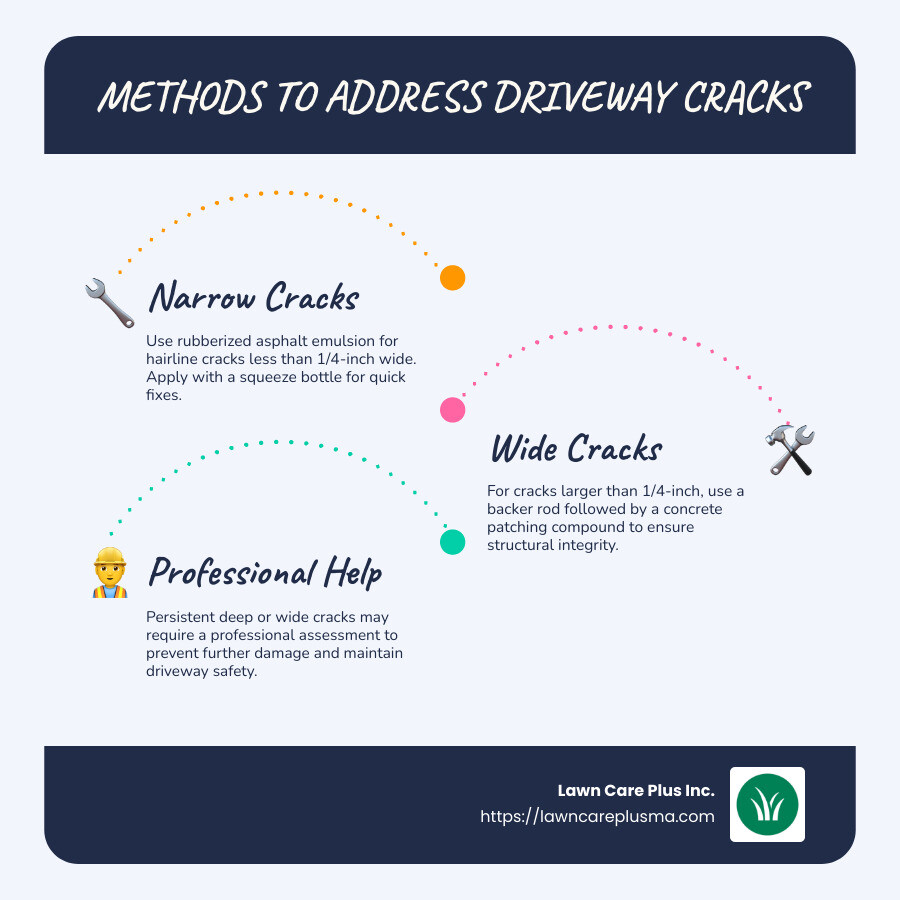
For narrow cracks (less than 1/4-inch wide), a rubberized asphalt emulsion is ideal. It comes in squeeze bottles, making it easy to apply directly into the cracks. Simply squeeze the product into the crack and smooth it out with a putty knife. This material is flexible and expands and contracts with temperature changes, preventing further cracking.
How to Repair Narrow Cracks
- Clean the area: Use a pressure washer to clear out debris.
- Apply rubberized asphalt emulsion: Use a squeeze bottle for precise application.
- Smooth the surface: Use a putty knife to level the filler with the driveway surface.
How to Repair Wide Cracks
For wide cracks (greater than 1/4-inch), you’ll need a more robust solution.
- Insert a backer rod: For cracks wider than 1/2 inch, place a backer rod into the crack. This foam-like material reduces the amount of filler needed and provides a base for the repair.
- Apply concrete patching compound: Use a trowel to spread the compound over the crack, ensuring it fills the space completely. Smooth the surface with the trowel to create a level finish.
- Allow to dry: Follow the manufacturer’s instructions for drying times. Avoid traffic on the repaired area until it’s fully set.
By following these steps, you can effectively repair both narrow and wide cracks in your driveway. Addressing these issues promptly will help maintain the integrity of your driveway and prevent more costly repairs in the future.
Professional Driveway Crack Repair
While DIY repairs can be effective for minor issues, some situations call for professional intervention. Here’s when you might consider hiring a pro, along with insights on costs and insurance coverage.
When to Hire a Professional
- Extensive Damage: If your driveway has deep cracks or is heavily damaged, professional repair is recommended. Experts have the tools and expertise to address underlying structural issues that DIY methods might miss.
- Complex Repairs: For uneven surfaces or cracks wider than an inch, professional solutions like concrete leveling or replacement might be necessary. These tasks require specialized equipment and skills.
- Aesthetic Concerns: If the visual outcome is a priority, professionals can ensure a smooth, uniform finish that blends seamlessly with the rest of your driveway.
Cost of Professional Repair
The cost of professional driveway crack repair varies based on the extent of the damage and the materials used. While hiring a professional might seem costly upfront, it can save money in the long run by preventing further deterioration.
- Material and Labor: Costs depend on the materials chosen and the complexity of the repair. For example, using high-quality concrete or epoxy fillers can be more expensive but offer better durability.
- Project Scope: Larger driveways or those with extensive damage will naturally incur higher costs due to the increased labor and materials required.
Insurance Coverage
Homeowners insurance may cover driveway repairs if the damage results from a covered peril, such as a fallen tree or other accidental damage. However, normal wear and tear or age-related cracking typically aren’t covered.
- Check Your Policy: Review your homeowners insurance policy to understand what types of damage are covered. It’s wise to contact your insurance provider for clarification on specific coverage details.
- Documentation: If covered, document the damage thoroughly with photos and detailed descriptions to facilitate the claims process.
By carefully considering these factors, you can decide whether professional repair is the best option for your driveway. This approach not only ensures effective repairs but also helps maintain your property’s value.
Driveway Crack Repair Tips
When tackling driveway crack repair, a few smart strategies can make the process smoother and more effective.
Timing is Everything: Choose Dry Weather
Start your repair project when the weather is dry. Avoid rainy or humid days. Moisture can interfere with the bonding of fillers and cause them to set improperly. Ideally, the surface temperature should be at least 50 degrees Fahrenheit. This ensures the materials adhere properly and cure well.
Use Self-Leveling Caulk for a Smooth Finish
For a flawless repair, consider using self-leveling caulk. This type of caulk is excellent for filling cracks because it spreads evenly and requires minimal effort to achieve a smooth surface.
- Application: Simply apply the caulk into the crack and let it settle. It will naturally level itself without the need for extensive smoothing.
- Benefits: Self-leveling caulk is flexible, accommodating the natural expansion and contraction of concrete, which reduces the chance of future cracking.
Add Sand for a Textured Finish
To make your repair blend seamlessly with the rest of your driveway, add sand on top of the wet caulk. Sprinkling sand over the caulk while it’s still wet gives a more natural, textured finish.
- Method: Lightly sprinkle the sand over the caulk immediately after application. This helps the sand adhere before the caulk sets.
- Result: The sand not only improves the appearance but also provides better traction, which can be useful during wet or icy conditions.
By following these tips, you can achieve a professional-looking repair that stands the test of time. Up next, we’ll dive into Frequently Asked Questions about Driveway Crack Repair, where we’ll address common concerns and provide expert answers.
Frequently Asked Questions about Driveway Crack Repair
Can driveway cracks be repaired?
Absolutely, driveway crack repair is not only possible but also essential to maintain your driveway’s longevity. Small cracks can be easily tackled with DIY solutions like filler/sealers. These products are designed to fill narrow gaps and prevent further damage. For more robust solutions, rubberized asphalt emulsion is a popular choice due to its flexibility and durability, making it ideal for areas that experience temperature fluctuations.
When cracks are wider or more severe, professional repair might be necessary. Experts can assess the situation and use advanced techniques to restore your driveway effectively.
What is the best material to fill driveway cracks?
The best material depends on the type and size of the crack. For narrow cracks, a rubberized asphalt emulsion is a great option. It’s easy to apply and provides a flexible seal that adjusts to temperature changes.
For wider cracks, a combination of a backer rod and a concrete patching compound works well. The backer rod fills most of the gap, allowing the patching compound to form a strong surface seal.
For those preferring a DIY approach, products like concrete crack fillers are available at most home improvement stores. However, for high-traffic areas or more extensive damage, consulting a professional might be the best route.
How much does it cost to repair a crack in a driveway?
Repair costs can vary widely based on the severity of the damage and whether you choose a DIY or professional approach. DIY solutions can be relatively inexpensive, with materials like crack fillers costing around $10 to $50.
Professional repairs, on the other hand, may range from $100 to several hundred dollars, depending on the size and complexity of the job. It’s worth noting that some homeowners insurance policies may cover driveway repairs if the damage is due to specific perils, so it’s a good idea to check your coverage.
Understanding these basics can help you make informed decisions about repairing your driveway. Next, we’ll wrap up with a look at how Lawn Care Plus Inc. can assist you with comprehensive services in the Boston Metro-West area.
Conclusion
At Lawn Care Plus Inc., we understand that maintaining your driveway is crucial for both aesthetics and functionality. Our comprehensive services cover everything from driveway crack repair to full driveway replacements, ensuring that your property remains in top condition. Whether you’re dealing with small cracks or need a complete overhaul, our experienced team is ready to assist.
Operating in the Boston Metro-West area, we offer a wide range of landscaping and hardscaping solutions custom to meet the unique needs of our community. From lawn maintenance and irrigation systems to masonry and snow removal, our goal is to provide you with a seamless experience that improves your home’s curb appeal and longevity.
If you’re facing challenges with your driveway or any other hardscaping needs, don’t hesitate to reach out. Our team of experts is here to help you every step of the way. For more information on our services, visit our hardscaping services page.
Let us take the hassle out of your driveway maintenance, so you can enjoy a beautiful, durable surface for years to come.