How to care for new sod is a crucial question for anyone aiming to transform bare soil into a vibrant green lawn. To get you started, here are some quick, effective tips:
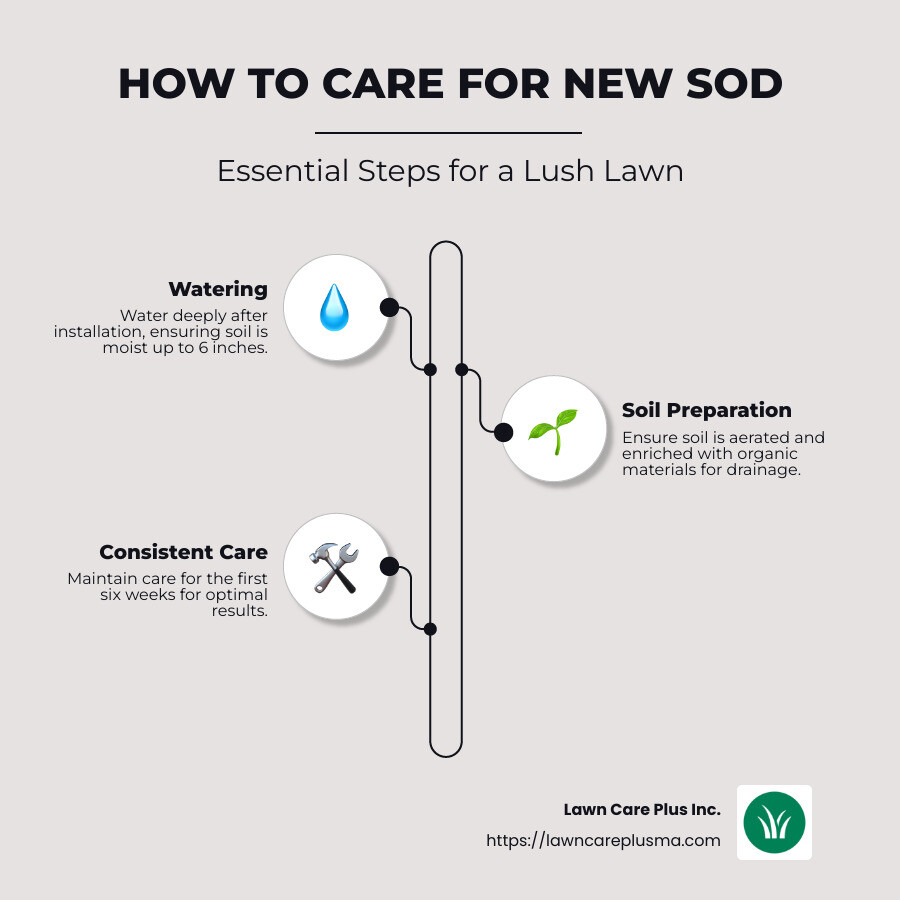
- Water deeply right after sod installation, ensuring the soil is moist up to 6 inches.
- Use a balanced fertilizer to nurture those first roots.
- Begin the first mow once your lawn reaches about 3 inches.
- Ensure consistent care throughout the first six weeks for optimal results.
Installing new sod is an exciting step toward achieving that picturesque lawn you’ve always envisioned. But, like any new venture, it hinges on careful preparation and precise timing. Timing ensures the sod takes root effectively—think about the difference a few weeks can make in weather conditions and soil readiness.
Soil preparation is your foundation. Before laying down the lush, green carpet, make sure your soil is well-aerated and enriched with organic materials. This ensures proper drainage, which is vital for a healthy lawn. Consider compost and a layer of rich topsoil to provide the nutrients your sod will crave for deep rooting.
Ready your soil, get your timing right, and soon you’ll be stepping on the lush green grass you’ve always dreamed about.
How to care for new sod terms made easy:
– how to install a new lawn
– how to install a new lawn from seed
– how to lay sod
How to Care for New Sod: Initial Installation and Immediate Care
When you’re laying new sod, proper care from the beginning is crucial to ensure a lush and healthy lawn. Let’s explore the essentials of watering, soil preparation, and timing for your sod installation.
Proper Watering Practices for New Sod
Watering is the lifeline of your new sod. Right after installation, soak the sod thoroughly until the soil is moist up to 6 inches deep. This initial deep watering is critical to help the roots penetrate the soil.
Frequency and Timing:
– Day 1: Water immediately after laying the sod.
– Days 2–5: Continue watering twice daily, once in the morning and once in the late afternoon.
– Days 6–9: Keep up with twice-daily watering, but start checking for dry spots.
– Days 10–12: You can reduce watering to once a day, keeping an eye on the perimeter and seams of the sod.
Overwatering can be just as harmful as underwatering. Keep the soil moist but not soggy to prevent root rot and disease.
Soil Preparation Before Laying New Sod
Proper soil preparation sets the stage for a thriving lawn. Here’s what you need to focus on:
Compost and Topsoil:
– Compost: Before laying sod, incorporate a 2–3 inch layer of compost into the top few inches of soil. This enriches the soil with organic matter, improving its structure and nutrient content.
– Topsoil: Add a layer of rich topsoil to ensure your sod has a nutritious bed to root into. Aim for at least 6 inches of cultivated soil for optimal water and nutrient movement.
Herbicides (Glyphosate):
– If there are existing weeds or grass, applying a herbicide like glyphosate can clear the area. Ensure you do this well in advance, giving the herbicide time to break down before you lay the sod.
Installation Timing:
– Timing is everything. Install sod early in the morning or late in the afternoon when temperatures are cooler. This reduces stress on the sod and helps it retain moisture. Avoid laying sod in extreme heat or during heavy rainfall.
By focusing on these key areas, you set your new sod on the path to becoming a lush, green carpet. The next section will guide you through the first two weeks of maintenance, ensuring your lawn establishes strong roots and stays healthy.
Key Maintenance Tips for the First Two Weeks
The first two weeks after installing new sod are critical for its establishment. Proper care during this period will ensure your lawn develops strong roots and stays vibrant.
How Often Should You Water New Sod?
Watering is crucial in the early days. New sod needs consistent moisture to help roots establish quickly. Here’s a simple schedule to follow:
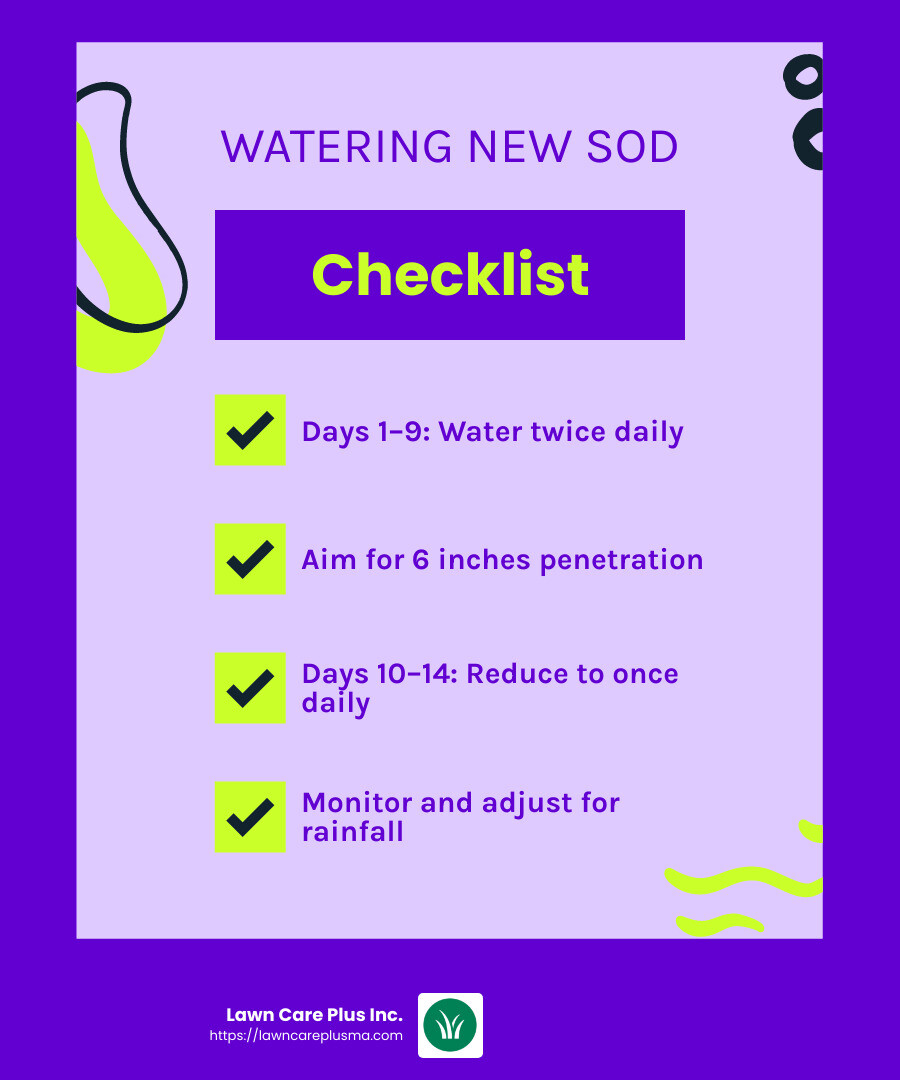
- Days 1–9: Water twice a day, once in the early morning and once in the late afternoon. Aim for the water to penetrate about 6 inches into the soil. This depth ensures that the roots are encouraged to grow downwards, anchoring the sod firmly.
- Days 10–14: You can reduce watering to once per day. However, continue to monitor the sod for dry spots, especially around the edges and seams. Adjust your watering routine based on rainfall and temperature changes.
Avoiding Foot Traffic
While your new sod is settling, it’s important to keep foot traffic to a minimum. Walking on the sod during this stage can disrupt root growth and lead to uneven patches. Set up barriers or signs to remind family and visitors to stay off the grass. Pets, too, should be kept away until the sod is well-rooted.
When to Perform the First Mow on New Sod
Mowing too soon can damage your new sod. Wait until the grass reaches about 3 inches in height before the first mow. This usually happens around two to three weeks after installation. Here are some mowing guidelines:
- Blade Height: Set your mower to the highest setting. Only trim the top third of the grass blades. This encourages deeper root growth and helps the grass thicken.
- Mower Type: Use a sharp blade to ensure clean cuts. Dull blades can tear the grass, making it more vulnerable to disease.
- Timing After Installation: Ensure the soil is firm enough to support the mower. If the sod shifts or lifts, wait a few more days before trying again.
By following these key maintenance tips, you provide the best start for your new sod, setting the stage for a lush and healthy lawn. In the next section, we’ll explore long-term care strategies to keep your lawn thriving year-round.
Long-Term Care Strategies for New Sod
Once your new sod is established, it’s time to focus on long-term care to ensure it stays lush and healthy. This involves regular fertilization, proper aeration, and effective weed control.
Best Fertilizers for New Sod
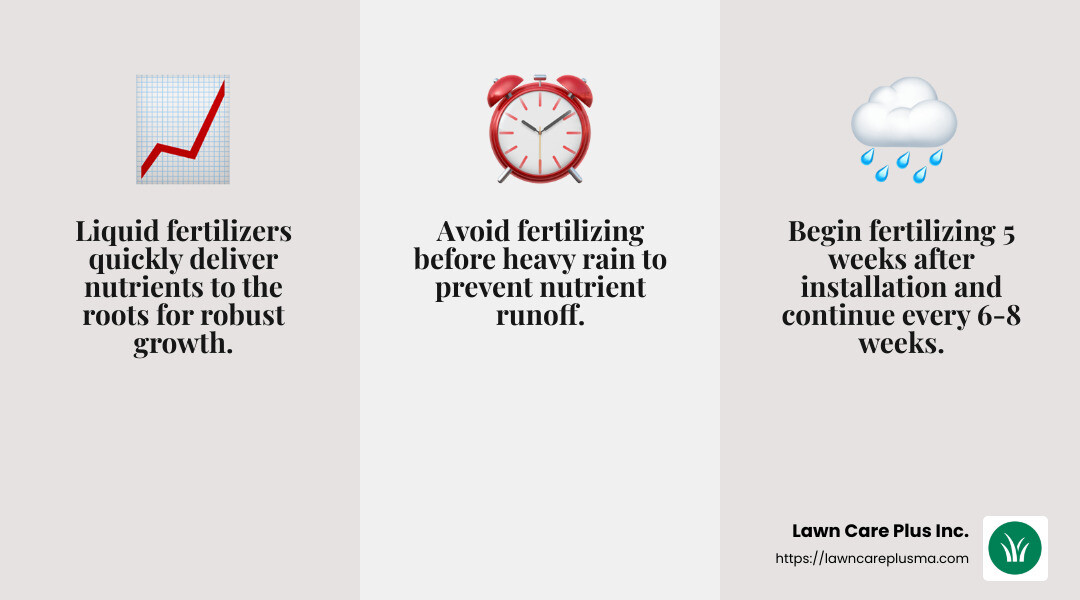
Fertilization is essential for maintaining the health and vibrancy of your lawn. Liquid fertilizers are often recommended for new sod because they penetrate the soil quickly, delivering nutrients right to the roots. These fertilizers provide a balanced mix of nitrogen, phosphorus, and potassium, which are crucial for robust growth.
- Nutrient Balance: Choose a fertilizer with a higher nitrogen content in spring and summer to promote growth and color. In the fall, switch to a formula with more potassium and phosphorus to strengthen roots and prepare the lawn for winter.
- Application Timing: Begin fertilizing about five weeks after installation. Continue with regular applications every six to eight weeks during the growing season. Be mindful of the weather; avoid fertilizing before a heavy rain to prevent runoff.
Effective Aeration Techniques
Aeration is a key practice for maintaining healthy sod. It involves perforating the soil with small holes to allow air, water, and nutrients to penetrate the grass roots. This process alleviates soil compaction, improves drainage, and encourages deeper root growth.
- Aeration Timing: The best time to aerate your lawn is during the growing season, in spring or early fall, when the grass can recover quickly. Aerate once a year to maintain optimal soil conditions.
- Tools: Use a core aerator for the best results. It removes small plugs of soil and turf, allowing your lawn to “breathe.” You can rent these machines or hire a professional if you prefer not to do it yourself.
- Benefits: Regular aeration prevents thatch buildup, reduces soil compaction, and improves nutrient absorption. It sets the stage for a lush, resilient lawn that can withstand stress and disease.
Weed Control
Weeds can quickly invade and disrupt the beauty of your lawn if not managed properly. Implementing a weed control strategy is crucial for maintaining the pristine condition of your sod.
- Preventive Measures: Regular mowing and proper fertilization help keep weeds at bay. A dense, healthy lawn naturally suppresses weed growth.
- Targeted Treatments: Use herbicides sparingly and only as needed. Spot treat problem areas rather than applying chemicals across the entire lawn. Always follow product instructions to avoid damaging your grass.
By incorporating these long-term care strategies, you’ll ensure your new sod remains a vibrant and inviting space for years to come. These practices are the foundation for a healthy lawn that improves your home’s curb appeal and provides a perfect setting for outdoor activities.
Common Mistakes to Avoid When Caring for New Sod
Caring for new sod can seem daunting, but avoiding common mistakes will make the process smoother. Understanding the risks of overwatering, incorrect mowing, and delayed installation is key to ensuring your lawn thrives.
Is It Possible to Overwater New Sod?
Yes, it is indeed possible to overwater new sod. While new sod needs more water than established lawns, too much can be harmful. Overwatering leads to soggy soil, which deprives roots of the oxygen they need to grow. This can cause root rot and eventually kill the sod.
Signs of Overwatering include:
- Water pooling on the surface
- Soggy soil that stays wet long after watering
- Grass turning yellow or brown
Prevention Tips:
- Water in short bursts, allowing the soil to absorb moisture without becoming waterlogged.
- Check the soil’s moisture by sticking a screwdriver into the ground. If it easily penetrates, the soil is adequately moist.
- Adjust your watering schedule based on rainfall and temperature.
The Risks of Delaying Sod Installation
Delaying sod installation can lead to root shock and moisture loss. Sod is perishable and should be laid as soon as possible after purchase. If left uninstalled:
- Root Shock: The roots may dry out and fail to establish themselves, leading to weak growth.
- Moisture Loss: Sod can dry out quickly, especially in hot weather, making it harder for roots to take hold.
- Temperature Impact: Installing sod during the cooler parts of the day helps prevent stress from heat.
To avoid these risks, plan your installation carefully and ensure the soil is prepped and ready before the sod arrives. This will help your new lawn get off to a healthy start.
By avoiding these common mistakes, you’ll set the stage for a lush, green lawn that adds beauty and value to your home. Next, we’ll explore frequently asked questions about new sod care, providing you with even more insights and tips.
Frequently Asked Questions about New Sod Care
How do you take care of freshly laid sod?
Caring for freshly laid sod is all about timing and consistency. Right after installation, water the sod thoroughly so that the moisture reaches a depth of six inches. This encourages the roots to grow deep into the soil.
Key Steps:
- Watering: Ensure the sod is consistently moist, especially during the first two weeks. Water twice a day—early morning and late afternoon—to prevent the sod from drying out.
- Avoid Walking: Keep foot traffic off the new sod until it has established roots. Walking on it too soon can disrupt root development.
- Monitor Growth: Check for signs of drying or browning, which indicate a need for more water or nutrients.
What should you not do with new sod?
Avoid these pitfalls to protect your new lawn:
- Don’t Overwater: While sod needs water, too much can cause root rot. Keep the soil moist, not soggy.
- Don’t Mow Too Soon: Wait until the sod has firmly rooted before mowing, which is usually 2-3 weeks post-installation. Start with a high mower setting to avoid damaging the grass.
- Don’t Delay Installation: Lay the sod as soon as possible after purchase to prevent root shock and moisture loss.
How often should you water new sod?
Watering frequency is crucial for new sod. Initially, water the sod twice daily to keep the topsoil consistently moist. Each session should provide enough water to penetrate six inches deep.
Adjustments:
- Rainfall: Reduce watering if there’s significant rainfall to avoid overwatering.
- Temperature: In hotter climates, you may need to water more frequently to prevent the sod from drying out.
By following these guidelines, you’ll ensure your new sod receives the care it needs to flourish. Next, we’ll dig into long-term care strategies to keep your lawn lush and healthy.
Conclusion
Caring for new sod doesn’t stop after the first few weeks. Sustained care is essential to maintain a lush, green lawn throughout the year. As your sod matures, adjust your care routine to meet seasonal needs.
Sustained Care
Once your sod is established, regular maintenance becomes key. Continue to water your lawn deeply but less frequently, aiming for about 1 to 1.5 inches of water per week, including rainfall. This helps the roots grow deeper and stronger, enhancing drought resistance.
Mowing should be done regularly, following the ⅓ rule—not cutting more than a third of the grass blade at a time. This practice keeps your lawn healthy and prevents stress on the grass.
Seasonal Adjustments
As seasons change, so should your lawn care practices. In the spring, consider aerating your lawn to improve soil health and encourage robust growth. Fertilize according to the season’s demands—spring and fall are ideal times for feeding your lawn with the nutrients it needs.
During the hot summer months, raise your mower height slightly to protect the roots from heat stress. In winter, reduce watering and avoid heavy foot traffic to prevent soil compaction.
Lawn Care Plus Inc. Services
At Lawn Care Plus Inc., we understand that maintaining a beautiful lawn requires time and expertise. Our comprehensive lawn care services are designed to keep your lawn looking its best all year round. From professional fertilization and aeration to custom seasonal care, we are here to help you achieve the lush lawn of your dreams.
By investing in proper care and making seasonal adjustments, your new sod will not only thrive but will become the envy of the neighborhood. Let us partner with you in this journey to ensure your lawn remains healthy and beautiful for years to come.