
Inside basement drainage systems are the unsung heroes for anyone dealing with basement flooding woes. These systems can save you from the discomfort and hazards of a damp, musty basement by addressing moisture issues at their core. Here’s a quick peek into the solutions that will ensure your basement stays dry and your property remains protected:
- Basement flooding: Prevent and manage water intrusion effectively with custom drainage systems.
- Moisture mitigation: Keep your basement healthy and mold-free by reducing excess moisture.
- Waterproofing solutions: Implement strategies that provide long-term protection for your home’s foundation.
Imagine turning your damp, unusable basement into a safe, cozy addition to your living space. This change is made possible with the right drainage system in place. Whether it’s through a sump pump that efficiently channels water away or an intricate network of interior French drains, these solutions work tirelessly to safeguard your home.
Ready to explore your best options for dry, comfortable living? Let’s dive in!
Inside basement drainage systems terms simplified:
– french drain inside basement
– french drain through tree roots
– roots in french drain
Understanding Interior Basement Drainage Systems
When it comes to keeping your basement dry, interior drainage systems play a crucial role. These systems are designed to manage water intrusion from the inside and keep your basement free from moisture and flooding. Let’s break down the main components and how they work.
Interior Drainage: The Basics
Interior drainage systems typically involve a network of pipes and channels that collect water entering your basement. This water is then redirected to a sump pit where it can be pumped out. The goal is to capture water before it causes any damage.
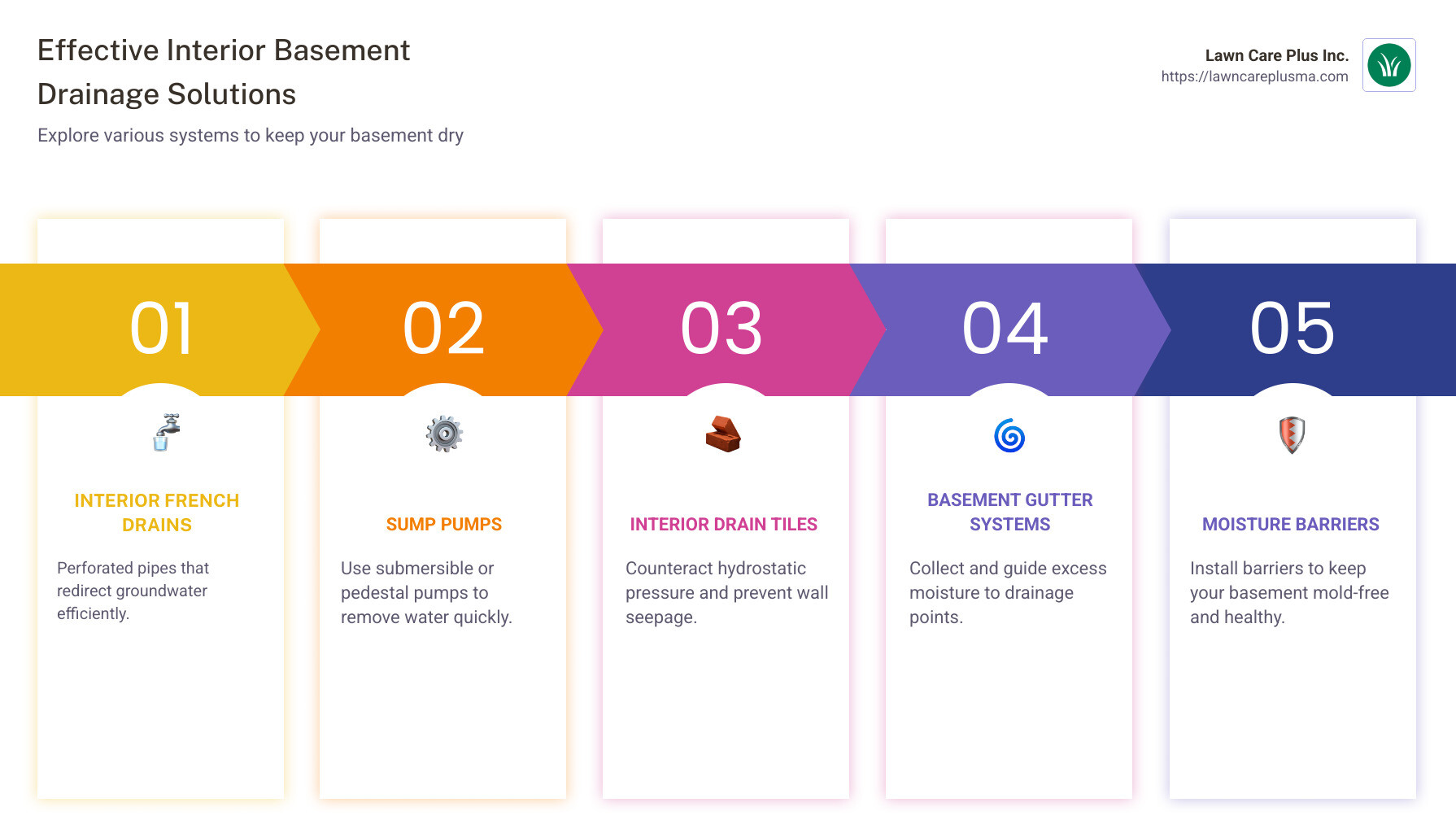
- French Drains: These are trenches filled with gravel and perforated pipes that direct water away from your basement. They’re often installed along the perimeter where the floor meets the walls. French drains are a popular choice because they effectively manage groundwater and protect your basement from seepage.
- Sump Pumps: These devices are essential for any interior drainage system. They sit in a sump pit and pump collected water out of your basement. There are two main types: submersible pumps, which sit underwater in the sump pit, and pedestal pumps, which have a motor above the pit. Both types are effective, but the choice depends on your specific needs and basement configuration.
The Role of Sump Pumps
Sump pumps are the workhorses of basement drainage. They automatically activate when water levels in the sump pit rise, ensuring your basement stays dry. Here’s how they work:
- Water Collection: Water from the perimeter drains flows into the sump pit.
- Activation: As the pit fills, a float switch triggers the pump.
- Water Removal: The pump moves water out through a discharge pipe, directing it away from your home’s foundation.
Interior French Drains: A Closer Look
French drains are a key component of inside basement drainage systems. They are particularly effective in managing hydrostatic pressure, which is the force exerted by water against your basement walls. By redirecting water away, French drains help prevent wall seepage and keep your basement dry.
- Installation: These drains are usually installed along the inside perimeter of the basement. A trench is dug, and a perforated pipe is laid on a bed of gravel. The pipe collects water and channels it to the sump pit.
- Maintenance: Regular checks are essential to ensure the drains remain clear of debris and function effectively.
By combining these systems, you can create a robust defense against basement flooding and moisture. Whether you’re dealing with heavy rains or rising groundwater, interior drainage systems provide peace of mind and long-term protection for your home.
Next, we’ll explore the various types of interior basement drainage systems, including their pros and cons, to help you choose the best solution for your home.
Types of Interior Basement Drainage Systems
When it comes to keeping your basement dry, choosing the right interior drainage system is key. Let’s explore the main types of systems available and how each works to protect your home from water damage.
Interior French Drains
Interior French drains are a popular choice for managing groundwater and preventing moisture from seeping into your basement. These systems consist of perforated pipes laid in trenches along the perimeter of the basement floor. The pipes are surrounded by gravel, which helps to filter water into the pipes.
- Groundwater Redirection: As water seeps through the ground, it enters the French drain system. The perforated pipes collect the water and direct it towards a sump pit, where it can be pumped out of the basement.
- Hydrostatic Pressure Management: By capturing and redirecting groundwater, French drains help relieve the pressure exerted by water against your basement walls, reducing the risk of concrete wall seepage.
Sump Pumps
Sump pumps are essential components of interior drainage systems, responsible for removing water collected in the sump pit. There are two main types of sump pumps:
- Submersible Pumps: These pumps are installed inside the sump pit and are designed to operate underwater. Submersible pumps are typically quieter and more efficient, making them ideal for basements with higher water volumes.
- Pedestal Pumps: Unlike submersible pumps, pedestal pumps have their motor mounted above the sump pit. While they are often less expensive, they can be noisier and may not handle large volumes of water as effectively.
Both types of pumps activate automatically when water levels in the pit reach a certain point, ensuring your basement stays dry.
Interior Drain Tiles
Interior drain tiles are another effective solution for managing basement water issues. These systems consist of perforated pipes installed along the basement floor and within the footing.
- Hydrostatic Pressure Relief: Like French drains, interior drain tiles help to alleviate the pressure of water against basement walls. They capture rising groundwater and channel it to the sump pit for removal.
- Concrete Wall Seepage Prevention: By managing water that enters the basement, interior drain tiles help prevent seepage through concrete walls, offering an extra layer of protection.
Each of these systems has its strengths, and the choice of which to use depends on your specific needs and the conditions of your basement. In the next section, we’ll explore the pros and cons of these interior basement drainage systems to help you make an informed decision.
Pros and Cons of Interior Basement Drainage Systems
When considering interior basement drainage systems, it’s important to weigh the advantages and drawbacks. Understanding these can help you make the best decision for your basement’s needs.
Pros
Cost-Effective: Interior drainage systems are generally more affordable than exterior options. Since they don’t require extensive outdoor excavation, you save on labor and materials. This makes them a popular choice for homeowners looking to protect their basements without breaking the bank.
No Need for Major Excavation: One of the biggest benefits is that these systems can be installed without digging up your yard. This means less mess and disruption to your landscaping. You can install them any time of the year, regardless of weather conditions.
Effective Against Rising Groundwater: Interior systems are great at capturing and redirecting rising groundwater. This helps relieve hydrostatic pressure on your basement walls, reducing the risk of leaks and seepage. With proper installation, these systems can keep your basement dry and safe.
Cons
Not Ideal for Finished Basements: Installing an interior drainage system often requires removing existing concrete floors. This can be a major downside if your basement is already finished. You’ll need to factor in the cost and hassle of repairing or replacing flooring after installation.
Limited Effectiveness on Certain Foundations: While these systems work well with concrete, they may be less effective for brick or stone foundations. Water might still penetrate through masonry unless additional measures, like an exterior sealant, are applied.
Temporary Inaccessibility: During installation, your basement might be off-limits. This can be inconvenient if you use it frequently. However, the long-term benefits of a dry, protected basement usually outweigh this short-term disruption.
Choosing the right interior basement drainage system involves considering these pros and cons in the context of your home’s specific needs. In the next section, we’ll address some frequently asked questions to further clarify how these systems work and their potential impact on your home.
Frequently Asked Questions about Interior Basement Drainage Systems
How does an interior basement drain work?
An interior basement drainage system is designed to tackle excess moisture by capturing water at the base of the basement walls. This typically involves installing a sump pit at the lowest point of the basement. Water collected by the drainage system flows into this pit.
The sump pump, placed in the sump pit, then pumps the water out and away from the home. This prevents water from pooling and causing damage. Think of it as a proactive approach to water management—like having a reliable team working 24/7 to keep your basement dry.
How much does an interior drainage system cost?
The cost of installing an interior drainage system varies. Factors like the size of your basement and the complexity of the installation can impact the price. Typically, costs are calculated per linear foot of drainage installed.
While the initial installation cost might seem significant, it’s important to consider the long-term benefits. A well-installed interior drainage system can save you money by preventing water damage, mold growth, and structural repairs.
Are basement gutter systems worth it?
When it comes to waterproofing your basement, gutter systems can be a worthwhile investment. They help redirect water away from your home, reducing the risk of water ingress. This can improve the ROI (return on investment) by maintaining your property’s value and preventing costly repairs.
However, the effectiveness of basement gutter systems depends on proper installation and maintenance. They should be part of a comprehensive approach to basement waterproofing, which includes addressing exterior drainage and grading issues.
In the next section, we’ll conclude our discussion by exploring how Lawn Care Plus Inc. can help you maintain your basement and protect your home’s structure.
Conclusion
Maintaining your basement is crucial for protecting your home’s structure. At Lawn Care Plus Inc., we understand the importance of keeping your basement dry and secure. Our comprehensive services in the Boston Metro-West area are designed to help you safeguard your home against water damage.
Interior basement drainage systems are a key part of this protection strategy. By effectively managing water ingress, these systems prevent costly issues like mold growth and structural damage. Whether it’s through sump pumps or interior French drains, the right drainage solution can make all the difference.
At Lawn Care Plus Inc., we offer more than just drainage solutions. Our expertise in landscaping and hardscaping means we can address both interior and exterior factors that affect your basement’s health. From installing efficient drainage systems to improving exterior grading, we’re here to help keep your home safe and sound.
For more information on our services and how we can assist you with your basement maintenance needs, visit our Hardscape and Landscape page. Let us be your partner in ensuring your home’s structural protection and peace of mind.