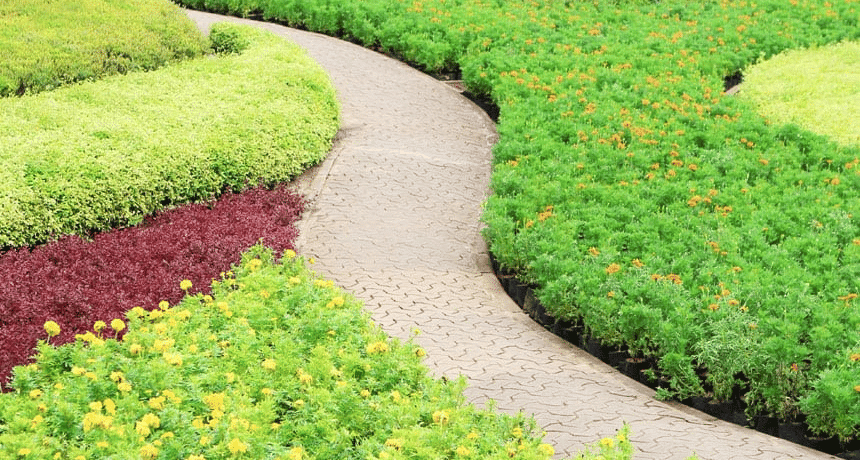
Overview: The Beauty and Importance of Landscape and Hardscape Design
Landscape and hardscape design is essential for creating beautiful and functional outdoor spaces. Whether you’re a busy homeowner or a commercial property manager, understanding the basics of landscape and hardscape design can help you enhance your property’s appearance and usability effectively.
Here’s a quick overview to get you started:
- Landscape Design: Focuses on living elements like lawns, gardens, trees, and shrubs.
- Hardscape Design: Involves non-living elements such as patios, walkways, driveways, and retaining walls.
- Integration: Combining both elements can create aesthetically pleasing and practical outdoor spaces.
Properly designed landscapes and hardscapes offer multiple benefits:
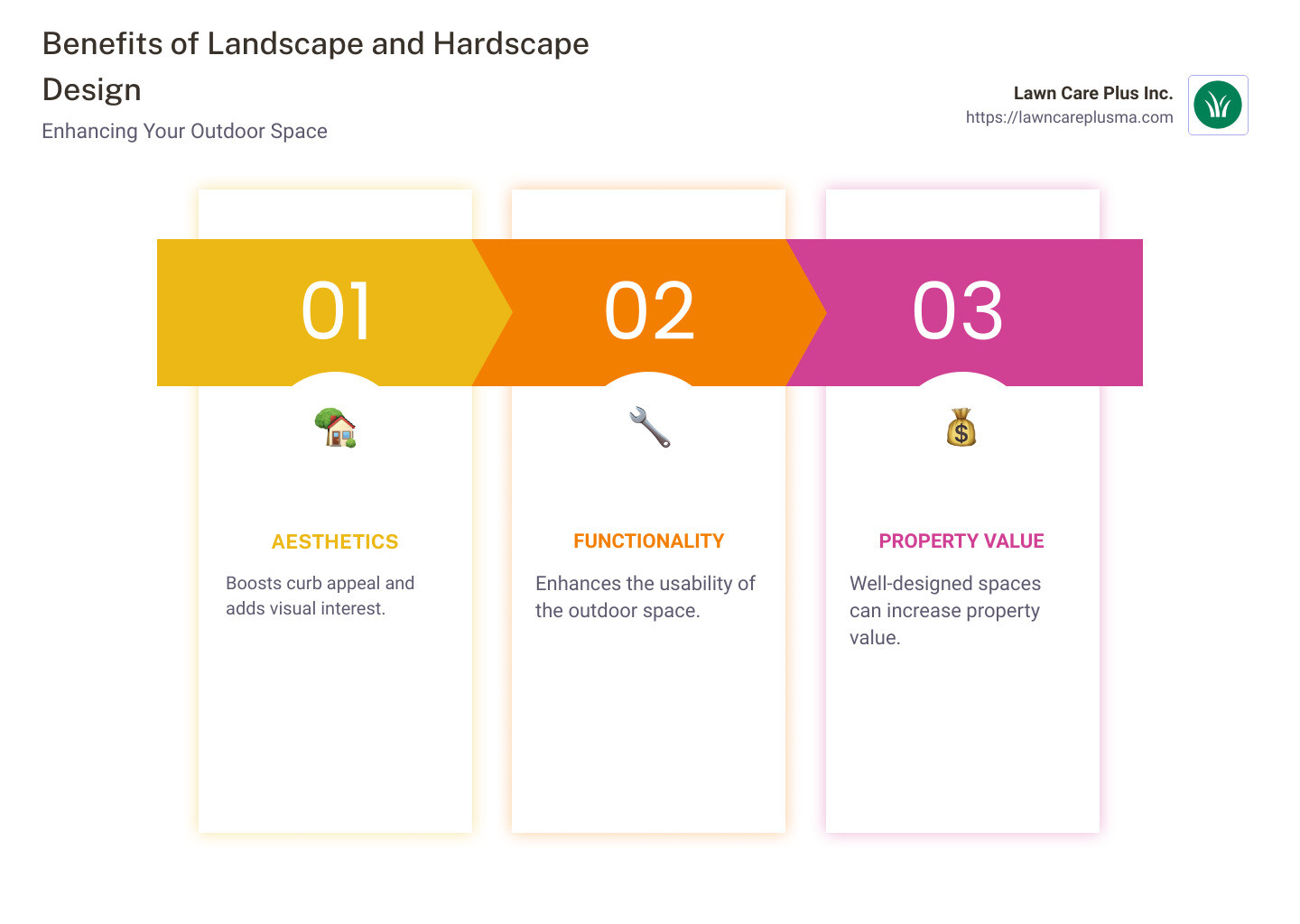
- Aesthetics: Boosts curb appeal and adds visual interest.
- Functionality: Enhances the usability of the outdoor space.
- Property Value: Well-designed spaces can increase property value.
- Low Maintenance: Reduces the need for frequent upkeep.
Creating a harmonious balance between landscape and hardscape elements is key to achieving a stunning outdoor area that serves both aesthetic and practical purposes.
Understanding Landscape and Hardscape Design
What is Landscape?
Landscape refers to the living elements in your outdoor space. Think of lush lawns, vibrant gardens, and shady trees. These elements add color, texture, and life to your yard.
A well-maintained lawn serves as the canvas for the entire landscape. Grass types like Bermuda, Kentucky Bluegrass, and Fescue can vary based on climate and maintenance needs. Gardens, on the other hand, bring in seasonal beauty and can range from flower beds to vegetable patches.
What is Hardscape?
Hardscape involves the non-living elements in your outdoor design. These include driveways, patios, walkways, retaining walls, and more. Hardscape materials like concrete, brick, and natural stone provide structure and functionality.
For example, a driveway made of asphalt or concrete pavers can lead to your garage, while a patio offers a perfect spot for outdoor dining or relaxing. Walkways guide you through the garden and connect different areas of your yard.
Differences and Integration
Differences:
– Landscape is all about living plants, while hardscape focuses on solid, non-living materials.
– Landscape elements are more dynamic and change with seasons, whereas hardscape elements are stable and long-lasting.
Integration:
Combining both elements creates a balanced and functional outdoor space. For instance, a patio surrounded by flower beds or a walkway lined with shrubs can enhance both aesthetics and usability.
Creating a harmonious balance between landscape and hardscape elements is key to achieving a stunning outdoor area that serves both aesthetic and practical purposes.
Key Elements of Landscape and Hardscape Design
Five Basic Elements of Landscape Design
When crafting a stunning outdoor space, understanding the basic elements of landscape design is essential. These elements help you make informed decisions to create a cohesive and appealing environment.
Line: Lines guide the eye and create movement in a landscape. They can be straight for a formal look or curved for a more relaxed, natural feel. For example, a straight walkway might lead directly to a front door, while a winding path could meander through a garden, inviting exploration.
Form: This refers to the shape of plants, structures, and garden beds. Trees can be columnar or spreading, while shrubs might be rounded or irregular. Choose forms that complement each other and the overall design of your space.
Texture: Texture is about the surface quality of plants and hardscape materials. It can be fine, medium, or coarse. Combining different textures, like the rough bark of a tree with the smooth surface of a concrete patio, adds visual interest.
Color: Color brings life to your landscape. Use a mix of flowers, foliage, and hardscape materials to create a vibrant and dynamic space. Consider seasonal changes to ensure year-round color.
Scale: Scale relates to the size of elements in relation to each other and the overall space. Large trees might dwarf a small garden, while tiny plants could get lost in a vast yard. Balance the scale of your features to maintain harmony.
Essential Hardscape Features
Hardscapes are the backbone of any landscape design. They provide structure, functionality, and aesthetic appeal. Here are some essential hardscape features to consider:
Patios: Patios extend your living space outdoors, providing a place for dining, lounging, or entertaining. Materials like concrete pavers, natural stone, and brick offer durability and style. For instance, white pavers in a running bond pattern can create a sleek and modern look for an outdoor kitchen.
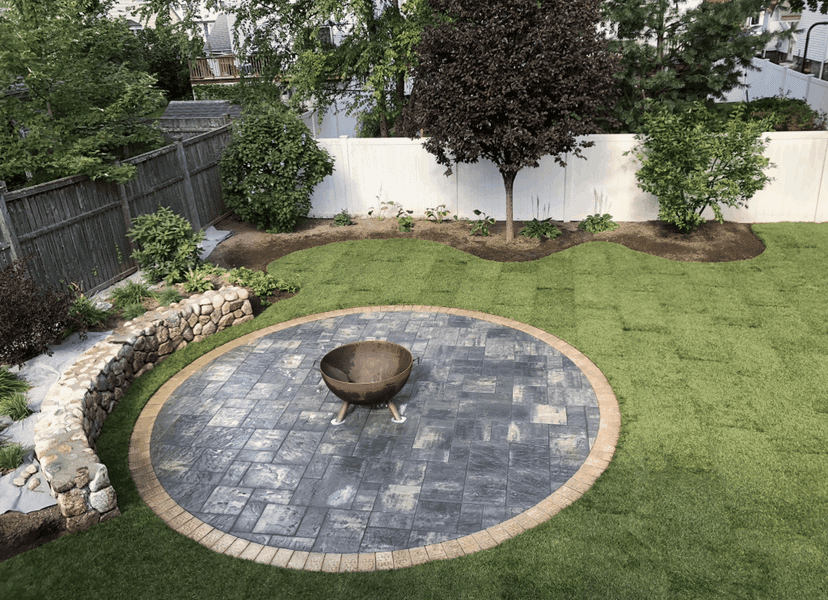
Walkways: Walkways guide foot traffic and connect different areas of your yard. They can be made from materials like gravel, stepping stones, or concrete pavers. A well-designed walkway not only adds functionality but also enhances the beauty of your garden.
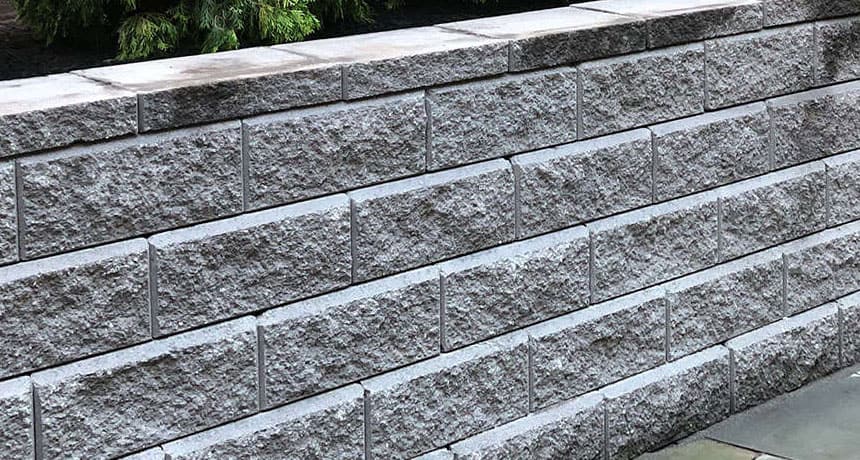
Retaining Walls: Retaining walls help manage slopes and prevent soil erosion. They can also create terraced garden beds and add visual interest. Materials like natural stone, concrete blocks, and timber are popular choices. For example, a retaining wall made from Belgard’s Tandem® System offers both strength and aesthetic appeal.
Design Principles, Material Selection, Style Consistency
When planning your landscape and hardscape design, keep these principles in mind:
Design Principles: Proportion, order, repetition, and unity are key. Use the golden ratio to achieve pleasing proportions, and ensure your design has a balanced, organized feel.
Material Selection: Choose materials that are durable, low-maintenance, and complement your home’s architecture. Concrete, natural stone, and wood are versatile options. For example, flagstone patios and walkways offer timeless appeal and longevity.
Style Consistency: Ensure that your hardscape and landscape elements work together harmoniously. Match the style, color, and texture of materials to create a cohesive look. For instance, a rustic garden might feature natural stone pathways and wooden pergolas, while a modern design could use sleek concrete and metal accents.

By understanding and applying these key elements, you can create a landscape and hardscape design that is both functional and visually stunning.
Next, we’ll explore how to plan your landscape and hardscape design effectively, including budgeting and phasing your project.
Planning Your Landscape and Hardscape Design
Planning your landscape and hardscape design involves several key steps. Let’s dive into how to approach this process, where to allocate your budget, and how to incorporate sustainable practices.
Where to Splurge and Where to Save
Splurge on:
– Master Plan: A comprehensive plan is crucial. It ensures all elements work together harmoniously. Hiring a professional designer can cost between $50 and $150 per hour, but it’s worth the investment.
- Masonry: Quality masonry gives your garden strong, lasting structure. Think retaining walls, patios, and walkways. These elements control erosion, manage weeds, and increase property value.
- Quality Materials: Durable materials like natural stone and premium wood withstand the elements better than cheaper options. This investment pays off in longevity and reduced maintenance.
- Privacy and Craftsmanship: High-quality fencing, hedges, and custom-built features enhance both privacy and aesthetic appeal.
Save on:
– Gravel Paths: Gravel is an affordable alternative to pavers. It’s easy to install and maintain, and it provides good drainage.
- Reuse Existing Materials: Repurpose bricks, stones, or wood from your yard. This not only saves money but also adds unique character to your space.
- Smaller Plants: Buy smaller plants and let them grow. They’re cheaper and often adapt better to new environments.
- Mix-and-Match Furniture: Combine different styles and sources for a unique, budget-friendly look.
Incorporating Sustainability
Sustainability is key in modern landscape and hardscape design. Here are some ways to make your outdoor space eco-friendly:
Xeriscaping: This approach uses drought-resistant plants to reduce water use. Native plants are ideal as they’re adapted to local conditions. For example, in Massachusetts, consider Eastern Red Columbine or Black-Eyed Susan.
Low-Maintenance Plants: Choose plants that require minimal care. Perennials, for instance, come back year after year, reducing the need for replanting.
Eco-Friendly Materials: Opt for materials like permeable pavers, which allow water to seep through, reducing runoff and erosion. Recycled materials are also a great choice for sustainability.
By planning wisely and making strategic choices, you can create a beautiful, functional, and sustainable outdoor space. Next, we’ll discuss how to enhance the functionality and aesthetics of your outdoor spaces.
Enhancing Functionality and Aesthetics in Outdoor Spaces
Creating Outdoor Rooms
Outdoor rooms can transform your yard into a multi-functional living space. Imagine a cozy outdoor kitchen where you can cook and dine under the stars, or a fire pit area where you can gather with friends and family. These spaces not only enhance functionality but also add aesthetic value to your home.
Outdoor Kitchens: An outdoor kitchen can be a real showstopper. Equip it with a grill, sink, and countertops to make cooking outside a breeze. Massachusetts summers are perfect for outdoor cooking and dining. Adding shade structures like pergolas or umbrellas ensures comfort during varying weather conditions.
Fire Pits: Fire pits are the ultimate hangout spot. They provide warmth during cool evenings and create a focal point in your outdoor space. Opt for smokeless fire pits to avoid watery eyes and the smell of smoke.
Water Features: Water features, like fountains or small ponds, add a touch of tranquility. They can be small, like a mini bubbling fountain, or large, like a full-size fish pond. Water features not only enhance the visual appeal but also provide a calming ambiance.
Small Details, Big Impact
Small details can make a big difference in your landscape and hardscape design. Paying attention to material harmony and architectural style ensures a cohesive look.
Material Harmony: Make sure hardscape materials—stone, pavers, concrete, gravel, wood, paint, hardware—all work together. They should also complement your house’s architectural style. For example, using local materials like stone and wood can create a sense of unity with your environment.
Architectural Style: Your outdoor space should reflect the architectural style of your home. Whether it’s mid-century modern or Southwestern, choosing the right materials and design elements is crucial. For instance, integrating lighting and tech features like Wi-Fi and electrical outlets can make your outdoor space more usable and inviting.
By focusing on both functionality and aesthetics, you can create an outdoor area that is not only beautiful but also highly usable. Next, we’ll answer some frequently asked questions about landscape and hardscape design.
Frequently Asked Questions about Landscape and Hardscape Design
What are the rules of landscape design?
Designing a stunning outdoor area involves following some basic rules of landscape design: unity, scale, and balance.
Unity ensures that all elements in your landscape work together to create a cohesive look. This means using similar colors, materials, and styles throughout the space.
Scale refers to the size relationship between different parts of your landscape. For example, large trees should not overshadow small shrubs, and pathways should be wide enough for easy walking.
Balance can be either symmetrical or asymmetrical. Symmetrical balance means both sides of a landscape are mirror images, while asymmetrical balance uses different elements to achieve a harmonious look.
What are the types of hardscape materials?
When it comes to hardscape materials, you have several options to consider:
- Natural Stone: This includes materials like granite, limestone, and flagstone. Natural stone is durable and offers a timeless look but can be more expensive.
- Pavers: These come in various shapes, sizes, and colors, providing versatility in design. They are often more affordable than natural stone and can mimic its appearance.
- Concrete: A versatile and cost-effective option, concrete can be colored and textured to fit any design style. It’s durable and low-maintenance.
How can landscape and hardscape design increase property value?
Effective landscape and hardscape design can significantly boost your property’s value by enhancing outdoor living space, curb appeal, and usability.
Outdoor Living Space: Features like patios, outdoor kitchens, and fire pits extend your living space and make your home more attractive to potential buyers. These areas are in high demand and can increase your property’s appraisal value.
Curb Appeal: A well-designed front yard with attractive hardscape elements like paver driveways and walkways can make a strong first impression. This not only makes your home more appealing but also adds value.
Usability: Creating functional areas in your landscape, such as seating areas and defined pathways, makes your outdoor space more usable and enjoyable. This added functionality can be a significant selling point.
By adhering to these principles and choosing the right materials, you can create a stunning and valuable outdoor space.
Conclusion
A thoughtfully designed landscape and hardscape offers long-term benefits that go beyond mere aesthetics. Here’s why investing in your outdoor space is a wise decision:
Long-Term Value
Increased Property Value: According to experts, adding features like outdoor kitchens, fire pits, and well-designed patios can significantly boost your home’s market value. These additions are in high demand and can make your property more attractive to potential buyers.
Low Maintenance: Hardscape elements such as patios and walkways require minimal upkeep compared to traditional gardens. This means you can enjoy your beautiful outdoor space without spending countless hours on maintenance.
Erosion Control and Weed Management: Hardscaping can help control soil erosion and manage weed growth. Features like retaining walls and gravel paths not only look great but also serve practical purposes.
Lawn Care Plus Inc.
At Lawn Care Plus Inc., we specialize in creating stunning outdoor areas that combine both landscape and hardscape elements. Our team of professionals is dedicated to helping you achieve your dream lawn while ensuring functionality and long-term value.
Ready to transform your outdoor space? Contact us today to learn more about our hardscaping services and how we can help you create a beautiful and practical landscape.
Invest in your outdoor space today for a lifetime of enjoyment and increased property value.