
Achieving the Perfect Quincy Lawn: Your Local Service Guide
Looking for lawn service in Quincy MA? Here’s what you need to know:
- Average Cost Range: $36-$68 per cut (based on internet data, not actual Lawn Care Plus pricing)
- Popular Services: Weekly mowing, spring cleanup, fall leaf removal, aeration, fertilization
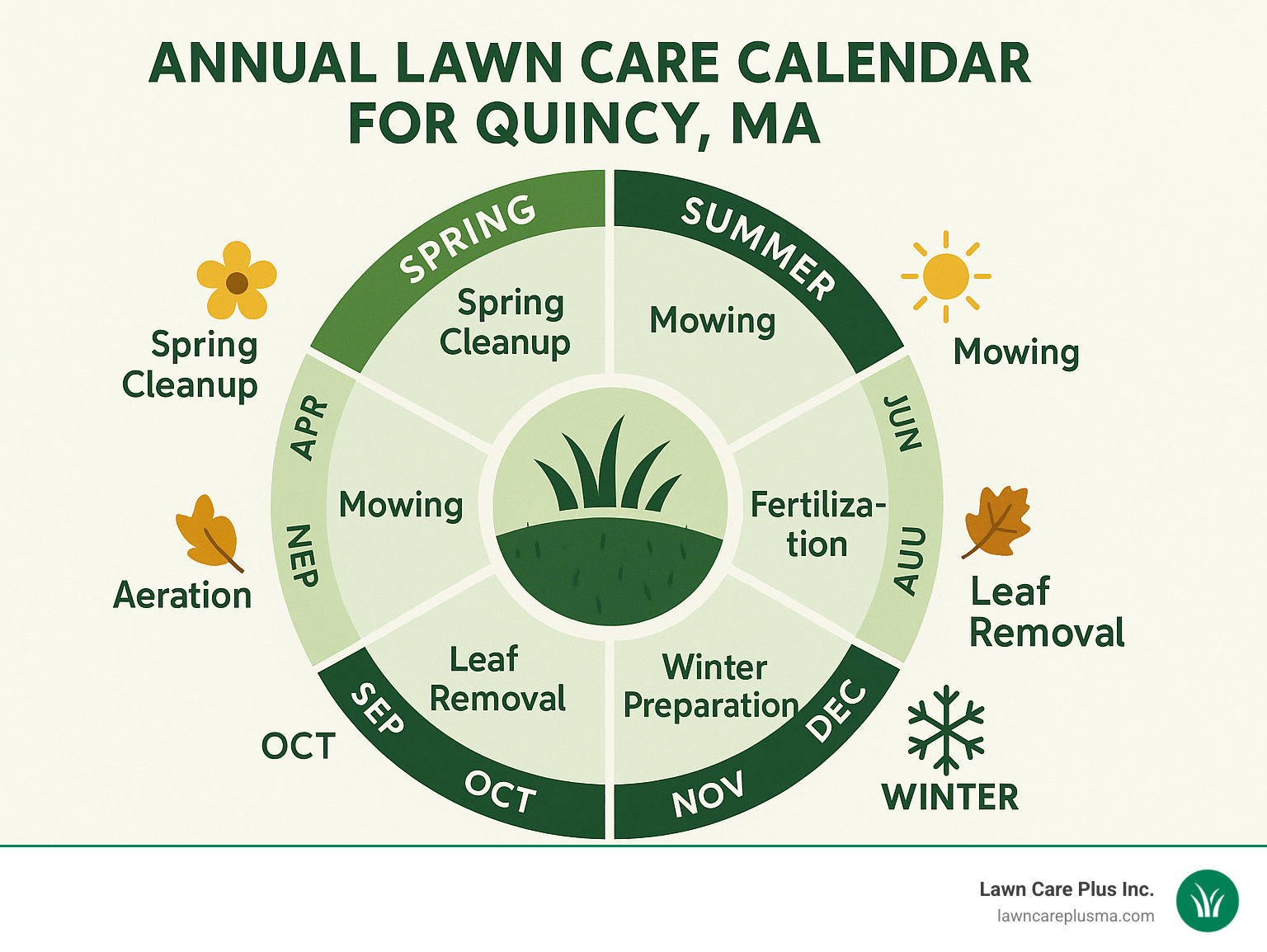
- Best Local Timing: Begin spring cleanup in late April, weekly mowing May-September, fall services in October
- Top Grass Types: Kentucky bluegrass, fine fescue, and perennial ryegrass
- Service Coverage: All Quincy neighborhoods including Adams Shore, Houghs Neck, and Squantum
A lawn service in Quincy MA offers the perfect solution for maintaining your property’s curb appeal throughout New England’s challenging four seasons. Situated along the coast with its unique microclimate, Quincy lawns require specialized care that adapts to both maritime influences and seasonal extremes.
The average Quincy yard spans approximately 10,640 square feet, making professional maintenance a sensible choice for busy homeowners and property managers. Rather than spending your weekends pushing a mower or battling stubborn weeds, local lawn care professionals can handle everything from routine cutting to comprehensive seasonal care.
With 55% of Quincy homeowners opting for weekly mowing service during peak growing season, professional lawn care has become the standard for maintaining the city’s residential and commercial properties alike. Whether you’re near the historic Adams National Historical Park or closer to the waterfront, your lawn deserves care custom to Quincy’s specific growing conditions.
Finding reliable lawn service doesn’t have to be complicated. The best companies offer free estimates, customized maintenance plans, and year-round options including snow removal for complete property management through all seasons.
Find more about lawn service quincy ma:
– boston lawn mowing
– landscaping westfield ma
– lawn care massachusetts
1. Kick Off with a Thorough Spring Cleanup
When Quincy’s winter finally releases its grip, your lawn is ready for some serious TLC. Here at Lawn Care Plus Inc., we’ve seen how our coastal New England winters can leave lawns looking pretty rough around the edges. That’s why we always recommend scheduling your lawn service Quincy MA spring cleanup for late April – that sweet spot when frost risk is minimal and soil starts warming up.

A proper spring cleanup isn’t just about making things look pretty (though that’s certainly a nice bonus!). It’s about giving your lawn the fresh start it deserves. Our comprehensive spring cleanup includes removing all those fallen branches and twigs that winter storms scattered across your yard. We’ll rake out those smothering dead leaves that can suffocate new growth and perform essential dethatching to remove that layer of dead grass sitting between your soil and living grass.
We don’t stop there! Our crews will create crisp, clean edges around your garden beds to prevent grass invasion and give your property that manicured look everyone envies. And because we believe in science-based lawn care, we’ll conduct a soil test to pinpoint exactly what your lawn needs in terms of pH balance and nutrients.
As one of our lawn care specialists often tells clients, “Think of spring cleanup as your lawn’s annual physical – we’re clearing away problems and setting the stage for vibrant health all season long.”
Visit our Spring Yard Clean Up Services page to learn more about how we can transform your winter-weary yard into a springtime showcase.
Why Spring Matters for Recovery
Living in Quincy means your lawn faces some unique coastal challenges after winter. Lawn service Quincy MA needs to address several specific recovery issues:
The salt struggle is real! Between road salt and ocean spray, many Quincy properties experience significant salt stress along driveways, walkways, and especially in coastal neighborhoods. Our spring cleanup includes thoroughly flushing these areas with fresh water to dilute harmful salt concentrations that can prevent healthy growth.
Ever noticed those matted, straw-colored patches when snow melts? That’s likely snow mold – a fungal disease that develops under snow cover. Our careful raking and dethatching process helps eliminate these fungal spores before they can cause lasting damage.
Winter is also notorious for leaching essential nutrients from your soil. Spring is the perfect time for a nutrient reset, where we replenish the soil based on specific test results rather than guessing what your lawn might need.
One of our long-time Quincy customers recently told us, “I used to dread spring because my lawn looked so terrible after winter. Since hiring Lawn Care Plus, I actually look forward to it now. They handle all the heavy lifting, and my lawn starts the season looking better than my neighbors’ lawns do mid-summer!”
By addressing these specific spring challenges, your lawn service Quincy MA team sets the foundation for a healthy, vibrant lawn that will be the envy of the neighborhood all season long.
2. Regular Mowing: The Backbone of a Healthy Lawn
Regular mowing isn’t just about keeping your property looking neat—it’s the foundation of a truly healthy lawn. Based on internet data (not actual Lawn Care Plus pricing), most Quincy homeowners can expect to pay between $36–$68 per cut for a typical 10,640 square foot yard.
At Lawn Care Plus Inc., we believe proper mowing is both an art and a science. We maintain cutting heights between 2-3 inches for most Quincy lawns, which strikes the perfect balance between appearance and health. We always follow what professionals call the “1/3 rule“—never removing more than one-third of the grass blade in a single cutting to avoid stressing your lawn.
“Many homeowners don’t realize that leaving small grass clippings on the lawn actually returns valuable nutrients to the soil,” explains our lead maintenance technician. “It’s like giving your lawn a mini feeding every time you mow.”
We also alternate our mowing patterns with each visit to prevent ruts and encourage upright growth, while keeping our blades razor-sharp for clean cuts that heal quickly and resist disease.
| Mowing Schedule | Best For | Benefits | Considerations |
|---|---|---|---|
| Weekly | Active growing season, showcase properties | Consistent appearance, healthier turf, fewer clumps | Higher seasonal cost |
| Bi-Weekly | Average maintenance, moderate growth periods | Balance of appearance and cost | May need adjusting during peak growth |
| Monthly | Vacation properties, drought periods, native grass areas | Most economical, reduced emissions | Only suitable for certain situations |
Our experience shows that about 55% of Quincy homeowners prefer weekly mowing during peak season, while 35% choose bi-weekly service, and 10% select monthly options for specific situations like vacation properties or drought periods.
Best Mowing Schedule for Lawn Service Quincy MA
Your ideal mowing schedule depends on several factors unique to your property:
Kentucky bluegrass, the most common grass type in Quincy, grows vigorously during spring and early summer, often demanding weekly attention. During July and August, however, growth typically slows due to heat stress, allowing for less frequent cutting.
Different grass varieties also have different needs. While Kentucky bluegrass and perennial ryegrass are faster-growing varieties that demand more frequent mowing, fine fescue varieties grow more slowly and may require less maintenance.
Quincy’s maritime climate brings variable precipitation throughout the season. After those rainy weeks, your grass will grow more quickly and may need more frequent cutting. Our teams monitor weather patterns and adjust schedules accordingly.
“What I appreciate most about lawn service Quincy MA from Lawn Care Plus is their flexibility,” says a customer near Adams Shore. “They understand that my lawn doesn’t grow at the same rate all season and adjust their schedule accordingly.”
How Often Should Lawn Service Quincy MA Adjust Height?
One of the secrets to a beautiful lawn is adjusting your mowing height seasonally:
In spring (April-May), we start at a medium height (2.5 inches) to encourage root development while removing winter damage. The moderate height allows sunlight to reach the soil while still providing enough leaf surface for photosynthesis.
During summer (June-August), we raise cutting height to 3 inches, especially during drought and heat stress periods. This taller grass provides natural shade for the soil, reducing evaporation, discouraging weed germination, and protecting delicate roots from scorching temperatures.
As fall (September-October) approaches, we gradually lower back to 2-2.5 inches. This helps prevent matting under snow and reduces the risk of snow mold during Quincy’s wet winters.
At Lawn Care Plus Inc., we carefully calibrate our equipment before each visit to ensure the optimal cutting height for your lawn’s current conditions. We believe these thoughtful adjustments are what separate a merely neat lawn from a truly thriving one.
3. Fertilization, Aeration & Overseeding Timeline
A truly lush lawn requires more than just regular mowing. When it comes to lawn service in Quincy MA, the magic happens beneath the surface with strategic fertilization, aeration, and overseeding.
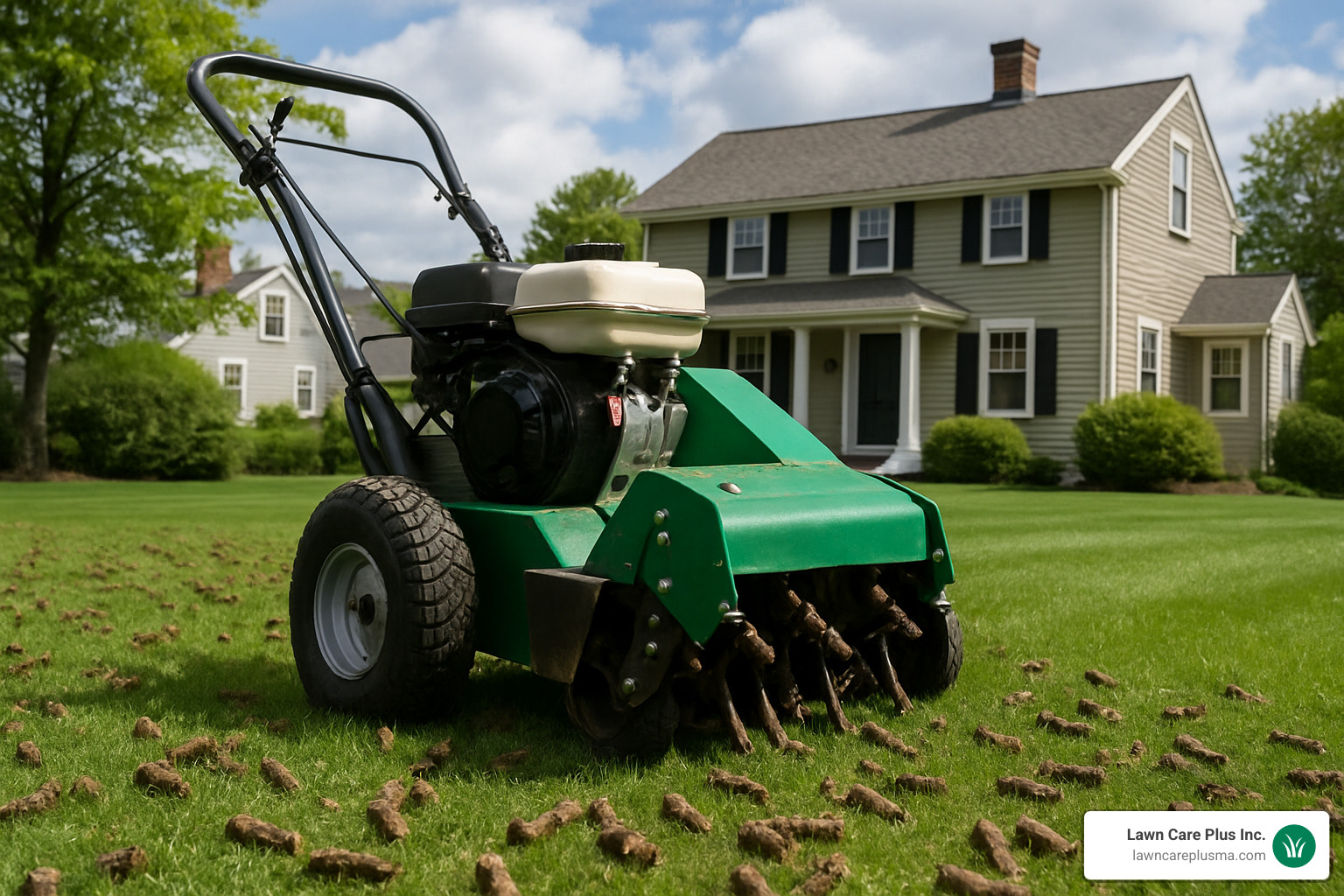
Would you believe only 8% of Quincy lawns receive proper aeration? It’s a shame because this simple service works wonders for soil health. When we aerate your lawn, we create thousands of small holes that allow air, water, and nutrients to reach hungry grass roots. The result? Deeper root systems and a lawn that’s more resilient to everything Mother Nature throws at it.
At Lawn Care Plus Inc., we’ve developed a seasonal timeline specifically for Quincy’s unique coastal climate:
Early Spring (April-May) is when we wake your lawn up gently. We apply a light nitrogen fertilizer to fuel that initial growth spurt, put down pre-emergent weed control to stop crabgrass before it starts, and conduct soil tests to check your pH levels (we’re aiming for that sweet spot between 6.0-7.0).
By Late Spring/Early Summer (June), your lawn is in full growth mode. This is when we apply a balanced fertilizer to keep things green and lush, while targeting any stubborn weeds that managed to sneak through.
Late Summer (August) is prep time. The soil is warm but not scorching, making it perfect for core aeration. Those little soil plugs scattered across your lawn might look messy for a day or two, but they’re setting the stage for the most important lawn care season of all.
Early Fall (September) is when the magic happens. We overseed with premium cool-season grass varieties, apply a root-focused fall fertilizer, and add lime if your soil test indicated acidity issues. September is truly the “New Year’s Day” for your lawn!
Our comprehensive Lawn Care Services follow this proven schedule, which we’ve refined through years of experience with Quincy’s specific growing conditions. Just look at the grounds of Adams National Historical Park for inspiration – their beautiful lawns thrive under similar care principles.
Spring vs. Fall Nutrient Needs
Your lawn’s appetite changes with the seasons, especially in Quincy’s variable coastal climate.
In spring, your grass is focused on leafy growth – those green blades reaching for the sun. We feed it accordingly with moderate nitrogen to fuel this top growth, balanced phosphorus for developing stronger roots, and light potassium to support overall health.
By fall, your lawn’s priorities shift dramatically. It’s no longer concerned with looking pretty – it’s preparing for survival. We adapt our fertilizer blend with lower nitrogen (to avoid pushing vulnerable new growth before winter), higher potassium (nature’s antifreeze for grass), and plenty of phosphorus to strengthen root systems that will sustain the plant through dormancy.
“The biggest mistake I see homeowners make is treating fertilizer like a one-size-fits-all product,” says our lawn care manager. “Your lawn’s needs change with the seasons, especially in a coastal climate like Quincy’s where we get those wild temperature swings.”
How to Overseed Thin Spots
Nothing ruins a lawn’s appearance faster than thin, patchy areas. Overseeding is your secret weapon against these eyesores, and early September is the absolute perfect time in Quincy. The soil is still warm (promoting fast germination) while the air is cooling down (reducing stress on seedlings).
For the best results, we first select the right seed blend. For Quincy’s sometimes challenging climate, we typically use a resilient mix of Kentucky bluegrass, perennial ryegrass, and fine fescue varieties – each bringing different strengths to your lawn.
Preparation is crucial. We mow lower than usual (about 1.5 inches) and rake thoroughly to ensure those tiny seeds make direct contact with the soil. A light topdressing of compost provides both protection and nutrients for the vulnerable seedlings.
The trickiest part? Proper watering. Those tiny seeds need consistent moisture until germination, which can take anywhere from 7-21 days depending on the grass type. This often means light watering several times daily – something our irrigation experts can help manage.
Finally, we ask homeowners to limit foot traffic on newly seeded areas for at least 3-4 weeks. Those baby grass plants need time to establish before they can handle the rough and tumble of regular lawn use.
With the right timing and techniques, overseeding can transform a thin, tired lawn into a thick carpet of green that’s naturally resistant to weeds, disease, and drought – exactly what every Quincy homeowner wants.
4. Go Green: Eco-Friendly and Water-Wise Lawn Practices
Going green isn’t just a trend – it’s becoming the standard for responsible lawn service in Quincy MA. At Lawn Care Plus Inc., we’re proud to champion environmentally friendly practices that keep your lawn looking spectacular while protecting our local ecosystems.
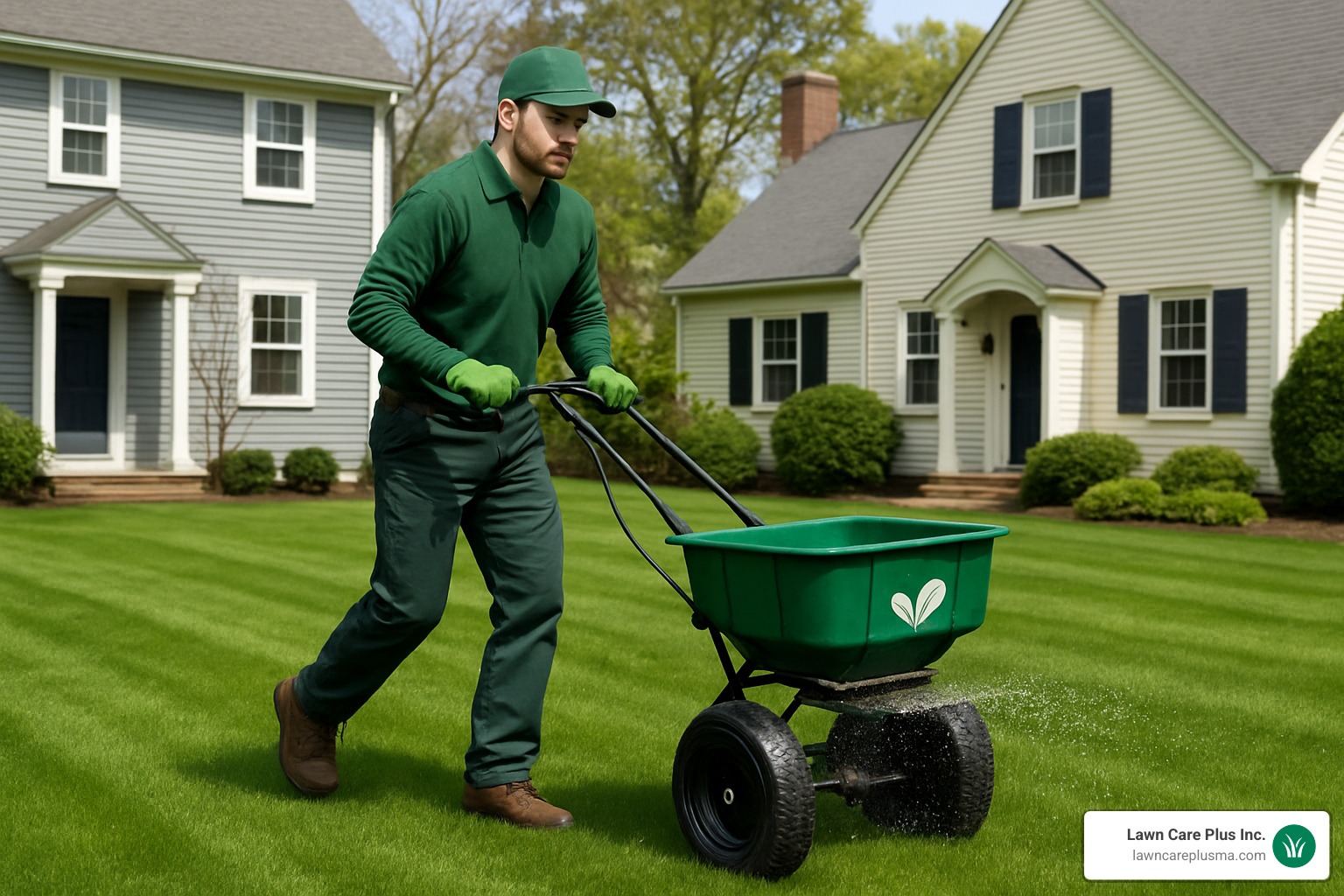
Living near the coast means Quincy residents have a special responsibility to protect our water resources. Our eco-friendly approach focuses on methods that maintain beautiful lawns while minimizing environmental impact. We’ve seen how sustainable practices actually create healthier, more resilient lawns that better withstand our New England weather challenges.
“When we switched to organic-based fertilizers, we noticed our customers’ lawns didn’t just look better – they became more drought-resistant and had fewer pest problems,” shares one of our lawn care specialists. “It’s a win-win for everyone.”
Our sustainable toolkit includes organic-based fertilizers that feed your soil gradually, building long-term health rather than just providing a quick green-up. We implement integrated pest management techniques that target specific problems without blanket-spraying chemicals across your entire property. For irrigation, we recommend smart controllers that adjust watering schedules based on actual weather conditions – no more sprinklers running during rainstorms!
For those establishing new lawns, we offer What is Hydroseeding? as an eco-friendly alternative that uses less water while providing excellent germination rates and erosion control. This technique is particularly valuable for Quincy’s hilly areas where erosion can be a concern.
We’ve also acceptd electric equipment options that significantly reduce noise and air pollution, making Saturday morning lawn maintenance a lot more neighbor-friendly. And our crews are trained to use native fescues and other adaptive grass varieties that naturally require less water and fertilizer once established.
Sustainable Fertilizers & Weed Control
The cornerstone of our eco-friendly approach is how we feed your lawn and manage weeds. Traditional chemical-heavy approaches are giving way to smarter, more targeted methods that work with nature rather than against it.
Slow-release organic fertilizers form the foundation of our feeding program. Unlike synthetic quick-release products that can leach into waterways, our organic options feed soil microbes that gradually release nutrients to your grass. This builds a living soil ecosystem beneath your lawn that improves resilience year after year.
For weed management, we’ve had great success with corn gluten meal as a natural pre-emergent control. When applied at the right time, it prevents weed seeds from establishing while providing nitrogen to your existing grass. We combine this with maintaining the proper mowing height – taller grass naturally shades out many weed seedlings before they can get established.
“I was worried my lawn would look weedy without traditional chemicals,” admits one Houghs Neck homeowner. “But my lawn looks better than ever since switching to Lawn Care Plus’s organic program. And I love that my grandkids can play on it without worry.”
Around garden beds and trees, we recommend generous mulching with natural materials. This creates a physical barrier against weeds while conserving moisture and gradually decomposing to feed the soil. It’s nature’s way of maintaining healthy plant communities without chemical intervention.
By embracing these sustainable practices, you’re not just getting a beautiful lawn – you’re contributing to healthier soils, cleaner waterways, and a more sustainable future for Quincy. And that’s something we can all feel good about.
5. Combat Quincy’s Most Common Lawn Pests & Problems
Quincy’s coastal climate creates ideal conditions for certain lawn pests and diseases. Identifying and addressing these issues early is key to maintaining a healthy lawn.
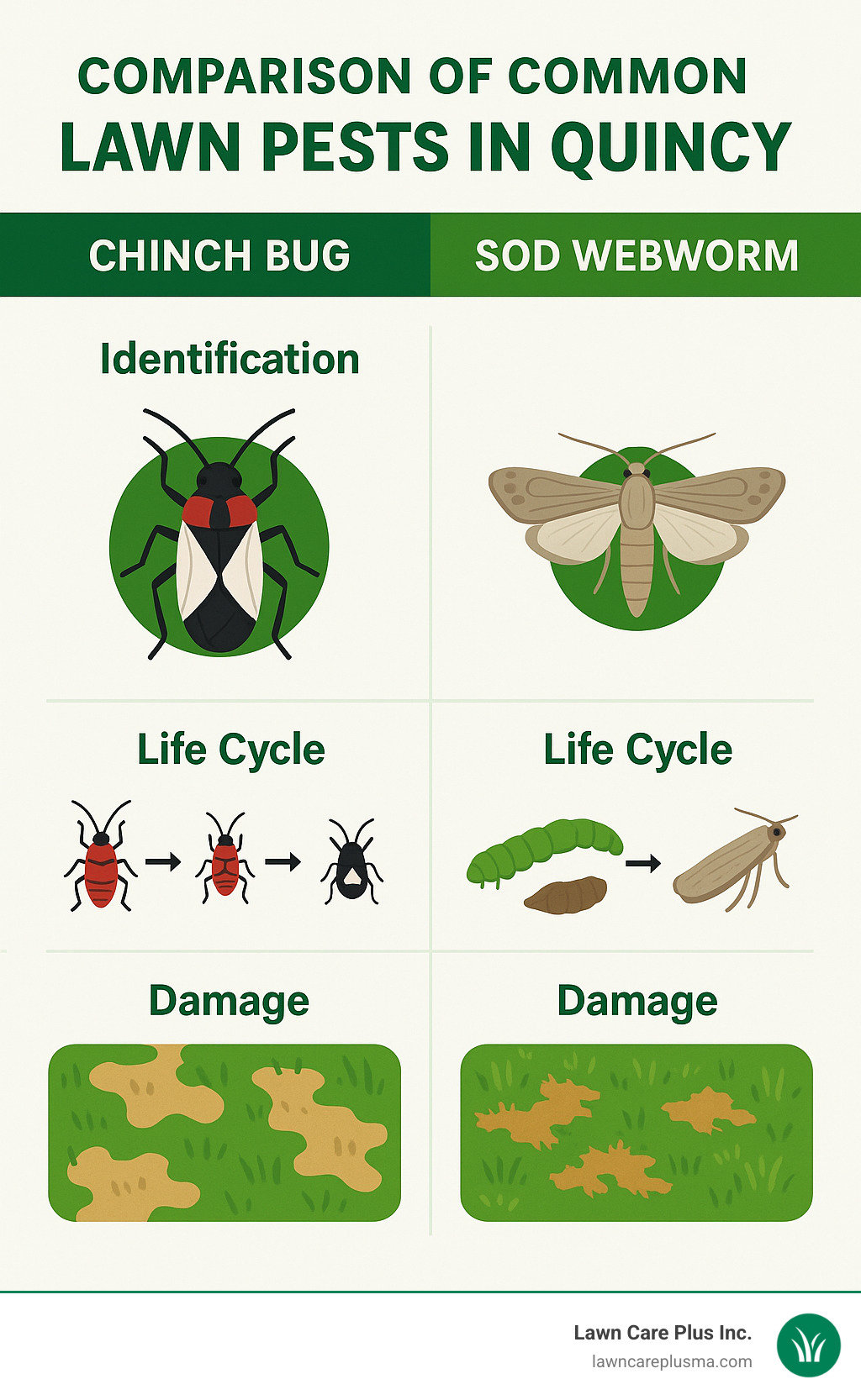
When it comes to maintaining your Quincy lawn, you’re not just battling weeds – you’re defending your turf from a variety of hungry insects and persistent fungi. The maritime influence of our coastal location creates perfect conditions for several common lawn enemies.
Chinch bugs become particularly troublesome during those hot, dry stretches in July and August. You’ll notice yellowish-brown patches across your lawn that stubbornly refuse to green up despite regular watering. These tiny pests actually suck the moisture right out of your grass blades, leaving destruction in their wake.
“I spent weeks watering a brown spot in my lawn before realizing it wasn’t drought – it was chinch bugs,” shares one Quincy homeowner. “Once we properly identified the problem, the solution was straightforward.”
During late summer evenings, if you notice small moths flying in distinctive zigzag patterns just above your grass, you’re likely witnessing sod webworms in action. These moths aren’t the actual problem – they’re laying eggs that hatch into hungry larvae that chew grass blades at the base, creating scattered brown patches that might be mistaken for drought damage.
Billbugs present another challenge for Quincy lawns, particularly in June and July. These sneaky beetles lay eggs that hatch into grub-like larvae that feed on grass roots. The damage appears as small, seemingly random dead patches across your lawn. If you can easily pull up sections of turf like a loose carpet, billbugs might be the culprit.
The humid summer conditions in Quincy create the perfect environment for brown patch fungus to thrive. This disease creates circular brown areas with darker borders that can expand rapidly during humid weather. Evening watering and excessive nitrogen fertilization practically roll out the red carpet for this fungal invader.
At Lawn Care Plus Inc., we believe in proper identification before treatment. We’ll carefully assess your lawn’s specific issues rather than applying one-size-fits-all solutions. Our approach emphasizes cultural practices that prevent problems while minimizing chemical interventions.
Prevention Beats Cure
The most effective way to manage lawn pests and diseases is to create conditions that naturally discourage them. Think of your lawn as a living ecosystem – when it’s healthy and balanced, it can naturally resist many common problems.
Balanced watering forms the foundation of pest prevention. Water deeply but infrequently, aiming for about 1-1.5 inches per week. Early morning watering allows grass blades to dry completely during the day, reducing humidity that fungi love. Evening watering, on the other hand, creates the moist overnight conditions that promote disease development.
Proper mowing height plays a crucial role in keeping pests at bay. Maintaining your grass at 2.5-3 inches during summer stress periods helps shade the soil, reducing temperatures that chinch bugs prefer. Our lawn service in Quincy MA always uses sharp blades that make clean cuts, allowing grass to heal quickly and resist disease entry. Regular mowing on the right schedule prevents thatch from building up too quickly.
Thatch control is essential for long-term lawn health. That layer of dead grass between your living turf and the soil can become a perfect habitat for pests when it exceeds ½ inch thick. Core aeration improves soil biology that naturally breaks down thatch, while avoiding excessive nitrogen prevents the rapid growth that contributes to thatch buildup.
“A healthy lawn naturally resists pests and disease,” explains our lawn care specialist. “Our goal is to create conditions where your lawn can defend itself, rather than relying on constant treatment.”
We also encourage the presence of beneficial insects by minimizing broad-spectrum insecticide use and recommending flowering plants nearby to support predatory insects that naturally control pest populations. Sometimes accepting minor damage is part of maintaining a balanced ecosystem that will be healthier in the long run.
By taking a prevention-focused approach to lawn care, we help Quincy homeowners enjoy beautiful lawns with fewer chemical interventions and more sustainable results. Your lawn isn’t just grass – it’s a complex living system that thrives when properly maintained.
Lawn Service Quincy MA: Costs, Estimates & How to Choose
Selecting the right lawn service in Quincy MA involves understanding typical costs, service options, and what qualities make a lawn care provider worth your investment. After all, your lawn isn’t just grass—it’s the green welcome mat to your home.

“I spent three years trying different lawn companies before finding one that actually understood Quincy’s unique growing conditions,” shares Michael, a homeowner in Houghs Neck. “The right professional makes all the difference.”
Average Prices for Lawn Service Quincy MA
When budgeting for lawn care, it helps to understand typical price ranges. Based on internet data (not actual Lawn Care Plus pricing), here’s what Quincy homeowners might expect to pay:
For lawn mowing, the typical range spans from $36 for a basic cut of a smaller property to $120 for larger yards with special requirements. Your actual cost will depend on your lawn’s size, obstacles like trees or garden beds, whether clippings need bagging, and how frequently you schedule service.
Fertilization programs generally run between $55 and $180 per application, with complete annual programs (typically 4-6 treatments) ranging from $200 to $600 depending on your lawn’s size and specific needs.
Core aeration, that essential service that only 8% of Quincy homeowners use despite its tremendous benefits, typically costs between $90 and $300. When combined with overseeding—the perfect fall treatment—you’re looking at $150 to $450 for the complete service.
For those crucial seasonal cleanups, expect to invest between $100 and $350 for basic service, while comprehensive cleanup packages may range from $200 to $600 depending on your property’s condition and size.
At Lawn Care Plus Inc., we believe in transparent pricing with no surprises. That’s why we offer detailed, free on-site estimates custom specifically to your property’s unique requirements rather than one-size-fits-all pricing.
What to Look for in a Quincy Lawn Care Pro
Finding a lawn care partner you can trust matters. Here’s what separates the professionals from the merely adequate:
Proper credentials speak volumes about a company’s commitment to quality. Look for Massachusetts pesticide applicator licenses (if they’ll be applying treatments), industry certifications, and evidence of continuing education. At Lawn Care Plus Inc., we’re particularly proud of our team’s expertise with Quincy’s unique coastal growing conditions.
Business professionalism provides peace of mind. This includes comprehensive insurance coverage, clear written estimates, prompt communication, and flexible scheduling options that work around your life. As one client told us, “I appreciate that Lawn Care Plus returns my calls within hours, not days.”
The service approach can make or break your lawn care experience. The best providers offer customized programs rather than cookie-cutter solutions, provide eco-friendly options, possess strong diagnostic skills for troubleshooting problems, and focus on preventing issues rather than just reacting to them.
Don’t overlook the value of year-round availability. A company that offers snow removal in winter alongside comprehensive growing season care provides continuity and convenience. Many of our clients appreciate the simplicity of bundled service packages and the savings they provide.
“What sets Lawn Care Plus apart is their attention to detail,” notes a long-term client from Adams Shore. “They don’t just mow and go—they notice issues developing and address them before they become problems.”
At Lawn Care Plus Inc., we believe relationships matter as much as results. That’s why we offer Professional Landscaping Services throughout Quincy with a personal touch, creating custom programs that respect both your property’s needs and your budget constraints.
Choosing the right lawn service in Quincy MA isn’t just about finding the lowest price—it’s about finding the best value and a partner who’ll help your property look its best season after season.
Frequently Asked Questions about Quincy Lawn Care
How often should I water my Quincy lawn?
The “how much water” question is one we hear constantly from Quincy homeowners. The short answer? Your lawn typically needs about 1 to 1.5 inches of water weekly during growing season, counting both irrigation and rainfall.
But timing matters more than frequency. Instead of those quick daily sprinkles (which actually encourage shallow roots), we recommend deep watering just 2-3 times weekly. This trains your grass to develop deeper, more drought-resistant root systems.
“Early bird gets the worm” applies perfectly to watering schedules. Aim for early mornings between 5-9 AM when evaporation is minimal and your grass has all day to dry, reducing fungal disease risk.
If you’re near the coast, you might need less supplemental water thanks to the natural humidity. However, watch for signs of salt stress if you’re close enough for ocean spray to reach your property.
For folks with irrigation systems, we can perform efficiency checks to ensure you’re not creating soggy spots or wasting water on sidewalks. Our customers with smart controllers typically see 15-30% water savings while maintaining healthier lawns!
Can I leave grass clippings on the lawn?
Absolutely yes! At Lawn Care Plus, we’re big fans of “grasscycling” – leaving those clippings right where they fall. Your lawn will thank you for it.
Think of those clippings as free fertilizer. They return valuable nutrients to your soil (roughly equivalent to 1-2 fertilizer applications yearly) while improving soil biology. Plus, you’ll be keeping organic matter out of landfills – a win-win!
Modern mulching mowers make this even easier by chopping clippings into tiny pieces that disappear into your lawn within days. The key is mowing regularly. If you wait until your grass is overgrown, those longer clippings might form clumps that should be removed.
One neighbor in Houghs Neck told me: “I used to bag everything until my Lawn Care Plus guy explained I was basically throwing away free fertilizer. Now my lawn’s healthier and I’m doing less work!”
The only exception? If your lawn has an active fungal disease, temporarily removing clippings can help reduce spread until the issue is resolved.
When is the best time to plant new grass in Quincy?
For new grass in Quincy, timing is everything. Early fall – specifically late August through September – gives you the best chance of success. This sweet spot combines warm soil (which speeds germination) with cooler air temperatures that reduce stress on tender seedlings.
Fall seeding has several other advantages:
– Fewer aggressive summer weeds competing with your new grass
– More consistent natural rainfall
– Young grass gets two growth periods (fall and spring) to establish before facing summer heat
If you miss the fall window, early spring (April-May) works as your backup plan, though you’ll typically need more diligent watering and weed control.
Summer seeding? We generally advise against it unless absolutely necessary. The heat stress and constant watering requirements make success much harder to achieve.
For quick results any time of year, ask us about our hydroseeding services. This technique establishes new lawns significantly faster than traditional seeding and provides better erosion control – particularly helpful for Quincy’s sloped properties.
One customer near Squantum shared: “After two failed attempts at DIY seeding in spring, I had Lawn Care Plus hydroseed in September. The difference was night and day – full coverage within weeks instead of patchy results.”
Conclusion
A beautiful, healthy lawn doesn’t happen by accident – especially in Quincy’s unique coastal environment. Throughout this guide, we’ve walked through the seasonal rhythm of proper lawn care, from that crucial spring cleanup to the final fall preparations that set your yard up for success next year.
Lawn service in Quincy MA isn’t just about keeping up appearances (though that lush, green carpet certainly boosts your home’s curb appeal). A well-maintained lawn actually serves multiple important functions: it prevents soil erosion during Quincy’s heavy rain events, naturally filters stormwater before it reaches our local waterways, cools your property during summer heat waves, and creates a comfortable outdoor living space for your family to enjoy.
At Lawn Care Plus Inc., we’ve fine-tuned our approach specifically for Massachusetts properties, with special attention to Quincy’s coastal influences. Our teams understand how salt spray affects coastal lawns, how to adapt maintenance schedules to our variable New England weather, and how to create sustainable landscapes that thrive in our unique growing conditions.
The convenience factor shouldn’t be overlooked either. Rather than spending your precious weekends pushing a mower or struggling with stubborn weeds, professional lawn care gives you back your time while delivering superior results. Our comprehensive approach means you can rely on a single trusted provider for everything from routine mowing to seasonal cleanups, and even snow removal when winter arrives.
Whether you’re in Adams Shore with its maritime exposures, near the historic downtown district, or anywhere in between, our locally-developed practices ensure your lawn receives exactly what it needs, when it needs it. After all, your property is unique – shouldn’t your lawn care be too?
For more details about our complete range of services, visit our Lawn Care Services page or reach out for a friendly, no-pressure consultation. We’re proud to serve Quincy homeowners and businesses with sustainable, professional lawn care solutions that are customized to your specific property needs.
As one of our long-time Quincy customers puts it: “My lawn isn’t just green now – it’s the neighborhood standout. And I didn’t have to lift a finger to make it happen!”