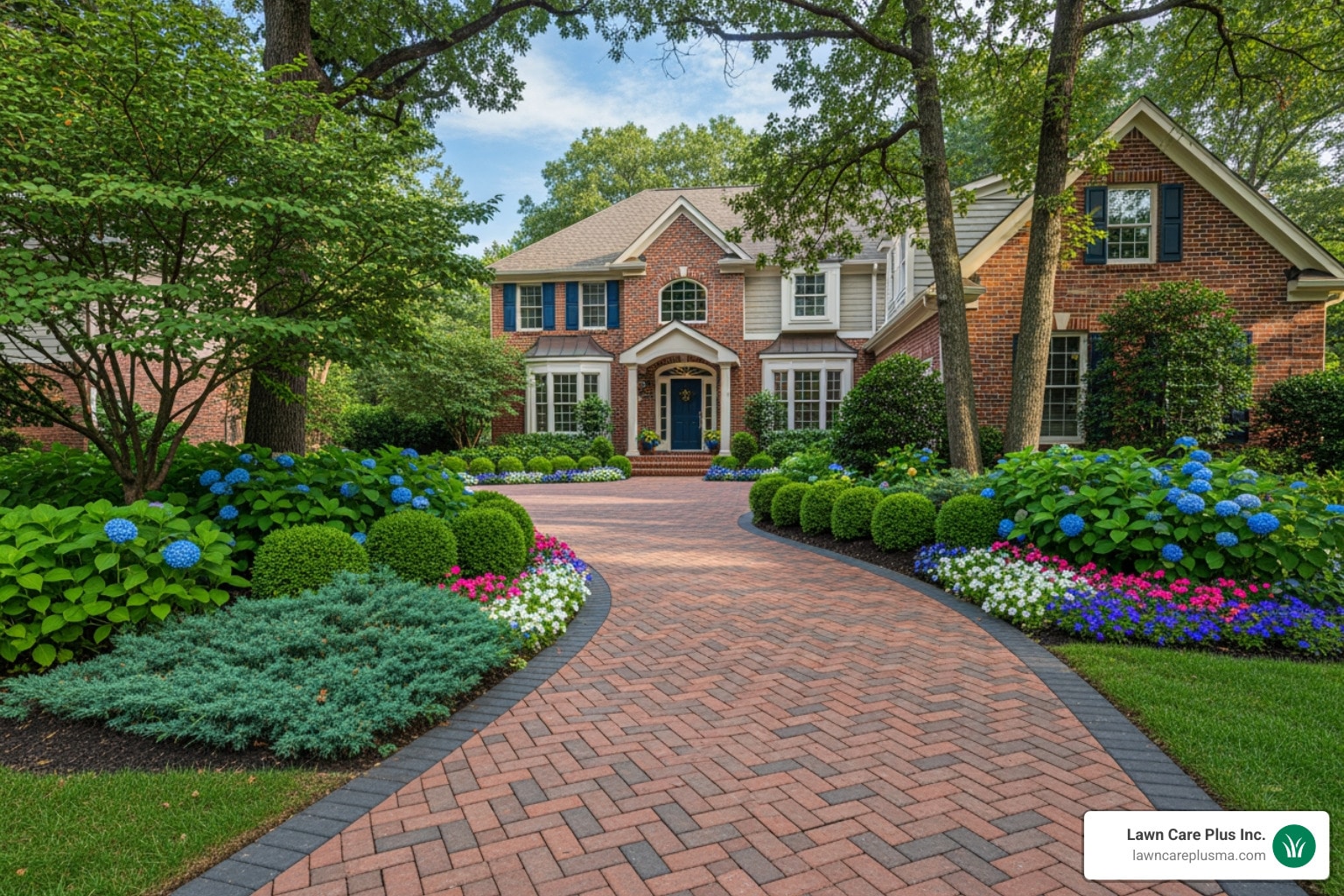
Why Brickwork Maintenance Matters for Your Property
Brickwork repairs near me are essential services for maintaining the structural integrity and curb appeal of your home or commercial property. If you’re looking for local brickwork repair contractors, here’s what you need to know:
Quick Guide to Finding Brickwork Repair Services:
- Search locally – Look for licensed masonry contractors in your area with experience in New England’s climate
- Check credentials – Verify insurance, BBB ratings, and local references
- Get multiple estimates – Compare written quotes from at least three contractors
- Ask about mortar matching – Ensure they can match your existing brick and mortar for seamless repairs
- Review their portfolio – Look for examples of similar work on residential or commercial properties
Brick structures have a timeless appeal that adds character and value to any property. But even the most well-built brickwork doesn’t last forever without proper care.
Weather conditions in the Boston Metro-West area are particularly tough on masonry. Our freeze-thaw cycles, heavy rains, and temperature swings gradually wear down mortar joints and damage bricks. Over time, this leads to cracks, crumbling mortar, and even structural issues that can compromise your building’s safety.
The good news? Most brickwork problems are repairable when you catch them early and work with qualified professionals.
This guide will help you identify common signs of brick damage, understand your repair options, and find the right local contractor to restore your masonry. We’ll cover everything from tuckpointing basics to the questions you should ask before hiring anyone.
I’m Tim DiAngelis, owner of Lawn Care Plus, Inc., and we’ve been providing professional masonry and hardscaping services to residential and commercial clients throughout Greater Boston for over a decade. When homeowners search for brickwork repairs near me, we understand they need reliable, local expertise to protect their property investment.
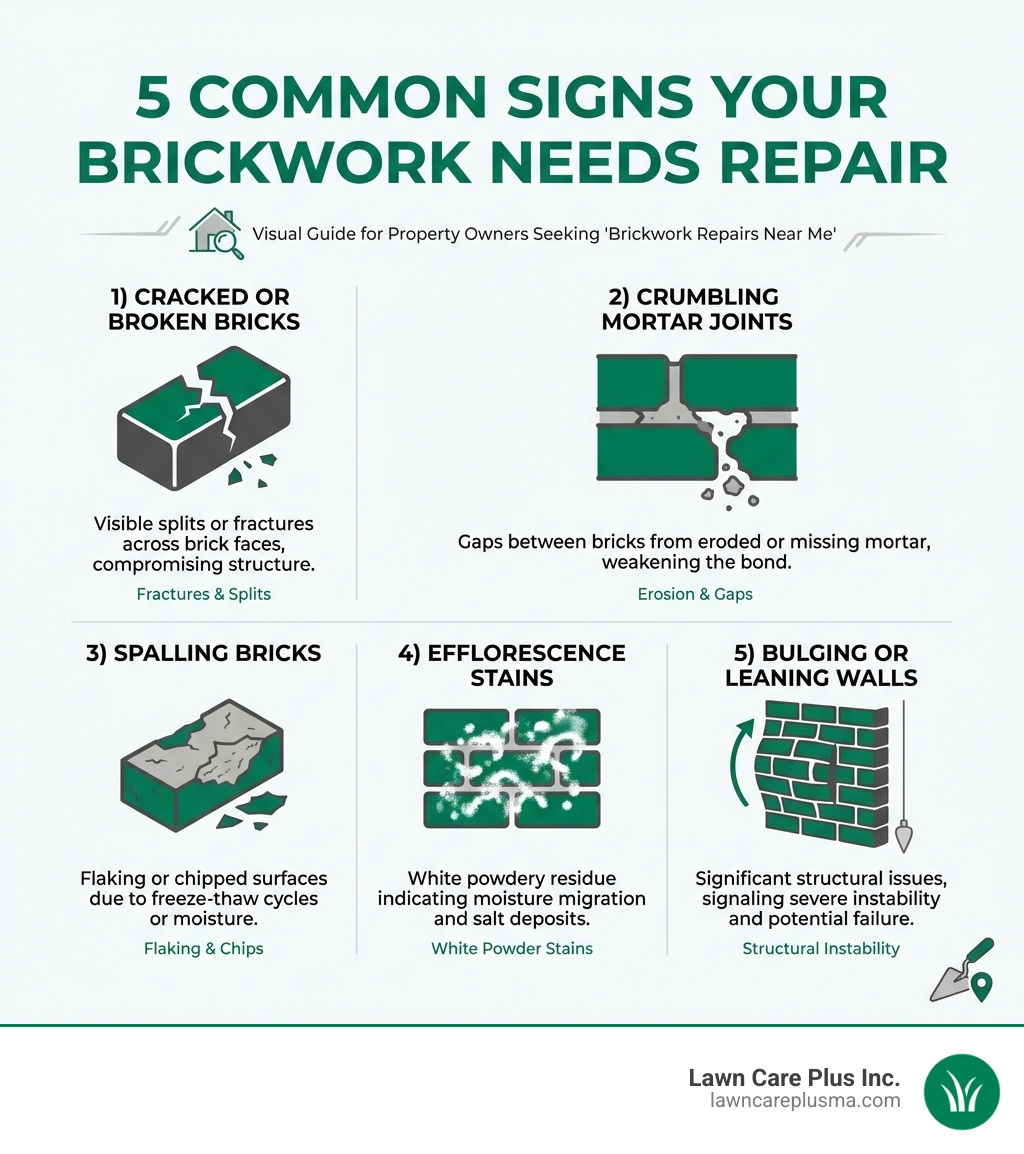
Common brickwork repairs near me vocab:
Spotting the Trouble: Telltale Signs Your Brickwork Needs Repair
Recognizing early warning signs of brickwork damage is crucial for preventing costly repairs. Brick structures in the Boston Metro-West area face harsh winters and humid summers that take a toll. Here’s what to look for:
Common Signs Your Brickwork Needs Attention:
- Cracked Bricks: Obvious cracks can appear in individual bricks. Even small hairline cracks allow water entry, leading to deterioration. Larger cracks that span multiple bricks and mortar joints may signal serious structural movement.
- Crumbling Mortar: Mortar holds bricks together, but its 50-100 year lifespan can be shortened by water and freeze-thaw cycles. If the mortar is soft, sandy, or falling out, it’s losing integrity and compromising the wall’s stability.
- Spalling: This is the flaking, peeling, or chipping of a brick’s face, often caused by moisture freezing and expanding inside the brick. Spalling is unsightly and weakens the brick, making it vulnerable to more water intrusion.
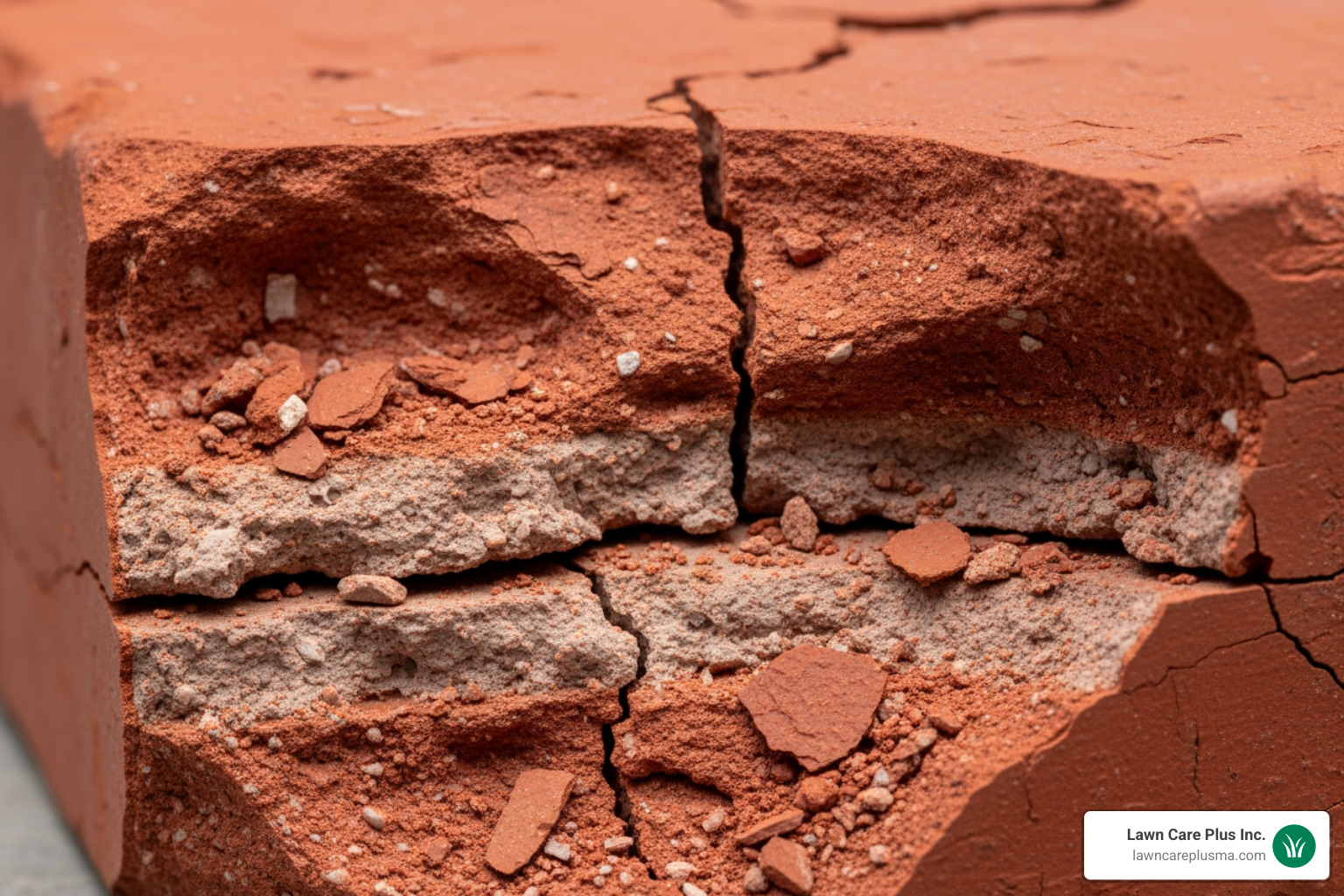
- Efflorescence: These white, powdery deposits on brick occur when water dissolves internal salts and evaporates, leaving them behind. While often a cosmetic issue, efflorescence indicates excess moisture that could lead to spalling if ignored.
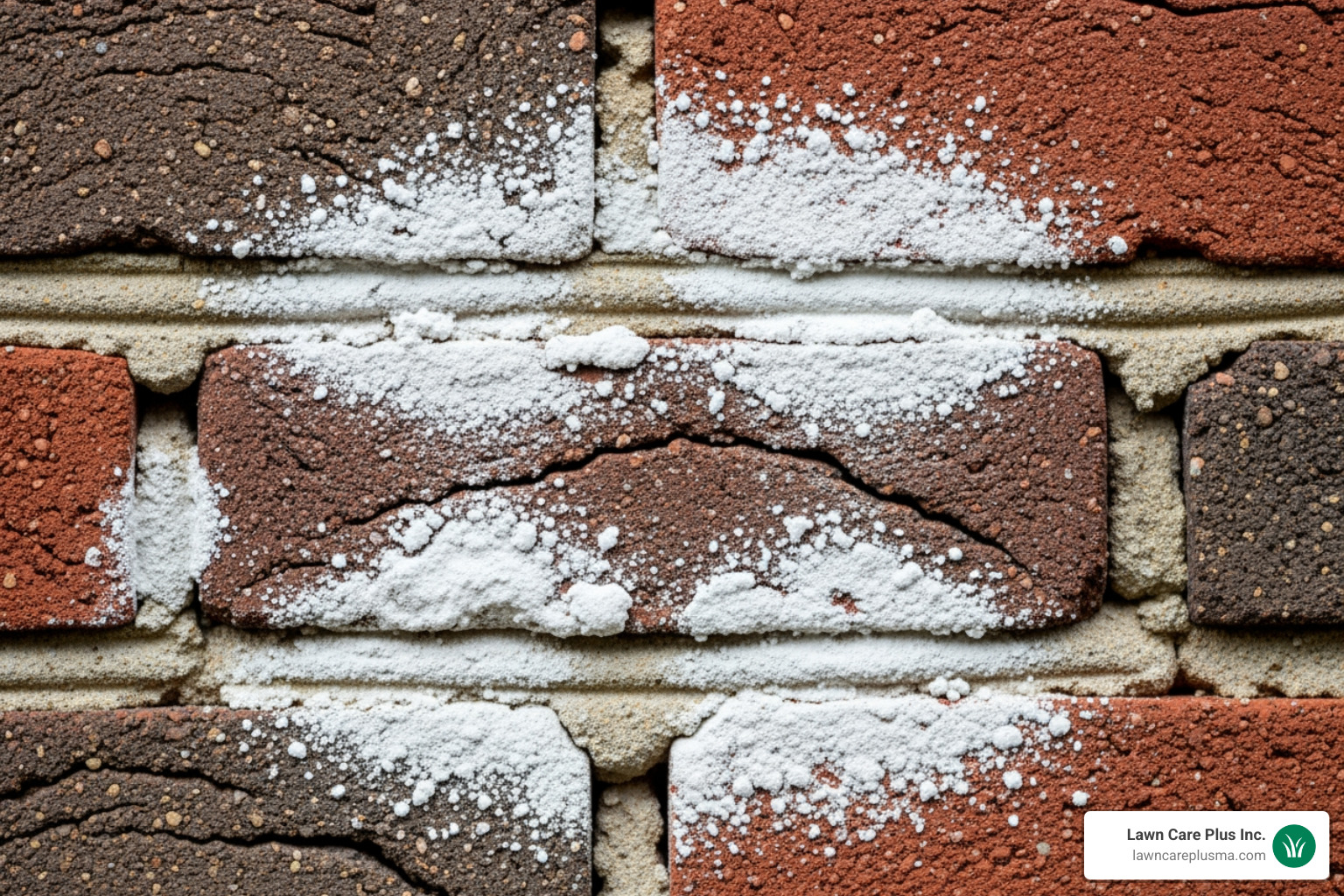
- Bulging or Leaning Walls: A serious red flag, a bulging or leaning wall suggests significant structural problems from issues like foundation failure or water saturation. This requires immediate professional assessment.
- Water Damage & Discoloration: Dark stains, moss, or algae growth also indicate persistent moisture. Unchecked water is a leading cause of brick deterioration and can lead to mold growth inside your property.
The Risks of Not Repairing Damaged Brickwork Promptly:
Ignoring these signs only makes things worse. The risks of neglecting damaged brickwork are substantial:
- Loss of Structural Integrity: Weakened mortar or bricks can lead to dangerous and expensive structural failures, including shifting walls or collapse.
- Increased Water Penetration: Gaps allow water to seep indoors, causing dampness, mold, and damage to insulation and structural frames.
- Decreased Property Value: Damaged brickwork hurts curb appeal and lowers market value, while well-maintained masonry increases it.
- Pest Infestation: Holes in brickwork provide entry points for rodents, insects, and other pests.
- Higher Repair Costs: Addressing small issues early is far cheaper than waiting for them to become major structural problems.
If you observe any of these signs, it’s time to consider professional brickwork repairs near me.
A Guide to Brickwork Damage and Repair Solutions
Understanding brickwork damage is key to finding the right solution. Most issues, from minor cosmetic flaws to major structural concerns, can be repaired by skilled masons. We offer a full range of masonry services and hardscaping services in Brookline, MA to address these problems. Damage typically falls into two categories:
- Cosmetic Issues: Minor cracks, efflorescence, or staining that detract from appearance and may signal moisture problems.
- Structural Issues: Severe damage like deep cracks, bulging walls, or major mortar deterioration that compromises safety and requires urgent attention.
What is Tuckpointing and When Is It Necessary?
Tuckpointing (or repointing) is a critical repair that involves removing old, deteriorated mortar and replacing it with new mortar. This process is vital for maintaining structural integrity and preventing water penetration, especially in New England where freeze-thaw cycles shorten mortar’s typical 50-100 year lifespan.
Tuckpointing is necessary when you see:
- Crumbling, powdery, or recessed mortar joints.
- Cracks in the mortar lines.
- Loose bricks or water leaks through the wall.
Timely tuckpointing restores the bond between bricks, seals out moisture, and prevents more expensive repairs. Repointing costs can vary, often ranging from $5 to $15 per square foot depending on the damage.
Repairing Cracks, Spalling, and Other Damage
Beyond tuckpointing, other common repairs include:
- Brick Replacement: Carefully removing and replacing spalled, cracked, or heavily damaged bricks with matching new ones for a seamless look.
- Crack Stitching: Inserting stainless steel bars across cracks to reinforce the area and prevent further movement.
- Lintel and Sill Repair: Repairing or replacing the crucial supports above and below windows and doors to prevent sagging and cracking in the surrounding brickwork.
- Wall Stabilization: For bulging or leaning walls, more extensive work like installing wall ties or partial rebuilding may be needed to ensure safety.
The Critical Role of Mortar Matching
When undertaking brickwork repairs near me, mortar matching is critical for both aesthetics and the long-term health of your masonry.
Types of Mortar and Their Impact:
Historically, Massachusetts structures used soft, flexible, and breathable lime mortar. It’s designed to be weaker than the brick, so it deteriorates first, protecting the brick itself. Modern construction often uses Portland cement-based mortar, which is harder and less breathable.
Why Matching is Crucial:
Using hard cement mortar on an older lime-mortar building is a common mistake that causes serious issues:
- Damage to Bricks: The hard mortar doesn’t flex with the building, transferring stress to the softer, older bricks and causing them to crack or spall.
- Moisture Trapping: Non-breathable cement traps moisture inside the wall, accelerating deterioration.
- Aesthetic Mismatch: Mismatched mortar color and texture make repairs obvious and unattractive.
For a deeper understanding of this topic, the National Park Service’s brief on repointing historic masonry is an excellent resource. Our experienced masons analyze existing mortar to ensure a perfect match in composition, color, and texture, preserving your property’s structural integrity and historical aesthetic.
The Professional Brickwork Repair Process from Start to Finish
When you enlist professionals for brickwork repairs near me, you’re investing in a systematic and skilled approach to restoring your masonry. While the specific steps may vary depending on the extent and type of damage, a typical professional brickwork repair process follows these general stages:
- Assessment and Diagnosis: This is the critical first step. Our masons will conduct a thorough inspection of your brickwork, identifying the type and extent of the damage, its underlying causes (e.g., water penetration, structural movement, age), and the appropriate repair methods. We’ll assess the existing mortar composition to ensure proper matching.
- Site Preparation and Safety Measures: Before any work begins, the area around the repair site is prepared. This involves protecting landscaping, windows, and other parts of your property from dust and debris. Safety is paramount, so scaffolding or lifts may be erected, and safety nets or covers installed to protect workers and passersby.
- Old Mortar Removal (for Tuckpointing): For repointing projects, deteriorated mortar joints are carefully removed to a consistent depth, typically about 1/2 to 3/4 inch. This is usually done using specialized grinders or hand tools, ensuring minimal disturbance to the surrounding bricks. Proper dust control measures are employed.
- Brick Removal and Replacement (if necessary): If individual bricks are spalled, cracked, or severely damaged, they are carefully chiseled out. New, matching bricks are then installed, bedded in fresh mortar, ensuring they are level and properly aligned with the existing masonry.
- Applying New Mortar (Pointing): Once the old mortar is removed, the joints are thoroughly cleaned and dampened. New, carefully matched mortar is then applied in thin layers, pressed firmly into the joints to ensure a dense, void-free fill. This process, called pointing, requires skill to achieve a consistent and aesthetically pleasing finish. For more information on structural elements, see our page on retaining walls.
- Curing Process: Mortar doesn’t dry; it cures. This chemical process requires moisture and time. Depending on the type of mortar and weather conditions, masons may mist the newly pointed areas with water or cover them to slow down the drying process, allowing the mortar to achieve maximum strength and durability.
- Final Cleanup and Inspection: After the mortar has cured sufficiently, the work area is thoroughly cleaned of any excess mortar, dust, and debris. We pride ourselves on leaving your property spotless. A final inspection is then conducted to ensure the repairs are complete, aesthetically pleasing, and meet our high standards of quality and craftsmanship.
This meticulous process ensures that your brickwork is not only repaired but restored to its original strength and beauty, designed to withstand the elements for many years to come.
Finding Qualified “Brickwork Repairs Near Me”
When your brickwork needs attention, finding the right contractor is just as important as identifying the problem itself. A quick online search for “brickwork repairs near me” will yield many results, but knowing how to sift through them to find qualified, reliable professionals is key. We invite you to explore our work to see the quality and craftsmanship we bring to every project.
How to Choose a Qualified Service for Brickwork Repairs Near Me
Here are essential steps for choosing the best masonry contractor:
- Verify License and Insurance: This is non-negotiable. Ensure they are licensed and carry proper insurance to protect you from liability. Always ask for and verify proof.
- Check Local References: Ask for and contact references from past clients in your area to inquire about their experience, work quality, and professionalism.
- Review Portfolios: Look at examples of their previous brickwork repairs. A strong portfolio demonstrates skill, especially in mortar matching and craftsmanship.
- Get Multiple Written Estimates: Obtain detailed quotes from at least three contractors. Compare the scope of work, materials, timeline, and price. Be cautious of unusually low bids.
- Read Online Reviews: Check testimonials on platforms like Google for insights into a contractor’s reputation, communication, and quality.
- Ask About Their Team: Inquire if they use an in-house team or subcontractors. In-house crews often provide more consistent quality control and scheduling.
Key Questions to Ask Your Masonry Contractor
Once you’ve narrowed down your choices, here are some critical questions to ask prospective masonry contractors:
- “What is your experience with brickwork repairs in the New England climate?” Our region’s unique weather patterns (freeze-thaw, humidity) require specific knowledge and material choices.
- “How do you ensure proper mortar matching for my existing brickwork?” This demonstrates their understanding of historical masonry and the importance of compatible materials.
- “What is your estimated project timeline, and how do you handle potential delays?” Clear communication about timelines and contingencies is a good sign.
- “What steps do you take to protect my property and landscaping during the repair process?” A professional will have clear procedures for site protection and cleanup.
- “Do you offer a warranty on your brickwork repairs, and if so, what does it cover?” A warranty provides peace of mind regarding the longevity and quality of their work.
Why Local Expertise Matters for Brickwork Repairs Near Me
Choosing a local contractor for your brickwork repairs near me offers distinct advantages, especially in areas like the Boston Metro-West:
- Knowledge of New England Climate: Local masons are intimately familiar with how our specific weather conditions impact masonry. They understand the importance of using materials that can withstand harsh winters, frequent rain, and significant temperature fluctuations. This local knowledge helps them recommend the most durable and effective repair solutions.
- Familiarity with Local Building Codes: Building codes can vary by municipality. A local contractor in areas like Boston or Newton will be well-versed in the specific regulations and requirements, ensuring your repairs are compliant and up to standard.
- Sourcing Correct Materials: Local experts often have established relationships with suppliers who can provide historically accurate or perfectly matched bricks and mortar specific to the architectural styles prevalent in our Massachusetts communities. This ensures a seamless and aesthetically pleasing repair.
- Accessibility and Accountability: A local company is more accessible for follow-up questions or concerns. Their reputation within the community is vital to their business, fostering a higher level of accountability and commitment to customer satisfaction.
Understanding the Cost and Value of Brickwork Repair
When considering brickwork repairs near me, it’s natural to wonder about the cost. While DIY might seem like a way to save money, brickwork repair is a specialized skill that often requires professional expertise. The long-term value of professional repair far outweighs the initial expense, not only in terms of structural integrity but also in enhancing your property’s curb appeal and market value.
What is the Typical Cost of Brickwork Repair?
These are average costs based on internet data and not actual costs for Lawn Care Plus Inc. The average cost of brick repair can range from $200 for minor repairs to upwards of $3,000 or more, depending on the extent of the damage and the type of repair needed.
For repointing, a common brick repair technique, costs can range between $5 to $45+ per square foot. This wide range accounts for variations in:
- Extent of Damage: Small, isolated cracks will naturally cost less than extensive crumbling across an entire wall or structural issues.
- Accessibility: Repairs on a ground-level wall are less costly than those requiring extensive scaffolding or working at height, such as on a chimney.
- Type of Brick and Mortar: Matching historical bricks or specialized mortar can increase material costs.
- Location: Labor rates vary by region, and in the Boston Metro-West area, they might be on the higher end of national averages.
- Complexity of Repair: Simple tuckpointing is different from rebuilding a section of a wall or addressing foundation issues that affect the brickwork.
Always request a detailed, written estimate from your chosen contractor to understand the specific costs for your project.
The Benefits of Prompt, Professional Repair
Delaying necessary brickwork repairs can lead to a cascade of problems and significantly higher costs. Investing in prompt, professional repair offers numerous benefits:
- Preventing Major Structural Failure: Small cracks can grow into large structural problems, potentially compromising the stability of your entire building. Addressing issues early prevents these from escalating.
- Avoiding Water Damage and Mold: Damaged mortar and bricks are direct pathways for water intrusion. This can lead to costly interior water damage, rot in structural timbers, and unhealthy mold growth, especially in our humid climate.
- Enhancing Property Value: A well-maintained brick facade significantly increases your property’s curb appeal and its overall resale value. Conversely, visible brick damage can deter buyers and necessitate price reductions.
- Ensuring Safety: Bulging walls or loose bricks pose a safety hazard to occupants and visitors. Professional repairs restore the safety and soundness of your property.
- Peace of Mind: Knowing your home’s or business’s brickwork is sound and protected from the elements provides invaluable peace of mind.
Long-Term Care: Maintaining Your Brickwork for a Lifetime
Once your brickwork has been expertly repaired, proper maintenance is key to ensuring its longevity and preventing future damage. Think of it as a routine check-up for your home’s exterior. Our commitment to your property extends beyond repairs; we also offer comprehensive commercial property maintenance services that can include brickwork upkeep.
Here are our top tips for maintaining your brickwork:
- Regular Inspections: Periodically walk around your property and visually inspect your brickwork. Look for any new cracks, crumbling mortar, efflorescence, or signs of spalling. Early detection is your best defense against costly repairs.
- Gutter and Downspout Maintenance: Clogged or damaged gutters and downspouts can cause water to overflow and run directly down your brick walls, leading to excessive moisture absorption and accelerated deterioration. Keep them clean and ensure they divert water effectively away from your foundation.
- Managing Vegetation: While climbing vines can look charming, they can cause significant damage to brickwork. Roots can penetrate mortar joints and cracks, expanding and exacerbating damage. Keep plants, shrubs, and trees trimmed away from your brick walls to allow for proper airflow and prevent moisture buildup.
- Proper Drainage: Ensure that the ground around your foundation slopes away from the building, directing rainwater away from the brickwork. Poor drainage can lead to saturated soil, which can contribute to foundation issues and moisture wicking up into your brick walls.
- Sealing and Waterproofing (with caution): In some cases, applying a breathable sealant can help protect brickwork from moisture penetration. However, this should only be done after consulting with a masonry professional. Using the wrong type of sealant can trap moisture inside the wall, leading to more severe problems like spalling.
Consider scheduling routine property check-ups, much like you would for our popular spring yard clean-ups, to ensure your brickwork remains in top condition year-round.
Conclusion
Brickwork is a hallmark of enduring quality, but it requires diligent care to stand the test of time, especially in the dynamic climate of the Boston Metro-West area. We’ve explored the telltale signs of damage—from subtle cracks and crumbling mortar to more alarming issues like spalling and bulging walls—and the critical importance of addressing them promptly to safeguard your property’s structural integrity and value.
Understanding the nuances of repair, such as the vital process of tuckpointing and the necessity of precise mortar matching, underscores why professional expertise is irreplaceable. Choosing a qualified local contractor, one intimately familiar with our region’s specific challenges and building codes, ensures that your brickwork repairs near me are not just a quick fix, but a lasting investment.
For homeowners and commercial property managers in Belmont, Boston, Brighton, Brookline, Canton, Chestnut Hill, Dedham, Hyde Park, Jamaica Plain, Mattapan, Medfield, Milton, Needham, Newton, Norwood, Randolph, Readville, Roslindale, Walpole, Watertown, Wellesley, and Westwood, Lawn Care Plus Inc. offers expert masonry and hardscaping services. We pride ourselves on delivering meticulous craftsmanship and custom solutions that preserve the beauty and resilience of your brick structures.
Don’t let minor brickwork issues become major headaches. Contact us today for a comprehensive consultation on your masonry needs!