
Masonry work is the art and craft of building structures from individual units like bricks, stones, or concrete blocks. These materials are often laid and bound together with mortar, providing both strength and aesthetic appeal to buildings and landscapes. In both residential and commercial projects, masonry work is crucial for constructing walls, chimneys, patios, and other structures. It combines durability with visual charm, which is why many property owners opt for masonry when enhancing their spaces.
Here’s what makes masonry work important:
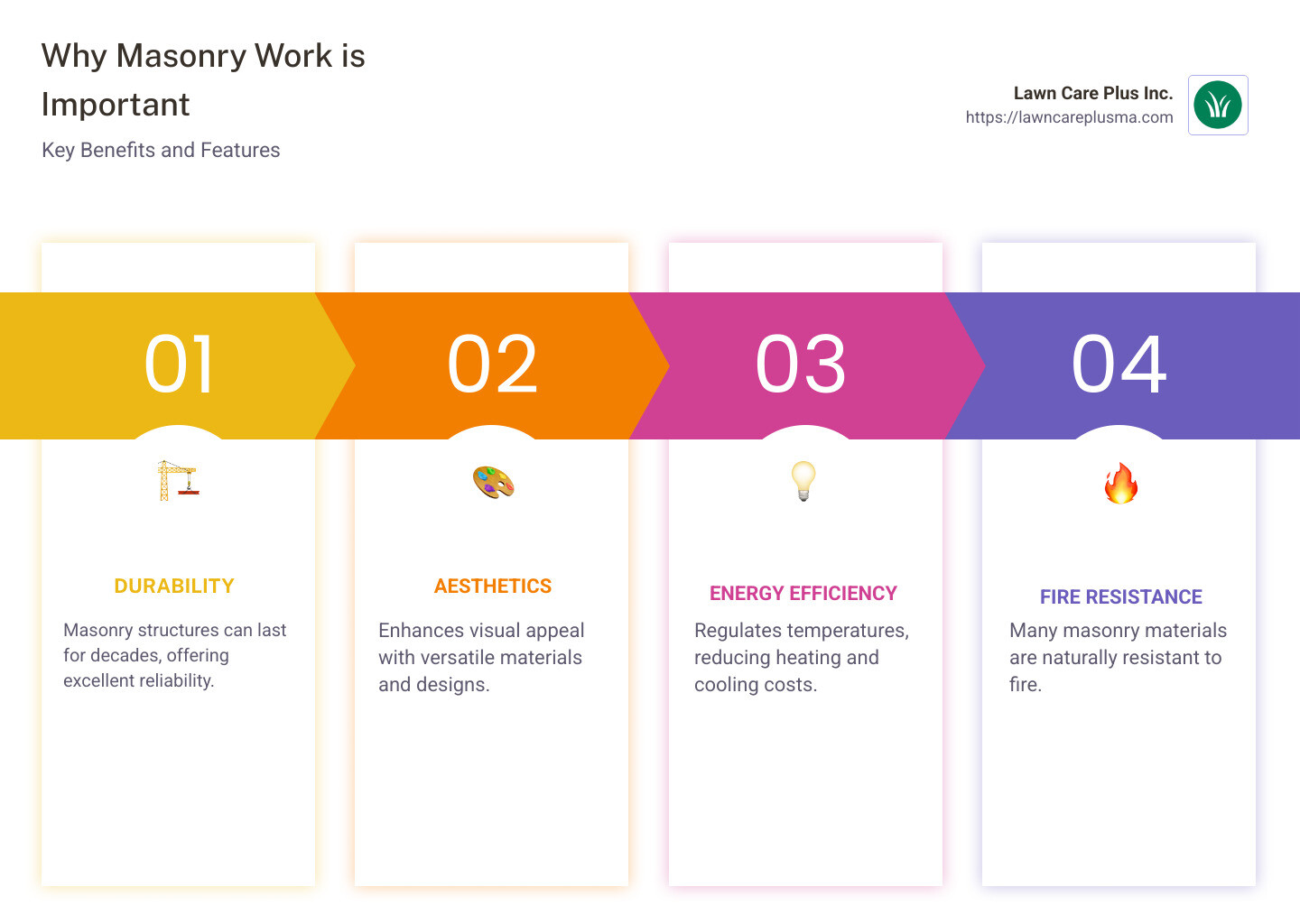
- Durability: Masonry structures can last for decades, if not centuries, with proper maintenance, making them a reliable choice.
- Aesthetics: With a variety of materials and designs available, masonry can improve the visual appeal of any property.
- Energy efficiency: Masonry materials can regulate interior temperatures, reducing heating and cooling costs.
- Fire resistance: Many masonry materials are naturally fire-resistant, contributing to the overall safety of a structure.
Engaging skilled masons ensures that the quality and longevity of masonry work meet the highest standards. By understanding the essentials of masonry, property managers and homeowners can make informed decisions about their next construction or renovation project.
Masonry work basics:
– brick masons near me
– masonry repair near me
– stone mason near me
What is Masonry Work?
Masonry work involves constructing structures from individual units like bricks, stones, or concrete blocks. These are often laid and bound together with mortar, a mixture of sand, cement, and water, to create durable and aesthetically pleasing structures. Let’s explore the materials and techniques that make up this craft.
Types of Masonry Materials
Brick: A classic choice, bricks are known for their durability and versatility. They are often used for building walls, chimneys, and even homes. Bricks are available in various colors and textures, allowing for creative designs.
Stone: Natural stone, such as granite or limestone, offers a unique and neat look. Each stone piece is different, adding character to any structure. Stone is often chosen for its longevity and ability to blend with natural surroundings.
Concrete Blocks: These are larger than bricks and are commonly used for structural walls. Concrete blocks are strong and can be used in both residential and commercial projects. They provide excellent insulation and are cost-effective.
Masonry Techniques
Laying: This involves placing the bricks, stones, or blocks in a specific pattern. Proper laying ensures the structure is stable and visually appealing. Masons use tools like trowels and levels to achieve precision.
Binding: Binding is the process of connecting the masonry units with mortar. This step is crucial as it determines the strength of the structure. The mortar acts as a glue, holding everything together.
Mortar Application: Applying mortar requires skill and precision. The mason spreads the mortar evenly between the units to ensure a strong bond. Consistency in the mortar mix is key for durability and weather resistance.
Masonry work combines these materials and techniques to create structures that are not only functional but also beautiful. Whether you’re building a new home or renovating an existing space, understanding the basics of masonry work can help you make informed decisions and achieve the best results.
The Role of Masons in Construction
Masons play a vital role in the construction industry, changing raw materials into sturdy and beautiful structures. They work with bricks, stones, and concrete blocks to build everything from homes to commercial buildings.
What Masons Do
Building Structures: Masons are responsible for constructing walls, chimneys, and other structural elements. They carefully lay each brick or stone, ensuring that the final structure is both strong and visually appealing. Precision is key, as any misalignment can affect the structural integrity.
Use of Concrete: While masonry often involves bricks and stones, masons also work with concrete. They may pour concrete for foundations or use concrete blocks for walls. Concrete provides a solid base, essential for supporting the weight of the entire structure.
Ensuring Structural Integrity: Masons must ensure that every structure they build is safe and durable. This involves understanding load-bearing principles and using the right materials and techniques for each project.
Tools and Equipment Used in Masonry
Masons rely on a variety of tools to complete their work. Each tool has a specific purpose and helps ensure the accuracy and quality of the construction.
Trowels: These are used to spread mortar between bricks or stones. A trowel allows the mason to apply just the right amount of mortar, ensuring a strong bond.
Levels: A level helps masons ensure that their work is perfectly horizontal or vertical. This tool is crucial for maintaining the symmetry and stability of the structure.
Mixers: Mortar mixers are used to combine sand, cement, and water into a consistent mixture. The right mortar mix is essential for the durability and weather resistance of the masonry work.
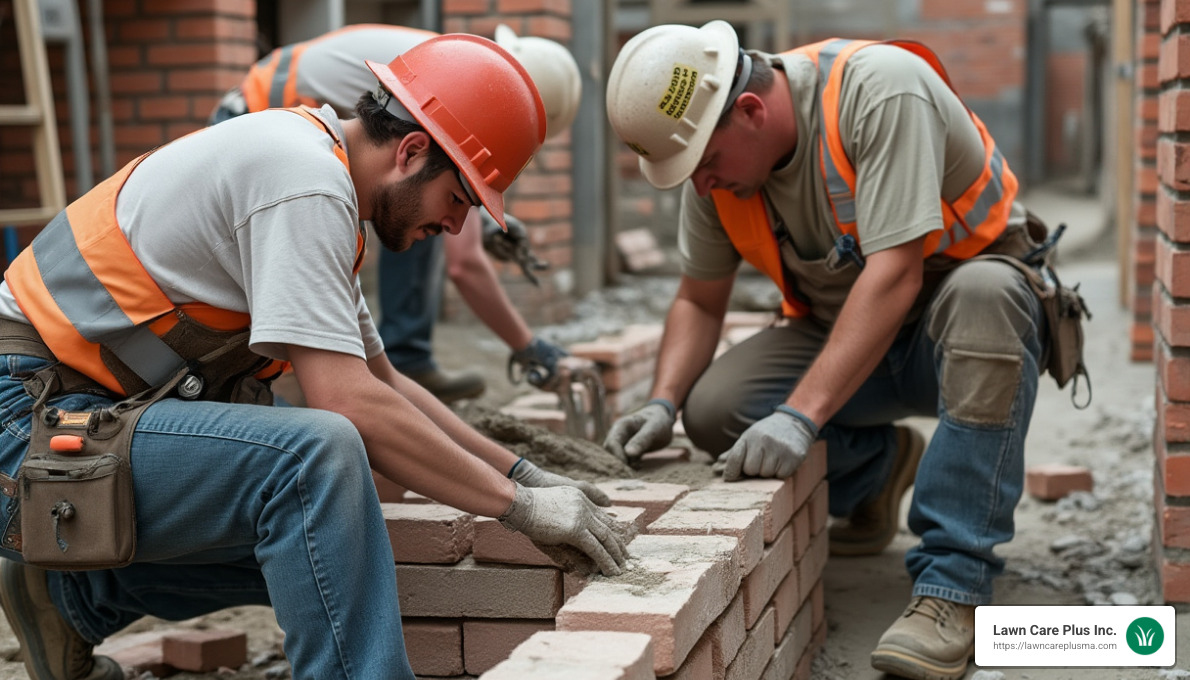
Masons must have a keen eye for detail and a strong understanding of construction principles. Their skills and tools come together to create structures that stand the test of time, showcasing the beauty and durability of masonry work.
Masonry Work vs. Concrete Work
Masonry work and concrete work are both essential components of construction, but they serve different purposes and involve distinct materials and techniques.
Understanding Concrete
Concrete is a versatile building material made from a mixture of cement, water, sand, and stone aggregates. It is known for its strength and durability, making it ideal for foundations, floors, and other structural elements. Concrete’s setting process involves a chemical reaction called hydration, which hardens the mixture over time. This process is crucial because it determines the final strength and stability of the structure.
Concrete is commonly used in large-scale commercial projects due to its ability to be poured into various forms and molds, allowing for custom shapes and sizes. It’s also favored for its relatively low maintenance requirements and resistance to weathering.
Benefits of Masonry Over Concrete
While concrete is undeniably strong, masonry work offers several advantages, particularly in terms of aesthetics and durability.
Durability: Masonry structures, such as those made with brick or natural stone, often last longer than concrete. This is because masonry materials are less prone to cracking and can withstand harsh weather conditions better. For instance, natural stone can last for decades, if not centuries, without significant deterioration.
Aesthetics: Masonry work provides a timeless and classic look that is hard to replicate with concrete. Each brick or stone is unique, adding character and charm to any structure. This aesthetic appeal makes masonry a popular choice for residential projects like patios and retaining walls.
Maintenance: Masonry requires minimal maintenance compared to concrete. While concrete may need repairs or resurfacing over time, masonry structures typically only require occasional cleaning to maintain their appearance.
While both concrete and masonry work have their place in construction, the choice between them often depends on the project’s specific needs and desired outcomes. Masonry work excels in providing long-lasting beauty and resilience, making it a preferred choice for many builders and homeowners alike.
Common Masonry Services and Projects
Masonry work is a crucial aspect of both residential and commercial construction, offering versatility and aesthetic appeal that few other building methods can match.
Residential Masonry Projects
In residential settings, masonry work transforms houses into homes with character and durability. Home renovations often use masonry for its timeless appeal and structural integrity. Whether adding a new fireplace or updating an exterior facade, masonry materials like brick and stone can breathe new life into a home.
Retaining walls are another popular residential project. These structures not only offer functional support for sloped landscapes but also improve the aesthetic appeal of a property. By using materials like natural stone or brick, homeowners can create beautiful, long-lasting barriers that blend seamlessly with their environment.
Patios are a favorite among homeowners looking to expand their outdoor living space. Masonry patios provide a sturdy, attractive foundation for relaxation and entertainment. With a variety of materials available, from bluestone to interlocking pavers, the design possibilities are endless. A well-crafted patio can significantly increase a home’s value and appeal.
Commercial Masonry Applications
In the commercial field, masonry work plays an essential role in the construction and design of office buildings and other structures. The use of masonry materials ensures durability and stability, which are vital for high-traffic areas. Moreover, the aesthetic versatility of masonry allows for creative architectural designs that can set a building apart.
Landscapes in commercial settings often feature masonry elements such as walkways, terraces, and retaining walls. These features not only improve the beauty of the space but also provide practical benefits like erosion control and defined pathways for foot traffic.
Public works projects, such as schools, libraries, and government buildings, frequently incorporate masonry for its durability and low maintenance requirements. The natural beauty of stone and brick makes these structures inviting and enduring, standing the test of time and weather.
In summary, masonry work is a vital component of both residential and commercial construction, offering a blend of beauty, functionality, and longevity. Whether for home renovations or large-scale public projects, the versatility and appeal of masonry make it a preferred choice across various applications.
Frequently Asked Questions about Masonry Work
Frequently Asked Questions about Masonry Work
What is the difference between a brickmason and a blockmason?
Brickmasons and blockmasons are both skilled tradespeople who specialize in masonry work, but they focus on different materials.
- Brickmasons primarily work with bricks, which are smaller and require precise placement. They often handle tasks like building walls, fireplaces, and other intricate structures. The work of a brickmason is detailed and often involves creating decorative patterns.
- Blockmasons, on the other hand, work with larger cement blocks. These blocks are used for constructing foundations, walls, and other substantial structures. Blockmasons often work on larger projects, where speed and efficiency are crucial due to the size of the blocks.
Both roles demand a keen eye for detail and a strong understanding of masonry techniques. They must also be adept at mortar application, ensuring that structures are both sturdy and aesthetically pleasing.
How long does a typical masonry project take?
The duration of a masonry project can vary greatly depending on several factors:
- Project Size: Larger projects, like building a new wall or patio, will naturally take longer than smaller repair jobs.
- Complexity: Intricate designs or challenging site conditions can extend the timeline.
- Materials Used: Some materials, like natural stone, may require more time to handle and install.
- Weather Conditions: As masonry work is often done outdoors, adverse weather can cause delays.
On average, smaller projects may take a few days to a week, while larger or more complex projects could span several weeks or even months.
Can masonry work be done in any weather condition?
While masonry work can be performed in various weather conditions, some scenarios are less than ideal.
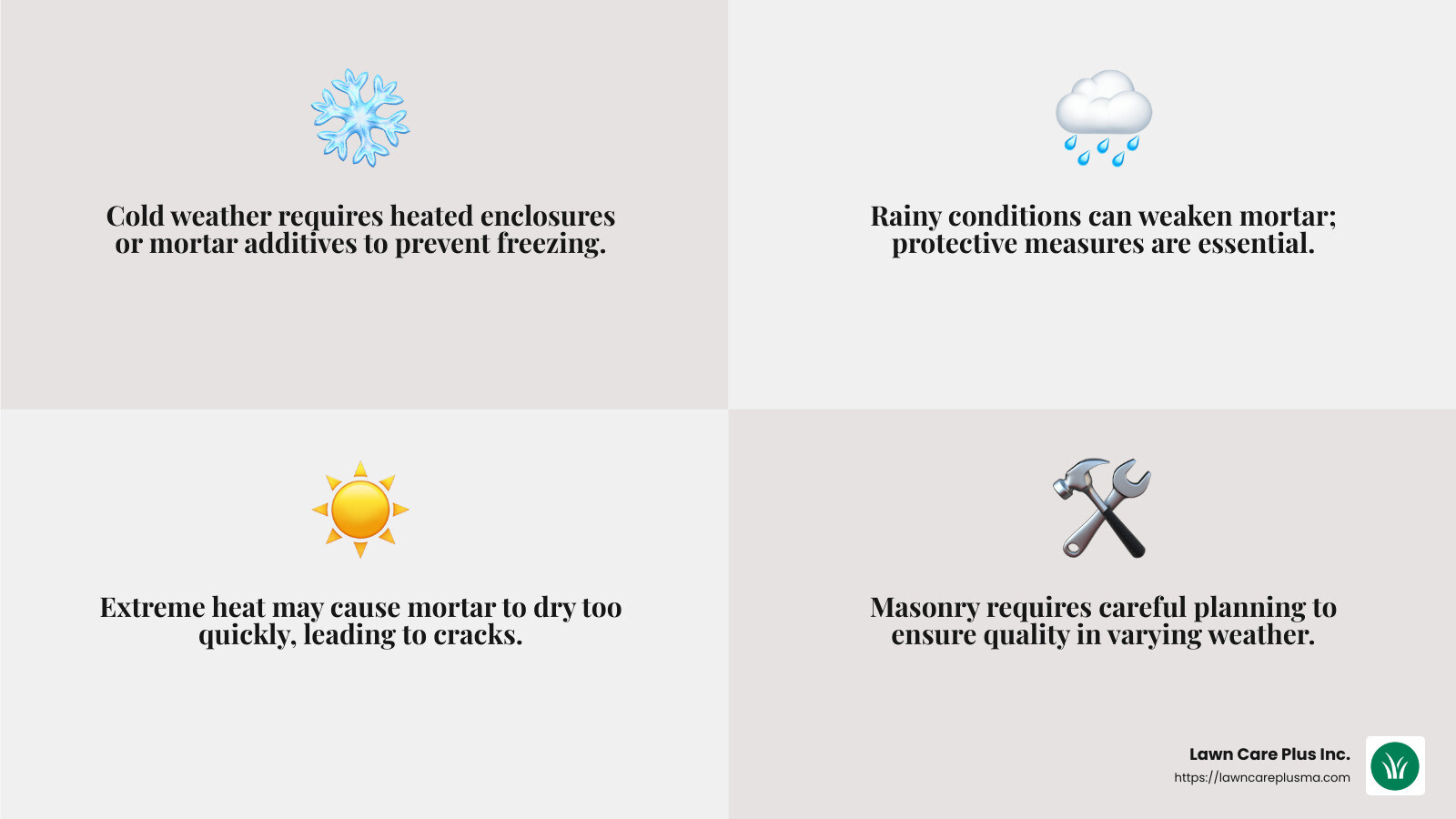
- Cold Weather: Working in freezing temperatures can be challenging because mortar requires time to set and cure properly. Extra precautions, such as using heated enclosures or additives in the mortar, may be necessary to prevent the mortar from freezing.
- Rainy Conditions: Excessive moisture can weaken mortar and affect the integrity of the structure. It’s best to avoid starting projects in heavy rain unless proper protective measures are in place.
- Extreme Heat: High temperatures can cause mortar to dry too quickly, which can lead to cracking. In such cases, masons may need to dampen the work area and mortar to ensure proper curing.
While masonry work can proceed in various weather conditions, careful planning and appropriate measures are essential to ensure the quality and durability of the finished project.
In the next section, we’ll explore how Lawn Care Plus Inc. delivers excellence in masonry services, ensuring that each project meets the highest standards of quality and craftsmanship.
Conclusion
At Lawn Care Plus Inc., we are deeply committed to delivering excellence in every aspect of our masonry work. Our team of skilled professionals ensures that each project is completed with the utmost care and precision, whether it’s a simple repair or a complex installation.
Our Commitment to Quality
Our commitment goes beyond just completing a task. We focus on understanding your unique needs and delivering solutions that improve the beauty and functionality of your property. We believe that every project, big or small, deserves the same level of dedication and craftsmanship.
Excellence in Service
We pride ourselves on our ability to transform spaces through our comprehensive masonry services. Our team is equipped with the latest tools and techniques to handle any challenge, ensuring that your project not only meets but exceeds expectations. From patios and walkways to retaining walls and driveways, our expertise covers a wide range of applications.
Our reputation for excellence is built on years of experience and a proven track record of satisfied customers. We strive to maintain this reputation by continuously improving our services and staying updated with industry trends.
If you’re ready to improve your property with top-notch masonry services, we invite you to contact us and find the Lawn Care Plus Inc. difference. Our team is ready to assist you with your next project, ensuring that you receive the best in quality and service.
