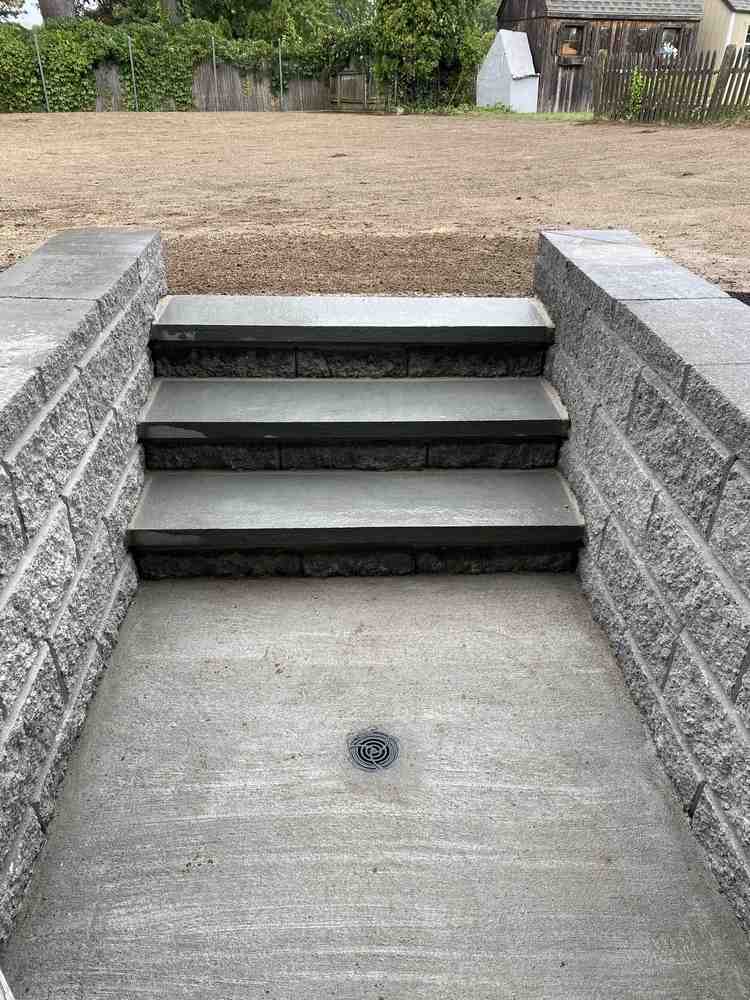
Why Choosing the Right Retaining Wall Company Matters
Retaining wall companies design and install structures that hold back soil, prevent erosion, and create functional outdoor spaces. A skilled contractor blends structural engineering with aesthetic vision to build walls that protect your property and improve its curb appeal.
What to Look for in Retaining Wall Companies:
- Experience: A proven track record with local soil and climate conditions.
- Engineering Capabilities: Professional design services that account for soil pressure, drainage, and structural integrity.
- Licensing and Insurance: Full coverage and proper certifications (like ICPI for pavers).
- Material Knowledge: Expertise in options like modular blocks, natural stone, or concrete.
- Transparent Process: Clear communication and detailed proposals from start to finish.
- Warranty Coverage: At least a 3-5 year warranty on labor.
When your property has erosion or drainage issues, a professionally built retaining wall is a functional necessity and a landscape upgrade. The retaining wall market reflects this, valued at $10.5 billion in 2022 and projected to reach $17.8 billion by 2032. However, quality varies greatly. A wall that lasts decades versus one that fails in years depends on proper engineering, materials, and installation. Poorly built walls can lean, crack, or collapse, causing costly damage.
I’m Tim DiAngelis, owner of Lawn Care Plus, Inc. For over a decade, our team has designed and installed retaining walls in Greater Boston and Metro-West, creating lasting landscape solutions. Working with expert retaining wall companies ensures you get a structure that is both reliable and beautiful.
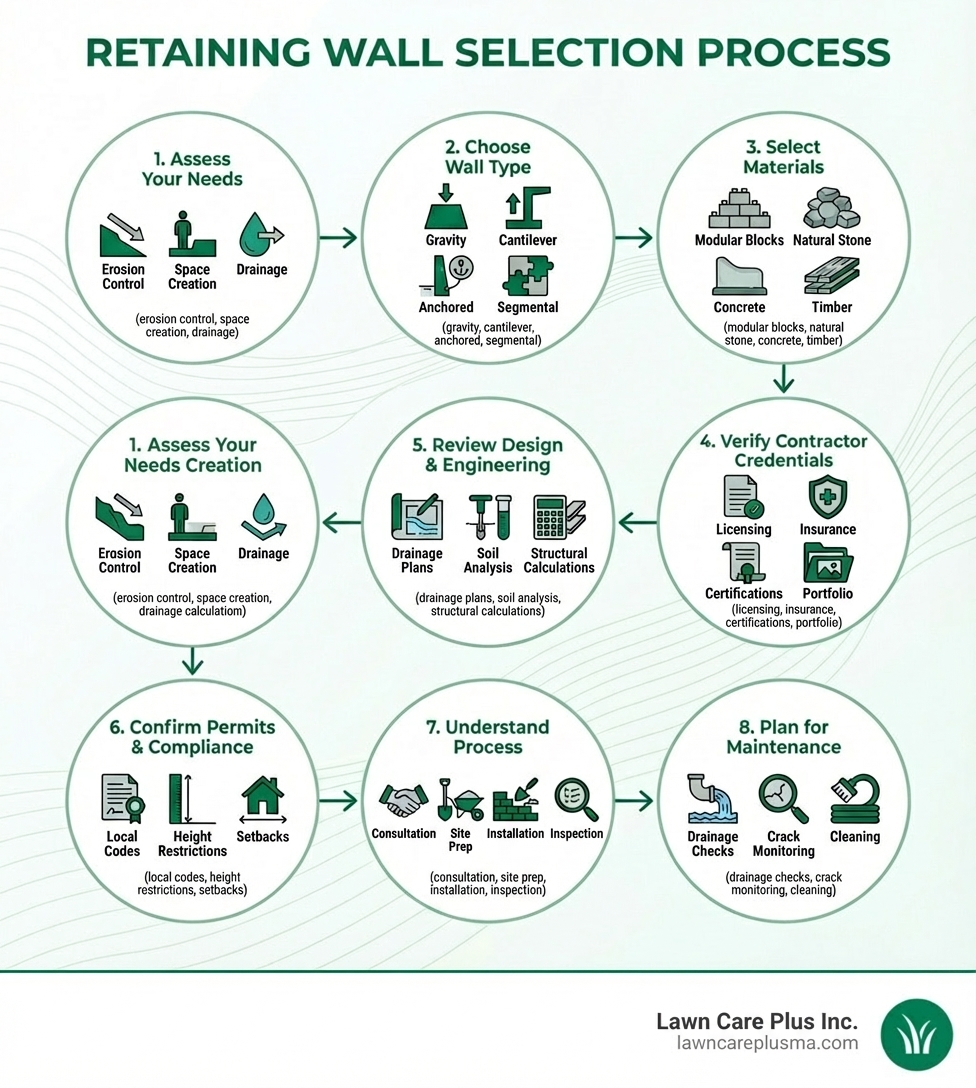
Retaining wall companies vocab to learn:
- Retaining Walls
- concrete block retaining wall
- retaining wall repair near me
The Functional and Aesthetic Benefits of a Retaining Wall
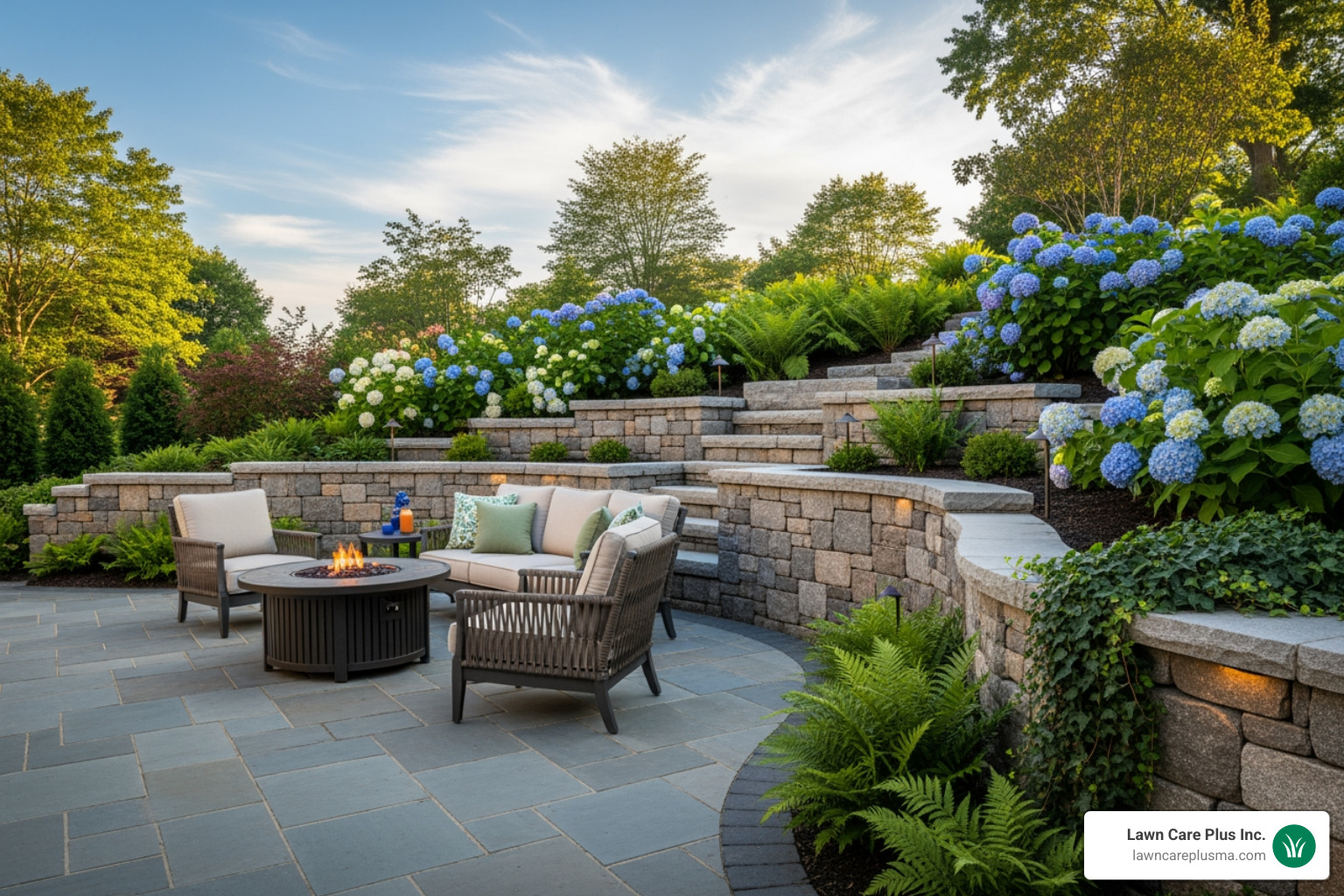
A retaining wall is a versatile tool that reshapes your property by holding back soil and changing ground elevation. This creates numerous practical and visual benefits for properties in areas like Belmont, Newton, and Wellesley.
A key function is soil erosion control. On sloped properties, a retaining wall prevents topsoil from washing away, ensuring slope stabilization and preventing landslides. They are also vital for stormwater management, directing runoff to protect foundations and prevent pooling, which is crucial in New England’s climate.
Retaining walls also create increased usable land by turning steep inclines into level terraces for gardening or entertaining. This expansion of space improves your lifestyle and contributes to improved property value. A well-designed wall is a quality landscape upgrade.
Finally, they offer significant aesthetic improvement. Retaining walls add visual interest, define outdoor spaces, and create a polished look. They can be a stylish feature that boosts your property’s curb appeal.
More info about our hardscaping services.
Maximizing Your Outdoor Space
Sloped yards, common around Boston, can feel restrictive. Retaining walls are an excellent solution for reclaiming and redefining these outdoor areas.
By creating terraces, we can transform a steep slope into multiple flat levels, making the land more accessible and providing zones for different activities like gardens or seating areas. Retaining walls are also essential for leveling for patios, creating the flat foundation needed for outdoor dining or fire pit areas on sloped ground. They are also perfect for defining garden beds, which improves drainage and adds structure to your landscape. All these applications contribute to usable grade creation, making your entire yard more functional and enjoyable.
More info about our patio & fire pits.
Solving Drainage and Erosion Problems
A retaining wall’s primary function is managing soil and water, which is crucial for property longevity in areas like Dedham, Hyde Park, and Canton.
They are designed for preventing soil shifting on sloped terrain, maintaining your landscape’s integrity and protecting structures downhill. They also play a key role in managing water runoff by redirecting water away from vulnerable areas. This is essential for protecting foundations from costly water damage and hydrostatic pressure, which can cause structural instability. In some cases, retaining walls can also provide shoreline protection by preventing land erosion near water.
Exploring Retaining Wall Types and Materials
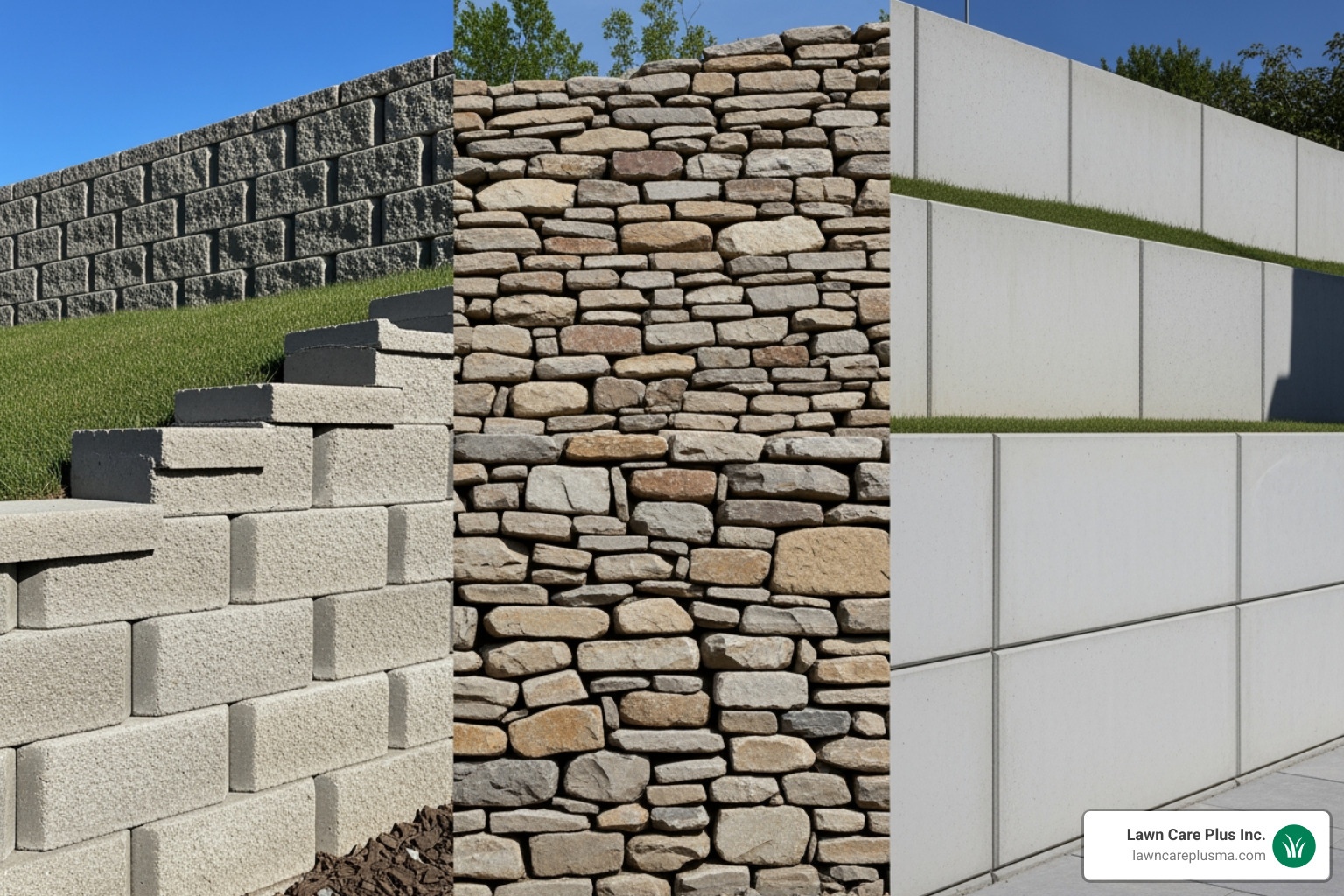
When planning a retaining wall in Brighton, Brookline, or Watertown, you have many options for structural design and materials. This allows for solutions that are both structurally sound and aesthetically pleasing. A company’s expertise across these options is a key differentiator for retaining wall companies.
We offer various material options, from natural stone to modular concrete blocks, each with unique durability and visual characteristics. There are also several structural types engineered for different site conditions. Modern construction offers great design flexibility, allowing for curved, tiered, or straight walls. Understanding the durability comparison between materials is key to making a lasting investment.
General information on retaining walls.
How Different Retaining Walls Function
The engineering behind retaining walls is fascinating, as each type uses distinct principles to counteract soil pressure. Understanding these functions helps us select the most effective solution for your landscape.
- Gravity Walls: These rely on their own mass (from large stone, concrete, or brick) to resist soil pressure. They are self-supporting and common in New England for shorter walls, offering a timeless look but requiring significant bulk.
- Cantilever Walls: Made of reinforced concrete or masonry, these walls use a lever-like design with a base slab. The soil’s weight on the base helps resist pressure, making them efficient for taller walls and challenging terrains. They are highly resistant to the freeze-thaw cycle.
- Anchored Walls: Ideal for very tall walls or tight spaces, these use “tiebacks” (steel rods or cables) anchored into the soil or rock behind the wall for extra stability. They are often made of cast-in-place concrete and provide robust support for ambitious designs.
- Sheet Piling Walls: Used in soft soils with limited space, these are made by driving interlocking sheets of steel, vinyl, or wood into the ground. While less common for residential projects, they are effective where a slender, strong solution is needed.
Common Materials Used by Professional Retaining Wall Contractors
The choice of material for your retaining wall significantly impacts its appearance, durability, and cost. Professional retaining wall companies like ours offer a variety of options suited to the landscapes of the Boston Metro-West area.
- Modular Concrete Blocks: A popular, cost-effective choice with easy installation and a wide variety of colors and finishes. These interlocking blocks are versatile for residential and commercial projects in areas like Newton and Randolph.
- Natural Stone: Offers a timeless, durable appearance that blends with nature. Typically used for gravity walls, they require skilled masonry but result in a beautiful, long-lasting structure ideal for properties in Chestnut Hill or Wellesley.
- Poured Concrete: Provides maximum strength, durability, and design versatility. These walls can be reinforced and formed into any shape, offering a modern aesthetic suitable for large residential or commercial projects.
- Timber and Wood: Offers a natural, rustic look. Pressure-treated wood is used to resist rot, but these walls have a shorter lifespan than stone or concrete and are not recommended for heights over 10 feet. They are an affordable but higher-maintenance option.
Choosing the right material involves balancing aesthetics with structural needs, budget, and desired longevity. Our team can guide you through these options to find the perfect fit for your project.
| Material Type | Cost (Relative) | Lifespan (Years) | Maintenance | Aesthetics |
|---|---|---|---|---|
| Modular Concrete Blocks | Moderate | 50-100+ | Low | Versatile, wide range of colors & textures |
| Natural Stone | High | 100+ | Very Low | Timeless, rustic, neat, blends with nature |
| Poured Concrete | Moderate-High | 75-100+ | Low | Modern, sleek, can be stamped or colored |
| Timber (Pressure-Treated) | Low-Moderate | 15-20 | Moderate (rot, insects) | Natural, rustic, blends with wooded areas |
The Professional Installation Process: From Design to Build
Starting on a retaining wall project, whether in Milton or Needham, involves a meticulous process. Professional retaining wall companies adhere to a structured approach to ensure every wall is beautiful, structurally sound, and compliant with local regulations.
Our process begins with comprehensive engineering and design, followed by a thorough site assessment. We then steer permitting and codes before moving into the construction phases, each executed with precision.
More info about our masonry services.
The Importance of Engineering and Design
The engineering and design phase is non-negotiable for any retaining wall, especially taller ones. This step ensures structural integrity through detailed calculations of size, shape, and reinforcement to resist soil pressure. Without it, walls can fail, leading to costly repairs.
A key part is soil pressure calculation, where engineers assess soil type and moisture to design a stable structure. Equally vital is drainage planning. Effective systems (weeping tiles, gravel backfill) are designed to prevent water buildup and hydrostatic pressure, a common cause of failure, especially with Massachusetts’ freeze-thaw cycles. This planning also guides material selection to ensure the chosen material is structurally adequate. The entire process is focused on ensuring long-term stability.
Navigating Local Regulations and Building Codes
Building a retaining wall requires compliance with local building codes in areas from Belmont to Wellesley. Professional retaining wall companies are well-versed in these rules, ensuring your project is legal and smooth.
Permit requirements are common, especially for walls over 3 or 4 feet in Massachusetts. Building without a permit can lead to fines or forced removal. Codes also specify wall height restrictions and property line setbacks to prevent hazards and disputes. These rules vary by town. Professional compliance is invaluable; we handle the entire permitting process, from plans to liaising with building departments in Boston, Newton, and surrounding communities. This ensures your project meets all legal standards.
A Step-by-Step Look at Installation
Installing a retaining wall is a complex process requiring expertise. Here’s an overview of the steps we follow for a successful installation:
- Consultation & Site Analysis: We meet with you to discuss your vision and assess your property’s soil, slopes, and drainage.
- Custom Design & Proposal: We develop a custom design with material selection, engineering, and drainage plans, then provide a detailed proposal with scope, timeline, and cost.
- Permitting: If required (often for walls over 3-4 feet), we manage the permit process with your local municipality to ensure compliance.
- Excavation & Base Preparation: A proper foundation is key. We excavate a trench and install a compacted gravel base, often with geotextile fabric to prevent soil contamination.
- Construction & Reinforcement: We build the wall layer by layer, ensuring proper leveling. For taller walls, geogrid reinforcement is added for stability.
- Backfilling & Drainage System: We backfill behind the wall with clear gravel and install a perforated pipe at the base to channel water away and prevent hydrostatic pressure.
- Final Inspection: We conduct a final walkthrough with you to ensure the project meets your expectations and provide maintenance tips for longevity.
How to Choose the Best Retaining Wall Contractor
Selecting the right partner from the many retaining wall companies is the most critical decision for your project. A retaining wall is a significant investment in your property’s safety, aesthetics, and value. Choosing wisely ensures a durable, beautiful structure, while a poor choice can lead to costly future problems.
Look for a team with demonstrable experience and expertise in designing walls for Massachusetts’ unique climate and soil. It’s essential to verify their insurance and licensing to protect yourself. Reviewing a contractor’s portfolio review shows their work quality, and genuine customer testimonials offer insight into their reliability.
Key Factors for Vetting Retaining Wall Contractors
When evaluating retaining wall companies in areas like Newton, Norwood, or Roslindale, a thorough vetting process is crucial. Here are the key factors to consider:
- Local Experience: Choose contractors experienced in the Boston Metro-West area. Familiarity with local soil, climate (like the freeze-thaw cycle), and building codes is invaluable for anticipating challenges.
- Certifications: Look for professional certifications, like from the Interlocking Concrete Pavement Institute (ICPI), which show a commitment to quality and industry standards.
- Comprehensive Insurance: Verify the contractor has liability insurance and workers’ compensation to protect you from liability. Always request proof.
- Written Contracts: A detailed contract is essential. It should outline the project scope, materials, timeline, payment schedule, and warranty to protect both parties.
- Transparent Communication: A good contractor keeps you informed, answers questions promptly, and works collaboratively to achieve your vision.
Questions to Ask Potential Retaining Wall Contractors
Asking the right questions upfront can save you headaches. When speaking with prospective retaining wall companies, consider these inquiries:
- What are your warranty details?: Reputable contractors offer a warranty on labor, typically 3-5 years, showing confidence in their work.
- What is the estimated project timeline?: Ask for start and completion dates and potential delays (like weather).
- Can you describe your team’s experience?: Inquire about the crew’s qualifications and specific training for retaining wall installation.
- How do you handle the permitting process?: Clarify if they manage the entire permit process with the local building department.
- Where do you source your materials?: Ask about their suppliers. Quality contractors use products from leading brands like PermaCon, Unilock, or Techo-Bloc.
Budgeting, Repairs, and Maintenance for Your Wall
A retaining wall is a long-term investment, and understanding its financial aspects, potential repairs, and ongoing care is crucial. Whether planning a new wall or assessing an existing one in Wellesley, Westwood, or Watertown, being informed helps protect your property.
We’ll explore the cost factors of a retaining wall project, how to identify repair signs, and provide maintenance tips. We’ll also cover the differences between residential vs. commercial needs, which often have different budgeting and maintenance approaches.
More info about our commercial property maintenance.
Understanding Retaining Wall Costs
Retaining wall costs vary significantly. The following figures are based on internet data, not actual Lawn Care Plus pricing. Please contact us for a personalized quote.
Generally, costs can range from $50-$600+ per linear foot for every 6 inches in height, reflecting the wide variety of materials and site conditions. Labor costs often range from $50-$200+ per linear foot, covering design, excavation, and installation.
Several factors influence the total cost:
- Material: Natural stone and poured concrete are typically more expensive than modular blocks or timber.
- Height and Length: Larger walls require more material, excavation, and engineering.
- Site Access: Difficult sites increase labor and equipment costs.
- Complexity: Curves, tiers, or integrated features add to the cost.
- Soil Conditions: Poor soil may require additional foundation work.
The investment is often worthwhile, as reflected by the growing market. The retaining wall market size was valued at $10.5 billion in 2022 and is projected to reach $17.8 billion by 2032, driven by demand in residential and commercial development.
Common Issues and Signs Your Wall Needs Repair
Even well-built walls can show wear over time. Identifying issues early can prevent major repairs. If you see these signs in Dedham, Hyde Park, or Jamaica Plain, seek a professional assessment from retaining wall companies.
- Leaning or Bulging: A serious sign that soil pressure is exceeding the wall’s capacity, often due to poor drainage or foundation problems.
- Cracking or Crumbling: Significant cracks (especially horizontal) or crumbling material can indicate structural distress or material degradation.
- Water Pooling: Water accumulating near the wall signals drainage failure, which creates immense pressure and can cause rapid deterioration.
- Separation from Adjacent Structures: If the wall is pulling away from a patio or walkway, it indicates movement and can compromise the stability of both structures.
Addressing these issues promptly is key. A professional repair is often more cost-effective than waiting for a complete wall failure.
More info about our spring & fall yard clean-ups.
Frequently Asked Questions about Retaining Walls
We frequently receive questions from clients throughout the Boston Metro-West area regarding retaining walls. Here, we address some of the most common inquiries to provide clarity.
What’s the difference between residential and commercial retaining wall needs?
While the basic function is the same, retaining wall companies approach residential and commercial projects differently:
- Scale and Load: Commercial walls are larger and support heavier loads (buildings, parking lots), while residential walls are smaller (for gardens, patios).
- Engineering Requirements: Commercial projects require extensive, licensed engineering due to higher stakes. Residential projects may have simpler engineering for shorter walls.
- Durability Standards: Commercial walls are built to higher standards with more robust materials to withstand heavy use and exposure.
- Aesthetic Focus vs. Pure Function: Residential walls often prioritize aesthetics and landscape integration. Commercial walls may prioritize function and cost-effectiveness, though many now blend both.
How long does a retaining wall last?
The lifespan depends on the material, installation quality, and maintenance.
- Timber walls: 15-20 years; susceptible to rot and insects.
- Modular concrete block walls: 50-100+ years; highly durable with proper installation.
- Natural stone walls: 100+ years; among the longest-lasting.
- Poured concrete walls: 75-100+ years; very durable when reinforced.
Proper installation—including engineering, a stable foundation, and good drainage—is the key to maximizing any wall’s lifespan.
Do all retaining walls need a permit?
Not all retaining walls need a permit in Massachusetts, but many do. It depends on local codes and the wall’s height.
- Walls over a certain height (often 3-4 feet) typically require a building permit. This threshold varies by town, so it’s important to check local rules in places like Belmont, Newton, or Wellesley.
- Permits are also common for walls supporting significant loads or near property lines.
Professional retaining wall companies are familiar with local regulations and can manage the permitting process to ensure your project is compliant.
Your Partner for a Lasting Landscape Solution
A retaining wall is a significant investment in your property’s safety, functionality, and beauty. By understanding the different types, materials, and the importance of proper engineering, you can make an informed decision. Choosing an experienced contractor is the most critical step to ensure your wall stands the test of time. The team at Lawn Care Plus Inc. has the expertise to design and build retaining walls that are both structurally sound and visually stunning, changing your landscape for years to come.
Ready to enhance your property? Contact us for your retaining wall project.