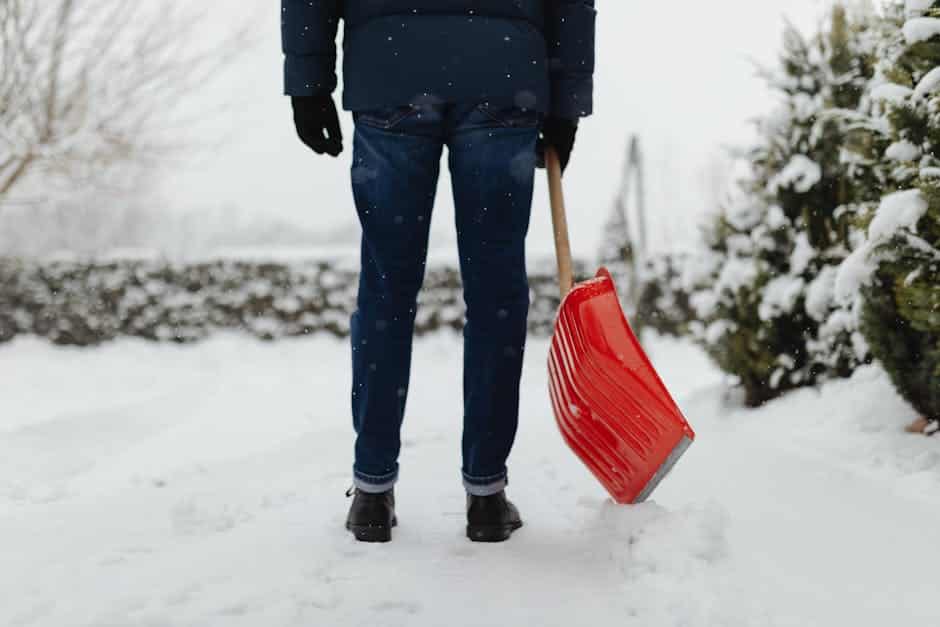
Snow removal and landscaping are essential services for maintaining beautiful and functional properties, especially in areas like the Boston Metro-West, where snowy winters are a given. Whether you’re a homeowner or manage commercial properties, understanding the nuances of these services can save you time, money, and a whole lot of hassle.
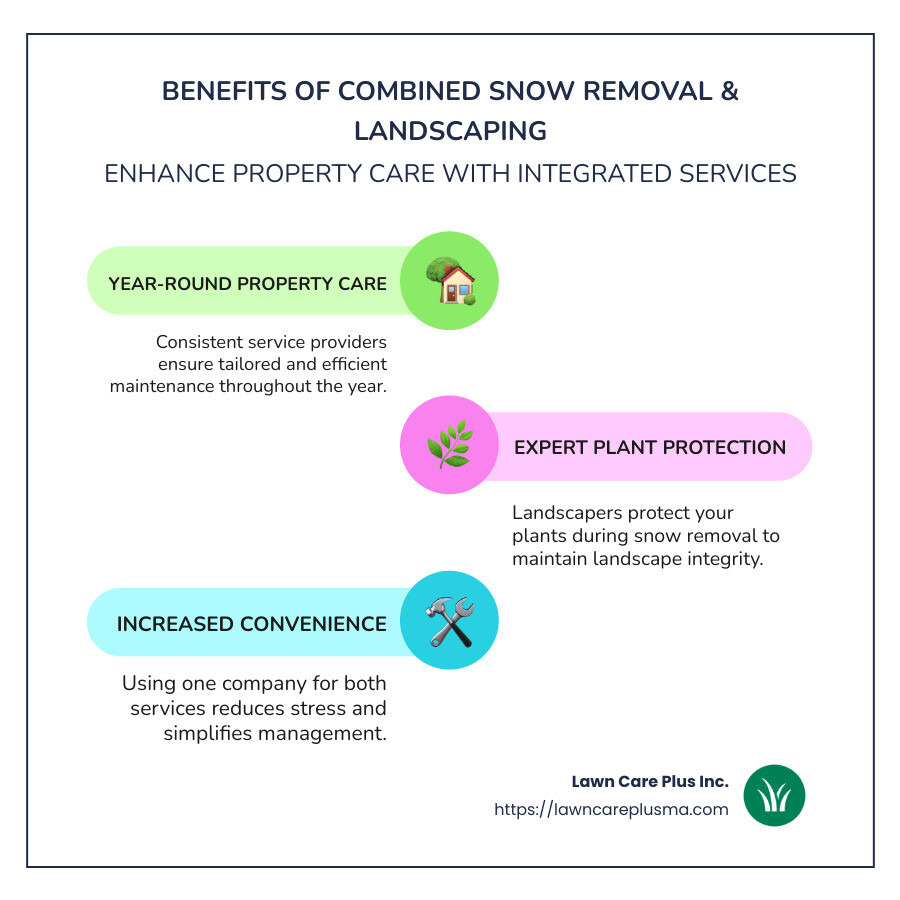
Here’s why you should consider snow removal and landscaping as a combined service:
- Year-round property care: Consistent service providers know your property, leading to custom care and efficient maintenance.
- Expertise: Landscapers handle plant protection during snow removal, ensuring your landscape remains intact.
- Convenience: One company for all services means less stress managing different teams for different needs.
Caring for your property across all seasons not only boosts curb appeal but also ensures safety from hazards like slips and falls due to untreated snow. By engaging a professional service that understands both snow and greenery, you protect your investment with minimal effort on your end.
Quick snow removal and landscaping terms:
– commercial snow removal boston ma
– massachusetts snow removal law
– residential snow removal boston ma
Understanding Snow Removal and Landscaping
Snow Removal vs. Snow Plowing
When it comes to snow removal and landscaping, it’s crucial to understand the difference between snow removal and snow plowing. While these terms are often used interchangeably, they serve different purposes and suit different settings.
Snow Removal involves completely removing snow from your property. This is common in commercial settings where space is limited, and snow piles can’t be left to melt naturally. It’s a more expensive option because it requires scooping up the snow and transporting it elsewhere.
Snow Plowing, on the other hand, is more common in residential areas. Here, the snow is pushed into piles and left on the property. This method is more economical, as it doesn’t involve transporting snow offsite.
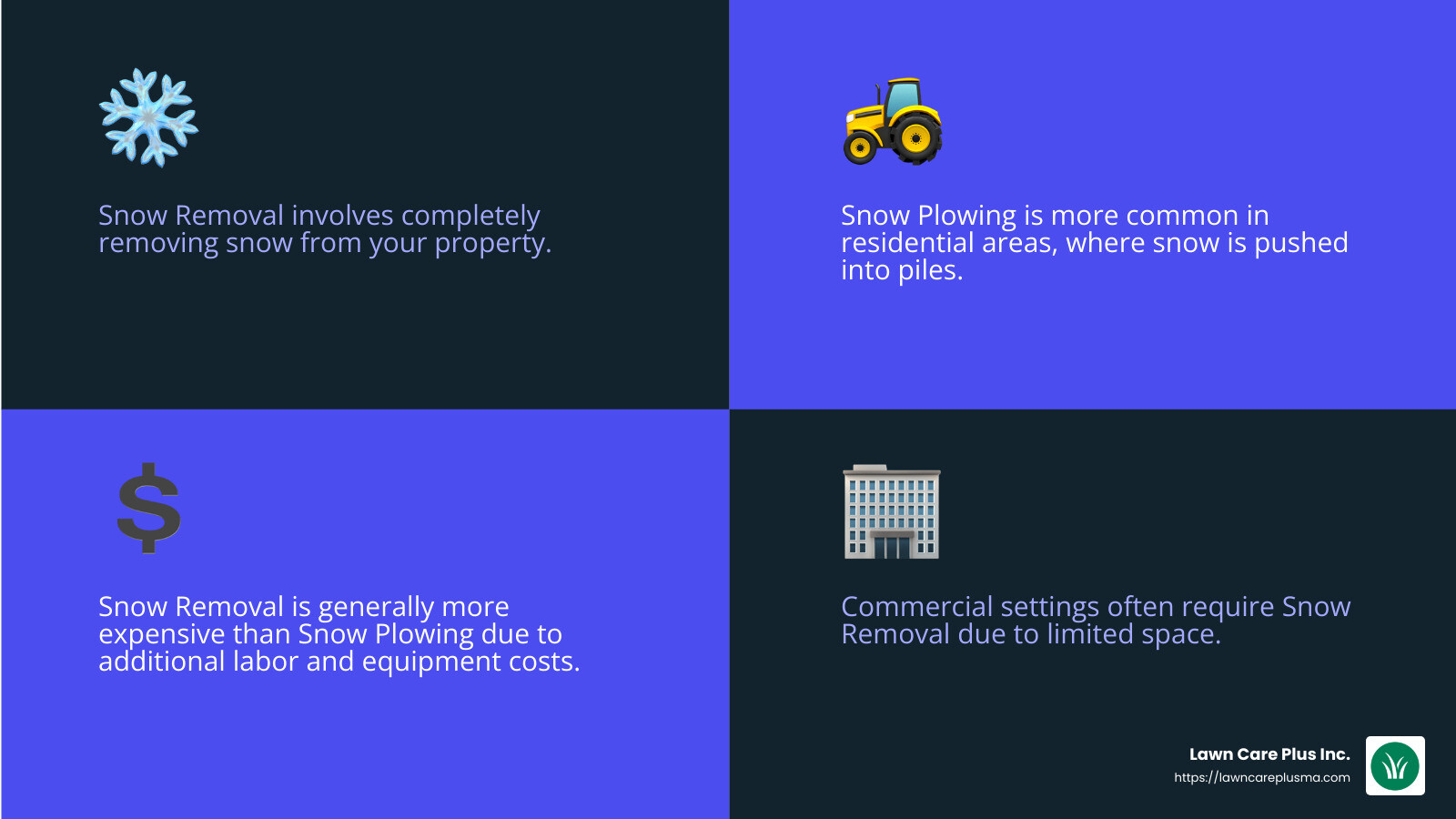
Cost Differences: Generally, snow removal costs more than snow plowing. The extra expense comes from the need to haul snow away from the site, which requires additional labor and equipment.
Benefits of Combining Snow Removal and Landscaping Services
Combining snow removal and landscaping services offers several advantages:
- Year-round Service: Having a single provider for both services ensures consistent care throughout the year. They become familiar with your property, which leads to more personalized and effective maintenance.
- Property Knowledge: Landscapers who also manage snow removal will understand the specific needs of your property, from plant care to optimal snow placement. This knowledge helps in protecting your landscape during harsh winters.
- Plant Care: During snow removal, experts can take measures to protect your plants from damage. For instance, they might use less corrosive deicing products like acetate, which are gentler on plants compared to traditional salt.
- Hassle Reduction: Dealing with one company for both landscaping and snow removal minimizes the stress of coordinating multiple service providers. This streamlined approach saves time and reduces potential miscommunications.
By choosing a service that integrates both snow management and landscaping, you ensure your property remains beautiful and safe, no matter the season. This holistic approach not only improves curb appeal but also protects your investment with less effort on your part.
Types of Snow Removal Services
When winter hits, effective snow removal and landscaping services become essential for safety and accessibility. Let’s explore the various services available to manage snow effectively.
Driveway and Walkway Clearing
Clearing driveways and walkways is a priority for safe and easy access to your home or business. Different tools can be used depending on the size and complexity of the area:
- Plows: Ideal for large driveways, plows push snow into piles. This method is quick and efficient for areas with space to store snow until it melts.
- Snow Blowers: These machines are perfect for medium-sized driveways and walkways. They are more powerful than snow throwers and can handle deeper snow.
- Shovels and Mechanical Brooms: For smaller areas or delicate surfaces, shovels and mechanical brooms offer precision. They are great for clearing snow from narrow walkways or around obstacles.
Choosing the right equipment helps keep costs down and ensures the job is done effectively.
Roof Shoveling
Snow accumulation on roofs can lead to blockages, leaks, and even structural damage. Roof shoveling is critical for preventing these issues:
- Safety First: Removing snow from roofs is risky. It’s crucial to hire professionals who understand how to do it safely to avoid accidents.
- Preventing Blockages: By keeping gutters and roof edges clear, you prevent blockages that can lead to ice dams and water damage.
- Protecting Plants: Snow falling from roofs can crush plants below. Professional services can clear snow in a way that protects your landscaping.
Deicing Products
After clearing snow, it’s important to prevent ice formation. Deicing products play a key role in maintaining safety:
- Salt and Sand: Commonly used for deicing, salt lowers the freezing point of water, while sand provides traction. However, excessive salt can harm plants and corrode surfaces.
- Acetate Deicing Products: These are less corrosive alternatives to traditional salt. They are gentler on plants and less damaging to the environment.
When choosing deicing products, consider their environmental impact and how they might affect your landscape. Opt for products that balance effectiveness with environmental safety.
By understanding the different types of snow removal services, you can select the right solutions to keep your property safe and accessible all winter long. Up next, we’ll explore how to choose the right snow removal and landscaping service provider.
How to Choose the Right Snow Removal and Landscaping Service
Selecting the right snow removal and landscaping service can make a significant difference in maintaining your property effectively throughout the year. Here’s how to evaluate potential service providers and understand the cost considerations involved.
Evaluating Service Providers
When choosing a service provider, it’s important to consider several factors to ensure you receive reliable and efficient service:
- Experience and Expertise: Look for companies with a proven track record in both snow removal and landscaping. Experienced providers are more likely to understand the nuances of your property and offer custom solutions.
- Equipment and Technology: Modern, well-maintained equipment ensures that snow removal is done efficiently and safely. Ask potential providers about the tools they use for various tasks like plowing, shoveling, and deicing.
- Customer Reviews: Check reviews and testimonials from past clients. Look for comments on timeliness, professionalism, and quality of service. A high number of positive reviews can indicate a trustworthy provider.
- Service Range: Ensure the company offers a comprehensive range of services that meet all your needs, from snow plowing to deicing and landscaping maintenance.
- Local Expertise: A local provider will have a better understanding of the typical weather patterns and conditions in your area, which can be crucial for effective snow management.
Cost Considerations
Understanding the cost structure of snow removal services can help you budget effectively. Here are the common billing methods and factors that influence pricing:
- Seasonal Billing: This option involves paying a flat rate for the entire winter season. It’s predictable and can protect you from unexpected costs during heavy snowfall. However, you pay the same rate regardless of the actual snowfall.
- Per Inch Billing: With this method, you pay based on the amount of snowfall. This can be fairer if your area experiences variable snow levels, as you only pay for the service you receive.
- Hourly Billing: Some services, especially those involving detailed work like roof shoveling, may be charged by the hour. This is useful for tasks where the time needed can vary greatly.
- Cost Factors: Several factors can affect the total cost, including the size and complexity of your property, accessibility, and any specific requirements like delicate landscaping or difficult-to-reach areas.
By evaluating service providers thoroughly and understanding the cost considerations, you can choose a snow removal and landscaping service that fits your needs and budget. This ensures your property remains safe and well-maintained all year round.
Tips for Protecting Your Landscape During Snow Removal
Winter can be tough on your landscape, but with the right strategies, you can minimize damage and keep your property looking great. Here are some essential tips to protect your landscape during snow removal.
Preventing Plow Damage
Snow plows can be a lifesaver during heavy snowfalls, but they can also damage your landscape if not used carefully. Here’s how to prevent plow damage:
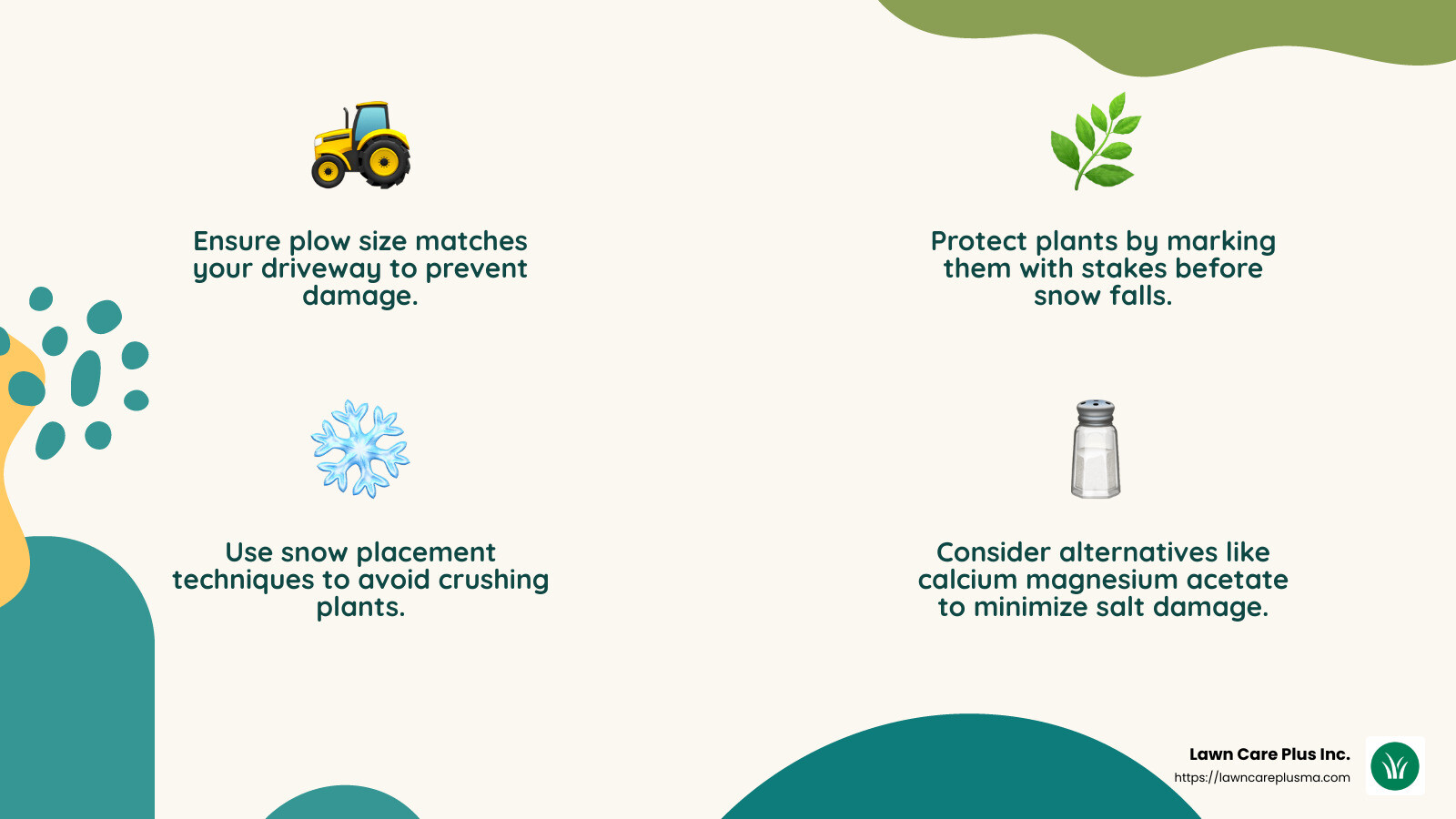
- Plow Size and Sidewalk Width: Ensure that the plow used is appropriate for your driveway and sidewalks. A plow that’s too large can easily damage curbs, plant beds, and other landscape features. Communicate with your service provider about the dimensions of your property to avoid mishaps.
- Plant Protection: Protect plants by marking their locations with stakes before the snow falls. This helps plow operators avoid accidentally running over them. Consider using barriers or temporary fencing around delicate areas to provide an extra layer of protection.
- Proper Snow Placement: Instruct the plow operator to pile snow in areas that won’t harm your landscape. Avoid piling snow on top of plants, which can crush them, or in low areas where melting snow can lead to waterlogging and root damage.
Minimizing Salt Damage
Salt is a common deicing agent, but it can wreak havoc on your landscape. Here’s how to minimize its impact:
- Alternative Deicers: Consider using deicing products that are less harmful to plants, such as calcium magnesium acetate or sand. These alternatives can effectively melt ice without the damaging effects of traditional salt.
- Runoff Management: Ensure that meltwater from salted areas doesn’t flow into plant beds. Creating barriers or channels can help redirect runoff away from sensitive areas. This protects plant roots from salt exposure, which can lead to dehydration and nutrient imbalances.
- Plant Safety: After the snow melts, water your plants thoroughly to wash away any residual salt. This helps dilute and remove salt from the soil, reducing the risk of long-term damage.
By following these tips, you can keep your landscape healthy and beautiful, even during the harshest winter months. Proper planning and communication with your snow removal and landscaping service can make all the difference in preserving your outdoor spaces.
Frequently Asked Questions about Snow Removal and Landscaping
What is the difference between snow removal and snow plowing?
The terms snow removal and snow plowing are often used interchangeably, but they refer to different processes. Snow plowing involves pushing snow into a pile on your property, typically at the edge of a driveway or parking lot. This method is more common in residential settings where there is ample space for snow piles. It’s also more economical, making it a popular choice for homeowners.
On the other hand, snow removal means completely removing the snow from the property. This is more common in commercial settings or urban lots where space is limited. Snow removal involves scooping up the snow and transporting it to another location, which makes it a pricier option.
How do I budget for snow removal?
Budgeting for snow removal involves considering several factors. First, understand the pricing models that service providers offer. Some companies charge per visit, while others may offer seasonal contracts. Seasonal billing can be cost-effective if you anticipate frequent snowfalls.
Next, assess the size of the area that needs clearing and any obstacles that might complicate the process. Wider driveways and clear paths are less expensive to maintain than narrow, obstacle-filled areas. Also, consider any additional services like deicing or roof shoveling, which can increase costs.
Finally, get multiple quotes from local providers to compare prices. Look for providers with good customer reviews and a solid reputation to ensure you’re getting value for your money.
How can I protect my landscape during snow removal?
Protecting your landscape during snow removal is crucial to maintaining its health and appearance. Here are some key strategies:
- Use Proper Equipment: Ensure that the snow removal service uses equipment suitable for your property. Oversized plows can damage sidewalks and plant beds, so communicate your property’s dimensions clearly.
- Strategic Snow Placement: Instruct the service to pile snow in areas that won’t harm your landscape. Avoid piling snow on top of plants or in low-lying areas where melting snow can cause waterlogging.
- Choose Safe Deicers: Opt for deicing products that are less harmful to plants, like calcium magnesium acetate. This reduces the risk of salt damage, which can dehydrate and damage plant roots.
- Mark Plant Locations: Use stakes or markers to indicate where plants are located. This helps snow removal operators avoid damaging them.
By taking these precautions, you can keep your landscape safe and sound throughout the winter season while ensuring effective snow management.
Conclusion
In summary, understanding the nuances of snow removal and landscaping can significantly improve the management of your property during the winter months. By combining these services, you benefit from year-round care, ensuring your landscape remains healthy and visually appealing. With the right strategies, you can protect your plants and infrastructure from the potential damages of snow and ice.
At Lawn Care Plus Inc., we are committed to providing comprehensive snow management services custom to your needs. Our experienced team is well-equipped to handle everything from driveway clearing to safe deicing practices, ensuring your property is both accessible and safe during the snowy season.
For those in the Boston Metro-West area, our expertise in both landscaping and snow removal means you can trust us to care for your property year-round. We pride ourselves on delivering exceptional service with a focus on customer satisfaction.
If you’re ready to experience the benefits of professional snow removal and landscaping services, contact us today for a consultation. Let us help you keep your property safe and beautiful, no matter the season.