
Retaining wall design is crucial in changing outdoor spaces from functional to fabulous. These structures not only serve practical purposes, like preventing erosion and managing water, but they also significantly improve the aesthetics of a property. Whether you’re a homeowner or a property manager in the busy Boston Metro-West area, understanding the importance of retaining walls can lift your landscape design.
Quick Takeaways:
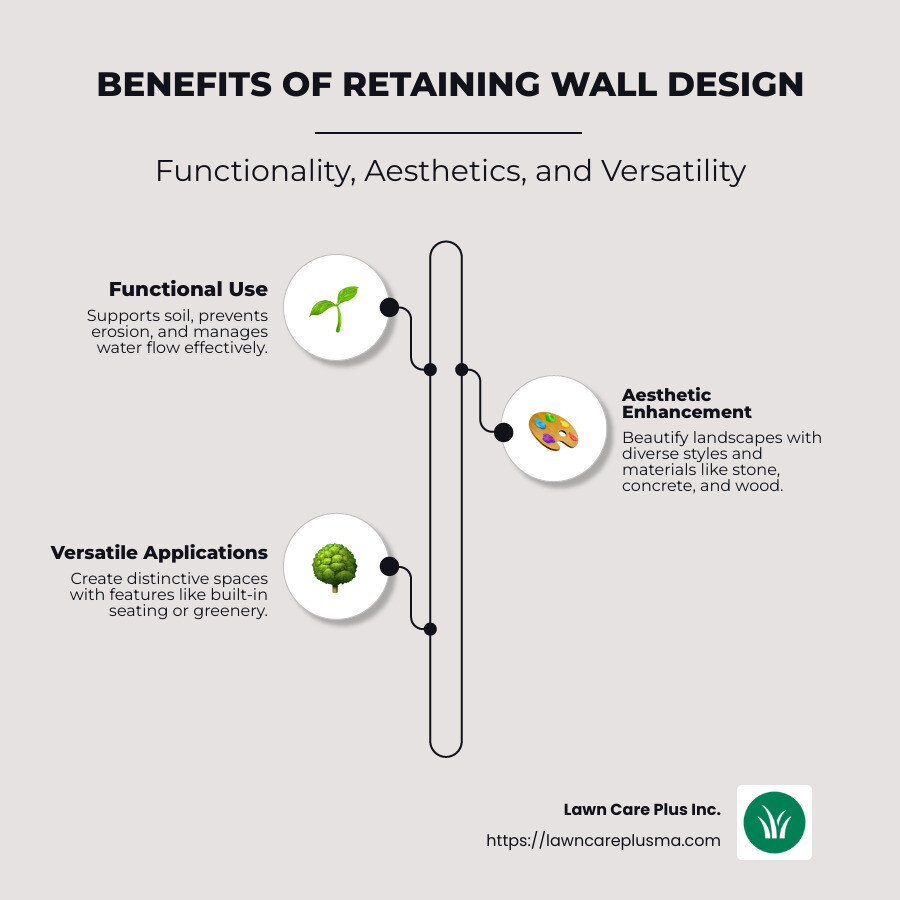
- Function: Supports soil, prevents erosion, and manages water flow.
- Aesthetic Appeal: Improves landscape beauty with various styles and materials.
- Types of Materials: Options include stone, concrete, and wood.
Retaining walls offer a blend of durability and style, fitting into a variety of design themes—modern, traditional, or rustic. They can delineate spaces in your garden, add dimension, and become a focal point with creative touches like built-in seating or lush greenery. Investing in well-designed retaining walls can make your outdoor areas not just functional, but also breathtakingly beautiful.
Must-know retaining wall design terms:
– block retaining wall
– block walls
– retaining wall cost
Understanding Retaining Wall Design
Retaining walls are more than just structures holding back soil. They are integral to both the functionality and aesthetics of a landscape. Understanding the different types, materials, and cost considerations is essential for making informed decisions.
Types of Retaining Walls
Gravity Walls rely on their mass to resist the pressure from the soil. Made from heavy materials like stone or concrete, these walls are ideal for shorter heights.
Cantilever Walls use a structural footing to leverage the weight of the soil. They are more economical for taller walls and often made from reinforced concrete.
Reinforced Soil Walls incorporate geogrid or other materials to strengthen the soil itself, allowing for greater height and flexibility in design.
Each type has its unique advantages and applications, so choosing the right one depends on the specific needs of your property.
Choosing the Right Materials
The choice of materials plays a crucial role in the functionality and appearance of a retaining wall. Here are some popular options:
- Concrete: Durable and versatile, concrete can be poured or made into blocks. It’s great for modern designs and can be finished in various textures and colors.
- Stone: Offers a natural, timeless look. Stone walls blend seamlessly with gardens and landscapes, providing a rustic charm.
- Wood: A cost-effective option, especially for temporary walls. Pressure-treated wood can extend its lifespan, but it’s less durable than stone or concrete.
- Masonry: Includes brick and other block materials, offering a classic look with a variety of design possibilities.
Selecting the right material involves balancing aesthetics, durability, and budget.
Cost Considerations
When planning a retaining wall, it’s important to consider not just the initial installation costs, but also maintenance and longevity.
- Installation: Costs vary based on wall type, materials, and labor. Complex designs or larger walls typically require more investment.
- Maintenance: Some materials, like wood, may need regular upkeep to prevent decay, while stone and concrete generally require less maintenance.
- Longevity: Natural stone and concrete walls can last for decades, making them cost-effective in the long run despite higher upfront costs.
Understanding these factors can help you make a decision that suits both your budget and your design goals.
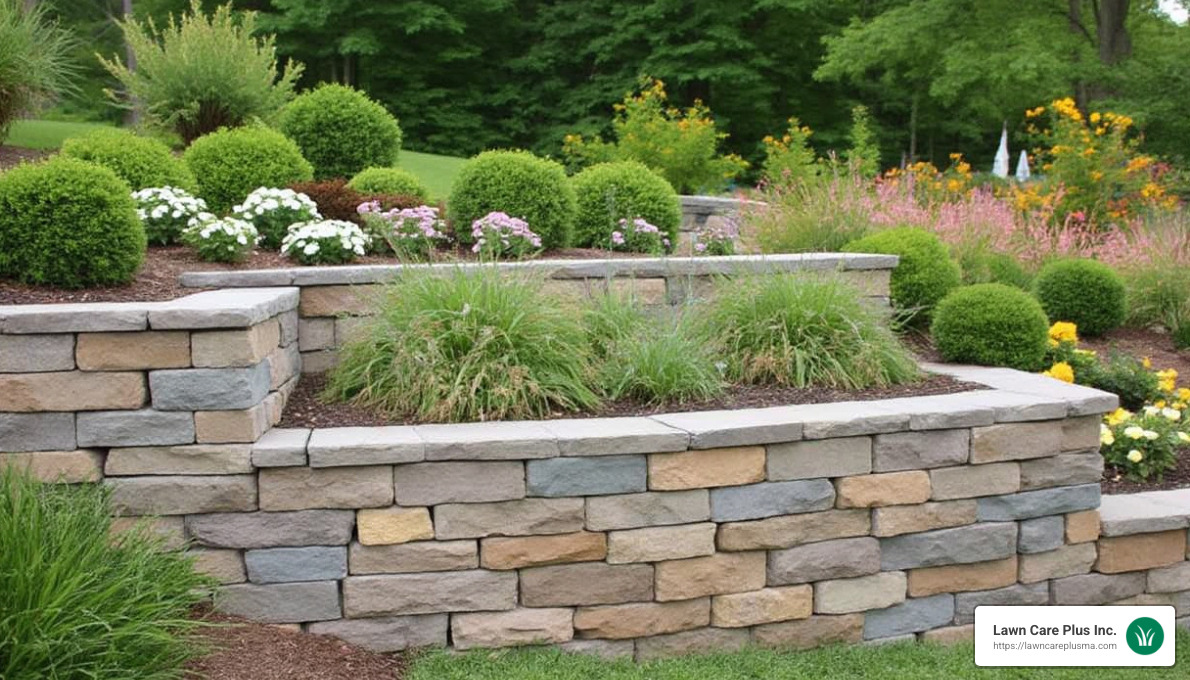
Incorporating retaining walls into your landscape design not only adds structural stability but also improves the visual appeal of your outdoor space. Whether you’re looking to prevent erosion, manage water flow, or simply add an aesthetic touch, the right retaining wall design can transform your property.
The Art of Retaining Wall Design
Retaining walls are more than just functional barriers holding back soil. They are a canvas for creativity, seamlessly blending functionality and visual appeal to lift your landscape. Let’s explore how these structures can improve your outdoor space through thoughtful design and integration.
Enhancing Landscape Aesthetics
Garden Integration is a key aspect of retaining wall design. By incorporating planter boxes or using the wall itself as a backdrop for climbing plants, you can create a lush, green oasis. This not only softens the hard edges of the wall but also brings your garden to life.
Color Schemes play a significant role in the overall look. Choosing materials that complement your home’s exterior or the surrounding landscape can create a harmonious environment. For instance, concrete can be colored or textured to mimic natural stone, offering a sleek, modern aesthetic.
Textural Contrast is another technique to consider. Mixing materials like stone and wood can add depth and interest. A stone wall with a smooth finish paired with rough-hewn timber accents can create a striking visual effect that draws the eye and defines the space.
Functional Benefits Beyond Soil Retention
Beyond aesthetics, retaining walls offer numerous functional benefits:
- Erosion Control: By stabilizing slopes and holding back soil, retaining walls prevent erosion, protecting your landscape from washouts and preserving the integrity of your property.
- Flood Management: Retaining walls can also be designed to manage water flow, directing runoff away from vulnerable areas. This is especially crucial in regions prone to heavy rainfall, where proper drainage can prevent costly water damage.
- Space Creation: On sloped properties, retaining walls can transform unusable areas into functional spaces. By creating terraces, you can add patios, gardens, or even a play area, maximizing your outdoor living space.
The integration of these elements ensures that your retaining wall is not just a barrier but a beautiful, functional part of your landscape design.
Incorporating these ideas into your retaining wall design can significantly improve both the beauty and utility of your outdoor space. Whether it’s through thoughtful material selection, creative garden integration, or addressing practical needs like erosion control, the possibilities are endless.
Innovative Retaining Wall Ideas for Your Home
Incorporating Seating and Garden Features
Retaining walls can transform your outdoor space into a multifunctional haven. By incorporating seating into the design, you can create a cozy nook for relaxation or social gatherings. Imagine a built-in bench nestled against a stone wall, offering a perfect spot to enjoy your garden.
Adding planter integration into the retaining wall design is another way to blend functionality with nature. Planters can be seamlessly built into the wall, providing a home for vibrant flowers or lush greenery. This not only improves the visual appeal but also maximizes space, especially in smaller yards.
Consider using dual-purpose walls that serve both as a boundary and a feature. For instance, a retaining wall with integrated seating and planters can serve as a focal point in your landscape, drawing attention while offering practical benefits.
Using Retaining Walls as Artistic Statements
Retaining walls don’t have to be mundane. They can be transformed into artistic statements that reflect your personal style. One way to achieve this is by incorporating sculptural forms into the wall design. Curved lines or geometric shapes can turn a simple wall into a work of art, adding character and interest to your outdoor space.
Mural opportunities are another creative avenue. A retaining wall can serve as a canvas for a mural, whether it’s a vibrant painting or a subtle, textured design. This approach not only personalizes your space but also lifts the wall from a mere structural element to a captivating feature wall.
By exploring these creative designs, you can ensure that your retaining wall is more than just a functional necessity. It’s a versatile component that improves your landscape, offering beauty, utility, and a touch of your unique personality.
Retaining Wall Design Considerations
Ensuring Structural Integrity
When designing a retaining wall, safety should be your top priority. A well-designed wall not only holds back soil but also stands strong against the forces of nature. To achieve this, you need to conduct a thorough load analysis. This involves calculating the weight of the soil, any additional loads from structures or vehicles, and the impact of environmental factors like wind and water.
Soil assessment is another crucial step. Understanding the type of soil you’re working with helps in determining the wall’s design and material. Different soils have varying levels of stability and drainage, which can affect the wall’s performance. For instance, clay soil retains water and can exert more pressure on the wall, whereas sandy soil drains well but might not provide as much support.
Proper drainage is essential to prevent water buildup, which can lead to wall failure. Incorporate drainage solutions like gravel backfill and weep holes to allow water to escape, reducing hydrostatic pressure on the wall. Water is one of the biggest threats to retaining walls, so addressing drainage from the start is key.
Navigating Building Codes and Regulations
Building a retaining wall isn’t just about design; it’s also about adhering to local codes and regulations. Each area may have specific requirements regarding wall height, materials, and construction methods. Before starting your project, research the regulations in your location to ensure compliance.
Permit requirements can vary, especially for walls above a certain height or those supporting significant loads. Check with your local building authority to see if a permit is necessary. Failing to obtain the required permits can lead to fines or even the need to dismantle your wall.
Engaging a professional consultation can be invaluable. A qualified engineer or landscape architect can provide insights into the best design practices and ensure your wall meets all necessary standards. They can also help steer the complexities of building codes, ensuring your project proceeds smoothly and legally.
By focusing on structural integrity and adhering to regulations, you can build a retaining wall that not only improves your landscape but also stands the test of time.
Frequently Asked Questions about Retaining Wall Design
What is the basic rule of retaining wall design?
The fundamental principle of retaining wall design is to ensure stability against the forces that could cause the wall to fail. This involves understanding the pressures exerted by the soil and any additional loads. A well-designed wall must resist sliding, overturning, and bearing failure.
Cantilever mechanics play a significant role in this. A cantilever wall uses a slab foundation to counteract the pressure from the soil. The weight of the wall and the soil above the heel of the base slab help in stabilizing the structure. This type of wall is efficient for heights up to 25 feet and is commonly used in residential settings.
What is the formula for retaining wall design?
The earth retaining formula is crucial for calculating the forces acting on a retaining wall. The active earth pressure (Pa) can be determined using:
[ Pa = \frac{1}{2} \cdot \gamma \cdot H^2 \cdot K_a ]
- γ is the unit weight of the soil.
- H is the height of the wall.
- K_a is the coefficient of active earth pressure, calculated using the soil’s angle of internal friction.
This formula helps in performing a stability analysis to ensure the wall can withstand the lateral earth pressures. Additionally, understanding the coefficient of passive earth pressure (Kp) is necessary for designing the wall’s resistance to sliding.
What are the 4 types of retaining walls?
Retaining walls come in various types, each suitable for different applications and soil conditions. The four main types are:
- Gravity Walls: Rely on their weight to resist the pressure from the soil. They are often made of concrete or stone and are suitable for lower heights.
- Cantilevered Walls: Use a slab foundation to support the wall and are efficient for taller structures. They require less material compared to gravity walls due to their design.
- Embedded (Piled) Walls: Involve driving piles into the ground to support the wall. These are ideal for sites with limited space or where the soil conditions are challenging.
- Reinforced Soil Walls: Use layers of geogrid or other reinforcement within the soil to stabilize the structure. These are flexible and can accommodate various heights and loads.
By understanding these types, you can choose the best option for your specific needs and ensure a successful retaining wall project.
Conclusion
Incorporating retaining walls into your landscape can significantly transform both the functionality and aesthetics of your outdoor space. These structures not only help manage soil and prevent erosion but also provide opportunities to improve your garden’s visual appeal. By choosing the right design and materials, retaining walls can become an integral part of your landscape, adding value and beauty to your property.
At Lawn Care Plus Inc., we specialize in creating retaining wall designs that blend seamlessly with your home’s architecture and landscape. Our team is committed to delivering exceptional craftsmanship and personalized service to ensure your retaining wall meets both your functional needs and aesthetic preferences.
Whether you’re looking to create additional usable space, manage water runoff, or simply add a striking feature to your yard, our experts can guide you through the process. From selecting materials that complement your home’s style to ensuring compliance with local regulations, we cover every aspect of your project with precision and care.
Find how our retaining wall designs can transform your outdoor space by visiting our landscape retaining walls service page. Let us help you create a landscape that not only looks stunning but also stands the test of time.
