
Concrete patios have become a popular choice for homeowners looking to improve their outdoor living spaces. If you’re considering concrete patio installation, here are some quick takeaways:
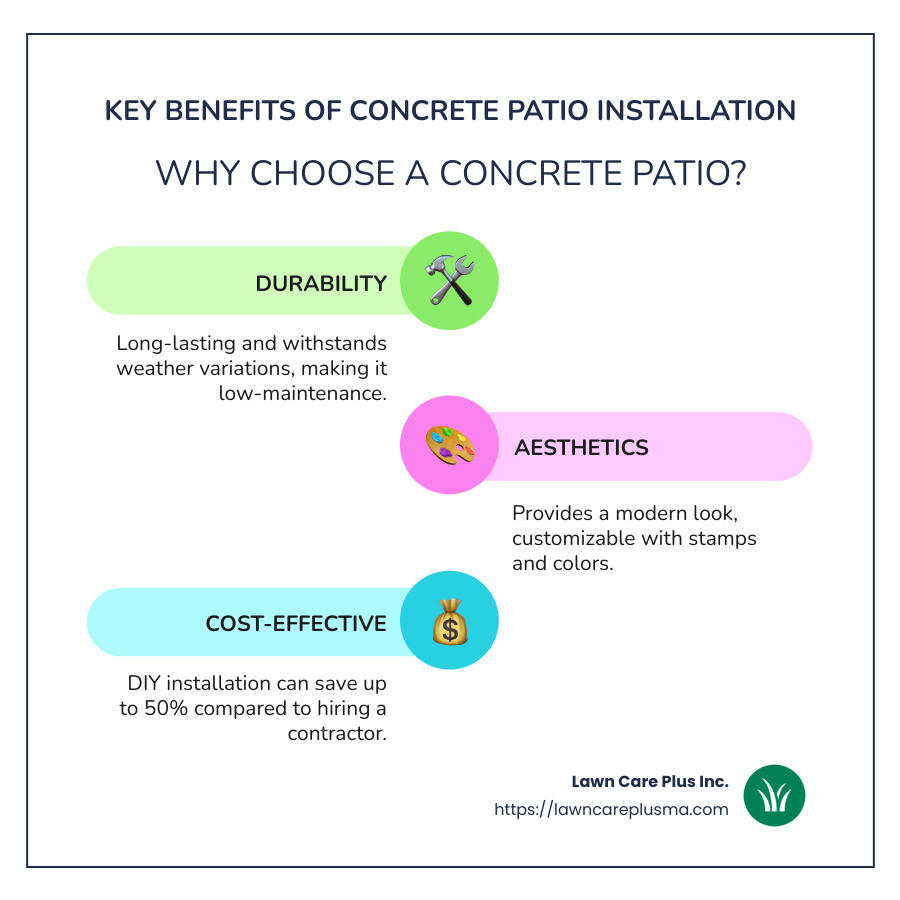
- Durability: Concrete patios are long-lasting and can withstand varying weather conditions, making them a low-maintenance choice.
- Aesthetics: Offers a clean, modern look and can be customized with stamps and colors to fit your design preferences.
- Cost-Effective: Installing a concrete patio yourself can save up to 50% versus hiring a contractor, making it a budget-friendly option.
- Weed and Pest Resistant: Reduces gaps and cracks, preventing weed growth and avoiding ant infestations.
Installing a concrete patio involves important steps like site planning, material selection, and following a methodical process to ensure the patio not only looks great but also stands the test of time. A well-crafted patio transforms an ordinary backyard into a functional area perfect for entertaining or relaxation.
Whether you’re a DIY enthusiast aiming for a hands-on project or seeking professional help, understanding the basics of concrete patio installation is essential. This guide will equip you with all the key insights to ensure your patio not only meets your needs but also improves the overall value and appeal of your property.
Essential concrete patio installation terms:
Understanding Concrete Patio Installation
Creating a concrete patio is a rewarding project that can enhance your outdoor space significantly. To embark on this venture, it’s crucial to grasp the essentials of materials, tools, and site preparation required for a successful installation.
Choosing the Right Materials
Concrete Mix: The foundation of any concrete patio is the concrete mix. Options include ready-mixed concrete delivered by truck for larger projects, which ensures consistency and quality.
Portland Cement: This ingredient provides strength and durability to the concrete, mixed with sand and gravel.
Rebar: Incorporating rebar can be beneficial for reinforcing the slab, particularly under heavy use, helping to prevent cracking and maintain a level surface over time.
Essential Tools for Installation
Equipping yourself with the right tools is crucial:
- Wheelbarrow: For transporting materials.
- Shovel: For digging and moving materials.
- Hose: For cleaning and water management during mixing.
- Finishing Tools: Including trowels and edgers for a smooth finish and control joints for crack management.
Preparing the Installation Site
Effective site preparation ensures a durable and level patio:
Marking and Excavating: Start by marking the area with stakes and string, then dig down to create space for both the concrete slab and a gravel base, ensuring to compact the soil beneath.
Leveling: Spread and compact a layer of gravel to stabilize the base and aid drainage, setting a solid foundation for the concrete.
By understanding these fundamental aspects of concrete patio installation, you’re well-prepared to start your project. With the right preparation, materials, and tools, your patio will not only look great but also stand the test of time.
Step-by-Step Guide to Installing a Concrete Patio
Excavating the Area
The initial step in concrete patio installation is excavation. Remove the sod and topsoil to a depth of about 8 inches to accommodate the gravel base and concrete slab. Use a shovel or a mini-excavator for larger areas. After removing the sod, compact the soil to provide a stable foundation.
Building and Setting Forms
Next, construct and set the forms which will define the patio’s edges. Use lumber for the forms and ensure they are level and securely staked into the ground.
Pouring the Concrete
For the concrete pour, start at one end of the form and progress to the other, ensuring the concrete is evenly spread. Use a screed board to level off the concrete with the form tops.
Finishing Touches
Once the concrete is poured, smooth the surface with a trowel or float. Then, round off the edges with an edger and cut in control joints to prevent cracking. These finishing steps are crucial for a professional-looking patio that lasts.
By following these detailed steps, you can ensure a successful installation of your concrete patio, enhancing both the functionality and aesthetics of your outdoor space.
Cost Considerations in Concrete Patio Installation
When planning a concrete patio installation, understanding the cost factors involved is crucial. This will help you budget effectively and avoid any unexpected expenses.
Analyzing Cost Factors
Several factors influence the cost of installing a concrete patio:
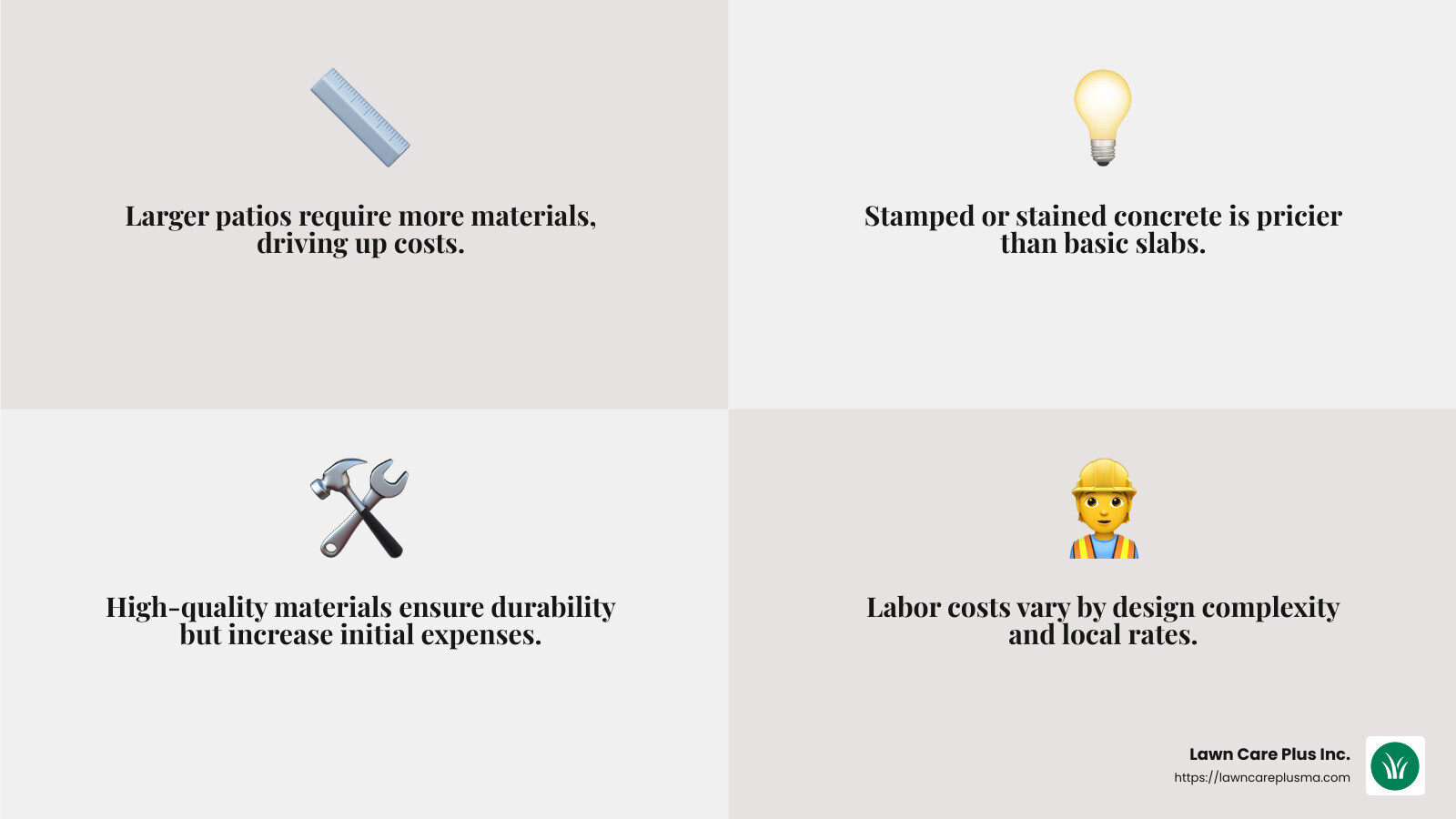
- Size: Larger patios require more materials and labor, increasing the overall cost. It’s essential to determine the exact dimensions before beginning the project.
- Type and Thickness: Basic concrete slab patios are more affordable, while decorative options like stamped or stained concrete can be pricier. The thickness of the slab also affects cost. A standard patio is about 4 inches thick, but if it needs to support heavy loads, it may need to be thicker.
- Materials: The choice of materials, such as the type of concrete mix or additional features like rebar for reinforcement, impacts the budget. Opting for high-quality materials ensures durability but may increase initial costs.
- Labor: Hiring professionals can be costly, but it ensures expertise and efficiency. Labor costs vary depending on the complexity of the design and the local market rates.
How to Save on Installation Costs
Thinking about savings? Here are some tips to reduce costs without compromising quality:
- DIY Approach: If you’re handy and have some experience, you can save significantly by doing the work yourself. This includes tasks like excavation and setting forms. However, ensure you’re confident in your skills to avoid costly mistakes.
- Material Choices: Opt for standard concrete slabs instead of decorative finishes. This reduces expenses while still providing a functional patio. If aesthetics are important, consider adding decorative features later.
- Phased Construction: Consider breaking the project into phases. Start with the basic slab and add features like built-in seating or decorative finishes over time. This spreads out costs and allows for better budget management.
- Shop Around: Get quotes from multiple suppliers and contractors. Comparing prices can help you find competitive rates and save money.
By carefully considering these factors and tips, you can effectively manage the costs of your concrete patio installation, ensuring you get the best value for your investment.
Next, we’ll cover how to maintain your new concrete patio to keep it looking great for years to come.
Maintaining Your Concrete Patio
Once your concrete patio installation is complete, the next step is ensuring it remains in top condition. Regular maintenance is key to preserving its appearance and durability. Here’s how to keep your patio looking great year-round.
Regular Maintenance Tips
Sealing
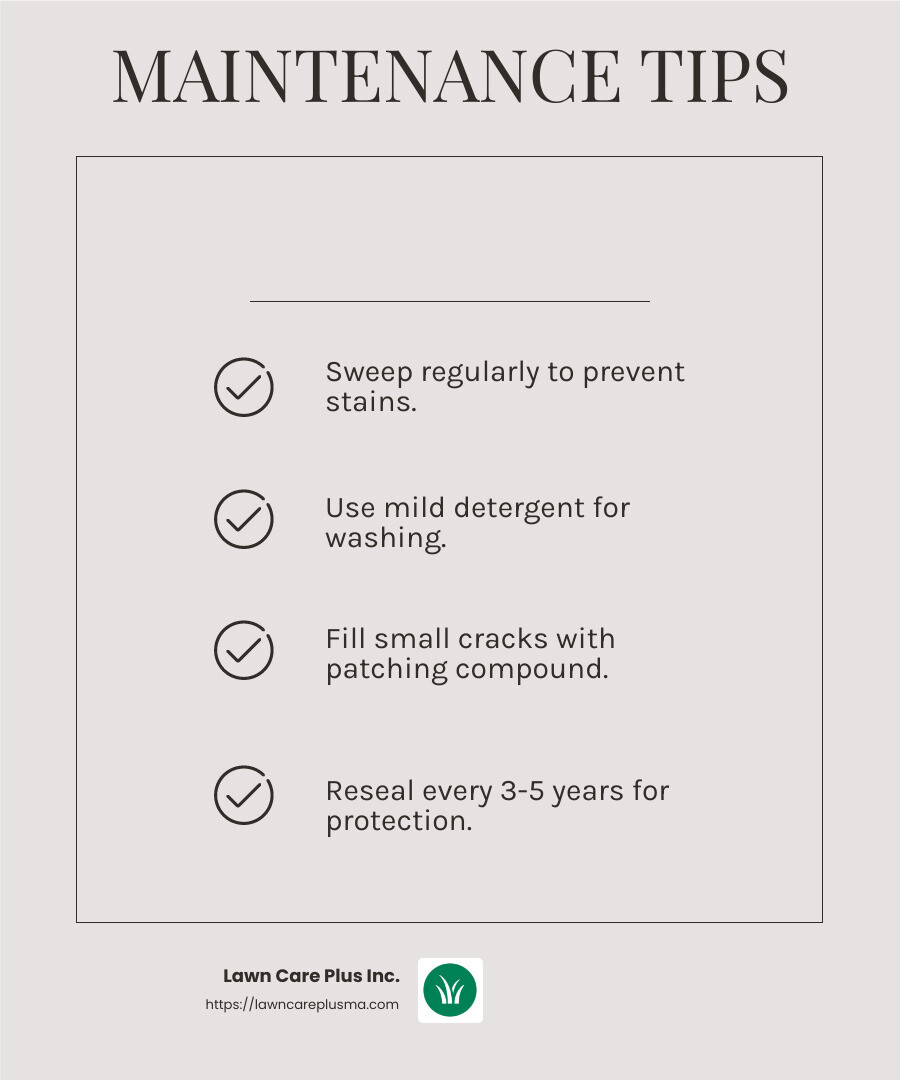
Sealing your concrete patio is essential to protect it from the elements. A good sealant prevents water penetration, which can cause cracks and make the surface susceptible to stains and mildew. For best results, reseal your patio every three to five years. This frequency maintains the protective barrier and keeps your patio looking fresh.
Cleaning Methods
Regular cleaning is crucial for maintaining your patio’s aesthetic appeal. Simple cleaning methods include:
- Sweeping: Regularly sweep away dirt and debris to prevent stains and surface scratches.
- Washing: Use a garden hose or a pressure washer for a deeper clean. Mix a solution of mild detergent and water, and scrub the surface with a stiff brush to remove stubborn stains. Avoid harsh chemicals that can damage the sealant or concrete.
Handling Repairs
Despite regular maintenance, wear and tear can lead to minor damages over time. Here’s how to tackle them:
Identifying Damage
Look for common signs of damage like cracks, chips, or discoloration. Small cracks are normal, but larger ones can lead to more significant issues if not addressed. Discoloration may indicate that the sealant is wearing off or that the concrete is absorbing moisture.
Repair Techniques
- Cracks: Small cracks can be filled with a concrete patching compound. For larger cracks, consider using a concrete repair kit that includes a bonding agent to ensure a strong fix.
- Chips and Spalling: These can be repaired using a concrete resurfacer. This product helps restore the surface’s smoothness and appearance.
- Discoloration: If your patio is discolored, usually due to weather exposure or chemical spills, consider power washing or applying a concrete cleaner. If discoloration persists, it might be time to reseal the patio.
By following these maintenance and repair strategies, your concrete patio will remain a beautiful and durable outdoor space for years to come. Next, we’ll address some frequently asked questions about concrete patio installation to help you make informed decisions.
Frequently Asked Questions about Concrete Patio Installation
How thick should my concrete patio be?
The thickness of your concrete patio is crucial for its durability and function. For most patios, a thickness of four inches is standard. This thickness supports typical outdoor furniture and foot traffic. However, if you’re planning to place heavy structures like a gazebo or a hot tub on your patio, consider increasing the thickness to six to eight inches. A thicker slab provides the necessary strength to support additional weight without cracking.
Is it cheaper to install a concrete patio or pavers?
Concrete patios are generally more affordable than paver patios. The cost of poured concrete can range widely, with average prices between $6 and $11 per square foot, including labor, based on internet data. In contrast, concrete pavers can cost between $12 and $19 per square foot. While concrete is cheaper, more complex finishes like stamping or staining can increase the cost, sometimes making it comparable to pavers. Keep these factors in mind when deciding on the best option for your budget and design preferences. Please note that these are average costs and not actual costs for Lawn Care Plus Inc.
Can I install a concrete patio myself?
Yes, you can install a concrete patio yourself, but it requires careful planning and execution. DIY installation can save you 40 to 50 percent on costs. However, the process involves several steps, including site preparation, form building, and concrete pouring, which require precision and patience. If you have the skills and tools, such as a shovel, wheelbarrow, and trowel, you can tackle this project yourself. For those less experienced, hiring professionals like Lawn Care Plus Inc. ensures a high-quality finish and may save time and effort in the long run.
Conclusion
Review
Concrete patio installation is a rewarding project that can transform your outdoor space. From selecting the right materials to executing precise techniques, every step matters. By now, you should have a good grasp of the process, including excavation, forming, pouring, and finishing. The thickness of your patio and the choice between concrete and pavers will significantly impact both cost and durability.
Additional Resources
If you’re still unsure about any part of the installation process, consider reaching out to professionals. Expert guidance can save you from common pitfalls and ensure a long-lasting patio. For more detailed information on hardscaping and other landscaping services, Lawn Care Plus Inc. offers a range of resources and services to help you achieve your ideal outdoor space.
Lawn Care Plus Inc.
At Lawn Care Plus Inc., we specialize in creating beautiful and functional outdoor spaces. Our expertise extends beyond just concrete patios to include a wide array of hardscaping and landscaping services. Serving the Boston Metro-West area, we pride ourselves on delivering high-quality work that meets your specific needs. Whether you’re planning a DIY project or looking to hire professionals, our team is here to help.
By following this comprehensive guide, you’re now equipped with the knowledge to either tackle concrete patio installation yourself or make informed decisions when hiring professionals like Lawn Care Plus Inc. We hope your new patio brings years of enjoyment and improves your outdoor living experience.
