
Is a Backyard Patio Worth the Investment? Here’s What to Expect in 2026
Backyard patio installation cost is one of the first things homeowners want to know before starting an outdoor project — and for good reason. It’s a significant investment, and the price range is wide.
Here’s a quick snapshot based on national averages from across the internet:
| Project Type | Typical Cost Range |
|---|---|
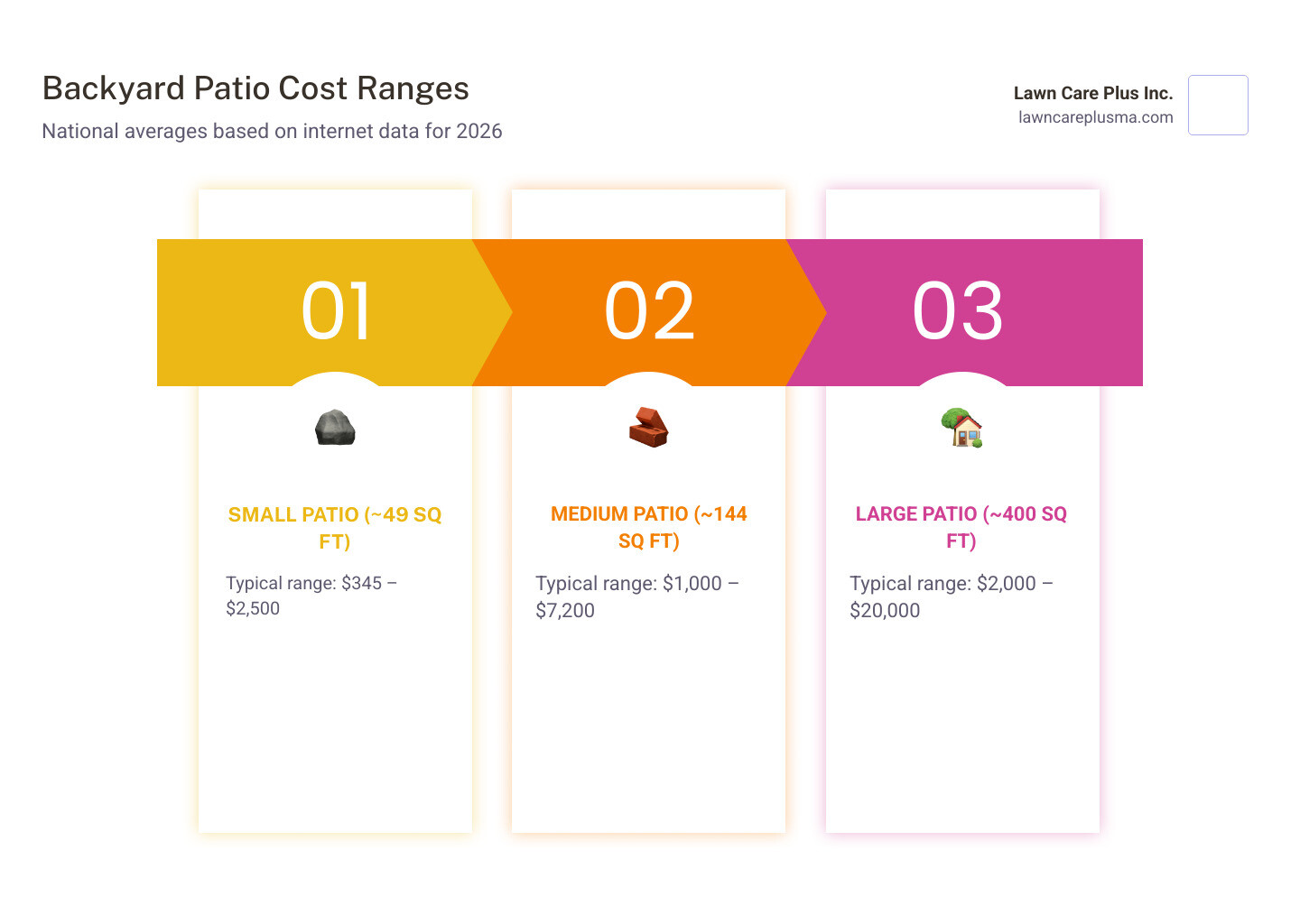
| Small patio (~49 sq ft) | $345 – $2,500 |
| Medium patio (~144 sq ft) | $1,000 – $7,200 |
| Large patio (~400 sq ft) | $2,000 – $20,000 |
| National average (all sizes) | $2,000 – $12,000 |
| Cost per square foot | $5 – $50+ |
Note: These are average cost ranges based on national internet data and do not represent actual pricing from Lawn Care Plus Inc.
Most homeowners spend somewhere in the middle — but the final number depends on your material choice, yard conditions, and how much work the site needs before anything gets built.
A patio is more than just a slab of concrete or a pile of stone. It’s an outdoor living space where you relax, entertain, and add real value to your home. Getting the budget right from the start means fewer surprises down the road.
I’m Tim DiAngelis, owner of Lawn Care Plus Inc., a full-service landscaping and hardscaping company based in Roslindale, MA, serving Greater Boston and Metro-West — and I’ve spent over a decade helping homeowners plan and build patios that fit both their vision and their budget. In this guide, I’ll walk you through everything that affects backyard patio installation cost so you can make a confident, informed decision.
What Is the Average Backyard Patio Installation Cost in 2026?
Based on 2026 internet data, a new backyard patio usually falls somewhere between a modest starter project and a high-end outdoor living upgrade. Across the web, national averages commonly land in the low thousands for basic patios, while custom builds with premium materials and added features can climb much higher.
A practical rule of thumb is this:
- Simple patios often start around the low end of the national range
- Mid-range patios usually fall in the broad middle
- Premium patios with custom layouts, drainage work, walls, steps, lighting, or kitchens can reach the high end quickly
Per-square-foot pricing also varies a lot. Basic patios may come in around the lower end of the common national range, while premium builds can exceed three times that amount. Labor alone often makes up a large share of the project total, especially in Massachusetts where site access, excavation, and skilled hardscaping labor matter.
For many homeowners, the most useful way to think about cost is by size first, then by material, then by site conditions.

Average backyard patio installation cost by project size
Internet cost data consistently shows a pattern: the larger the patio, the more the total cost rises, but the per-square-foot price may become a bit more efficient on straightforward layouts.
Typical national examples:
- Small patio, about 49 square feet: often the lowest overall project cost
- Medium patio, about 144 square feet: common for a dining set or lounge area
- Large patio, about 400 square feet: typical for full outdoor entertaining spaces
A small bistro patio might work for two chairs and a tiny table. A medium patio usually gives enough room for dining and circulation. A large patio can support dining, seating, a grill zone, and maybe that fire pit you promised yourself you were only “thinking about.”
Backyard patio installation cost per square foot
Across major 2026 sources, backyard patio installation commonly ranges from about $5 to $50+ per square foot based on internet averages. That wide spread exists because not all patios are created equal.
The lower end usually reflects:
- Simple shapes
- Minimal prep
- Easy backyard access
- Budget-friendly materials
- Ground-level installation
The higher end usually reflects:
- Premium pavers or natural stone
- Complex shapes and borders
- Significant excavation or grading
- Drainage corrections
- Tight access in urban or suburban lots
- Added structures or built-ins
Material is only part of the story. Some sources note that labor and below-grade work can represent a surprisingly large share of the budget. In many cases, what you do not see under the patio matters just as much as the surface you do.
Typical 12×12 and 20×20 backyard patio installation cost examples
A 12×12 patio is a common starter size for a backyard seating or dining area. A 20×20 patio is more of a full outdoor room.
National internet data shows:
- 12×12 patios can range widely depending on material and prep needs
- 20×20 patios often range from a few thousand dollars for simple installs to much higher for pavers, stone, or raised builds
- A 20×20 brick paver patio is one of the clearest examples of how broad the range can be
Raised patios also cost more than ground-level ones. Research shows elevated designs can add meaningful cost per square foot because they may require extra structure, fill, steps, or retaining features.
Patio Cost Per Square Foot by Material Type
Here is a simplified comparison using 2026 internet averages, not Lawn Care Plus pricing:
| Material | Typical Installed Range |
|---|---|
| Gravel | $2 – $16 per sq ft |
| Poured concrete | $5 – $15 per sq ft |
| Stamped concrete | $8 – $30 per sq ft |
| Pavers | $8 – $25 per sq ft |
| Brick | $9 – $25 per sq ft |
| Natural stone/flagstone | $15 – $35 per sq ft |
| Permeable pavers | $10 – $30 per sq ft |
These are average cost ranges based on internet data and can vary based on site conditions, design, and location.
In general:
- Cheapest options: gravel and basic poured concrete
- Mid-range options: standard pavers and brick
- Highest-cost options: natural stone, flagstone, and specialty permeable systems
Concrete backyard patio installation cost
Concrete is popular because it is usually one of the most affordable professional patio materials. A basic brushed or broom-finished slab tends to sit at the lower end of the installed cost spectrum.
Stamped concrete costs more because it adds:
- Decorative finishing
- Extra labor
- Color or pattern work
- More careful curing and finishing
Pros of concrete:
- Lower upfront cost
- Clean, simple look
- Good longevity when installed correctly
Cons:
- Can crack over time
- Repairs are often more visible
- Concrete slabs may trigger permit requirements more often than loose-laid systems
Paver and brick backyard patio installation cost
Concrete pavers and brick pavers are usually more expensive than basic concrete, but they offer flexibility and easier repair. If one section settles or a paver gets damaged, it can often be fixed without replacing the whole patio.
Pavers are great for:
- Custom shapes
- Borders and accents
- Better crack resistance than slabs
- Easier spot repairs
Brick gives a classic look, while concrete pavers offer more colors, shapes, and patterns. Both usually require good base prep, edge restraint, and joint material to perform well long term.
If you want a deeper breakdown, here is our guide on paver patio costs.
Stone, flagstone, and gravel patio costs
Natural stone and flagstone are usually at the premium end. They look beautiful, but the material is heavier, installation is slower, and shaping irregular pieces takes skill.
Gravel is usually the budget winner. It drains well and works nicely for casual, rustic spaces, but it is not the best choice for every use. Chairs can wobble, stones can shift, and edging is important unless you want the patio slowly migrating into the lawn.

Stone and gravel are best when matched to the right setting and expectations.
What Affects Total Backyard Patio Installation Cost?
Material matters, but several hidden factors can change the final total just as much.
The biggest cost drivers usually include:
- Patio size
- Site prep
- Excavation depth
- Grading and drainage
- Accessibility
- Labor rates in Massachusetts
- Permit needs
- Removal of an old patio
- Shape complexity
- Added features like steps or walls
Yard conditions, terrain, and prep work
A flat, open backyard is easier and less expensive to build on than a sloped yard with drainage problems and limited access.
Common prep issues that raise cost:
- Uneven ground that needs leveling
- Poor drainage or water pooling
- Clay-heavy soil that needs deeper base prep
- Tree roots or buried debris
- Existing patio demolition
- Utility line awareness before digging
Some national sources note that leveling and drainage corrections can add a meaningful amount before the patio surface even begins. In Massachusetts, freeze-thaw cycles make base prep even more important. If the base is weak, the patio may settle, shift, or hold water.
Labor, permits, and location-based pricing
Labor often accounts for a major chunk of patio cost. In the Boston Metro-West area, labor can be higher than national averages because of:
- Regional cost of living
- Skilled masonry and hardscape demand
- Tighter workspaces in established neighborhoods
- Hauling and disposal costs
- Permit and inspection requirements
Permits may be required depending on the patio type, location, and whether the project involves concrete, drainage, structures, walls, electrical work, or gas lines. Open paver patios may not always need permits, but concrete slabs and permanent improvements often do.
Tight access can also increase labor. If materials cannot be easily wheeled into the backyard, crews may need more hand labor or specialized equipment.
Design choices and upgrades that raise the price
Design has a direct effect on labor and waste.
These features usually increase cost:
- Curves instead of straight edges
- Decorative borders
- Multiple elevations
- Steps
- Retaining walls
- Seating walls
- Built-in features
- Complex patterns
- Drainage systems
A simple rectangle is almost always more budget-friendly than a custom curved layout with walls and stairs. If your yard needs a larger outdoor transformation, our guide on the cost of installing a new lawn, hardscaping, patios, walkways and retaining walls can help you plan the bigger picture.
DIY vs Professional Backyard Patio Installation Cost
DIY can save money on paper. In reality, it depends on the material, your tools, your time, and your tolerance for moving a lot of heavy material while asking yourself why you did not just call a pro in the first place.
How much a DIY patio really costs
DIY savings usually come from reduced labor, but homeowners still pay for:
- Surface material
- Base stone
- Sand or setting bed
- Edge restraints
- Joint sand
- Compactor rental
- Cutting tools
- Disposal fees
- Delivery charges
Research shows DIY can save a lot in some cases, but not always as much as people expect once tool rental and mistakes are included. One source found that a mid-sized DIY patio still required substantial spending on materials and equipment.
DIY works best when:
- The patio is small
- The yard is flat
- Drainage is already good
- Access is easy
- The design is simple
When hiring a professional is worth the extra cost
Professional installation is usually worth it when the project involves:
- Drainage concerns
- Grading or slope correction
- Retaining walls or steps
- Large paver layouts
- Concrete work
- Tight urban access
- Long-term performance concerns
Pros help with:
- Proper excavation depth
- Base compaction
- Correct pitch for drainage
- Cleaner finish details
- Faster timeline
- Insurance and accountability
A patio can last for decades, so mistakes under the surface are expensive to fix later.
Smart ways to lower patio costs without cutting quality
You can save money without sacrificing the final result. Helpful strategies include:
- Keep the shape simple
- Choose a flat area if possible
- Clear furniture or obstacles before work begins
- Remove sod yourself if appropriate
- Bundle patio work with walkways or other hardscaping
- Avoid unnecessary extras at the first phase
- Plan drainage correctly the first time
Money-saving tips:
- Pick straight lines over curves
- Use fewer material types
- Build in phases
- Keep access paths open for crews
- Ask about combining related landscape work
You can also explore ideas that balance looks and budget by pairing the patio with simple connectors like backyard walkways.
Ongoing Maintenance, Repairs, Lifespan, and Home Value
Patio cost does not end on installation day. Different materials have different upkeep needs, repair patterns, and service lives.
Maintenance and repair costs by patio material
Concrete usually needs the least routine maintenance, but it can crack and may need resurfacing later.
Pavers and brick may need:
- Joint sand refresh
- Weed control
- Occasional leveling
- Resealing, depending on finish
Natural stone may need:
- Periodic sealing
- Joint maintenance
- Cleaning to control staining or moss
Gravel may need:
- Raking
- Top-offs
- Edge cleanup
- Weed management
National internet data often cites these ongoing categories:
- Power washing
- Cleaning and resealing
- Resurfacing
- Crack or settling repairs
How long patios take to build and how long they last
Build time varies by size and complexity.
Research across 2026 sources suggests:
- Small, simple patios may take a few days
- Many average patios require roughly 30 to 50 labor hours
- Larger or more complex patios can stretch into multiple weeks
- Full backyard transformations may take longer when walls, grading, drainage, or utilities are involved
As for lifespan:
- Concrete patios often last a few decades with good installation and maintenance
- Quality paver and stone patios can last much longer
- High-quality brick pavers and natural stone may last many decades, sometimes approaching a lifetime installation
The main factor is not just the top material. It is the base, drainage, and installation quality underneath.
Does a patio add value or raise property taxes?
In many cases, yes, a patio can improve resale appeal and add value. Research commonly puts patio or deck return on investment in a broad range, often around 30% to 70% depending on the project and market.
A patio may add value because it:
- Expands usable outdoor living space
- Improves curb appeal and backyard function
- Appeals to buyers who want entertaining space
Property tax impact depends on the type of improvement and local assessment practices. A permanent concrete installation is more likely to be treated as a taxable improvement than a simpler loose-laid patio, but this varies by municipality.
For a general calculator and broader reference point, see this 2026 patio price calculator.
Backyard Patio Add-Ons and Regional Cost Differences
Once homeowners start imagining the finished space, patios tend to collect extras. It starts with “just a sitting area” and somehow ends with a fire feature, lighting, and plans for an outdoor kitchen.
Popular add-ons that increase backyard patio installation cost
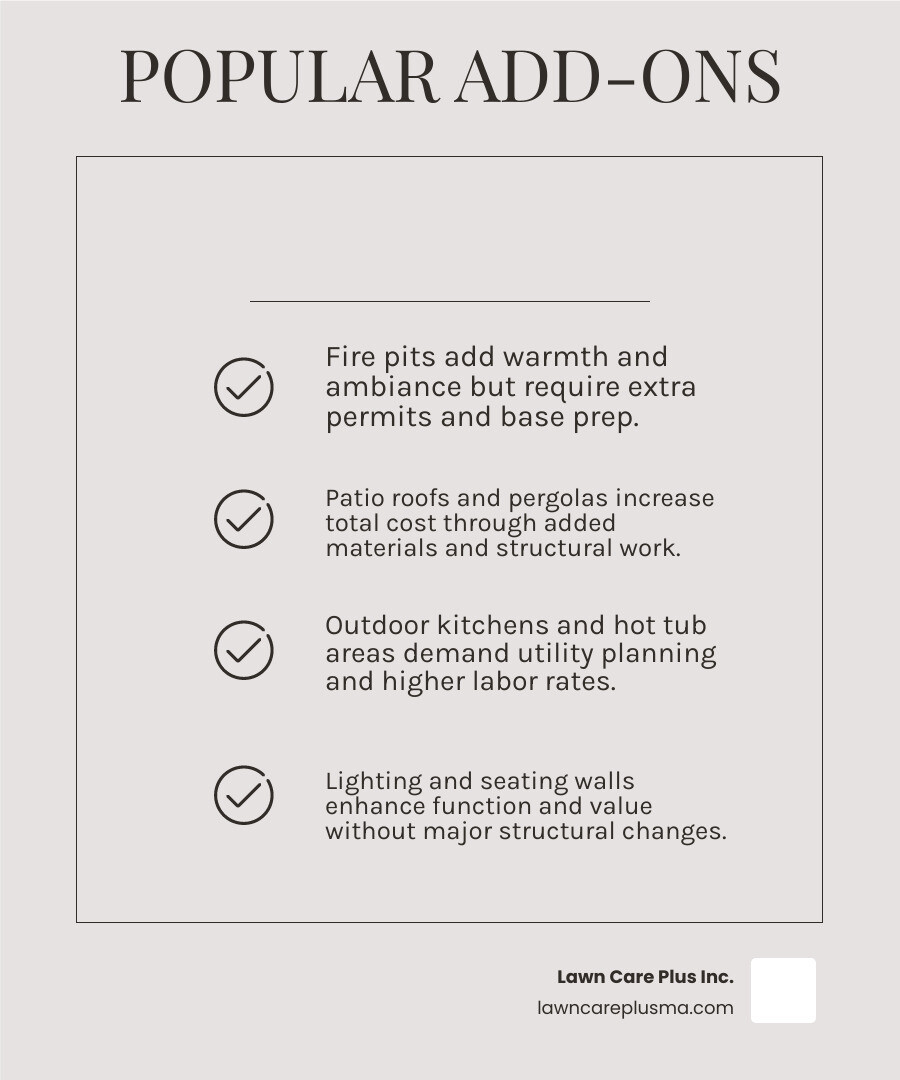
Common upgrades include:
- Fire pits
- Pergolas
- Patio roofs or covers
- Landscape lighting
- Outdoor kitchens
- Seating walls
- Hot tub or pool-adjacent hardscaping
- Planting beds and softscaping
These can transform a patio from a surface into a real outdoor room, but each add-on increases labor, materials, and often permitting complexity.
For inspiration, browse our patio design ideas.
How patio costs vary across the United States and in Massachusetts
Nationally, patio costs vary by labor market, climate, material availability, and demand. The Northeast generally trends higher than lower-cost regions because of labor rates, weather-related base requirements, and transportation.
For Massachusetts homeowners, especially in the Boston-area communities we serve, costs can rise due to:
- Skilled labor demand
- Dense neighborhoods
- Limited machine access
- Disposal fees
- Freeze-thaw preparation needs
This is one reason national averages are helpful for planning, but local quotes matter more for real decisions. For another overview of national and regional patterns, see this 2026 patio cost guide.
Best time of year to install a patio
In Massachusetts, the best time to install a patio is usually when the ground is unfrozen and weather is more predictable.
Spring and early summer are popular because:
- Soil is workable
- Homeowners can enjoy the patio sooner
- It is easier to coordinate surrounding landscape work
Fall can also be a smart time:
- Schedules may open up
- Cooler weather is easier for crews
- You can be ready for next spring
The main thing is to plan early. Good patio contractors book up fast once everyone realizes outdoor season is coming.
Frequently Asked Questions About Backyard Patio Installation Cost
What is the cheapest backyard patio material?
Gravel is usually the cheapest material, followed by basic poured concrete. Gravel has good drainage and low upfront cost, but it is less stable for furniture and needs more routine touch-up. Basic concrete is often the most cost-effective professional option if you want a cleaner, more permanent surface.
Is a patio cheaper than a deck?
Usually, yes. Ground-level patios are typically less expensive than decks because decks often require framing, footings, railings, stairs, and more structural labor. Once a patio becomes raised or includes walls and steps, the gap narrows, but patios are still often the lower-cost choice.
Do I need a permit for a backyard patio?
Sometimes. Permit needs depend on the municipality, setbacks, drainage changes, materials, and whether the project includes concrete, walls, electrical work, gas lines, roofs, or kitchens. In the Boston Metro-West area, local codes matter. It is always smart to verify permit requirements before work starts.
Conclusion
A patio can be a simple backyard upgrade or a full outdoor living investment. The final cost depends on size, material, access, drainage, design complexity, and the features you want to include. National internet averages are helpful for setting expectations, but they are only starting points.
At Lawn Care Plus Inc., we help homeowners across the Boston Metro-West area plan patios that fit their space, goals, and long-term budget. If you are comparing options and want local guidance, start with our patio installation cost page.
And one last reminder: any ranges mentioned in this guide are based on internet research and general 2026 market data, not actual Lawn Care Plus pricing. The best next step is a custom quote based on your yard, your design, and how much work the site really needs before the first stone goes down.
