Why Your Basement Needs a French Drain System
A basement french drain pipe is a perforated drainage system installed in a gravel-filled trench that redirects groundwater and surface water away from your home’s foundation to prevent basement flooding, moisture damage, and structural issues.
If you’ve ever walked downstairs to find water pooling on your basement floor, you know that sinking feeling. A damp basement isn’t just an inconvenienceit’s a warning sign that water is winning the battle against your foundation.
When rain saturates the soil around your foundation, it creates immense pressurecalled hydrostatic pressurethat pushes against your basement walls and floor. Over time, this pressure forces water through cracks, seams, and even solid concrete, leading to wet basements, musty odors, mold growth, and potentially thousands of dollars in structural damage.
The good news is that French drains have been solving this exact problem since the 1800s. Today, they’re so effective that many municipalities require them for new home construction. Whether you’re dealing with recurring puddles or just want to protect your finished basement, understanding how a French drain works is your first step toward a permanently dry basement.
Related basement french drain pipe topics:
What is a French Drain and How Does It Protect Your Basement?
First developed in the 1850s by Massachusetts lawyer Henry French, the French drain is a simple trench system that remains one of the most reliable ways to keep basements dry. It isn’t complicated—and that’s exactly why it works so well.
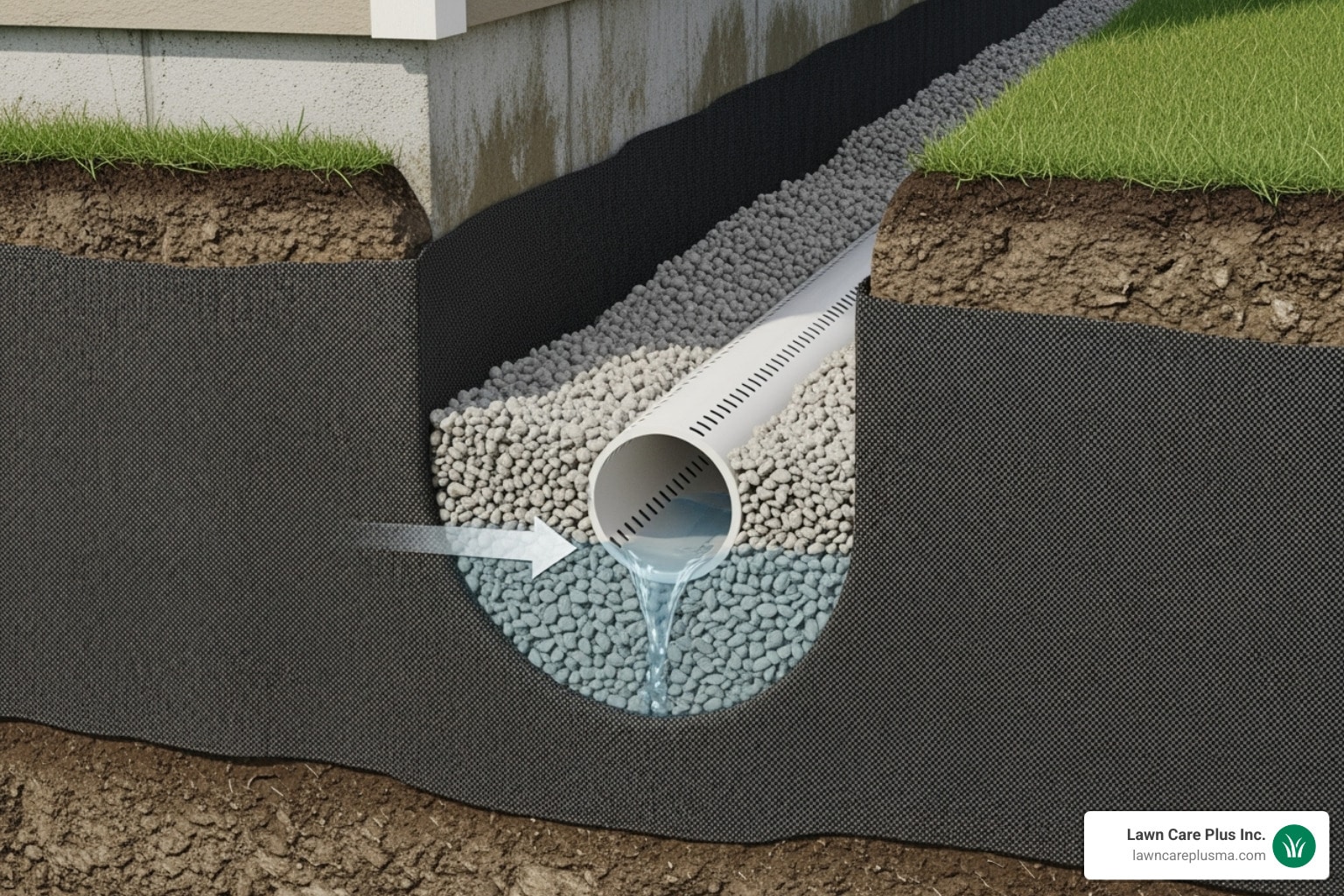
A French drain consists of a trench dug around or beneath your foundation, filled with gravel, and containing a perforated pipe. You might also hear it called drain tile, weeping tile, or a perimeter drain, but the purpose is the same: collect water before it causes problems and send it somewhere else.
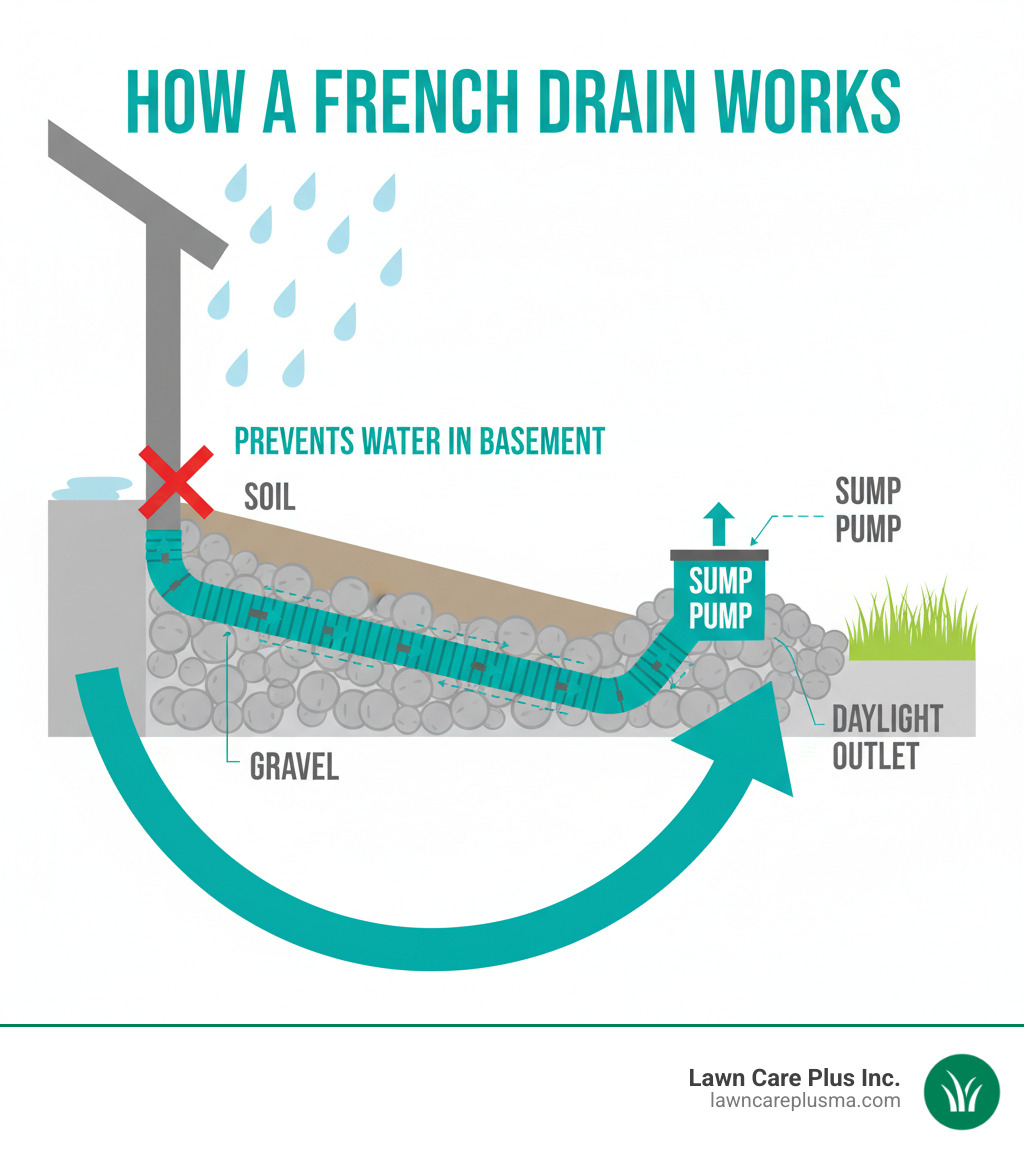
Water always takes the path of least resistance. The gravel-filled trench and perforated pipe create an easy route that water naturally follows instead of pushing against your foundation. As water seeps through the gravel, it enters the pipe through small perforations. Gravity then carries it along a gentle slope toward a safe discharge point, like a sump pump or a spot where it can drain away from your property.
This groundwater collection and surface water redirection happens continuously, protecting your basement around the clock. The system includes filter fabric wrapped around the gravel to prevent soil and sediment from clogging the pipe over time. It’s this combination of materials that makes domestic surface water drainage systems so effective.
How French Drains Prevent Hydrostatic Pressure
Hydrostatic pressure is the force exerted by water-logged soil against your basement walls. This constant pressure can cause bowing walls, cracks in floors and walls, and can even force water through solid concrete.
A basement french drain pipe system acts as a pressure relief mechanism. By intercepting and removing groundwater before it accumulates, the drain eliminates the source of that destructive pressure. This same principle applies to retaining wall drainage, where a French drain can manage water buildup behind the wall to prevent failure.
For homes with block foundations, an interior French drain is particularly effective. Contractors can drill small weep holes at the base of the blocks, allowing water trapped inside the hollow cores to drain directly into the system. This solution for draining block walls prevents moisture from seeping into your basement.
When to Consider a French Drain
Your basement usually gives you warning signs before a major water problem occurs. Acting on these signs can save you from costly damage and mold remediation.
- Recurring basement flooding, even small puddles, is a clear red flag.
- Dampness or musty smells indicate the presence of moisture, creating a perfect environment for mold. The EPA guide on mold prevention and remediation details the health risks.
- Efflorescence on walls—a white, chalky powder—is mineral residue left by evaporating water, proving that water is passing through your foundation.
- Water stains on walls or floors show where water has been, even if the area is currently dry.
- Puddles near your foundation or a soggy yard that stays wet long after rain suggests poor drainage, with excess water moving toward your basement.
If you notice any of these signs, it’s time to consider a French drain. Waiting only allows the problem to worsen.
Interior vs. Exterior: Which French Drain System is Right for You?
When facing basement water problems, you have two main options: an exterior French drain or an interior one. Both systems keep your basement dry, but they work in different ways and are suited to different situations.
An exterior system is like an umbrella, stopping water before it gets near your home. An interior system is like a doormat and drainage channel inside your door, managing water as it arrives.
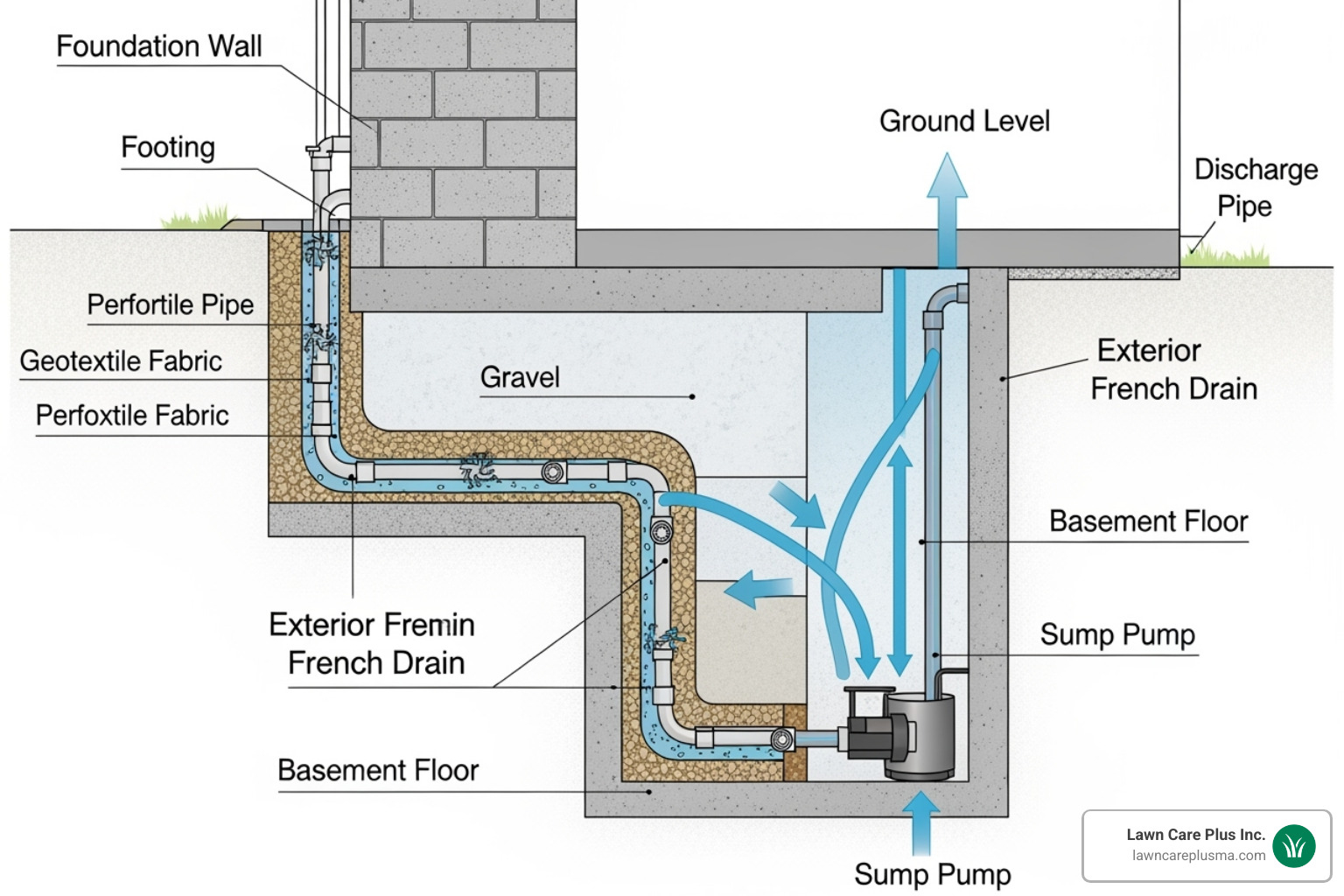
The key difference is location. An exterior drain is installed outside at the footing level, intercepting water before it touches your foundation. An interior system is installed beneath your basement floor, catching water as it enters where the floor meets the wall. If you’re researching inside basement drainage systems, you’re looking at the interior option.
Exterior French Drains: Pros and Cons
Exterior French drains are the first line of defense against groundwater and are often required for new construction. They stop water before it ever reaches your foundation walls, protecting the structural integrity of your home from the start.
However, installing an exterior drain on an existing home is a massive undertaking. It requires excavating around your entire foundation, which means landscaping, walkways, and decks may need to be removed. The cost reflects this disruption, as it involves heavy equipment, extensive labor, and restoration work.
Exterior drains are also buried in soil where silt and tree roots can cause clogs over time. For most existing homes, the disruption and cost make exterior installation impractical.
Interior French Drains: Pros and Cons
Interior French drains are often a more practical solution for existing homes. These systems are installed under the basement floor along the perimeter walls, collecting water and channeling it to a sump pump. If you’re considering a French Drain Inside Basement, this is typically the most sensible choice.
The biggest advantage is minimal disruption to your property. All work happens inside your basement, so your landscaping and outdoor structures remain untouched. Interior systems are generally more affordable and faster to install because they don’t require major excavation.
These systems excel at managing water at the cove joint (where the floor meets the wall), a common entry point. The main trade-off is that an interior system requires a reliable sump pump, and we always recommend a battery backup. While it doesn’t stop water from reaching the outside of your foundation, it effectively redirects it before it enters your living space, keeping your basement dry.
| Feature | Exterior French Drain | Interior French Drain |
|---|---|---|
| Location | Outside foundation at footing level | Under basement floor along walls |
| Installation | Major excavation, very disruptive | Basement floor work, less disruption |
| Cost | Higher due to excavation work | Lower overall cost |
| Clogging Risk | Higher (exposed to soil and roots) | Lower (protected environment) |
| Water Prevention | Before reaching foundation | At basement entry point |
| Sump Pump | May not be needed | Always required |
| Best For | New construction, severe issues | Existing homes, practical solution |
At Lawn Care Plus Inc., we can help you determine which approach makes the most sense for your specific situation, budget, and home in the Boston Metro-West area.
The Anatomy of a Basement French Drain Pipe Installation
Installing a basement french drain pipe is like building a carefully engineered highway for water. Each component plays a critical role, and proper installation is key to a system that can protect your home for decades.
Key Materials for a Basement French Drain Pipe
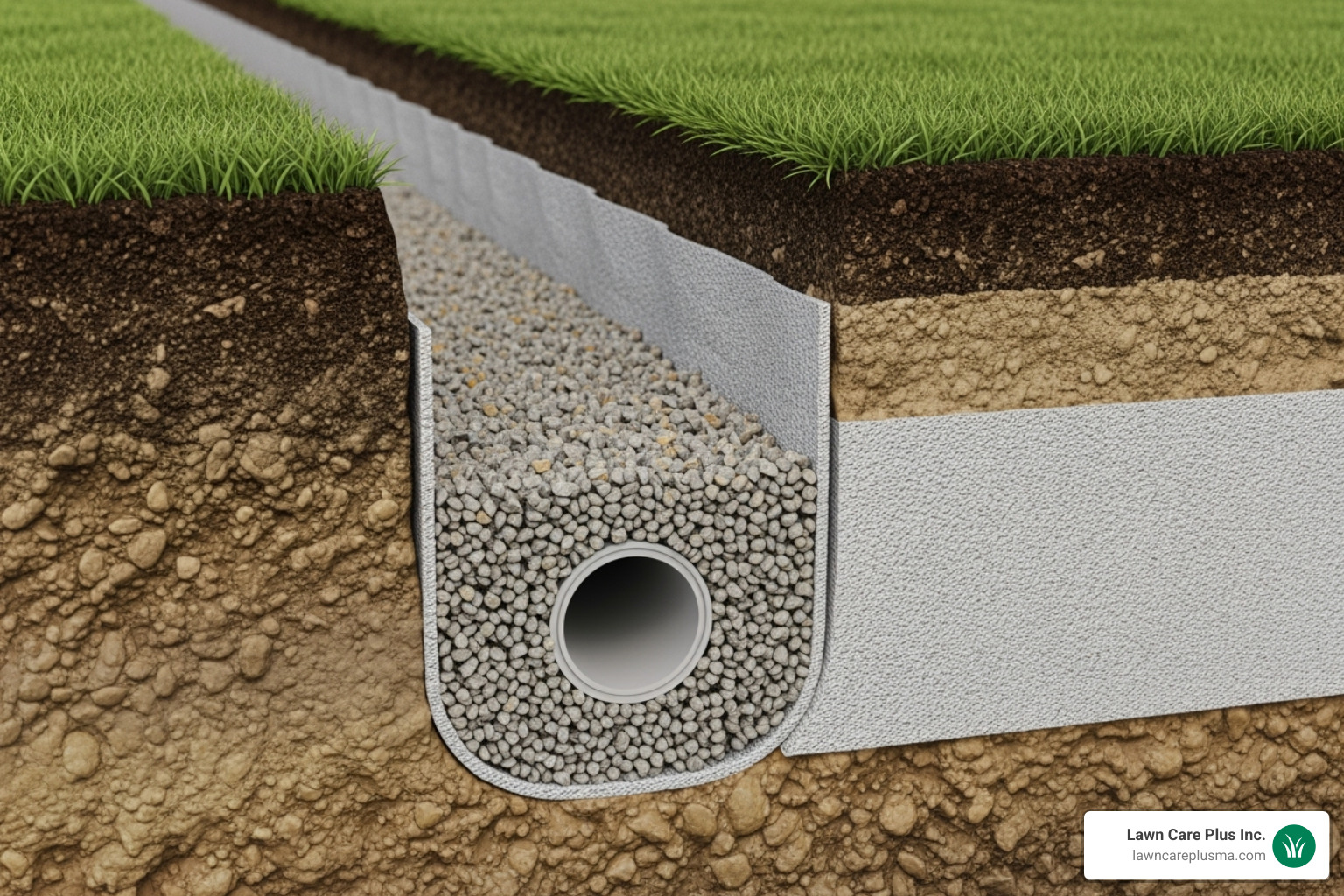
- Perforated Pipe: The two main choices are flexible corrugated pipe and rigid PVC pipe. We prefer rigid PVC for its smooth interior, which allows water to flow freely without catching debris. A 4-inch diameter pipe is standard.
- Gravel or Crushed Stone: Clean, washed gravel (1/2 to 1-inch size) creates a filtration zone around the pipe, allowing water to flow freely while providing structural support.
- Geotextile Filter Fabric: This specialized fabric is the system’s insurance policy. It wraps the trench and gravel to let water in while keeping out soil, silt, and roots that can clog French drains. Without it, the drain will eventually clog.
- Sump Pump and Basin: For interior systems, a basin collects water from the drain, and a pump ejects it away from the foundation. A battery backup is highly recommended.
The Installation Process Step-by-Step
Proper installation is crucial for a long-lasting system. The process involves several key steps:
- Call 811: Before any digging, this free service marks all underground utility lines to prevent dangerous and costly accidents.
- Trenching: A trench is dug about 18 inches deep and 9-12 inches wide. For interior systems, this involves breaking up the concrete floor. For exterior systems, it requires excavation around the foundation.
- Ensuring Proper Slope: The trench must have a consistent slope of at least 1% (a one-inch drop for every 10 feet of pipe) to ensure water flows properly and doesn’t pool in the pipe.
- Laying the Foundation: The trench is lined with geotextile fabric, followed by a 3-inch base of gravel. The perforated pipe is then laid on the gravel with the holes facing down to prevent sediment from settling inside.
- Covering and Wrapping: The pipe is covered with more gravel. The excess filter fabric is then wrapped over the top of the gravel, creating a self-contained unit that resists clogging.
- Backfilling: For interior systems, new concrete is poured to restore the floor. For exterior systems, the trench is backfilled with topsoil and the landscaping is restored.
This is also the stage where connections are made, such as when installing a French drain for gutters.
Choosing the Right Outlet
Collected water must be discharged safely away from your home. The best outlet depends on your property’s layout.
- Gravity-Fed Discharge (Daylight Exit): If your property slopes away from the house, the pipe can run to a lower point where water flows out naturally. This is a simple, maintenance-free solution.
- Sump Pump System: For flat properties or all inside basement drainage systems, the drain directs water to a sump pump, which actively pumps it away from the house.
- Dry Well: An underground chamber filled with gravel that allows water to slowly percolate back into the soil, placed far from the foundation.
- Other Options: In some cases, water can be directed to a storm sewer (with proper permits), a swale (a shallow channel), or a catch basin. Understanding drainage solutions for sloping land can help identify the best choice.
No matter the outlet, water must be directed away from your home and must not create problems for your neighbors.
Practicalities: Cost, Maintenance, and What to Expect
Investing in a basement french drain pipe system is a long-term solution for your home’s health. It’s important to understand the costs, maintenance, and whether to hire a professional.
Typical Cost of a French Drain
What does a French drain cost? Please note that these are average costs based on internet data and not actual costs for Lawn Care Plus Inc.
Based on industry data, most homeowners can expect to pay between $4,000 and $15,000 or more for a complete installation. Several factors influence the final price:
- System Type: Exterior systems cost more than interior ones due to extensive excavation and landscape restoration.
- Length and Depth: Longer and deeper drains require more labor and materials.
- Accessibility and Soil Conditions: Tight spaces, buried utilities, or rocky soil can increase labor costs.
- Materials and Discharge Method: High-quality materials and complex discharge systems (like sump pumps or dry wells) cost more than basic options.
For a personalized assessment and quote, we recommend reaching out to a local professional who can evaluate your specific situation.
DIY or Pro? Installing Your Basement French Drain Pipe
While a shallow yard drain might be a DIY project, we strongly recommend hiring a professional for a basement french drain pipe system. The complexity is high, requiring jackhammering concrete (for interior systems) or deep excavation (for exterior systems).
Professionals have the right equipment, such as excavators and laser levels, to ensure the job is done correctly and safely. There are significant safety risks with DIY installation, including striking buried utility lines (gas, water, electrical) and the dangers of deep trenching. Most importantly, professional expertise ensures the correct slope, materials, and installation techniques are used. An improperly installed drain can fail and lead to more expensive damage. Given what’s at stake, professional installation is a smart investment.
Common Problems and Maintenance
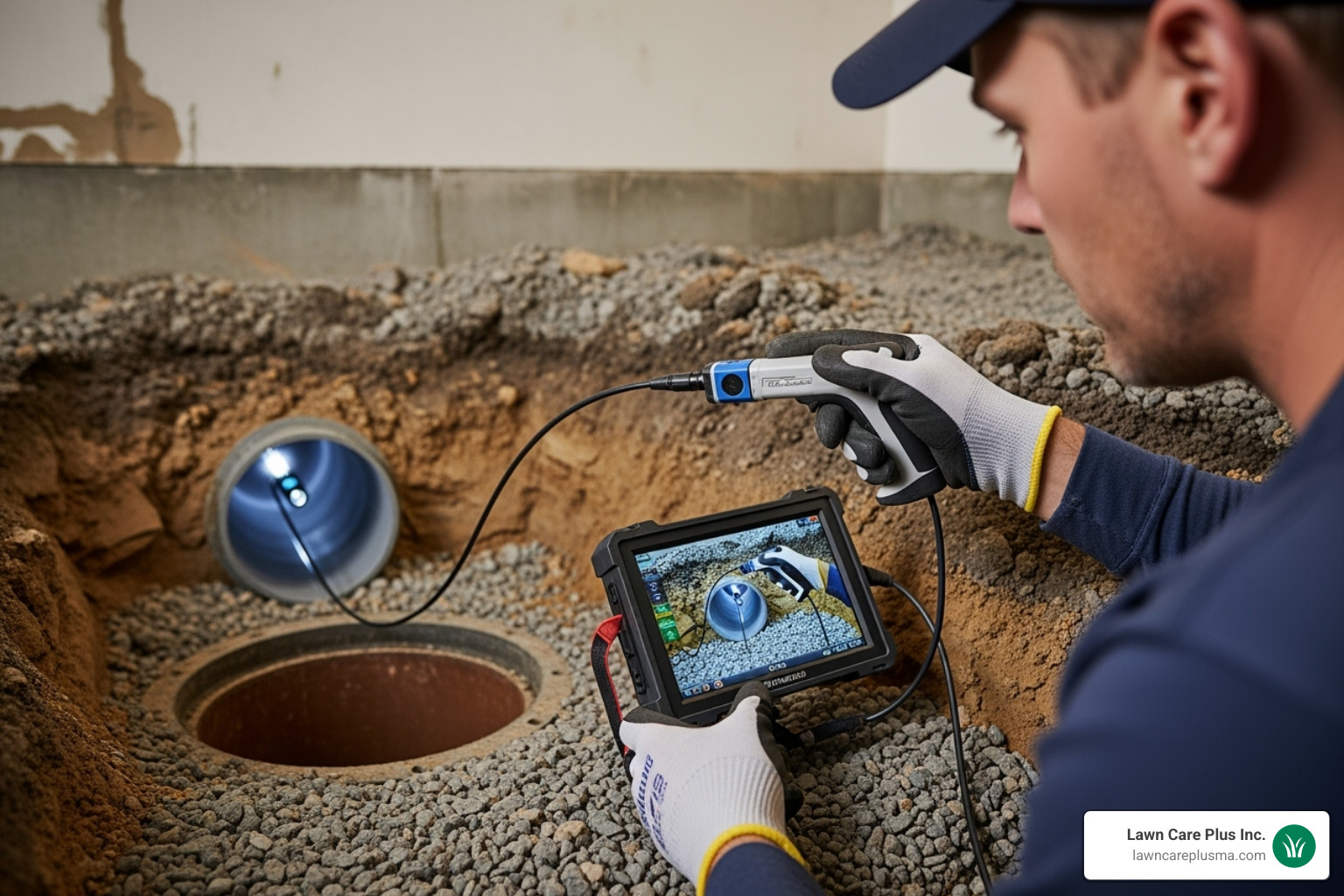
Even well-installed systems need some attention. The most common issue is clogging from silt, soil, or roots in French drain pipes. Other problems include improper slope from a faulty installation or damaged pipes from soil settlement.
Proper installation with high-quality filter fabric is the best prevention. For ongoing maintenance:
- Inspect your system every six months, clearing debris from inlets and outlets.
- Flush the system periodically through cleanout ports to remove sediment.
- Maintain your sump pump by testing it regularly and cleaning the basin. A battery backup is crucial for protection during power outages.
Exterior systems may require more significant maintenance after about 10 years due to their exposure to soil and roots.
Why French Drains Are the Recommended Solution
French drains are a highly effective and reliable option for basement waterproofing because they address the root cause of water problems. Instead of just reacting to water, a French drain proactively intercepts and redirects it, relieving hydrostatic pressure before it can cause damage.
A sump pump alone is reactive, dealing only with water that has already entered. It works best when paired with a French drain that channels water to it.
You might also hear about variations on the traditional French drain. Some interior systems are designed to sit on top of the foundation footing, which can help prevent clogging. Other systems install above the floor entirely, which eliminates the need for jackhammering—a useful option for homes with monolithic concrete floors. Both types often address water in block wall cavities by drilling weep holes.
Advancements in drainage technology also include gravel-free systems, which use a pre-wrapped pipe that can simplify installation and offer excellent flow rates. The bottom line is that French drains are a foundational component of any effective waterproofing strategy, providing long-lasting protection when properly installed.
Frequently Asked Questions about Basement French Drains
How long does a French drain last?
A properly installed French drain can last for decades, with some systems performing well after 30 years or more. The actual lifespan depends on several factors:
- Material Quality: Durable materials like rigid PVC pipe and high-quality filter fabric contribute to a longer life.
- Installation Expertise: A system installed with the correct slope and attention to detail will far outlast a poor installation.
- Soil Conditions: Sandy, well-draining soil is gentler on a system than heavy clay or soil with aggressive tree roots.
Interior systems often have a longer lifespan because they are protected from the harsh outdoor environment. Exterior drains may require maintenance after about 10 years to address sediment or root intrusion.
Can a French drain connect to my gutters?
Yes, and it’s highly recommended. Connecting your gutters to your drainage system prevents the massive amount of water from your roof from saturating the soil around your foundation.
However, the connection must be made correctly. Downspouts should connect to a solid pipe that runs separately to the discharge point or ties into the main line downstream. This prevents the initial rush of water and debris from your roof from overwhelming or clogging the perforated drain pipe.
For more details on this approach, see our guide on installing a French drain for gutters.
Will an interior French drain solve water in my block foundation walls?
Yes, a correctly installed interior French drain is an excellent solution for this common problem. Block foundation walls have hollow cores that can fill with water, creating pressure and leading to seepage.
During the installation of an interior basement french drain pipe, professionals drill small weep holes at the base of the block walls. These holes allow any water trapped inside the blocks to drain out and into the French drain system below. Instead of building up pressure, the water is safely channeled to the sump pump for removal. This is a key feature that makes interior systems so effective for homes with block foundations.
Secure Your Foundation with a Professional Drainage Solution
Water damage compromises your home’s value and structural integrity while creating an environment for mold to thrive. A professionally installed basement french drain pipe system is the definitive solution to end these problems for good.
French drains work by addressing the root cause of water intrusion—hydrostatic pressure. By redirecting groundwater before it can damage your foundation, a French drain protects not just your basement but your entire home.
At Lawn Care Plus Inc., we’ve seen how a proper drainage system can transform a home. Our team has served the Boston Metro-West area for years, combining landscaping expertise with specialized knowledge in drainage solutions designed for Massachusetts weather.
Professional installation matters. The difference between a drain that lasts for decades and one that fails in a few years comes down to expertise. Details like precise slope, quality materials, and safe installation practices are crucial.
Your home is your biggest investment. Protecting it from water damage isn’t an area to cut corners. Whether you have an active water problem or want to prevent future issues, the time to act is now.
Contact us for your hardscaping and landscape drainage needs and let our experienced team design a solution that will keep your basement dry for years to come. With the right French drain system, you can finally have the dry, healthy basement you deserve.