
Why Professional-Grade Snow Equipment Matters for Your Business
When winter storms hit the Boston Metro-West area, commercial snow removal equipment is the backbone of business continuity. Reliable machinery is essential for clearing parking lots, sidewalks, and access roads quickly and safely.
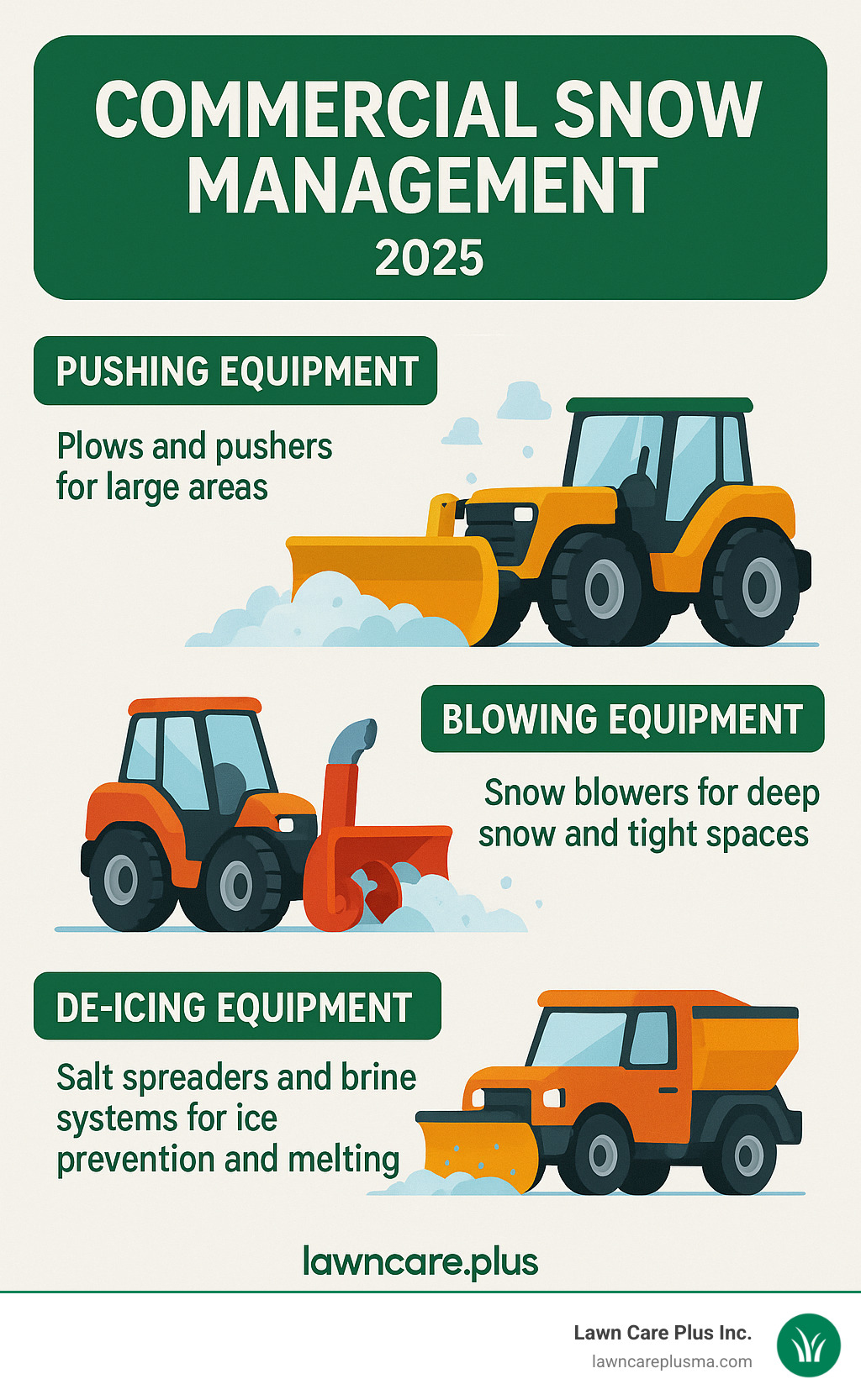
Essential commercial snow removal equipment includes:
- Snow plows and pushers – For clearing large parking areas and roadways
- Sidewalk snow vehicles – Compact machines for walkways and tight spaces
- Salt spreaders and de-icing systems – To prevent ice formation and ensure safety
- Snow blowers – For deep snow and areas where plowing isn’t practical
- Skid steers and wheel loaders – Heavy-duty machines for large commercial properties
The right equipment mix depends on your property’s size and local snowfall patterns. As one industry expert noted, “One Snowrator can do the job of four shovelers – reducing payroll, saving time, and making you more money.”
The stakes are high. Slip-and-fall accidents lead to costly liability claims, and inaccessible properties mean lost revenue. A smart equipment investment pays for itself through reduced labor costs and faster clearing times.
Modern snow equipment has evolved far beyond basic plows, now featuring heated cabs, GPS tracking, and precision spreader controls. Upgrading can lead to significant savings, with some contractors reporting a 40% reduction in labor costs.
Terms related to commercial snow removal equipment:
- commercial snow removal companies
- commercial snow removal contract
- how much does commercial snow removal cost
The Essential Arsenal: A Guide to Commercial Snow Removal Equipment
When winter weather threatens your business, the right commercial snow removal equipment is essential. Not all snow events are the same; a light dusting requires different tools than a blizzard, and what works for a parking lot may be useless on a sidewalk.
| Equipment Type | Ideal Snow Depth | Best For | Surface Type |
|---|---|---|---|
| Snow Plows | Up to 12 inches | Rapid clearing of large, open areas like parking lots and long driveways | Asphalt, Concrete, Paved Surfaces |
| Snow Pushers | 6 inches to 3 feet | Moving large volumes of snow efficiently, creating snow storage piles | Asphalt, Concrete, Gravel |
| Snow Blowers | Any depth, especially deep snow (12+ inches) | Clearing pathways, sidewalks, tight spaces, and removing snow from around obstacles | Paved, Concrete, Grass, Gravel |
Heavy-Duty Machinery for Large Lots and Roadways
For massive properties like shopping centers or industrial facilities, you need the heavy hitters of commercial snow removal equipment.
Wheel loaders are powerful workhorses for handling heavy snow on large properties, excelling at scooping and stacking large volumes.
Skid steer loaders offer a great balance of power and maneuverability, making them ideal for working around obstacles while pushing heavy, wet snow. Their ability to use different attachments adds to their value.
Snow plows remain the top choice for quick clearance of large areas. V-plows are particularly versatile, allowing operators to angle the blade to direct snow flow and create clear lanes.
Snow pushers (or box plows) are efficiency champions. They contain snow and move massive volumes in a single pass, clearing large lots in a fraction of the time.
When on-site storage is full, hauling capacity is key. Heavy-duty dump trucks can transport snow off-site to designated disposal areas.
For comprehensive winter property management that includes this heavy-duty approach, check out our Commercial Snow Removal Services.
Specialized Tools for Sidewalks and Tight Spaces
Keeping sidewalks and walkways safe requires precision and maneuverability over raw power.
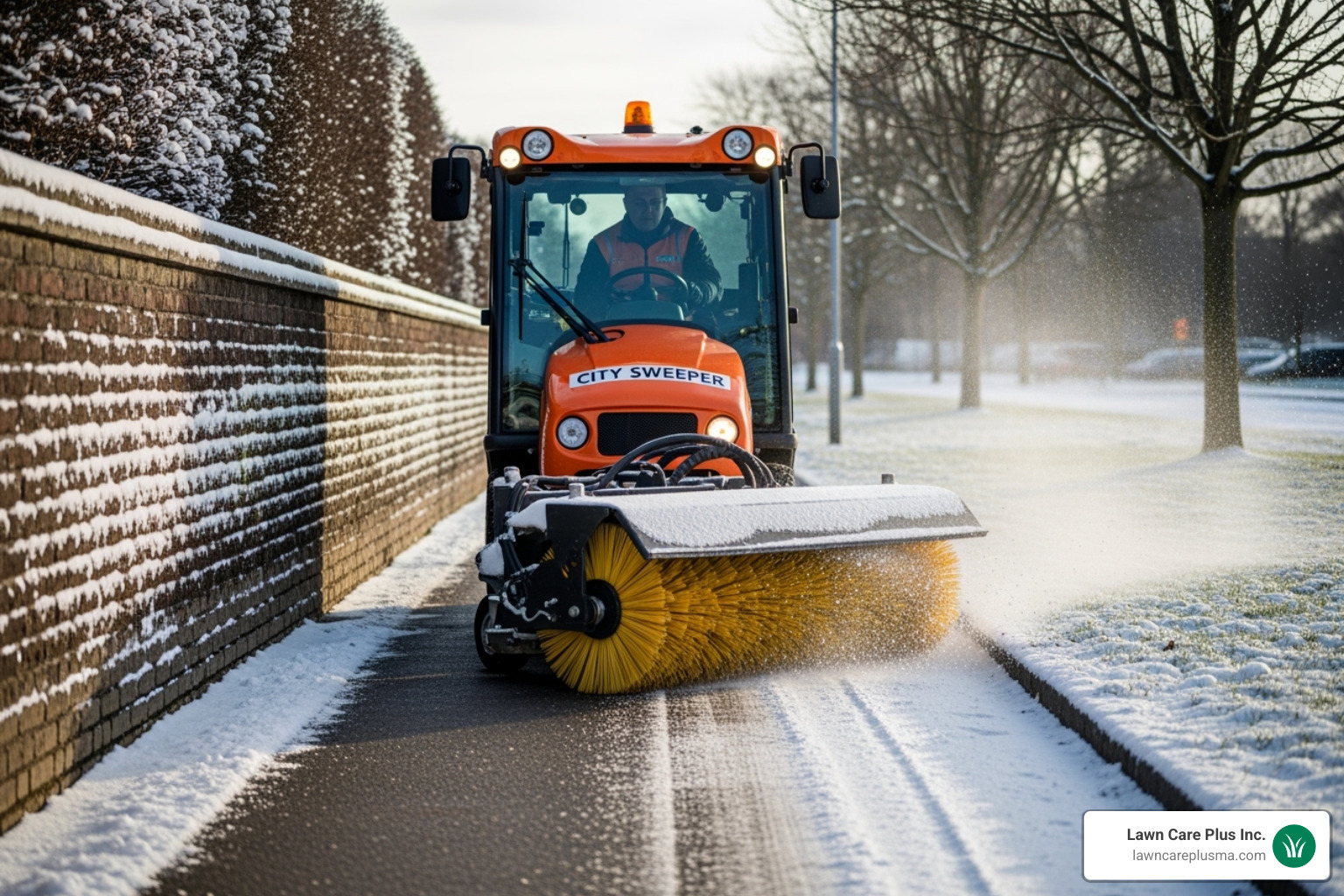
Sidewalk Snow Vehicles (SSV) are compact game-changers for pedestrian areas, able to clear and de-ice narrow spaces in a single pass.
Power brooms are incredibly effective for sweeping away light snow and slush, cleaning right down to the pavement to prevent slip-and-fall accidents.
Commercial-grade snow blowers are essential for deep snow. These powerful machines can throw snow up to 40 feet away, moving thousands of pounds per minute to clear drifts or move snow far from walkways.
De-icing spreaders designed for tight spaces, like walk-behind or compact mounted models, ensure sidewalks remain safe after clearing.
These specialized tools excel at working around obstacles like landscaping and building features without causing damage, thanks to features like zero-turn radius and articulating frames.
To see the full range of professional-grade equipment available, take a look at this comprehensive Snow Solutions Brochure.
De-Icing and Anti-Icing Equipment
Clearing snow is only half the battle; preventing and eliminating ice is critical for safety.
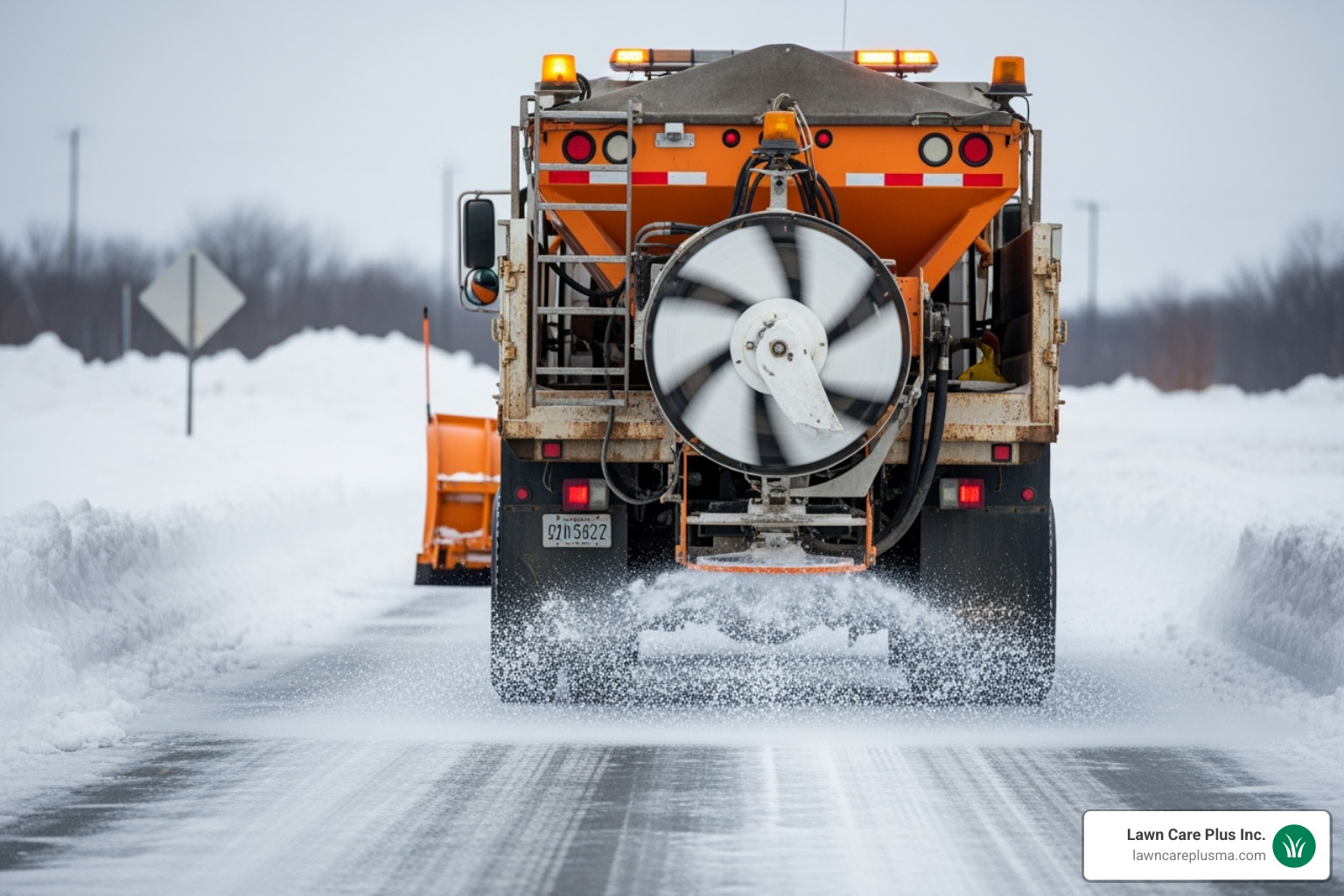
Salt spreaders are the backbone of ice management, available in various sizes from walk-behind units to truck-mounted systems. Proper application is key to balancing safety, cost, and environmental impact.
Brine sprayers represent the cutting edge of ice prevention. Applying a liquid salt solution before a storm prevents snow and ice from bonding to the pavement, making removal much easier.
Drop spreaders offer precision application for sensitive areas like building entrances or landscaping, placing de-icing agents exactly where needed without overspray.
Liquid anti-ice and pre-wet systems boost efficiency. Pre-wetting granular salt with liquid brine helps it activate faster and stick to surfaces, reducing material usage and improving results.
These integrated systems are invaluable in challenging winter climates. To learn more about how we handle comprehensive ice management, explore our Boston Snow Removal capabilities.
Selecting the Right Snow Management Fleet for Your Property
Choosing the right commercial snow removal equipment is like assembling a specialized team where each piece has a crucial role. A small medical office in Dedham has different needs than a sprawling shopping center in Framingham, so your fleet must match your property’s specific demands.
Key factors to consider include:
- Property size: Acres of parking lots require the muscle of wheel loaders and large snow pushers, while smaller properties benefit from versatile, compact machines.
- Average snowfall: Areas with deep, heavy snow need powerful blowers and pushers. Lighter, frequent snowfalls may only require quick-response plows and sweepers.
- Surface types: Delicate pavers or decorative concrete need gentler treatment, such as rubber cutting edges or power brooms, to prevent damage.
- Zero-tolerance requirements: Facilities like hospitals or high-end retail centers demand rapid-response equipment like sidewalk snow vehicles and comprehensive de-icing systems to ensure constant accessibility.
- Specialized vs. general-purpose machinery: Some equipment can be used for landscaping in the off-season, offering better year-round value.
Understanding these factors helps create an effective snow management strategy for any property in our service area. Find out about Snow Management in Dedham, MA.
How to Choose the Right Commercial Snow Removal Equipment
Asking the right questions is the foundation of a smart equipment investment. Before you buy, consider the following:
- What’s your total clearing area? Measure all surfaces to be cleared, including parking lots, roads, and sidewalks. An accurate measurement is crucial for planning.
- Do you have sensitive surfaces? Plan for equipment with lighter footprints or specialized attachments to avoid expensive repairs to decorative pavers or turf.
- Where will the snow go? Determine if you have space for large snow piles on-site or if you’ll need hauling capacity to move snow elsewhere. This impacts your need for pushers, loaders, or dump trucks.
- What’s your typical snow like? Heavy, wet snow can bog down smaller machines, while light powder can be handled with less powerful equipment.
- What’s your budget reality? Look beyond the purchase price to ongoing costs like fuel, maintenance, and operator training. A higher upfront investment can pay off in lower operating costs.
If these questions feel overwhelming, professional snow removal services can offer better value and peace of mind. Learn about Commercial Snow Removal Contracts to explore your options.
Evaluating Cost vs. ROI for Your Equipment Investment
Investing in commercial snow removal equipment is a significant financial decision, but a positive return on investment (ROI) is often achieved faster than you might think.
- Purchase price: This is the starting point. Consider the total cost of ownership, including necessary attachments like plows and spreaders.
- Operating costs: Modern equipment offers better fuel efficiency, but the real savings come from labor. A specialized machine can replace several manual workers, dramatically cutting payroll expenses. Some property managers report saving 40% on labor after upgrading.
- Maintenance expenses: Look for equipment with a reputation for durability and reliability to minimize repair costs and downtime.
- Labor savings: Reliable equipment works consistently without calling in sick or requiring overtime, addressing the challenge of finding dependable seasonal workers.
- Increased efficiency: Faster clearing times reduce business interruptions and keep customers happy. For contractors, it means the ability to service more clients.
Factoring in reduced liability, labor savings, and efficiency gains, quality equipment often pays for itself within a few seasons.
Maximizing Efficiency: Operations, Safety, and Technology
Having the right commercial snow removal equipment is just the start. To get the most from your investment, you need smart operational strategies, solid safety protocols, and modern technology. When these elements work together, your equipment becomes a reliable partner that keeps your property safe and accessible all winter.
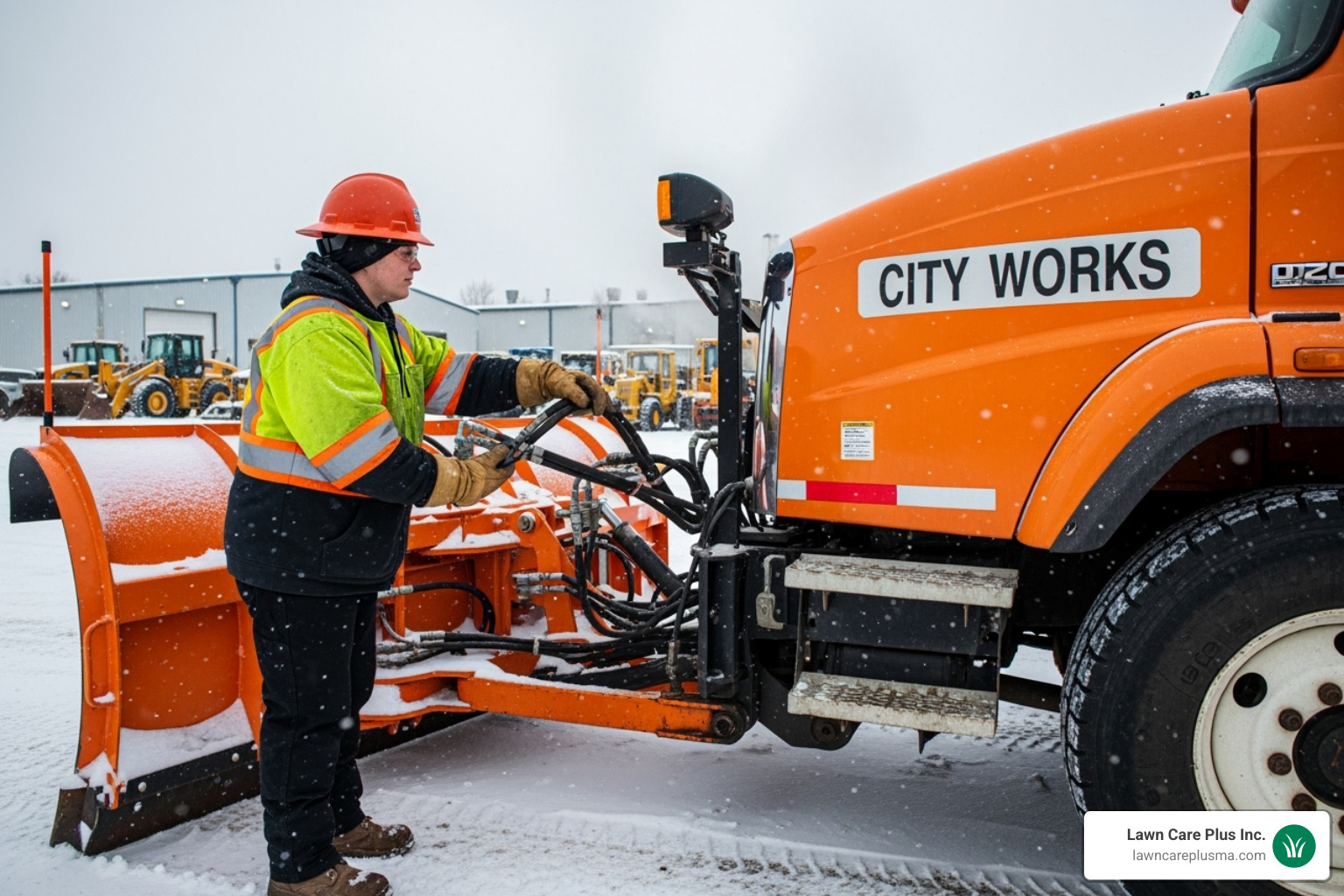
This approach is built on thorough operator training, pre-season readiness, and diligent post-season care. At Lawn Care Plus Inc., we ensure our team is trained, our fleet is prepared long before the first storm, and our equipment is properly maintained to protect the investment for years to come.
Maintenance and Operational Best Practices
Equipment failures happen at the worst times, which is why preventative maintenance is critical. A proactive approach avoids costly downtime during a major storm.
- Pre-season inspection: A thorough checklist is non-negotiable. Check all fluids, belts, hoses, tires, and electrical systems to prevent mid-storm failures.
- Blade and cutting edge wear: These parts take the most abuse. Worn blades clear snow poorly and can damage pavement. Replace them before they become a problem.
- In-season fluid checks: Cold weather is tough on machinery. Regularly monitoring hydraulic fluid and engine oil keeps everything running smoothly under pressure.
- Post-season cleaning and storage: Salt is incredibly corrosive. Thoroughly clean every surface, service all components, and store equipment properly to prevent damage and add years to its life.
For operators managing their own fleets, resources like free online operator tutorials provide valuable training on maintenance and troubleshooting.
Key Safety Protocols for Snow Removal Operations
Operating heavy commercial snow removal equipment in poor conditions requires strict adherence to safety protocols.
- High-visibility gear: Bright, reflective clothing is non-negotiable to ensure operators are seen in swirling snow and low light.
- Equipment lighting and strobes: Bright work lights illuminate the site, while flashing strobes alert drivers and pedestrians to your presence.
- Site mapping for hazards: Before the season, walk every property to identify and mark hazards like fire hydrants, curbs, and drainage grates that will be hidden by snow.
- Operator certification: Ensure every team member understands their equipment, winter driving techniques, and emergency procedures.
- Public and pedestrian safety: Use spotters when needed, establish clear work zones, and coordinate with property managers to minimize disruptions.
How Technology is Revolutionizing Snow Removal
Today’s commercial snow removal equipment uses technology to make operations more efficient, precise, and environmentally responsible.
- GPS tracking for fleets: Real-time monitoring helps optimize routes, ensures complete coverage, and provides documentation of service for clients.
- Automated spreader controls: These systems automatically adjust salt application rates based on vehicle speed and temperature, improving ice control while reducing material waste.
- Fuel-efficient engines: Modern engines significantly reduce operating costs and lower emissions.
- Emerging electric and hybrid models: These options offer quieter operation and zero emissions, ideal for properties with noise restrictions or environmental goals.
- Advanced de-icing liquids: Modern brine and pre-wet systems work more effectively at lower temperatures with less damage to concrete and landscaping.
These advances transform snow removal into smart, sustainable winter property management.
Frequently Asked Questions about Commercial Snow Removal Equipment
We’ve helped countless property managers steer commercial snow removal equipment. Here are answers to some of the most common questions.
What’s the most versatile piece of snow removal equipment?
For maximum flexibility, a skid steer loader or a compact multi-purpose tractor is hard to beat due to its attachment versatility. In winter, it can use a plow, pusher, or salt spreader. In the off-season, the same machine can be used for landscaping tasks like mowing or trenching. This four-season versatility means your investment is working for you year-round, which is a huge benefit for your bottom line.
How do I decide between a snow plow and a snow pusher for a parking lot?
The choice depends on snow conditions and space.
- Snow plows are best for lighter snowfalls (up to 12 inches). They are fast and maneuverable, making them ideal for quick passes and working around obstacles like parked cars.
- Snow pushers (box plows) excel in heavy accumulation (6 inches to 3+ feet). They contain snow, allowing you to move large volumes in fewer passes. This is highly efficient for creating consolidated, well-stacked snow piles, especially when storage space is limited.
Many large properties use both: plows for initial clearing and pushers for stacking and managing the accumulated snow.
Is buying used commercial snow removal equipment a good idea?
Buying used can make financial sense, as the upfront savings can be substantial. However, you must proceed with caution. Snow removal equipment operates in harsh conditions with corrosive salt and freezing temperatures.
When evaluating used equipment, look for salt corrosion damage and check all hydraulic systems, which are expensive to repair. Inspect wear parts like cutting edges and drive components. We always recommend having a qualified mechanic inspect any used machine before you buy.
For high-stakes commercial operations where downtime is not an option, the reliability of new equipment often justifies the higher cost. For supplemental or lower-risk applications, a carefully purchased used machine can be a smart choice.
Conclusion: Partnering for a Clear and Safe Winter
When winter storms hit the Boston Metro-West area, success is determined by how quickly and safely you can clear them away. The right commercial snow removal equipment is the difference between a business that stays open and one that faces costly shutdowns and liability claims.
We’ve covered the essential equipment, from heavy-duty loaders and plows for large lots to specialized sidewalk vehicles and advanced de-icing systems for total site safety. The best fleet is customized to your property’s unique size, surfaces, and snowfall patterns.
However, equipment is only part of the equation. Professional expertise in training, maintenance, safety, and technology deployment is what ensures a truly effective operation. Modern commercial snow removal equipment offers incredible capabilities, from GPS tracking to automated spreader controls, that make winter management smarter and more efficient than ever.
Winter doesn’t wait, and neither should your preparation. Whether you’re buying equipment or considering professional services, the key is to act before the first storm.
For comprehensive winter property care in the Boston Metro-West area, trust the experienced teams at Lawn Care Plus Inc. We have the expertise and the arsenal of commercial snow removal equipment to keep your property clear, safe, and open for business.
Get a quote for your property’s Snow Management needs.
