
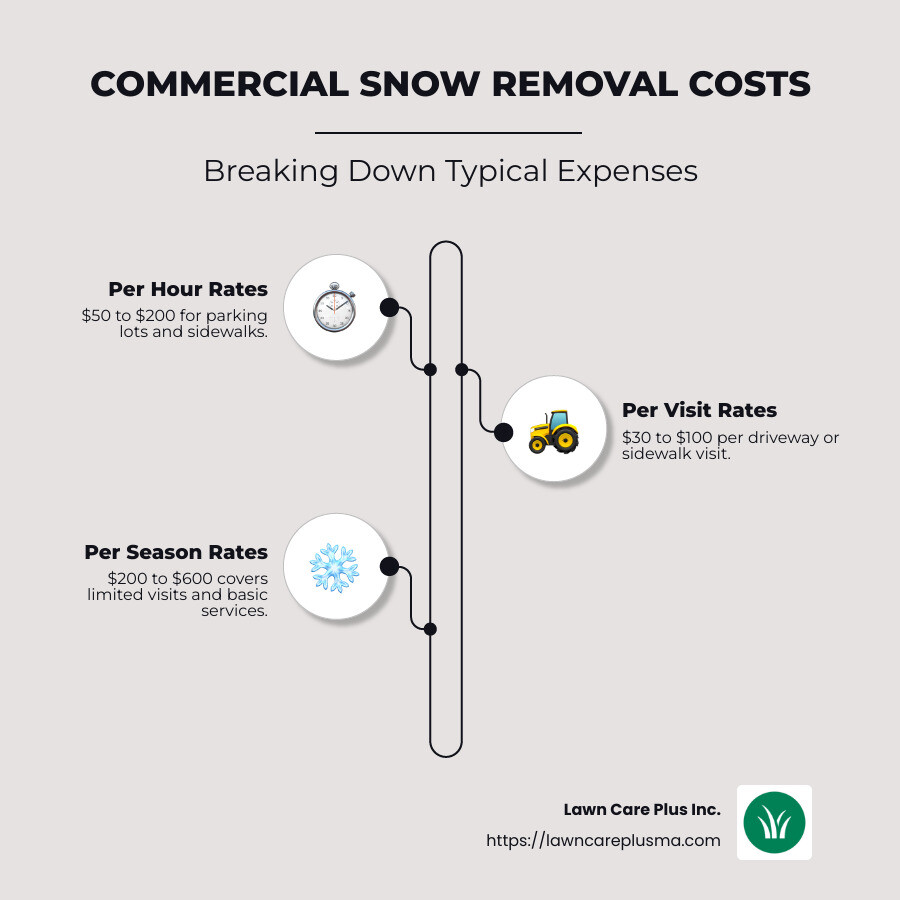
How much does commercial snow removal cost? This is a common query on the minds of property managers and business owners, especially when preparing for the unpredictable winters in the Boston Metro-West area. Understanding the expenses involved is pivotal for budgeting effectively and ensuring your property remains accessible and safe throughout the season. Here’s a quick breakdown of typical costs:
- Per Hour Rates: $50 to $200
- Per Visit Rates: $30 to $100
- Per Season Rates: $200 to $600
Snow management is not just a necessity but a critical aspect of maintaining the functionality and safety of commercial properties in winter. Proper budgeting for snow removal ensures that businesses can operate smoothly during heavy snowfalls without incurring unexpected expenses. Every commercial property has unique needs, influenced by factors like the size of the area, specific services required (such as plowing, blowing, or salting), and regional conditions.
By investing time in creating a comprehensive snow removal budget, you can avoid disruptions caused by snow buildup and keep your property safe, operational, and efficient all winter long.
Essential how much does commercial snow removal cost terms:
– commercial snow removal companies near me
– snow plowing services
– snow removal companies
Factors Influencing Commercial Snow Removal Costs
When considering how much does commercial snow removal cost, several key factors come into play. Each factor can significantly impact the overall expense, so understanding them can help in budgeting effectively.
Overhead Costs
Overhead costs are the backbone of pricing for snow removal services. These include insurance for vehicles and equipment, employee wages, and fuel for machinery. Additionally, the costs of running daily business operations can add up. Failing to account for these can lead to financial shortfalls.
Snow Depth and Job Duration
The amount of snowfall and the time it takes to clear it are crucial in determining costs. Estimating the snowfall amount accurately helps in planning the job duration. For instance, deeper snow requires more time and labor. A simple formula to estimate labor is to calculate the hours needed for one worker and then divide by the number of workers deployed for the job.
Equipment Needed
Different jobs require different tools. Snow plows are ideal for large areas, while snow blowers work well in tighter spaces. Salt spreaders help in preventing ice buildup, and Bobcat skid-steer loaders are useful for heavy-duty tasks. The type and number of equipment needed will influence the cost.
Location and Property Size
Location plays a big role in pricing. Urban areas may have higher rates due to accessibility and demand, while rural areas might incur travel costs. The size of the property—such as the length of a driveway or the size of a parking lot—also affects the cost. More space requires more time and resources to clear.
Special Conditions and Response Time
Special conditions like curbs or obstacles can increase complexity and cost. Properties in rural areas might face additional charges due to distance. Emergency services, which require quick response times, are typically more expensive. Many companies offer the option to set a trigger amount—a predetermined snowfall depth that prompts service. The lower the trigger, the more frequent the service, which can increase costs.
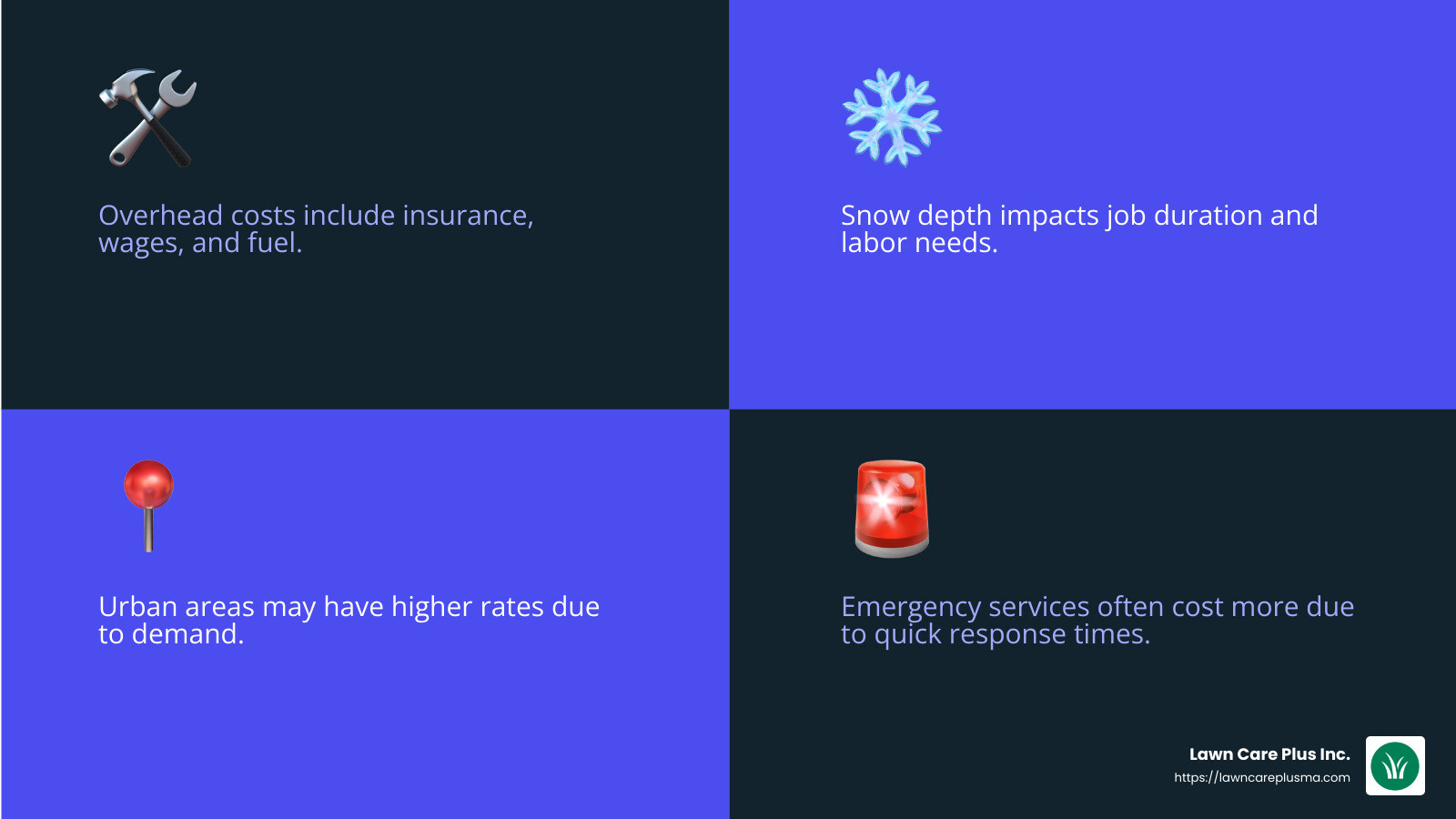
Understanding these factors helps in anticipating the costs associated with commercial snow removal. By considering each element, businesses can better prepare for the winter season and ensure that their properties remain safe and accessible.
Pricing Models for Commercial Snow Removal
When it comes to commercial snow removal, choosing the right pricing model is essential. Let’s break down the common options:
Per Event
Charging per event means setting a flat rate for each snowstorm or significant snowfall. This is ideal for areas with sporadic snow. You pay once for each storm, typically within a 24-hour period. This model is straightforward—no need for complex calculations.
Per Push
With the per push model, you pay a flat rate each time the snow is cleared from your property. This is beneficial if you expect multiple snow events throughout the season. Knowing the average number of snow events in your area can help you budget effectively.
Per Hour
The per hour model involves charging based on the time it takes to clear the snow. This requires calculating the hourly rate for workers and equipment. For instance, if you have two workers at $50 per hour each, and the job takes 4 hours, the cost would be $400. This model is flexible but requires accurate time estimation.
Seasonal Contract
A seasonal contract involves paying a flat fee for snow removal services over a set period. Think of it as a subscription service. This model offers peace of mind, knowing your property will be cleared whenever it snows, without worrying about individual charges.
Multi-Seasonal Contract
For long-term planning, consider a multi-seasonal contract. These agreements often come with discounts and are designed to retain customers over several seasons. It’s a win-win: businesses get consistent service, and snow removal companies secure long-term clients.
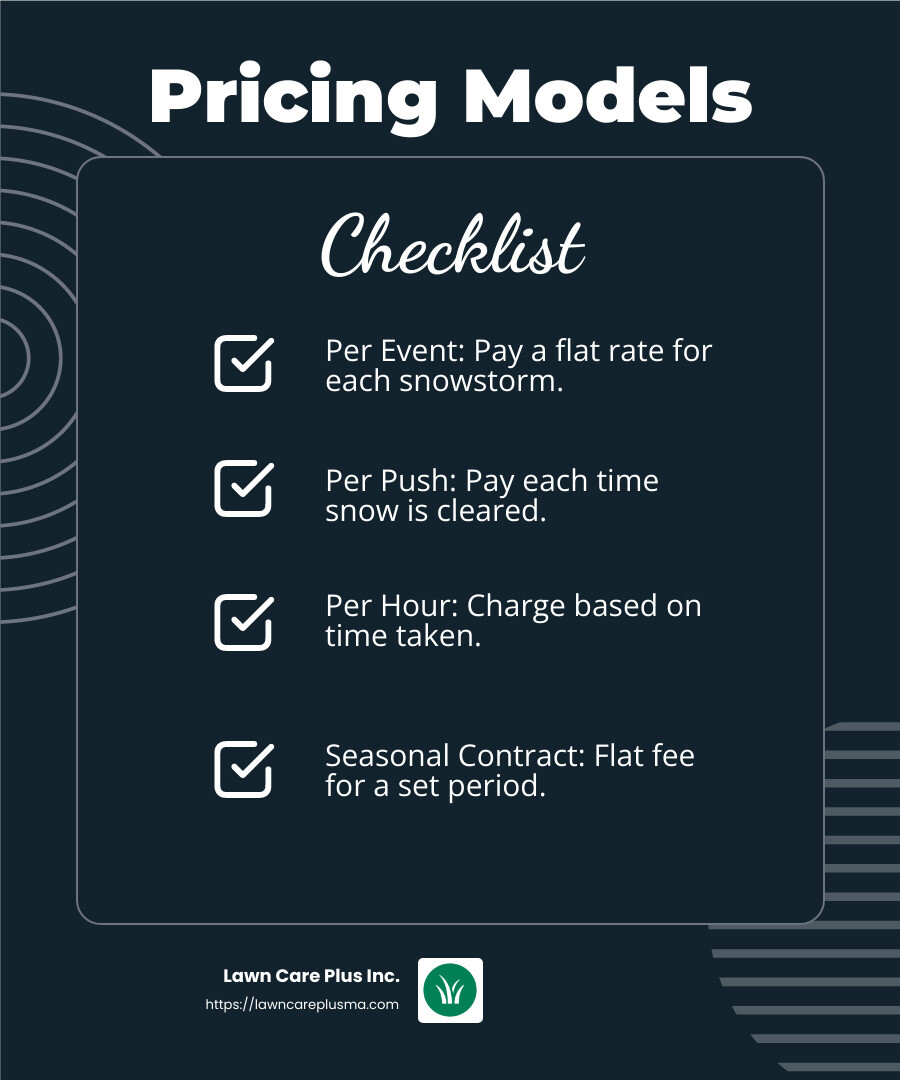
Choosing the right pricing model depends on your location, typical snowfall, and budget preferences. Each model offers different advantages, so consider what best suits your needs.
Average Costs for Commercial Snow Removal
Understanding the average costs for commercial snow removal can help businesses plan their budgets effectively. Let’s explore the typical costs based on different pricing models.
Per Hour Rates
When you opt for per hour rates, you can expect to pay between $50 and $200 per hour. This range depends on factors like the size of the area, the complexity of the job, and the number of workers and equipment needed. For instance, clearing a large parking lot or multiple sidewalks will naturally fall on the higher end of this spectrum. Hourly pricing is ideal for properties with varying snow removal needs, allowing flexibility in cost based on the actual time spent on the job.
Per Visit Rates
With per visit rates, businesses pay a set fee each time snow is cleared. This typically ranges from $30 to $100 per visit. This model is straightforward, making it easy to budget for each snow event. It’s perfect for properties like driveways and sidewalks, where the snow removal process is relatively consistent in scope. Knowing the average number of snow events in your area can help you estimate the total seasonal cost.
Per Season Rates
For those looking for a comprehensive solution, per season rates offer a flat fee for the entire snow season, usually between $200 and $600. This model includes a limited number of visits, with additional clearings available at a predetermined cost. It’s like a subscription service for snow removal, providing peace of mind that your property will be maintained throughout the winter without unexpected expenses.
Per Inch Rates
Per inch rates charge based on the depth of snow, typically $60 to $100 for the first 4-6 inches. Additional inches may be charged at a lower rate. This pricing model is beneficial in areas with heavy snowfall, where the amount of snow can vary significantly from one storm to another. It allows for precise budgeting based on actual snow accumulation, making it a fair approach for both the service provider and the customer.
Understanding these cost structures can help you choose the best approach for managing your commercial property’s snow removal needs.
How Much Does Commercial Snow Removal Cost?
Cost Breakdown by Property Type
When budgeting for commercial snow removal, understanding the cost breakdown by property type is essential. Different areas require varying levels of effort and equipment, which influences pricing.
Parking Lots:
Clearing snow from parking lots can range from $50 to $160 per hour. The size of the lot, presence of obstacles, and whether cars are parked during removal all affect the cost. For a 50,000 square-foot lot with obstacles, expect to pay around $900 per snowfall.
Sidewalks:
Snow removal on sidewalks is often included in a flat rate or charged separately. The cost can be $30 to $70 per visit, depending on the length and complexity of the sidewalks.
Driveways:
Driveways can be charged per visit or per hour. For a straightforward driveway, expect $30 to $75 per visit. Gravel or dirt driveways might incur additional charges due to the complexity of plowing.
Roofs:
Removing snow from roofs is crucial to prevent structural damage. Costs range from $220 to $500 for standard roofs, but may rise to $1,000 to $2,000 for more complex structures.
Cost Breakdown by Service Type
The type of service provided also impacts the cost of commercial snow removal. Here are the main services and their typical pricing:
Plowing:
Plowing is the most common and cost-effective service for large areas. It’s priced per hour, with rates varying from $50 to $160 depending on the location and equipment needed.
Blowing:
Snow blowing is ideal for tight spaces like sidewalks. It often shares the same price range as plowing, making it a versatile option for smaller areas.
Shoveling:
Manual shoveling is labor-intensive and typically costs $55 to $95 per hour. It’s used for areas inaccessible to machinery, such as steps or narrow pathways.
Salting:
Salting is an additional service that can prevent ice formation. It’s usually charged separately, with costs depending on the size of the area and the amount of salt required.
By understanding these pricing factors and service types, businesses can better plan their snow removal budgets and ensure their properties remain safe and accessible during winter months.
Tips for Budgeting Commercial Snow Removal
When it comes to budgeting for commercial snow removal, understanding all the elements involved is crucial. Let’s break down some key tips to help you manage costs effectively.
Understanding Overhead
Overhead costs are the backbone of your snow removal budget. They include:
- Insurance: Essential for protecting your vehicles and equipment. Make sure you’re covered to avoid unexpected expenses.
- Driving & Setup Time: Billable to clients, but you need to know how much time you’re spending on these tasks to price correctly.
- Employee Wages: Your team needs to be paid fairly. Ensure your pricing covers these wages.
- Supply Costs: This includes deicer, fuel, and maintenance for your equipment. Keep track of these to avoid surprises.
- Fuel Costs: Critical for operating your machinery, especially during long snow seasons.
Estimating Job Length
Accurate job length estimation is key to effective budgeting. Consider:
- Labor Calculation: Estimate how long it takes one person to complete a job, then scale based on team size.
- Job Scope: Clearly define whether you’re plowing, shoveling, or salting. Each has different time requirements.
- Snow Plowing vs. Salt Spreading: Understand the time difference between these tasks to adjust pricing accordingly.
Knowing Your Market
Understanding your market is vital for setting competitive rates:
- Location-Based Pricing: Wealthier areas might pay more, while less affluent regions might need lower rates.
- Competitive Rates: Research what others are charging to stay competitive without underpricing your services.
- Market Research: Keep an eye on market trends to adjust your pricing strategy as needed.
Hiring Salespeople
A good salesperson can boost your business significantly. Consider:
- Sales Runs and Customer Acquisition: A dedicated salesperson can reach out to potential clients, increasing your customer base.
- Team Building: Decide if you want to be in the field or the office. If the latter, ensure you have a strong sales team.
Digital Marketing
Digital marketing is essential for any business:
- Google Business: Ensure your profile is complete and engaging with photos and reviews.
- Website: A simple, easy-to-steer website can help clients find and contact you.
- Social Media: Use platforms to engage with the community and showcase your work.
- Customer Reviews: Respond to reviews to show you’re active and care about customer feedback.
By focusing on these areas, businesses can better manage their snow removal budgets, ensuring they remain competitive and efficient. Up next, we’ll explore common questions about commercial snow removal to further aid your planning.
Frequently Asked Questions about Commercial Snow Removal
How do you calculate commercial snow plowing?
Calculating the cost of commercial snow plowing involves several factors. Here’s a breakdown:
- Hourly Rate: Typically ranges from $50 to $200 per hour. This rate includes labor and equipment usage. It’s important to consider how many workers are on the job, as this can affect the overall cost.
- Square Foot Pricing: Some companies charge based on the area covered. This is useful for large properties like parking lots.
- Per Inch Pricing: Another method is charging per inch of snowfall. For instance, the first six inches might have a set rate, with additional charges for every inch beyond that.
- Number of Workers: More workers mean faster snow removal but can increase costs. Balance efficiency with budget.
These methods help ensure that pricing is fair and reflects the work involved.
How do I budget for snow removal?
Budgeting for snow removal requires understanding several key elements:
- Snowfall Amount: Consider average snowfall in your area. More snow means more frequent service, which affects your budget.
- First Six Inches: Many companies have a base rate for the first six inches of snow. Knowing this can help you estimate initial costs.
- Additional Six Inches: Additional charges often apply beyond the first six inches. Plan for these extra costs to avoid surprises.
By keeping these factors in mind, you can create a realistic snow removal budget that covers all necessary services without overspending.
How much does a commercial snow plow weigh?
Commercial snow plows vary in weight, but here are some general guidelines:
- Width: Plows typically range from 10 to 13 feet in width. This size is suitable for large areas like parking lots.
- Weight: They can weigh up to 4,000 pounds, depending on the type and size.
- Wing Plows: These have additional wings that extend the plow’s reach. They are heavier and require more powerful vehicles.
Understanding the size and weight of the plow helps in selecting the right equipment for your needs and ensuring your vehicles can handle the load.
These FAQs cover the essentials of commercial snow removal, providing a foundation for effective planning and budgeting.
Conclusion
To sum up, planning for commercial snow removal costs is essential for businesses that want to keep their properties safe and accessible during winter. By understanding the factors that influence pricing, such as overhead costs, snow depth, and equipment needs, you can budget more effectively. The right planning can save you from unexpected expenses and ensure that your property remains functional no matter the weather.
At Lawn Care Plus Inc., we offer comprehensive snow management services custom to the unique needs of commercial clients in the Boston Metro-West area. Our team is equipped with top-rated equipment and expertise to handle any snow-related challenges, ensuring your property is clear and safe. From snow plowing to de-icing, our services are designed to keep your business running smoothly during the harsh New England winters.
For more information on how we can assist with your snow management needs, visit our Snow Management Services page. Let us help you stay prepared and protected this winter season.
