
Why a DIY Lawn Fertilization Guide Can Transform Your Massachusetts Lawn
A diy lawn fertilization guide gives you everything you need to feed your lawn correctly, at the right time, with the right products. Here’s a quick overview of the core steps:
- Identify your grass type — cool-season grasses like fescue, bluegrass, and ryegrass are most common in Massachusetts
- Test your soil — check pH (aim for 6.0–7.0) and nutrient levels before applying anything
- Choose the right fertilizer — match your N-P-K ratio to your soil test results
- Calculate your application rate — target 0.75–1.5 lbs of nitrogen per 1,000 sq ft for cool-season grasses
- Apply at the right time — early spring and early fall are the key windows for New England lawns
- Use the right equipment — a broadcast spreader gives the most even coverage
- Water in after application — about 0.25 inches of water helps nutrients reach the roots
A healthy, actively growing lawn uses a significant amount of energy. Without the right nutrients, it struggles to recover from foot traffic, resist weeds, and push new root and leaf growth — especially through the stress of a Boston-area winter and summer.
I’m Tim DiAngelis, owner of Lawn Care Plus, Inc., and after more than a decade maintaining lawns across Greater Boston and Metro-West, I’ve put together this diy lawn fertilization guide based on what actually works in New England’s climate. Whether you’re starting from scratch or fine-tuning your routine, the sections below will walk you through every step.
The Essential DIY Lawn Fertilization Guide for 2026
Taking care of your own lawn is a chance to get hands-on with your outdoor space and make it truly your own. However, it isn’t just about throwing down some green pellets and hoping for the best. To achieve that deep, golf-course green, we need to understand the biology of our Massachusetts turf.
In our region, including spots like Newton, Needham, and Milton, we primarily deal with cool-season grasses. These plants have a specific “energy budget.” They use nutrients to build strong roots in the fall and lush leaf blades in the spring. If we mistime our efforts, we aren’t just wasting money; we might actually be feeding the weeds instead of the grass. This is why a comprehensive Lawn Care plan is essential. As we move through April 2026, many of you are likely seeing the first signs of green-up. This is the perfect time to start your Spring Lawn Care routine.
Identifying Your Grass Type for This DIY Lawn Fertilization Guide
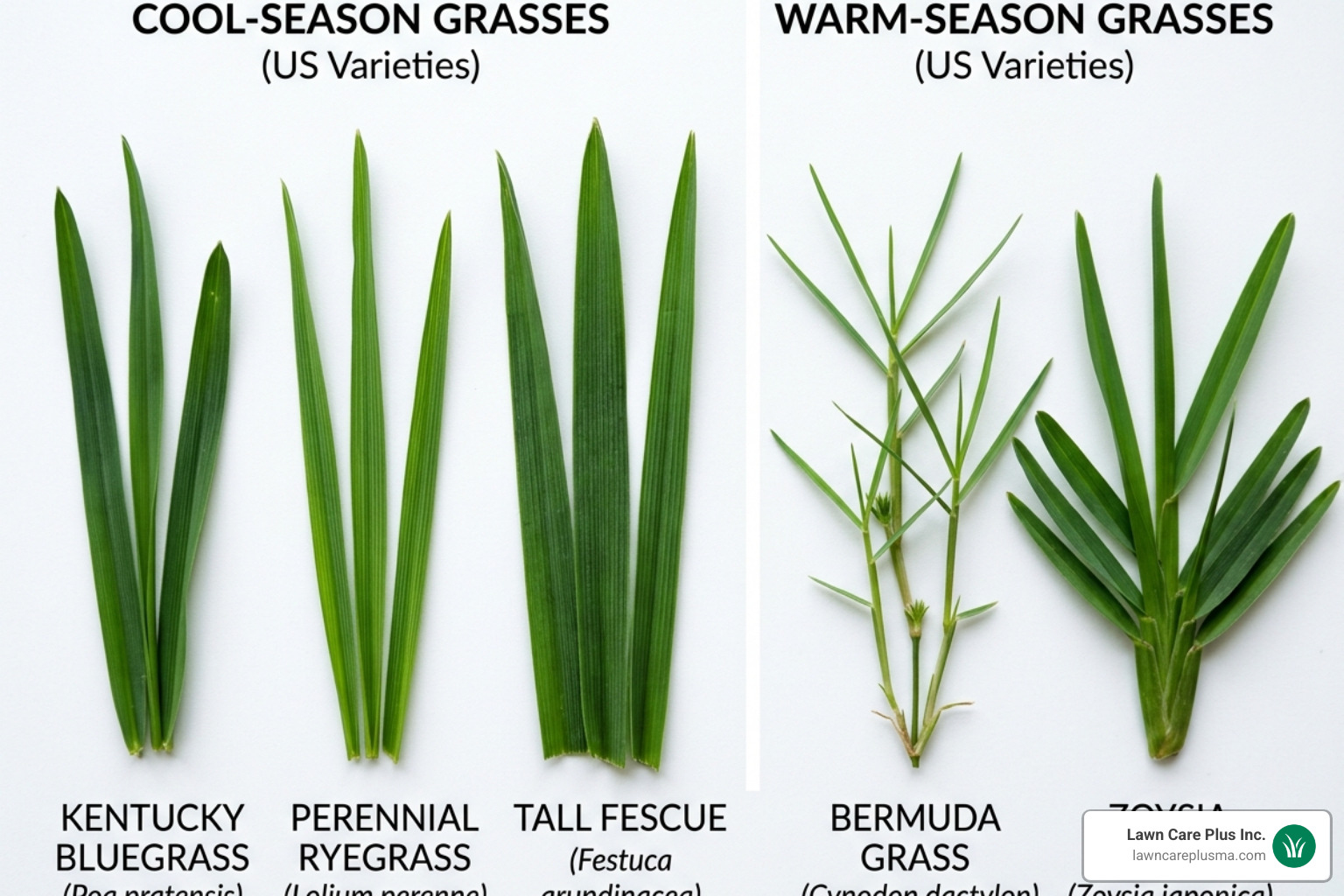
Before you buy a single bag of fertilizer, you must know what you’re growing. In New England, you almost certainly have cool-season grass. The most common varieties are Kentucky Bluegrass, Perennial Ryegrass, and Tall or Fine Fescues.
- Cool-Season Grasses: These stay green late into the fall and are the first to wake up in spring. They grow most vigorously when temperatures are between 60°F and 70°F.
- Warm-Season Grasses: Varieties like Bermuda or Zoysia are rare in Massachusetts because they turn brown and go dormant at the first sign of frost. If your lawn looks like straw from October to May, you might have a warm-season variety, but for most of our clients in the Boston Metro-West area, we are managing cool-season blends.
Understanding this distinction is vital for Your Guide to Lawn Fertilization in New England: When and How because the timing for these two groups is completely opposite. Fertilizing a dormant lawn is a recipe for nutrient runoff and environmental waste.
Soil Testing and pH Correction
If I could give you only one piece of advice for this diy lawn fertilization guide, it would be this: test your soil. Applying fertilizer without a soil test is like a doctor prescribing medicine without a blood test.
Most lawns in our area prefer a soil pH between 6.0 and 7.0. If your pH is too low (acidic), which is common in Massachusetts, your grass literally cannot “eat” the fertilizer you provide. At a pH of 5.5, only about 50% of the nitrogen you apply is actually available to the plant. You can perform a “screwdriver test” to check for compaction—if a flat-head screwdriver doesn’t slide easily into the soil, you likely need aeration alongside your fertilization.
For a proper nutrient assessment, we recommend taking core samples from several spots in your yard, mixing them in a bucket, and sending them to a lab (like the UMass Extension office). This ensures your Lawn Care and Maintenance efforts are backed by data, not guesswork.
Choosing Your Nutrients: N-P-K and Fertilizer Types
When you look at a fertilizer bag, you’ll see three numbers, such as 20-5-10. This is the N-P-K ratio:
- Nitrogen (N): Promotes top growth and that deep green color.
- Phosphorus (P): Stimulates root development. This is especially important for Fertilizer For New Sod. Many Massachusetts soils are already high in phosphorus, and some local regulations restrict its use unless a soil test proves a deficiency.
- Potassium (K): Enhances overall plant health and stress resistance against disease and drought.

If you’re interested in a more natural approach, you can even explore Homemade Fertilizers For Lawns – How To Make Your Own Lawn Fertilizer | Gardening Know How to supplement your program with organic matter.
Organic vs. Synthetic Options
We often get asked which is better. The truth is, both have their place in a diy lawn fertilization guide.
- Synthetic Fertilizers: These are often “quick-release,” providing an immediate “espresso shot” of green. They are water-soluble and work fast, but they carry a higher risk of “burning” the grass if over-applied.
- Organic Fertilizers: Products like Milorganite or composted manure release nutrients slowly as they are broken down by soil microbes. They improve soil structure and are much safer for the environment and your pets.
- Slow-Release Synthetics: These are coated pellets that release nutrients over 6–12 weeks based on temperature and moisture, offering a middle ground between the two.
According to the experts at Healthy Lawns—Fertilization: What to apply, using slow-release nitrogen is generally preferred for home lawns to ensure steady growth and reduce the frequency of application.
Calculating Application Rates for Your DIY Lawn Fertilization Guide
Math is the secret ingredient to a great lawn. You need to know the square footage of your actual grass (total lot size minus the footprint of your house, driveway, and patios).
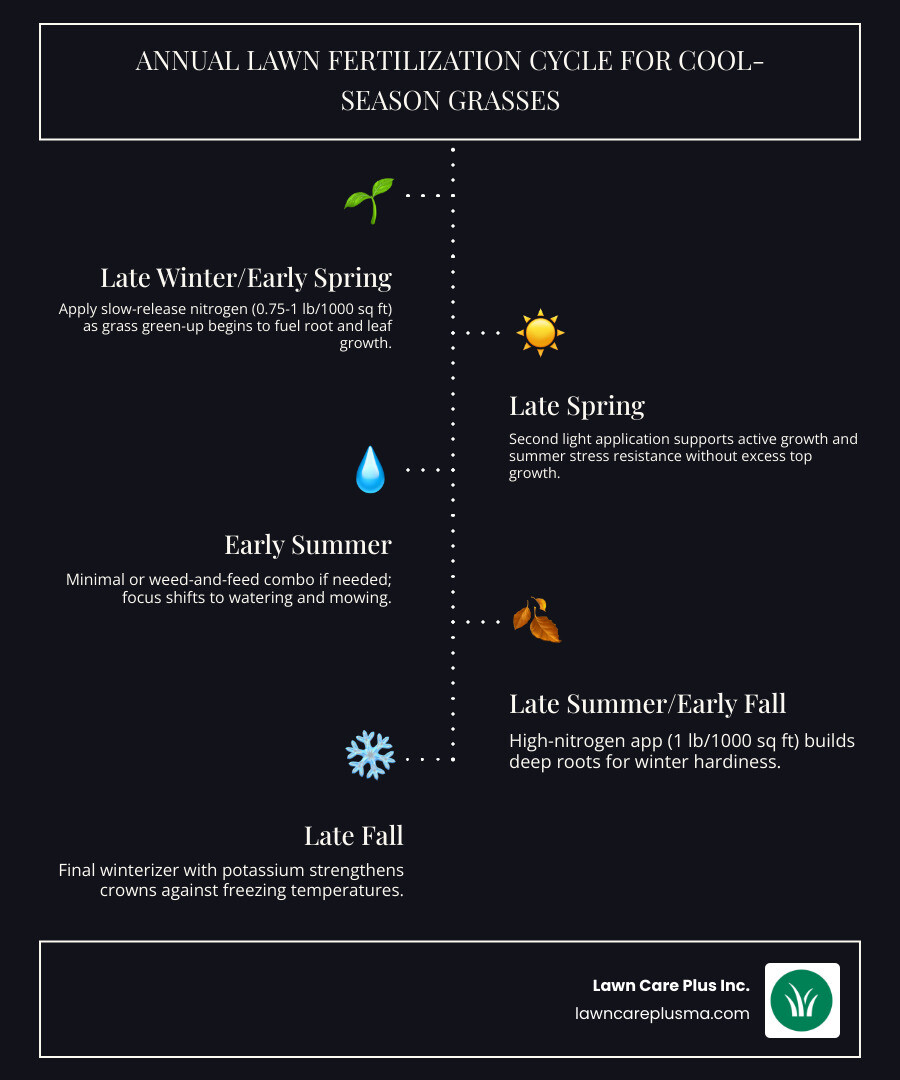
The Nitrogen Goal: For cool-season grass in the spring, aim for 0.75 to 1.5 pounds of nitrogen per 1,000 square feet, usually split into two applications.
The Formula: (Pounds of Nitrogen desired) ÷ (Percentage of Nitrogen in the bag as a decimal) = Total pounds of fertilizer needed per 1,000 sq ft.
For example, if you want 1 lb of nitrogen and your bag is 20-0-0: 1 ÷ 0.20 = 5 lbs of fertilizer product per 1,000 sq ft.
| Fertilizer Bag Weight | Nitrogen % | Coverage Area (at 1 lb N) |
|---|---|---|
| 50 lbs | 10% | 5,000 sq ft |
| 50 lbs | 20% | 10,000 sq ft |
| 50 lbs | 30% | 15,000 sq ft |
Timing and Technique: Applying Fertilizer Like a Pro
In Massachusetts, timing is everything. Our “chaotic” New England weather means the calendar isn’t always right, but the soil temperature is. We look for soil temperatures to hit 55°F—usually around the time forsythia bushes begin to bloom—for our first light spring application.
The most important application of the year for cool-season grass is actually in the early fall (September). This builds the root reserves needed to survive the winter. For Residential Lawn Care, following a How to Fertilize a Lawn: Complete Step-by-Step Guide ensures you don’t miss these critical windows.
Granular vs. Liquid Application Techniques
Most DIYers should stick to granular fertilizer. It’s easier to see where you’ve been and much harder to mess up.
- Broadcast Spreader: This is our top choice for large yards in places like Walpole or Medfield. It flings the granules in a wide arc.
- Drop Spreader: Better for precision near flower beds or walkways, as it drops fertilizer directly beneath the hopper.
- Liquid Fertilizer: These provide a “Green-Up Express” effect. If you want to try this, check out the Best Homemade Liquid Lawn Fertilizer Recipe (2026 Guide) for some fun DIY tonics using household items like ammonia and Epsom salts.
Pro Tip: Always apply to dry grass to prevent the granules from sticking to the blades and causing burn. Then, water it in lightly (about 0.25 inches) to activate the nutrients.
Safety and Cleanup
Fertilizer is a chemical, so treat it with respect. Wear gloves, eye protection, and long pants during application. One of the biggest mistakes we see in the Boston area is fertilizer left on sidewalks and driveways. This washes directly into our storm drains and local waterways, causing algae blooms. Always sweep or blow excess granules back onto the grass.
Furthermore, keep children and pets off the lawn until the fertilizer has been watered in and the grass is dry. This is a core part of Lawn Care Maintenance Near Me that keeps your family safe while your lawn gets healthy.
Complementary Maintenance: Mowing, Watering, and Aeration
Fertilizer is not a silver bullet; it’s one part of a trio. If you fertilize but mow too short or water incorrectly, you’re throwing money away.
- Mowing: Never remove more than one-third of the grass blade at a time. In the summer heat of Dedham or Watertown, we recommend keeping your mower deck high (3.5 to 4 inches). Taller grass shades the soil, reducing water loss and weed germination. Always keep your blades sharp; dull blades tear the grass, making it susceptible to disease. Our Lawn Mowing Service team emphasizes this for every property we visit.
- Watering: Aim for 1 inch of water per week in the spring and 1.5 inches in the summer. It is better to water deeply and infrequently (2–3 times a week) in the early morning than to do light daily sprinkles. This encourages deep root growth.
- Aeration: If your soil is compacted, nutrients can’t reach the roots. Aerating in the fall is the best way to open up the soil. This is especially critical if you are learning How To Care For New Sod.
Average Costs of DIY Lawn Fertilization
Doing it yourself can save money on labor, but the initial investment in equipment and quality products adds up. Based on average internet data, here is what you might expect to spend for a standard 5,000 to 10,000 sq ft lawn in the Boston area. Please note these are average ranges and not specific quotes for our services.
| Item | Low End | High End |
|---|---|---|
| Broadcast Spreader | $40 | $350+ |
| Soil Test Kit (Lab) | $15 | $60 |
| Annual Fertilizer (4-step) | $80 | $350 |
| Soil Amendments (Lime/Sulfur) | $30 | $150 |
| Total Seasonal Investment | $165 | $910+ |
If you find that the cost of high-end equipment and the time spent researching products is becoming a burden, it might be time to look into Lawn Care Companies Near Me to see how professional programs compare.
Frequently Asked Questions about DIY Fertilization
When is the best time to fertilize in Massachusetts?
The “Golden Windows” for our area are late April to early May (once the grass is actively growing) and early September. A third “winterizer” application in late October or early November is also highly beneficial for cool-season roots.
Can I fertilize my lawn before it rains?
A light rain is actually helpful as it “waters in” the fertilizer. However, you should avoid fertilizing before a heavy downpour or thunderstorm. Intense rain can wash the granules off your lawn and into the street, wasting your money and polluting local water.
How do I fix fertilizer burn on my grass?
If you see yellow or brown streaks where you may have overlapped too much, the best remedy is water. Flush the area with plenty of water for several days to help dilute the excess nitrogen salts. If the grass is completely dead, you may need to rake out the thatch and reseed the spot in the fall.
Conclusion
Mastering a diy lawn fertilization guide is a journey of patience and observation. While the steps are straightforward, the nuances of New England weather and soil can be tricky. Whether you are in Brookline, Canton, or Jamaica Plain, the goal is the same: a healthy, resilient lawn that adds value to your home and provides a beautiful space for your family.
At Lawn Care Plus Inc., we take pride in helping our neighbors across the Boston Metro-West area achieve their landscape goals. If the DIY route feels like too much of a “sod” of a job, or if you want to complement your hard work with professional aeration or Lawn Care Services, we are here to help. From Belmont to Walpole, our team has the experience and local knowledge to keep your property looking its absolute best.
Ready to take your lawn to the next level? Contact us today for a consultation!
