
Why Build a Retaining Wall Matters for Your Property
Build retaining wall projects address some of the most common challenges homeowners face with sloped or uneven terrain. Whether you’re dealing with soil erosion, need to create usable flat space, or want to add visual interest to your landscape, a well-constructed retaining wall provides both functional and aesthetic benefits.
Quick Answer: Essential Steps to Build a Retaining Wall
- Plan and prepare – Check local codes, obtain permits if needed (typically required for walls over 3-4 feet), and call 811 before digging
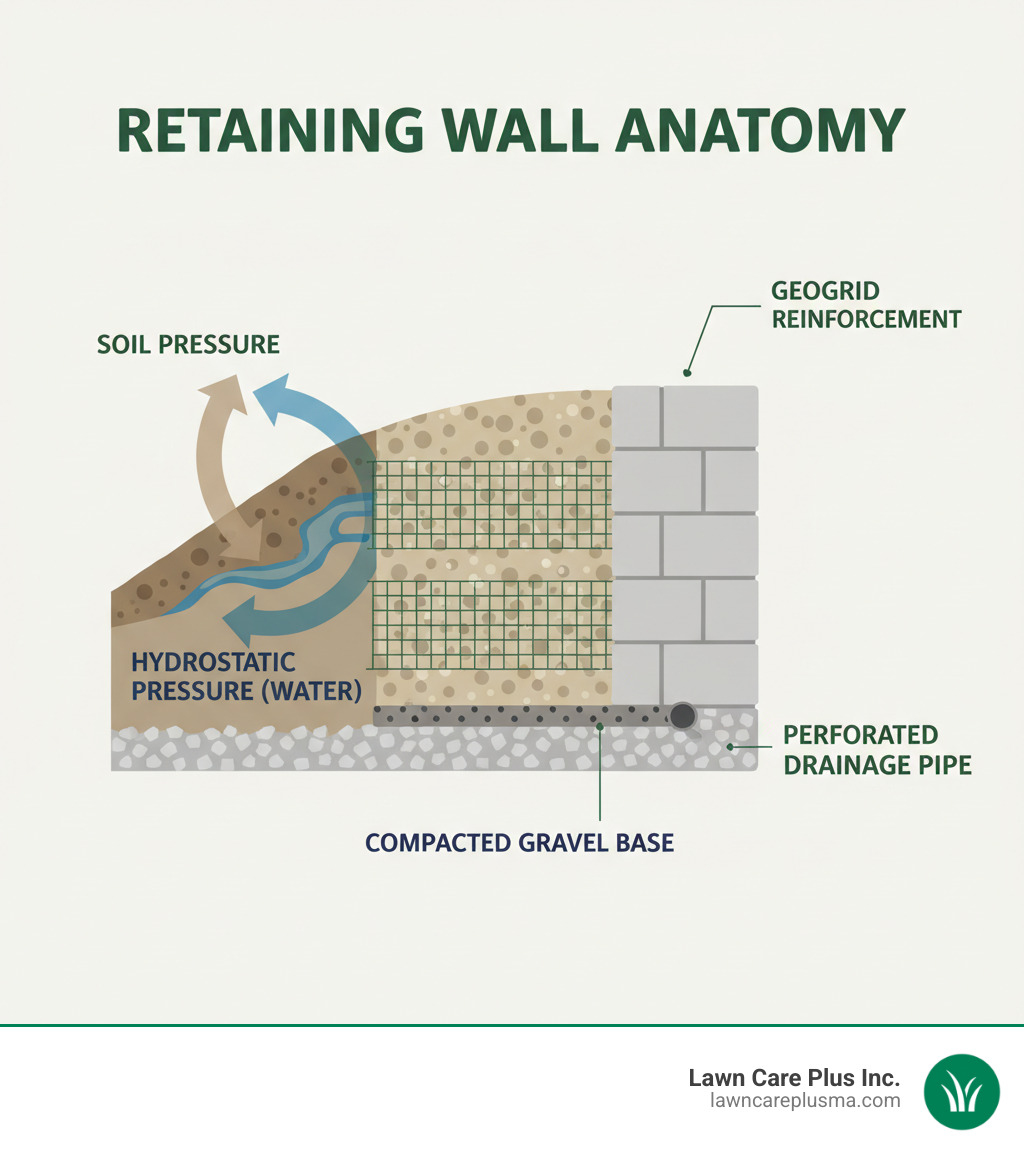
- Excavate the trench – Dig 6-8 inches deep and twice the width of your blocks, burying the first course halfway
- Create a solid base – Add 4-6 inches of compacted gravel for a stable foundation
- Lay the first course – Level each block carefully, as this determines the stability of your entire wall
- Install drainage – Place perforated pipe behind the wall and backfill with gravel to prevent water pressure buildup
- Stack subsequent courses – Stagger joints between rows and compact backfill in 6-inch layers
- Add reinforcement – Use geogrid every 2-3 courses for walls over 3-4 feet tall
- Finish with capstones – Secure the top course with construction adhesive for a polished look
A retaining wall can transform unusable sloped terrain into functional garden beds, patios, or defined outdoor spaces. These structures prevent soil erosion by holding back earth on hillsides and managing water runoff that could otherwise damage your property.
For property owners in the Boston Metro-West area, retaining walls serve double duty through harsh New England winters. They stabilize landscapes against freeze-thaw cycles while creating terraced areas that make snow removal and yard maintenance significantly easier.
The good news? Walls under 3-4 feet are typically manageable DIY projects when you follow proper techniques. The key is understanding three critical principles: building a solid foundation, ensuring proper drainage, and maintaining level courses. Without these elements, even the most attractive wall will eventually fail.
Find more about build retaining wall:
Phase 1: Planning Your Retaining Wall Project
The difference between a retaining wall that lasts decades and one that fails within a few years often comes down to what happens before the first shovel hits the ground. When we build retaining wall structures, thorough planning isn’t just helpful—it’s essential. This preparation phase determines everything from material selection to long-term durability.
Think of planning as your project’s blueprint. We’re not just deciding where to stack blocks—we’re solving specific problems your property faces. Maybe water pools at the bottom of your slope after every rainstorm, or perhaps that hillside garden bed keeps washing away. Understanding exactly what we need the wall to accomplish guides every decision that follows.
The functional benefits of retaining walls extend beyond simple aesthetics. Soil erosion control ranks as the primary concern for most homeowners. Without intervention, sloped terrain loses valuable topsoil with each heavy rain, leaving behind exposed roots and unsightly gullies. A properly constructed wall acts as a permanent barrier against this gradual loss.
Creating usable flat space transforms how we can enjoy our properties. That steep backyard that’s been off-limits suddenly becomes a terraced garden, an outdoor dining area, or a safe play space for children. In the Boston Metro-West area, where properties often feature challenging topography, this added functionality can significantly increase your home’s value.
Water management deserves special attention in our New England climate. Retaining walls channel runoff away from foundations and prevent erosion during spring thaws. They also help define raised garden beds with better drainage, creating ideal growing conditions for plants that struggle in our clay-heavy soils.
Choosing the Right Materials
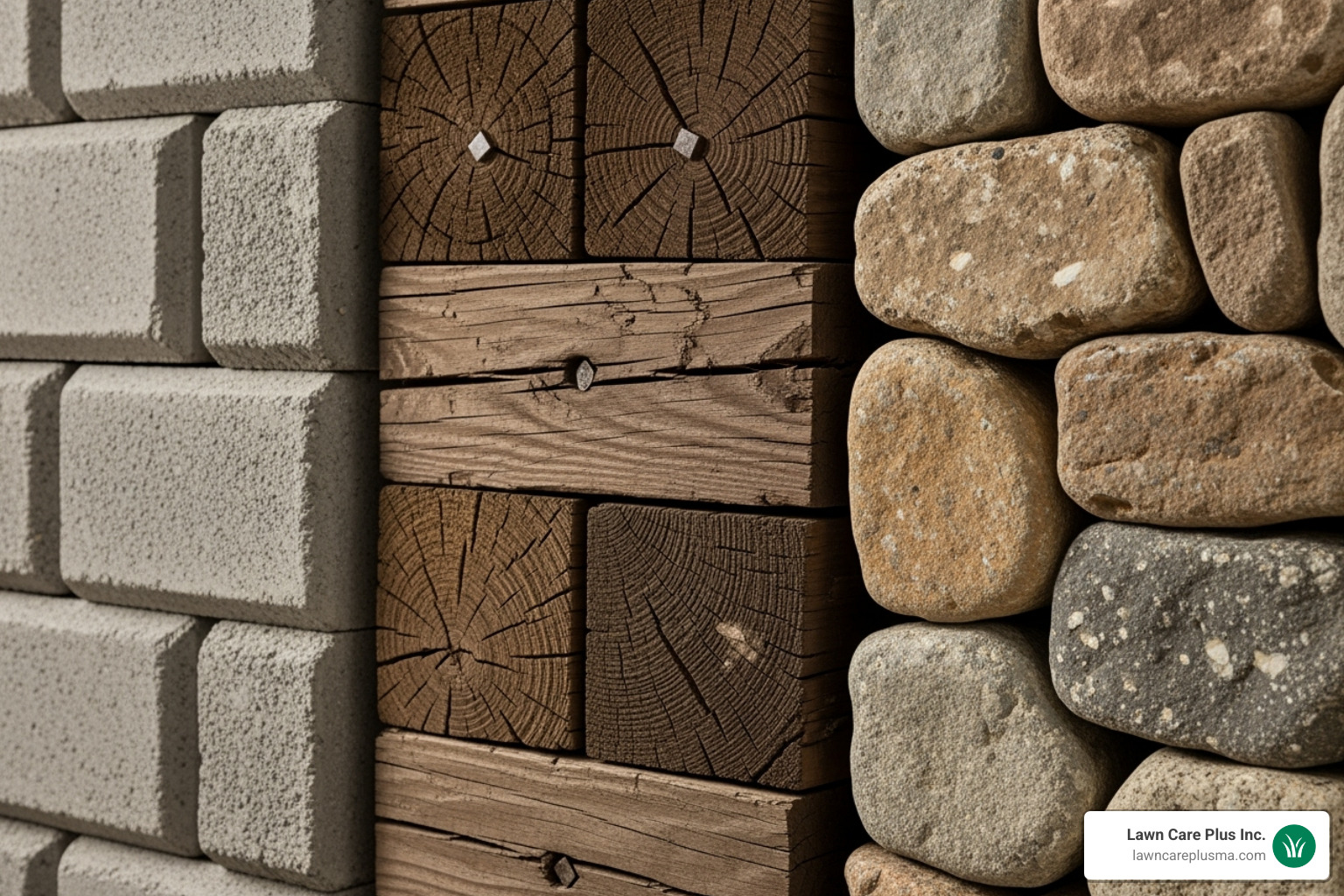
Material selection shapes both the appearance and longevity of your wall. Walk through any neighborhood, and you’ll notice the variety—from rustic stacked stone to modern concrete blocks. Each material brings distinct advantages depending on your project’s scale, budget, and design vision.
Interlocking concrete blocks have become the gold standard for DIY retaining walls, and for good reason. These engineered blocks feature built-in alignment lips that make stacking straightforward even for first-timers. They’re manufactured to precise dimensions, which means achieving level courses becomes much easier than working with irregular natural materials. Most concrete retaining wall blocks can handle walls up to 3-4 feet without additional reinforcement, making them ideal for typical residential applications.
The variety of textures and colors available in concrete blocks surprises many homeowners. Modern manufacturing techniques create surfaces that mimic natural stone, split-face rock, or smooth contemporary finishes. These blocks typically last 50-100 years when properly installed, offering excellent value for the investment.
Pressure-treated wood appeals to those seeking a more natural, rustic appearance. Timber walls work particularly well for shorter structures in garden settings, and you can find a step-by-step DIY guide for these types of projects. The material is lighter and easier to handle than concrete, and it integrates beautifully into wooded or naturalistic landscapes. However, even the best pressure-treated lumber has a limited lifespan—usually 20-25 years in our climate—and requires more frequent maintenance than masonry options.
Natural stone creates the most dramatic visual impact but demands the highest skill level to install correctly. Fieldstone, limestone, or granite walls can last centuries when built by experienced masons. The irregular shapes require careful fitting and selection, making this a time-intensive choice. For DIY builders, natural stone presents significant challenges in maintaining level courses and achieving structural integrity.
Poured concrete offers maximum strength for tall walls or those bearing heavy loads. Professional contractors typically handle this option since it requires forms, reinforcement bars, and precise mixing. The smooth surface can be stamped or stained for decorative effects, though many homeowners find the appearance too industrial for residential landscapes.
When we’re evaluating materials for a specific project, we consider three key factors: the wall’s height, the soil conditions behind it, and how the finished structure should blend with existing landscape features. A wall holding back sandy soil faces different pressures than one restraining heavy clay. Similarly, a wall visible from the street deserves different aesthetic consideration than one tucked behind a garage.
Essential Tools and Supplies
Having the right equipment before starting saves countless trips to the hardware store and prevents frustrating delays. Professional results require professional tools, though most items are affordable and useful for other landscape projects.
For excavation and foundation work, we need a quality shovel for digging the trench and a tamper (also called a compactor) for creating that crucial solid base. Hand tampers work fine for walls under 20 feet long, but consider renting a plate compactor for larger projects—your back will thank you, and the improved compaction makes a real difference in long-term stability.
Precision tools make or break the leveling process. A 4-foot level helps ensure each block sits perfectly horizontal, while a string line stretched along the wall’s length keeps everything aligned. We also rely on a measuring tape for checking dimensions and a rubber mallet for adjusting blocks without damaging their edges. Never use a steel hammer directly on blocks—you’ll chip the faces and weaken the structure.
For cutting blocks to size, a masonry saw (either electric or gas-powered) creates clean cuts where half-blocks are needed. Rent rather than buy this tool unless you’re planning multiple hardscaping projects. Always wear proper safety equipment when cutting—masonry dust is no joke.
The caulk gun might seem like an odd addition to this list, but it’s essential for applying construction adhesive to the top courses and capstones. This adhesive prevents shifting and keeps the finished wall looking professional for years.
Material-wise, your shopping list should include the blocks themselves (order 5-10% extra to account for cuts and potential damage), paver base (crushed limestone that compacts well), drainage gravel (clean angular stone, not round river rock), perforated drain pipe (4-inch diameter), and landscape fabric to wrap around the pipe and prevent soil infiltration.
For a typical 20-foot wall that’s 3 feet tall, you’re looking at roughly 100-120 blocks, about 2 tons of paver base, 3-4 tons of drainage gravel, 20 feet of drain pipe, and 50 square feet of landscape fabric. These quantities vary based on block size and wall dimensions, so always calculate your specific needs or consult with the supplier.
Critical Pre-Construction Steps and Safety
Here’s where many DIY projects go sideways—skipping the bureaucratic steps seems tempting when you’re eager to start building. Don’t do it. Checking local building codes and obtaining permits protects you legally and ensures your wall meets structural requirements.
Most municipalities require permits for retaining walls over 3-4 feet in height, though some have stricter rules based on proximity to property lines or public right-of-ways. The permit process typically involves submitting plans that show the wall’s location, height, and construction method. Yes, it adds a week or two to your timeline, but it also means an inspector will verify your work meets safety standards.
Height restrictions exist for good reason. Walls over 4 feet generate substantial lateral pressure that requires engineering expertise to manage safely. If your slope needs more than 4 feet of retention, consider terracing with multiple shorter walls instead. This approach is often easier to build, creates interesting visual layers, and avoids permit complications. For complex retaining wall design challenges, professional consultation can save both money and headaches.
Before any digging begins, calling 811 is not optional—it’s the law. This free service marks underground utilities within a few days, preventing catastrophic (and potentially fatal) accidents. Gas lines, electrical cables, water mains, and fiber optic lines often run through yards in unexpected locations. That call could literally save your life.
Personal Protective Equipment (PPE) might feel excessive for a backyard project, but retaining wall construction involves real hazards. Safety glasses protect against flying stone chips when cutting blocks. Work gloves prevent blisters and protect hands from sharp edges and splinters. Steel-toed boots guard against dropped blocks—a single concrete block weighs 30-50 pounds and can cause serious foot injuries.
When working on slopes, be conscious of your footing. Wet grass or loose soil can send you tumbling downhill with tools in hand. Keep your work area clear of tripping hazards, and never work alone when lifting heavy materials. Having a helper isn’t just about making the work easier—it’s about having someone there if something goes wrong.
A solid retaining wall foundation starts with proper planning, and that foundation extends beyond the physical base. Taking time to select appropriate materials, gather the right tools, obtain necessary permits, and prioritize safety creates the conditions for success. Rush through planning, and you’ll pay for it later—either in a failed wall or in having to tear everything out and start over.
