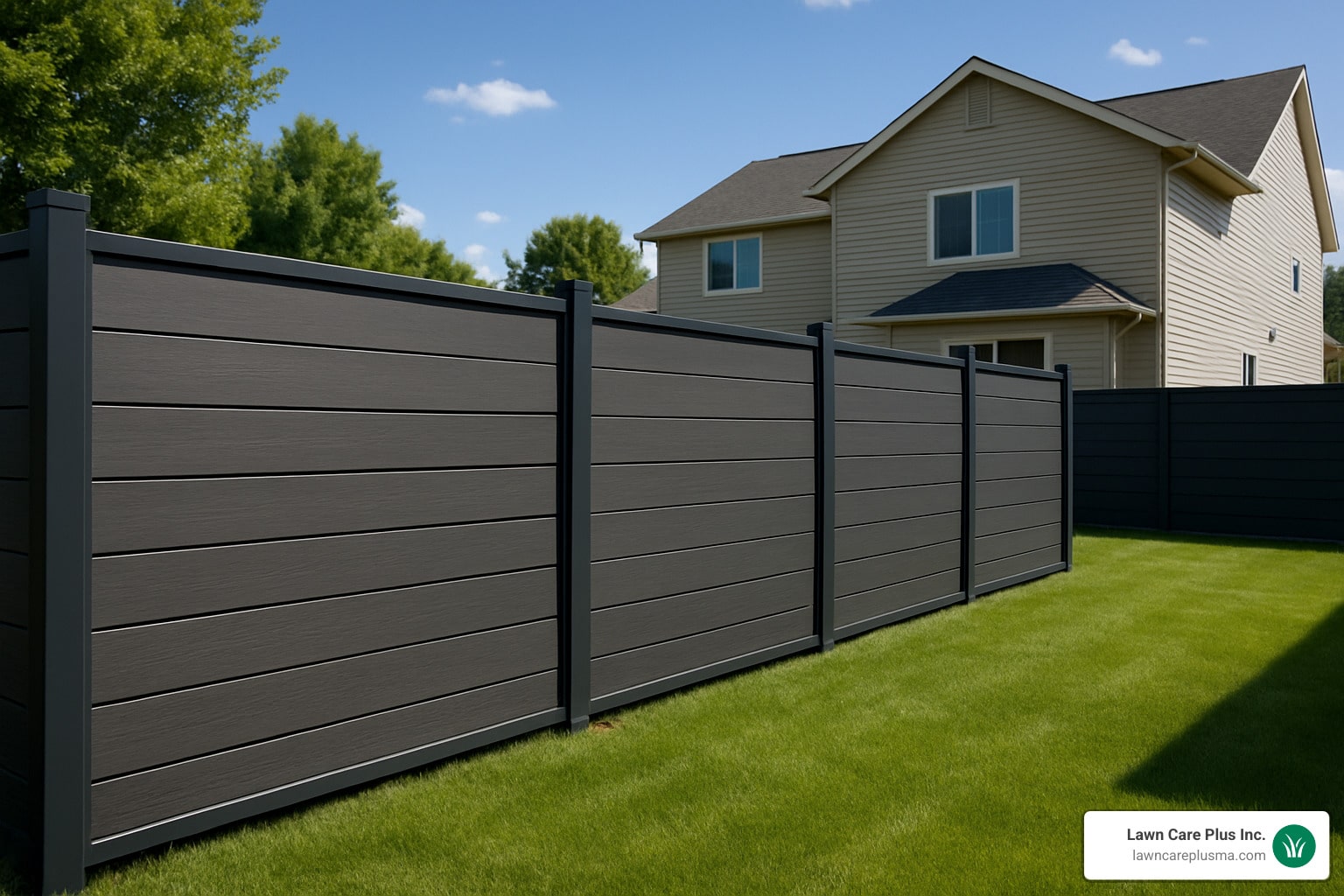
Why Choosing the Right Composite Fencing Fitters Matters
Finding qualified composite fencing fitters near me is the key to getting a beautiful, long-lasting fence that adds value to your property. The right installer will handle everything from permits to cleanup, while the wrong one can leave you with crooked panels, voided warranties, and costly repairs.
Quick Guide to Finding Composite Fencing Fitters:
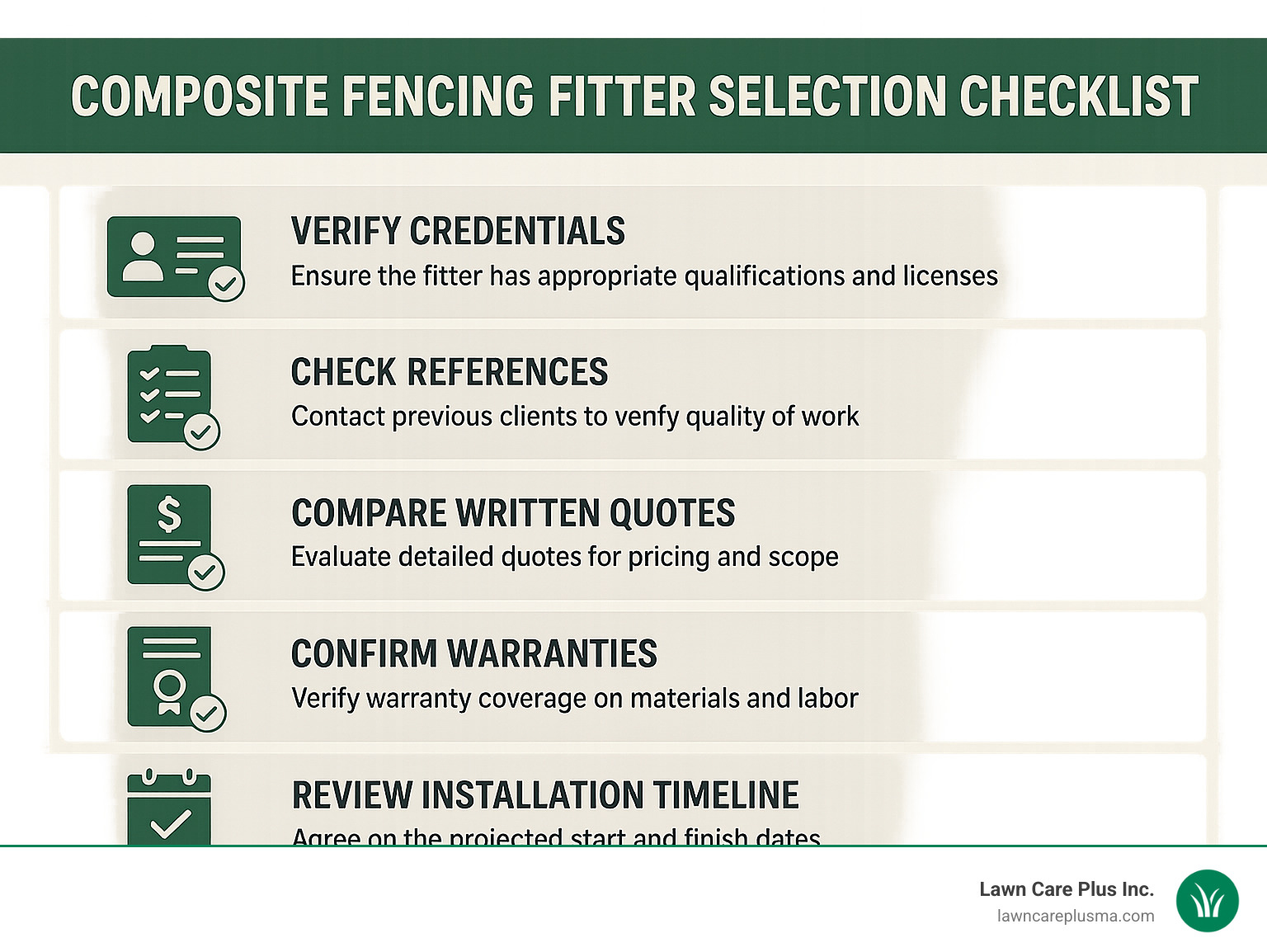
- Check credentials: Valid license, insurance, and BBB rating
- Verify experience: Ask for recent composite fence projects and references
- Get written quotes: Compare 3+ contractors with detailed breakdowns
- Confirm warranty: Both manufacturer (25 years) and workmanship coverage
- Review timeline: Typical installation takes 1-5 days per 100 linear feet
Composite fencing has become the go-to choice for homeowners who want durability without the hassle. As a customer from our research put it: “Product is of excellent quality… literally half the prices of some larger suppliers.”
The stakes are high. Composite fences can last 20-30 years when installed correctly – that’s double the lifespan of traditional wood fencing. They’re made from recycled wood fibers and plastic, making them rot-resistant and virtually maintenance-free. But improper installation can lead to sagging panels, loose posts, and gaps that defeat the purpose of your investment.
Professional installation matters more than you think. While composite materials are durable, they require specific techniques for post setting, panel alignment, and gate installation. A qualified fitter knows local building codes, understands soil conditions, and has the right tools to ensure your fence stays straight and secure for decades.
Find more about composite fencing fitters near me:
– building a cedar fence
– pool safety fence installation
– reliable fence company
What Is Composite Fencing & Why Switch?
Composite fencing combines wood fibers with recycled plastic to create panels that capture the natural look of wood without any of its headaches. No more weekend staining sessions, no more replacing rotted boards, and no more worrying about termites.
The manufacturing process transforms reclaimed sawdust and recycled plastic bags into durable fencing materials. A typical 100-linear-foot composite fence contains approximately 140,000 recycled plastic bags, giving waste materials a second life as something beautiful and functional.
Style options have expanded beyond basic brown panels. Today’s composite fencing comes in gorgeous colors and textures that genuinely mimic natural wood grain. Whether you want privacy panels for a backyard retreat, classic picket designs, or sleek horizontal slats for a modern look, there’s a composite option that fits your vision. Many manufacturers offer dual-sided woodgrain finishes for consistent beauty from both sides.
The sustainability story goes deeper than just recycling materials. Many composite fence manufacturers use clean production methods and earn LEED certification, which can help environmentally conscious homeowners earn green building credits.
Color stability sets composite apart. While traditional wood fences fade unevenly, composite materials maintain their rich appearance with only minimal color change during the first six months. After that initial weathering period, your fence will look consistent and beautiful year after year.
Benefits Over Wood & Vinyl
No more weekend staining marathons. Traditional wood fences demand staining or sealing every 2-3 years. With composite fencing, you can spend those weekends doing something far more enjoyable.
Warp-proof construction keeps your fence straight. The plastic component prevents warping, maintaining professional appearance for decades through Massachusetts weather extremes.
True fade-resistance sets composite apart from vinyl alternatives. While vinyl often develops yellow tint or chalky appearance, quality composite materials use advanced UV stabilizers to maintain rich color.
Superior privacy and security come naturally. Unlike wood where boards shrink and create gaps, composite panels maintain tight seams and offer better security than traditional alternatives.
Is It Really Green?
By diverting plastic bags and wood waste from landfills, composite manufacturing tackles two waste problems at once. The 20-30 year lifespan means your fence won’t need replacement for decades, reducing total environmental impact.
Circular economy principles drive the industry. Manufacturers transform waste materials into durable building products, typically requiring less energy than producing virgin materials.
Carbon footprint considerations favor composite when you consider the big picture. A wood fence might need replacement two or three times during a single composite fence’s lifespan. The total lifetime carbon impact often favors composite.
For homeowners working with composite fencing fitters near me, this environmental story becomes part of your home’s sustainability narrative.
Counting the Cost: Budgeting for Your New Fence
Composite fencing fitters near me typically charge between $11 and $45 per linear foot for complete installation, though premium projects can cost significantly more.
Note: These are average costs based on internet data and not actual costs for Lawn Care Plus. Actual pricing can vary significantly based on local conditions, with high-end installations potentially costing 3x the average pricing.
The national average for a complete composite fence project hovers around $16,000, but your actual cost depends on many factors.
Height makes a huge difference. A 3-4 foot composite fence might run $11-$15 per linear foot, while a 6-foot privacy fence jumps to $22-$34 per foot. An 8-foot fence costs $28-$45 per linear foot, with premium decorative styles potentially reaching $50-$180 per foot.
Labor costs typically eat up $10-$30 per linear foot. Professional installers charge $20-$60 per hour depending on location and complexity. Rocky soil, steep slopes, or utilities increase costs.
Don’t forget about gates – basic composite gates run $200-$400 to install, while larger drive-through gates can exceed $600.
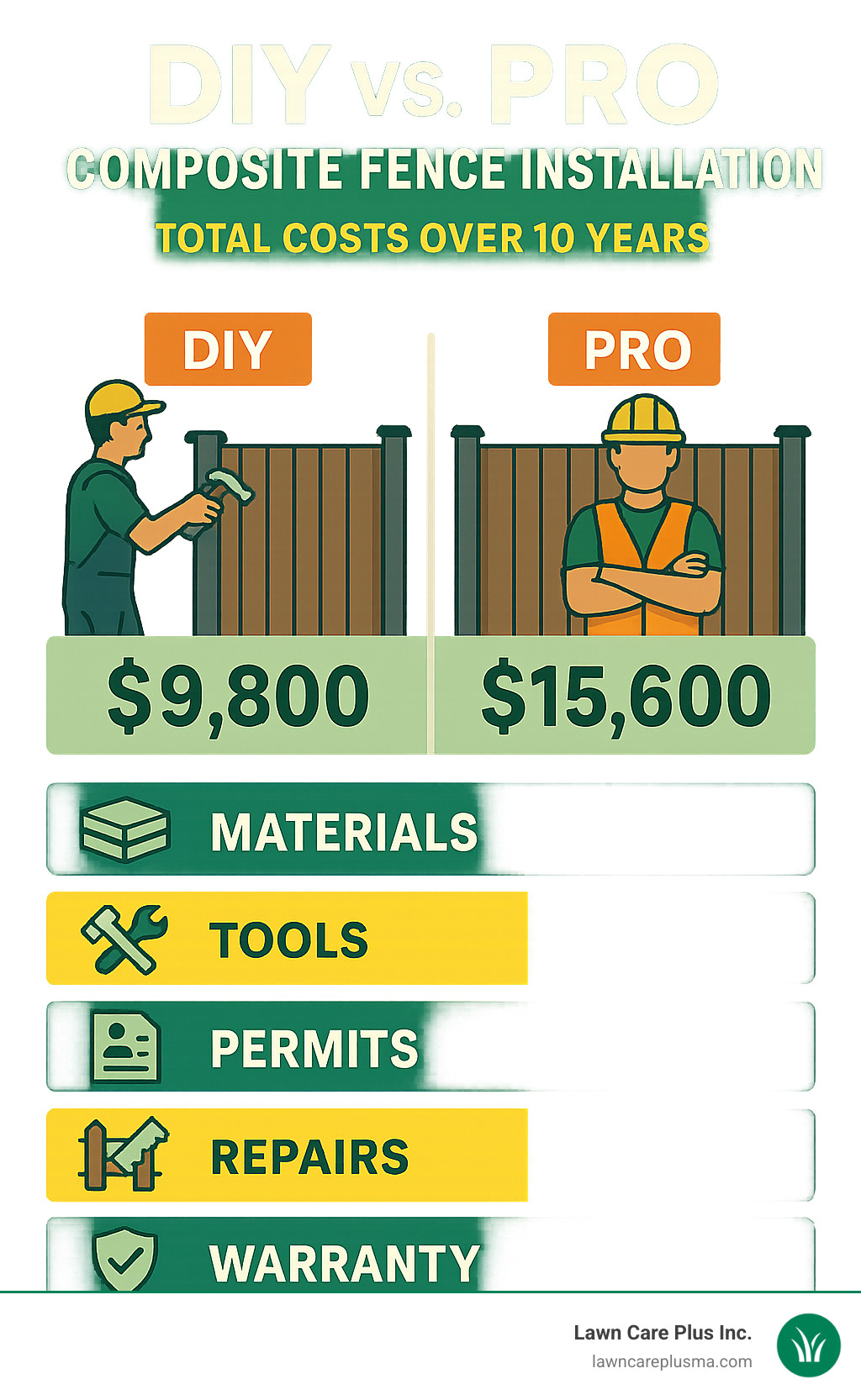
Cost Factors That Matter
Your property’s characteristics affect pricing significantly. Fence length and height are obvious drivers, but terrain challenges like slopes, rocky soil, or poor drainage can bump up labor costs by 25-50%.
Soil conditions determine post installation difficulty. Clay, sandy, and rocky conditions each require different approaches and equipment.
Existing fence removal adds $3-$8 per linear foot depending on materials and local disposal fees. Chain link with concrete footings costs more to remove.
Complex utility layouts complicate installation. Professional installers might need to hand-dig around utility lines, increasing labor time significantly.
HOA requirements can push budgets higher with specific style, color, or privacy requirements that cost more than basic panels.
Sample Price Map & Financing Tips
Based on average internet data, here’s rough pricing, though actual costs vary widely with high-end projects potentially costing 3x these averages:
Basic installations for 100-foot, 6-foot privacy fence: $2,200-$6,600. Premium installations covering 200 feet with gates: $8,800-$26,400. Complex installations with slopes and utilities: $13,200-$39,600.
Financing options include home equity loans (often lowest rates), credit cards, and manufacturer promotional financing deals.
Off-season installations (fall, winter, early spring) often come with better rates and more attention to detail.
Permit costs vary by location but typically run $20-$400.
For more detailed information, check out More info about Composite Fence Installers.
Finding & Vetting Composite Fencing Fitters Near Me
Finding the right composite fencing fitters near me doesn’t have to be overwhelming. Think of it like hiring any professional – you want someone who knows their stuff, treats your property with respect, and stands behind their work.
Start with credentials and insurance. Any legitimate contractor should have current license and general liability insurance. Professional contractors expect this question and will gladly provide documentation.
BBB ratings tell a story. Look for A+ ratings, but read actual reviews, especially recent ones mentioning composite fence installations. Pay attention to how contractors respond to complaints – professional responses reveal character.
Local knowledge makes a difference. The best composite fencing fitters near me understand your area’s requirements, setback rules, height restrictions, permits, soil conditions, and utility layouts.
Questions to Ask Composite Fencing Fitters Near Me
Ask for their contractor license number – legitimate professionals share this without hesitation and encourage verification with local authorities.
Warranty coverage is crucial. Find out exactly what warranty they offer on workmanship and duration. Most professional installers provide labor warranties from one to six months.
Request recent project photos. Experienced contractors should have photos and references from projects similar to yours in scope and complexity.
Understand crew size and timeline. Larger crews finish faster but cost more per day, while smaller crews take longer but provide more personalized attention.
Clarify permit and utility marking responsibility. Professional contractors typically manage permits and coordinate 811 utility marking as included services.
Red Flags When Screening Composite Fencing Fitters Near Me
Run from contractors who won’t provide written contracts. Professional contractors always provide detailed written contracts specifying materials, timeline, and payment terms.
Cash-only demands are alarm bells. Legitimate contractors accept multiple payment methods and never require full payment upfront.
Vague pricing without property assessment indicates inexperience. Quality contractors need to assess soil, utilities, slopes, and access before accurate quotes.
Unmarked vehicles and no business address suggest fly-by-night operations. Professional contractors have marked trucks, established addresses, and verifiable local presence.
Poor cleanup from previous jobs reveals overall professionalism. Drive by recent projects to see how they leave job sites.
For detailed installation information, check this scientific research on fence post longevity.
Find additional guidance at More info about Reliable Fence Company Near Me.
Where to Look for Trusted Pros
Start with professional directories like the Better Business Bureau. Their external ratings directory provides verified contractor information and complaint resolution records.
Personal referrals beat online reviews. Ask neighbors, friends, and coworkers about fence installation experiences. Don’t hesitate to ask about beautiful composite fences you see in your neighborhood.
Material suppliers often maintain installer networks. Manufacturers frequently keep lists of certified installers experienced with their specific products.
Consider landscaping companies with fencing capabilities. Companies like Lawn Care Plus Inc. can coordinate fence installation with other landscape improvements, ensuring consistent quality and project management across your entire outdoor space.
From Quote to Completion: Installation Workflow
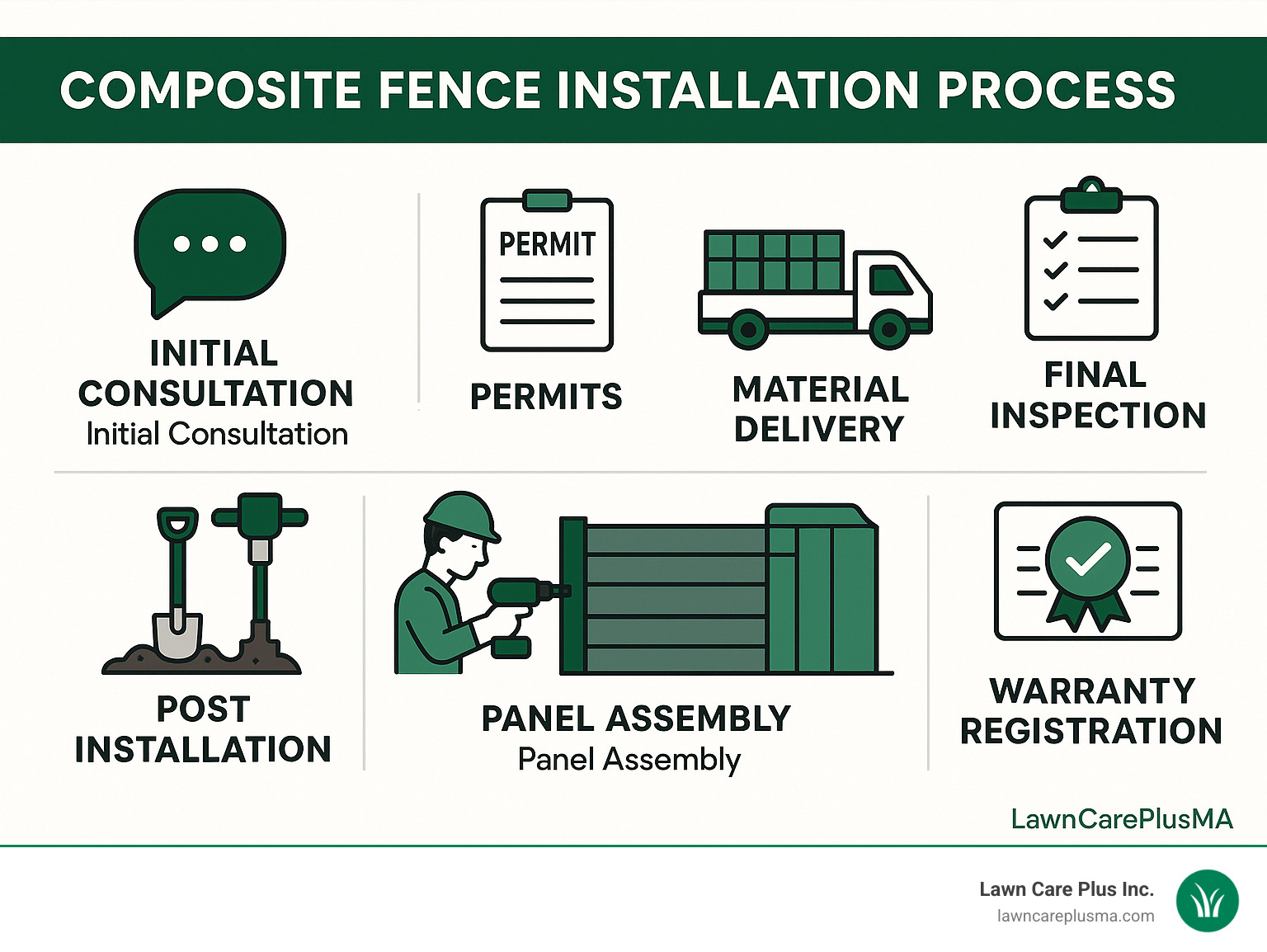
Getting a composite fence installed flows smoothly when you hire the right composite fencing fitters near me. The entire process typically takes 1-5 days per 100 linear feet, though weather and project complexity can affect timing.
Your journey begins with a thorough site survey. Professional contractors walk your property with measuring tape, identifying underground utilities and assessing soil conditions. This foundation work ensures your fence gets installed right the first time.
The utility mark-out through 811 adds 2-3 days to your timeline but is legally required and potentially life-saving. Professional contractors know that striking utilities can turn your project into an expensive nightmare.
Once utilities are marked, installers lay out the fence line with precision using string lines and stakes to map exact post locations, ensuring straight runs and perfect corner angles.
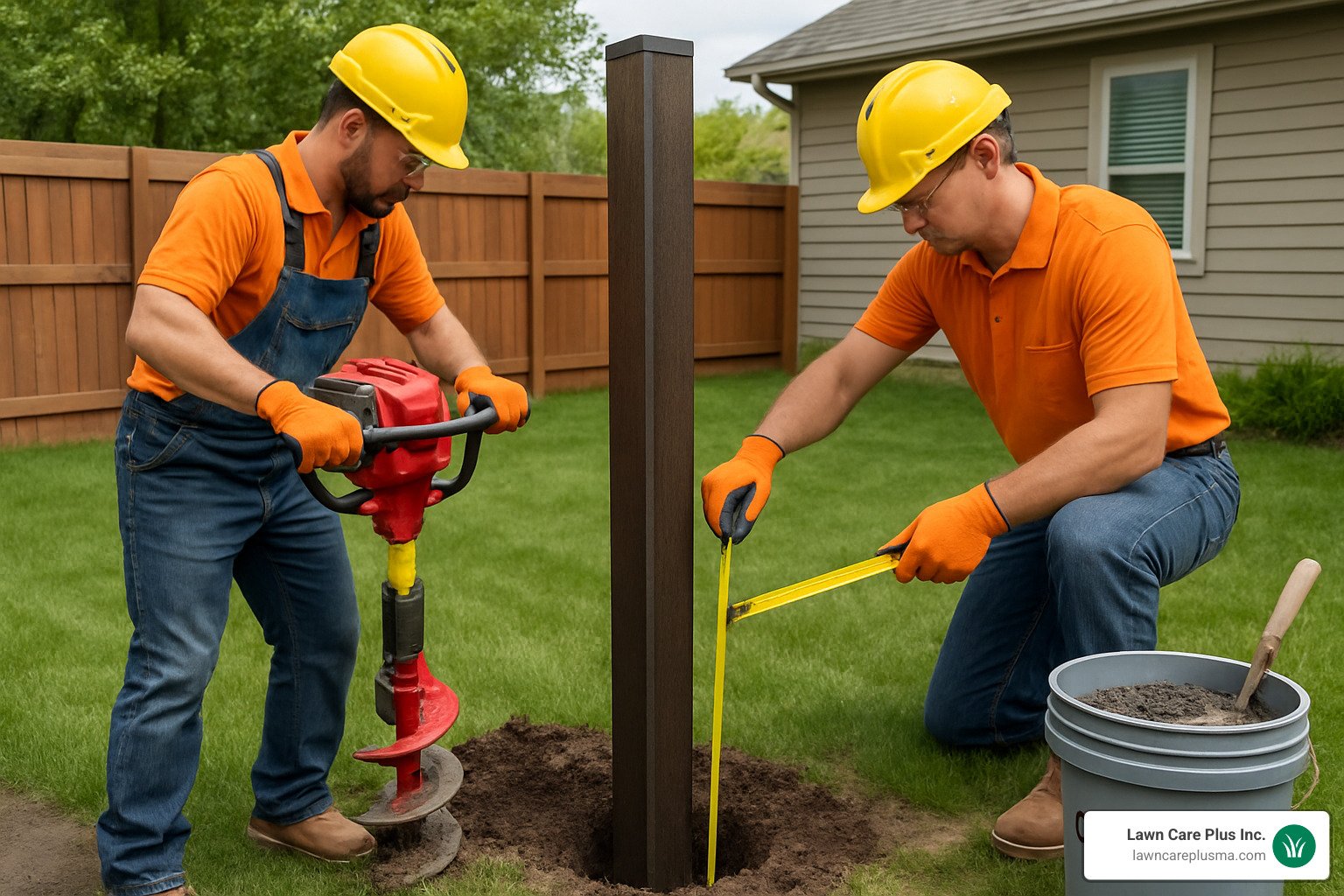
Post hole drilling uses specialized equipment – power augers or hydraulic diggers that handle challenging soil. Each post gets set in concrete and needs proper curing time. Rushing this step leads to wobbly fences.
Panel installation requires both muscle and finesse. Composite panels need proper support during installation to prevent sagging. Experienced installers use temporary braces and constantly check alignment.
Final gate installation and fine-tuning completes the project. Gates need to swing smoothly, latch securely, and stay aligned for years. Professional installers test everything multiple times before completion.
Preparing Your Property
Clear vegetation and obstacles from the fence line before crew arrival. Remove rose bushes and garden decorations to create clear workspace for efficient work.
Mark sprinkler systems and private utilities that won’t show up on 811 marking. Irrigation lines, septic systems, and mystery cables need identification to prevent accidental damage.
Improve equipment access by ensuring gates open wide enough for delivery trucks and installation equipment. Items stored against fence lines should find temporary new spots.
Notify neighbors about upcoming installation. Most appreciate knowing about noise, equipment, and activity along property lines.
For comprehensive property preparation, our yard cleanup services can help ensure installation-ready landscapes.
Permits & Local Regulations
Local zoning requirements can be specific about fence height, setback distances, and color choices. What’s legal in one town might violate regulations in the next.
Historic districts often have additional rules beyond standard zoning. Some areas have strong opinions about fence materials and might prohibit composite entirely.
HOA approval processes can add weeks to timelines, so start early. Many associations require detailed plans, color samples, and committee approval before breaking ground.
Professional installer support for permits and regulations is often included in quality contractor services, handling paperwork and ensuring local compliance.
Care, Warranties & Long-Term Value
One advantage of choosing composite fencing fitters near me is learning how little maintenance your new fence needs. Unlike wood fencing requiring annual staining and constant repairs, composite materials look great with minimal effort.
A simple hose rinse handles most cleaning needs. Spray down your fence twice yearly to remove dust, pollen, and dirt. For stubborn stains, gentle scrubbing with soft brush and mild dish soap works beautifully.
Important tip: avoid pressure washers on composite fencing. High-pressure water can damage surface texture and void manufacturer warranty. Stick with garden hose pressure and elbow grease.
Warranty coverage is impressive with quality composite materials. Most manufacturers offer 25-year warranties covering material defects, structural problems, and excessive fading beyond specified limits. That’s peace of mind unavailable with traditional wood.
Color changes during first six months are normal and desirable. Your fence undergoes natural weathering as tannins bleed out and UV exposure creates authentic, weathered wood appearance.
Professional installation warranties add protection. Quality contractors offer workmanship guarantees covering installation defects, post stability, and gate operation. Experienced composite fencing fitters near me provide both material and labor protection.
Maintenance Schedule
Twice-yearly cleaning keeps composite fencing looking best. Spring cleaning removes winter grime, while fall cleaning clears summer dust before winter.
Annual gate maintenance takes minutes but makes huge difference. Apply light machine oil to hinges and latches once yearly to prevent binding and ensure smooth operation.
Hardware checks should become part of annual home maintenance. Walk fence lines and inspect post caps, panel brackets, and gate hardware for looseness or damage. Tighten fasteners to maintain structural integrity.
Protecting Your Investment
Register warranty immediately after installation – don’t delay! Keep documentation, receipts, and warranty cards accessible. Many manufacturers require registration within 30-90 days.
Take photos of completed installation for warranty and insurance purposes. Document post alignment, panel attachment, and gate operation while everything is perfect.
Consider annual professional inspections to catch issues early. Small problems caught early prevent major headaches and protect warranty coverage while extending fence lifespan.
Frequently Asked Questions About Composite Fencing Fitters Near Me
When you’re searching for composite fencing fitters near me, you probably have plenty of questions swirling around in your head. We’ve been helping homeowners in the Boston Metro-West area with their fencing projects for years, and these are the three questions that come up most often.
How long does a typical installation take?
Here’s the honest answer: most composite fence installations take 1-5 days per 100 linear feet. But like most things in life, it’s not quite that simple.
If you’ve got a straightforward project – think a nice straight fence line with good soil conditions and no surprises – professional crews can often knock out 50-100 linear feet per day. We’ve seen experienced teams fly through simple installations when everything goes according to plan.
But real life has a way of throwing curveballs. Weather delays can stretch timelines, especially when concrete needs time to cure properly. Rain or freezing temperatures mean we have to pause work to ensure your posts set correctly and panels align perfectly. Nobody wants a crooked fence because we rushed through a rainy day.
Complex projects naturally take longer. If your fence needs to steer slopes, work around underground utilities, or include multiple gates, expect the installation to be on the longer side of that timeline. Each gate requires precise alignment and hardware adjustment – it’s detailed work that can’t be rushed.
Do fitters handle permits for me?
Most professional composite fencing contractors handle permits as part of their service – and honestly, that’s exactly what you want. We’ve been through the permit process countless times and know exactly what local building departments expect.
Professional contractors prepare the required drawings, submit applications, and coordinate inspections with local authorities. It’s one less headache for you to worry about, and we know the local codes inside and out. There’s nothing worse than having your project delayed because of permit issues that could have been avoided.
That said, always clarify permit handling during your initial consultation. Make sure permit costs are included in your written quote so there are no surprises later. Some contractors might need your signature on applications, but they should handle all the legwork and paperwork.
In Massachusetts, permit requirements can vary quite a bit from town to town. What flies in one municipality might not work in the next town over. That’s why working with local contractors who understand your area’s specific requirements makes such a difference.
Can I mix composite with existing wood or metal posts?
This question usually comes up when homeowners want to save money by keeping existing posts. Mixing composite panels with existing posts is sometimes possible, but it requires careful evaluation by experienced installers.
The existing posts must be structurally sound, properly spaced, and compatible with composite panel mounting systems. We’ve seen cases where old posts looked fine on the surface but were rotting below ground level. That’s not something you want to find after your new composite panels are installed.
Professional installers can assess your existing post conditions and recommend any modifications needed. Sometimes it’s as simple as adding new brackets or hardware. Other times, the spacing doesn’t match modern composite panel dimensions, which creates installation challenges.
Here’s the thing though: mixing materials may affect warranty coverage and long-term performance. Most manufacturers design their systems to work together as complete units. When you start mixing and matching, you might void warranties or create weak points in your fence system.
Many contractors recommend complete replacement for optimal results and full warranty protection. Yes, it costs more upfront, but you get a fence system that’s designed to work together for 20-30 years. Sometimes the peace of mind is worth the extra investment.
Conclusion
Finding the right composite fencing fitters near me isn’t just about installation – it’s about making an investment that will improve your property for 20-30 years. After helping countless homeowners in the Boston Metro-West area, we’ve seen how the right contractor makes all the difference.
Smart homeowners who end up happiest always follow the same pattern. They verify contractor credentials and insurance before anything else. They get detailed written quotes from multiple qualified professionals. Most importantly, they understand warranty coverage for both materials and installation work.
Professional installation pays for itself. We’ve seen too many DIY projects that looked great initially but had problems within the first year. Composite materials require proper post setting, precise panel alignment, and correct gate installation. When investing in a decades-long fence, getting it right the first time makes financial sense.
At Lawn Care Plus Inc., we bring something unique to composite fence installation – we’re not just fence contractors. We’re a full-service landscaping and hardscaping company that understands how your fence fits into your entire outdoor space. When we install your composite fence in Belmont, Newton, Brookline, Needham, or anywhere in our service area, we consider how it complements your landscape design, drainage patterns, and future outdoor living plans.
One phone call, complete solution. While other contractors install your fence and leave, we coordinate everything. Need area cleanup before installation? We handle that. Want to add patios or walkways that complement your new fence? We’ve got you covered. This integrated approach saves time, money, and the headache of managing multiple contractors.
The families we work with appreciate our straightforward approach. We’ll walk your property, explain what’s involved, and give honest advice about what works best for your situation. No high-pressure sales, no surprise costs – just experienced professionals helping you make the best decision for your home.
Ready to explore how composite fencing can transform your outdoor space? Let’s start with a conversation about your goals.
For more information about our comprehensive approach, visit More info about Composite Fence Installers Near Me.