
Why Homeowners Are Choosing Paver Overlays
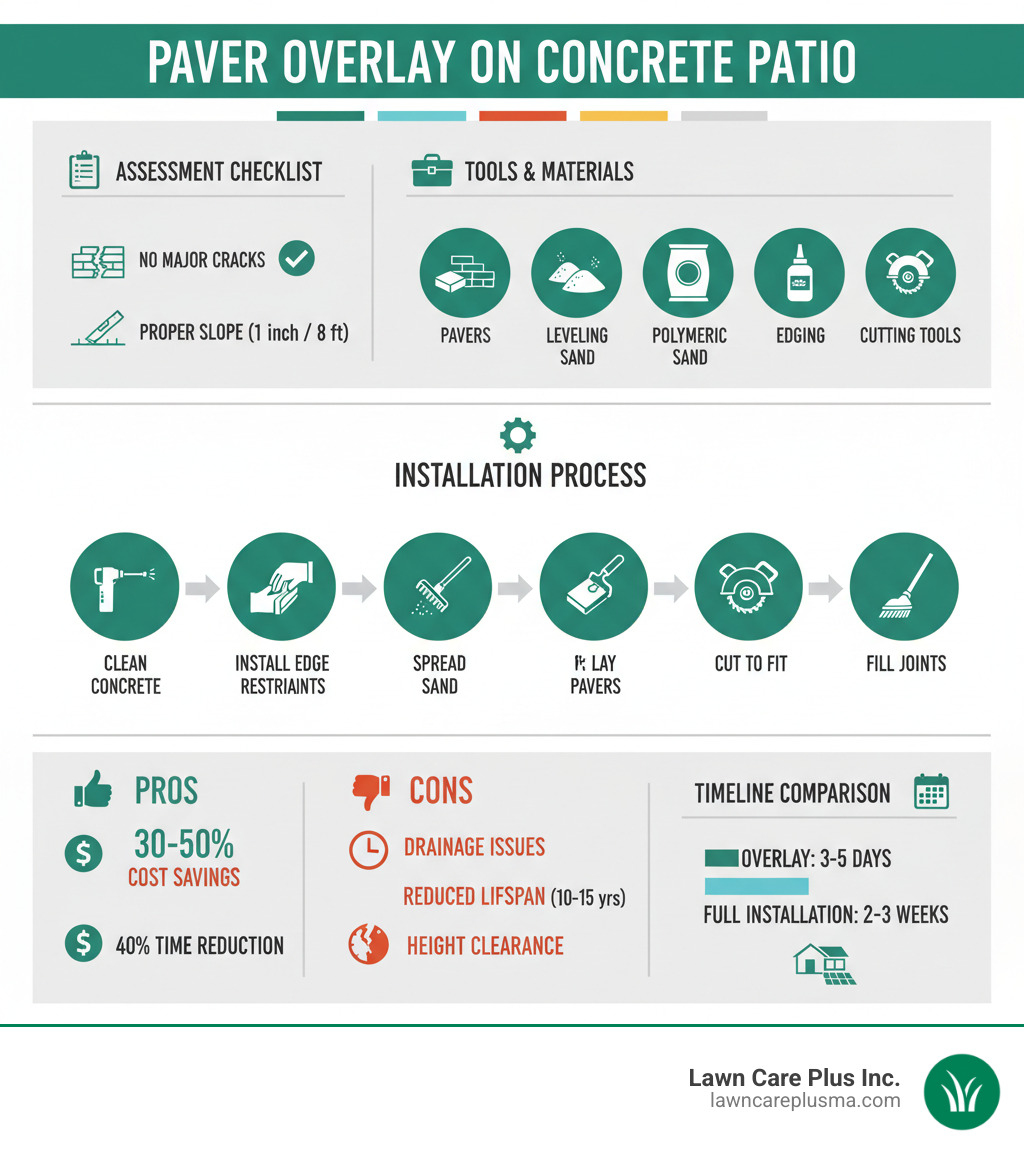
Installing pavers over concrete patio is a practical way to refresh an old, cracked, or stained surface without the cost and labor of demolition. Here’s what you need to know:
Quick Answer: Can You Install Pavers Over Concrete?
Yes, but only if your concrete is structurally sound. Here’s the basic process:
- Assess the concrete – No major cracks, heaving, or sinking
- Clean and prepare – Pressure wash, fill minor cracks, drill weep holes for drainage
- Install edging – Use adhesive to secure perimeter restraints
- Add bedding layer – Spread 1 inch of leveling sand
- Lay pavers – Work from corner outward, maintaining consistent spacing
- Lock joints – Fill with polymeric sand and activate with water
Important: Your concrete must have proper slope (1 inch per 8 feet) and be free from major structural damage. Adding pavers increases surface height by 2-3 inches, which can create clearance issues with doors or create tripping hazards.
A dated concrete slab with stains and cracks can detract from your home’s curb appeal. While tearing it out is an option, it involves significant excavation and cost. The paver overlay method offers a faster, more affordable alternative, but it’s not right for every situation.
By using the existing concrete as a base, you can save 30-50% on installation costs and reduce project time by up to 40%. However, there are trade-offs. Water drainage is more complex, the added height can cause issues, and problems with the underlying concrete will transfer to the new pavers. An overlay’s lifespan is typically 10-15 years, compared to 20-30 years for a full installation.
Deciding if an overlay is right for you depends on your concrete’s condition, budget, and timeline. I’m Tim DiAngelis, owner of Lawn Care Plus, Inc. With over a decade of experience installing paver patios across Greater Boston, I’ve seen what leads to success and what causes failure. This guide will help you make the right choice for your property.
Key terms for installing pavers over concrete patio:
- average cost of concrete patio installation
- concrete patio contractors near me
- cost to have stamped concrete patio installed
The Great Debate: Pros and Cons of a Paver Overlay
Before you start installing pavers over concrete patio, it’s crucial to weigh the pros and cons. While the aesthetic upgrade is fast and dramatic, there are significant trade-offs to consider.
The main advantages are cost and time. By using your existing concrete as a base, you skip the expensive and lengthy process of demolition and excavation. This can save 30-50% on installation costs and reduce project time by up to 40%, turning a weeks-long project into a matter of days.
However, there are serious potential downsides. Water can get trapped between the pavers and the impermeable concrete, leading to damage from freeze-thaw cycles in our Massachusetts winters. Any structural issues in the concrete, like cracks or settling, will eventually transfer to the pavers above. The new surface will be 3-4 inches higher, which can create clearance problems with doors and steps. Finally, an overlay’s lifespan is shorter, typically 10-15 years, compared to 20-30+ years for a full installation.
Here’s how the two approaches stack up:
| Feature | Paver Overlay (Over Concrete) | Full Paver Installation (With Proper Base) |
|---|---|---|
| Initial Cost | Lower (saves 30-50% on installation) | Higher (includes excavation, base materials) |
| Installation Time | Faster (reduces by up to 40%) | Longer (requires excavation and base prep) |
| Longevity | Shorter lifespan (10-15 years) | Longer lifespan (20-30 years) |
| Potential Issues | Drainage problems, shifting, height clearance, structural instability | Minimal issues with proper installation |
The Upside: Why Homeowners Choose to Overlay
For many homeowners in areas like Brookline or Wellesley, an overlay is appealing because it solves an immediate visual problem. It instantly covers stained, cracked, or dated concrete with beautiful new pavers in a style that fits your home.
The cost-effectiveness is a major driver. By avoiding demolition, debris hauling, and building a new base, you can save 30-50% over a full replacement. This makes a new patio financially accessible for many. The speed is also a huge draw; a project can be completed in a weekend instead of weeks, minimizing disruption to your yard and daily life.
The Downside: Potential Risks and Challenges
We’ve seen paver overlays fail in Milton, Needham, and across Metro-West, and the primary cause is almost always water. Rain and snowmelt seep through paver joints and get trapped on the concrete slab. In winter, this water freezes and expands, causing brutal freeze-thaw damage that heaves, cracks, and shifts pavers.
Instability is another major risk. Any movement or cracking in the underlying concrete will be mirrored in the paver surface, leading to an uneven patio and tripping hazards. This is why the reduced lifespan is a hidden cost; initial savings can be wiped out by the need for major repairs or a full replacement in just 10-15 years.
Other challenges include persistent weed growth in the moist environment under the pavers and clearance issues. The 3-4 inch height increase can interfere with door thresholds and create awkward, unsafe transitions to stairs or other landscape features. For a look at how we design lasting outdoor spaces, see our hardscaping services page.
Is Your Patio a Candidate? Preparing for a Paver Overlay
Not every concrete patio is a candidate for a paver overlay. A thorough assessment is critical to avoid a project that fails within months. Homeowners in Canton or Dedham sometimes find their concrete isn’t suitable for installing pavers over concrete patio projects, and it’s better to know this upfront.
Step 1: Assess the Existing Concrete Slab
Your paver overlay is only as good as the concrete beneath it. If the slab is in poor condition, covering it will only hide the problems temporarily.
- Structural Soundness: This is non-negotiable. The slab must be stable. Minor hairline cracks are acceptable, but large, active cracks or sections that are heaving or sinking are deal-breakers. An overlay will simply follow these flaws, creating an uneven and unsafe surface.
- Slope for Drainage: The concrete must have a proper slope to shed water away from your home’s foundation. The minimum is a 1-inch fall for every 8 feet of length. A flat slab or one that slopes toward the house will trap water and cause significant problems, especially during Massachusetts winters.
If your slab has major structural or drainage issues, you may need professional repairs. Our team has expertise in a wide range of masonry services.
Step 2: Gather Your Tools and Materials
Once you’ve confirmed your concrete is suitable, gather all your supplies. A complete list prevents delays.
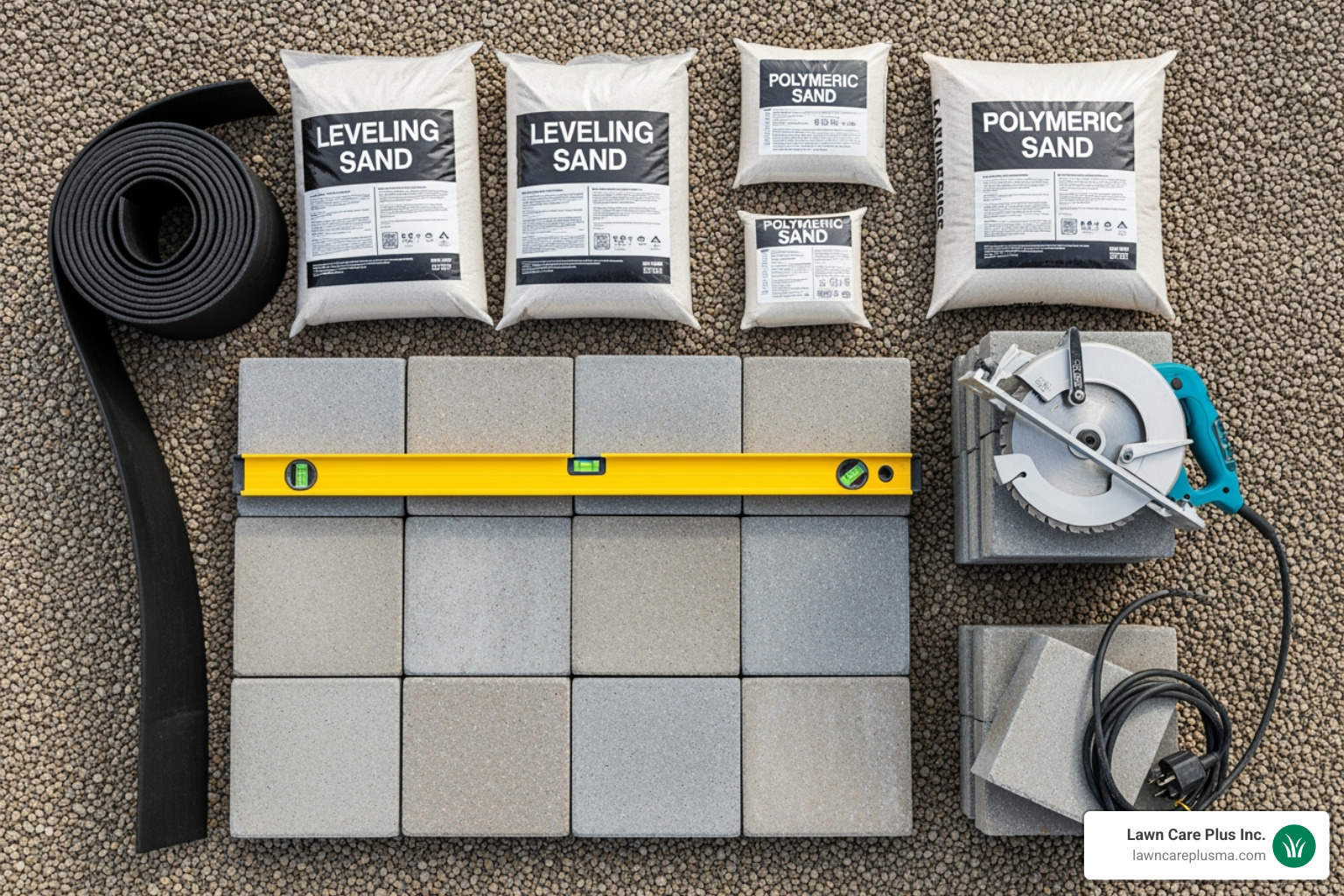
- Materials: Choose thinner pavers (20mm-60mm) to minimize height. You’ll need a 1-inch layer of leveling paver sand, polymeric sand for the joints, flexible plastic paver edging, and a quality landscape adhesive.
- Tools: A pressure washer, shovel, wheelbarrow, levels, and a rubber mallet are essential. For cutting pavers, you’ll need a circular saw with a diamond blade or an angle grinder. A straight 2×4 for screeding sand, a broom, and a hose with a misting nozzle are also required.
- Safety Gear: Always use gloves, safety glasses, a dust mask, and ear protection, especially when cutting pavers.
Step 3: Prepare the Surface
Proper surface prep is the key to a long-lasting overlay. Don’t skip these steps.
- Clean Thoroughly: Use a pressure washer to aggressively remove all dirt, grime, moss, and loose material. Use a degreaser on any oil stains to ensure proper adhesion and sand setting.
- Fill Minor Cracks: Fill any small, stable cracks with a concrete crack filler and allow it to cure completely. This prevents the cracks from transferring to the paver surface.
- Drill Weep Holes: This step is critical in Massachusetts. Drill 1-inch diameter weep holes every few feet in the lowest areas of the concrete. These holes allow trapped water to escape, preventing it from freezing, expanding, and destroying your patio during winter.
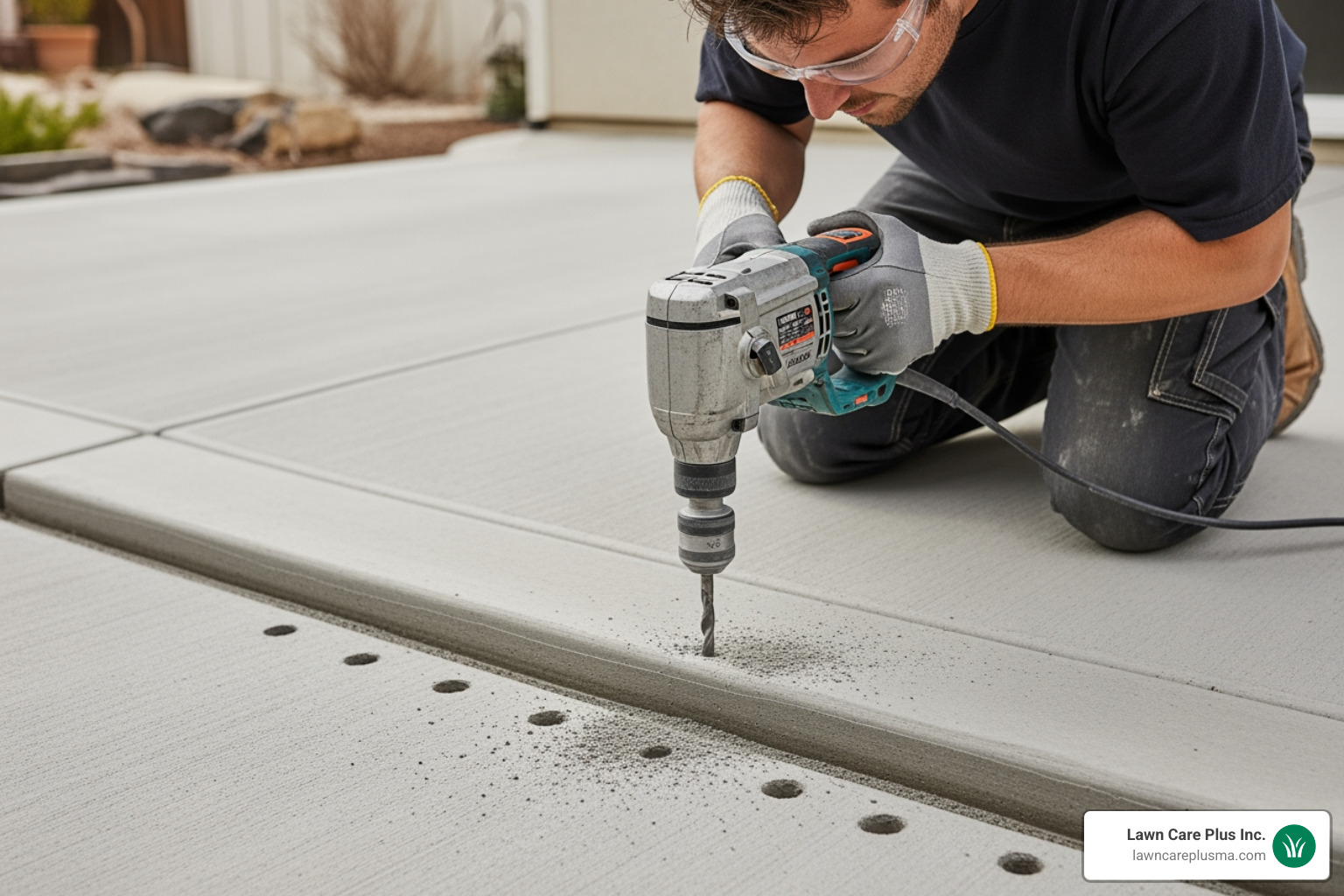
These small holes act as relief valves, making a huge difference in the longevity of your installing pavers over concrete patio project.
A Step-by-Step Guide to Installing Pavers Over a Concrete Patio
With the surface assessed and prepared, you can begin the installation. We’ll cover the sand-set method, the most common technique for installing pavers over concrete patio projects. This method uses a sand bedding layer to cushion the pavers and allow for fine adjustments. Attention to detail is key for a lasting result.
Step 4: Install Edging and a Sand Bedding Layer
Edging acts as a structural frame to prevent pavers from shifting over time. Install a perimeter restraint around the entire patio, securing it directly to the concrete with a high-quality landscape adhesive. A strong bond is essential for long-term stability.
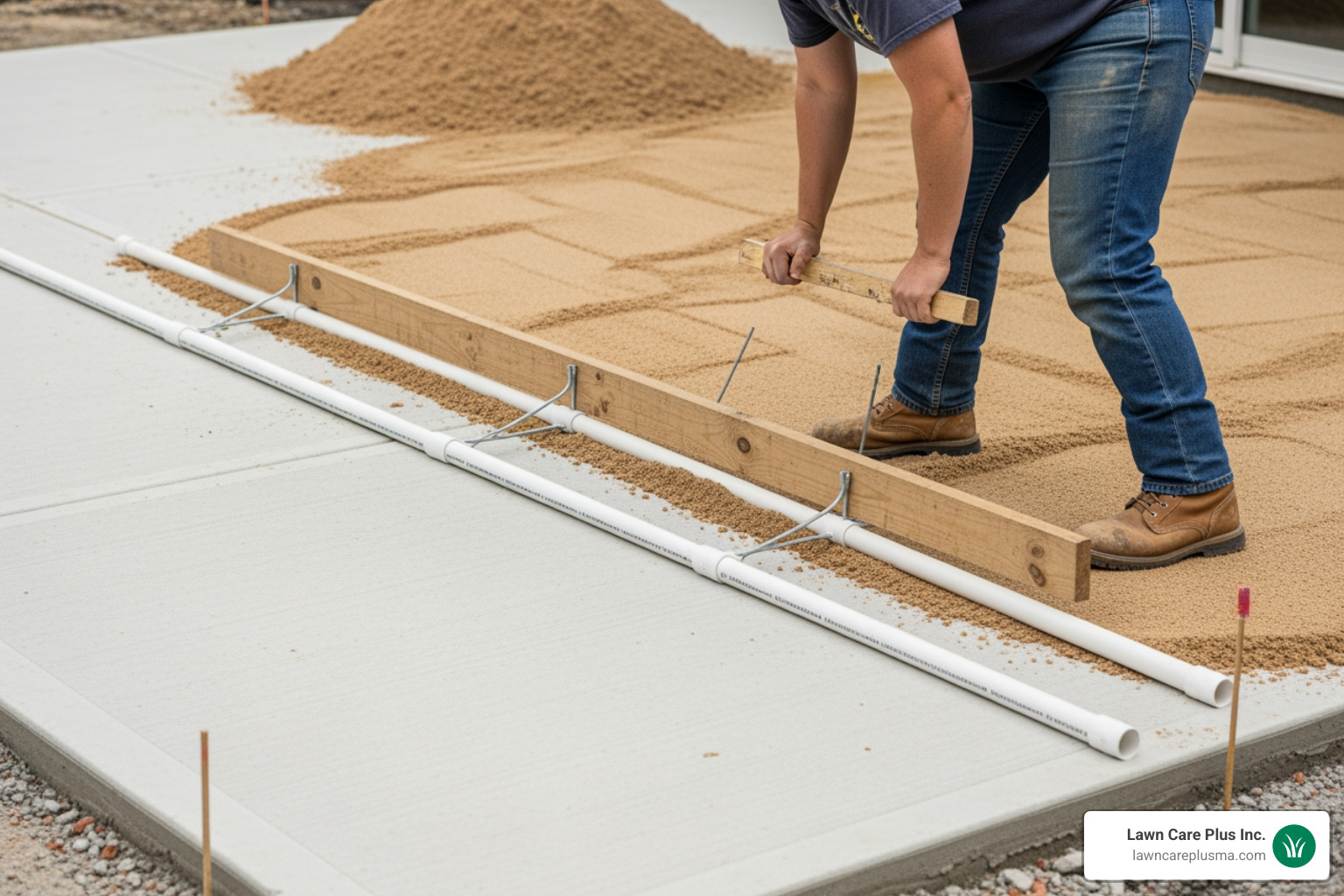
Next, spread a uniform 1-inch layer of leveling sand. This layer cushions the pavers and absorbs minor imperfections in the concrete. To ensure a perfectly flat surface, use screed pipes and a straight 2×4 to level the sand to a consistent depth. A well-screeded sand bed is the secret to a professional-looking patio.
Step 5: Lay the Pavers
Begin laying pavers in one corner and work outward in your chosen pattern. Place each paver straight down onto the sand; do not slide them, as this will disturb the level sand bed. Maintain a consistent joint space of about 1/8 inch between pavers.
Use a rubber mallet to gently tap each paver, seating it firmly in the sand. Constantly check your work with a long level across multiple pavers to ensure the surface is even. If a paver is too high or low, lift it and adjust the sand underneath. Patience during this stage is crucial for a flat, safe surface. This attention to detail is what we bring to projects in Roslindale and Watertown. For more ideas, see our patio installations page.
Step 6: Make Cuts and Lock in the Joints
Cuts will be necessary for edges and corners. Measure carefully, mark the paver, and use a wet saw or an angle grinder with a diamond blade. Always wear proper safety gear (glasses, mask, hearing protection) as cutting creates significant dust and noise.
Once all pavers are laid, lock them in place with polymeric sand. This sand contains polymers that harden when wet, creating a durable, weed-resistant joint.
- Fill Joints: Pour sand over the surface and sweep it into every joint until full.
- Compact: Use a plate compactor to vibrate the pavers, which settles the sand deep into the joints and seats the pavers.
- Top Off & Clean: Sweep more sand into the joints to top them off. Then, use a leaf blower to completely remove all excess sand from the paver surfaces. Any remaining sand will create a permanent haze.
- Activate: Gently mist the entire patio with a hose to wet the sand in the joints without washing it out. This activates the polymers, locking everything together.
For more expert tips, this guide to paver overlays is a valuable resource.
Frequently Asked Questions about Paver Overlays
Homeowners considering installing pavers over concrete patio projects often have the same questions. Here are answers to the most common ones.
Can I install pavers over a badly cracked concrete patio?
The short answer is no. A paver overlay is only as stable as the concrete base beneath it. If your patio has significant, active cracks, or sections that are sinking or heaving, these structural problems will transfer directly to the new pavers, causing them to shift and fail. We’ve seen this happen in communities from Canton to Dedham. For an overlay to be successful, the concrete must be structurally sound. Minor hairline cracks can be filled, but major issues are deal-breakers.
How do I prevent water from getting trapped under the pavers?
Trapped water is the biggest threat to a paver overlay, especially in a freeze-thaw climate like Massachusetts. Proper water management is essential.
- Ensure Proper Slope: The concrete slab must slope away from your house (at least 1 inch of fall per 8 feet) to direct water away.
- Drill Weep Holes: Before adding sand, drill 1-inch diameter “weep holes” every few feet in the lowest areas of the concrete. These provide an escape route for any water that seeps through the joints, preventing it from freezing and expanding under the pavers.
- Use Polymeric Sand: High-quality polymeric sand in the joints helps create a water-resistant barrier.
How much does it cost to install pavers over a concrete patio?
While an overlay can save 30-50% compared to a full demolition, the final cost varies. Factors include patio size, paver choice (basic concrete vs. premium stone), the condition of the existing concrete, and project complexity. Local labor rates in areas like Wellesley or Hyde Park also play a role.
Based on national averages, DIY projects can range from $4 to $15 per square foot. Professional installation typically ranges from $10 to $50+ per square foot. These are estimates based on average internet data and not actual costs for Lawn Care Plus Inc. A simple project will be on the lower end, while a complex design with premium materials will cost more. The best way to get an accurate price is to request a personalized consultation.
Get a Flawless Finish with Professional Installation
While a DIY approach to installing pavers over concrete patio is tempting, the project’s complexity and the harsh Massachusetts climate present significant challenges. Improperly installed overlays are highly susceptible to damage from our brutal freeze-thaw cycles. We’ve seen many DIY projects fail after just one winter due to trapped water, leading to heaving pavers and costly repairs.
The difference between a DIY job and a professional one lies in the details: correctly placed weep holes, proper slope for drainage, and a perfectly screeded sand bed. These elements are critical for a patio that lasts 15 years versus one that needs repairs after 15 months.
Our team at Lawn Care Plus Inc. has installed countless patios throughout the Boston Metro-West area, from Brighton to Norwood. We know what works in our climate. We begin every project with an honest assessment. If an overlay is a smart choice, we’ll recommend it. If a full installation is the better long-term investment for your property, we’ll explain why. Our goal is to build a patio you’ll love for decades.
Professional installation ensures longevity and stability. We understand the nuances of drainage, existing structures, and our regional climate. Whether you’re in Belmont or Newton, you deserve a beautiful, durable patio.
Ready to explore your options? Contact us for a hardscaping consultation. We’ll provide an honest assessment and help you make the best decision for your home and budget.
