
Why Fall Clean Up Landscaping Sets Your Property Up for Success
Fall clean up landscaping is the secret to having a lush, healthy yard that bounces back beautifully in spring. This essential seasonal maintenance involves removing fallen leaves, debris, and dead plant material while preparing your lawn and garden beds for winter dormancy.
Key fall cleanup tasks include:
- Leaf removal – Prevents grass suffocation and fungal diseases
- Final lawn mowing – Cut grass to 2-3 inches for winter health
- Garden bed cleanup – Remove dead annuals and cut back perennials
- Tree and shrub pruning – Remove damaged branches before winter storms
- Mulching – Insulate plant roots and suppress weeds
As one landscaping expert puts it: “Fall clean-up is an essential evil” – but the payoff is huge. Research shows that leaves left on your lawn can suffocate grass by blocking sunlight and oxygen, while trapped moisture creates the perfect environment for mold and fungal diseases.
The benefits are clear: Fall cleanup reduces spring workload by up to 50%, prevents costly lawn diseases, and ensures your property looks attractive all winter long. For busy homeowners in the Boston Metro-West area, this seasonal maintenance is the difference between a struggling landscape and one that thrives year after year.
Without proper fall cleanup, you’re setting yourself up for brown patches, increased pest problems, and significantly more work (and expense) come spring.
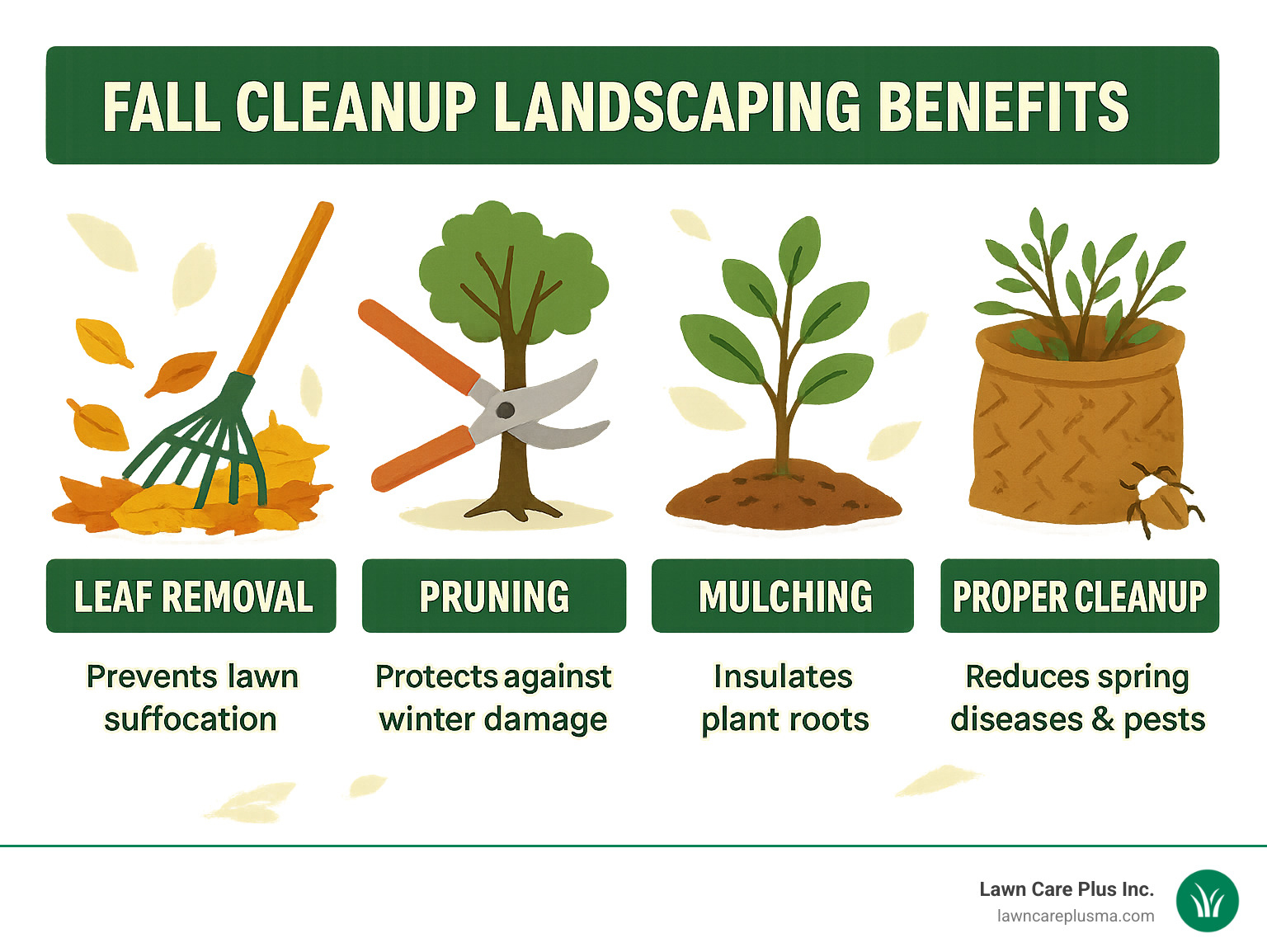
Explore more about fall clean up landscaping:
Why Fall Yard Cleanup is Non-Negotiable for a Healthy Landscape
Think of autumn as your yard’s bedtime routine; it needs proper preparation for its winter slumber. Fall clean up landscaping isn’t just about tidiness—it’s about preventing serious problems that cost time and money in the spring.
Skipping fall cleanup is like tucking your lawn in with a suffocating blanket of leaves. This blocks essential oxygen and sunlight, weakening your turf. Trapped moisture under the debris then creates a breeding ground for fungal diseases and mold growth. These issues can persist into spring, often requiring expensive treatments.
Furthermore, those cozy leaf piles become winter shelters for pest infestations, including insects and rodents. Removing debris tells pests there’s “no vacancy” in your yard. Proper cleanup also ensures your lawn can absorb fall fertilizers, gaining the nutrients it needs to survive winter. A well-fed lawn recovers faster and more affordably in the spring.
More info about our Yard Care Services
The Dangers of a Debris-Covered Lawn
A thick layer of leaves does more than just look messy; it actively harms your lawn.
- Blocked sunlight starves the grass of the light it needs for photosynthesis, leading to weak growth and brown patches in spring.
- Trapped moisture creates a damp environment perfect for fungal growth, such as snow mold and brown patch disease.
- Debris provides prime pest habitats for insects and rodents looking for a place to overwinter and feed on your plants.
- Impeded water evaporation keeps the lawn soggy, which can suffocate turfgrass roots and lead to rot.
Scientific research on Lawn Aeration
Setting the Stage for a Lush Spring
Proper fall clean up landscaping transforms your spring experience from damage control to enjoying healthy growth.
By clearing debris, you allow your grass to develop stronger root systems during the cool autumn months, building reserves for a vigorous return. A healthy, dense lawn also means fewer weeds in spring, as it naturally crowds out invaders like dandelions and crabgrass.
When you remove leaves from the lawn, you can shred and use them as mulch to create healthier soil in garden beds. This organic matter feeds beneficial microorganisms and improves soil structure. Clean beds also make it easier to apply mulch for protecting plants from frost, insulating their roots from harsh temperature swings.
The result is a vibrant return when spring arrives. Instead of repairing a damaged landscape, you’ll enjoy the fresh green growth of a yard that was prepared to thrive.
Read about our Spring Yard Clean Ups
Your Essential Fall Cleanup Checklist: A Step-by-Step Guide
As the days shorten and the air grows crisp, it’s time to tackle the essential tasks of fall clean up landscaping. This guide walks you through each area of your property, ensuring it gets the care it deserves before winter.
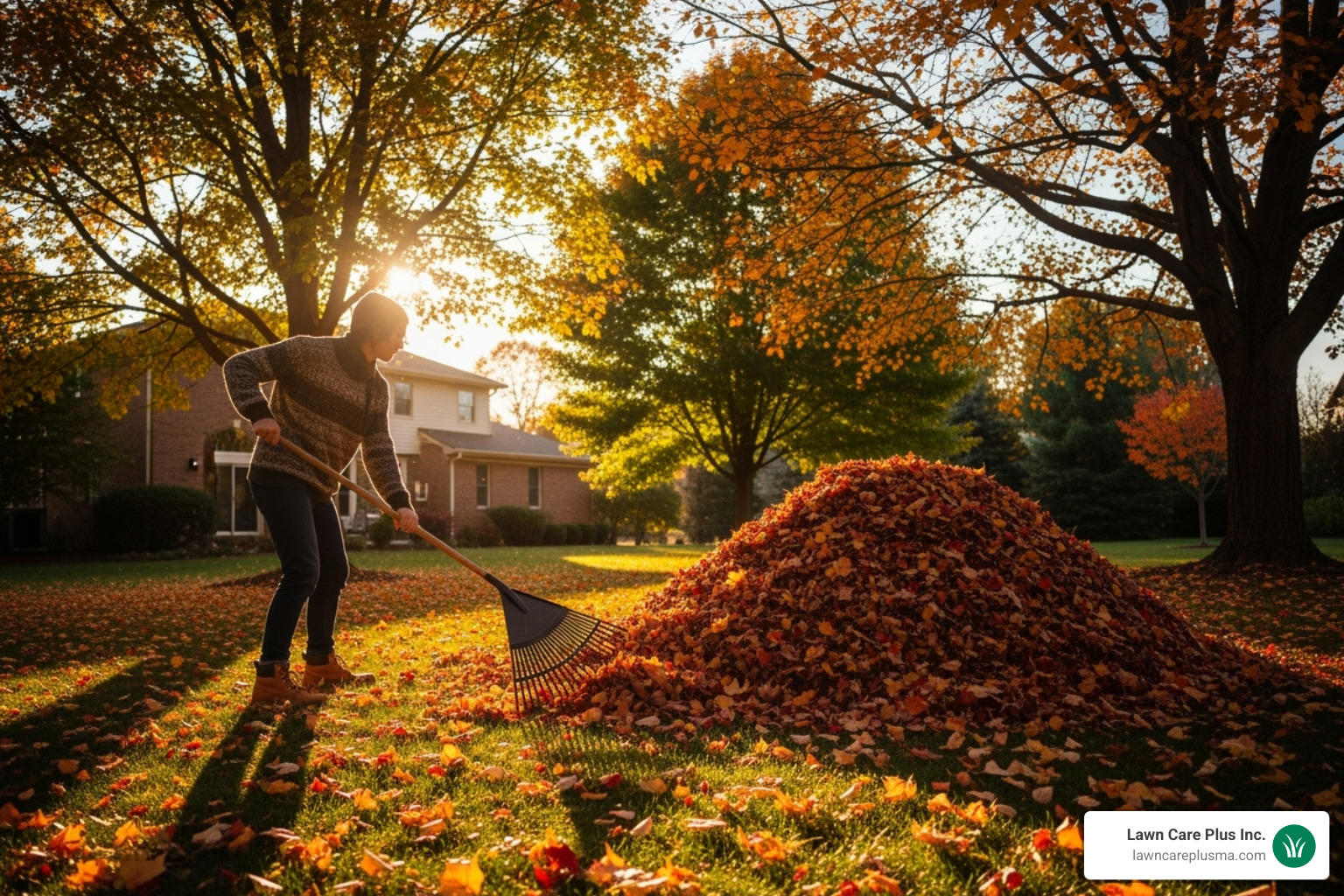
For Your Lawn
Your lawn needs special attention before its winter dormancy. These tasks give your grass the best chance to sleep soundly and wake up healthy.
- Raking leaves: This iconic chore is vital. A thick leaf blanket suffocates grass by blocking sunlight and trapping moisture, which leads to mold. We remove them to keep your lawn healthy.
- Final mowing: The last mow is crucial. We cut grass to 2-3 inches—the ideal height to prevent fungal growth and help the soil dry faster in spring.
- Lawn aeration: If your soil is compacted, we aerate it by creating small holes that allow oxygen, water, and nutrients to reach the roots.
- Fertilizing: A phosphorus-rich fall fertilizer promotes strong root development and helps the lawn store energy, which also helps it crowd out spring weeds.
- Weed control and de-thatching: We tackle stubborn weeds before they seed and remove thick layers of thatch (dead grass) that can choke your turf.
Learn more about our Lawn Care services
For Your Garden Beds and Perennials
Your garden beds need preparation for their winter chapter. It’s all about clearing debris and protecting plants.
- Removing spent annuals: We clear away spent annuals to prevent them from becoming a soggy, pest-harboring mess.
- Cutting back perennials: We selectively cut back perennials, removing diseased foliage while leaving plants with seed heads for winter interest and to feed birds.
- Weeding: Removing weeds in the fall prevents a bigger headache and more work in the spring.
- Adding compost: A layer of rich compost enriches your garden beds, creating a healthy foundation for next year’s growth.
- Mulching for insulation: Fresh mulch or shredded leaves insulate plant roots, protecting them from harsh freeze-thaw cycles.
- Dividing overgrown plants: Fall is the ideal time to divide most overgrown perennials, which refreshes the plant and gives you free additions to your garden.
- Protecting sensitive plants: Sensitive plants like roses may need extra protection, such as mounding mulch at the base or wrapping them in burlap.
Guidance on Rose Disease Prevention and Care
For Your Trees and Shrubs
Fall maintenance keeps the backbone of your landscape—your trees and shrubs—strong and healthy through winter.
- Pruning dead or damaged branches: We prune dead, damaged, or diseased branches before winter to improve plant health and remove the risk of them breaking in storms.
- Trimming for shape: Trimming hedges and shrubs gives them a tidy appearance and helps prevent heavy snow from breaking branches.
- Improving air circulation: Strategic pruning improves airflow, which helps prevent fungal diseases that thrive in damp conditions.
- Preventing snow and ice damage: By removing weak branches, we prevent heavy snow and ice from causing them to snap.
- Wrapping delicate shrubs: We wrap delicate evergreens and shrubs in burlap to protect them from drying winter winds and snow damage.
More on our Residential Landscaping Services
The Ultimate Fall Clean Up Landscaping Toolkit
Whether you’re a seasoned DIY enthusiast or just starting your journey into yard care, having the right tools makes fall clean up landscaping much more efficient and enjoyable. Think of it like cooking – you could probably make dinner with just a butter knife, but having proper kitchen tools makes everything so much smoother!
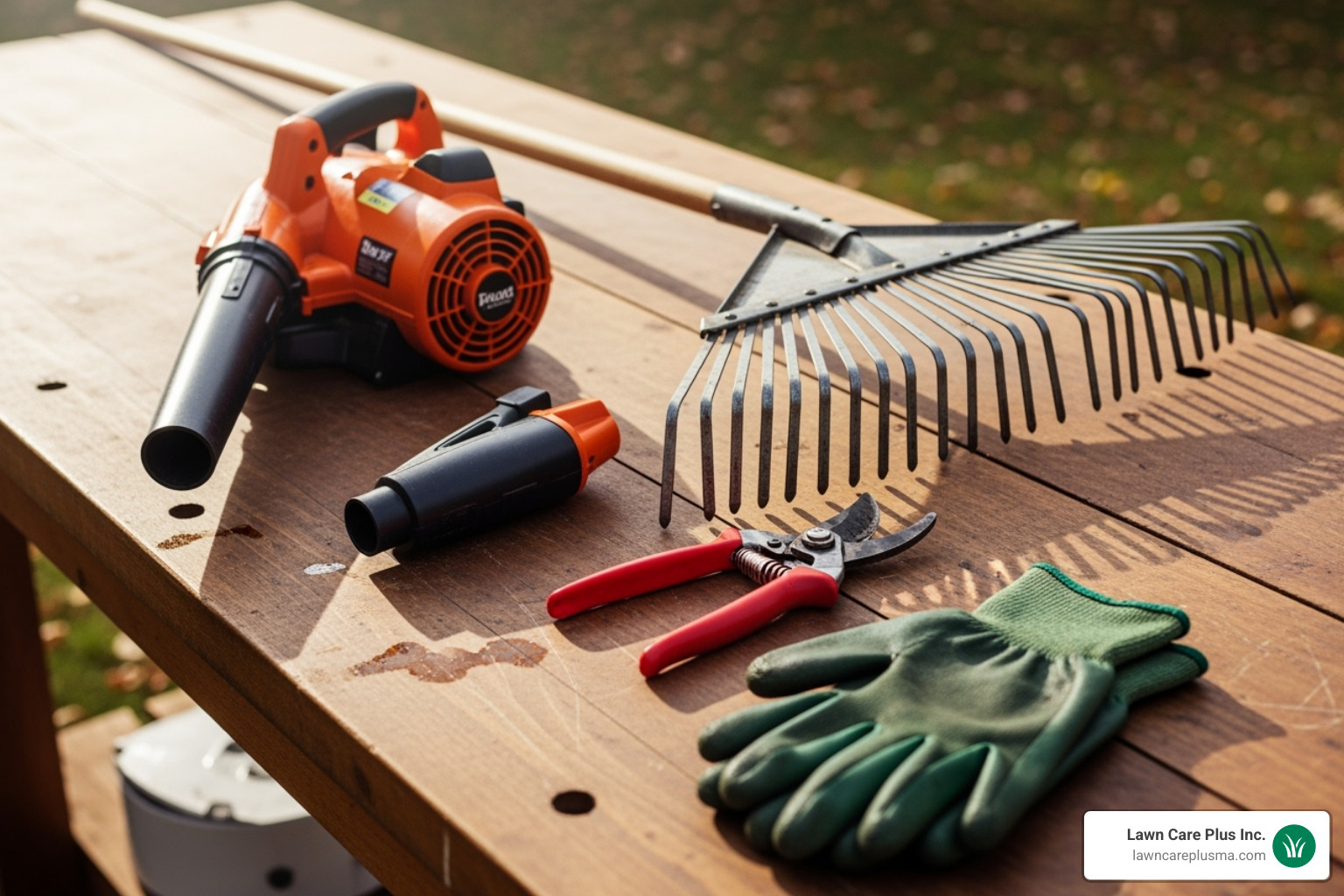
Essential Tools for the DIY Homeowner
The backbone of any successful fall cleanup starts with a leaf blower – this game-changing tool quickly gathers leaves into manageable piles, especially on larger properties or hard surfaces like driveways and patios. For smaller lawns, a handheld blower does the trick perfectly, while backpack blowers bring the muscle needed for extensive areas.
Of course, you can’t forget the classic rake – the trusty workhorse that’s been helping homeowners tackle fall cleanup for generations. Rakes excel at getting into tight corners and providing that final, detailed sweep that makes your yard look professionally maintained.
Your lawn mower plays a crucial role beyond just cutting grass. It’s essential for that final seasonal mow and, when equipped with a mulching feature, can actually chop up thin layers of leaves directly into your lawn – turning debris into natural fertilizer!
For precision work, pruning shears handle the delicate task of cutting back perennials and trimming smaller shrubs, while loppers step in for thicker branches that hand pruners can’t manage. A sturdy wheelbarrow becomes your best friend for hauling leaves, debris, and mulch around the property without wearing out your back.
Don’t underestimate the importance of quality garden gloves – they protect your hands from blisters, thorns, and dirt while keeping you comfortable during long cleanup sessions. A large tarp works like magic for dragging massive volumes of leaves to your compost area or disposal spot. And if you’re planning to aerate your lawn yourself, you can rent a core aerator from most equipment rental stores.
Here’s a pro tip that many homeowners overlook: clean your tools after each use! Simply wipe away debris and dirt, then apply a light coating of oil to metal parts. This prevents rust during winter storage and ensures your tools are ready for action next season.
Tips for Cleaning, Sharpening, and Lubricating Tools
Ecological Considerations and Debris Disposal
As we tackle fall clean up landscaping, we have a wonderful opportunity to support our local ecosystem while reducing waste. It’s amazing how turning “yard waste” into resources can benefit both your property and the environment.
Composting leaves transforms what many consider trash into gardening gold. Instead of sending leaves to the landfill, add them to your compost bin where they’ll break down into nutrient-rich soil amendment for next year’s garden. For an even simpler approach, create a leaf mold pile in a quiet corner of your yard. Just pile up the leaves and let nature work its magic – over time, they’ll decompose into dark, crumbly leaf mold that’s fantastic for improving soil structure and water retention.
Mulching with shredded leaves offers another brilliant recycling option. Run leaves through a mulching mower or leaf shredder, then spread them in your garden beds. This natural mulch provides plant insulation, suppresses weeds, retains soil moisture, and enriches the soil as it decomposes. As a bonus, it supports caterpillars that transform into butterflies and moths – a real win for local wildlife!
Here in Massachusetts, we’re fortunate to have clear local brush and leaf removal regulations that make proper disposal straightforward. For larger volumes that can’t be composted or mulched on-site, following these guidelines ensures responsible waste management while keeping your property pristine.
One increasingly popular practice involves providing winter shelter for pollinators by leaving some native perennials and hollow-stemmed plants uncut in designated garden areas. While maintaining curb appeal in front beds remains important, creating small wildlife-friendly zones contributes to a healthier local ecosystem.
Find Brush and Leaf Removal Near Me
DIY vs. Hiring a Professional for Fall Clean Up Landscaping
When autumn leaves start to fall, homeowners face a choice: tackle fall clean up landscaping yourself, or call in the pros? The best option depends on your time, budget, and physical ability.
The biggest draw for hiring professionals is time savings. A cleanup that might take you an entire weekend can often be completed by an expert crew in just a few hours. Fall cleanup is also tough physical labor involving hours of raking, lifting, and bending. Hiring a pro saves you from soreness and potential injury.
Professionals also bring proper equipment. Commercial-grade leaf blowers, vacuums, and shredders are far more efficient than typical homeowner tools. Beyond tools, you get expertise. Our team can spot early signs of disease, identify plants needing special winter protection, and apply the correct pruning techniques for different species.
Safety is another key factor. Professionals are trained in safety protocols for operating machinery and working in slippery conditions, and they carry insurance. Finally, you get consistent results. A professional service guarantees a thorough, reliable cleanup that leaves your landscape pristine and properly prepared for winter.
Check out our Landscape Maintenance Services Near Me
Estimating the Cost
Understanding the costs involved can help you decide between DIY and professional fall clean up landscaping.
Several factors influence professional pricing, including yard size, the amount of debris (e.g., number of mature trees), and the specific included services (pruning, fertilization, etc.). Regional pricing differences also play a role.
For the DIY route, consider the cost of tools, consumables like fertilizer and mulch, and potential equipment rentals for tasks like aeration. These costs can add up over time.
Professional services bundle everything into one package. Based on national averages from online research, professional fall cleanup can range from around $300 for smaller properties to $1,200 or more for larger, more complex landscapes. These are general industry averages and not a quote for our services; actual costs vary based on your property’s specific needs.
When comparing costs, remember to factor in the value of your time, physical effort, and the peace of mind that comes with guaranteed professional results.
Learn about Fall Yard Clean Up Cost
Frequently Asked Questions about Fall Landscaping
Every autumn, we hear similar questions from homeowners across Massachusetts. Here are our answers to the most common concerns about fall clean up landscaping.
When is the best time to start fall cleanup in Massachusetts?
Timing is key. We recommend starting in late October through November, after most leaves have fallen but before the first heavy snowfall. This avoids re-doing work and ensures the ground isn’t frozen. Cooler soil temperatures during this window are also ideal for tasks like fertilizing and aerating, maximizing the health benefits for your lawn.
Can I just mow over the leaves instead of raking?
Sometimes, but it depends on the amount. If you have a thin layer of leaves, mulching them with your mower can add beneficial nutrients to the soil. However, if the leaf layer is thick enough to hide the grass, it must be raked. A heavy layer of mulched leaves will still smother your grass, blocking sunlight and oxygen, which can lead to fungal problems. Our rule of thumb: if you can’t see your grass, rake first.
How to Clean Up Leaves in Yard.
What happens if I skip fall cleanup completely?
Skipping fall cleanup might seem tempting, but it creates significant problems and more work down the road. The consequences include:
- Increased spring workload: Debris left over winter becomes matted, sometimes frozen to the ground, and is much harder to remove in spring.
- Lawn diseases: The blanket of wet leaves creates a perfect breeding ground for fungal problems like snow mold and brown patch.
- Pest infestations: Leaf piles and debris offer a cozy winter home for insects and rodents, which emerge in spring ready to damage your plants.
- Damaged plants: Heavy, wet leaf cover can cause rot and suffocation for the plants and grass underneath.
- Compacted soil: Debris contributes to soil compaction, which prevents water and nutrients from reaching plant roots.
- Poor curb appeal: A messy, unappealing winter landscape detracts from your home’s value and appearance.
Skipping fall clean up landscaping sets you up for a struggling spring, costing more time, effort, and money to fix.
Ensure a Beautiful Spring with a Proper Fall Cleanup
As the last leaves settle and winter’s chill approaches, it’s worth reflecting on everything we’ve covered about fall clean up landscaping. This isn’t just busy work to keep the neighbors happy – it’s genuinely one of the smartest investments you can make in your property’s future.
Think about it: by spending a weekend (or hiring professionals to handle it) preparing your yard for winter’s nap, you’re setting yourself up for healthier lawn and plants that bounce back stronger in spring. Your grass will thank you with fewer brown patches and disease issues. Your perennials will emerge more robust after their well-prepared winter rest.
The increased curb appeal benefits are obvious too. While your neighbors are dealing with matted, soggy leaf piles come spring, your property will maintain its neat appearance all winter long. There’s something satisfying about driving up to a tidy landscape even on the dreariest February day.
But perhaps the biggest payoff is less work in the spring. Instead of spending your first beautiful weekend of the year wrestling with compacted, moldy debris, you’ll be free to focus on the fun stuff – planting new flowers, planning garden improvements, or simply enjoying your outdoor space. It’s like giving your future self a gift.
The science backs this up too. Proper fall preparation prevents the soil compaction and disease issues that can plague neglected yards. Your lawn gets the oxygen and nutrients it needs to build strong roots during the cooler months. Garden beds stay healthier when they’re not suffocating under layers of wet leaves.
For homeowners in the Boston Metro-West area who want to ensure their landscape gets this crucial seasonal care, the expert team at Lawn Care Plus Inc. offers comprehensive Fall Yard Clean Ups to prepare your property perfectly for the winter ahead. We understand Massachusetts weather patterns and know exactly what your yard needs to thrive through our sometimes unpredictable winters and emerge beautifully in spring.
