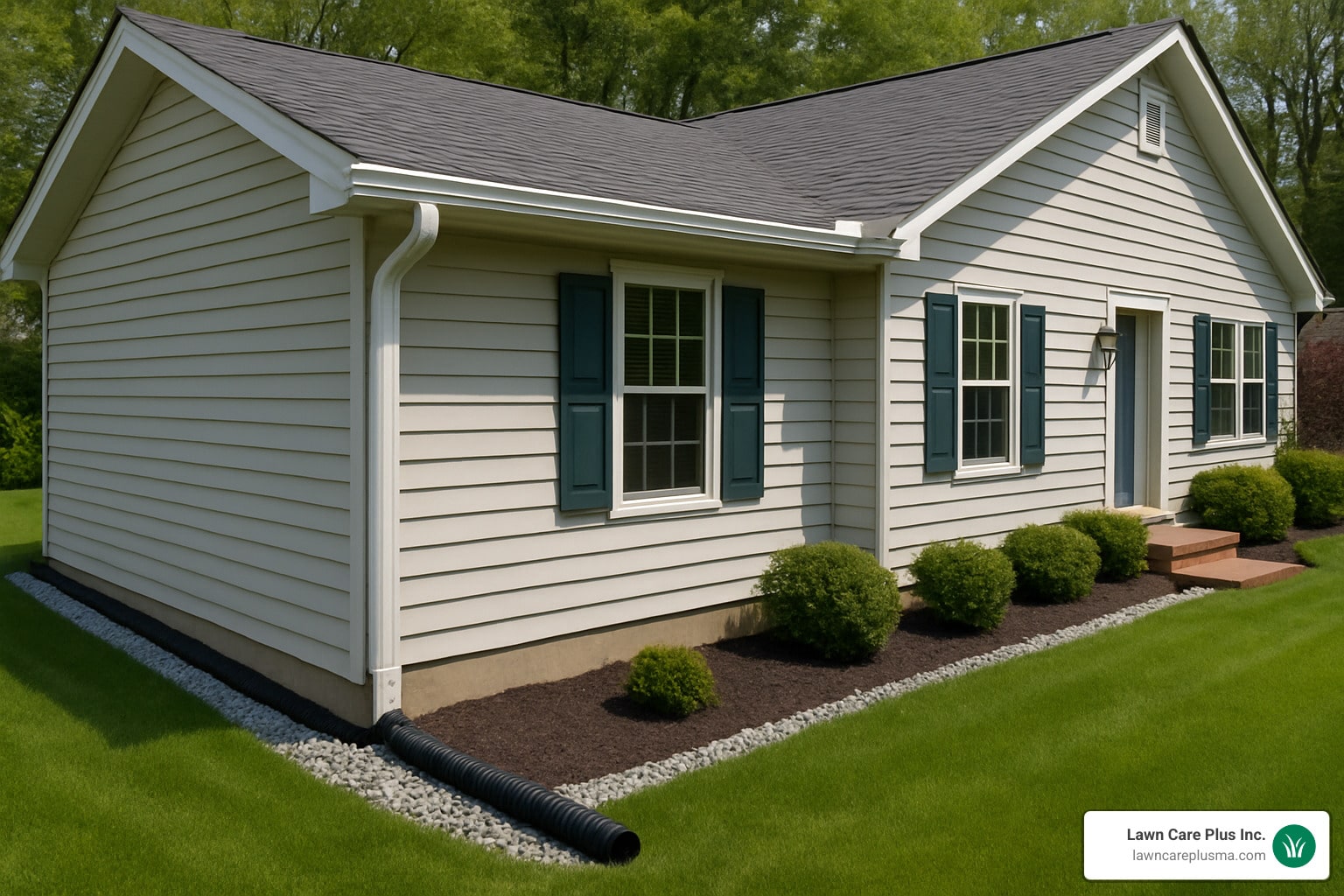
Why Proper Drainage is Critical for Your Property
When you search for gutters and french drains near me, you’re likely dealing with water damage, standing water, or foundation concerns that need immediate attention. Here’s what you need to know to find the right local drainage solution:
Quick Answer for Local Drainage Services:
• Gutters – Collect roof water, direct it away from foundation ($900-$3,000+ installed)
• French Drains – Handle ground water, prevent yard flooding ($1,000-$6,000+ installed)
• Find Services – Search zip code + “drainage contractors,” get 3+ quotes, verify licensing
• When to Call – Standing water >24 hours, basement moisture, foundation cracks
Water damage can happen quickly, so proper drainage is essential for protecting your investment. Most experts agree that nearly all homes need gutters, but not all properties require French drains.
Standing water in your lawn for more than a day, soft spots, or areas where the ground feels too wet are key signs of drainage problems. These issues can lead to serious consequences including:
- Foundation damage from hydrostatic pressure
- Basement flooding and mold growth
- Landscape erosion and plant root suffocation
- Mosquito breeding in stagnant water
- Structural settling from soil saturation
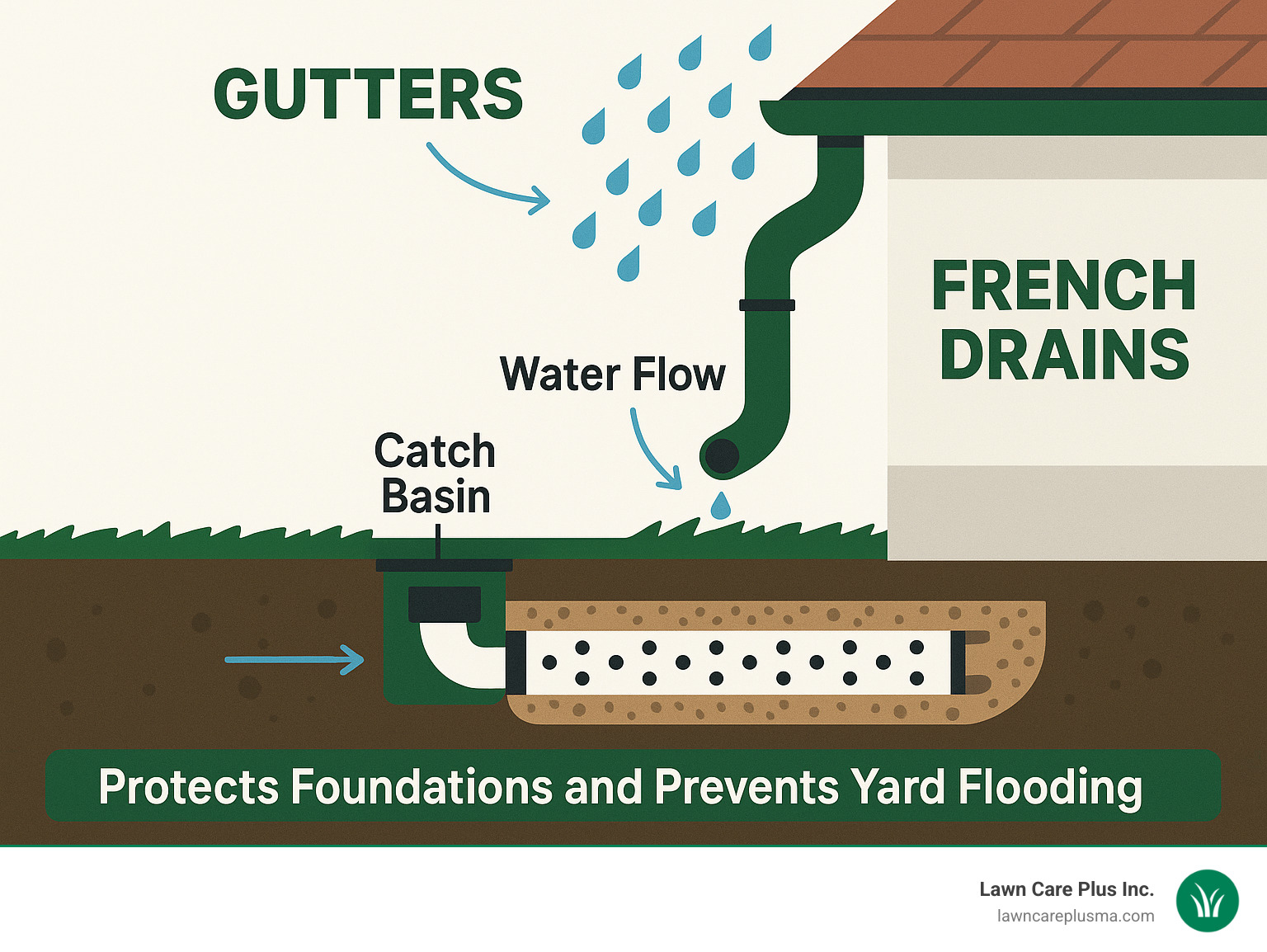
The good news? Gutters and French drains can work together as a comprehensive water management system. Gutters handle roofline runoff while French drains address ground-level water issues.
Important gutters and french drains near me terms:
– installing a french drain for gutters
– domestic surface water drainage systems
– sidewalk drainage solutions
How Gutters Work & Why They Matter
Think of gutters as your home’s umbrella system. When rain hits your roof, it needs somewhere to go – and that’s where gutters step in to save the day. These simple but essential channels collect all that roofline water and funnel it through downspouts, directing it safely away from your foundation.
Without gutters, you’re basically letting Mother Nature decide where thousands of gallons of water end up. Spoiler alert: she’s not great at protecting your investment.
The magic happens in the details. Proper gutter slope is crucial – we’re talking about a gentle 1/16 inch drop per foot toward the downspouts. It might not sound like much, but this slight angle keeps water moving instead of turning your gutters into a swimming pool for mosquitoes.
When gutters work correctly, they’re protecting multiple parts of your home at once. Your fascia and soffit boards stay dry and rot-free. Your foundation walls avoid the constant battering from roof runoff. Your carefully planted landscaping doesn’t get washed away during the next thunderstorm. Even your basement stays drier when water gets properly directed away from the house.
The erosion prevention benefits alone make gutters worth their weight in gold. Without them, you’ll watch your mulch migrate to the neighbor’s yard and your soil slowly disappear. Plus, gutters provide ice-dam relief during those brutal New England winters by giving melting snow a clear path off your roof.
For homeowners looking to maximize their drainage system, connecting gutters to underground drainage can be a game-changer. Check out our detailed guide on installing a french drain for gutters to see how these systems work together.
Components & Best Practices
Not all gutters are created equal, and the right components can make the difference between a system that works for decades versus one that causes headaches every few years.
Seamless aluminum gutters have become the go-to choice for good reason. Unlike those old sectional gutters with joints every ten feet, seamless gutters eliminate most potential leak points. Think of it this way: every joint is a potential problem waiting to happen, especially after a few freeze-thaw cycles.
The continuous design isn’t just about function – it looks cleaner too. No unsightly seams breaking up the roofline, and the smooth interior surface helps water flow more efficiently.
Gutter guards and leaf screens might seem like an optional upgrade, but they’re really an investment in your sanity. These protective barriers keep leaves, pine needles, and the occasional squirrel out of your gutters while still letting water flow freely. Many homeowners find they can go from cleaning gutters twice a year to maybe once every few years.
Downspout clean-outs are those little removable sections that make maintenance actually manageable. When you inevitably get a clog (it happens to everyone), these access points let you clear the blockage without taking apart your entire downspout system. It’s like having a maintenance door built right into your drainage system.
Signs You Need New Gutters
Your gutters will usually give you plenty of warning before they completely fail – you just need to know what to look for.
Overflow during moderate rain is your gutters waving a white flag. If cleaning doesn’t solve the problem, you might need larger gutters or additional downspouts. Some older homes just weren’t equipped for today’s more intense storm patterns.
Peeling paint or rust stains mean the protective coating has given up the fight. Once water gets through to the metal underneath, deterioration happens fast. What starts as a small rust spot can become a major leak in just one season.
Basement dampness or mysterious water stains often trace back to failing gutters. When gutters overflow or leak, that water doesn’t just disappear – it pools around your foundation and finds creative ways into your basement.
Washed-out mulch or eroded soil around your home’s perimeter tells the story of uncontrolled roof runoff. If you’re constantly replacing mulch or notice trenches forming near your foundation, your gutters aren’t doing their job.
When you’re searching for gutters and french drains near me, these warning signs usually mean it’s time to act quickly before minor problems become major expenses.
How French Drains Work & the Problems They Solve
Think of a French drain as your yard’s underground superhero. While gutters handle the water coming off your roof, French drains tackle the sneaky groundwater that pools in your lawn, threatens your basement, or turns your beautiful garden into a swamp.
The concept is beautifully simple: a perforated pipe buried in a gravel-filled trench that intercepts water before it can cause problems. Water naturally flows to the lowest point, and French drains take advantage of this basic principle. The system needs just a 1% slope (about 1 inch drop for every 10 feet) to let gravity do all the heavy lifting.
Here’s where French drains really shine – they solve problems that gutters simply can’t handle. Hydrostatic pressure relief around your foundation prevents that scary scenario where water pressure actually pushes against your basement walls. Groundwater interception stops water before it reaches your foundation in the first place.
If you’re dealing with lawn pooling in low spots or basement waterproofing issues, a French drain system can be a game-changer. The perforated pipe, surrounded by gravel, acts like a underground sponge – collecting water from all directions while keeping soil and debris out.
For comprehensive information about French drain basics and installation, this helpful resource on French drain basics provides additional technical details.
Planning & Installation Essentials
Before you start dreaming about a dry basement and perfect lawn, there’s some important groundwork to cover – literally and figuratively.
Call 811 at least 48 hours before any digging begins. This isn’t just a good idea, it’s the law in most areas. Underground utilities can turn a simple drainage project into a very expensive (and dangerous) nightmare. The utility location service is free and could save your life.
Trench depth typically runs 18-24 inches, though your specific situation might call for something different. Heavy clay soil or a high water table might require going deeper, while sandy soil often works fine with shallower trenches.
Outlet options need careful consideration from the start. Your French drain water has to go somewhere – maybe to a storm sewer (check local regulations first), a dry well, or simply to a lower area of your property. Just remember the golden rule: never direct drainage water onto your neighbor’s property without permission.
Landscape fabric lines the trench before the gravel goes in. This fabric barrier prevents soil from clogging your system while still letting water flow freely. Think of it as a coffee filter for your drainage system – it keeps the grounds out but lets the good stuff through.
Combining French Drains with Gutters
When you combine gutters and French drains, you’re creating a comprehensive water management system that handles everything Mother Nature throws at your property. It’s like having both an umbrella and waterproof boots – each serves a purpose, and together they keep you completely dry.
Catch basins serve as the connection point between your downspouts and French drain system. These underground collection boxes capture all that roof runoff and feed it into your French drain network, preventing any single part of your system from getting overwhelmed during heavy storms.
Downspout tie-ins require some engineering thought. Standard 4-inch pipe usually handles most residential connections, but homes with large roof areas might need bigger pipes. The goal is making sure your system can handle peak water flows without backing up or overflowing.
Overflow planning might sound overly cautious, but it’s actually smart insurance. Even the best-designed system can reach capacity during extreme weather events. Having emergency spillways or secondary discharge points means water has somewhere safe to go when things get really intense.
Dry wells make excellent endpoints for combined systems. These underground chambers allow collected water to slowly percolate back into the ground naturally while filtering out pollutants – it’s like giving water a chance to take a deep breath before rejoining the groundwater system.
If you’re concerned about tree roots invading your system, our article on roots in french drain management offers practical solutions for keeping your drains flowing freely year-round.
Gutters and French Drains Near Me: Selecting the Right Solution and Local Installer
When you’re searching for gutters and french drains near me, you’re not just looking for any contractor – you need someone who understands your specific property challenges and local conditions. Here in the Boston Metro-West area, we’ve learned that what works in sandy Needham soil might not be the best solution for clay-heavy areas in Newton.
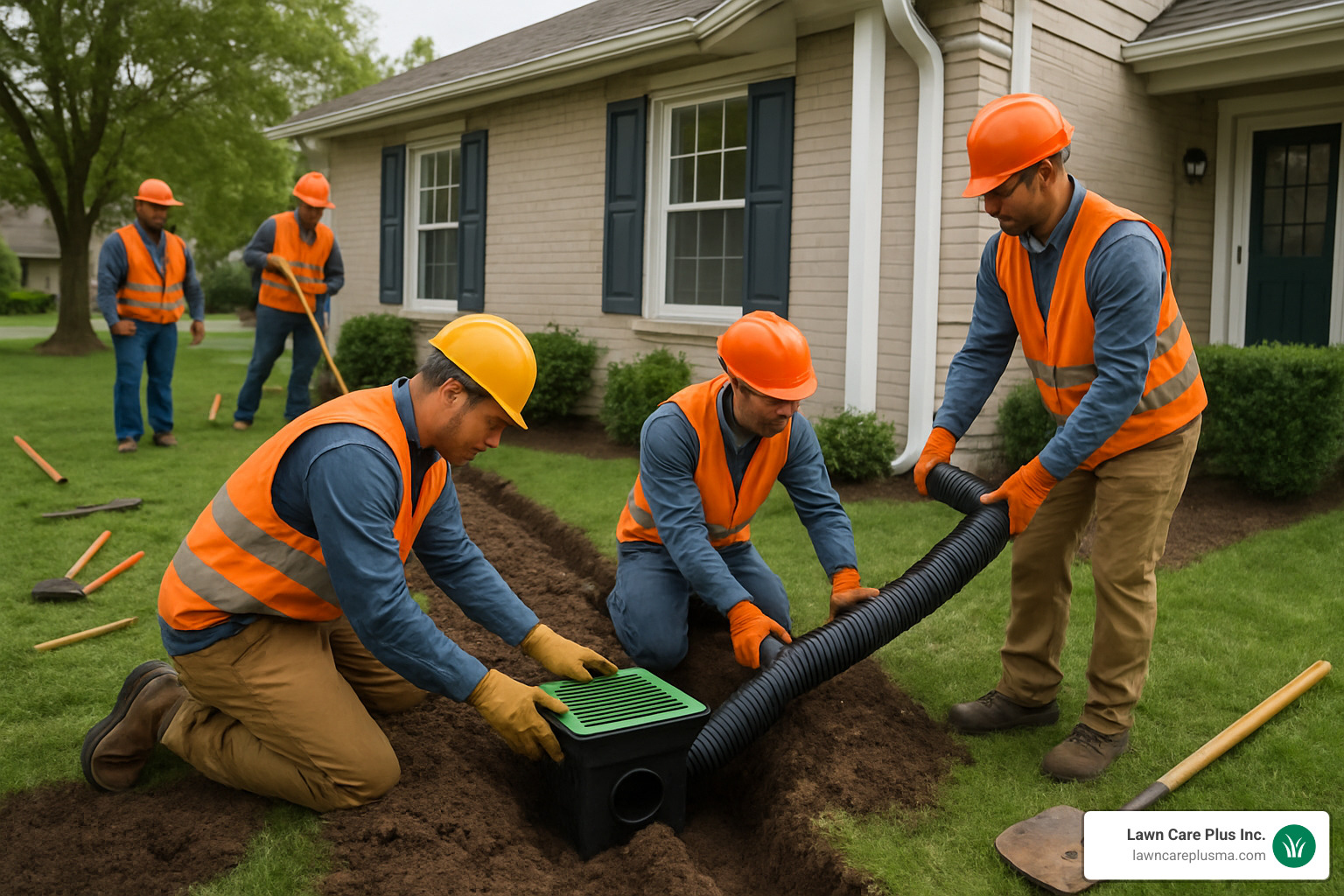
Service radius matters more than you might think. A contractor who regularly works in Belmont, Brighton, Brookline, and surrounding communities will understand local building codes, soil conditions, and permit requirements. They’ll also know which materials hold up best during our harsh New England winters and intense summer storms.
Your property’s slope tells the whole story about which drainage solutions will actually work. If you have a relatively flat yard, you might need sump pumps to help gravity do its job. Properties with good natural slope can often rely on simpler gravity-fed systems that cost less and require minimal maintenance.
Soil type is the hidden factor that many homeowners overlook. Clay soils in our area drain slowly and hold water like a sponge, often requiring more extensive French drain networks with specific gravel specifications. Sandy soils drain quickly but need different pipe spacing and installation techniques to work effectively.
Our Massachusetts climate throws everything at drainage systems – spring snowmelt, summer downpours, and freeze-thaw cycles that can crack poorly installed components. Any contractor you hire should design systems that handle our full range of weather challenges.
Finding gutters and french drains near me – step-by-step
Start your search locally by typing your zip code plus “drainage contractors” or “gutters and French drains” followed by your town name. This simple approach helps you find companies that actually service your area instead of national lead services that just collect your information.
Be smart about referral websites – while they can help you find contractors, always verify licensing, insurance, and local references on your own. Look for established local companies with real community roots rather than businesses that just have flashy online advertising.
Schedule face-to-face assessments with at least three qualified contractors. Every drainage problem is unique, and what solved your neighbor’s basement flooding might not address your yard’s standing water issues. A good contractor will spend time walking your property and asking about your specific concerns.
Compare detailed quotes that spell out materials, installation methods, cleanup procedures, and warranty coverage. If one estimate is dramatically different from the others, ask why – it often means different approaches or quality levels that aren’t immediately obvious.
Questions to Ask Before Hiring
Ask for a drainage design plan that shows exactly how water will flow through your property. Professional contractors should be able to draw or sketch their proposed system and explain how it solves your specific problems. If they can’t explain it clearly, keep looking.
Talk through material choices including pipe types, gravel specifications, and gutter materials. Quality contractors will explain why they recommend certain materials and help you understand the trade-offs between cost and performance. They should never pressure you into the most expensive option without good reasons.
Clarify what cleanup includes because drainage installation can temporarily mess up your landscaping. Make sure you understand what restoration work is included in the price and what you’ll need to handle separately. Some contractors include seeding and mulching, while others just backfill trenches.
Get realistic timelines for project completion. Weather delays, permit approvals, and material availability can all affect scheduling, especially during busy spring and fall seasons. A contractor who promises unrealistic timelines is often cutting corners somewhere.
Verify current insurance coverage including both liability and workers’ compensation. Request certificates of insurance and confirm they’re current before any work begins. This protects you from potential liability if someone gets hurt on your property.
Cost, Maintenance & Common Mistakes to Avoid
Let’s talk money – because understanding drainage system costs upfront helps you make smart decisions and avoid expensive surprises down the road. When you’re searching for gutters and french drains near me, you’ll quickly find that pricing varies dramatically based on your specific situation.
Gutter installation typically costs between $900 and $3,000 for most homes, though complex installations with premium materials can reach $10,000 or more. The wide range reflects differences in home size, material choices, and installation challenges. A simple ranch home with easy roof access costs far less than a multi-story colonial with steep rooflines and mature landscaping.
French drain systems generally run from $1,000 to $6,000 for typical residential projects, but extensive systems or difficult site conditions can push costs to $18,000 or higher. Factors like trench length, soil conditions, and outlet complexity all affect the final price. Rocky soil that requires excavation equipment costs more than soft earth that can be hand-dug.
These average cost ranges are based on publicly available internet data and do not represent quotes from Lawn Care Plus.
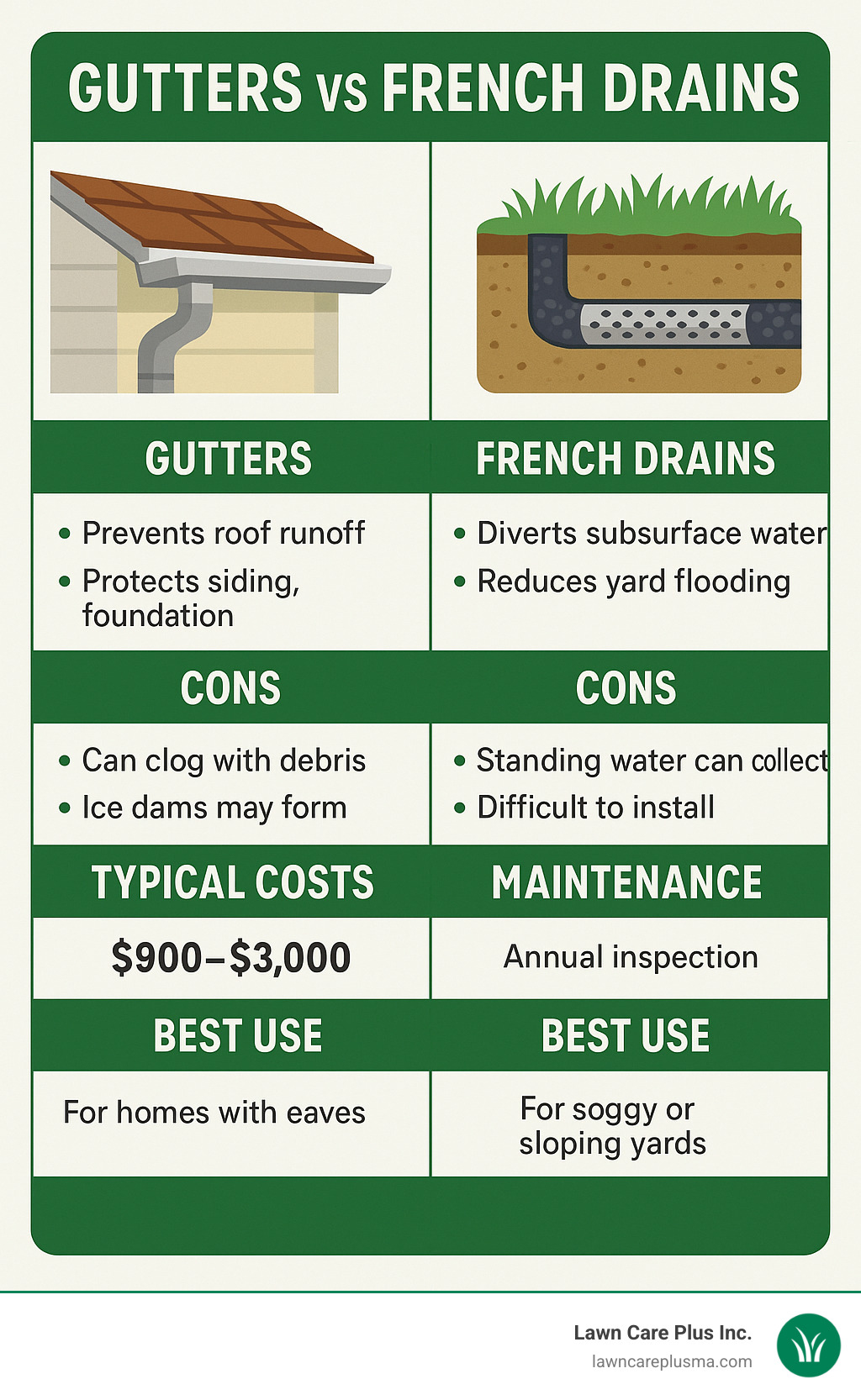
Here’s the thing about maintenance – it’s way cheaper than replacement. Gutters need cleaning twice yearly, typically in spring and fall. This simple task prevents most gutter problems and extends system life significantly. French drains require annual inspection and occasional flushing to remove accumulated sediment.
Inspection schedules matter more than you might think. Check gutter slope and alignment each season, test downspout flow during the first heavy rain, and make sure French drain outlets stay clear of debris. Catching small problems early prevents them from becoming wallet-draining disasters.
The DIY versus professional question comes up frequently. Simple gutter repairs might be manageable if you’re comfortable on ladders and have basic tools. French drain installation, however, requires specialized equipment, proper slope calculations, and knowledge of local building codes. Most homeowners find professional installation worth the investment.
Common mistakes can cost thousands in repairs. Never connect downspouts directly to French drains without catch basins – the sudden water volume can overwhelm the system. Installing insufficient slope in French drain trenches creates standing water and system failure. Using incorrect pipe types or sizes reduces effectiveness and shortens system life.
Always call 811 before digging – hitting underground utilities isn’t just dangerous, it’s expensive. Skipping proper outlet planning can direct water where it shouldn’t go, potentially creating legal issues with neighbors. And never skip landscape fabric in French drain trenches – it prevents soil infiltration that clogs the system.
The bottom line? Quality installation and regular maintenance protect your investment and keep your property dry. When you’re ready to solve your drainage problems, focus on finding experienced contractors who understand local conditions and stand behind their work.
Frequently Asked Questions about Residential Drainage
What are the warning signs I need gutters and french drains near me?
If you’re wondering whether it’s time to search for gutters and french drains near me, your property is probably already showing some telltale signs that shouldn’t be ignored.
Ponding water is one of the most obvious red flags. When water sits in your yard for more than a day after it rains, you’ve got a drainage problem that needs attention. This isn’t just an eyesore – standing water becomes a mosquito breeding ground and can slowly suffocate your grass roots.
Foundation issues often start small but can become expensive fast. Look for new cracks in your basement walls, water stains along the foundation, or that musty smell that seems to linger no matter how much you clean. These problems usually mean water isn’t being directed away from your home properly.
Mildew smells in basements or crawl spaces are your home’s way of crying for help. That distinctive odor often indicates mold growth from moisture intrusion – a health concern that drainage systems can prevent before it becomes a major problem.
You’ll also want to pay attention to erosion around your home’s perimeter. If you notice soil washing away, mulch disappearing after every storm, or soft spots in your lawn near the house, roof runoff isn’t being controlled effectively. This soil loss can undermine walkways, driveways, and even threaten your foundation’s stability over time.
Can I install these systems myself or should I hire a professional?
The honest answer? It depends on your comfort level with complex projects and the specific work involved.
Gutter installation might seem straightforward, but it requires working at height, calculating proper slopes, and ensuring secure mounting to your home’s fascia. Basic gutter repairs or cleaning might be manageable for experienced DIYers, but complete installations need specialized tools, safety equipment, and knowledge that most homeowners don’t have.
French drain installation is significantly more complex. You’ll need trenching equipment, laser levels for proper slope calculation, and the physical ability to dig trenches 18-24 inches deep. Most equipment rental costs for the necessary machinery can quickly approach what you’d pay for professional installation – and that doesn’t include the learning curve or potential mistakes.
Don’t forget about permit requirements either. Many Massachusetts communities require professional installation for drainage systems that connect to municipal storm drains or could affect neighboring properties. It’s worth checking with your local building department before you start digging.
How do I keep both systems working year-round?
The good news is that maintaining your drainage systems isn’t rocket science – it just requires staying on top of a few key tasks throughout the year.
Gutter maintenance works best on a twice-yearly schedule. Plan to clean them in spring and fall, removing leaves, twigs, and that mysterious black sediment that seems to appear everywhere. After cleaning, test water flow with your garden hose to make sure everything’s moving in the right direction. This simple routine prevents most overflow problems and ice dam formation.
French drain care is less frequent but equally important. Plan on yearly flushing using a pressure washer to clear accumulated sediment and maintain proper flow rates. Start at the outlet and work backward toward the source – this prevents pushing debris deeper into your system where it’s harder to remove.
Leaf guards can be a game-changer for busy homeowners. Quality gutter guards significantly reduce cleaning frequency while improving system performance during heavy rains. They’re an investment that pays for itself through reduced maintenance costs and better reliability when storms hit.
The key is consistency – a little maintenance each year prevents the big, expensive problems that come from neglected drainage systems.
Conclusion
When you search for gutters and french drains near me, you’re taking a smart first step toward protecting what’s likely your biggest investment – your home. Think about it this way: would you rather spend money now on proper drainage, or deal with foundation cracks, basement flooding, and landscape washouts later?
The math is pretty simple. Foundation repairs in our area can easily cost five figures, while basement waterproofing and mold cleanup add thousands more to the bill. Compare that to investing in quality drainage systems upfront, and prevention becomes a no-brainer.
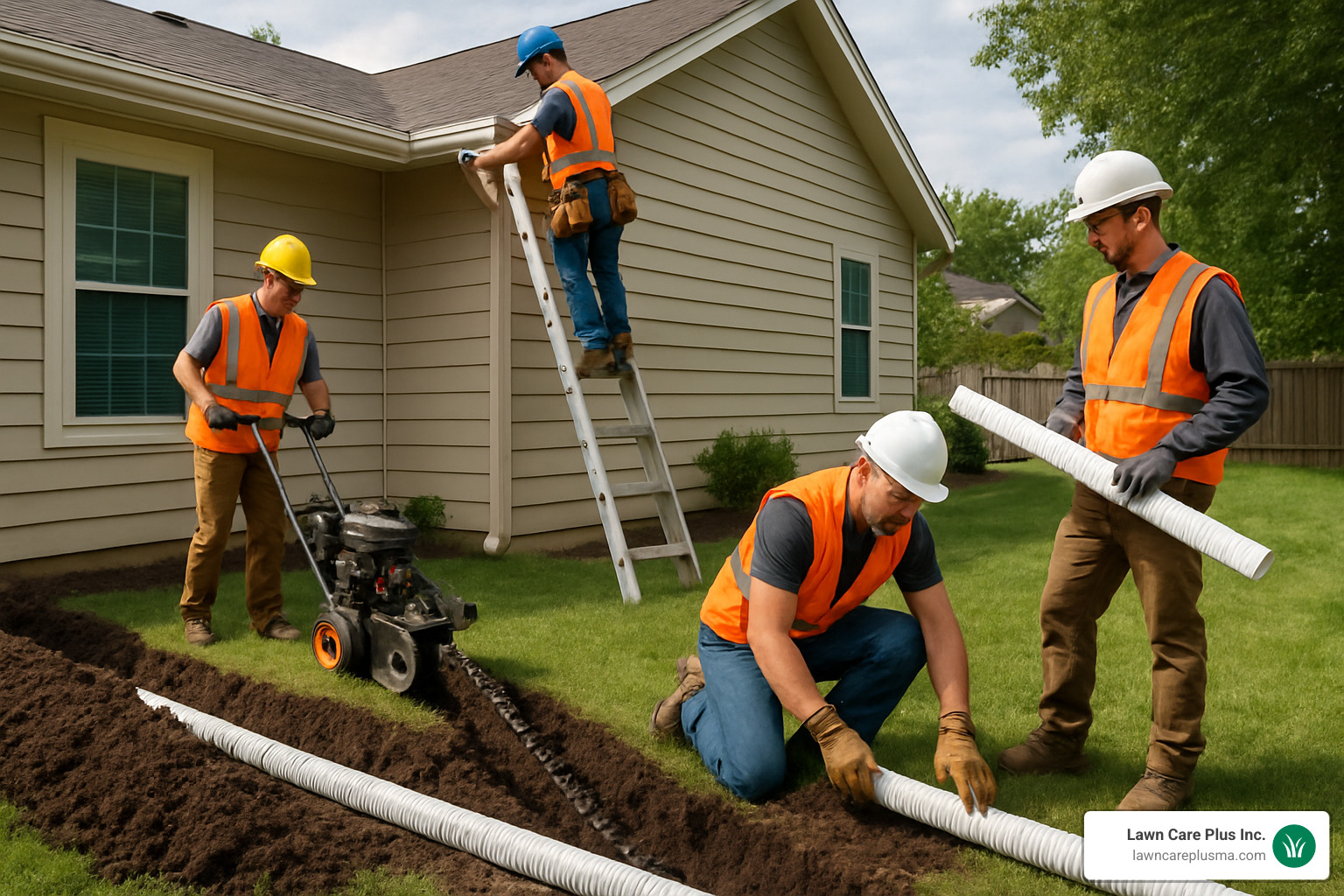
At Lawn Care Plus Inc., we’ve seen how proper drainage transforms properties throughout the Boston Metro-West area. We’re not just pipe installers – we’re your neighbors who understand how New England weather can wreak havoc on homes from Belmont to Watertown, Newton to Needham.
What sets us apart is our comprehensive approach. We don’t just dig trenches and hang gutters. Our team takes time to understand your property’s unique challenges, then designs drainage solutions that actually solve problems rather than just moving water around.
We serve communities throughout the region, including Boston, Brighton, Brookline, Canton, Chestnut Hill, Dedham, Hyde Park, Jamaica Plain, Mattapan, Medfield, Milton, Norwood, Randolph, Readville, Roslindale, and Walpole. This local expertise means we know how clay soils behave differently than sandy ones, and why some neighborhoods need more robust systems than others.
As a full-service landscaping company, we can integrate your drainage needs with your overall landscape vision. No more choosing between functionality and beauty – proper drainage can actually improve your property’s appearance while protecting its value.
From the initial site assessment through final cleanup, we handle every detail. Our experienced team uses quality materials and proven techniques that stand up to whatever Mother Nature throws at us. And because we’re local, we’re here for ongoing maintenance and service when you need us.
Don’t wait for the next heavy storm to reveal drainage problems you could have prevented. Water damage has a way of getting expensive fast, and it never gets better on its own.
Ready to protect your property? Contact us today for a drainage assessment. We’ll help you understand your options and find the right solution for your specific needs. For more information about our complete range of services, check out our hardscape and landscape services page.
Remember – when it comes to drainage, you can pay a little now or a lot later. Let’s make sure you’re in the first category.