
Introduction
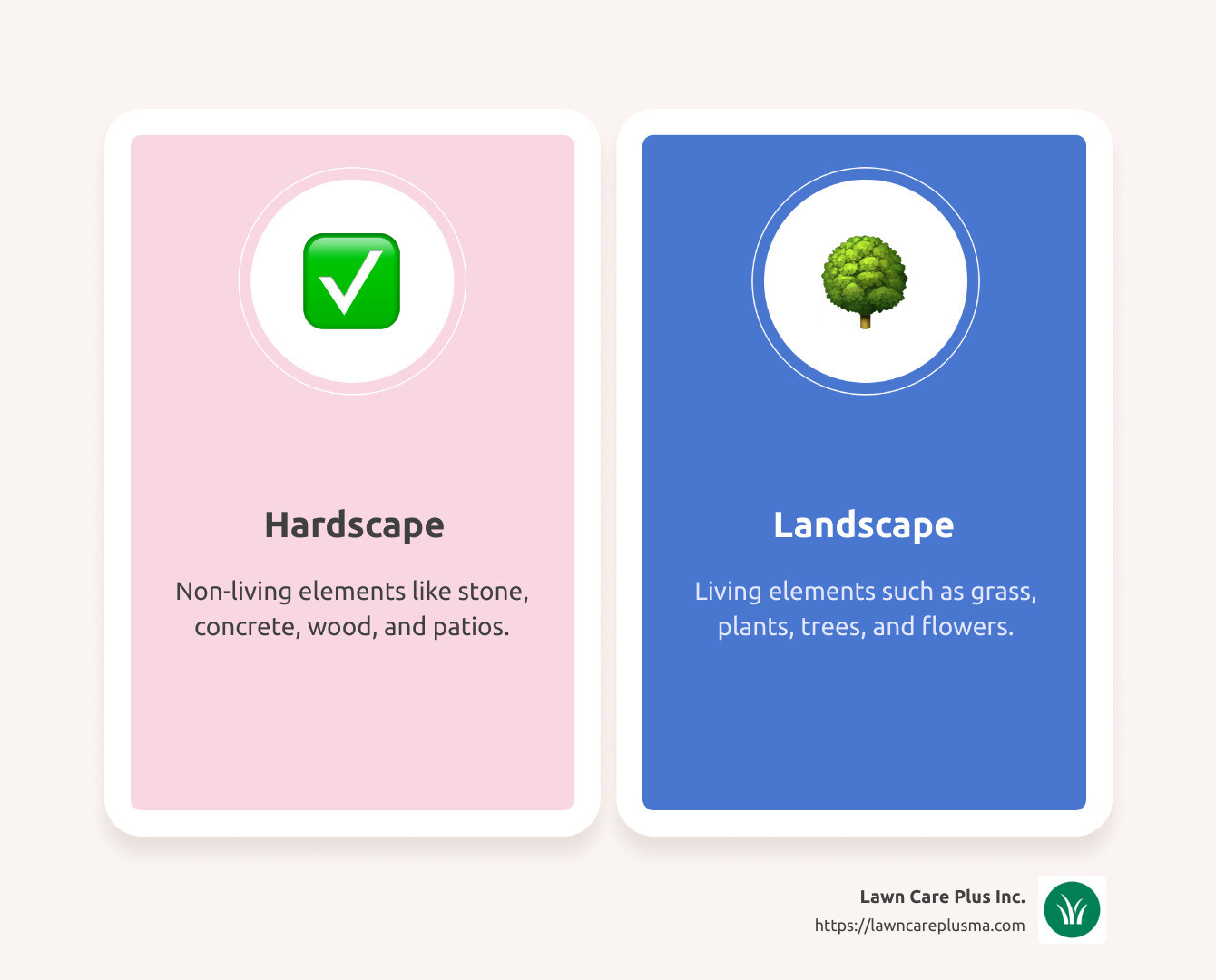
Hardscaping vs Landscaping—what’s the difference, and why does it matter for your outdoor space? In simple terms:
- Hardscape: Non-living elements (stone, concrete, wood, patios)
- Landscape: Living elements (grass, plants, trees, flowers)
Both are crucial to creating a harmonious, functional, and beautiful outdoor environment.
When you blend these elements well, you get a balanced space perfect for relaxing, entertaining, and enjoying nature. Think of it like this: hardscaping provides the structure, while landscaping brings life and softness. Imagine a patio with beautiful stone work, shaded by lush green plants and colorful flowers.
We’ll dive deeper into each throughout this article to help you understand how to use hardscaping and landscaping together to craft your perfect outdoor sanctuary.
Hardscape vs. Landscape: Knowing the Difference
When designing your outdoor space, it’s important to understand the difference between hardscaping and landscaping. Each plays a unique role in creating a balanced and functional garden.
What Is Hardscape?
Hardscape refers to the non-living elements of your garden. These are the “hard” materials that bring structure and definition to your outdoor space.
Common Hardscape Elements
- Concrete: Versatile and durable, concrete can be used for patios, driveways, and walkways. It comes in various colors and textures to suit your design needs.
- Rocks: Natural stones like granite, limestone, and flagstone add a rugged, timeless beauty. They are perfect for pathways, retaining walls, and decorative elements.
- Pergolas: These structures provide shade and can serve as a focal point in your garden. Made from wood or metal, pergolas offer a blend of functionality and style.

What Is Landscape?
Landscape involves the “soft,” living components that add life and vibrancy to your outdoor area. These elements are essential for creating a serene and inviting atmosphere.
Common Landscape Elements
- Grass: A lush green lawn is the foundation of many gardens. It provides a soft surface for activities and enhances the visual appeal.
- Plants: Shrubs, flowers, and ground cover plants add color, texture, and fragrance. They can be used to create borders, fill garden beds, or act as focal points.
- Trees: Trees offer shade, privacy, and a sense of permanence. They can also attract wildlife and improve air quality.
Bringing It All Together
Think of hardscaping as the skeleton of your garden, providing structure and form. Landscaping is the flesh, adding beauty and life. When combined thoughtfully, they create a harmonious and functional outdoor space that you can enjoy year-round.
Next, we’ll explore why your yard needs both hardscaping and landscaping to achieve the perfect balance of functionality and aesthetics.
Why Your Yard Needs Both Hardscaping and Landscaping
Benefits of Hardscaping
Functionality:
Hardscaping elements like retaining walls, stone paths, and patios serve practical purposes. For instance, retaining walls can prevent soil erosion and create level areas on sloped terrain. Stone paths provide clear walkways, reducing the wear and tear on your lawn.
Drainage Improvement:
Materials like stone and concrete help manage water flow. They can prevent standing water, reduce over-watering, and minimize algae and mildew growth. This is crucial for maintaining a healthy yard and avoiding unwanted pests.
Privacy:
Fences, gates, and pergolas add privacy and security to your outdoor space. They delineate property lines and create secluded areas where you can relax without prying eyes.
Extended Outdoor Use:
Features like outdoor kitchens, fire pits, and patios make your outdoor space usable year-round. An outdoor fireplace, for example, can extend your outdoor activities well into the colder months, making your yard a true extension of your home.
Benefits of Landscaping
Natural Beauty:
Landscaping adds life and color to your yard. Trees, flowers, and shrubs can transform a dull space into a vibrant oasis. The right combination of plants can create a serene and inviting atmosphere.
Environmental Benefits:
Landscaping is not just about looks. Planting trees and shrubs improves air quality by absorbing carbon dioxide and releasing oxygen. Plus, certain plants attract pollinators like bees and butterflies, contributing to local biodiversity.
Outdoor Comfort:
Shade from trees and the coolness from lush grass can make your outdoor space more comfortable. During hot summer months, a well-landscaped yard can offer a refreshing retreat.
Property Value:
Both hardscaping and landscaping can significantly increase your property’s value. Well-designed outdoor spaces are attractive to potential buyers. According to Forbes, a thoughtfully landscaped property can make a lasting impression and boost curb appeal.
Combining hardscaping and landscaping ensures your yard is both functional and beautiful. Next, we will discuss how to design with both elements in mind to create a harmonious outdoor space.
Designing with Hardscape and Landscape in Mind
Combining hardscaping and landscaping ensures your yard is both functional and beautiful. Here are some tips for designing with both elements in mind to create a harmonious outdoor space.
Tips for Effective Hardscape Design
Focal Points:
Your hardscaping should have a clear purpose. Create a focal point to draw the viewer’s gaze. For example, a striking stone fireplace or a beautifully designed patio can serve as a centerpiece.
Curves and Rounded Edges:
Too many straight lines can make your yard feel rigid and unnatural. Incorporate curves and rounded edges to add a touch of creativity and soften the overall look. This can make your space feel more inviting and less structured.
Drainage Considerations:
Good drainage is crucial. Utilize features like retaining walls and stone steps to manage water flow effectively. This helps prevent flooding and ensures your plants get the right amount of water. Always plan ahead to avoid water-related issues.
Tips for Effective Landscape Design
Plant Selection:
Choose plants that thrive in your local climate. Native plants are often the best choice as they require less maintenance and are more resilient to local pests and weather conditions. For example, in Massachusetts, plants like Eastern Red Columbine and Black-Eyed Susan are excellent options.
Color Coordination:
A well-coordinated color scheme can enhance the visual appeal of your garden. Mix and match plants with complementary colors to create a vibrant and cohesive look. Seasonal diversity can also add year-round interest with different plants blooming in various seasons.
Maintenance Ease:
Consider the maintenance needs of your plants. Opt for low-maintenance options like perennial shrubs and native plants to reduce the time and effort required to keep your garden looking its best. Mulch can also help retain moisture and suppress weeds, making maintenance easier.
Integration, Flow, and Balance
Integration:
Ensure that your hardscaping and landscaping elements complement each other. For instance, if your home exterior features stone, use similar stone in your hardscaping to create a seamless transition between the house and the yard.
Flow:
Design your outdoor space so that it feels natural and unplanned. Paths should guide visitors through the garden, leading them from one area to another without abrupt stops. This creates a sense of journey and discovery.
Balance:
Achieve visual balance by considering the proportion of each element. Large trees can balance out a big patio, while smaller plants can be used to soften the edges of walkways and retaining walls. Use the Golden Ratio as a guideline to create pleasing proportions.
By thoughtfully integrating hardscape and landscape elements, you can create a balanced, visually appealing, and functional outdoor space. Next, we will discuss the cost and maintenance considerations for both hardscaping and landscaping.
Hardscaping vs Landscaping: Cost and Maintenance
Cost Comparison
When it comes to hardscaping vs landscaping, understanding the costs involved is crucial for budgeting and planning. Let’s break down the initial costs and long-term expenses associated with both.
Initial Costs:
- Hardscaping: Generally, hardscaping projects like patios, walkways, and retaining walls come with higher upfront costs. This includes materials like stone, concrete, or wood, and labor for installation. For example, a simple concrete patio can cost between $2,500 to $7,000 depending on size and complexity.
- Landscaping: The initial costs for landscaping are often lower but can vary widely based on the scope of the project. Planting flowers, trees, and shrubs may cost anywhere from $800 to $10,000. The cost of sod vs. seed also plays a role; sod is more expensive but provides instant results, while seeding is cheaper but takes longer to establish.
Maintenance Requirements
Both hardscaping and landscaping require maintenance, but the type and frequency differ significantly.
Hardscape Maintenance:
- Preventative Measures: Hardscaping elements like patios and walkways are durable but still need care. Adding a protective sealant to surfaces helps prevent cracks and chips. Regular inspections and minor repairs can extend the life of your hardscaping.
- Regular Upkeep: Filling in cracks between pavers can prevent weed growth and moisture damage. A fresh coat of stain or sealant on wood elements like decks and fences can keep them looking new and prevent deterioration.
Landscape Maintenance:
- Ongoing Care: Landscaping requires more frequent attention. This includes tasks like mowing the lawn, trimming trees, and weeding flower beds. The average cost for lawn mowing services ranges from $50 to $250 per service, while tree trimming can cost between $300 to $700 per tree.
- Seasonal Tasks: Seasonal maintenance is also essential. For example, yard cleaning in the fall and spring can cost $150 to $400 per service, and lawn aeration ranges from $50 to $300.
Long-term Maintenance:
- Hardscaping: Over time, hardscaping elements generally need less maintenance. However, they may require occasional repairs due to weathering or ground shifting. Planning ahead for soil movement and settling hardscaping below the frost line can prevent extensive damage.
- Landscaping: Landscaping demands consistent effort to maintain its beauty. Annual flowers will need replacing each year, and mulch should be refreshed every couple of years. While trees and perennial shrubs may last for decades, they still require regular care to thrive.
By comparing the costs and maintenance requirements of hardscaping and landscaping, you can make informed decisions that align with your budget and long-term goals. Next, we will explore frequently asked questions about hardscaping and landscaping.
Frequently Asked Questions about Hardscaping and Landscaping
Is hardscaping and landscaping the same thing?
No, hardscaping and landscaping are not the same.
Hardscaping refers to the non-living elements of your outdoor space. This includes items like concrete patios, stone pathways, decks, and pergolas. These elements are “hard” and provide structure and functionality to your yard.
Landscaping, on the other hand, involves the living components. This includes grass, plants, trees, and flowers. These “soft” elements add natural beauty and life to your outdoor space.
Both are essential for creating a balanced and appealing yard.
What is the difference between hard and soft landscaping?
Hard landscaping (or hardscaping) consists of the solid, permanent features in your garden. Examples include:
- Patios and Decks: Provide outdoor living spaces.
- Retaining Walls: Help manage soil erosion.
- Walkways: Guide movement and define areas.
Soft landscaping (or landscaping) includes all the living, growing elements. Examples are:
- Grass and Lawns: Provide a lush, green area.
- Flower Beds: Add color and fragrance.
- Trees and Shrubs: Offer shade and privacy.
In short, hardscaping gives your garden its structure, while landscaping brings it to life.
What is the least expensive hardscape?
When considering cost-effective hardscaping materials, think about:
- Gravel: One of the most budget-friendly options, perfect for pathways and driveways.
- Concrete: Versatile and cost-effective, it can be used for patios, walkways, and retaining walls.
- Pavers: While slightly more expensive than gravel or concrete, they are durable and come in various styles.
Choosing the right material depends on your budget, the look you want, and the function you need.
What is soft landscaping?
Soft landscaping refers to the living, organic elements in your garden. This includes:
- Grass: The green carpet of your yard.
- Plants and Flowers: Add color, texture, and fragrance.
- Trees and Shrubs: Offer shade and can be a habitat for wildlife.
Soft landscaping is essential for creating a vibrant and inviting outdoor space.
By understanding the differences between hardscaping and landscaping, you can make informed decisions that suit your garden’s needs and your personal preferences. This knowledge will help you create a balanced and beautiful outdoor space.
Adding Value to Your Home with Hardscaping and Landscaping
Hardscaping Projects that Add Value
Hardscaping can significantly boost your home’s ROI (Return on Investment). Key projects like patios, outdoor kitchens, and stonework not only enhance your home’s appeal but also increase its market value.
- Patios: A well-designed patio can transform your backyard into a functional living space. It’s perfect for entertaining guests or enjoying family time outdoors. According to NJ Hardscaping & Landscaping, patios are among the best hardscaping features to implement to increase your home’s ROI.
- Outdoor Kitchens: These are becoming increasingly popular for homeowners who love to cook and entertain outside. An outdoor kitchen can include a grill, sink, and even a mini-fridge. This setup extends your living space and can be a major selling point for potential buyers.
- Stonework: Incorporating stone elements like walkways, retaining walls, and decorative stone features can add a touch of elegance and durability. Stonework is not only visually appealing but also practical, offering solutions for drainage and erosion control.
Landscaping Enhancements for Home Value
Landscaping adds curb appeal and makes your home more inviting. Beautiful gardens, trees, and decorative shrubs can make a significant impact on your home’s marketability.
- Floral Arrangements: Planting colorful flowers can create an eye-catching display that draws attention to your property. Flowers like roses, tulips, and daisies can add vibrancy and charm.
- Decorative Shrubs: Shrubs like boxwood, holly, and azaleas can be used to define spaces, create privacy, and add structure to your garden. They are low-maintenance and can be shaped to fit any design.
- Trees: Trees provide shade, improve air quality, and can even reduce energy costs by cooling your home naturally. Popular choices include maple, oak, and evergreen trees, which also offer year-round beauty.
Combining hardscaping and landscaping in your outdoor space ensures that your home is both functional and beautiful. This balanced approach can make your property stand out in the real estate market.
Conclusion
At Lawn Care Plus Inc., we understand that creating a beautiful and functional outdoor space requires a blend of hardscaping and landscaping. Our comprehensive services ensure that every aspect of your garden is taken care of, from the initial design to the final installation.
Comprehensive Services
We offer a wide range of services to meet all your outdoor needs. Whether you need a new patio, retaining wall, or a complete landscape overhaul, we’ve got you covered. Our hardscaping services include:
- Patios and Walkways: Perfect for creating social spaces and easy navigation in your garden.
- Retaining Walls: Essential for managing slopes and preventing soil erosion.
- Stonework and Decorative Elements: Adds a touch of elegance and structure to your outdoor space.
Experienced Team
Our team of experts has years of experience in both hardscaping and landscaping. We pride ourselves on delivering high-quality work that stands the test of time. From the initial consultation to the final installation, we ensure that every project is completed to the highest standards.
Customer Testimonials:
“It was a wise decision to call Lawn Care Plus. Not only were they done paving around my pool on time, but they also left the surrounding area cleaner than when they started. They will definitely have my repeat business.” – Rudy, Devon, PA
“My backyard was a mess last summer, so before the 4th of July party, I had Lawn Care Plus install a new patio. My guests loved it! I think I will be going back to them for my landscaping needs after this harsh winter.” – Michelle, West Goshen
Why Choose Us?
Choosing Lawn Care Plus Inc. means investing in a company that cares about your outdoor space as much as you do. We use only the best products and follow exact methods of installation to ensure your satisfaction. Our team is licensed and insured, giving you peace of mind that your project is in good hands.
Enhancing your outdoor space with a balanced mix of hardscaping and landscaping not only improves the aesthetics of your home but also its functionality and value. Trust Lawn Care Plus Inc. to bring your outdoor dreams to life.
For more information or to schedule a consultation, visit our hardscaping services page.
By combining our expertise in hardscaping and landscaping, we can create an outdoor space that you’ll love for years to come. Contact us today to get started!
