Why Professional Lawn Leaf Clean Up Matters for Your Property
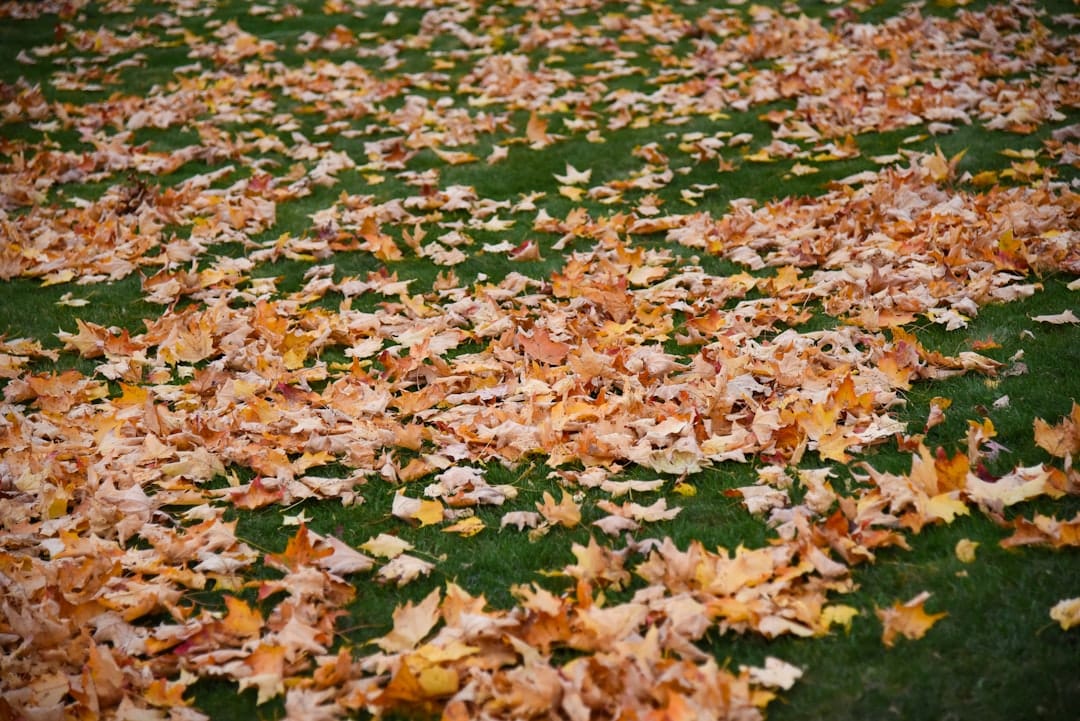
Lawn leaf clean up is more than a cosmetic chore; it’s essential for maintaining a healthy lawn. When autumn leaves pile up, they form a suffocating blanket that blocks sunlight, traps moisture, and invites disease.
Quick Answer: The 3 Best Leaf Cleanup Methods
- Mulching – Chop leaves with a mower (fastest, feeds your lawn).
- Blowing – Gather leaves with a leaf blower (efficient for large yards).
- Raking – Manual removal with ergonomic tools (budget-friendly, good exercise).
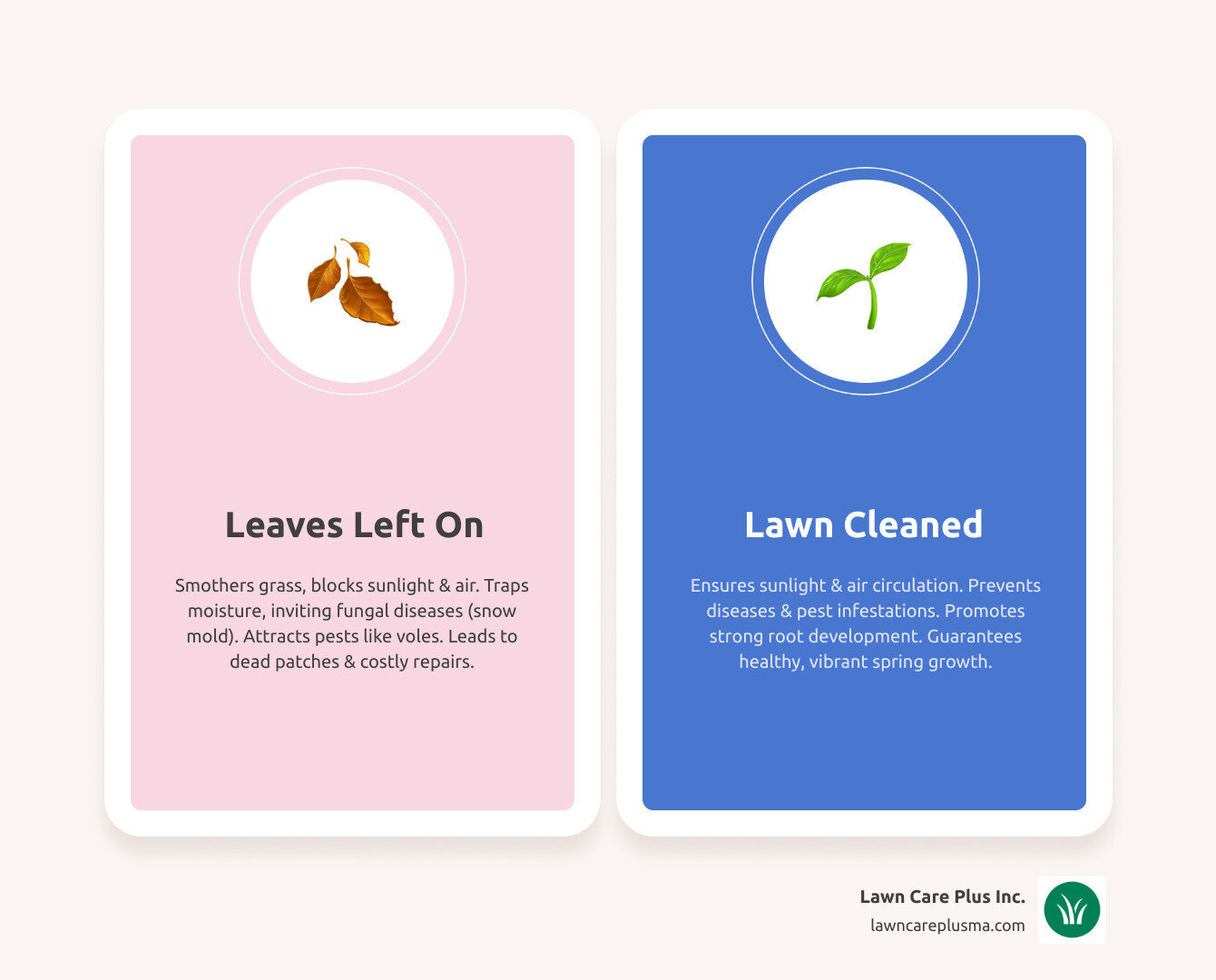
While light leaf coverage (10-20% of lawn area) is manageable, thick layers require complete removal to prevent grass damage. A dense mat of wet leaves blocks sunlight and air, creating ideal conditions for fungal diseases like snow mold. This can kill grass, leading to expensive repairs in the spring.
With the right approach, leaf cleanup is manageable. Whether you do it yourself or hire professionals, understanding your options is key. Professional lawn care companies use specialized equipment to clear large properties quickly and can spot potential lawn issues before they escalate.
Find more about lawn leaf clean up:
Why Leaf Cleanup is a Non-Negotiable Lawn Care Task
While a yard carpeted in autumn leaves looks beautiful, that thick blanket is suffocating your grass. Lawn leaf clean up is crucial for preventing what lawn care professionals call “grass suffocation.” A thick layer of leaves blocks the sunlight grass needs for photosynthesis, causing it to weaken, yellow, and die.
The problems don’t stop there. Matted leaves create a breeding ground for fungal diseases like snow mold, which can leave dead patches in the spring. This leafy shelter also provides a cozy winter home for pests like voles and mice, which can cause serious turf damage by burrowing and feeding under the snow.
Proper lawn leaf clean up sets your grass up for a healthy spring green-up. While The U.S. Department of Agriculture suggests a limited amount of leaves can be beneficial for wildlife and soil health, the key is moderation.
How Many Leaves Are Too Many?
The golden rule is simple: if you can’t see your grass through the leaves, you have too many. Aim to keep leaf coverage at 10-20% or less. A light sprinkling can add beneficial organic matter, but a thick carpet prevents air circulation, traps excessive moisture, and blocks sunlight. If you’re stepping on more leaves than grass, it’s time for action. Understanding this balance is key to year-round property care. More info about Landscape Maintenance services can help you keep your property looking its best.
Preparing Your Lawn for Winter
Winter preparation is about more than tidiness. Clearing excess leaves allows your grass to breathe, ensuring water and nutrients reach the soil for root strengthening during dormancy. Think of fall cleanup as an investment in next year’s lawn. Grass roots need to store energy to survive freezing temperatures, and a buried lawn can’t absorb late-fall fertilizer applications.
Healthy turf entering winter is better equipped to handle the stress, making it less susceptible to disease, pests, and winterkill. Proper seasonal lawn care in the fall saves you from expensive repairs in the spring and ensures a lawn that’s ready to green up beautifully. Read about our Spring Yard Clean Up services to see how fall prep simplifies spring maintenance.
The Top 3 Methods for Effective Lawn Leaf Clean Up
You have three proven strategies for lawn leaf clean up, each suited to different yard sizes, leaf volumes, and available tools.
The Classic Approach: Raking Leaves
Raking is a reliable method for lawn leaf clean up, especially for smaller yards. It’s quiet, inexpensive, and allows you to clean precisely around flower beds and trees. However, raking is slow and physically demanding, particularly on large properties.
For better results, use an ergonomic rake and gather leaves onto a large tarp to move them easily. Always work with dry leaves and rake in the direction of the wind to save effort. For more strategies, see our guide on how to Clean Up Leaves in Yard with these tips.
The Power-Up: Using Leaf Blowers and Vacuums
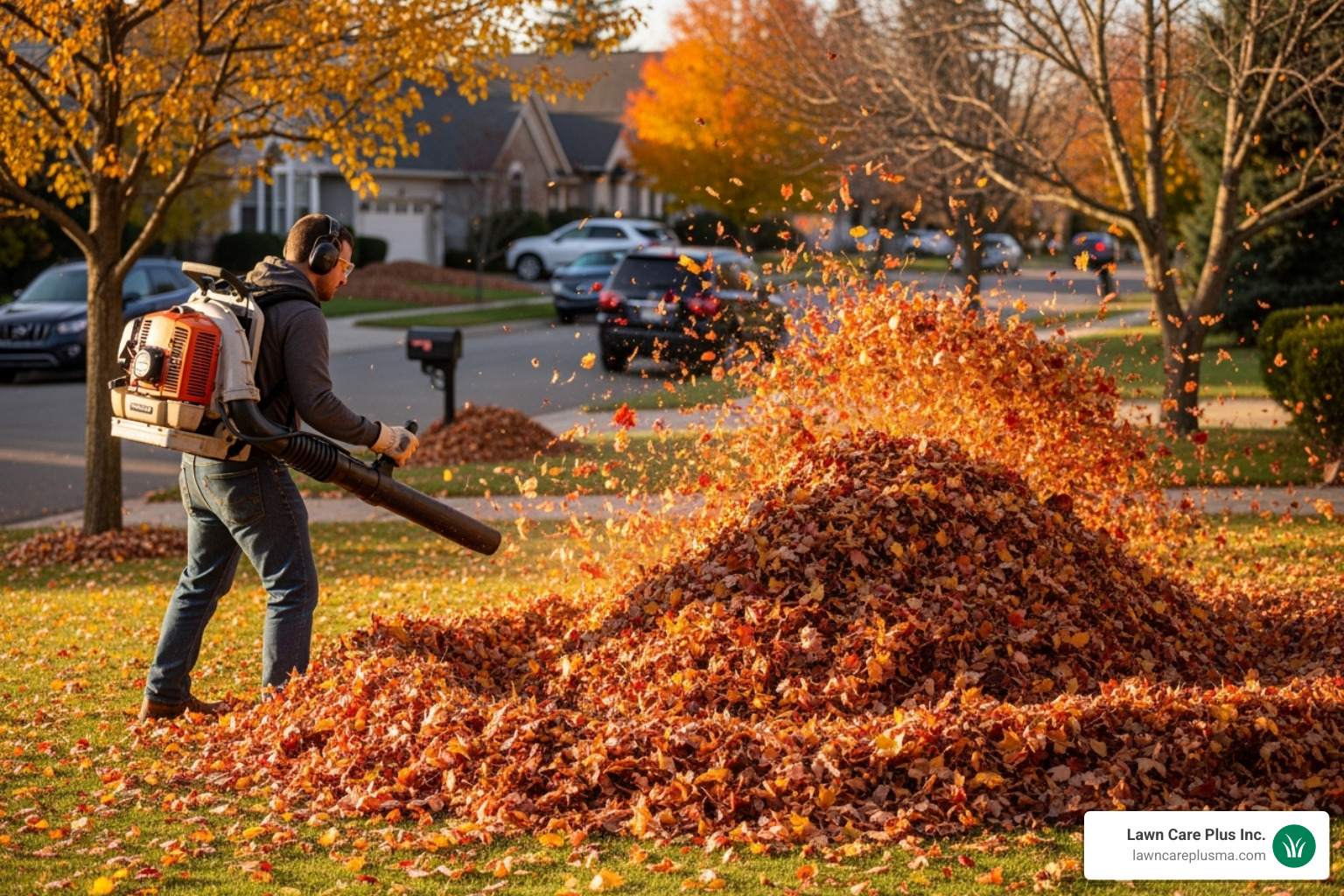
Leaf blowers and vacuums can transform hours of raking into a quick, efficient operation. Blowers are ideal for moving large volumes of leaves on large properties, cutting cleanup time significantly. The main drawback is noise levels; always wear hearing protection and check local noise ordinances in your Massachusetts town.
When choosing between gas vs electric, gas models offer more power and mobility but are heavier and produce emissions. Electric models are quieter and cleaner, but battery life can be a limitation. Leaf vacuums are excellent for detailed work, as they suck up and shred leaves into a collection bag, but they can clog with wet leaves. Many tools offer 2-in-1 or 3-in-1 functions for maximum versatility.
The Eco-Friendly Choice: Mulching Leaves into Your Lawn
Mulching leaves with your mower is the smartest and fastest method, turning waste into a gift for your lawn. Shredded leaves act as a natural fertilizer, adding valuable organic matter that improves soil structure and soil health.
While a lawn mower with mulching capability is most effective, any mower with sharp blades will work. Set your mower deck to its highest setting (around 3 inches) and work with dry leaves. The goal is to chop leaves into dime-sized pieces that fall between grass blades, which may require several passes. Keeping your blades sharp is crucial for a clean cut and rapid decomposition. For comprehensive care, Learn about our Lawn Care Services.
Comparison of Leaf Cleanup Methods
This table compares the three main lawn leaf clean up methods:
| Method | Effort | Cost (Tools) | Speed (for large yards) | Lawn Benefits |
|---|---|---|---|---|
| Raking | High (physical, tiring) | Low (rake only) | Slow | Minimal (clears debris, prevents smothering) |
| Blowing | Medium (less physical, noisy) | Medium to High (blower/vac purchase) | Fast | Minimal (clears debris, prevents smothering) |
| Mulching | Low to Medium (mowing, multiple passes) | Medium (mower, mulching blade) | Fast | High (natural fertilizer, soil improvement) |
Many homeowners combine methods, such as mulching light areas and blowing heavier leaf deposits. The goal is to manage leaves before they harm your grass.
Smart Disposal: What to Do with Piles of Autumn Leaves
Once your lawn leaf clean up is done, you need to decide what to do with the piles. Leaves can be a valuable resource for your garden, but sometimes complete removal is the best choice.
Turning Leaves into Garden Gold
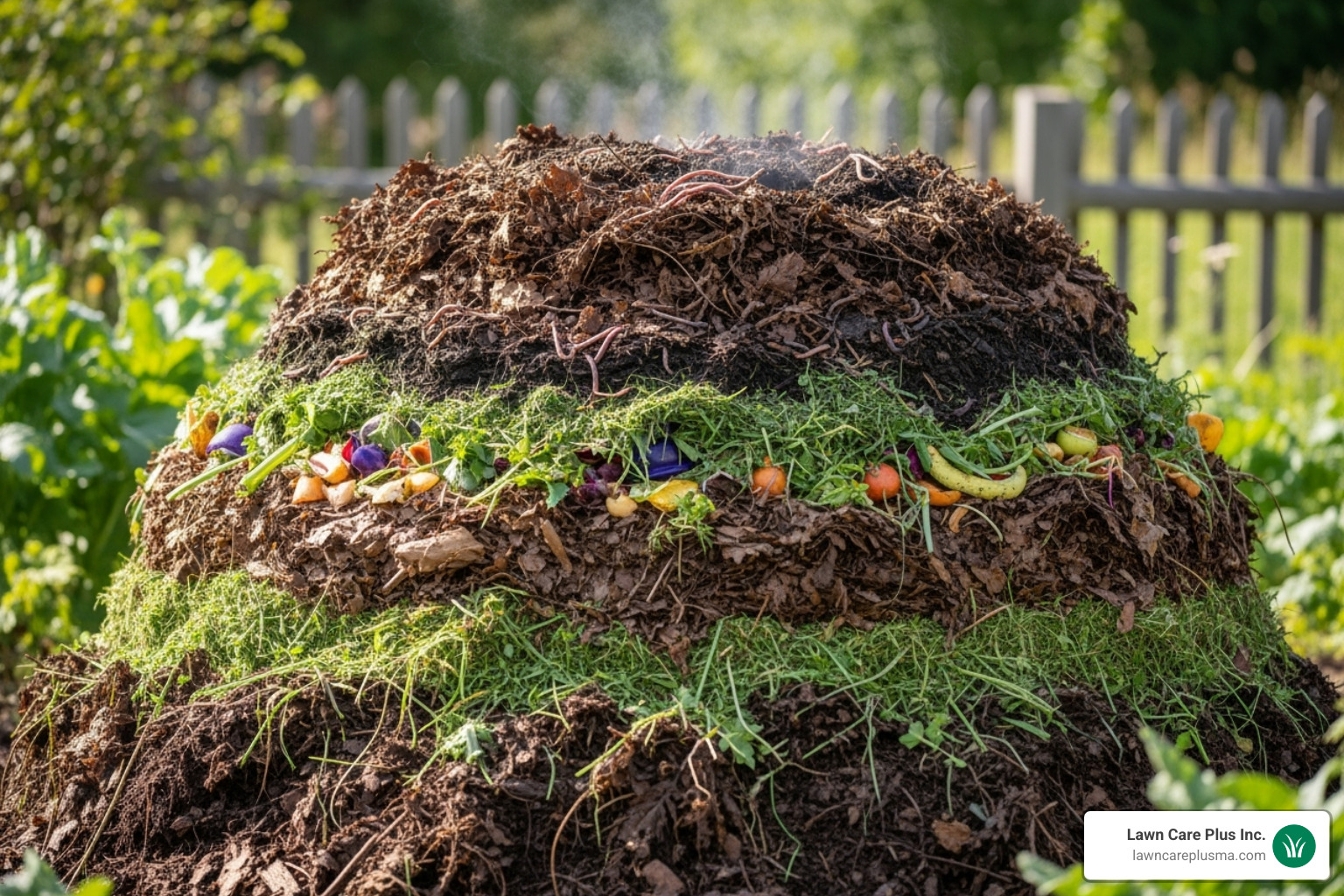
Collected leaves are “garden gold” that can enrich your soil.
- Composting: Leaves are a perfect high-carbon “brown” material for your compost pile. Shredding them first speeds up decomposition, creating rich compost in about 3-6 months.
- Leaf Mold: A simpler alternative is to pile leaves in a bin, keep them moist, and let them decompose over 6-12 months. The resulting leaf mold is excellent for improving soil structure and water retention.
- Natural Mulch: Use shredded leaves as mulch around flower beds and trees to regulate soil temperature, conserve moisture, suppress weeds, and provide winter protection for plants and beneficial insects.
When and How to Remove Leaves Completely
Complete removal is necessary when leaf coverage exceeds 10-20%, as a thick layer will smother grass. You should also remove leaves from trees that had fungal diseases to prevent spreading pathogens. For safety, clear leaves from walkways and driveways where they become a slippery hazard when wet.
For disposal, check your local regulations in the Boston Metro-West area. Many towns offer curbside collection, usually requiring paper yard waste bags. You can also take leaves to local disposal facilities. For large volumes or for convenience, professional services can handle collection and disposal. Never put leaves in the street, as this can clog storm drains.
For professional help with yard debris, explore our Find Brush and Leaf Removal Near Me services.
DIY vs. Professional Lawn Leaf Clean Up: Making the Right Call
Deciding between DIY and professional lawn leaf clean up involves weighing time versus money. The right choice depends on your property size, physical ability, and equipment costs. A small lot may be a satisfying DIY project, but a large, tree-filled property can be overwhelming. Professional services offer convenience and efficiency, changing a leaf-covered yard in hours, which can be more economical than buying and storing equipment you use infrequently.
The DIY Route: Essential Tools for Lawn Leaf Clean Up
If you tackle the job yourself, the right tools are essential for efficiency and comfort.
- Ergonomic Rake: A modern rake with a comfortable grip and wide head covers more ground with less strain.
- Leaf Blower/Vacuum: Essential for medium to large yards, these tools save hours of work. Gas models offer power, while electric versions are quieter.
- Lawn Mower with Mulching Capability: This versatile tool can shred leaves for composting or for decomposing directly on your lawn.
- Tarp and Paper Yard Waste Bags: A tarp is highly efficient for moving large piles of leaves, and paper bags are often required for municipal pickup.
- Safety Gear: Always use protective gloves, safety glasses, and hearing protection (especially with gas blowers).
Hiring the Pros: When to Call for a Fall Cleanup
Professional lawn leaf clean up is the most practical choice in several situations.
- Large Properties: Crews with commercial-grade equipment can clear acres in a few hours, a task that could take a homeowner several weekends.
- Time Constraints: For busy homeowners, hiring a service frees up valuable weekend time to enjoy the fall season.
- Physical Limitations: Leaf cleanup is strenuous. Professionals can handle the labor, protecting you from injury or strain.
- Convenience and Expertise: Pros arrive with all the necessary equipment, handle disposal logistics, and can identify potential lawn health issues you might miss.
While average costs for professional leaf removal can range widely from around $60 to $250 or more depending on the property, these are average costs based on internet data and not actual costs for Lawn Care Plus. The investment often pays for itself in time saved and peace of mind. At Lawn Care Plus Inc., we serve communities throughout the Boston Metro-West area, providing custom quotes for your property’s specific needs. For detailed pricing, Check our Fall Leaf Cleanup Prices.
Frequently Asked Questions about Leaf Cleanup
Here are answers to the most common questions we hear from Massachusetts homeowners about lawn leaf clean up.
Is it really that bad to leave leaves on my lawn all winter?
Yes, it is. A thick, matted layer of leaves smothers your grass by blocking sunlight and air circulation. This trapped moisture creates a breeding ground for fungal diseases like snow mold and provides shelter for turf-damaging pests like voles and mice. This can lead to dead patches and costly repairs in the spring.
What is the fastest way to clean up a yard full of leaves?
For pure speed and lawn benefits, mulching leaves with your lawn mower is the fastest method because it eliminates bagging and disposal. For collection and removal, using a powerful leaf blower to gather leaves onto a large tarp is highly efficient and can reduce collection time by up to 75% compared to raking and bagging.
Can I just mow over the leaves without a special mulching mower?
Yes. Any standard mower with a sharp blade can chop up leaves. However, you may need to make several passes to shred them into dime-sized pieces that can decompose properly. A dedicated mulching mower or blade is more efficient, creating finer pieces in fewer passes. For best results with any mower, raise the cutting height and ensure your blades are sharp.
If you’re overwhelmed by the volume of leaves, our team at Lawn Care Plus Inc. can handle lawn leaf clean up efficiently across the Boston Metro-West area, from Newton to Needham.
Conclusion
Effective lawn leaf clean up is more than just tidying up; it’s a crucial investment in your property’s health. Proper leaf management protects your grass from suffocation, prevents disease, and can even enrich your soil. Whether you choose to rake, blow, or mulch, the key is to select the method that best fits your property, budget, and schedule.
For many homeowners in the Boston Metro-West area, the sheer volume of leaves can be overwhelming. Finding the time and energy for a thorough lawn leaf clean up isn’t always realistic. That’s where Lawn Care Plus Inc. can help.

Our experienced team understands the challenges of a New England fall. We’ve seen the spring damage that results from unmanaged leaves and know how to prevent it. When you choose our professional services, you’re partnering with experts who will prepare your lawn for winter, allowing you to enjoy the season instead of working through it. We serve communities throughout Massachusetts, from Belmont to Watertown, ensuring every property gets the care it deserves.
Ready to enjoy a pristine yard without the hassle? Explore our Spring and Fall Clean Ups services and let us help you achieve the beautiful lawn you deserve.