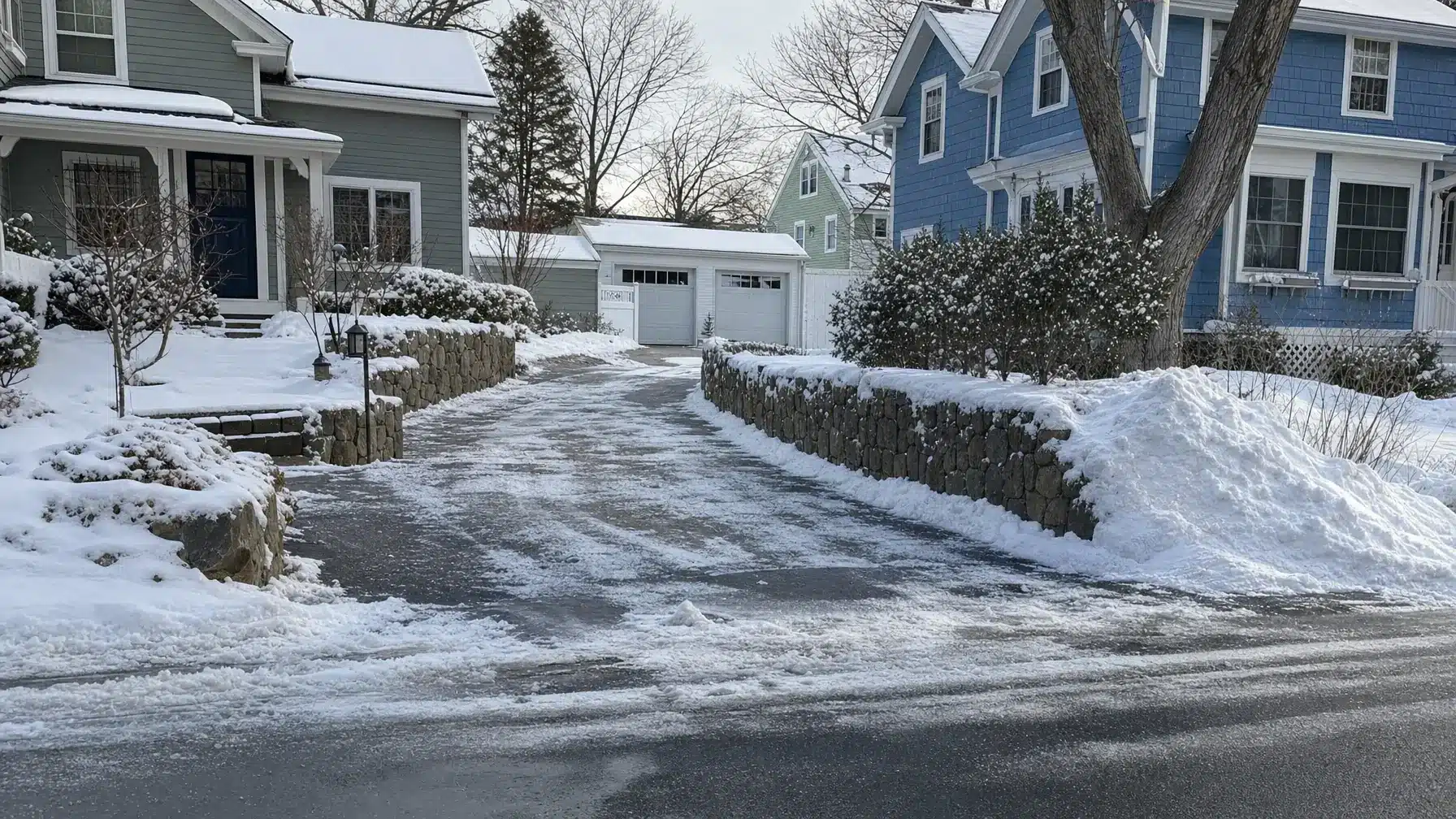
Before arranging snow removal for a shared driveway, neighbors should agree on the areas they want discussed, each household’s access needs, who will contact the provider, and how proposed changes will be approved. Record billing questions and disagreements as well, rather than leaving them for a storm-day conversation.
The useful outcome is a shared discussion note, not a legal agreement or a promise of service. Lawn Care Plus is based in Roslindale, MA, and serves residential and commercial clients throughout Greater Boston and Metro-West. This checklist helps neighboring households prepare a consistent request before discussing whether a provider can accommodate it.
Sketch how the driveway is used
Draw a simple sketch showing the street entrance, shared travel area, parking spaces, garage approaches and paths to household entrances. Label areas by a fixed reference, such as the front entrance or garage door, so everyone uses the same names in messages.
Distinguish areas used by all households from areas used separately. They do not establish property lines, ownership or rights of access. Mark uncertain areas as unresolved rather than drawing a boundary everyone has not confirmed.
- Shared request: identify the driveway sections and connecting routes the households want considered together.
- Separate requests: identify household-specific parking areas, paths, steps or entrances without assuming they belong in the shared service scope.
- Open questions: mark disputed areas, parking conflicts and proposed snow-storage locations that still need discussion.
Record access needs without promising a schedule
Ask each household which routes it uses, where vehicles normally sit and what limits its ability to move them. Include access needs related to mobility, regular departures or use of a particular entrance. Describe the practical need without sharing unnecessary personal or medical details.
Separate a household preference from a provider commitment. A requested departure time belongs in the discussion note, but it is not a confirmed clearing time. Likewise, a parking arrangement that works for the neighbors still needs provider confirmation if service depends on it.
Do not build the plan around moving a vehicle if its owner cannot reliably do so. Record that constraint and ask the provider how it would affect the proposed work.
Choose a contact and define that person’s authority
A designated contact can consolidate questions and share replies, but being the messenger should not automatically mean having authority to change the work or accept added charges. Agree on those roles separately, then ask what contact and authorization arrangements the provider can support.
- Primary contact: who sends the shared request and collects provider responses?
- Backup contact: who handles communication when the primary contact is unavailable?
- Change approval: whose agreement is needed before requesting an added area, a different parking arrangement or another change?
- Household updates: where will replies and confirmed changes be shared so nobody relies on an outdated conversation?
Keep a current shared copy of the note and identify when it was revised. If a household raises a new request separately, bring it back into the shared discussion before treating it as agreed.
Keep provider questions separate from neighbor decisions
Neighbors can agree on what they want to request. Carry these questions forward instead of filling in answers by assumption.
- Covered areas: which labeled driveway sections, parking areas and pedestrian routes could be included, and which would remain outside the scope?
- Vehicle relocation: would vehicles need to move, how would households receive instructions, and how would an obstructed area be handled?
- Snow storage: are the neighbors’ proposed locations workable, and what unresolved access or space constraints need review?
- Visit communication: what updates, if any, are available, through which channel, and who should receive them?
- Changes and billing: who may authorize work, how would changes be documented, and what billing arrangement could the provider accommodate?
Note Label each item as a household decision, a request awaiting provider confirmation or a provider-confirmed item. A neighbor’s approval does not establish service coverage. Ask for confirmed scope and responsibilities to appear in the service documentation.
Discuss billing questions and disagreements before proceeding
Discuss how households intend to handle shared costs and separately requested work, without assuming the provider can split invoices or manage reimbursements between neighbors. Confirm who would receive billing communications and how each household would review a proposed change that affects cost.
Agree on a way to raise disagreements: identify the disputed item, collect each household’s concern and decide what needs clarification before proceeding. If the disagreement involves ownership, easements or legal cost-sharing duties, keep it outside this planning worksheet and seek appropriate guidance. Do not ask the snow provider to decide those issues.
Fill-in shared-driveway discussion worksheet
Copy these fields into a shared note and attach the labeled sketch. Leave unresolved answers visibly open rather than treating silence as agreement.
Household discussion
- Property and participating households: ____
- Sketch labels for shared requests, separate requests and uncertain areas: ____
- Each household’s vehicle access, entry routes and parking constraints: ____
- Who can move vehicles, and known limits on relocation: ____
- Primary contact, backup contact and household update channel: ____
- Approval needed before requesting changes or accepting added costs: ____
- Proposed handling of shared costs, separate requests and billing questions: ____
- Unresolved neighbor concerns, who will follow up and when to revisit them: ____
Provider confirmation record
- Areas and tasks requested; provider-confirmed scope or exclusions: ____
- Parking, vehicle relocation and proposed storage questions; provider response: ____
- Contact, visit communication, change authorization and billing questions; provider response: ____
- Remaining questions, follow-up owner and location of confirmed service documentation: ____
Take the shared note into the provider conversation
Have participating households read the same version before sending it. If service is already arranged, identify the proposed changes separately from existing confirmed scope. Use the residential snow removal walkthrough preparation guide for property-specific preparation, or the residential snow removal options guide if you are still considering service options.
After service begins, keep planning changes separate from reports about a particular visit. The guide to reporting a missed area or property concern after snow removal explains how to document an observed condition. Your shared note should remain the place where neighbors track their decisions and unresolved requests, not a substitute for confirmed service terms.