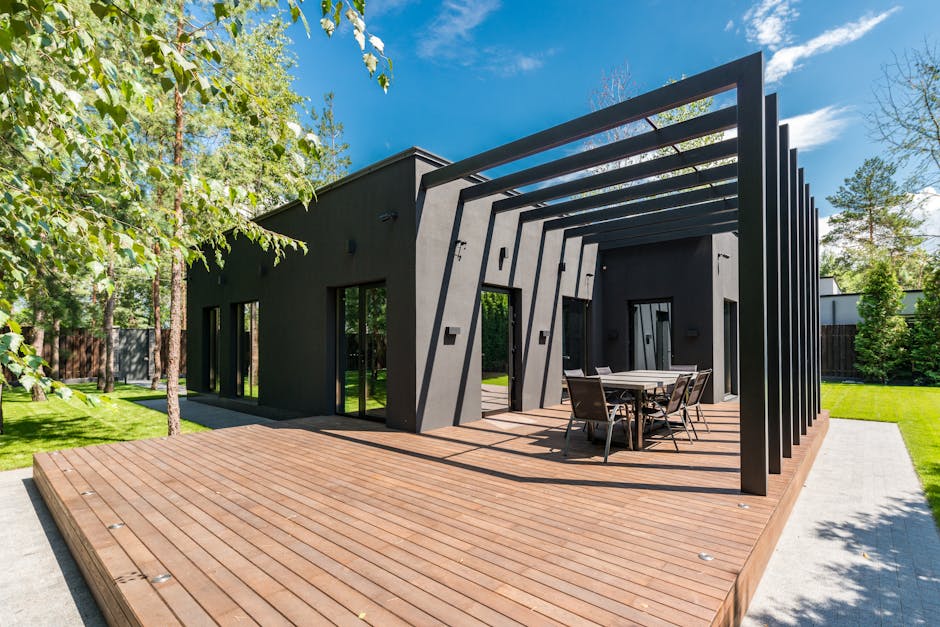
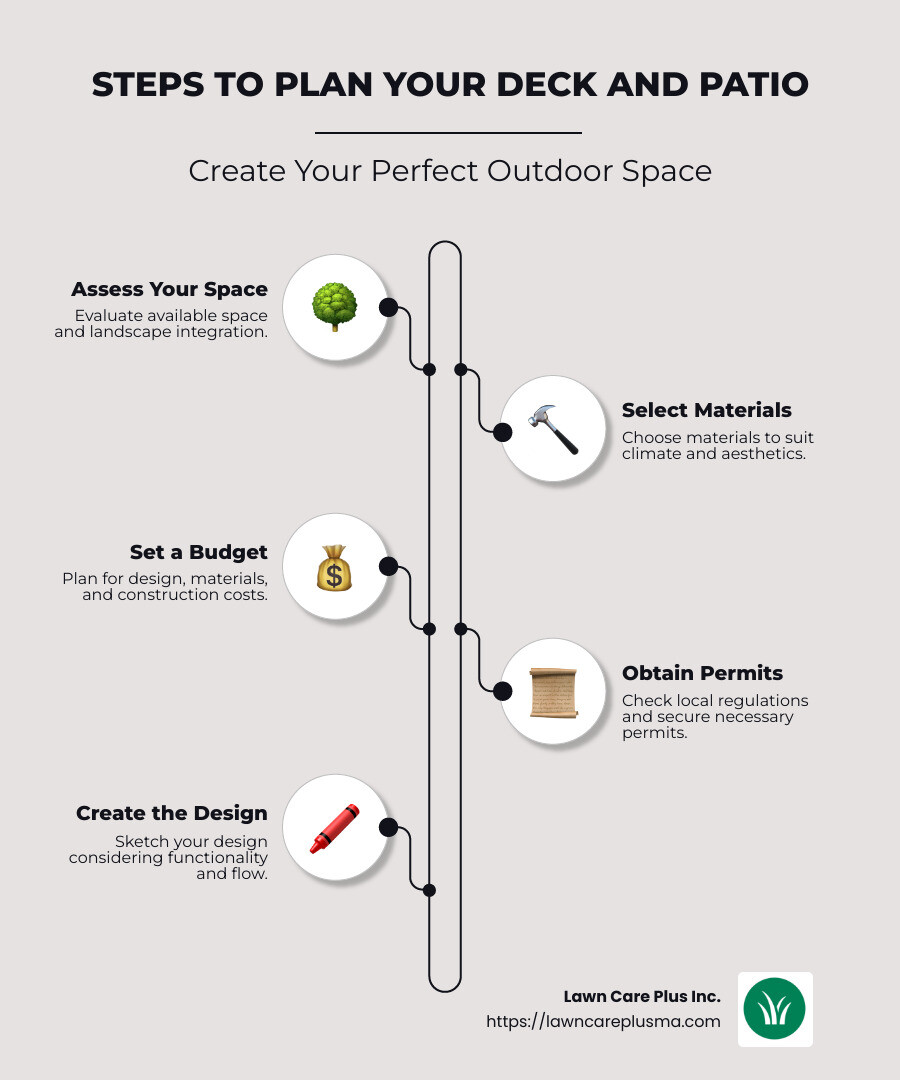
Planning to build a deck and patio is an exciting journey that can transform your outdoor space into an inviting oasis. You’ll want to focus on a few key areas to ensure success:
- Design: Consider your available space, the landscape, and how your deck or patio will blend with your home.
- Materials: Think about the materials that will best suit your climate and aesthetic preferences.
- Budget: Set a realistic budget that encompasses all phases from design to completion.
- Permits: Don’t forget to check your local building codes and obtain any necessary permits.
Cost-wise, prices can range dramatically based on materials and complexity, so planning carefully helps manage expectations.
Building a deck or patio is a way to extend your indoor lifestyle outdoors, perfect for enjoying the sometimes brisk, yet beautiful Massachusetts weather. By strategically planning your project, you can craft a space that is not only functional but also seamlessly integrates with the natural beauty of the Boston Metro-West area. Whether it’s a solo escape or a gathering space for friends and family, your deck or patio can become a cherished extension of your home.
Easy planning to build a deck and patio word list:
– custom decks and patios
– deck building
– outdoor deck builders
Planning to Build a Deck and Patio
Choosing Between Deck and Patio
When planning to build a deck and patio, the first decision is whether to go for a deck or a patio. Each has its own benefits and considerations.
Cost Comparison: Generally, patios are more budget-friendly than decks. Patios, often made of concrete or pavers, can range from affordable to very high-end based on material choice. Decks, particularly those made from premium hardwoods or composites, tend to be pricier. Costs can vary widely, with high-end projects costing up to three times the average.
Maintenance: Decks require regular maintenance, such as sealing and staining, especially if you choose wood. Composite decking is lower maintenance but comes at a higher initial cost. Patios, on the other hand, are generally easier to maintain but might need occasional cleaning and resealing.
Materials: Your choice of materials will affect both the look and longevity of your outdoor space. Decks often use wood or composite materials, while patios can be made from concrete, stone, or pavers. Consider your local climate and aesthetic preferences when choosing materials.
Sketching Your Design
Once you’ve decided between a deck and a patio, it’s time to sketch your design. This step is crucial for visualizing the space and ensuring it meets your needs.
Graph Paper: Start with graph paper to maintain scale. Draw the shape and proportion of your deck or patio, considering the orientation and layout. This helps in visualizing the final look and ensures everything fits perfectly.
Property Landmarks: Include important property landmarks like your house, doors, fences, or any existing structures. This will help you design a space that complements your home and surroundings.
Wrap-Around Deck: If you have the space, consider a wrap-around deck. It not only adds usable floor space but also increases the value of your home. This design allows for multiple entry points and can offer different views of your yard.
Permits and Local Regulations: Before finalizing your design, check local building codes and regulations. This ensures your project is compliant and avoids any legal issues down the road. Obtaining the necessary permits is a must to prevent costly fines or the need to alter your design later.
With a clear design in hand, you’re ready to move forward with your project. Whether you choose a deck or patio, thoughtful planning ensures your outdoor space is both beautiful and functional.

Building Your Deck
Materials and Tools
Building a deck requires the right materials and tools to ensure durability and safety. Here’s what you need to know:
- Pressure-Treated Lumber: This is essential for any deck that will be exposed to the elements. Pressure-treated wood is treated to resist rot and insects, making it ideal for outdoor use.
- Composite Decking: If you’re looking for a low-maintenance option, composite decking is a great choice. It mimics the look of wood without the need for regular sealing or staining.
- Joist Tape: To extend the life of your deck, apply joist tape to the tops of joists and the ledger board. This prevents moisture buildup and protects the wood from rot.
- Joist Hangers: These metal connectors are crucial for securing the joists to the ledger board and beams. Make sure to use the correct size and type for your lumber.
Step-by-Step Construction
Building a deck involves several key steps. Here’s a simple guide to get you started:
- Digging Footings: Begin by digging footings for the deck posts. Footings should be deep enough to reach below the frost line in your area, ensuring stability.
- Installing the Ledger Board: The ledger board attaches the deck to your house. Use structural screws for a strong connection and ensure it’s level. Don’t forget to install flashing to prevent water damage.
- Deck Framing: Once the ledger board is in place, construct the deck frame using pressure-treated lumber. Joists are installed perpendicular to the ledger board using joist hangers for support.
- Installing Joists: Secure the joists into place using joist hangers. Make sure they are evenly spaced and level. This provides a sturdy base for your decking boards.
- Post-to-Beam Connection: For supporting beams, make a notch in the posts to fit the beams. Use 1/2-in. through bolts or screw bolts for a secure connection. The post should bear the weight of the beam, not the bolts.
- Laying Decking Boards: Finally, install your decking boards. For composite decking, follow the manufacturer’s instructions for spacing and fastening. If using wood, remember to leave a small gap between boards to allow for expansion.
By following these steps, you’ll have a solid and beautiful deck ready for enjoyment. Next, we’ll dive into building your patio, covering everything from materials to step-by-step construction.
Building Your Patio
Materials and Tools
Creating a patio provides an inviting outdoor space. Whether you choose a concrete patio or a paver patio, having the right materials and tools is crucial.
- Concrete: Ideal for a smooth, solid surface. Concrete is durable and can be stamped or stained for a custom look. It’s perfect for a seamless patio design but requires a bit more skill to pour and finish.
- Pavers: These are versatile and come in various shapes, sizes, and colors. Pavers allow for creative designs and are easier to replace if damaged. They can be made from concrete, brick, or natural stone, each offering a unique aesthetic.
- Leveling Sand: Essential for creating a stable base for pavers. It helps in leveling the surface and ensures that pavers sit evenly.
- Tools: You’ll need a tamper for compacting the base, a shovel for digging, a level to ensure even surfaces, and a rubber mallet for setting pavers into place.
Step-by-Step Construction
Building a patio involves careful planning and execution. Here’s a straightforward guide to help you through the process:
- Marking the Perimeter: Begin by outlining your patio space with stakes and string. This will guide your excavation and help visualize the final layout.
- Excavating and Leveling: Remove any grass or topsoil within the marked area. Dig down to a depth that allows for the base material and pavers. Ensure the area is level by using a long board and a level.
- Adding the Base: For a concrete patio, pour a gravel base and compact it well before pouring the concrete. For paver patios, spread a layer of gravel, followed by leveling sand. Compact each layer thoroughly.
- Laying Pavers: Start laying pavers from one corner, ensuring they fit tightly together. Use a rubber mallet to tap them into place gently. Maintain consistent spacing by using spacers or a small gap between each paver.
- Leveling and Filling Joints: Once all pavers are in place, check the entire surface for levelness. Adjust as needed. For paver patios, sweep sand into the joints to lock them in place and prevent shifting.
- Finishing Touches: For concrete patios, apply any finishes like stamping or staining while the concrete is still wet. For paver patios, consider adding edging to keep pavers in place and improve the look.
By following these steps, you can create a patio that complements your outdoor space beautifully. Whether you choose a concrete or paver patio, the key is in the preparation and attention to detail.
Next, we’ll address some frequently asked questions about deck and patio construction to help you make informed decisions.
Frequently Asked Questions about Deck and Patio Construction
Should You Build a Deck or Patio First?
Deciding whether to build a deck or a patio first depends on various factors, including cost, time, and maintenance. If your budget is a major consideration, patios generally tend to be more cost-effective. They often require less labor and fewer materials compared to decks. However, if you are looking for a quicker installation, a deck might be the way to go, especially if you choose a simple design.
Maintenance is another aspect to consider. Decks, particularly those made of wood, may require more upkeep, such as sealing or staining, to maintain their appearance and structural integrity. Patios, on the other hand, are generally low-maintenance, especially if constructed with durable materials like concrete or stone pavers.
If your decision is based on the use and aesthetic you desire, think about how you want to use the space. Decks can offer elevation and a view, while patios provide a grounded, seamless extension of your living space.
Is It Cheaper to Build a Deck or Patio?
When it comes to average costs, patios are typically less expensive than decks. The cost of a patio can vary widely based on materials, ranging from basic concrete to high-end stone pavers. Decks, especially those made from premium woods or composite materials, can be more costly due to the need for structural supports and railings.
- Materials: Patios can be constructed with cost-effective materials like concrete, which is durable and versatile. Decks often require pressure-treated lumber or composite materials, which can increase the overall cost.
- Labor: The labor involved in building a patio is often less intensive than that for a deck, which requires framing and possibly more complex construction techniques.
- Average Pricing: On the internet, you might find that the cost of building a patio can range significantly, with the high end being at least three times the average pricing. These are just averages and can vary based on your location and specific needs.
Can You Build a Deck Directly on the Ground?
Building a deck directly on the ground is possible, but there are important considerations to keep in mind. Ground-contact wood is essential to prevent rot and decay. Using pressure-treated lumber designed for ground contact will ensure longevity.
- Substructure: A solid substructure is crucial. Even if the deck is ground-level, you need to ensure proper drainage and stability. This might involve using concrete deck blocks or shed anchors, which can save time and effort compared to pouring concrete footings.
- Height Considerations: Ground-level decks are a great option for creating a seamless transition from indoor to outdoor spaces. However, you must consider any building codes or regulations that might dictate the need for railings or specific structural supports, even for low decks.
By understanding these factors, you can make informed decisions about whether to build a deck or patio first, the costs involved, and the feasibility of ground-level deck construction. Next, we’ll explore how Lawn Care Plus Inc. can assist with your deck and patio projects in the Boston Metro-West area.
Conclusion
At Lawn Care Plus Inc., we understand that planning to build a deck and patio is more than just a construction project; it’s about creating a space that improves your lifestyle and adds value to your home. Serving the Boston Metro-West area, we offer comprehensive services that cover every aspect of your outdoor living needs, from design to execution.
Our team is well-versed in the nuances of local building codes and regulations, ensuring that your project is compliant and hassle-free. Whether you’re interested in a simple ground-level deck or a sophisticated patio with intricate paver designs, we have the expertise to bring your vision to life.
Why Choose Lawn Care Plus Inc.?
- Experience and Expertise: With years of experience in landscaping and hardscaping, our professionals are equipped to handle projects of all sizes and complexities. We take pride in our attention to detail and commitment to quality.
- Comprehensive Services: From lawn maintenance and landscape installations to patios and walkways, we provide a full suite of services. This means you can rely on us for all your outdoor needs, making the process seamless and efficient.
- Local Knowledge: As a Massachusetts-based company, we understand the unique challenges and opportunities presented by the local climate and terrain. This local expertise allows us to tailor our services to best suit your property.
- Customer Satisfaction: Our goal is to exceed your expectations, not just meet them. We work closely with you to ensure that the final result aligns with your vision and improves your outdoor living experience.
If you’re ready to transform your outdoor space, contact us today to learn more about how we can help you achieve your dream deck and patio. Let Lawn Care Plus Inc. be your partner in creating a beautiful, functional outdoor space you’ll love for years to come.