
Plow Season Is Here: How to Protect Your Lawn, Walkways and Plantings from Snow Plow and Salt Damage This Winter
You'll learn how to mark your edges, plan where snow goes, use de-icer with less harm, and shield shrubs and hardscape from plow and salt damage.
The short answer
- Stake driveway, walkway and bed edges with tall reflective markers before the first plowable storm, or at the next thaw if snow has already fallen.
- Pick snow pile spots in advance, away from shrubs, beds, young trees and anywhere meltwater could refreeze across a path.
- Clear snow first and use de-icer sparingly; gentler products and sand make sense near lawns and plantings.
- Screen exposed shrubs with burlap, use plastic-edged shovels on stone and pavers, and flush salty soil with water in spring.
What plows and salt actually do to a yard
Most winter landscape damage comes from two sources: the equipment that moves snow and the products that melt ice. The trouble is that a plow blade or snowblower can't see where the pavement ends once everything is buried, and salt doesn't stay where you put it.
By spring, the damage usually shows up as:
- Scalped turf along driveway corners and walkway edges, where a blade caught the lawn and peeled it back.
- Shifted edging and pavers, including Belgian block, cobblestone borders and the outer row of a paver walkway.
- Chipped steps, caps and wall corners from blades and metal shovels.
- Broken extras such as irrigation heads, landscape lights and mailbox posts near the pavement.
- Crushed shrubs under heavy, compacted snow piles.
- Salt burn: a brown strip of grass along walks and driveways, or evergreens browning on the side facing the street.
Salt hurts plants in two ways. Dissolved in meltwater, it makes it harder for roots to take up water, so plants can act drought-stressed even in wet soil. Spray from plows and passing cars also coats needles and buds directly. Over several winters, sodium can build up in the soil along pavement edges and break down its structure, which is why the same strip of lawn struggles year after year.
Salt damage often doesn't show until mid-spring, long after the storm that caused it, so prevention early in the winter pays off months later.
Stake your edges before the first plowable storm
Edge markers are one of the cheapest ways to protect your lawn. These are tall fiberglass or plastic rods, usually with a reflective tip, that show a plow driver or snowblower operator exactly where the pavement stops.
Where to put them
- Both sides of the driveway, especially at corners and curves where blades tend to cut across the lawn.
- Along walkways that border lawn or planting beds.
- Next to anything low and breakable near pavement: irrigation heads, landscape lights, low walls, granite or block edging, and raised beds.
- At the end of the driveway, where the lawn meets the street.
How to set them
Place each stake on the lawn side, just off the pavement, so equipment stays inside the line. Choose stakes tall enough to stand above the snowbanks you usually get, and space them closely on curves so the edge is obvious at night. Push them into soft soil by hand, or start a pilot hole with a thin metal rod if the ground is firm. Don't hammer stakes into the joints of a paver walkway or between stones, which can crack or loosen them.
Stakes only go a few inches down, but if you know or suspect buried landscape lighting wire, irrigation lines or a utility service along an edge, keep markers clear of that path or ask a professional to place them.
If snow has already fallen at your place, don't skip this step. Set markers at the next thaw, starting with the corners and the spots that got scraped last year. A partial row still prevents a lot of damage.
Snap a quick phone photo of each staked edge so you, or your plow driver, can check the layout if markers get knocked down mid-season.
Decide where the snow will go
Shrubs and beds get hurt far more often by snow piled in the wrong place than by the blade itself. A few minutes of planning before winter takes care of much of it.
Walk your property and pick snow storage spots that are:
- Open lawn or gravel, away from shrubs, perennial beds and young trees.
- Downhill of walkways and driveways, so meltwater drains away instead of flowing across pavement and refreezing overnight.
- Clear of fences, decks, house walls and foundation plantings, which take a beating under heavy piles.
- Out of sightlines at the end of the driveway, so tall banks don't block your view of the street.
Sketch a simple map with the pile spots marked and share it with whoever clears your snow. Point out anything fragile in person: a newly planted tree, a low wall cap, a buried light. If you're still lining up winter service, Lawn Care Plus offers snow management in Boston and nearby towns such as Brookline, Dedham and Wellesley, and a pre-season conversation about piles and markers is worth having with whoever plows your property.
For businesses, the same thinking applies to parking lot islands and entry plantings. Those beds often become default dumping zones, and they're usually the plantings customers see first.
Use less salt, and use it smarter
De-icer works best when it only has to loosen ice from pavement after the snow is cleared. Using less of it is the single biggest thing you can do for your lawn and shrubs.
- Clear snow first. Shovel, blow or plow before tires and foot traffic pack snow into ice.
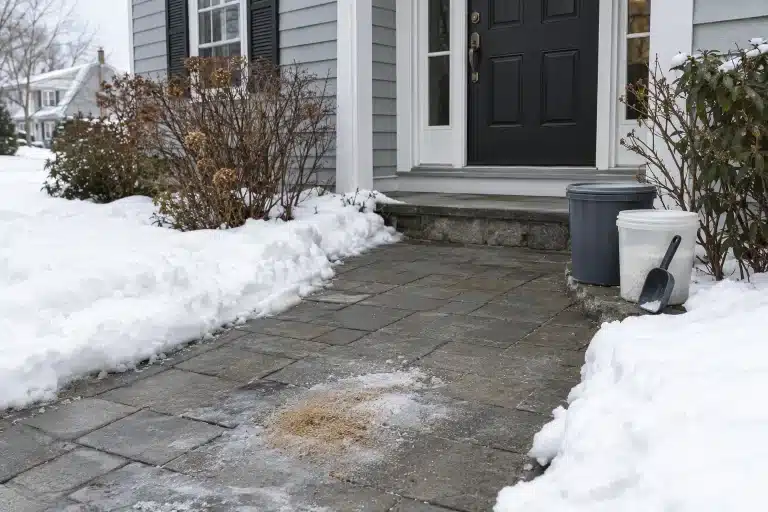
- Spread thinly. A light, even scatter works. Heaps of granules don't melt faster; they just leave more salt behind to wash into the lawn.
- Sweep up leftovers. Once pavement is dry, sweep up undissolved granules and reuse them rather than letting the next melt carry them into the soil.
- Aim the snowblower away from beds. Salty slush thrown onto shrubs does the same harm as road spray.
Alternatives to plain rock salt
- Calcium magnesium acetate (CMA) is generally gentler on plants and concrete. It costs more and works more slowly, so it suits walkways next to prized plantings.
- Calcium chloride and magnesium chloride keep working at colder temperatures than rock salt, so you can often use less. They are still salts, so keep them off plants and lawn edges.
- Sand or fine grit adds traction without melting anything. It's useful on steps and slopes, but plan to sweep it up in spring so it doesn't get tracked indoors or wash into drains.
Read the label before using any product on stone, pavers or concrete. Some de-icers are not recommended for newer concrete or certain natural stone, and your installer can tell you what suits your surface. If you have pets, look for products labeled with pets in mind and wipe paws after walks, since no de-icer is completely harmless.
If a contractor clears your property, ask what de-icer they use and whether a gentler product is an option along walkways that border beds.
Shield shrubs and beds from salt spray and heavy piles
Evergreens near the street or driveway take the worst of winter. Yews, boxwood, arborvitae and similar shrubs hold their foliage all season, so salt spray has plenty to land on.
- Put up burlap screens. Drive a few stakes on the road or driveway side of the shrub and staple burlap between them, leaving a few inches of air space and an open top. Avoid wrapping shrubs tightly, and never use plastic, which traps heat and moisture.
- Tie up upright shrubs loosely. Spiraling soft twine around tall, multi-stem evergreens helps them shed snow instead of splaying open under the weight. Remove it in spring.
- Brush snow off gently. After a heavy, wet storm, sweep snow off branches with an upward motion using a broom. If branches are coated in ice, leave them alone; knocking ice off usually breaks the branch.
- Keep mulch in place but off stems. A layer over the root zone helps moderate soil temperature, but pull it back from trunks and stems.
If a bed along the street loses plants every winter, it may be time to rethink what grows there. Ask a landscaper about salt-tolerant shrubs, grasses and perennials for that strip so you're not replacing the same plants each spring.
Never climb onto a snowbank or ladder to clear tall shrubs or trees; if heavy snow or ice threatens large limbs, call a professional.
Protect walkways, steps and paver edges
Hardscape is tough, but winter tools and freeze-thaw cycles find its weak spots. A few habits go a long way.
- Use a plastic or plastic-edged shovel on pavers, bluestone, brick and stamped concrete. Metal blades catch on slightly raised edges and chip them.
- Don't chop ice off stone or pavers. Ice choppers and hammers crack surfaces and joints. If you just need footing, scatter sand over the ice. If you want the ice gone, apply a light dose of de-icer, give it time to soften the ice, then shovel off the slush.
- Ask about equipment adjustments. On paver driveways and walks, ask whoever clears your snow whether their plow or snowblower can be set to ride slightly above the surface.
- Keep downspout runoff off walkways. Water that drains across a path refreezes overnight, and the cycle loosens joints and invites heavier de-icing.
Check your walkways and steps before the snow gets deep. A loose paver, wobbly tread or lifted edge is a tripping hazard on a good day and harder to spot under snow. Mark it with a stake, steer foot traffic around it, and leave resetting steps or stone treads to a professional, since a poorly reset stair can be more dangerous than the original problem. If a worn walkway or set of steps is past saving and you're thinking about a new one, Lawn Care Plus offers stairs and walkway installations as part of its hardscaping and masonry services. You can request an estimate through the contact page.
If a step or paver is already loose, mark it now rather than trying to reset it in frozen ground.
What to check and fix once the snow melts
Spring is when you find out how well the winter plan worked, and a little follow-up helps the yard recover quickly.
- Flush salty strips. Once the ground thaws, water the lawn and beds along driveways and walks deeply a few times. This pushes salt below the root zone. Steady spring rain helps too.
- Sweep up sand and grit from pavement, lawn edges and around drains.
- Repair scraped turf. If plowed-up chunks of sod are still intact, press them back into place and keep them moist. Where the soil is bare, loosen it and reseed or patch once the soil warms.
- Pull and store markers so they're ready for next fall, and note any spot where damage happened anyway; that's where markers or pile spots need to change.
- Inspect hardscape and fixtures. Look for shifted pavers, lifted edging, chipped steps, and broken lights or irrigation heads before you turn the system back on.
- Wait to prune evergreens. Browned foliage isn't always dead. Hold off until new growth starts, then trim only the branches that stay brown with no fresh buds or shoots.
If the same strip of grass fails spring after spring, a soil test can show whether salt buildup or another issue is the cause. Lawn Care Plus offers spring yard clean ups around Boston, which clear away the leaves and debris left over from winter.
Keep a short note of what got damaged and where; it makes next fall's marker and pile plan quicker to set up.
Common questions
Is it too late to put out driveway markers once it has already snowed?
No. Set them at the next thaw, starting with corners and spots that were scraped in past winters.
What ice melt is safest for my lawn and plants?
No de-icer is completely harmless, so the best approach is to use less of any product. Calcium magnesium acetate is generally gentler on plants and concrete, and sand adds traction without adding salt.
Will my lawn recover from plow damage?
Usually, yes. Scraped turf with roots still attached can be pressed back into place and kept moist, and bare spots can be reseeded or patched once the soil warms in spring. Flushing salt from edge strips with water helps new grass establish.
Should I wrap my shrubs in plastic for winter?
No. Plastic traps heat and moisture against the plant and can do more harm than the cold. Use burlap set on stakes as a screen on the exposed side, leaving air space around the shrub and the top open.
Can I use rock salt on my patio or paver walkway?
You can, but it adds wear. Rock salt lets ice melt into water that soaks into porous concrete, stone and joints, then refreezes, which speeds up surface flaking and chipping, especially on newer concrete. It also washes into nearby lawn and beds. If you use it, apply a thin scatter only after clearing snow, sweep up leftovers, and check the product label and your installer's guidance for your specific surface.