Where Should Snow Be Piled in a Commercial Parking Lot?
Learn how to choose snow-storage locations that keep parking spaces, entrances, sightlines, and meltwater routes working throughout winter.
The short answer
- Choose designated perimeter areas with room for repeated storms and safe equipment access.
- Keep piles away from entrances, accessible routes, intersections, loading areas, and emergency access.
- Check where meltwater will flow before approving a storage location.
- Identify overflow storage and a relocation plan before the main pile becomes a problem.
Start with usable perimeter space
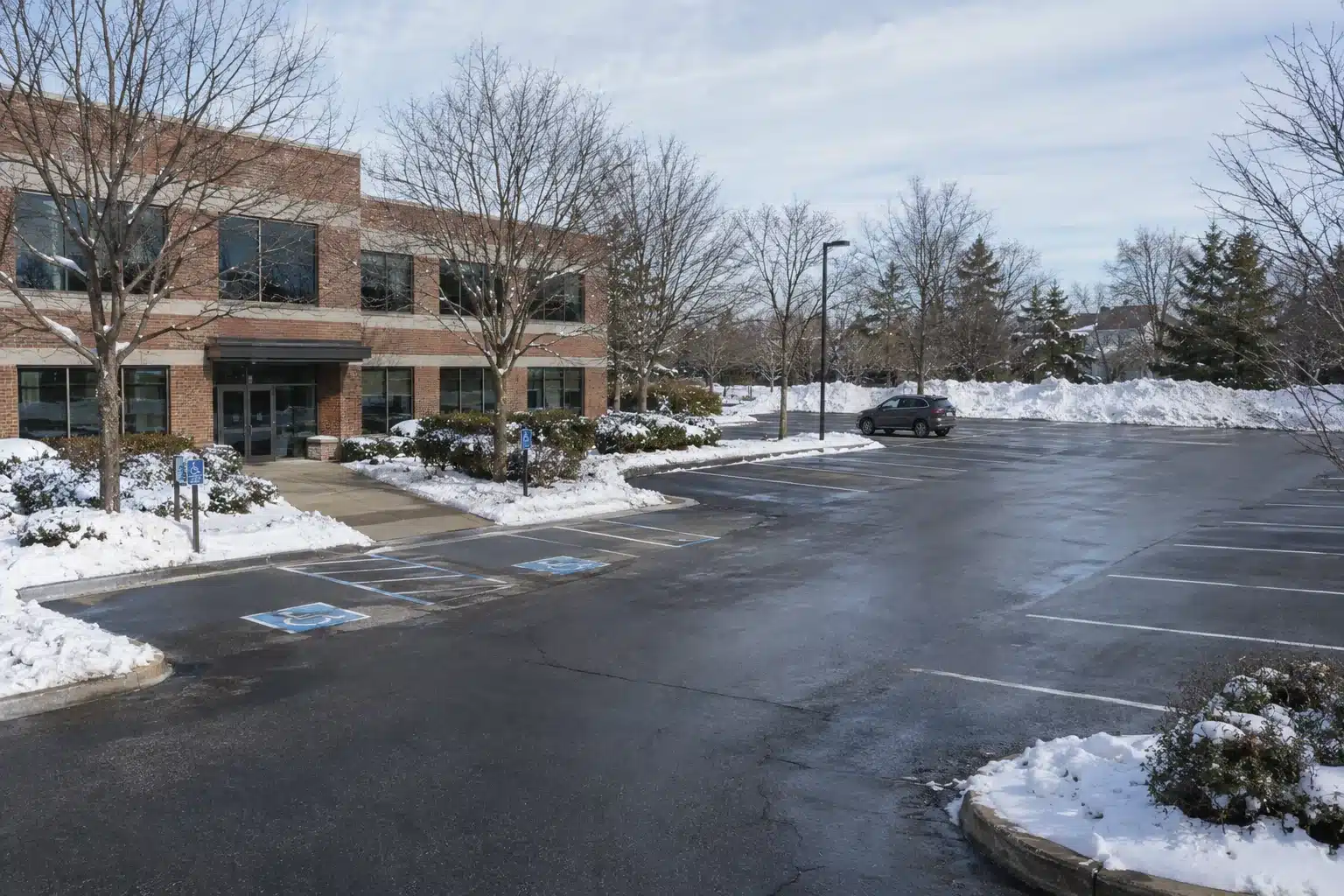
Snow should generally be piled in designated perimeter areas that can hold accumulating snow without interfering with how the property operates. The best location combines available space, clear visibility, a suitable surface, and a meltwater path that avoids busy walking and driving routes.
An unused corner may work, but being empty does not automatically make it suitable. It might sit beside a driveway exit, contain a drainage inlet, or provide access to equipment. A landscaped island can also look convenient while hiding shrubs, curbs, or irrigation components.
Look for broad areas away from building entrances and major traffic movements. Have the snow contractor evaluate whether equipment can reach them without repeatedly crossing pedestrian paths or pushing snow toward parked vehicles. Confirm who controls any proposed storage space, especially in shared shopping centers or office parks.
Lawn Care Plus provides commercial snow plowing and removal in Greater Boston, including Newton. Identifying acceptable storage locations before service begins gives the property owner and contractor a clearer basis for discussing the work.
Mark the areas where piles cannot interfere
Before choosing pile locations, identify the parts of the property that must remain usable. Start with an existing site drawing or aerial image, then mark these areas:
- Driveway entrances and intersections: Preserve views between exiting drivers, approaching traffic, and pedestrians.
- Accessible parking and walking routes: Keep parking spaces, access aisles, ramps, curb ramps, and connecting paths clear.
- Building access: Protect entrance doors, exterior stairs, exit routes, and the space people need when leaving the building.
- Emergency access: Keep hydrants, designated fire lanes, and emergency access routes unobstructed.
- Business operations: Leave loading docks, delivery approaches, dumpster enclosures, and service doors usable.
- Equipment access: Keep snow away from utility equipment, vents, meters, and maintenance access points.
Evaluate visibility from more than one direction. A pile that seems harmless from the building may hide a person approaching along the sidewalk. There is no single pile height that makes every location acceptable; the driveway slope, nearby traffic, and position of pedestrians all matter.
Keep proposed piles off neighboring property and public roads. Do not treat waterways or wetlands as available storage space.
A pile can obstruct a driver's view long before it uses up the available ground space.
Follow the meltwater before approving a location
Snow storage becomes a drainage issue during sunny afternoons, rain, and thawing weather. Water leaving a pile can cross pavement and refreeze after temperatures fall, creating slippery areas beyond the original storage footprint.
Use observations from previous rainstorms and thaws to answer three questions:
- Which direction does water travel from the proposed pile?
- Does that route cross a sidewalk, entrance apron, accessible route, or busy driving lane?
- Can the water reach functioning drainage without the pile covering an inlet or blocking its approach?
The lowest corner of the lot is not automatically the best choice. It may be where water already collects, and a pile there can obstruct drainage. Keep drainage structures identifiable and accessible rather than burying them beneath stored snow.
If the drainage pattern is unclear, ask a qualified drainage professional to evaluate it. Do not open drainage structures or try to redirect runoff toward another property. During winter, observe conditions from a safe, clear walking area; leave icy areas and active equipment zones to the professionals handling the work.
Reserve space for repeated storms and overflow
A storage plan needs room for more than one plowing event. Snow can persist between storms, and piles can spread into nearby spaces as additional snow is pushed into them. Avoid planning around the assumption that everything will melt before the next snowfall.
Identify a primary storage area and a backup. On a tight property, the backup may involve temporarily taking selected parking spaces out of use, provided that choice preserves accessible parking, circulation, and necessary business access. Coordinate that decision with the property manager and affected tenants before snow arrives.
Set practical triggers for changing the plan. Examples include a pile approaching a marked boundary, a narrowing travel lane, obstructed sightlines, or meltwater reaching a pedestrian route. Do not wait until the main area is completely full.
If the property lacks suitable overflow space, discuss professional relocation or hauling with the contractor and confirm what is available. Moving snow elsewhere on-site will only help if the receiving area is suitable. Avoid stacking against retaining walls, fences, trees, or structures, and leave equipment operation and pile reshaping to trained professionals.
Give the contractor a clear storage map
A simple, clearly marked map is more useful than an instruction to put snow “along the back.” Label the primary and backup storage areas, no-storage zones, drainage structures, pedestrian routes, and business access priorities.
Add details that may disappear under snow:
- Hidden edges: Curbs, islands, pavement transitions, and landscaped bed boundaries.
- Vulnerable features: Low shrubs, young trees, irrigation components, and uneven surfaces.
- Operational needs: Delivery schedules, tenant entrances, and dumpster access.
- Decision contacts: Who can approve closing parking spaces or arranging additional snow handling.
Have the contractor review equipment access and identify any areas that need further evaluation. Arrange for appropriate boundary markers before the ground freezes when possible; leave installation to someone who can account for buried utilities and irrigation.
To discuss snow plowing and removal with Lawn Care Plus, request an estimate and share your proposed storage areas and access priorities.
If winter weather has already arrived, use existing drawings and photographs to start the discussion, then verify conditions during a safe, clear-weather visit. Keep everyone out of active plowing areas.
Recheck placement as the lot changes
Even a sensible plan needs adjustments during winter. After a storm, review the lot from safe pedestrian areas once snow-clearing equipment has finished working. Do not climb piles or walk into traffic to check a sightline; have the contractor assess views you cannot safely evaluate.
Look for parking spaces becoming difficult to enter, snow encroaching on access aisles, delivery vehicles losing turning room, and piles spreading toward doors or walkways. During a thaw, watch for runoff crossing busy routes or collecting near entrances.
Report a developing problem while there is still room to correct it. Temporary barriers or closed spaces may be appropriate while the property manager arranges professional snow relocation or ice treatment.
Keep a few dated photos and brief notes showing where piles grew and where runoff appeared. Before the next storm, use those observations to revise the storage boundaries. If a location repeatedly creates icing or visibility problems, remove it from the plan rather than relying on repeated corrective work.
Common questions
Can snow be piled in unused parking spaces?
Sometimes, if the property manager approves and those spaces are outside accessible parking, access aisles, critical sightlines, and necessary travel routes. Check delivery turning movements and meltwater paths before designating them for storage.
Is a grass strip a good place to store plowed snow?
It depends on the strip's size, slope, plantings, and underlying features. A narrow strip may leave little room before snow encroaches on pavement, while equipment and accumulated snow can damage landscaping. Have the contractor evaluate it rather than assuming all lawn areas are suitable.
How close can a snow pile be to a driveway entrance?
Avoid choosing a distance without evaluating the actual sightlines and site conditions. Ask the contractor to assess visibility, and consult your local municipal office about any location-specific requirements.
When should snow be hauled away instead of piled higher?
Consider professional relocation or hauling when piles threaten visibility, access, drainage, or the lot's operating space. Taller stacking is not an automatic solution, especially near structures or where snow could fall into occupied areas.