
Before the First Storm: How to Protect Your Lawn, Walkways and Pavers from Plow and Salt Damage This Winter
Learn the late-fall steps that keep plows, shovels and de-icing salt from scalping your lawn edges and wearing down your pavers, walkways and patio.
The short answer
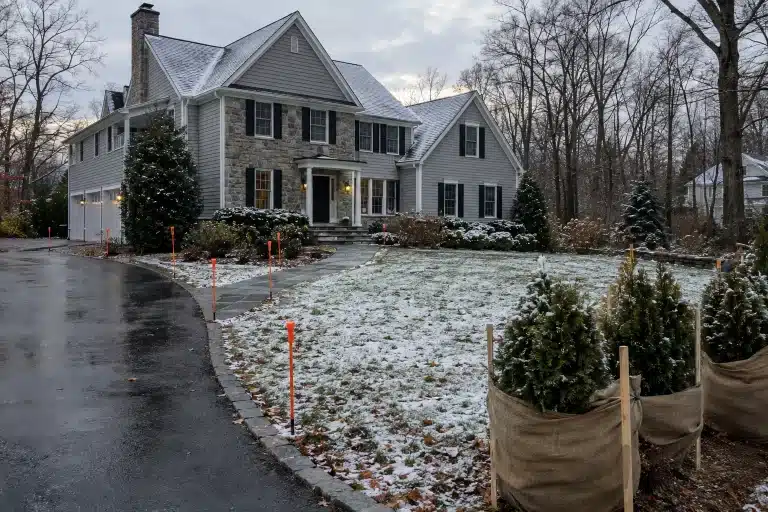
- Set reflective driveway and walkway markers in November, before the ground freezes. Also mark irrigation heads, lights and low walls that a blade could catch.
- Reset lifted pavers, refill joints and finish fall cleanup now. Blades will glide over a smooth surface, and leaves won't hide your edges.
- Shovel first and use de-icer sparingly. Choose gentler options like calcium magnesium acetate or magnesium chloride, or use sand for traction, and keep salty slush off lawns and beds.
- Choose snow pile spots ahead of time, away from shrubs and where meltwater won't run across walks and refreeze. Then walk the property with whoever plows for you.
Why winter is so hard on lawn edges and pavers
Most winter damage around a home doesn't come from the snow itself. It usually comes from three things:
- A plow blade or snowblower that can't tell where the pavement ends.
- De-icing chemicals that soak into soil, stone and concrete.
- Meltwater that refreezes overnight.
On a typical driveway around Boston, the results are familiar: scalped turf along the edges, chipped or popped-up pavers, flaking concrete and stone, and browned-out grass and shrubs where salty slush was thrown or piled.
Most of this is preventable. The best time to act is late fall, while the ground is still soft enough to drive stakes and you can still see where everything is.
Get your pavers, patio and lawn ready
Fix lifted or sunken pavers now
A paver sitting even slightly higher than its neighbors is exactly what a plow edge or metal shovel catches, and that's how pavers get chipped or pulled out mid-storm. Reset and re-level loose or heaved units before winter so blades have a smooth surface to ride over.
Refill the joints
When joint sand washes out, water gets under the pavers, and freeze-thaw cycles push them around. Topping up the joints helps lock the surface together. If you use polymeric sand, follow the label's weather and temperature requirements. Those requirements often rule it out once late fall turns cold and wet.
Consider sealing, but plan ahead
A sealer can reduce how much water and salt some pavers and natural stone absorb. It needs dry, mild weather to cure, so treat it as an early-fall task rather than a December one, and check the paver maker's recommendations first. Our post on patio and paver cleaning, sealing and repairs covers this in more detail.
Finish the fall cleanup
- Remove leaves from the lawn. Matted leaves under snow can smother grass, and they hide the line between turf and pavement.
- Give the lawn a final mow so tall grass doesn't flop over the edges.
- Make sure downspouts and low spots don't send water across walks and driveways, where it will freeze. If you have a chronic icy patch, see how to stop water pooling and icing on a sidewalk.
Choose a de-icer that won't wreck pavers, stone and grass
No de-icer is completely harmless. The goal is to pick a suitable product, use less of it and keep it off your plants. Here's how the common options compare in general terms:
- Rock salt (sodium chloride): Inexpensive and widely sold, but it loses effectiveness in deep cold. The sodium is hard on soil structure, turf and shrubs. Chlorides can also speed up freeze-thaw wear on concrete and some stone, and they corrode metal.
- Calcium chloride: Works at much lower temperatures, so you may need less of it. It can still burn plants when overused and can be hard on concrete.
- Magnesium chloride: Also works in cold weather and is generally considered less harmful to plants than rock salt.
- Potassium chloride: Gentler on vegetation than sodium-based salt, but noticeably less effective in very cold weather.
- Calcium magnesium acetate (CMA): Among the gentlest choices for concrete, stone and plants. It costs more and works more slowly.
- Sand or grit: Doesn't melt anything, but it adds traction and won't harm plants. Sweep it off pavers in spring so it doesn't clog joints or get ground into the surface.
Skip fertilizer-type products that contain ammonium nitrate or ammonium sulfate, because they can attack concrete. Also read "pet-safe" and "plant-safe" claims closely, since the wording isn't standardized.
Use less, more wisely
- Shovel or blow snow first. De-icer should only handle the thin layer left behind.
- Pre-treat lightly before a storm to keep ice from bonding. This usually takes less product than melting bonded ice afterward.
- Spread it evenly with a hand or walk-behind spreader instead of tossing handfuls.
- Sweep up leftover granules once the surface is dry so they don't wash into the lawn.
- Avoid de-icers entirely on concrete poured within the past year, and follow your paver or stone supplier's guidance. Some natural stones, such as certain bluestones and limestones, are more sensitive than concrete pavers.
More de-icer doesn't melt ice faster. Once it dissolves, the extra just ends up in your soil, your plants and the pores of your pavers.
Plan where the snow goes and how it gets moved
Snow piles are heavy, they hold whatever salt was spread, and they melt slowly. Deciding where they go before the first storm prevents a lot of damage.
- Pick pile spots on purpose. Sturdy turf or a gravel area works well. Keep piles off shrub beds, young trees, low walls and the house foundation.
- Think about meltwater. Avoid spots where runoff will flow across a walkway or driveway and refreeze. Downhill of the paved area is usually better than uphill.
- Keep sightlines clear. Tall piles at the end of a driveway make backing out risky.
- Adjust your equipment. On a snowblower, raise the skid shoes slightly so the scraper bar rides just above the pavers. On patios and walks, use a plastic or poly shovel blade instead of bare metal.
- Talk to whoever plows. On paver driveways, a rubber or poly cutting edge, or a blade set slightly higher, reduces scraping. The trade-off is a thin layer of snow left behind for you to treat.
Walk the property with your snow contractor
If you hire out, do a quick walkthrough before the season starts. Point out the markers, the pile spots, any delicate edges or plantings, and which surfaces are pavers or natural stone. Ask what de-icer they use and whether they can work with your preference.
Lawn Care Plus offers snow management, with service-area pages for Boston and nearby towns such as Brookline, Dedham and Newton. Going over these details up front makes the season easier on your property.
Agree on pile locations before the first storm. In the middle of a snowfall, the snow will go wherever is fastest.
Shield beds, shrubs and turf from salt spray
Street plows throw salty slush well onto front lawns and foundation plantings. Evergreens along the road often show it first, as browned needles on the street side.
- Put up burlap screens. Staple burlap to stakes set a little in front of street-facing shrubs rather than wrapping it tight against them. This blocks spray while letting the plants breathe.
- Protect shrubs from snow load. Loosely tie upright evergreens such as arborvitae so heavy snow doesn't split them.
- Don't shovel salty snow onto beds. Throw it onto the pile spots you chose instead.
- Water before the freeze. A deep fall watering helps evergreens go into winter hydrated, so they better handle drying wind and salt.
- Plant for the location next time. If a strip along the driveway struggles every year, salt-tolerant grasses and plants may be a better long-term fit than replacing the same shrubs.
Check for damage and repair early in spring
Even with good prep, a hard winter leaves some marks. Catching them early keeps small problems small.
- Flush salted areas. Once the soil thaws, soak lawn edges and beds near the driveway with plenty of water to push salt below the root zone.
- Repair scalped turf. Rake out debris, press any torn-up sod back into place, then topdress and overseed bare strips.
- Clean the hardscape. Sweep sand and grit off pavers and patios. Then look for shifted or heaved pavers, chipped edges and flaking stone or concrete.
- Pull the stakes once the risk of snow has passed, before the first mow.
Lawn Care Plus offers spring yard clean ups, lawn care, and hardscaping and masonry services. If your property needs attention after winter, request an estimate through our contact page.
Sweep winter grit off pavers early in spring. Left in place, it gets worked into the joints and ground into the surface by foot traffic.
Common questions
Is rock salt safe to use on my paver patio or walkway?
Many concrete pavers tolerate moderate use. However, heavy, repeated salting adds to surface wear, and the salt washes into the lawn and beds beside the pavers. Check your paver maker's guidance, shovel first so you need less, and consider gentler options like calcium magnesium acetate or magnesium chloride. Natural stone and new concrete deserve extra caution.
When should I put out driveway markers?
Put them out before the ground freezes, which in Massachusetts is usually November. Stakes go in cleanly while the soil is soft, and you can still see exactly where the pavement edge, curbs and irrigation heads are.
Can a plow be used on a paver driveway without damaging it?
Yes, with some care. Fix any lifted pavers before winter, mark the edges clearly, and ask that the blade be set slightly higher or fitted with a rubber or poly edge to reduce scraping. Expect a thin layer of snow to remain, which you can treat lightly with de-icer or sand.
How do I fix grass that salt killed along the driveway?
Once the ground thaws, water the strip heavily to flush the salt down, then rake out dead grass and debris. Add a thin layer of topsoil and reseed. If the same strip dies every year, a salt-tolerant grass or a different edge treatment may hold up better.
Does Lawn Care Plus offer both snow management and spring cleanup?
Yes. Lawn Care Plus offers snow management, spring and fall yard clean ups, lawn care, and hardscaping and masonry services, along with residential and commercial landscaping. You can request an estimate through the Contact us page.