
Repair concrete driveway effectively by knowing what signs to look out for and understanding the materials required for a sturdy fix. Concrete driveways offer a reliable and low-maintenance solution for both residential and commercial properties. However, over time, they might show signs of wear that require attention.
Here’s a quick takeaway on how to repair concrete driveway:
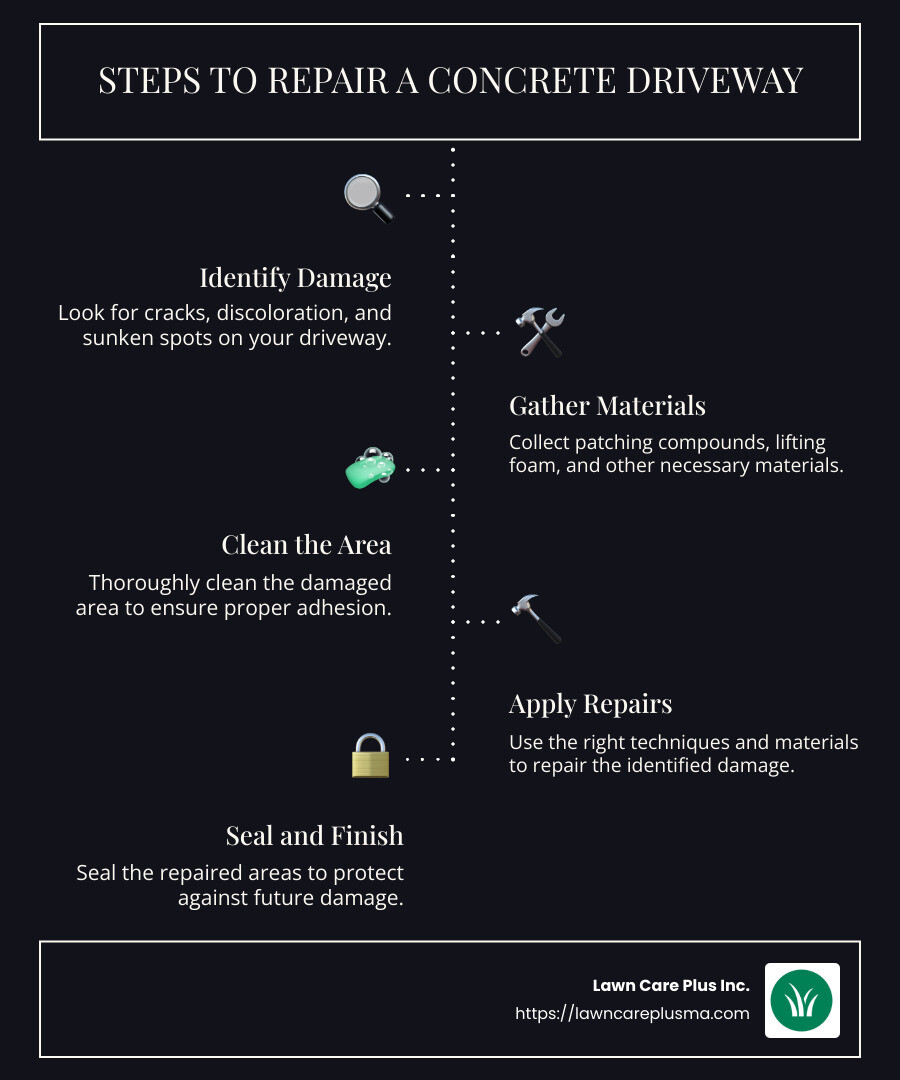
- Identify damage: Look for cracks, discoloration, and sunken spots.
- Gather materials: Obtain patching compounds, lifting foam, and other essentials.
- Follow a plan: Inspect, clean, and address damage using the right techniques.
Concrete is renowned for its durability, lasting up to 50 years when properly maintained. Yet, harsh weather and daily wear can cause issues that must be tackled promptly to maintain the surface’s integrity. One homeowner noted, “After the brutal winter, my wife and I found several locations on our driveway where the concrete is crumbling.” This illustrates the impact extreme conditions can have on even the toughest materials.
By attending to damages early, you prolong the life of your driveway and keep it looking pristine. As the experts at Lawn Care Plus, Inc., we’re here to provide guidance to ensure your outdoor spaces remain functional and attractive year-round.
Basic repair concrete driveway terms:
– asphalt driveway repair
– driveway crack repair
– does replacing driveway a good investment
Benefits of Concrete Driveways
Concrete driveways are a popular choice for many homeowners, and for good reason. They offer several key benefits that make them an excellent investment for your home.
Longevity
Concrete driveways are known for their impressive longevity. With proper maintenance, they can last up to 50 years or more. This means you won’t have to worry about frequent replacements, saving you time and hassle in the long run. Their durability is one of the main reasons why homeowners choose concrete over other materials.
Cost-Effective
While the initial cost of installing a concrete driveway might be higher than some alternatives like asphalt, the long-term savings are significant. Concrete requires less frequent repairs and maintenance, making it a more cost-effective option over time. This means you get more value for your money, as you won’t have to spend as much on upkeep.
Low Maintenance
Concrete driveways are low maintenance, which is a major advantage for busy homeowners. A simple hose down from time to time is usually all that’s needed to keep them looking clean and fresh. Unlike materials that require regular sealing or special treatments, concrete remains attractive with minimal effort.
Added Value
A well-maintained concrete driveway can also add value to your home. Its clean, crisp appearance improves curb appeal, making your property more attractive to potential buyers if you ever decide to sell. Plus, knowing that the driveway is durable and low-maintenance can be a selling point in itself.
Overall, concrete driveways provide a reliable, long-lasting, and cost-effective solution for your home. Their durability and low maintenance needs make them a smart choice for anyone looking to invest in their property’s exterior.
Signs You Need to Repair Your Concrete Driveway
Even the most durable concrete driveways aren’t immune to wear and tear. Knowing the signs of damage can help you address issues before they worsen.
Cracks
Cracks are the most common sign that it’s time to repair your concrete driveway. They can be caused by weather changes, heavy loads, or ground movement. Hairline cracks, though often cosmetic, can let water seep in, leading to more significant damage over time. If you notice larger cracks, especially those wider than 1/4 inch, it’s crucial to take action. These may indicate underlying structural issues that need attention.
Discoloration
Discoloration can make your driveway look old and neglected. It often results from exposure to the elements or spills from vehicles. While it might seem like a minor issue, discoloration can signal surface wear or chemical damage. Addressing it early can prevent further degradation and keep your driveway looking its best.
Sunken Spots
Sunken spots are a serious concern. They occur when the soil beneath the driveway shifts or erodes, causing sections to settle unevenly. This not only affects the driveway’s appearance but can also create trip hazards and drainage problems. If you notice areas of your driveway that are lower than others, it’s time to consider repairs. Lifting solutions, like foam or gravel, can help level these sunken sections.
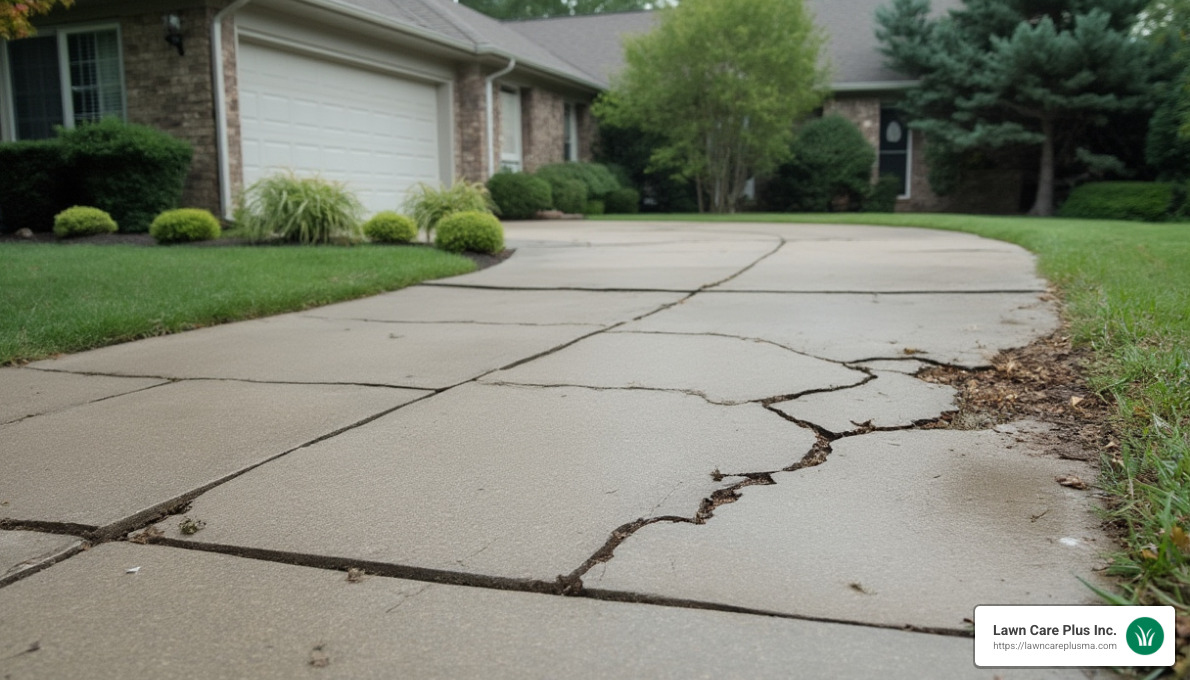
By keeping an eye out for these signs, you can maintain the integrity and appearance of your concrete driveway. Addressing issues promptly will save you from more extensive and costly repairs down the road. Next, we’ll explore how to take on these repairs yourself, using the right materials and techniques.
How to Repair Concrete Driveway
Repairing a concrete driveway might seem daunting, but with the right approach, you can tackle it like a pro. Whether it’s a small crack or a sunken section, here’s how to repair your concrete driveway step by step.
Inspect the Damage
Before jumping into repairs, take a good look at your driveway. Identify the type and extent of damage. Are there small cracks or large gaps? Is the surface discolored or are there sunken spots? Understanding the problem helps you choose the right repair method and materials.
Clean the Area
A clean surface is crucial for effective repairs. Use a broom or leaf blower to remove leaves and debris. For stubborn dirt, a pressure washer can work wonders. Make sure the area is dry before proceeding. This ensures the repair materials adhere properly.
Repair Small Cracks and Holes
For minor cracks and holes, a concrete patching compound is your best friend. Here’s how to use it:
- Prepare the Crack: Remove any loose material with a chisel or screwdriver. Clean the crack to ensure there’s no debris left.
- Apply the Compound: Use a putty knife to fill the crack with the patching compound. Smooth it out so it’s level with the surrounding surface.
- Let it Set: Allow the compound to dry as per the manufacturer’s instructions. Once dry, you can paint over the area if needed.
Repair Large Cracks
Larger cracks require a bit more effort. A concrete repair kit usually contains everything you need. Follow these steps:
- Widen the Crack: Use a hammer and chisel to give the crack an inverted “V” shape. This helps the filler adhere better.
- Insert Backer Rods: For cracks wider than 1/4 inch, use backer rods to reduce the amount of filler needed.
- Fill the Crack: Mix the concrete patching compound as instructed. Use a trowel to fill the crack, ensuring it’s level with the surrounding surface.
- Cure: Allow the compound to cure fully. Follow the curing time on the product for the best results.
Repair Sunken Sections
Sunken sections pose a bigger challenge but can be fixed with lifting foam or gravel:
- Lift with Foam: Inject lifting foam beneath the sunken area. This raises the section to the desired level.
- Fill Voids: Once lifted, fill any voids with sand or gravel. Compact the material to ensure stability.
- Smooth the Surface: If needed, use a sander to smooth out any rough edges around the repaired area.
By addressing these issues with the right materials and techniques, you can restore your driveway to its former glory. Next, we’ll look into the cost considerations for repairing your concrete driveway, helping you decide between DIY and professional help.
Cost Considerations for Concrete Driveway Repair
Repairing your concrete driveway can vary in cost, depending on several factors. Whether you choose to tackle the task yourself or hire a professional, understanding these considerations can help you make an informed decision.
DIY vs. Professional Repair
DIY Repairs:
- Pros: Doing it yourself can be cost-effective, especially for minor repairs like small cracks or holes. With some basic tools like a putty knife and a concrete patching compound, you can handle these tasks with ease.
- Cons: DIY requires time, effort, and a bit of skill. Mistakes can lead to further damage, especially if the repair is not done correctly.
Professional Repairs:
- Pros: Hiring a professional ensures that the job is done right the first time. They have the expertise to handle complex issues like sunken sections or large cracks.
- Cons: Professional repairs are more expensive, but they can save you time and potential headaches down the line.
Factors Influencing Repair Costs
Several factors can impact the cost of repairing your concrete driveway:
- Extent of Damage: Minor cracks are cheaper to fix than extensive damage that requires resurfacing or slab replacement.
- Driveway Size: Larger driveways require more materials and labor, increasing the overall cost.
- Location and Accessibility: If your driveway is hard to access or located in a busy area, it might increase labor costs.
Repair Costs
While specific pricing information is not provided here, it’s important to consider that costs can vary widely based on the factors mentioned above. For example, professional slab replacement can be quite costly, while DIY methods for small repairs are more budget-friendly.
Additional Considerations
- Materials: The choice of materials can affect the cost. High-quality materials may be more expensive upfront but can save money in the long run by reducing the need for future repairs.
- Weather Conditions: Repairing in adverse weather can affect the curing process and may lead to additional costs if repairs need to be redone.
Choosing between DIY and professional repair depends on your budget, the severity of the damage, and your confidence in handling the repairs. Next, we’ll explore common mistakes to avoid during the repair process to ensure your efforts are successful.
Common Mistakes to Avoid
When it comes to repairing your concrete driveway, avoiding common mistakes can save you time, money, and frustration. Let’s explore some pitfalls to watch out for:
Proper Preparation
Skipping preparation is like building a house on sand—it’s bound to fail. Before you start, inspect the damage thoroughly. This means checking for all cracks, holes, and sunken areas. Once you know the extent of the damage, clean the area properly. Remove dirt, debris, and any loose concrete. This helps the repair materials bond better and last longer.
Incorrect Materials
Using the wrong materials is a common blunder. Not all concrete repair products are the same. For small cracks, a concrete patching compound works well. For larger cracks, you’ll need a concrete repair kit. Always follow the manufacturer’s instructions. Using the wrong product or taking shortcuts can weaken the repair and lead to more problems down the road.
Weather Conditions
Weather can make or break your repair efforts. Avoid repairing your driveway in extreme weather conditions. Rain, extreme heat, or freezing temperatures can interfere with the curing process. This can make the repair weak and prone to future damage. Check the weather forecast and plan your repairs for mild, dry days.
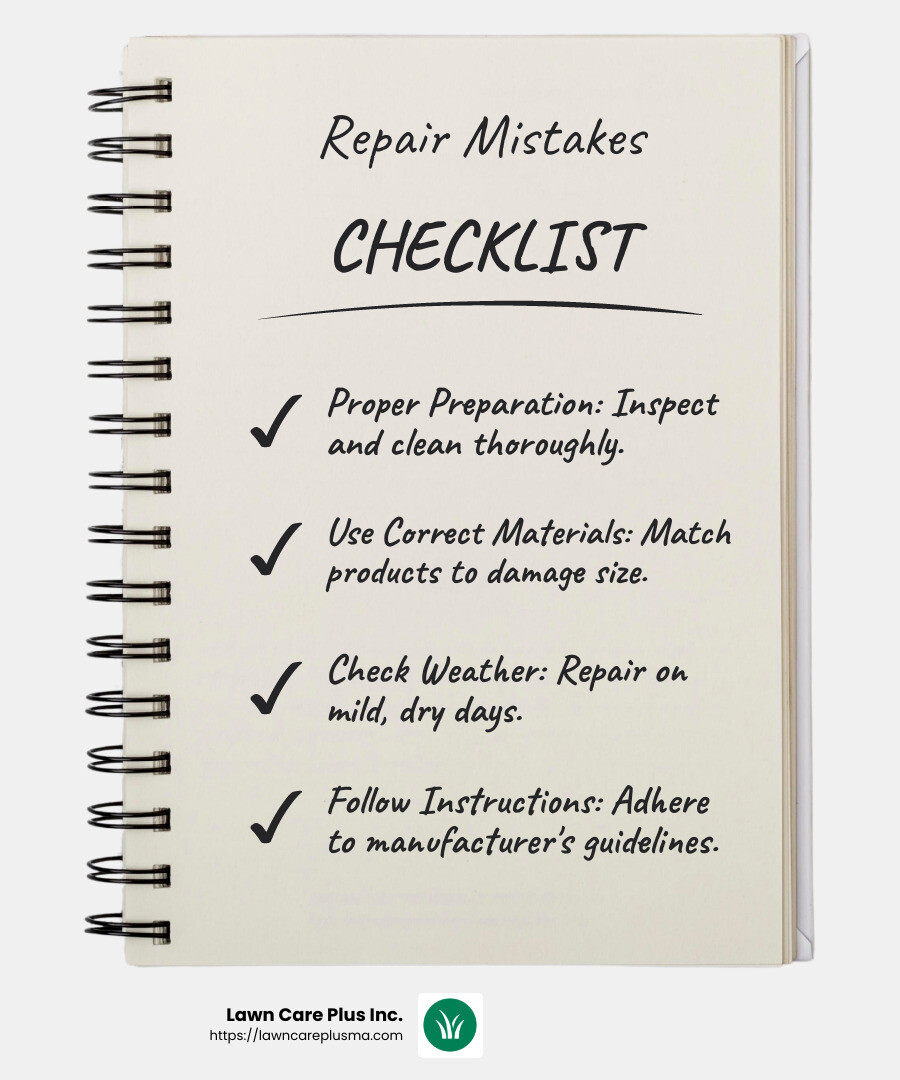
By steering clear of these common mistakes, you set yourself up for success in repairing your concrete driveway. With the right preparation, materials, and timing, your driveway can look as good as new. Next, let’s explore some tips for preventing future damage to keep your driveway in top shape.
Tips for Preventing Future Damage
Once you’ve successfully repaired your concrete driveway, you’ll want to keep it in great shape. Here are some simple tips to prevent future damage and extend the life of your driveway.
Regular Inspection
Regularly inspecting your driveway is crucial. Look for cracks, holes, or sunken spots. Catching these early means you can fix them before they become bigger problems. Make it a habit to walk your driveway every few months, especially after harsh weather.
Sealing Your Driveway
Sealing your driveway is like giving it a protective shield. It helps prevent water from seeping into the concrete, which can cause damage over time. Plan to seal your driveway every two to three years. This simple step can significantly prolong its lifespan.
Use De-Icer Sparingly
In winter, it’s tempting to use lots of de-icer to keep your driveway clear. But too much can harm the concrete. Use de-icer sparingly, and consider alternatives like sand or kitty litter for traction. This helps to avoid chemical damage while keeping your driveway safe.
By following these tips, you can keep your concrete driveway looking great for years to come. Regular inspection, sealing, and careful de-icer use are easy ways to prevent damage and save on future repair costs.
Next, let’s dive into some frequently asked questions about concrete driveway repair.
Frequently Asked Questions about Concrete Driveway Repair
Can I DIY concrete driveway repair?
Yes, you can definitely tackle some concrete driveway repairs yourself, especially if you’re dealing with small cracks or minor issues. For small cracks and holes, a concrete patching compound and a putty knife are often all you need. These repairs are straightforward and can be completed in a couple of hours. However, for larger cracks or more complex issues like sunken sections, it might be best to call in a professional. They have the expertise to ensure the repair is done correctly and lasts longer.
When is my driveway too far gone for repair?
Your driveway might be beyond repair if you notice significant problems like crumbling, numerous large cracks, or severe lifting due to tree roots. Deep cracks or cracks over 1/4-inch wide often signal more serious underlying issues. In these cases, replacing the driveway may be a better option. A professional can assess the situation and recommend whether repair or replacement is the best course of action.
How often should I seal my driveway?
Sealing your driveway is crucial for protecting it from water damage and extending its life. You should plan to seal your driveway every two to three years. This regular maintenance helps prevent water from seeping into the concrete, which can cause cracks and other damage over time. Keeping up with sealing can save you from more costly repairs down the road.
Now that we’ve covered these common questions, you’re well-equipped to handle your driveway’s needs. Whether you’re considering a DIY repair or calling in the pros, understanding when and how to maintain your driveway is key to keeping it in top shape.
Conclusion
A well-maintained driveway offers numerous benefits, including improved curb appeal, increased property value, and long-term durability. At Lawn Care Plus Inc., we understand the importance of keeping your driveway in top condition. Our expert team is here to help you with all your driveway repair and maintenance needs.
Maintaining your concrete driveway not only boosts the aesthetic appeal of your property but also provides peace of mind. By addressing minor issues early and conducting regular maintenance, you can prevent costly repairs in the future. A strong and durable driveway ensures safety for your family and guests by reducing slip hazards and other potential dangers.
When it comes to ensuring the longevity of your driveway, trust the experts at Lawn Care Plus Inc. Our comprehensive hardscaping services are designed to meet your specific needs, whether it’s a simple repair or a complete overhaul. Our experienced team is committed to providing top-notch service and ensuring your satisfaction.
For more information on our services, visit our hardscaping services page. Let us help you pave the way to a beautiful and well-maintained driveway.
