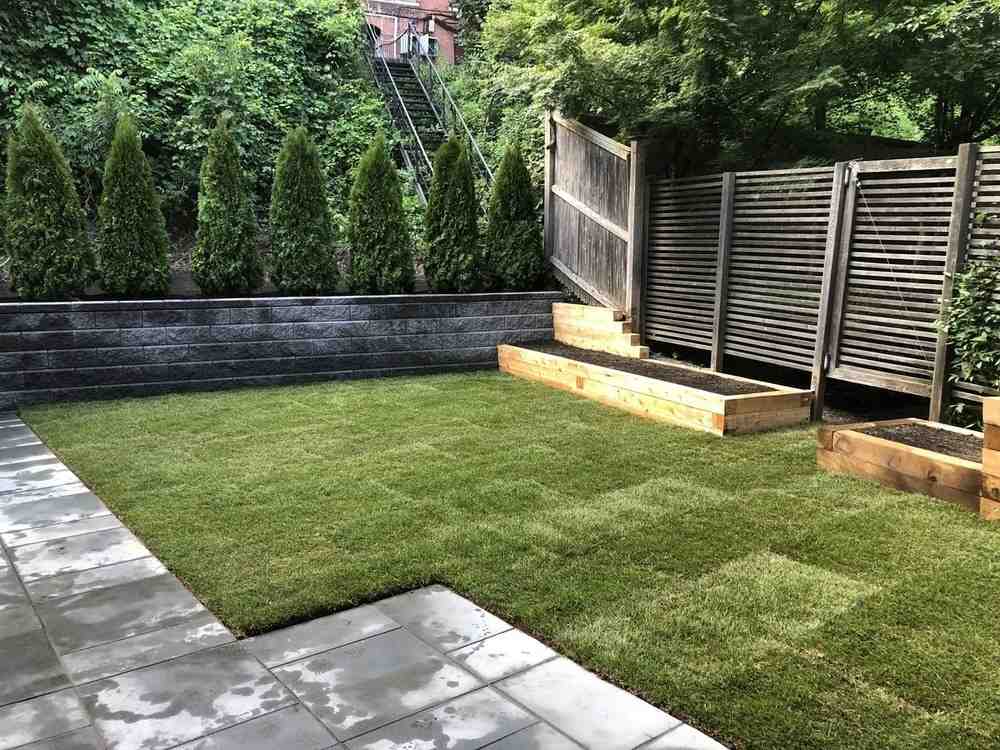
Why Backyard Retaining Walls Transform Sloped Properties
Backyard retaining walls are engineered structures that hold back soil on sloped properties. They create functional flat spaces, prevent erosion, and manage water runoff. These walls serve both practical and aesthetic purposes, turning unusable hillsides into terraced gardens, level patios, or safe play areas while adding property value.
Quick Answer: What You Need to Know About Backyard Retaining Walls
- Primary Purpose: Hold back soil on slopes to prevent erosion and create usable, level areas.
- Height Considerations: DIY-friendly for walls under 3-4 feet; taller walls require professional engineering.
- Essential Components: Proper drainage (perforated pipe, gravel backfill), a compacted base, and staggered block placement.
- Common Materials: Interlocking concrete blocks, natural stone, poured concrete, timber, or brick.
- Key Success Factor: Drainage is critical—saturated soil can exert over 20 tons of pressure on a 4-foot wall.
While the finished look of a retaining wall is important, what happens behind and below it determines its longevity. Poor drainage is the number one cause of retaining wall failure. Saturated soil is incredibly heavy and exerts immense pressure. Without proper drainage—including perforated pipes and gravel backfill—even a well-built wall can lean, bulge, or collapse.
Retaining walls create usable space, a valuable asset on the sloped properties common in the Boston Metro-West area. A well-placed retaining wall can transform an eroding hillside into a stunning terraced garden or expand your patio area significantly.
Building a low retaining wall (under 3-4 feet) can be a great DIY project if you follow proper techniques. However, taller walls, those on steep slopes, or walls supporting heavy loads require professional engineering and installation.
I’m Tim DiAngelis, owner of Lawn Care Plus, Inc. Our team has installed countless backyard retaining walls throughout Greater Boston and Metro-West. This guide will help you understand the fundamentals to make informed decisions and avoid costly mistakes.
Similar topics to backyard retaining walls:
The Purpose and Power of a Retaining Wall
At Lawn Care Plus Inc., we know a backyard retaining wall is more than a stack of blocks; it’s an engineered system designed to battle gravity and soil pressure, turning challenging landscapes into beautiful, functional spaces.
What is a Retaining Wall’s Primary Purpose?
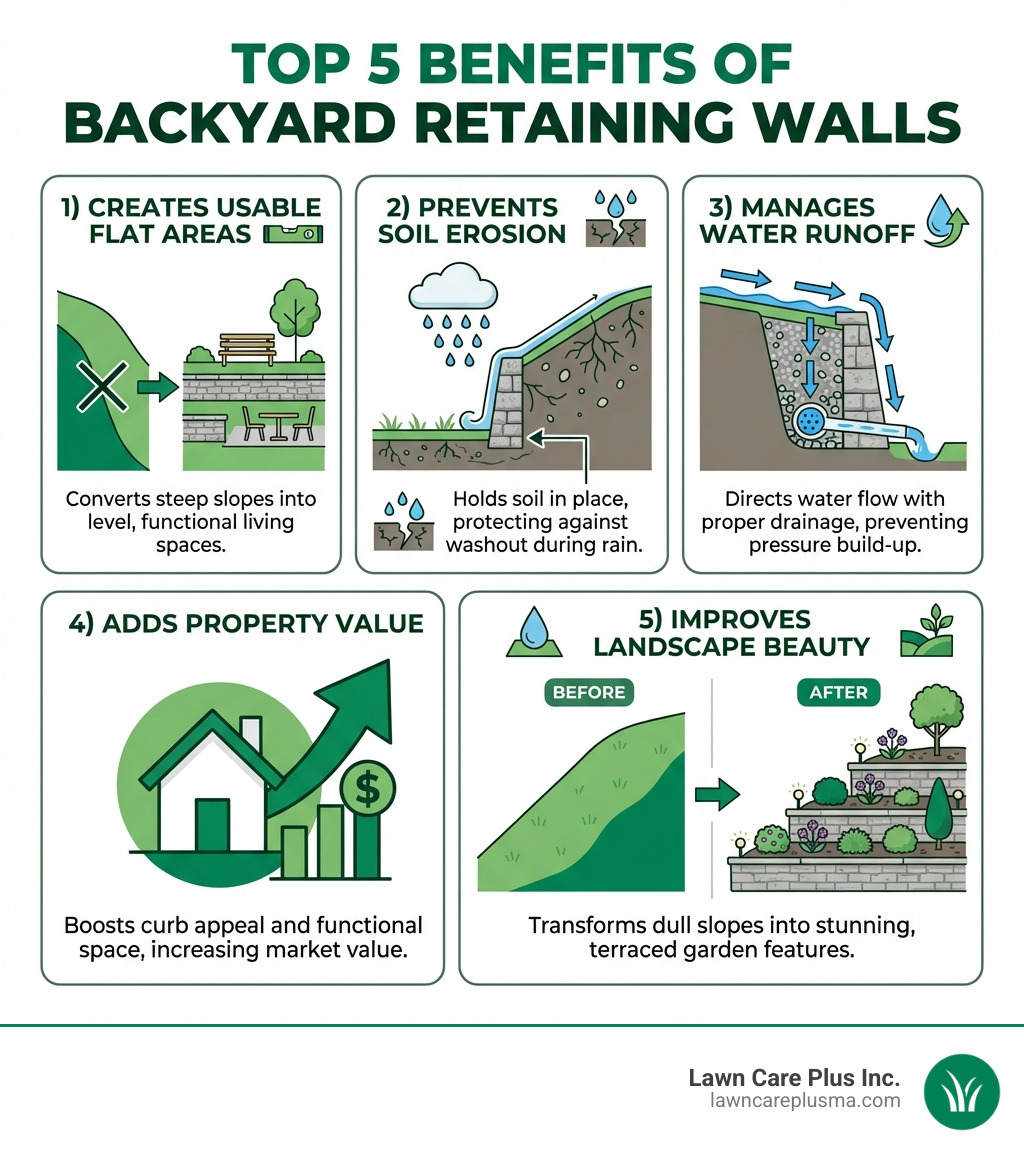
A retaining wall’s main purpose is to hold back soil and prevent its downhill movement on sloped terrain. Without one, gravity and water runoff can cause erosion, leading to unstable ground.
Retaining walls are built to resist the lateral pressure of soil and water, achieving several key goals:
- Preventing Soil Erosion: They protect valuable topsoil and maintain the integrity of your lawn and garden beds.
- Creating Usable, Flat Land: Walls allow for the creation of level tiers on sloped properties, changing inclines into space for patios, gardens, or play areas.
- Managing Water Runoff: With integrated drainage, retaining walls help control water flow, protecting your home’s foundation from excess moisture.
- Providing Structural Support: Footings anchor the wall, providing support that keeps soil from slumping, which is critical near driveways or other structures.
A retaining wall acts as a guardian for your landscape, ensuring stability and maximizing your outdoor space. For more information, explore our hardscaping services.
Retaining Walls vs. Freestanding Walls
While they may use similar materials, retaining walls and freestanding walls have different purposes and structural needs.
| Feature | Retaining Walls | Freestanding Walls |
|---|---|---|
| Primary Function | Hold back soil and resist lateral pressure on slopes. Prevent erosion and create level areas. | Primarily decorative. Define spaces or enclose features without holding back soil. |
| Structural Needs | Engineered to withstand soil and water pressure. Requires a robust foundation (footing), reinforcement, and critical drainage. | Simpler construction. May have a shallow footing or gravel base. Not designed for lateral pressure. |
| Location | Built into a slope, with soil higher on one side. | Typically built on flat ground as a boundary or decorative element. |
| Complexity | More complex due to the forces they resist. Taller walls often require engineering. | Simpler to design and build, as they are not subject to the same structural stress. |
| Common Uses | Terracing a sloped yard, creating raised garden beds, preventing hillside erosion, supporting driveways. | Garden borders, privacy screens, outdoor kitchen enclosures, seating walls, defining patios. |
| Height | Can be very tall. Walls over 3-4 feet typically require professional design and permits. | Usually lower, rarely exceeding 3-4 feet, as their purpose is not structural retention. |
A freestanding wall might border a garden on flat ground, but a retaining wall is needed to create that same garden on a hillside, requiring careful engineering to last.
Planning Your Backyard Retaining Walls Project
Meticulous planning is the cornerstone of any successful backyard retaining walls project. From local regulations to material selection, each step ensures your wall’s longevity and effectiveness.
Key Considerations Before You Dig
Before breaking ground, address these essential points:
- Permits and Local Building Codes: This is non-negotiable. Many Massachusetts communities require permits for walls over 4 feet, and some for shorter walls near property lines. Taller walls may require an architect on site. Always check with your local building department.
- Property Lines: Know your exact property lines to avoid legal disputes with neighbors.
- Underground Utilities: Call 811 before any digging. This free service marks underground utility lines, preventing dangerous and costly accidents.
- Slope and Soil: The steepness of the slope and soil type impact the wall’s design. Clay soil holds water and increases pressure, while sandy soil drains better. A steep slope requires a more robust, engineered solution, possibly with tiered walls.
- HOA Rules: If you have a Homeowners Association, check their guidelines for restrictions on wall height, materials, and aesthetics.
For more detailed guidance, resources like Building a landscape retaining wall can offer valuable insights.
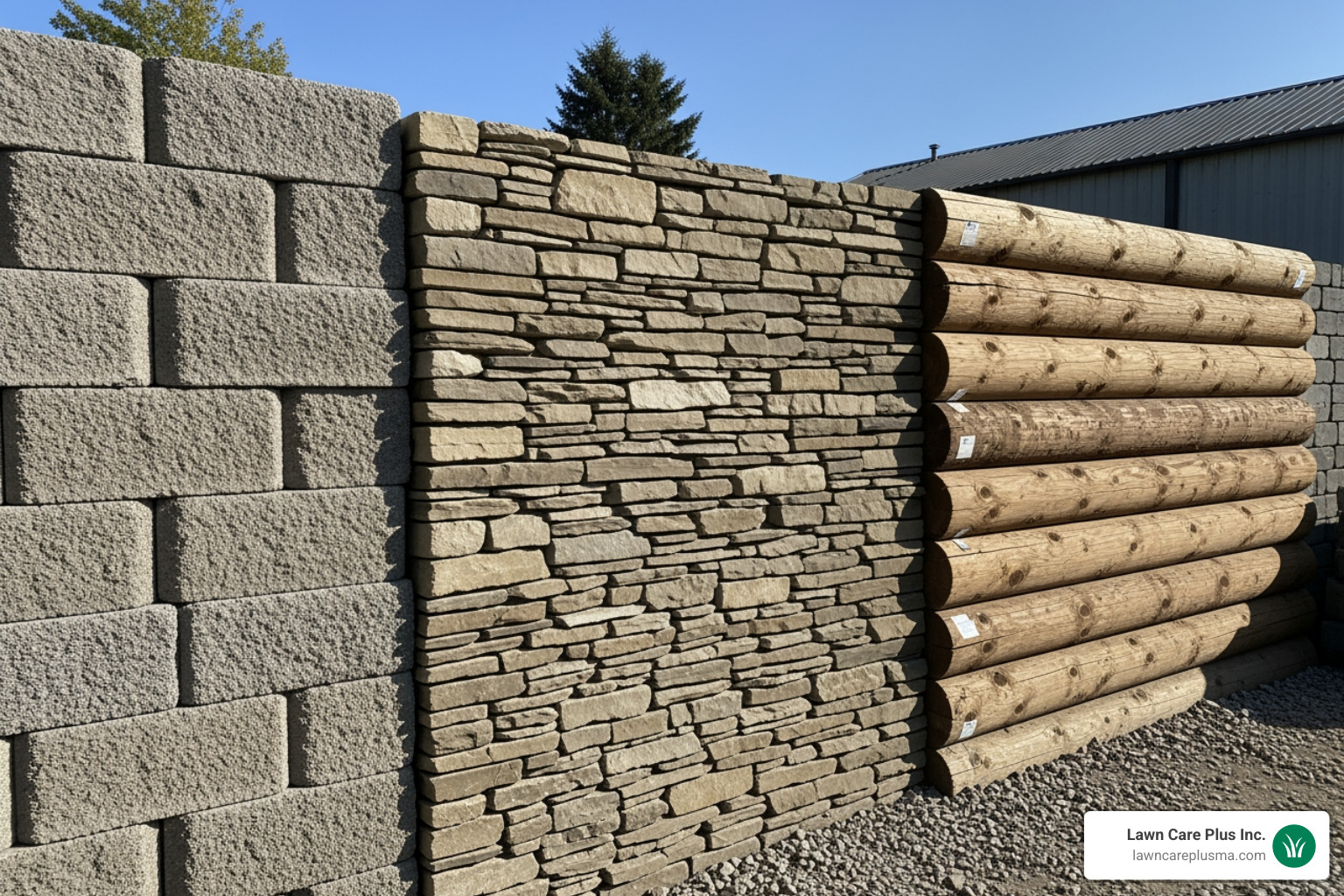
Choosing Materials for Your Backyard Retaining Walls
Your material choice affects both the structure and look of your backyard retaining walls.
- Interlocking Concrete Blocks: A popular DIY choice due to their ease of installation. They are mortar-free, stable, and come in many shapes and colors, often mimicking natural stone.
- Poured Concrete: Extremely strong and durable. While the look is plain, it can be veneered with stone or brick for a more decorative finish.
- Natural Stone (Fieldstone, Flagstone): Offers a timeless, rustic appeal that blends well with New England landscapes. Can be dry-stacked or mortared, but requires significant skill.
- Timber and Wood: Provides a natural, softer look. Pressure-treated lumber is common, but wood has a shorter lifespan (20-40 years) than masonry and requires careful drainage design.
- Bricks: A classic, refined look that can be cost-efficient. However, brick masonry requires a solid footing, proper drainage, and skilled installation for a professional result.
For projects requiring specific aesthetic finishes, our masonry services can help you achieve the perfect look.
Estimating Project Costs
The cost of backyard retaining walls varies significantly based on several factors. According to Angi’s cost guide, the average price is between $3,202 and $9,203, with many homeowners paying around $6,065. Please note, this is an average based on internet data and not actual costs for Lawn Care Plus Inc. We have seen projects range from $2,500 for a small garden wall to over $25,000 for complex, engineered systems.
Key factors influencing cost include:
- Materials: Natural stone is typically more expensive than interlocking blocks.
- Wall Size: Taller and longer walls require more material, labor, and engineering.
- Site Preparation: Difficult access, steep slopes, or major excavation increase costs.
- Labor: Professional installation is a significant portion of the cost but ensures quality.
- Drainage: A robust drainage system is essential and adds to the total cost.
- Permits & Engineering: Fees for permits and professional engineering ($350–$750+ for consultation) are necessary for taller walls.
Prioritizing quality construction over cutting corners will prevent expensive repairs later.
How to Build a Low-Level Retaining Wall: A DIY Guide
Building a low-level backyard retaining wall (under 3-4 feet) can be a rewarding DIY project. While Lawn Care Plus Inc. is here for complex jobs, we’re happy to share the essential steps for a successful DIY build. Always wear safety gear, including gloves, eye protection, and sturdy boots.
Step 1: Excavate and Prepare the Base
A solid, level base is crucial to prevent the wall from leaning or settling.
- Mark the Layout: Use stakes and a line to mark the wall’s path. Plan for the wall to lean slightly into the hill (battering), about 1 inch per foot of height.
- Dig the Trench: Excavate a trench twice the width of your blocks. The depth should bury at least half of the first course, plus 3-6 inches for the base material.
- Add Base Material: Fill the trench with 3-6 inches of angular, crushed gravel. Avoid round rocks that can shift.
- Compact Thoroughly: Use a hand tamper to pack the base material until it’s solid and doesn’t shift when you walk on it.
- Ensure a Level Base: This is the most critical step. Use a long level to ensure the entire trench is perfectly level, both lengthwise and front-to-back. An uneven base will create an unstable wall.
Step 2: Lay the Courses and Stagger the Blocks
With a prepared base, you can start building.
- Lay the First Course: Place the first block on the compacted base, ensuring it’s perfectly level side-to-side and front-to-back. Tap it with a rubber mallet to set it. Continue laying the first course, checking that each block is level with its neighbors.
- Stagger the Joints: For structural integrity, each new course must be staggered, so the block above straddles the joint between the two blocks below it. You may need to cut blocks in half to start alternating courses.
- Cut Blocks for Ends: Use a hammer and masonry chisel or a circular saw with a masonry blade to cut blocks. Always wear eye and ear protection and a dust mask.
- Continue Laying Courses: Lay additional courses, checking for level and staggering the joints. Sweep off debris before placing the next layer.
Step 3: The Crucial Role of Drainage and Backfill
Proper drainage is paramount and prevents most wall failures.
- Understand Hydrostatic Pressure: Water-saturated soil becomes extremely heavy and exerts immense pressure that can topple a wall.
- Install Perforated Drain Pipe: Behind the first course, lay a perforated drain pipe that slopes gently to an outlet where water can drain away.
- Gravel Backfill: After laying each course, fill the space behind the wall with at least 8-12 inches of crushed gravel. This allows water to flow down to the drain pipe.
- Landscape Fabric: Place porous landscape fabric between the native soil and the gravel backfill to prevent soil from clogging the drainage system.
- Tamping Backfill: Compact the gravel backfill in 3-4 inch layers as you build. This prevents future settling.
- Geogrid for Taller Walls: For walls over 4 feet (which require professional engineering), geogrid fabric is laid between courses and extends into the soil to reinforce the entire structure.
By carefully executing these steps, especially the critical drainage components, you can build a low-level retaining wall that stands strong and looks great for years. For deeper insights into building robust structures, refer to resources like How to Build a Retaining Wall.
Creative Design Ideas and Maintenance
Beyond their structural function, backyard retaining walls are incredible tools for enhancing the beauty and use of your outdoor living space.
Creative Design Ideas for Backyard Retaining Walls
Here are some popular ideas we’ve implemented for clients in the Boston Metro-West area:
- Tiered Walls for Terraced Gardens: A series of shorter, tiered walls creates multiple level planting areas, adding visual depth and space for diverse gardens.
- Curved Designs: Gentle curves create a softer, more organic look that complements the natural flow of your landscape.
- Integrated Planters: Build planters directly into the wall to showcase flowers and shrubs at different heights.
- Built-in Seating: Use flat capstones on a sturdy wall to create integrated benches, perfect for a patio or fire pit area.
- Water Feature Integration: A stone wall with a waterfall can create a serene and impressive focal point.
- Outdoor Kitchens and Fire Pits: Use matching blocks to construct the base for grill islands or fire pits, creating a cohesive outdoor living space.
- Highlighting Trees: Build a wall around a mature tree to protect its roots and create a raised bed that makes the tree a centerpiece.
By thoughtfully incorporating these design elements, your backyard retaining walls can become much more than just functional structures—they become integral parts of a cohesive and beautiful landscape. You can see examples of these and other changes in our projects portfolio.
When to Call a Professional
While DIY is possible for small walls, professional expertise is essential in these scenarios:
- Wall Height Exceeds 4 Feet: Taller walls are subject to immense pressure and require permits and engineered designs in Massachusetts.
- Steep Slopes or Poor Soil: If your property has a steep incline, unstable soil, or a high water table, an engineer must design a wall to handle the complex forces.
- Supporting Significant Loads: Any wall supporting a driveway, pool, or building requires professional engineering.
- Tiered Wall Systems: Complex tiered systems need careful design to ensure proper spacing and drainage between levels.
- Near Property Lines or Structures: Building near your home or a neighbor’s property requires precise planning to avoid foundation or boundary issues.
Retaining walls are complex structures designed to wage an ongoing battle with gravity. For walls that are more than just decorative, professional engineering ensures longevity and prevents dangerous failures. For comprehensive guidance on structural integrity, refer to resources like Engineering a Retaining Wall: A Comprehensive Guide.
Potential Risks and Long-Term Maintenance
Even a well-designed and constructed retaining wall needs ongoing attention. Improper construction, in particular, can lead to a host of problems that compromise its stability and appearance.
Potential Risks of Improper Retaining Wall Construction:
- Bulging: A sign of excessive pressure from poor drainage or reinforcement.
- Cracking: Large or horizontal cracks indicate significant structural stress.
- Leaning or Toppling: The most severe failure, usually caused by poor drainage or an inadequate foundation. This is a major safety hazard.
- Drainage Failure: Clogged drains lead to water buildup, pressure, and frost heave.
Long-Term Maintenance for Your Backyard Retaining Walls:
- Annual Inspections: Each spring and fall, check for bulging, leaning, cracks, and erosion.
- Manage Drainage: Keep weep holes and drain outlets clear of leaves and debris.
- Address Cracks: Fill small cracks with masonry caulk to prevent water infiltration. For large cracks, consult a professional.
- Control Vegetation: Avoid planting trees with aggressive root systems too close to the wall.
- Clean the Wall: Periodically clean off dirt and mildew to protect the material.
- Replenish Eroded Soil: If you notice soil eroding from behind the wall or at its base, replenish it with appropriate material and ensure proper grading.
By being proactive with maintenance, you can catch minor issues before they become major problems, ensuring your backyard retaining walls remain both beautiful and structurally sound for decades to come.
Conclusion
Backyard retaining walls are transformative, offering a powerful blend of function and beauty. They solve critical issues like soil erosion while creating valuable, usable space. From terraced gardens to integrated seating, their versatility can reshape your entire backyard.
Understanding the principles of planning, material selection, and drainage is key. While low-level walls can be a DIY project, professional expertise is necessary for walls over four feet, on challenging sites, or those supporting heavy loads to ensure safety and longevity.
A retaining wall is a long-term investment in your property’s value and usability. When built correctly, it will stand strong for decades. For expert design and installation of landscape retaining walls in the greater Boston Metro-West area, trust the experienced team at Lawn Care Plus Inc. to build a structure that is both beautiful and built to last. We’re here to help you retain your sanity and achieve the backyard of your dreams.