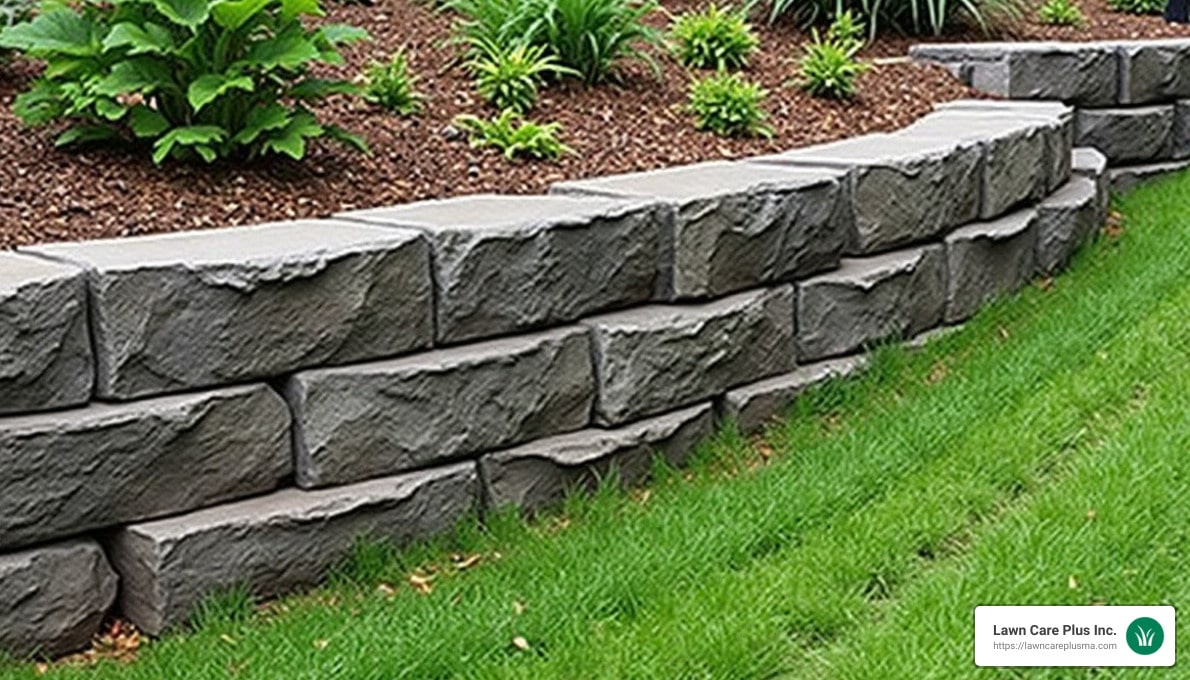
Retaining wall cost is an essential consideration for homeowners looking to improve their property and create functional outdoor spaces. Retaining walls not only provide structural benefits but also lift the aesthetics of your landscape, adding value and usability to your home.
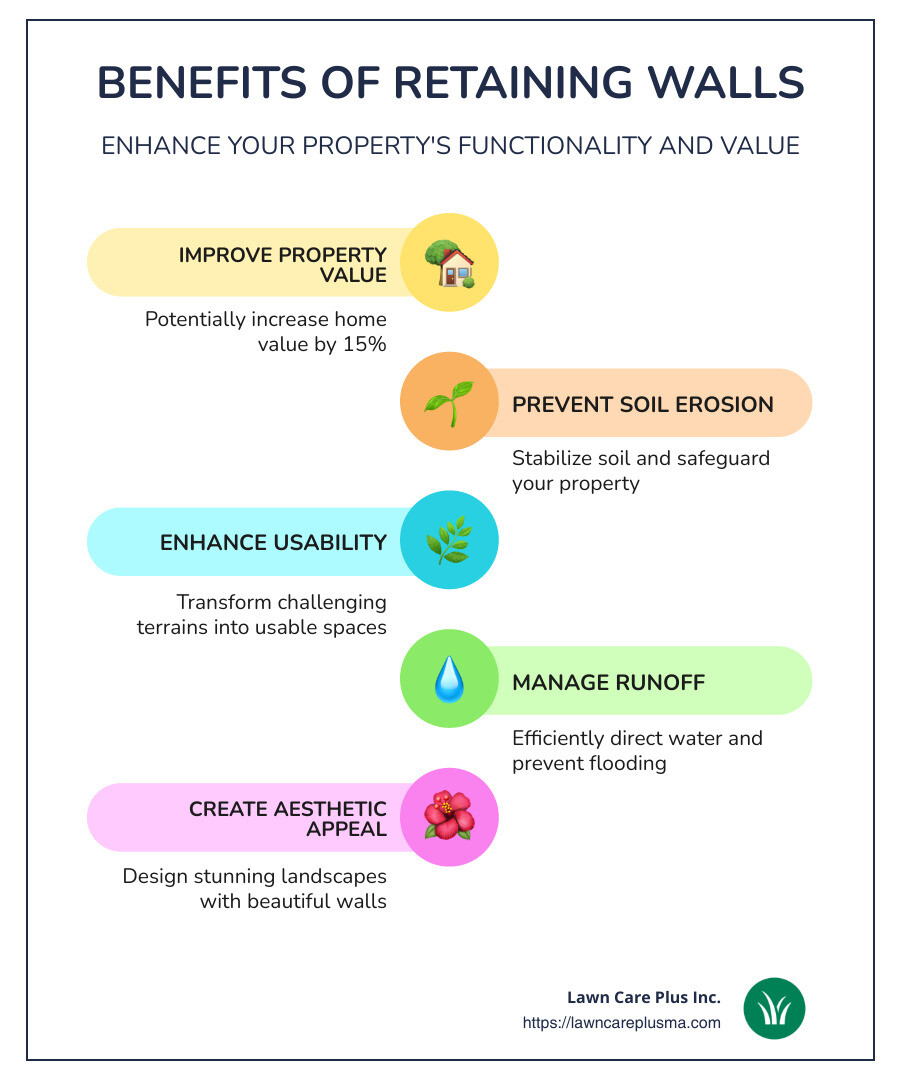
- Improves Property Value: Retaining walls can significantly improve the look of your outdoor space, offering a potential 15% increase in home value.
- Prevents Soil Erosion: Essential for sloped yards, these walls help stabilize soil and prevent erosion, safeguarding your property.
- Improves Usability: They transform tricky terrains into usable lands, perfect for gardens, patios, or simple relaxation areas.
Retaining walls are more than just structures; they offer a gateway to changing your property’s landscape into a beautiful, functional extension of your home. Their ability to manage runoff, support the soil, and create flat, usable spaces makes retaining walls a valuable addition to any home, especially in areas prone to heavy rain or flooding. Understanding the costs associated with building a retaining wall ensures you can make informed decisions suitable for your budget and landscape needs.
Retaining wall cost terms you need:
Understanding Retaining Wall Costs
Key Factors Influencing Cost
When it comes to retaining wall cost, several key factors come into play. Understanding these can help you budget effectively and make informed decisions.
Materials: The choice of materials greatly impacts the cost. Options range from economical choices like concrete to more luxurious materials such as natural stone. Each has its pros and cons, affecting durability and aesthetics.
Labor Rates: Labor costs can vary significantly. For instance, hiring a professional landscaper might cost between $50 and $100 per hour, depending on the complexity and location of the project. If you’re considering a DIY approach, while it may save on labor costs, it requires time and skill.
Permits: Depending on local regulations, permits might be necessary, especially for walls over four feet high. This can add to the overall cost, so check local requirements.
Drainage and Site Preparation: Proper drainage is crucial to prevent wall failure. This might involve additional materials and labor, especially in areas with challenging soil conditions. Site preparation, including clearing vegetation and leveling the ground, also impacts the cost.
Engineering Needs: For walls that are taller or need to support significant weight, engineering expertise is necessary. This ensures safety and stability but can increase both material and labor costs.
Average Costs Across the U.S.
The cost of building a retaining wall can vary widely across the U.S. due to differences in labor rates, material availability, and local regulations.
- National Averages: On average, constructing a retaining wall costs around $6,060, but this can range from as low as $3,199 to as high as $9,196. These figures provide a baseline, but individual projects may differ.
- Regional Variations: Costs can fluctuate based on geographic location. For example, areas with higher labor rates or stricter building codes may see increased expenses. Additionally, the type of soil and climate can affect the complexity and cost of the project.
Understanding these factors helps in planning and budgeting for your retaining wall project. Whether you’re aiming for a simple design or a more complex structure, being informed about these cost drivers ensures you make the best decisions for your landscape and wallet.
Types of Retaining Walls and Their Costs
When considering a retaining wall, it’s important to understand the different types available and how their costs can vary. Each type of wall has unique characteristics that affect both its functionality and aesthetics, ultimately influencing the overall retaining wall cost.
Gravity, Cantilever, Anchored, Sheet Piling, and Counterfort Walls
Gravity Walls: These walls rely on their weight to hold back soil. They are typically made from heavy materials like concrete or stone. Gravity walls are cost-effective for shorter heights but may need additional support for taller structures.
Cantilever Walls: These use a slab and a lever arm to hold back soil. They are often made from reinforced concrete and are suitable for taller walls. While more expensive due to their engineering needs, they offer excellent stability.
Anchored Walls: These walls use anchors driven into the ground to provide additional support. They are versatile and can be constructed from various materials. Anchored walls are ideal for situations requiring extra reinforcement and can be more costly due to the complex installation process.
Sheet Piling Walls: Made from steel, wood, or vinyl, these walls are thin and driven deep into the ground. They are best for tight spaces and areas with soft soil. The cost can vary widely depending on the material used, with steel being on the higher end.
Counterfort Walls: Similar to cantilever walls but with additional supports, these are used for very tall structures. They provide excellent stability and are commonly used in large-scale projects, which can make them pricier.
Materials and Their Impact on Cost
The material you choose for your retaining wall significantly impacts both the cost and the wall’s longevity.
- Concrete: Durable and versatile, concrete is a popular choice for many retaining walls. It’s cost-effective and can be molded into various shapes and finishes.
- Stone: Offers a natural look and is very durable. Natural stone can be expensive, but it provides a timeless aesthetic that many homeowners desire.
- Wood: Generally less expensive, wood provides a rustic appearance. However, it may require more maintenance and has a shorter lifespan compared to other materials.
- Vinyl: Lightweight and easy to install, vinyl is a cost-friendly option. It’s resistant to rot and insects but may not offer the same strength as other materials.
- Steel: Known for its strength, steel is often used in combination with other materials for added support. It can be costly, especially in coastal areas where rust is a concern.
- Gabion: These are wire cages filled with rocks or other materials. Gabion walls are eco-friendly and can be inexpensive, depending on the fill material used.
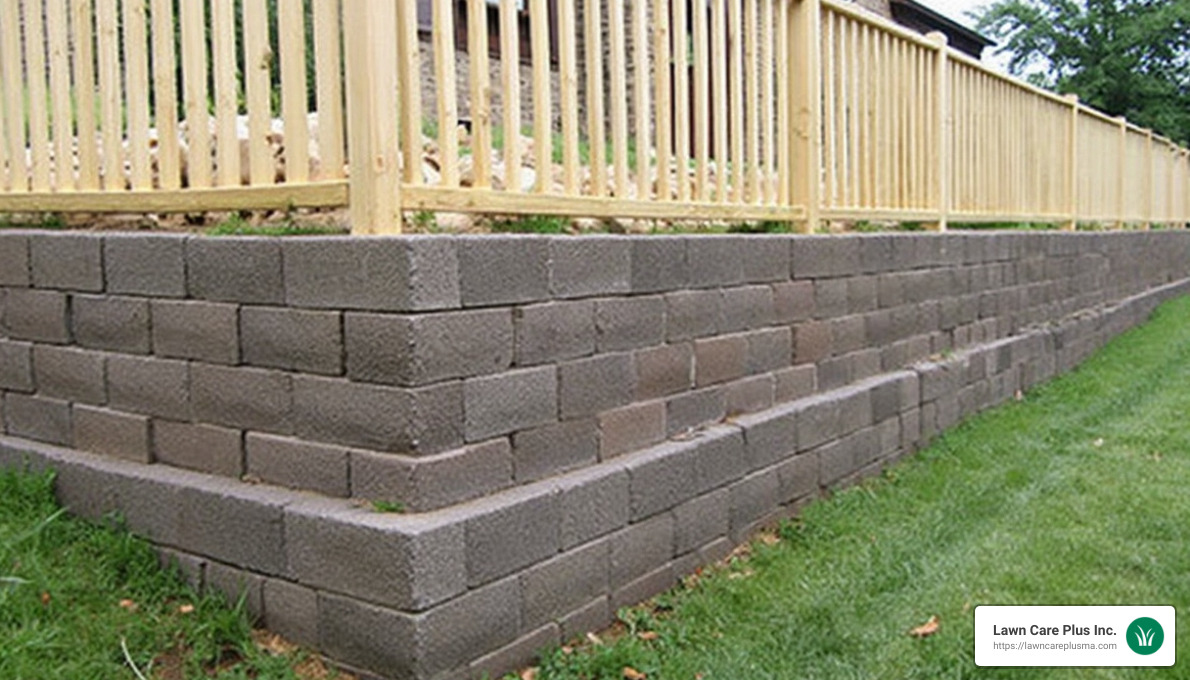
Choosing the Right Type for Your Needs
When selecting a retaining wall, consider the functionality you need, the aesthetic you desire, and the longevity you expect.
- Functionality: Determine the primary purpose of your wall. Is it to prevent erosion, create a level area, or improve your landscape design? This will guide your choice in wall type and materials.
- Aesthetics: Consider how the wall will fit with your existing landscape. Materials like stone and wood offer a more natural look, while concrete and steel can be more modern.
- Longevity: Think about the long-term maintenance and durability. Stone and concrete offer long-lasting solutions, whereas wood might need more upkeep.
By understanding the types of retaining walls and the materials available, you can make an informed decision that balances cost with your specific needs and preferences.
How to Calculate Your Retaining Wall Cost
When planning to build a retaining wall, it’s crucial to understand how to estimate the retaining wall cost accurately. This section will guide you through the process, from measuring the size to considering additional features.
Size Measurements
Start by measuring the length and height of the wall. Use these dimensions to calculate the total square footage. For example, a wall that is 10 feet long and 4 feet high covers 40 square feet. Most retaining walls cost between $20 and $53 per square foot, which will help you estimate the base cost.
Cost Per Square Foot
The cost per square foot varies based on the materials you choose. Here’s a quick overview:
- Vinyl: $10 – $15 per sq. ft.
- Concrete: $20 – $40 per sq. ft.
- Stone: $20 – $90 per sq. ft.
These figures can guide your budgeting process, helping you align your material choice with your budget.
Additional Features
Consider any extra features you might want, such as lighting, seating, or decorative elements. These can improve the wall’s functionality and appearance but will also increase the overall cost.
Tools and Resources
To make the calculation process easier, use online cost calculators. These tools allow you to input your wall’s dimensions and material choice to get a quick estimate. For more precise planning, consulting with a professional can provide insights custom to your specific project.
Example Calculations
Small Wall: For a 10-foot long, 2-foot high wall made of vinyl, expect to pay between $200 and $300 in materials alone.
Large Wall: A 50-foot long, 6-foot high concrete wall could range from $6,000 to $12,000, depending on material and labor costs.
Complex Designs: If your design includes curves or terraces, factor in additional costs for engineering and labor. These designs often require more expertise and time, making them more expensive.
By understanding these elements, you can better estimate your investment and plan accordingly. Next, we’ll explore how location impacts retaining wall costs.
Retaining Wall Cost by Location
Impact of Geographic Location
When it comes to building a retaining wall, the location on your property plays a significant role in determining the overall retaining wall cost. Let’s explore how different settings and conditions can affect your expenses.
Driveway
Installing a retaining wall along a driveway requires careful planning due to the need for structural support and aesthetic appeal. Costs can vary based on the wall’s length and height, as well as the materials used to complement the existing driveway design. Proper drainage is crucial here to prevent water damage to both the wall and the driveway.
Landscape
In a landscaped area, retaining walls often serve a dual purpose: preventing soil erosion and enhancing the garden’s visual appeal. The choice of materials—whether stone, wood, or concrete—will impact costs. Additionally, the wall’s design should blend seamlessly with the surrounding landscape, which might require additional customization.
Shoreline
Building a retaining wall along a shoreline presents unique challenges due to potential water exposure and erosion. These walls often require more robust materials and engineering solutions to withstand the elements. As a result, the costs tend to be higher than those for walls located in more protected areas.
Swimming Pool
Retaining walls around swimming pools need to be both functional and aesthetically pleasing. They must manage water flow and prevent soil erosion while also enhancing the pool area’s appearance. Costs can increase with the addition of decorative elements like planters or integrated lighting.
Slope
Constructing a retaining wall on a slope involves additional considerations for stability and drainage. The wall must effectively hold back soil while allowing water to drain away, which often requires specialized engineering. This complexity can lead to higher costs compared to walls on flat terrain.
Soil Type
The type of soil on your property is a critical factor in determining the retaining wall cost. Sandy soils offer good drainage but may require additional reinforcement. Clay soils, on the other hand, can hold water and exert more pressure on the wall, necessitating stronger materials and design solutions.
Climate and Local Regulations
Climate conditions, such as heavy rainfall or freezing temperatures, can influence the materials and construction methods needed for a durable retaining wall. Additionally, local regulations may dictate specific requirements for wall construction, such as permits or inspections, which can add to the overall cost.
Understanding these factors allows you to plan your retaining wall project more effectively. Next, we’ll dive into how enhancing your property with a retaining wall can boost curb appeal and property value.
Enhancing Your Property with a Retaining Wall
Customization Options
Retaining walls are not just about holding back soil; they can also transform your outdoor space into a beautiful and functional area. Let’s explore how a well-designed retaining wall can improve your property.
Curb Appeal and Property Value
Functional Benefits
Beyond looks, retaining walls provide practical benefits. They prevent soil erosion, manage water runoff, and stabilize slopes. This makes them particularly valuable in areas prone to heavy rain or with uneven terrain. By creating level spaces, retaining walls also increase usable land, perfect for gardens or patios.
Lighting and Seating
Improve your retaining wall with built-in lighting to create a magical ambiance in the evening. This not only adds safety but also highlights the wall’s beauty. Consider incorporating seating areas into the wall’s design. Stone benches or wooden seats can be integrated seamlessly, offering a cozy spot to relax and enjoy your garden.
Planters and Decorative Elements
Planters can be built into retaining walls to add greenery and color. Choose plants that thrive in your climate for a low-maintenance option. Decorative elements like mosaics or stone carvings can also be added to personalize the wall and reflect your style.
A retaining wall is more than just a functional structure; it’s an opportunity to improve your property’s aesthetics and usability. Whether you’re looking to increase your home’s value or simply enjoy a more beautiful garden, a well-designed retaining wall is a wise investment.
Now, let’s move on to frequently asked questions about retaining wall costs.
Frequently Asked Questions about Retaining Wall Costs
What is the cheapest retaining wall to build?
When it comes to affordability, vinyl, gabion, and wood are among the most cost-effective materials for building retaining walls. Vinyl costs range from $10 to $15 per square foot, making it the least expensive option. Gabion walls, which use wire cages filled with stones, offer flexibility and cost between $10 and $40 per square foot. Wood, while slightly more expensive, ranges from $13 to $35 per square foot and can be a visually appealing choice with proper maintenance.
Choosing the right material depends on your specific needs and local conditions. For example, wood can last over 20 years with care, but it may not be ideal in very humid environments. Always consider the pros and cons of each material to find the best fit for your project.
How much value does a retaining wall add to your property?
A well-built retaining wall can add up to 15% to your property’s value. This increase comes from both its functional benefits and its aesthetic appeal. Retaining walls manage soil erosion, improve drainage, and create usable outdoor spaces. These features improve the overall landscape, making your property more attractive to potential buyers.
Moreover, retaining walls offer a high return on investment, with some estimates suggesting a 100% to 200% return. This means the cost of building the wall can be recouped through the added property value, making it a financially sound decision for homeowners.
Can DIY approaches significantly reduce costs?
Yes, taking a do-it-yourself approach to building a retaining wall can reduce costs significantly. By eliminating labor fees, you can save between $14 and $46 per square foot. However, DIY projects are best suited for shorter walls, typically under 3 feet tall, where structural integrity is less of a concern.
While DIY can save money, it also requires time, effort, and a certain level of skill. Mistakes can lead to additional costs, especially if the wall collapses or fails to function properly. For taller or more complex walls, hiring a professional is advisable to ensure safety and longevity.
Whether you choose to DIY or hire a professional, understanding these factors can help you make an informed decision about your retaining wall project.
Conclusion
Building a retaining wall is a smart investment for your property. It improves not only the curb appeal but also the functionality of your outdoor space. By managing soil erosion and improving drainage, it adds significant value to your home. With the potential to increase property value by up to 15% and a high return on investment, a retaining wall is more than just a structural addition—it’s a financial asset.
At Lawn Care Plus Inc., we understand the complexities involved in designing and installing retaining walls. Our team of experienced professionals is ready to help you choose the right materials and design to suit your specific needs and budget. Whether you’re looking for a simple, cost-effective solution or a more elaborate design, we offer a wide range of services to meet your requirements.
We encourage you to reach out to us for expert advice and a consultation. Our commitment to quality and customer satisfaction ensures that your retaining wall project will be handled with the utmost care and professionalism.
Transform your landscape today with a beautifully crafted retaining wall. Contact Lawn Care Plus Inc. for a consultation and let us help you improve your property with our expert services.