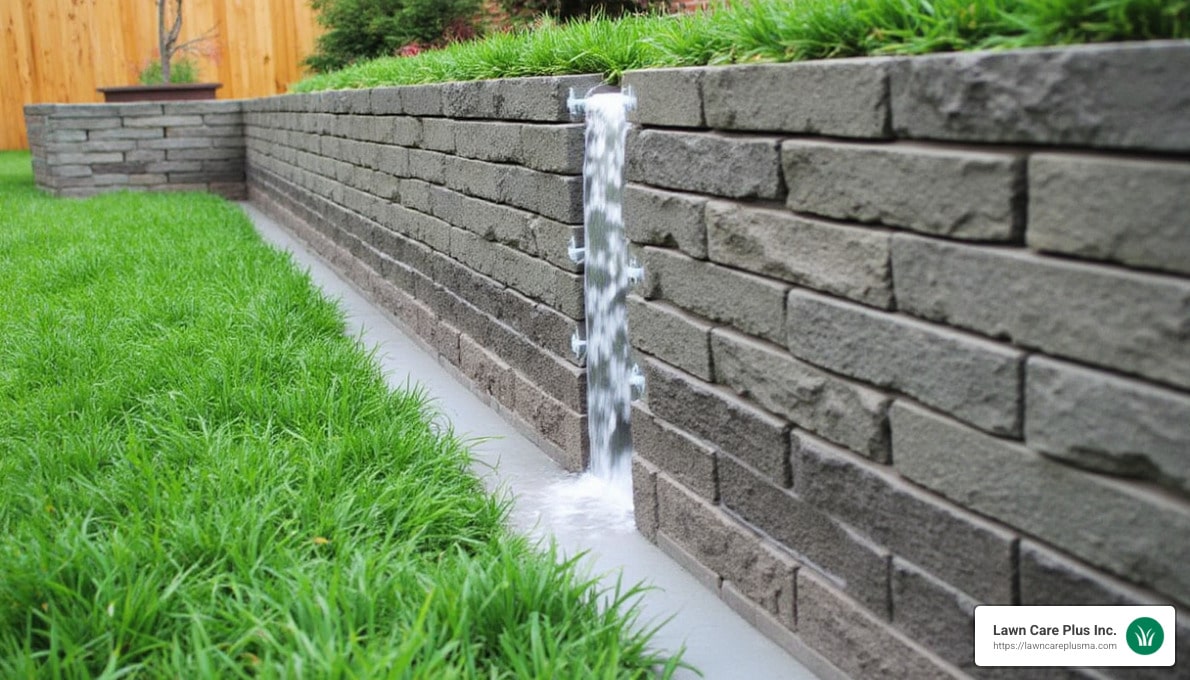
Retaining wall drainage is an essential aspect of landscape design that often gets overlooked—yet it plays a critical role in the longevity and effectiveness of retaining walls. Whether you’re a homeowner seeking to beautify your backyard or a property manager aiming for functional outdoor spaces, understanding how drainage systems work can save you from costly repairs and structural failures.
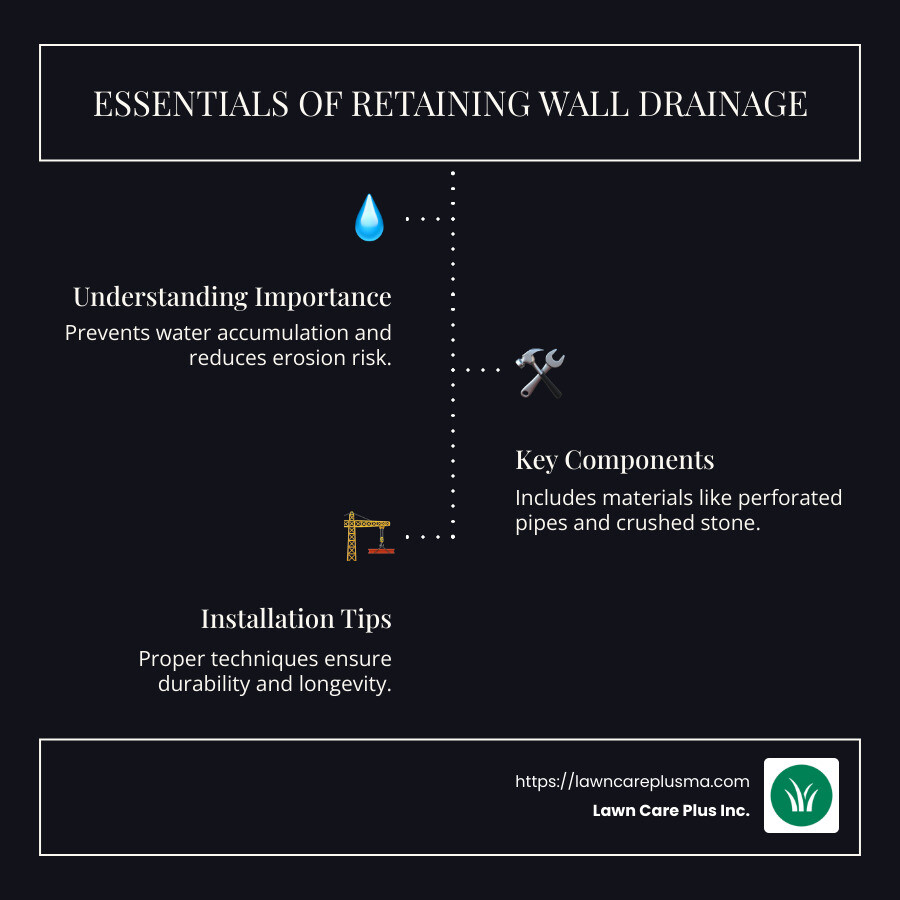
The importance of retaining wall drainage can’t be overstated. Essentially, it maintains the wall’s stability by preventing water from accumulating behind it, reducing the risk of erosion and structural damage. Proper drainage ensures that water flows away from your walls, safeguarding your landscape’s integrity. The key is to manage water wisely, taking into account factors such as soil type and the height of the wall.
To sum it up, a successful retaining wall project requires more than just good-looking design; it’s about building something that’s both beautiful and durable. By incorporating effective drainage techniques, you can achieve both.
Basic retaining wall drainage vocab:
– block retaining wall
– retaining wall cost
– retaining wall design
Understanding Retaining Wall Drainage
Why Proper Drainage is Crucial
Retaining wall drainage is not just a technicality—it’s a necessity to prevent structural failure. When water accumulates behind a retaining wall, it exerts hydrostatic pressure. This pressure pushes against the wall, increasing the risk of collapse. Just imagine a sponge soaking up water; the more water it holds, the heavier it becomes. Similarly, walls can buckle under the weight of accumulated water.
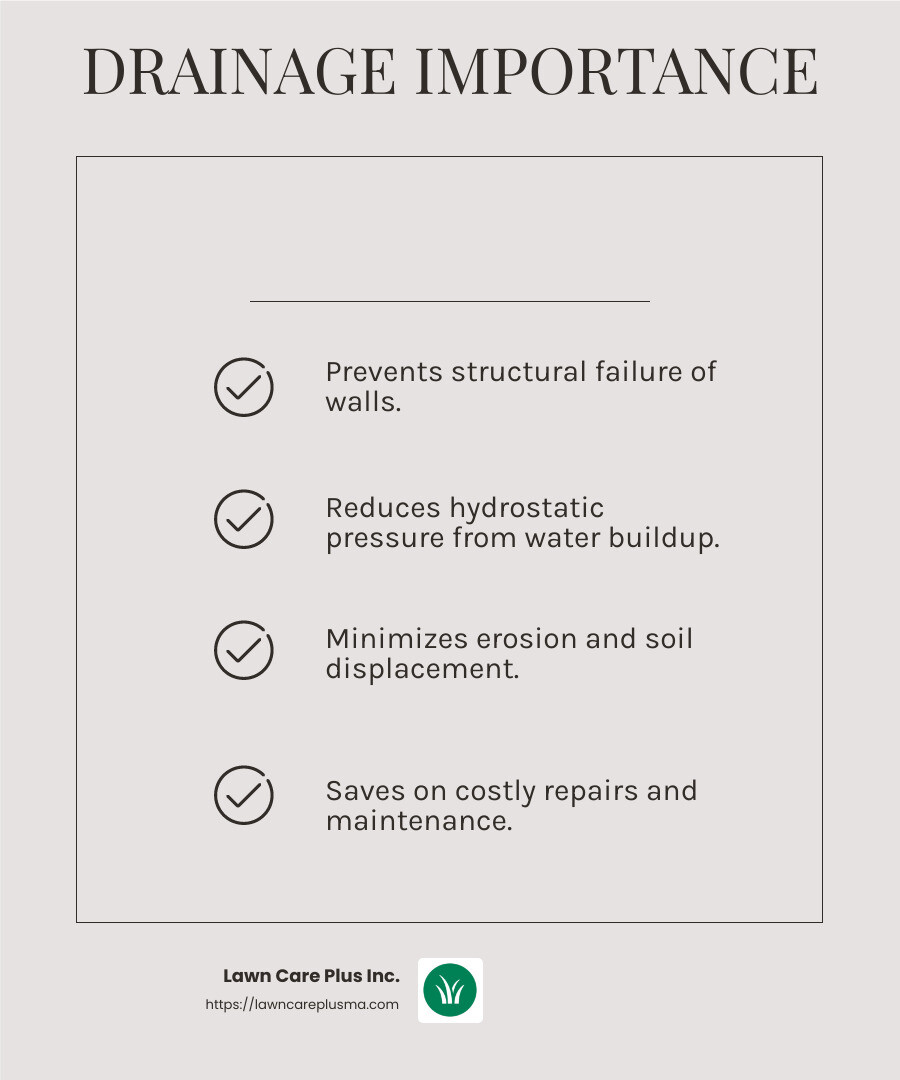
Proper drainage helps to channel water away, preserving the wall’s structural integrity. Without it, you might face costly repairs or even complete reconstruction. A well-designed drainage system also minimizes erosion, protecting both the wall and the surrounding landscape.
Types of Soil and Drainage Needs
Soil type plays a significant role in drainage planning. Different soils react differently to water:
- Clay soils are dense and hold water, making them prone to swelling and increasing hydrostatic pressure behind the wall. Proper drainage is especially crucial here to prevent water buildup.
- Sandy soils drain quickly but can erode easily. While they pose less risk of water retention, they still need controlled drainage to prevent erosion at the wall’s base.
- Gravel soils offer excellent drainage naturally. They allow water to flow through, reducing pressure on the wall. However, even with gravel, a drainage system is advisable to direct water efficiently.
Understanding the soil type helps in tailoring the drainage solution to meet specific needs. For instance, clay-heavy areas might benefit more from a robust drainage system, including weep holes and perforated pipes, to ensure water doesn’t linger behind the wall.
Effective retaining wall drainage is about more than just preventing water buildup. It’s about ensuring the wall’s longevity and keeping your landscape safe and beautiful. By considering soil types and managing hydrostatic pressure, you can prevent potential issues before they arise.
Best Practices for Installing Drainage Behind a Retaining Wall
When it comes to installing a retaining wall, drainage is the secret ingredient to success. Without it, your wall might end up leaning or even collapsing. Let’s explore the best practices for ensuring effective retaining wall drainage.
Choosing the Right Materials
Selecting the right materials is the foundation of an efficient drainage system. Here’s what you need to know:
- Angular Aggregate: Use clean, crushed stone or gravel with angular edges. This type of aggregate doesn’t compact, allowing water to pass through easily. The sharp edges interlock, providing stability and preventing the gravel from shifting.
- Perforated Pipe: Place perforated pipes under or behind the wall. These pipes help collect and direct water away from the wall, reducing hydrostatic pressure. The perforations allow water to enter the pipe, which then channels it to a safe drainage area.
- Solid Pipe: Use solid pipes to carry water away from the wall to the drainage site. These pipes don’t have holes, so they’re perfect for transporting water that has already been collected by perforated pipes.
Installation Techniques
Proper installation techniques ensure your materials work effectively. Here’s how to do it right:
- Gravel Base: Start with a solid foundation by laying a substantial gravel base. This base acts as the first line of defense against water buildup. Ensure the gravel is level and compacted to provide a stable footing for the wall.
- Compaction: After laying the gravel base, compact the soil behind the wall. This might seem counterintuitive, but compacting the soil reduces its permeability. By doing so, you minimize the amount of water that can saturate the soil and increase pressure on the wall.
- Backfill: Use gravel as backfill behind the wall. While convention suggests at least 12 inches of gravel, more is often better. According to Vince Christofora, a professional engineer, using 24 inches of gravel can significantly improve drainage and structural integrity.
These steps, when combined, create a robust drainage system that helps maintain the wall’s structural integrity. Retaining wall drainage isn’t just about preventing water buildup—it’s about ensuring your wall stands strong for years to come.
By choosing the right materials and following these installation techniques, you can prevent issues like leaning or collapsing walls. This approach not only preserves your wall but also protects your landscape from erosion and other water-related problems.
Key Components of Retaining Wall Drainage
Proper retaining wall drainage is essential for a wall’s longevity and effectiveness. Let’s break down the key components that ensure your wall can handle water pressure without buckling.
Footing Drains
A footing drain is a must-have for almost every retaining wall. Positioned at the wall’s base, this drain collects water and guides it away through a “daylighted” pipe. This means the pipe extends to a point where water can safely exit. As Vince Christofora, an experienced engineer, emphasizes, the cost of installing a footing drain is minimal compared to the benefits it offers in preventing future wall damage.
Installation Tips:
– Ensure the pipe slopes slightly to allow gravity to move the water.
– Use perforated pipes for the footing drain to collect water efficiently.
– Cover the pipe with gravel to improve water flow and filter out debris.
Gravel and Aggregates
Gravel and aggregates play a significant role in drainage. Angular, clean, crushed stone between 1/2- and 3/4-inch is recommended. This type of stone creates spaces for water to flow, reducing pressure on the wall.
Depth Recommendations:
– A minimum of 12 inches of gravel backfill is standard, but 24 inches is ideal for better drainage and stability.
– Lay the gravel as a base under the wall and as backfill behind it.
Filter Fabric Usage
Filter fabric, also known as geotextile, is a crucial component that acts as a barrier between soil and gravel. It prevents soil from clogging the drainage system, ensuring that water can flow freely.
Placement Tips:
– Place filter fabric at every interface where soil meets gravel.
– Use it under the wall’s gravel footing, between the footing drain’s gravel and soil, and behind the retaining wall.
– Ensure the fabric is properly secured and overlaps at seams to prevent soil intrusion.
By integrating these components—footing drains, gravel, and filter fabric—you create a robust drainage system that supports the structural integrity of your retaining wall. This setup not only prevents water buildup but also ensures your wall remains strong and stable over time.
Next, we’ll explore some advanced drainage solutions to further improve your wall’s resilience.
Advanced Drainage Solutions
When it comes to enhancing the durability of your retaining wall, advanced drainage solutions can make all the difference. Let’s explore two key techniques that can significantly improve water management: weep holes and slope and grading considerations.
Weep Holes
Weep holes are small but mighty when it comes to retaining wall drainage. These holes are strategically placed at the bottom of the wall to allow water to escape, preventing pressure buildup that could lead to structural failure.
Installation Tips:
– Use a core drill to create weep holes in existing walls. This can be done in concrete, stone, or brick walls.
– For walls over 6 feet tall, weep holes should be 3 to 4 inches in diameter and spaced every 3 to 4 feet.
– For smaller walls, 1-1/2 inch diameter holes spaced at 8-foot intervals are generally sufficient.
One important note from expert Vince Christofora: “Adding weep holes can help save a retaining wall, but if the wall was backfilled with soil instead of gravel, drainage through the weep holes might be insufficient.” Always ensure there is adequate gravel behind the wall to facilitate proper drainage.
Slope and Grading Considerations
Slope and grading are crucial for directing water away from your retaining wall and preventing water from pooling at its base. Proper grading ensures that water flows naturally away from the structure, reducing the risk of erosion and pressure on the wall.
Key Considerations:
– Ensure the ground slopes away from the wall. Even a slight slope can significantly improve water flow.
– Be mindful of where the water will end up. Avoid directing it onto neighboring properties or into natural bodies of water like ponds or rivers.
– Consider installing a French drain or a dry well if space permits. These systems collect water and allow it to be absorbed slowly into the ground, helping to manage excess runoff effectively.
By implementing weep holes and paying close attention to slope and grading, you can improve your wall’s drainage system, ensuring its strength and longevity. These advanced solutions not only improve the wall’s performance but also integrate seamlessly with your landscape, maintaining both functionality and aesthetics.
Frequently Asked Questions about Retaining Wall Drainage
What is the best drainage material for a retaining wall?
The best drainage material for a retaining wall is clean crushed stone. This material is highly effective because it allows water to pass through easily, reducing the pressure on the wall. Crushed stone or gravel should be used in the backfill area behind the wall to promote proper drainage. The angular shape of the stones helps them lock together, providing stability while still allowing water to flow through.
How deep should the drainage layer be behind a retaining wall?
The drainage layer behind a retaining wall should be at least 12 inches deep. This depth provides enough space for water to be effectively diverted away from the wall. Using a combination of crushed stone and a perforated drainage pipe within this layer can significantly improve the wall’s ability to manage water. The drainage layer is crucial for preventing water buildup that could lead to wall failure.
Can water seep through a retaining wall and what does it mean?
Yes, water can seep through a retaining wall, and this usually indicates a problem with the drainage system. If water is visibly seeping through the wall, it could mean that the backfill material is not allowing adequate drainage, or that the wall lacks proper weep holes. This can lead to increased hydrostatic pressure, which might cause the wall to shift or even collapse over time. Addressing drainage issues promptly is essential to maintain the wall’s integrity and prevent costly repairs.
Conclusion
Proper retaining wall drainage is key to ensuring the longevity and effectiveness of your landscape design. Without effective drainage, water can build up behind the wall, increasing hydrostatic pressure and potentially leading to structural failure. This can result in costly repairs and even complete wall collapse.
Regular maintenance is crucial to keep your retaining wall in top condition. Inspect the drainage system periodically to ensure it remains clear and functional. Look for any signs of water seepage or erosion around the wall, as these could indicate a need for maintenance or adjustments.
At Lawn Care Plus Inc., we understand the importance of well-designed and maintained retaining walls. Our team of experts is ready to assist with all your landscaping needs, ensuring that your walls are not only beautiful but also durable and effective. For more information on our services, visit our Landscape Retaining Walls page.
By implementing these best practices and regular upkeep, you can enjoy a beautiful and functional landscape that stands the test of time.