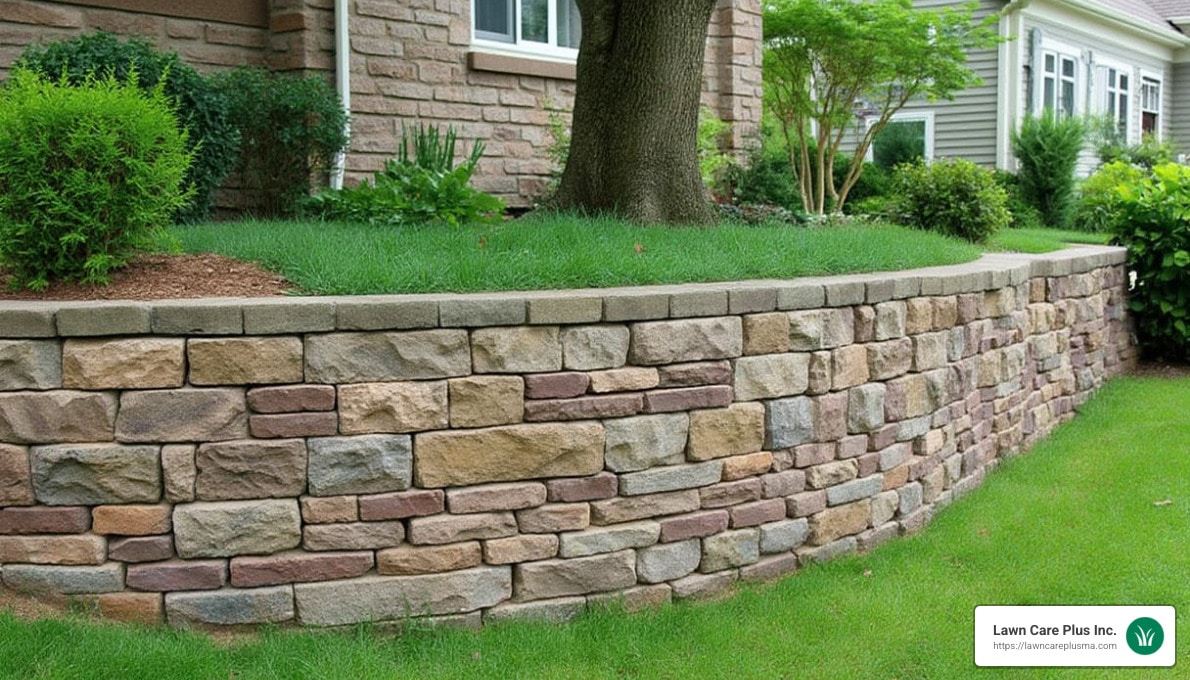
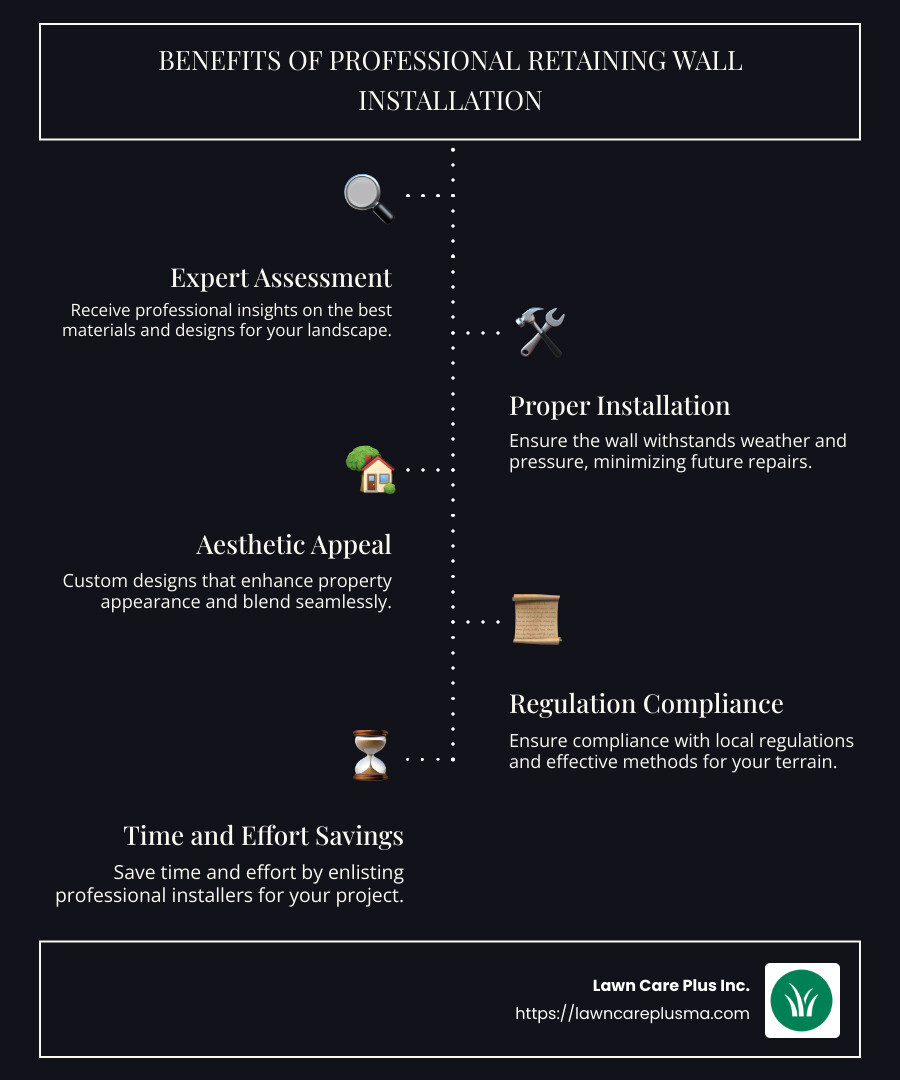
Retaining wall installers play a crucial role in changing outdoor spaces, ensuring both function and beauty. Whether you’re looking to prevent soil erosion, create level areas in your sloped yard, or simply boost curb appeal, these structures can make a significant difference. Here’s what retaining wall installers bring to the table:
- Expert Assessment: Professional insights on the best materials and designs for your specific landscape needs.
- Proper Installation: Ensures the wall is built to withstand weather and pressure over time, minimizing potential future repairs.
- Aesthetic Appeal: Custom designs that improve the overall look of your property, blending seamlessly with existing elements.
When you choose retaining wall installers, you’re investing in peace of mind, knowing your landscape is both visually appealing and structurally sound.
Retaining walls can be designed using a variety of materials such as natural stone, bricks, or concrete, each offering unique benefits. A well-designed retaining wall not only holds soil in place but also adds elegance to a garden or outdoor area. By enlisting professional installers, you ensure compliance with regulations and the use of the most effective methods for your terrain, ultimately saving time and effort.
Reach out to Lawn Care Plus Inc. to discuss your retaining wall project and see just how they can help improve your outdoor space.
Types of Retaining Walls
When considering retaining wall installers, understand the different types of materials available. Each material brings its own set of benefits and aesthetics to your landscape. Let’s explore the most common types:
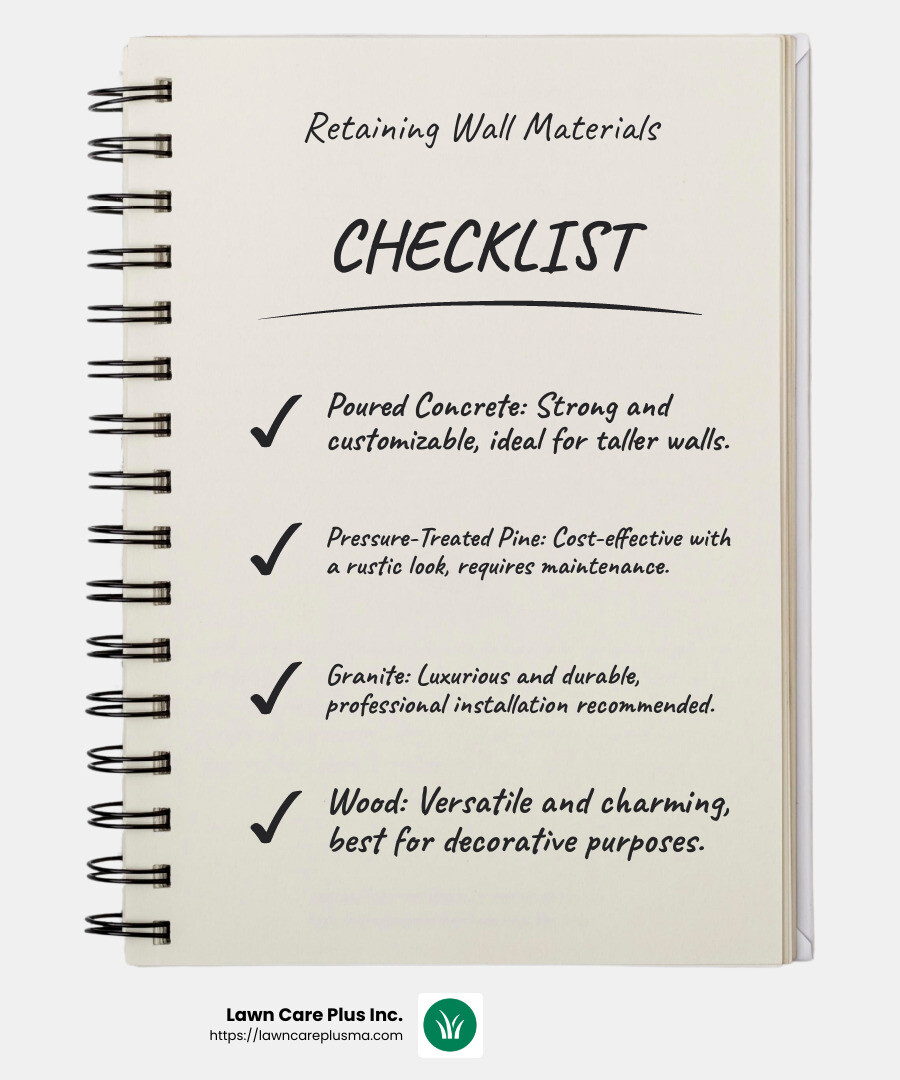
Poured Concrete
Poured concrete is a popular choice for modern landscapes. It’s known for its strength and durability, making it ideal for taller walls. Concrete can be molded into any shape or style, offering flexibility in design. Additionally, it can be dyed to match your desired color scheme, adding an artistic touch to your outdoor space.
Pressure-Treated Pine
For those seeking a natural look, pressure-treated pine is a cost-effective option. It’s durable and resistant to decay, making it suitable for smaller retaining walls. The wood’s grain and texture provide a warm, rustic appearance that blends well with natural surroundings. However, it’s important to note that wooden walls may require more maintenance over time compared to other materials.
Granite
Granite is a luxurious choice for retaining walls. Its natural beauty and strength make it a desirable option for homeowners looking to improve their landscape with elegance. Granite walls are long-lasting and require minimal maintenance. However, due to the complexity of working with natural stone, professional installation is recommended to ensure structural integrity.
Wood Retaining Walls
Wood retaining walls, including those made from timber and railroad ties, offer a classic and familiar aesthetic. They are typically built on gravel beds and secured with long spikes. Wood is a versatile material that can be used for both functional and decorative purposes. While it may not be as durable as concrete or stone, it provides a charming, rustic look that complements many outdoor settings.
Choosing the right material for your retaining wall depends on various factors such as budget, design preferences, and the specific needs of your landscape. By working with experienced retaining wall installers like Lawn Care Plus Inc., you can ensure that the materials and design align perfectly with your vision and practical requirements.
In the next section, we’ll dig into the benefits of hiring professional retaining wall installers, highlighting how they can simplify the installation process and improve your landscape’s value.
Benefits of Professional Retaining Wall Installers
When it comes to building a retaining wall, hiring professional retaining wall installers can make all the difference. Here are the key benefits:
Easy Installation
Professional installers have the expertise and tools needed for a smooth, hassle-free installation. They know how to handle different materials, from concrete to wood, ensuring each piece is correctly placed. This expertise helps avoid common pitfalls like uneven surfaces or improper drainage, which can lead to future problems.
Cost-Effective
While a DIY approach might seem cheaper upfront, hiring professionals can be more cost-effective in the long run. Professionals have access to high-quality materials at better prices and know how to use them efficiently. They also avoid costly mistakes, ensuring your wall stands strong for years. According to industry data, while DIY projects can cost less initially, professional installations often save on repairs and maintenance over time.
Landscape Design Flexibility
Professional installers offer flexibility in design, allowing your retaining wall to fit seamlessly into your landscape. Whether you want a curved wall or specific color schemes, experts can customize the design to meet your vision. They understand how to incorporate features like steps or seating areas, enhancing both the functionality and beauty of your outdoor space.
Choosing professional retaining wall installers not only ensures a sturdy and aesthetically pleasing wall but also saves time and potential headaches. In the following section, we’ll explore the detailed installation process, from preparing the base to implementing drainage systems.
Retaining Wall Installation Process
Building a retaining wall is more than just stacking blocks or stones. It involves several key steps to ensure the wall is stable and durable. Here’s a look at the installation process, focusing on the paver base, tamping, and drainage systems.
Paver Base
The foundation of any good retaining wall starts with the paver base. This is the layer that supports the entire structure. Typically, a paver base consists of compacted gravel, which provides a solid and level surface. It’s crucial because it helps the wall withstand ground movement and prevents it from leaning or collapsing over time.
Professional installers will dig a trench to the correct depth and fill it with gravel before compacting it. This creates a stable base that can support the weight of the wall.
Tamping
Once the paver base is laid, tamping is the next step. Tamping involves compacting the gravel to eliminate air pockets and ensure a firm foundation. This process is vital because it strengthens the base, making it more resistant to shifting or settling.
Installers use a mechanical tamper or a hand tamper, depending on the size of the project. A well-tamped base helps in maintaining the alignment and stability of the wall, preventing future problems like cracks or bulges.
Drainage Systems
Drainage is a critical component of retaining wall construction. Without proper drainage, water can build up behind the wall, increasing pressure and leading to potential failure. To prevent this, installers design drainage systems that allow water to escape safely.
The drainage system typically includes perforated pipes and gravel backfill. The pipes direct water away from the wall, while the gravel allows water to flow freely through the soil. Some designs might also incorporate weep holes, which are small openings that let water drain out naturally.
By focusing on these essential steps—paver base, tamping, and drainage systems—professional installers ensure that your retaining wall is not only functional but also long-lasting. In the next section, we’ll answer some frequently asked questions about retaining wall installations, covering topics like cost and drainage requirements.
Frequently Asked Questions about Retaining Wall Installers
What is the cheapest retaining wall to build?
When considering cost, poured concrete and pressure-treated pine are often the most budget-friendly options for retaining walls. Poured concrete provides a modern and sleek appearance and is known for its strength and durability. It’s a popular choice for those looking for a cost-effective solution that doesn’t compromise on sturdiness.
Pressure-treated pine is another economical choice, especially for smaller projects or those seeking a natural look. While it’s less expensive than stone or concrete, it may require more maintenance over time to prevent rot and insect damage.
How much should I charge to build a retaining wall?
The cost to build a retaining wall can vary significantly based on materials and labor. On average, the cost per square foot ranges from $15 to $45, but this can increase to over $100 per square foot for more complex designs or premium materials like granite. Granite is a high-end option known for its beauty and longevity, often used in upscale projects.
Labor costs are a crucial component of the overall price. Skilled retaining wall installers ensure the wall is built correctly, which is essential for safety and durability. The complexity of the site and the design can also affect labor costs. For instance, walls that require engineering expertise or additional drainage systems will typically be more expensive.
Does a 2-foot retaining wall need drainage?
Even a 2-foot retaining wall can benefit from a drainage system. Proper drainage is essential to prevent water buildup behind the wall, which can increase pressure and lead to failure. By incorporating drainage solutions like perforated pipes and gravel backfill, you can significantly improve the wall’s safety and sturdiness.
While smaller walls might not face the same pressure as taller ones, neglecting drainage can still result in problems over time, such as soil erosion or structural weakening. Therefore, it’s wise to include drainage considerations in any retaining wall project, regardless of height.
Conclusion
At Lawn Care Plus Inc., we pride ourselves on being your go-to experts for all things related to landscaping and hardscaping, including retaining wall installation. With our experienced team, we ensure that each project is handled with precision and care.
Our comprehensive services cover everything from lawn maintenance to complex hardscaping projects. Whether you need a simple garden wall or a more intricate design, our skilled professionals are equipped to deliver exceptional results that blend functionality with beauty.
Choosing the right retaining wall installers is crucial for the success of your project. Our team takes the time to understand your needs and offers custom solutions that fit your landscape and budget. We use high-quality materials and proven techniques to ensure your retaining wall stands the test of time.
If you’re ready to transform your outdoor space with a professionally installed retaining wall, contact us today to learn more about how our services can improve your property. Let Lawn Care Plus Inc. help you achieve the perfect balance of style and strength for your landscape.