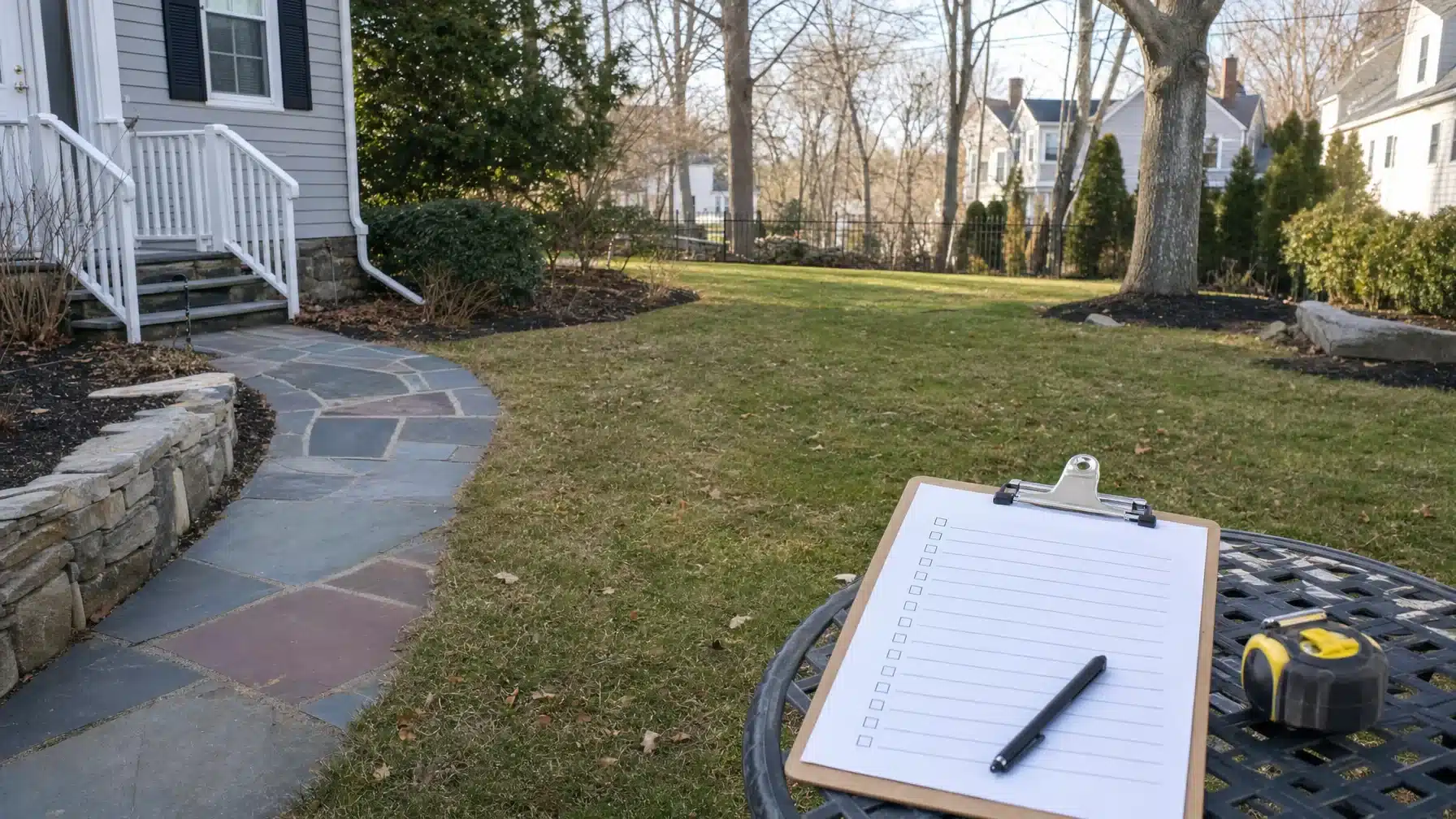
To prepare your lawn for core aeration service, start by confirming that the provider considers it ready for the visit. Then request property-specific mowing and watering instructions, share what you know about installed features, and agree on an equipment access route. Preparation is not just clearing the yard—it is resolving questions before machinery enters the lawn.
Lawn Care Plus uses specialized machinery to remove small plugs of soil and thatch during core aeration. Because the work enters the ground rather than simply passing over the grass, lawn history and property information belong in the pre-visit conversation.
For background on the process and its benefits, see the lawn aeration benefits guide. This checklist focuses on what to document and confirm before a service visit.
Record lawn history and current conditions
Your role is to report what has happened and what you can see. The provider’s role is to assess whether to proceed, exclude a section or change the plan. Separate recently worked areas from established lawn rather than treating the whole yard as having the same history.
- Recent work: Note sod installation, seeding, overseeding, patch repairs, grading or other ground disturbance. Include when and where the work occurred, if known.
- Visible conditions: Describe standing water, muddy sections, unusually dry areas, bare patches or visible damage without trying to diagnose the cause.
- Existing care instructions: Share any establishment plan from your installer and ask whether the proposed preparation instructions are compatible with it.
- Location notes: Label affected areas on a simple yard sketch or share photographs with recognizable landmarks.
If you have recently installed sod, tell the provider before accepting a preparation plan. Ask specifically whether that section is ready for aeration. The existing guide to aerating new sod addresses that separate topic; this checklist does not set a universal waiting period.
Confirm readiness before mowing or watering
Ask a direct question: “Given the recent work and current conditions, should we proceed with the planned visit?” Do not use the publication month, a calendar reminder or the lawn’s appearance alone as approval to aerate.
Once readiness is addressed, request instructions for your property rather than borrowing a generic mowing height or watering schedule. Keep those instructions with your appointment details so another household member does not prepare the lawn differently.
- Mowing: Should the lawn be mowed before arrival? If so, what height and timing does the provider want, and how should clippings be handled?
- Watering: Is supplemental watering needed? What instructions apply to this lawn, and what should change if rain arrives?
- Changed conditions: Who should you contact if the yard becomes muddy, develops standing water or looks different from the conditions already discussed?
- Unconfirmed preparation: If instructions have not arrived, ask before changing mowing or irrigation specifically for the visit.
Discuss installed features and no-work areas
Share known irrigation heads, valve boxes, irrigation lines, drainage components, landscape-lighting cables, invisible pet fencing and other installed features in or near the planned work area. If you have installation plans, offer them to the provider. Distinguish a documented location from a location you only suspect.
Ask how features and exclusions should be identified, who is responsible for doing so, and how the crew will receive that information. Clearly describe sections you want left untouched, including recently repaired lawn or areas where buried features remain uncertain.
Note Do not probe or dig to locate buried items for this checklist. Treat markers and sketches as communication aids, not proof that every buried feature has been found. If a location is uncertain, ask the provider what confirmation is needed and whether that area should remain outside the work zone.
Agree on equipment access and arrival arrangements
Tell the provider which entrance you expect the crew to use. Describe gates, steps, narrow passages, slopes and surfaces along the route, and ask whether the planned equipment can use it. Do not assume an entrance is suitable because a mower has used it before.
- Gate arrangements: Confirm how the crew will enter, who will unlock the gate and whether someone needs to be present.
- Moveable obstacles: Agree on which toys, furniture, hoses and other loose items you will remove from the work area and access route.
- Pets and household activity: Arrange to keep pets secured away from the work area and keep household members informed about the visit.
- Arrival questions: Confirm any parking or unloading arrangements the provider needs, along with the person to contact if access is blocked.
Reusable pre-visit worksheet
Copy these prompts into your appointment notes. Mark each as confirmed, awaiting an answer or not applicable. An unanswered item is a question to resolve—not permission to guess.
- Lawn history shared: Recent work, affected sections and existing care instructions.
- Current observations shared: Wet, dry, damaged or otherwise uncertain areas.
- Provider readiness decision: Proceed, reassess or exclude named sections.
- Preparation instructions received: Mowing, watering and what to do if conditions change.
- Features and exclusions discussed: Known locations, uncertain locations, identification method and responsible person.
- Access agreed: Entrance, gate arrangements, route, obstacles and arrival contact.
- Household preparation arranged: Loose items removed as agreed and pets secured.
- Open questions: List anything still requiring the provider’s answer before work begins.
Before equipment enters the yard, contact the provider if readiness, buried-feature information or access remains unresolved. Share any changes since the original discussion and ask whether the plan needs to be adjusted. A useful checklist ends with a clear decision, not simply a cleared lawn.