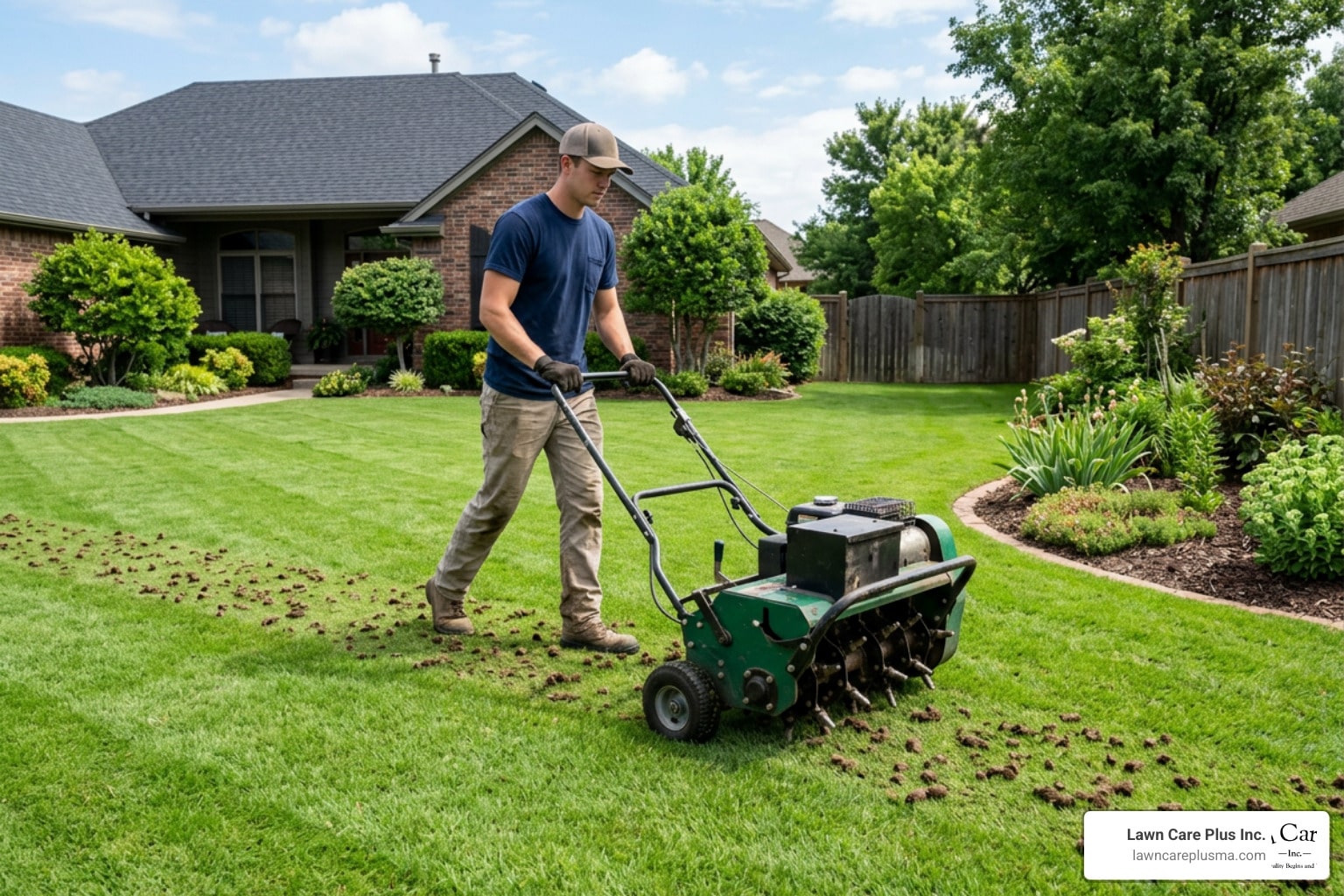
Is Your New Sod Ready to Aerate?
Quick Answer: When to Aerate New Sod
- Minimum wait: 6 to 12 months after installation
- Recommended wait: A full year (one complete growing season)
- Why: New sod has shallow, fragile roots that a mechanical aerator can rip out before they establish
- How to check: Perform a tug test — if the sod lifts easily, it is not ready
When homeowners ask about how to aerate new sod, the most important thing to know is this: you almost certainly need to wait longer than you think. Fresh sod looks established from the surface, but underground it is still a transplant fighting to connect its roots to your soil.
That gap between “looks fine” and “actually ready” is where most lawn damage happens.
Aerating too early — even just a few months after installation — can tear up roots that haven’t yet anchored deep enough to resist the mechanical force of an aerator. One forum user put it plainly after damaging their lawn: the aerator exerts far more force than you can by simply pulling on the sod by hand. If it looks secure, that doesn’t mean it is secure.
The good news is that once your sod is truly established, aeration is one of the best things you can do for long-term lawn health. It relieves soil compaction, improves drainage, and gets oxygen, water, and nutrients down to the root zone where they matter most.
I’m Tim DiAngelis, owner of Lawn Care Plus, Inc., a full-service landscaping company serving Greater Boston and Metro-West — and knowing exactly when to aerate new sod is one of the most common questions we field from homeowners after a sod installation. Getting the timing right is the difference between a thriving lawn and an expensive do-over.
Why You Must Wait to Aerate New Sod
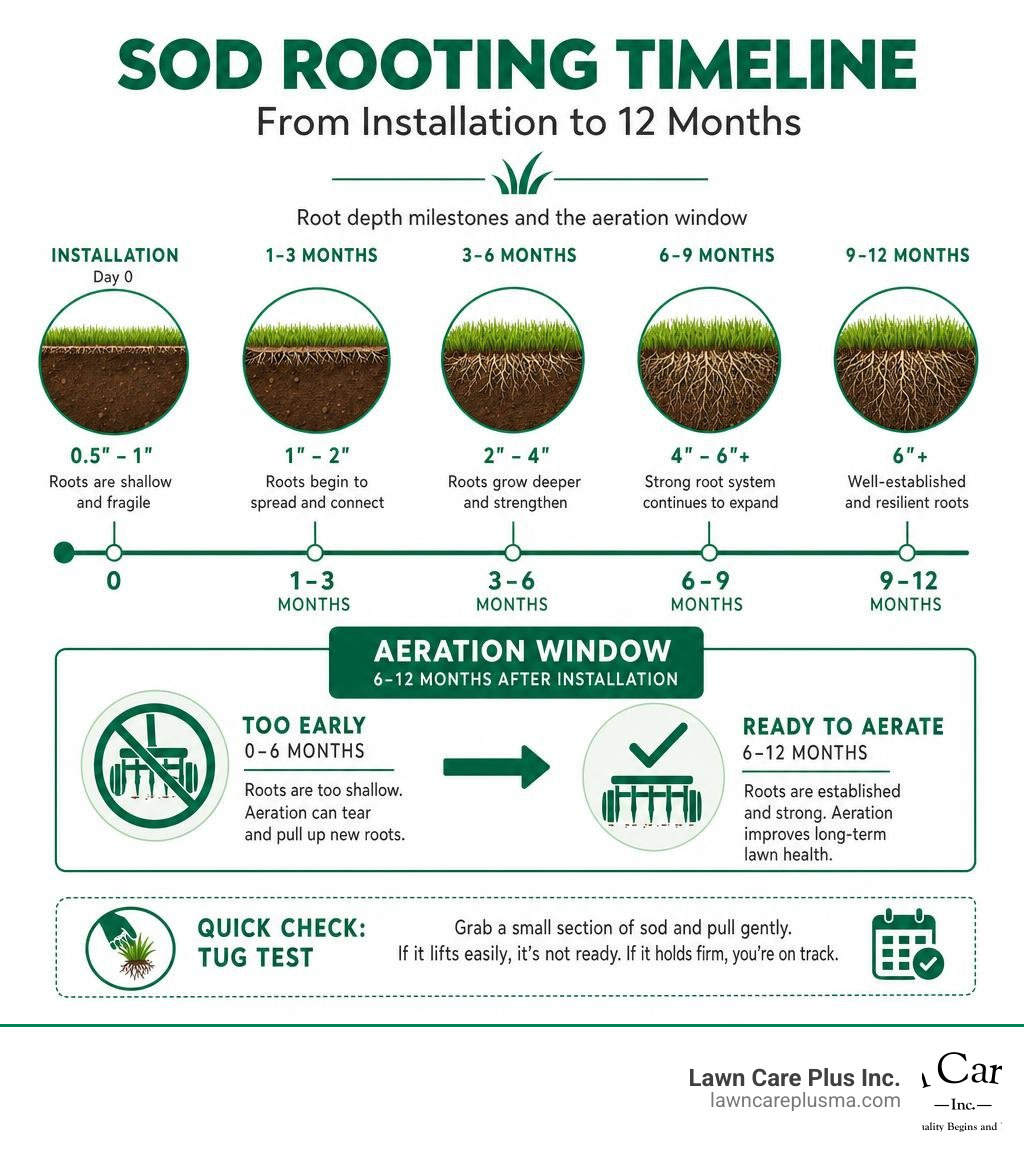
When sod is harvested at a commercial sod farm, the harvesting machinery slices through the root system at a depth of roughly 0.5 to 1 inch. This means the beautiful rolls of green turf delivered to your home are missing the vast majority of their original root mass.
Because of this, the first year after installation is a delicate biological transition period. For the first 6 to 12 months, your grass is working hard to establish a completely new root system.
If you run a heavy mechanical core aerator over this young turf too early, you risk major structural damage. The tines of a core aerator punch deep into the ground and pull out heavy plugs of soil. If the roots have not grown deep into the underlying soil, this mechanical pulling force will simply lift the sod strips right off the ground, tearing what few fragile roots have begun to form.
According to the biological timeline detailed in How New Sod Roots | The Complete 12-Month Timeline, the primary root system developed immediately after installation is only temporary. It functions for about 6 to 8 weeks before being replaced by a permanent, deep-reaching adventitious root system. Disrupting this transition with early aeration can permanently stunt your lawn’s growth or kill entire sections of turf.
To prevent this, you should focus your efforts on proper watering, mowing, and fertilization during the first year. For a complete look at how to protect your investment during this fragile phase, check out our guide on How to Care for New Sod.
Factors That Affect When to Aerate New Sod
Not all lawns are created equal. The exact timeline for when you can safely aerate new sod depends heavily on your grass variety and the native soil structure in your yard.
How Grass Variety Impacts the Decision to Aerate New Sod
Different turf species establish their roots at very different speeds.
- Tall Fescue: This cool-season grass is popular in Massachusetts towns like Newton and Milton because of its excellent heat and drought tolerance. However, fescue sod typically starts with a very shallow root system due to the thick organic mat or “straw layer” created at the sod farm. While fescue grown from seed can reach deep into the soil quickly, fescue sod often hovers at a 1-to-2-inch root depth for its first year.
- Kentucky Bluegrass: This grass spreads via underground runners called rhizomes. It forms a dense, tightly knit root system, but it takes longer to mature than fescue.
No matter which cool-season variety you have, the turf needs time to develop its permanent adventitious roots. According to When to Aerate New Lawn? Timing for Optimal Growth – LawnGardenPro, you should avoid any mechanical aeration until these grass varieties have completed at least one full, active growing season.
Soil Type and the Timing to Aerate New Sod
The soil beneath your sod plays a massive role in compaction and root growth.
- Clay Soils: Common across the Boston Metro-West area, clay soils compact very easily. Compaction acts like a concrete barrier, preventing water and air from reaching the roots. While clay soils desperately need aeration to relieve this compaction, doing so too early on young sod will destroy the fragile root network.
- Sandy Loam Soils: Sandy soils drain quickly and rarely suffer from severe compaction. Because of this, sandy lawns do not need frequent aeration and can easily wait two to three years between sessions.
| Soil Type | Compaction Risk | Initial Watering Frequency (First 14 Days) | Recommended Aeration Frequency |
|---|---|---|---|
| Heavy Clay | High | 4 times per day (short, light sessions to avoid pooling) | Annually (after the first year) |
| Sandy Loam | Low | 7 times per day (frequent, brief sessions due to rapid drainage) | Every 2 to 3 years |
How to Tell If Your Sod Is Ready for Aeration
Before you rent an aerator or call in a professional team, you must confirm that your new turf is strong enough to handle the stress. The absolute best way to check this is by performing a simple, physical tug test.
Choose a few different spots across your lawn—especially near the seams of the sod strips and in high-traffic areas. Gently but firmly grab a handful of grass blades and pull upward.
- If the sod lifts or shifts: The roots have not yet anchored deep into the native soil. Do not aerate.
- If the sod resists your pull completely: The roots have successfully locked into the soil.
Generally, you will find that sod installed in the spring is not ready for aeration by the following fall. If you planted in June, for example, the summer heat likely limited root depth. Attempting to aerate too soon will rip the sod right up.
That mowing also requires a well-anchored lawn. If your sod is still shifting underfoot, you should review the safety guidelines in When to Mow New Sod before running any heavy machinery over your grass.
How to Aerate New Sod in 4 Simple Steps
Once your sod has passed the tug test and rested for a full year, it is finally ready for its first aeration. For cool-season lawns in Massachusetts, the ideal time to do this is in the early fall (late August through October), when the soil is warm and the air is cool.
To get the most out of your efforts, we recommend using a professional core aerator rather than a spike aerator. According to the Lawn Aeration Guide: When to Aerate, How to Do It, and Why It Matters — Yardcast Blog, spike aerators simply push the soil aside, which can actually increase compaction around the holes. Core aerators, on the other hand, physically remove plugs of soil to create true breathing room for the root system.
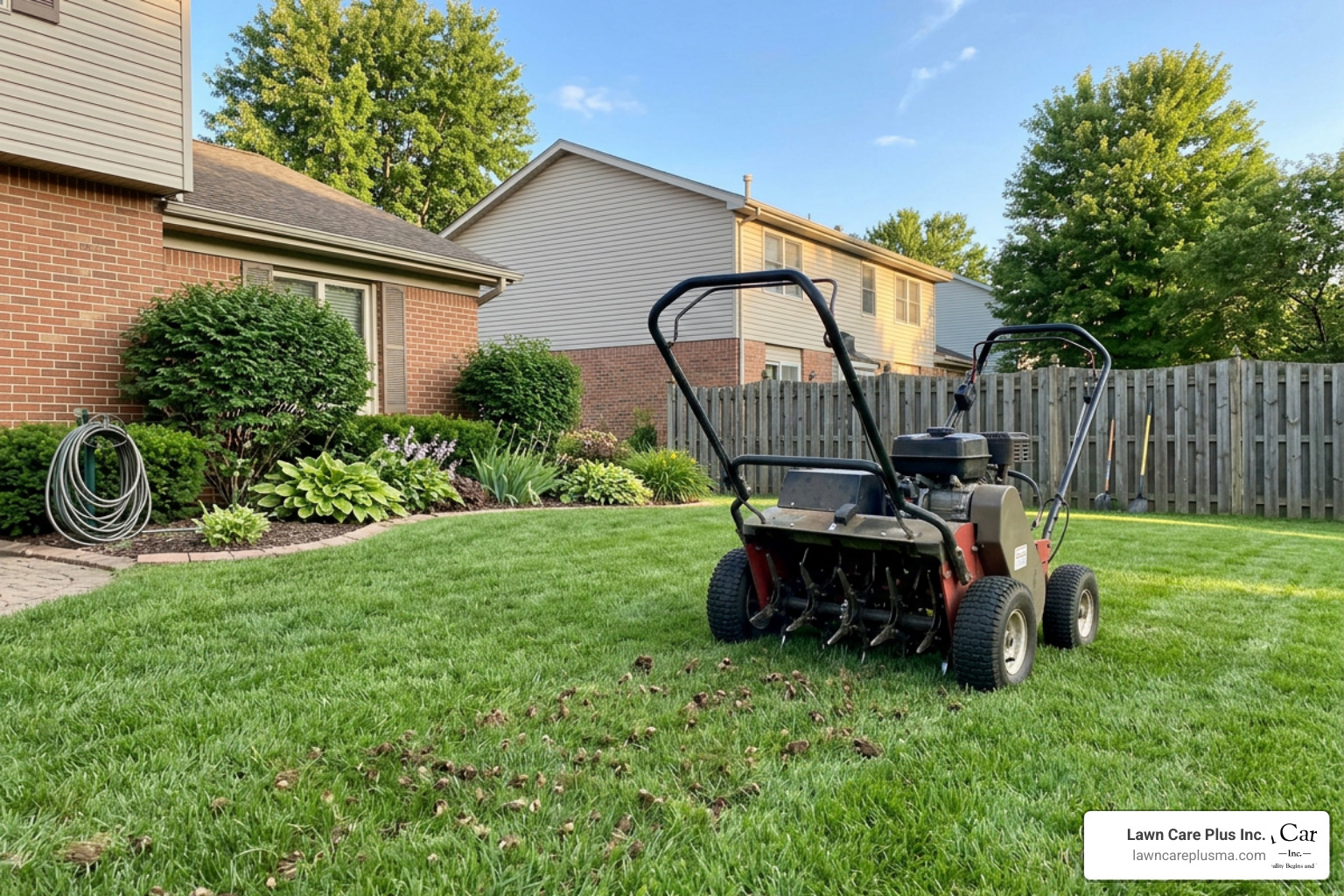
Here is our step-by-step guide to doing it right, keeping in mind the expert recovery tips found in What To Do After Aerating Grass – The Professional Recovery Guide For.
Step 1: Prepare and Water the Lawn
Aerating dry, rock-hard soil is incredibly difficult and will result in shallow, useless plugs. To prepare, water your lawn deeply two days before you plan to aerate. You want the soil to be moist like a wrung-out sponge, but not muddy or waterlogged.
Before starting up the machine, walk your yard and flag all irrigation heads, shallow utility lines, and invisible dog fences. Striking a sprinkler head with a heavy core aerator will ruin your afternoon and require costly repairs.
Step 2: Run the Core Aerator
For the best coverage, run the core aerator in a grid pattern. Make one complete pass across the lawn in one direction (e.g., north to south), and then make a second pass perpendicular to the first (e.g., east to west). This ensures you pull plenty of cores and relieve compaction evenly.
If you are planning a DIY project, renting a commercial core aerator from a local home improvement center typically costs between $70 to $250+ per day. Note: This is an average cost range based on national internet data and does not represent actual pricing for Lawn Care Plus Inc. services.
Step 3: Leave the Soil Plugs
Once you finish aerating, your lawn will look like it was visited by a flock of very messy geese. Do not rake up or discard the soil plugs left behind!
These plugs contain beneficial soil microorganisms that are essential for breaking down organic thatch. As they decompose over the next 1 to 2 weeks, they will naturally crumble back into the lawn, returning vital nutrients and microbes directly to the root zone.
Step 4: Fertilize and Water
Aeration opens up hundreds of direct pathways straight to your lawn’s root system. This makes immediately after aeration the absolute best time to feed your grass.
Apply a high-quality starter fertilizer to encourage deep root development. To select the right nutrients for this phase, read our guide on choosing the best Fertilizer for New Sod. After fertilizing, water the lawn thoroughly to help wash the nutrients deep into the newly opened aeration holes.
Alternatives to Aerating Newly Laid Sod
If your new sod is struggling with poor drainage or compacted soil but is still too young to safely tolerate mechanical core aeration, don’t panic. There are safer alternatives you can use to encourage healthy growth without risking root damage.
- Pre-Installation Aeration: The absolute best time to deal with soil compaction is before the sod even arrives at your property. Tilling the ground, aerating the bare soil, and mixing in rich organic compost creates a loose, nutrient-rich bed that encourages rapid root establishment. If you are preparing for a new project, follow our step-by-step guide on How to Prepare Ground for Sod to set your lawn up for success.
- Compost Top-Dressing: Applying a thin, 1/4-inch layer of rich organic compost across the surface of your young lawn is a highly effective way to feed the soil. The nutrients and organic matter will slowly work their way down into the turf, improving soil structure without disturbing the fragile roots.
- Liquid Aeration: Liquid aerators use specialized soil conditioners (typically containing mild surfactants or humic acids) to help water penetrate compacted clay soils. While liquid aeration does not physically remove soil plugs like a mechanical machine, it is 100% safe for young sod and will not tear up establishing roots.
By taking the time to prepare your soil correctly before laying your turf, you can avoid many of the compaction issues that make early aeration tempting. To learn more about proper installation techniques, check out our guide on The Best Way to Lay Sod for a Lawn That Doesn’t Succumb to Peer Grass-Ure.
Frequently Asked Questions About Aerating New Sod
What happens if you aerate new sod too early?
If you aerate new sod before its roots have fully anchored into the soil, the mechanical tines of the aerator will grab the unestablished turf and rip it off the ground. This tears the fragile root network, ruins the seamless look of your lawn, and leaves large bare patches that are highly vulnerable to weed invasions and disease.
Can you use liquid aeration on new sod?
Yes. Liquid aeration is completely safe for new sod because it does not involve any mechanical pulling or tearing. It uses liquid soil conditioners to help open up microscopic pathways in the soil, allowing water and nutrients to penetrate deeper into the root zone without putting the physical structure of your young lawn at risk.
How much does professional lawn aeration cost?
For residential properties in the Boston Metro-West area, professional core aeration typically ranges from $75 to $250+ per treatment, depending on the size of the yard and soil conditions. Note: This price range is an average based on national internet data and does not represent actual service rates for Lawn Care Plus Inc.
Conclusion
When it comes to your lawn, patience is a virtue—especially when deciding when to aerate new sod. Giving your new turf a full year to rest, grow, and establish its deep adventitious root system is the absolute best way to ensure a beautiful, resilient lawn for years to come.
If you live in the Boston Metro-West area—including Belmont, Milton, Newton, Needham, Canton, or Walpole—and want to make sure your lawn is cared for by the pros, we are here to help. At Lawn Care Plus Inc., our experienced team handles everything from professional sod installations and custom irrigation systems to seasonal yard cleanups and precision core aeration.
Ready to give your lawn the expert care it deserves? More info about lawn care and maintenance services is just a click away!