The Best Way to Lay Sod: A Quick-Start Guide for Boston Homeowners
The best way to lay sod comes down to a handful of non-negotiable steps that most DIYers either rush or skip entirely:
- Remove all existing grass and weeds – New sod needs direct soil contact to root
- Test and amend your soil – Target a pH between 6.0 and 7.5
- Grade the surface – Set soil level 1 inch below surrounding paved areas
- Lay in a staggered brick-wall pattern – No aligned seams, no gaps, no overlaps
- Roll the entire lawn – Eliminate air pockets and ensure root-to-soil contact
- Water immediately and consistently – Twice daily for the first two weeks minimum
- Stay off the lawn – Keep foot traffic away for at least two to four weeks
Skip any of these steps and you risk ending up with a patchy, brown lawn that looks more like a sad patchwork quilt than the lush green carpet you were picturing.
Sod is one of the fastest ways to transform a tired, weed-choked yard into something you’re actually proud of. Unlike seeding — which can take six weeks or more to show results — sod starts rooting in as little as seven to fourteen days. That’s the appeal. You put in a hard weekend of work, and by the following week, you’ve got a lawn.
But here’s the catch: sod is a perishable product. It begins to degrade within 24 hours of being harvested. That means timing, preparation, and immediate post-care aren’t optional — they’re everything.
I’m Tim DiAngelis, owner of Lawn Care Plus, Inc., a full-service landscaping company based in Roslindale, MA, and I’ve helped homeowners and commercial property managers across Greater Boston and Metro-West get the best way to lay sod right the first time. In this guide, I’ll walk you through exactly how we do it — from soil prep to the first mow.
Preparation: The Foundation of a Healthy Lawn
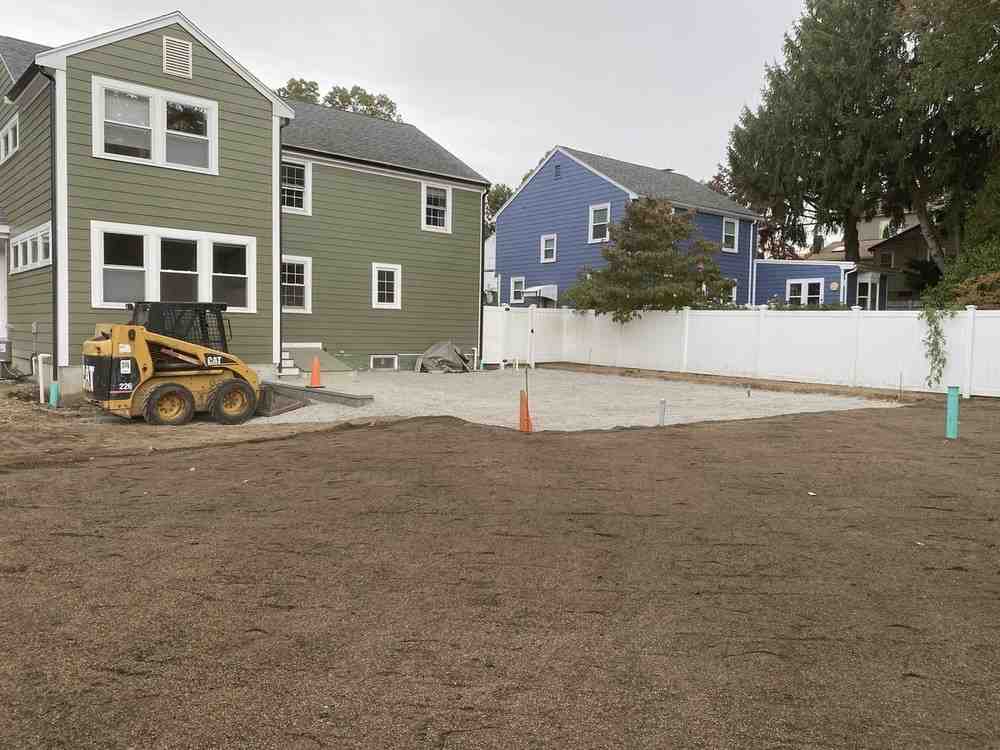
If you think the best way to lay sod starts with unrolling grass, we have some news for you: by the time the first roll hits the ground, 90% of the work should already be finished. In the landscaping world, we often say that a lawn is only as good as the dirt beneath it.
Removing the Old Guard
You cannot simply lay new sod over your existing lawn. We see this mistake often in areas like Newton and Needham, where homeowners hope the new grass will just “smother” the old weeds. Unfortunately, the old grass and weeds will rot, creating an anaerobic layer that suffocates new roots and creates air pockets.
The most efficient method is to rent a sod cutter. This machine slices through the roots of your old turf, allowing you to peel it up like a carpet. For smaller patches in places like Jamaica Plain, a grape hoe or a sturdy shovel can do the trick, but for a full yard, the machine is your best friend.
Soil Testing and Amending
Once the old turf is gone, you need to know what you’re working with. Massachusetts soil can be notoriously acidic or rocky. We recommend taking several soil samples from different spots in your yard. You’re looking for a pH between 6.0 and 7.5. If your soil is too acidic (common in the Northeast), you’ll need to add lime.
To give your new lawn the best start, till the soil to a depth of at least 4 to 6 inches. This alleviates compaction, which is a major “kill step” for new sod. Incorporate about 2 inches of high-quality compost or organic matter to improve drainage and nutrient retention. For more details on this phase, check out our guide on How To Prepare Ground For Sod.
Grading and Leveling
After tilling, rake the area smooth. You want to remove any large rocks, sticks, or debris. The final grade should slope away from your home’s foundation—aim for a drop of at least 1 foot for every 50 feet of distance.
Crucially, the finished soil level should be exactly 1 inch below surrounding paved surfaces like your driveway in Brookline or your patio in Milton. This accommodates the thickness of the sod’s own soil and thatch layer, ensuring you don’t have a “lip” that causes drainage issues or tripping hazards.
Sod vs. Seed: The Reality Check
Why choose sod over seed? In our climate, especially in May 2026, the windows for perfect seeding are narrow. Sod provides instant erosion control and can be installed almost any time the ground isn’t frozen, though early fall remains the “gold standard” for cool-season grasses like Kentucky Bluegrass and Fescue.
| Feature | Sod Installation | Traditional Seeding |
|---|---|---|
| Establishment Time | 7 – 14 Days | 6 – 10 Weeks |
| Initial Traffic | 2 – 4 Weeks | 2 – 4 Months |
| Erosion Control | Immediate | Poor until established |
| Weed Competition | High Resistance | Low Resistance |
For more on the technical side of lawn establishment, Laying Sod: A Step-by-Step Guide to a Lush Lawn offers excellent industry perspectives.
Step-by-Step: The Best Way to Lay Sod for Professional Results
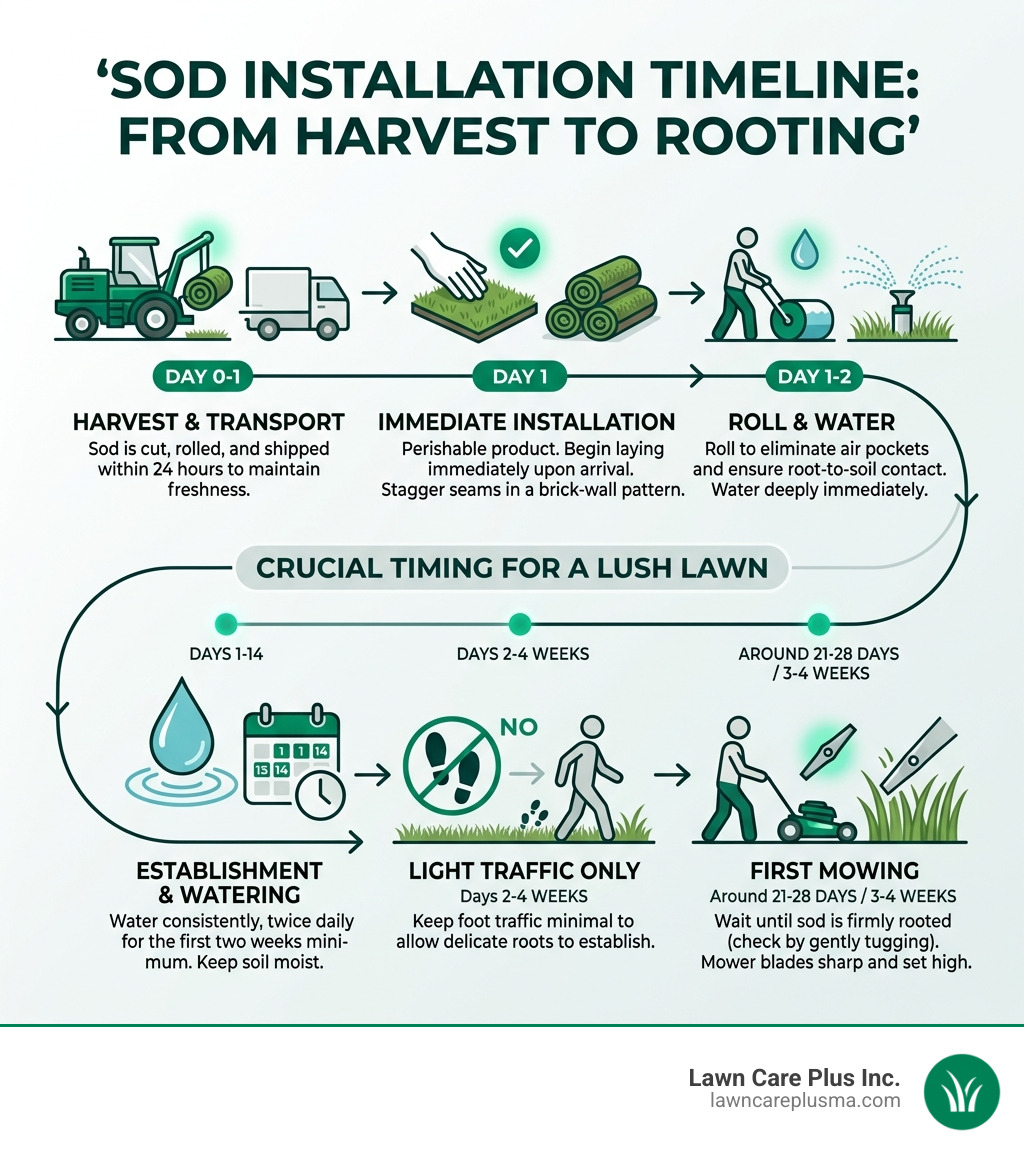
When your delivery arrives, the clock starts ticking. Sod is a living, breathing product. If it sits on a pallet in the sun for more than 24 hours, the center of the stack will begin to heat up, effectively “cooking” the grass. If you can’t lay it immediately, move the pallets to a shady spot in your yard—whether you’re in Waltham or Dedham—and keep the edges moist.
The First Row
Start along the longest straight edge of your yard, such as a fence line or a straight driveway. This sets the trajectory for the rest of the lawn. Lightly mist the soil before laying the first piece; you want it damp but not muddy. This prevents the dry soil from sucking the moisture right out of the new roots.
The Brick-Wall Pattern
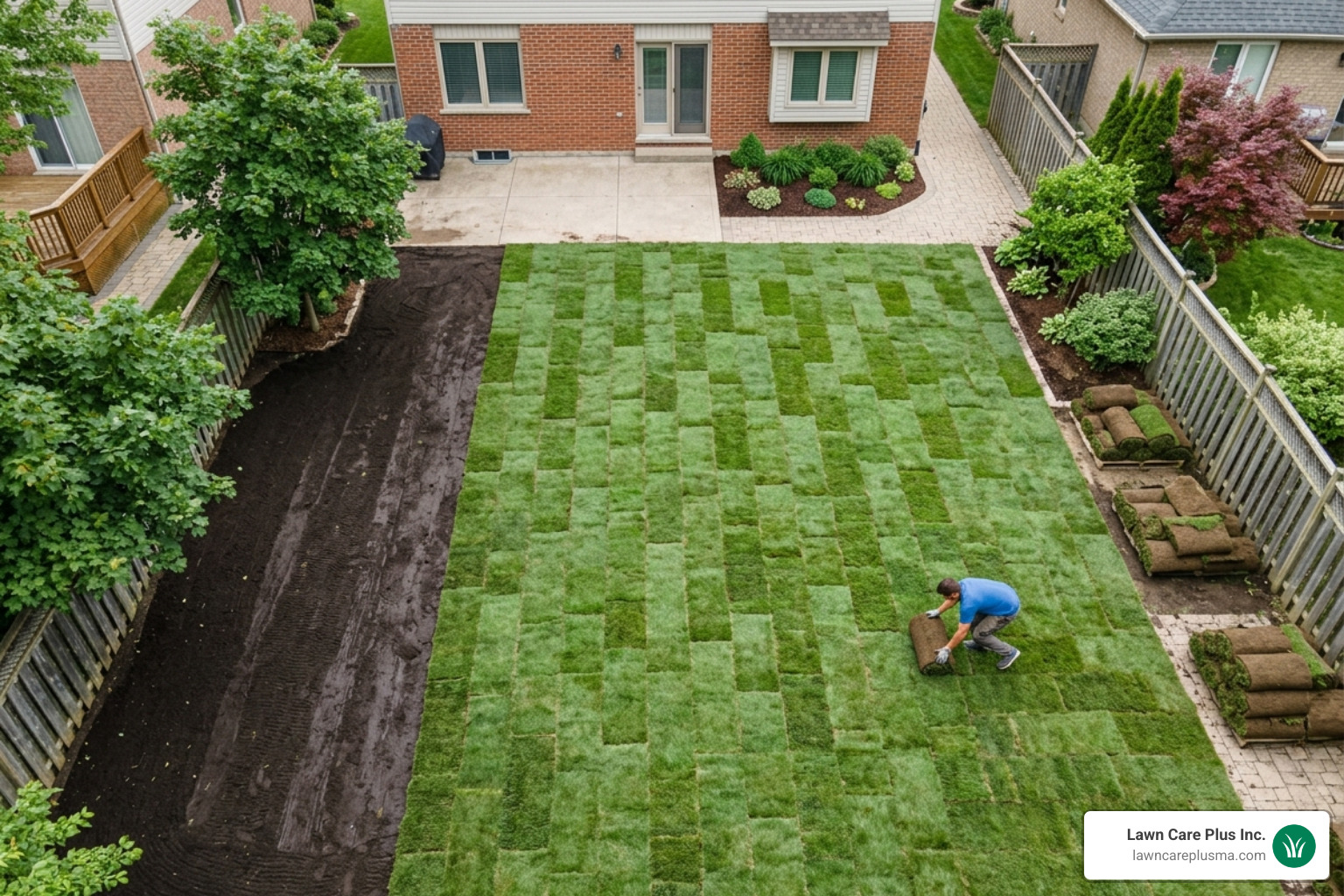
The best way to lay sod is to use a staggered “brick-work” pattern. When you start your second row, cut the first piece in half. This ensures that the vertical seams do not align. Staggered joints are vital because they prevent water from creating “channels” and eroding the soil beneath the sod.
Snug as a Bug
As you work, butt the edges and ends of the sod strips tightly against each other. Do not overlap them, as this creates uneven bumps, and do not leave gaps, which will dry out and turn brown. If you encounter a gap, don’t stretch the sod to fit—sod naturally shrinks slightly as it settles, and stretching it only makes the eventual gaps wider. Instead, tuck the edges firmly together.
For a deeper dive into the mechanics of the layout, see our article on How To Lay Sod.
Handling Curves and Obstacles
You’ll eventually hit a tree, a flower bed, or a curved walkway. Use a sharp utility knife or a linoleum knife to trim the sod. When dealing with curves, some pros use a “darting” technique—cutting small triangular notches to help the sod strip follow a contour without bunching up. For those tricky spots, How To Lay Sod in 7 Easy Steps – This Old House provides great visual tips on tailoring your turf.
Slopes and Hills
If you’re working on a slope—common in parts of Chestnut Hill or Belmont—always lay the sod strips horizontally (perpendicular to the incline). This helps catch water and prevents the strips from sliding. For steep grades, use wooden stakes or biodegradable sod staples to anchor each piece in place until the roots take hold.
The Final Roll
Once the last piece is in place, it’s time for the most overlooked step: rolling. Rent a lawn roller and fill it about one-third to one-half with water. Run it over the entire lawn. This presses the roots firmly into the soil and eliminates air pockets that would otherwise kill the grass.
Post-Installation Care and Maintenance
Congratulations, you have an “instant” lawn! But don’t break out the lawn chairs just yet. The next two weeks are the most critical period for survival.
The Watering Marathon
New sod has a very shallow root system. It cannot reach deep into the earth for water, so you have to bring the water to it.
- Days 1-14: Water twice daily (early morning and mid-afternoon). The goal is to keep the sod and the top inch of soil consistently moist.
- The “Lift Test”: To see if you’re watering enough, lift a corner of a sod piece. The soil underneath should be damp. If it’s bone-dry, increase your watering time.
- Avoid Night Watering: Watering in the evening can lead to fungal diseases like brown patch, especially in our humid Massachusetts summers.
We have a comprehensive guide on How To Care For New Sod that breaks this down by season.
Root Bonding and Traffic
It typically takes 7 to 14 days for the roots to bond with the soil. You’ll know it’s happening when you try to lift a corner of the sod and feel significant resistance. This is the “tug test.”
Keep all foot traffic—including kids and pets—off the lawn for at least 3 weeks. Heavy traffic on new, wet sod will create ruts and shift the pieces before they can anchor themselves.
Mowing and Fertilizing
When should you first mow? Generally, wait until the grass is about 3 to 4 inches tall, which usually happens around the 14-day mark. Set your mower to its highest setting; you never want to remove more than one-third of the grass blade at once. For more timing tips, see When To Mow New Sod.
As for nutrients, hold off on heavy nitrogen for the first 6 weeks. A phosphorus-rich starter fertilizer applied before laying the sod is usually enough to get the roots moving. After 6 to 8 weeks, you can begin a regular maintenance program. Check out our recommendations for Fertilizer For New Sod.
Frequently Asked Questions About Sod
Is laying sod over existing grass the best way to lay sod?
In a word: No. While it might seem like a time-saver, it is a recipe for failure. The existing grass acts as a barrier, preventing the new sod’s roots from making the “soil-to-root” contact they need to survive. Furthermore, as the old grass dies, it creates heat and gasses that can actually kill the new sod from the bottom up. For a successful Lawn Sod Installation, you must start with bare, prepared dirt.
What is the best way to lay sod in the shade?
This is a challenge because most commercial sod is grown in wide-open, full-sun fields. When you move that sun-loving grass into a shady backyard in Brookline or Newton, it can struggle.
- Select the right variety: Ask for a shade-tolerant Fescue blend.
- Overseed immediately: We often recommend overseeding new sod in shady spots with a high-quality shade-tolerant seed mix right away.
- Mow higher: Leave the grass longer in shady areas to allow for more photosynthesis. Our team specializes in Sod And Turf Installation for challenging light conditions.
How much does sod installation cost in 2026?
Based on current internet data, the average cost for professional sod installation typically ranges from $1.00 to $2.00 per square foot. However, depending on the complexity of the site (slopes, debris removal, or soil quality), we see a wide range of pricing from $0.45 to as high as $7.50 per square foot.
Please note that these are average internet-based costs and do not reflect the specific project pricing for Lawn Care Plus Inc. Factors like accessibility in tight Boston neighborhoods or the need for extensive grading can influence the final quote. For an accurate estimate tailored to your property, visit our New Lawn Installations page.
Conclusion
The best way to lay sod isn’t a secret—it’s a process. It requires sweat equity, precise timing, and a commitment to watering when you’d probably rather be doing anything else. But the result is a lawn that transforms your home’s curb appeal in a single afternoon.
At Lawn Care Plus Inc., we’ve spent years perfecting this process across the Boston Metro-West area. From the tight residential lots of Brighton and Watertown to the sprawling commercial properties in Canton and Walpole, our experienced team understands the unique demands of the Massachusetts climate.
Whether you need help with the heavy lifting of a full yard renovation, or you want a pro to handle the delicate work of an irrigation system to protect your investment, we are here to help. If you’re ready to stop dreaming of a green lawn and start walking on one, check out our Complete Lawn Installation Guide or contact us today for a consultation. We serve all local neighborhoods, including West Roxbury, Roslindale, Hyde Park, and beyond. Your “emerald dream” is just a phone call away!