Why New Lawn Installations Transforms Your Property
New lawn installation is one of the most impactful ways to improve your property’s appearance, value, and environmental benefits. Whether you’re building a new home or renovating an existing landscape, proper installation is crucial for long-term success.
Quick Answer: New Lawn Installation Methods
| Method | Best For | Establishment Time |
|---|---|---|
| Seeding | Budget-conscious projects | 7-21 days to germinate; 3-6 months to mature |
| Hydroseeding | Large areas, erosion control | 7-14 days to germinate; 2-3 months to mature |
| Sodding | Immediate results, high-traffic areas | Instant appearance; 2-3 weeks for roots |
| Artificial Turf | Low maintenance, water conservation | Immediate usability |
| Plugging/Sprigging | Warm-season grasses | 3-6 months for full coverage |
As a 25-year turf industry veteran once shared, “A properly installed lawn is like a well-built foundation for a house—get it right from the start, and everything else falls into place.”
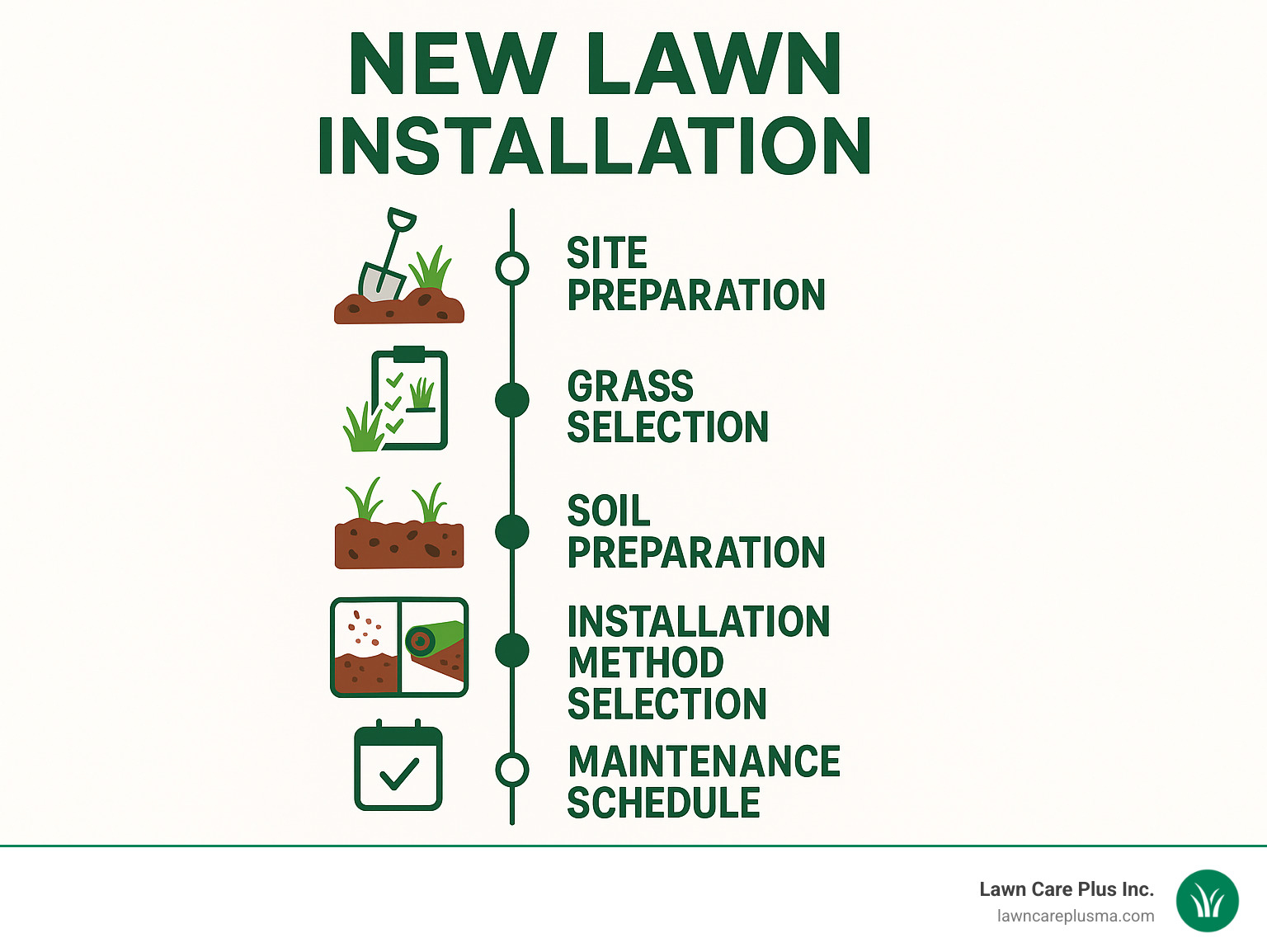
In this guide, we’ll walk you through five proven methods for new lawn installation that guarantee results, covering everything from site preparation to ongoing maintenance.
Why proper installation matters:
- Creates curb appeal and increases property value
- Prevents soil erosion and improves drainage
- Reduces mud, dust, and weed problems
- Provides a comfortable outdoor living space
- Contributes to environmental health
Before diving into specifics, successful lawn installation requires patience. Even with instant-gratification methods like sodding, a truly established lawn takes time to develop strong root systems.
New Lawn Installation further reading:
Choosing the Right Lawn Installation Method
Selecting the appropriate method for your New Lawn Installation depends on several factors: your budget, timeline, soil conditions, and how you plan to use your yard.
Assess Your Goals & Site Conditions
Before deciding on an installation method, evaluate these key factors:
The way your family uses your yard makes a huge difference. Areas with high activity benefit from sodding or robust seed blends that withstand wear and tear.
Massachusetts sunshine patterns vary widely. Most grasses need at least 6 hours of direct sunlight daily, though some varieties are more forgiving in shadier spots.
After rainfall, check for standing water which indicates drainage issues that must be addressed before installation. As my grandfather used to say, “Fix your drainage first, or you’ll be fixing your lawn forever.”
Massachusetts soils vary from sandy coastal compositions to heavy clay inland. Your specific soil type will influence both grass selection and preparation work.
Budget considerations often drive installation decisions. While seeding costs less initially, sodding provides immediate results but at a higher price.
Match Grass Species to Massachusetts Climate
The Boston Metro-West area falls primarily in USDA Hardiness Zones 6a-6b, making it ideal for cool-season grasses:

Kentucky Bluegrass creates that classic, picture-perfect lawn. It’s excellent for sunny areas and creates a dense, self-healing turf that recovers well from damage.
Tall Fescue has deep roots providing impressive drought tolerance, and handles both sunny spots and partial shade with equal grace.
Fine Fescues are the shade specialists. When those tall maple trees make growing grass seem impossible, fine fescues come to the rescue.
Perennial Ryegrass germinates in just 5-7 days. Often mixed with Kentucky bluegrass, it provides quick ground coverage while its slower companion establishes.
“Selecting the right grass species for your specific site conditions is perhaps the most crucial decision you’ll make,” notes our lawn installation team at Lawn Care Plus Inc.
| Method | Best For | Speed | Maintenance | Cost Range |
|---|---|---|---|---|
| Seeding | Budget projects, large areas | Slow | High initially | Lowest |
| Hydroseeding | Large areas, slopes | Medium | Medium | Low-Medium |
| Sodding | Immediate results | Instant | Low initially | Medium-High |
| Artificial Turf | Water conservation | Instant | Very low | Highest |
| Plugging/Sprigging | Warm-season grasses | Very slow | High initially | Low |
Want to learn more? Check out our detailed guide on New Grass Installation.
New Lawn Installation: Site Preparation Essentials
Proper site preparation isn’t just a step in your New Lawn Installation journey—it’s the foundation of your lawn’s future success.
Soil Testing & Amendment
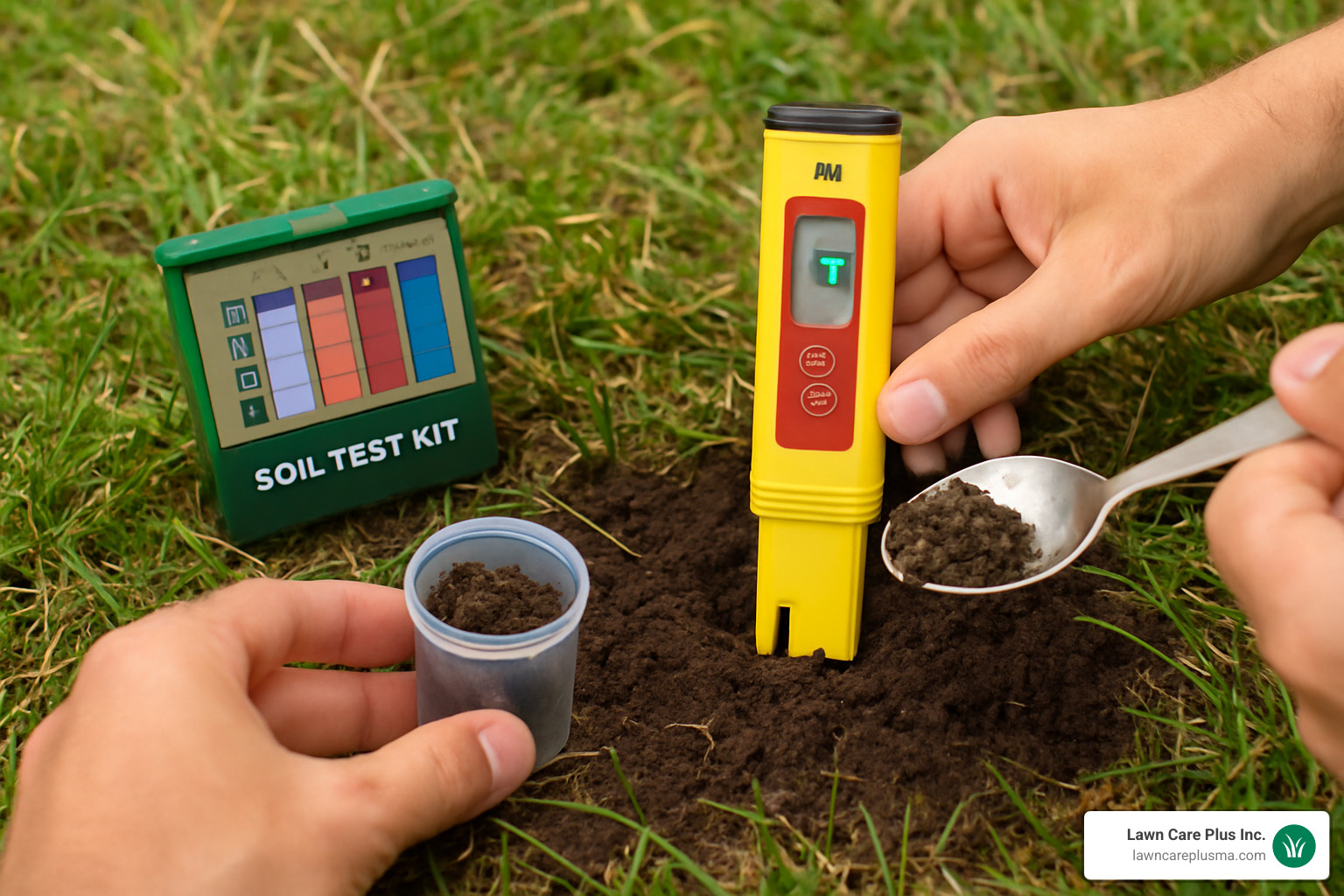
Think of soil testing as your lawn’s medical checkup. It reveals what’s happening beneath the surface before problems appear.
Most Massachusetts soils lean acidic, but your specific property might be different. Collect several 4-6 inch deep soil samples from different areas of your yard and send them to a testing lab—UMass Extension offers affordable testing for local homeowners.
Ideal soil conditions for most grass types include a pH between 6.0 and 7.0. If your soil tests below 6.0 (common in our region), limestone application can help. For the rare Massachusetts yard with alkaline soil above 7.0, elemental sulfur helps bring it down.
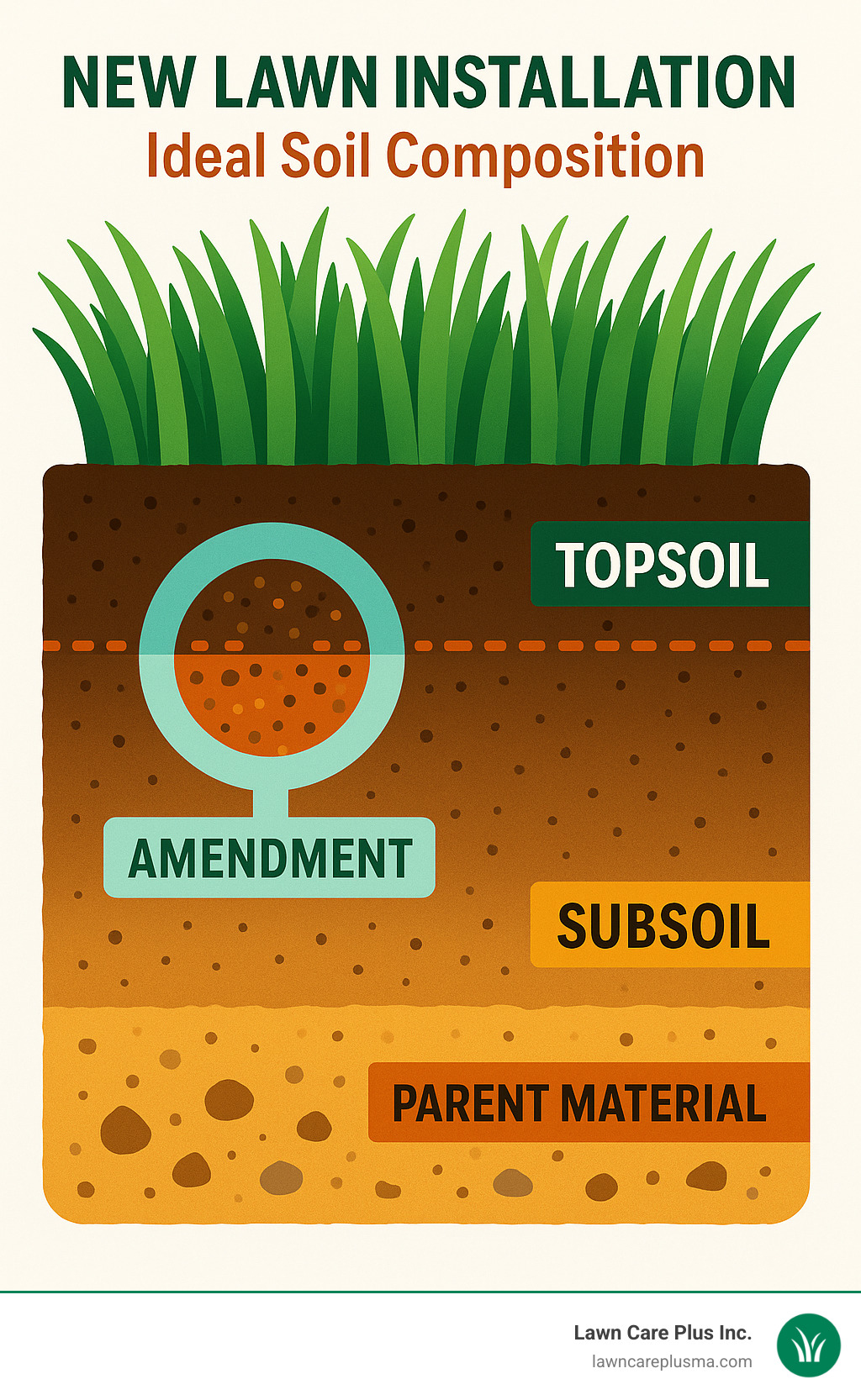
Beyond pH, your soil structure matters tremendously. Clay soils benefit from compost and coarse sand to improve drainage, while sandy soils need organic matter to retain moisture.
A proper New Lawn Installation typically requires 2-3 inches of quality topsoil, especially if your existing soil is poor. Incorporating a starter fertilizer with higher phosphorus content encourages strong root development.
Grading, Leveling & Drainage Fixes
Water is both essential for your lawn and potentially its worst enemy when it doesn’t drain properly. Proper grading ensures water moves away from your home’s foundation and prevents soggy spots.
The golden rule for basic grading: slope the soil away from foundations at a rate of 1 inch per 4 feet (minimum). When finalizing your grade, aim for about 1 inch below sidewalks and driveways to accommodate new grass height.
For yards with more serious drainage issues, consider these solutions:
French drains work wonders for wet areas by redirecting water through underground perforated pipes. Dry wells provide underground collection points where water can slowly disperse. For surface water management, gentle swales can direct flow away from problem areas.
Installing or Upgrading Sprinkler Systems
A properly designed irrigation system dramatically improves your New Lawn Installation success. Installing sprinklers before your lawn goes in ensures consistent, efficient watering during the critical establishment phase.
Modern irrigation systems include smart controllers that adjust watering schedules based on weather conditions and zone planning that allows different areas to receive appropriate amounts of water based on exposure and plant types.
For most residential lawns, you’ll choose between spray heads (ideal for smaller areas) and rotors (better for larger spaces), while drip systems provide precise watering for garden beds.
Installing Your Lawn: 5 Proven Methods That Guarantee Results
Now that your site is properly prepared, let’s explore five proven New Lawn Installation methods that deliver beautiful results for Massachusetts homeowners.
Traditional Seeding for New Lawn Installation
Seeding remains the most budget-friendly approach to creating a new lawn. While it requires more patience, many homeowners appreciate the cost savings and deeper root development.
The process begins with a final smoothing of your prepared soil bed. Using a quality broadcast spreader, apply your selected seed blend in two perpendicular passes to ensure even coverage. Gently rake the seeds into the top 1/8 inch of soil, then apply a thin layer of straw mulch to retain moisture.
Professional Tip: “In Massachusetts, timing is everything with seeding,” shares our lawn team at Lawn Care Plus Inc. “Mid-August through September gives you ideal conditions with less weed competition.”
How to Install a New Lawn from Seed
Hydroseeding 101
Hydroseeding sprays a special slurry mixture of seed, fertilizer, mulch, soil amendments, and a binding agent evenly across your prepared soil. The paper-based mulch creates a mini-greenhouse effect around your seeds, helping them germinate in just 7-14 days.
New Lawn Installation via hydroseeding particularly shines on properties with slopes or erosion concerns. The tackifier (binding agent) holds everything in place until young roots can establish.
The process begins just like traditional seeding with thorough soil preparation. A specialized truck mixes your custom seed blend with the other ingredients and sprays it evenly across your yard.
Instant Impact with Sod
When you need a finished lawn right now, nothing beats sod. While more expensive than other methods, sod delivers an instant, usable lawn that transforms your property overnight.
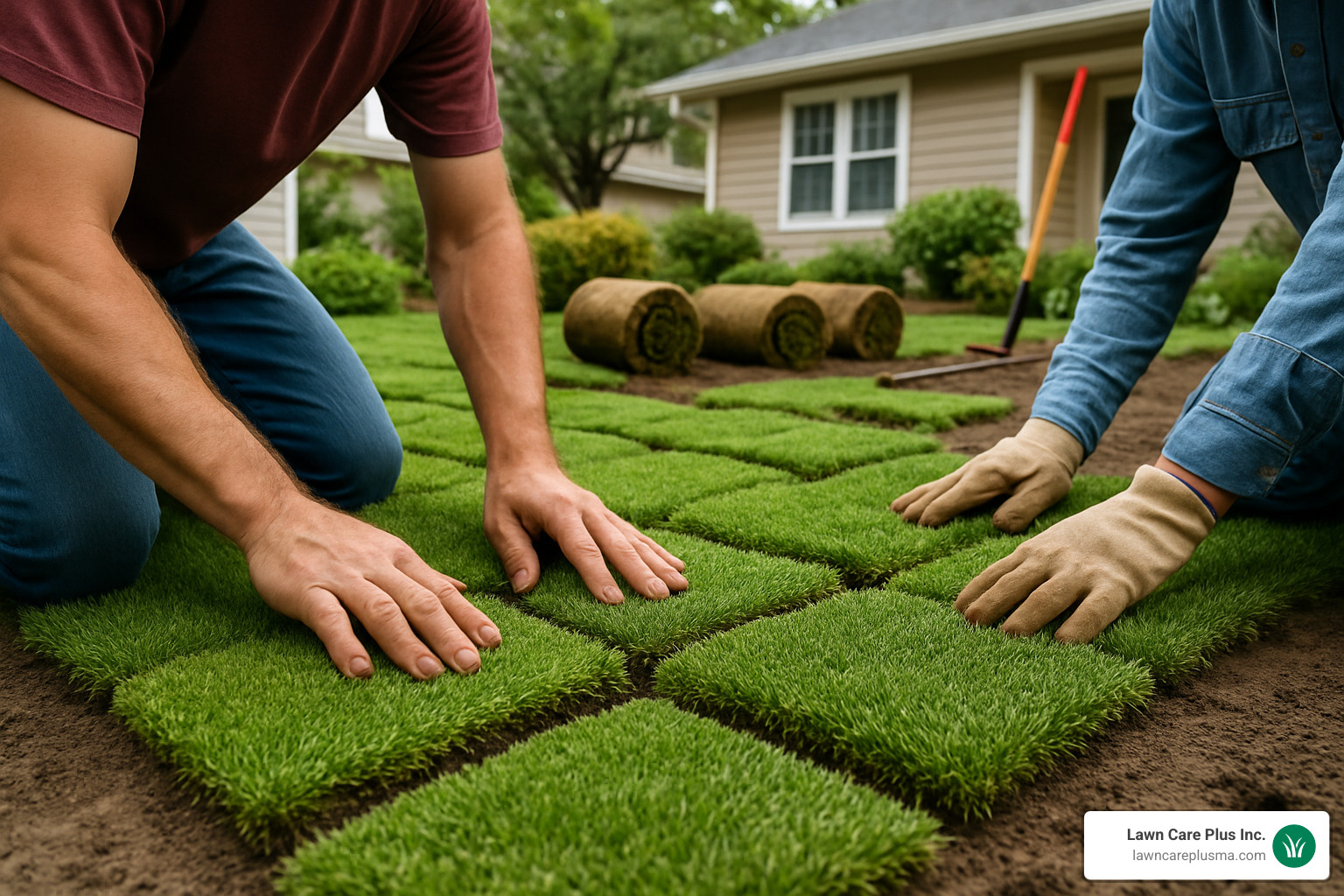
The key to successful sodding lies in proper installation. Arrange your sod pieces in a staggered, brick-like pattern with tightly butted seams. This prevents seams from lining up and creates a stronger lawn.
When selecting sod, freshness is critical. Look for sod that’s moist and vibrant green, and confirm it was cut within 24 hours of delivery. After laying your final piece, roll the entire lawn with a water-filled roller to ensure good sod-to-soil contact, then water thoroughly.
Low-Maintenance Artificial Turf
For challenging areas where natural grass struggles, artificial turf offers a compelling alternative. Modern synthetic options look increasingly realistic while eliminating mowing, watering, and fertilizing.
Installing artificial turf begins by removing about 4 inches of existing soil and installing a proper drainage foundation of crushed rock. After carefully rolling out and securing the turf material, special attention goes to seaming sections together. The final touch is adding infill material between the blades.
While artificial turf has improved dramatically, it does heat up significantly in direct sunlight and has a finite lifespan of 15-20 years before replacement becomes necessary.
Budget-Friendly Sprigging & Plugs
While less common in Massachusetts, sprigging and plugging offer economical alternatives for establishing certain grass types, particularly warm-season varieties that might work in protected microclimates.
Sprigging involves planting small pieces of grass stems or runners in furrows or holes, while plugging uses small squares of sod placed in a grid pattern. Both methods allow grass to spread horizontally and fill in over time.
The main advantage is cost – at a fraction of full sodding prices, these methods give you living grass that’s already adapted to grow in our region. The tradeoff is patience, as full coverage typically takes 3-6 months.
First 12 Weeks: Caring & Maintaining Your Brand-New Lawn
The first three months after your New Lawn Installation are make-or-break time. Think of your new lawn like a baby – it needs extra attention now to grow into a healthy, resilient adult lawn later!
Week 0-2 Establishment
Those first two weeks are absolutely critical. Your new grass is just getting its footing.
For seeded lawns, water 3-4 times daily with short 5-10 minute sessions. You want the soil surface consistently moist, like a wrung-out sponge. Avoid walking on these delicate areas, as your footprints might create depressions where water collects or seeds wash away.
If you’ve installed sod, you’ll need deeper watering 2-3 times daily. The key is making sure water penetrates through the sod layer into the soil beneath. Occasionally lift a corner of sod to check for root development.
Hydroseeded lawns follow a similar watering routine to traditional seeding. The green mulch will gradually disappear as your grass emerges. Stay off the surface until grass reaches about an inch tall.

Week 3-6 Transition
Now your lawn is finding its feet, and it’s time to start transitioning to a more sustainable care routine.
Watering changes are the biggest shift. For seeded or hydroseeded lawns, reduce frequency to once daily, while sodded lawns can go to every other day. However, when you do water, do it for longer to encourage roots to grow deeper. Early morning watering (5-7am) reduces evaporation and disease risk.
The first mowing is a milestone! For seeded lawns, wait until the grass reaches 3-4 inches tall. Sodded lawns are usually ready after 2-3 weeks. Remember the golden rule of mowing: never remove more than 1/3 of the blade height in a single cut.
Now’s also the time for a gentle fertilization. A starter fertilizer applied after the first or second mowing gives your lawn the nutrients it needs without overwhelming it.
Week 7-12 Long-Term Health
By now, your lawn should be transitioning to a regular maintenance schedule.
Your watering schedule can relax to 1-2 deep waterings per week, totaling about 1 inch of water (including rainfall). This deep, infrequent watering encourages roots to grow downward, creating a drought-resistant lawn.
Regular mowing should maintain a height of 3-3.5 inches for most cool-season grasses in Massachusetts. Vary your mowing patterns each time to prevent soil compaction and encourage upright growth.
For fertilization, follow your soil test recommendations. If you installed in fall, wait until spring for additional feeding.
Weed control requires patience. Avoid pre-emergent herbicides on newly seeded lawns until after 3-4 mowings, as they can harm young grass.
More info about Lawn Care and Maintenance
How Much Does a New Lawn Cost? Budget & Environmental Considerations
Understanding the complete picture of costs helps you plan properly and avoid mid-project budget surprises.
The total cost of your New Lawn Installation varies widely depending on your specific situation. Site preparation typically runs between $0.50-$3.00 per square foot, with the higher end reflecting properties that need extensive grading. Quality topsoil or amendments add another $0.30-$1.20 per square foot.
Your choice of installation method dramatically impacts your bottom line:
Traditional seeding remains the most economical approach at $0.75-$2.70 per square foot including materials and labor.
Hydroseeding offers a middle ground at $0.50-$1.00 per square foot and becomes increasingly cost-effective for larger properties.
Sodding provides instant lawn satisfaction for $1.50-$4.00 per square foot installed.
Artificial turf represents the premium option at $8.00-$12.00 per square foot including proper base preparation.
Don’t forget about “hidden” costs! Significant regrading might add $1,000-$3,000 to your project. Removing existing vegetation and rocks could be another $500-$1,500. Drainage solutions like French drains might cost an additional $1,500-$4,500.
An irrigation system dramatically improves establishment success and long-term lawn health. Plan on $1.80-$5.20 per square foot for professional installation.
Ongoing maintenance represents a significant part of your lawn’s lifetime cost. Professional mowing and edging typically runs $30-$40 per visit for average suburban lots. Fertilization adds about $60 per application (generally 3-4 times annually), while annual aeration and overseeding costs $40-$60 per 1,000 square feet.
These cost figures represent average prices based on internet data and industry standards—not actual costs for Lawn Care Plus services.
The Environmental Value of Your Lawn Investment
While we’re talking numbers, let’s not forget the environmental benefits your lawn provides:
Your lawn actively captures carbon dioxide from the atmosphere, helping combat climate change. On hot summer days, your grass surface can be up to 30 degrees cooler than asphalt, reducing cooling costs and the urban heat island effect.
Those grass roots form a powerful erosion control system, preventing soil loss during heavy New England downpours. The root zone and soil also act as a natural water filter, removing pollutants from runoff before they reach local waterways.
Scientific research on lawn benefits
Frequently Asked Questions about New Lawn Installation
How long until I can use my new lawn?
For seeded lawns, light foot traffic should wait until after you’ve mowed 3-4 times, which typically happens around 8-12 weeks after seeding.
Hydroseeded lawns follow a similar timeline, though with faster germination. Most homeowners can begin light use after about 6-10 weeks.
If you’ve opted for sod, light traffic can typically begin after roots have established—usually 2-3 weeks after installation. It’s best to avoid games, pets, and heavy use for at least 4-6 weeks.
Artificial turf can be used immediately after installation is complete.
Is it cheaper to DIY or hire a pro?
While handling a new lawn installation yourself can save approximately 30-40% on labor costs, professionals bring expertise that often results in fewer mistakes and better long-term outcomes.
DIY installation might make sense if:
You have previous landscape experience, your yard is relatively small (under 1,000 square feet), you already own or can easily rent the necessary equipment, and your property has minimal grading or drainage complexities.
Professional installation is worth considering when:
Your property presents challenging issues, you’re installing irrigation alongside your new lawn, your available time is limited, you want guaranteed results with potential warranties, or your project exceeds 2,000 square feet.
Many homeowners find a middle ground—handling simpler preparation tasks themselves while bringing in professionals for the more technical aspects.
What’s the best season for New Lawn Installation in New England?
Fall (Late August to Mid-October) is the golden season for all installation methods. This period offers the perfect combination of warm soil and cooling air temperatures, creating ideal conditions for root development with less weed competition.
Spring (April to Early June) represents your second-best option but will face more aggressive weed competition and may encounter heat stress as summer approaches.
Summer (Late June to Early August) presents significant challenges, particularly for seeding. The heat and potential drought conditions make establishment difficult.
Winter (November to March) is simply not recommended for any installation method in our region.
“In our experience serving communities from Belmont to Walpole, fall installations consistently outperform spring installations, especially for seeded lawns,” our scheduling team at Lawn Care Plus shares.
Conclusion
A successful new lawn installation transforms your property while providing environmental benefits that extend beyond your property line. Whether you choose seeding, hydroseeding, sodding, artificial turf, or plugging, proper preparation and aftercare are the keys to long-term success.
The most important takeaways from our guide:
Proper planning pays off. Take time to assess your site conditions, budget, and timeline before choosing an installation method.
Don’t skip soil preparation. The quality of what’s beneath your lawn determines its long-term health and appearance.
Choose the right grass for your conditions. In Massachusetts, cool-season grasses like Kentucky bluegrass, perennial ryegrass, and fescues typically perform best.
Timing matters. Fall installations have the highest success rate in our New England climate.
Maintenance is crucial. The first 12 weeks after installation determine your lawn’s long-term health and resilience.
At Lawn Care Plus Inc., we’ve been helping Boston Metro-West homeowners and businesses create beautiful, sustainable lawns for years. Our comprehensive approach to new lawn installation ensures results that last, whether you’re in Newton, Brookline, Jamaica Plain, or anywhere else in our service area.
Every property tells a unique story with its own challenges and opportunities. While this guide provides the foundation for successful lawn installation, sometimes a professional perspective can make all the difference.
More info about our lawn care services