
Understanding Your Lawn Installation Options
Sod and turf installation offers two distinct paths to a dream lawn. Natural sod provides authentic beauty, while artificial turf offers low-maintenance appeal. Understanding their key differences is crucial for making the right choice for your Boston Metro-West property.
Quick Comparison: Sod vs. Artificial Turf
| Factor | Natural Sod | Artificial Turf |
|---|---|---|
| Installation Time | Same day installation, 2-3 weeks to establish | 1-2 days installation, immediate use |
| Maintenance | Regular watering, mowing, fertilizing | Occasional rinsing and brushing |
| Lifespan | Permanent with proper care | 15-25 years |
| Best For | Natural ecosystem, authentic look | High traffic, water conservation |
| Climate Impact | Cooling effect, oxygen production | Heat retention, no environmental benefit |
Natural sod is a living lawn that becomes part of your property’s ecosystem. It requires deep soil preparation and daily care for the first 2-3 weeks while roots establish.
Artificial turf is a maintenance-free alternative that stays green year-round without water or mowing. Installation involves creating a stable base and securing the synthetic materials.
Both options quickly transform bare ground into a usable lawn, but they serve different lifestyles and budgets. Your choice will depend on your maintenance preferences, water usage concerns, and long-term goals.
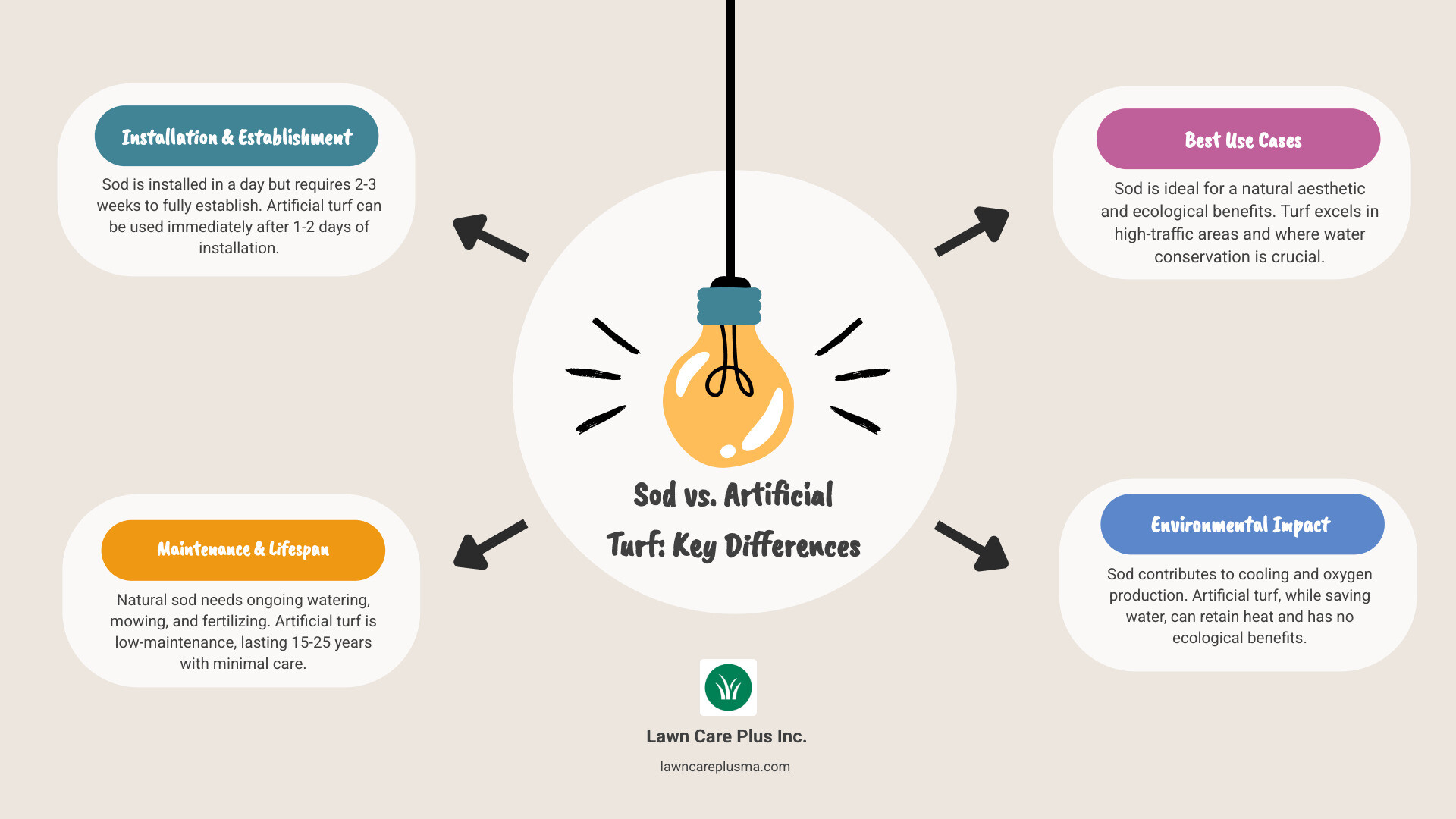
Quick sod and turf installation definitions:
Understanding Your Lawn Options: Sod vs. Artificial Turf
Both natural sod and artificial turf offer an instant change from bare soil to a beautiful green space, but they serve very different lifestyles. The beauty of modern sod and turf installation is the immediate result, but it’s key to match the right solution to your specific needs and long-term goals.
For homeowners exploring all their options, our comprehensive guide on new grass installation covers additional methods to achieve your perfect lawn.
What is Natural Sod and Why Choose It?
Natural sod is pre-grown grass cultivated at a farm and harvested with its soil and root system intact. These mature turf strips arrive ready to transform bare ground into a lush lawn in a single day, skipping the long wait associated with seeding.
Beyond speed, sod offers several benefits:
- Immediate Erosion Control: The established root system is perfect for slopes or areas where soil runoff is a concern.
- Natural Weed Barrier: The dense, mature turf naturally crowds out weeds from the start.
- Supports the Ecosystem: Sod produces oxygen, filters pollutants, and has a cooling effect. It supports beneficial insects and microorganisms, creating a healthy environment.
Since sod is a living, perishable product, it requires immediate installation upon delivery. For those interested in other natural grass options, consider learning about how to install a new lawn from seed.
What is Artificial Turf and Why Choose It?
Artificial turf uses synthetic fibers engineered to look and feel like real grass. The biggest draw for most homeowners is the low maintenance lifestyle—no mowing, fertilizing, or watering.
Key advantages of artificial turf include:
- Water Conservation: Synthetic grass requires no irrigation beyond occasional rinsing, saving on water bills and supporting conservation efforts in Massachusetts.
- Year-Round Green: Your lawn looks perfect in every season, with no dormant brown grass in winter or stress patches in summer.
- Durability for High Traffic: It handles constant use from kids, pets, and entertaining without developing worn spots.
If you’re curious about how artificial turf might work for your specific situation, learn more about artificial turf options and how they could transform your outdoor space.
The Installation Process for Sod and Artificial Turf
Whether you choose natural sod or artificial turf, the secret to a beautiful lawn is proper preparation. Both sod and turf installation projects share similar foundational steps, but the materials and techniques differ. While both options transform your yard quickly, proper installation requires careful planning and is physically demanding, which is why many homeowners opt for professional help.
For detailed guidance on the entire sod installation process, check out our comprehensive guide on how to sod a new lawn.
How to Prepare the Ground for Sod and Turf Installation
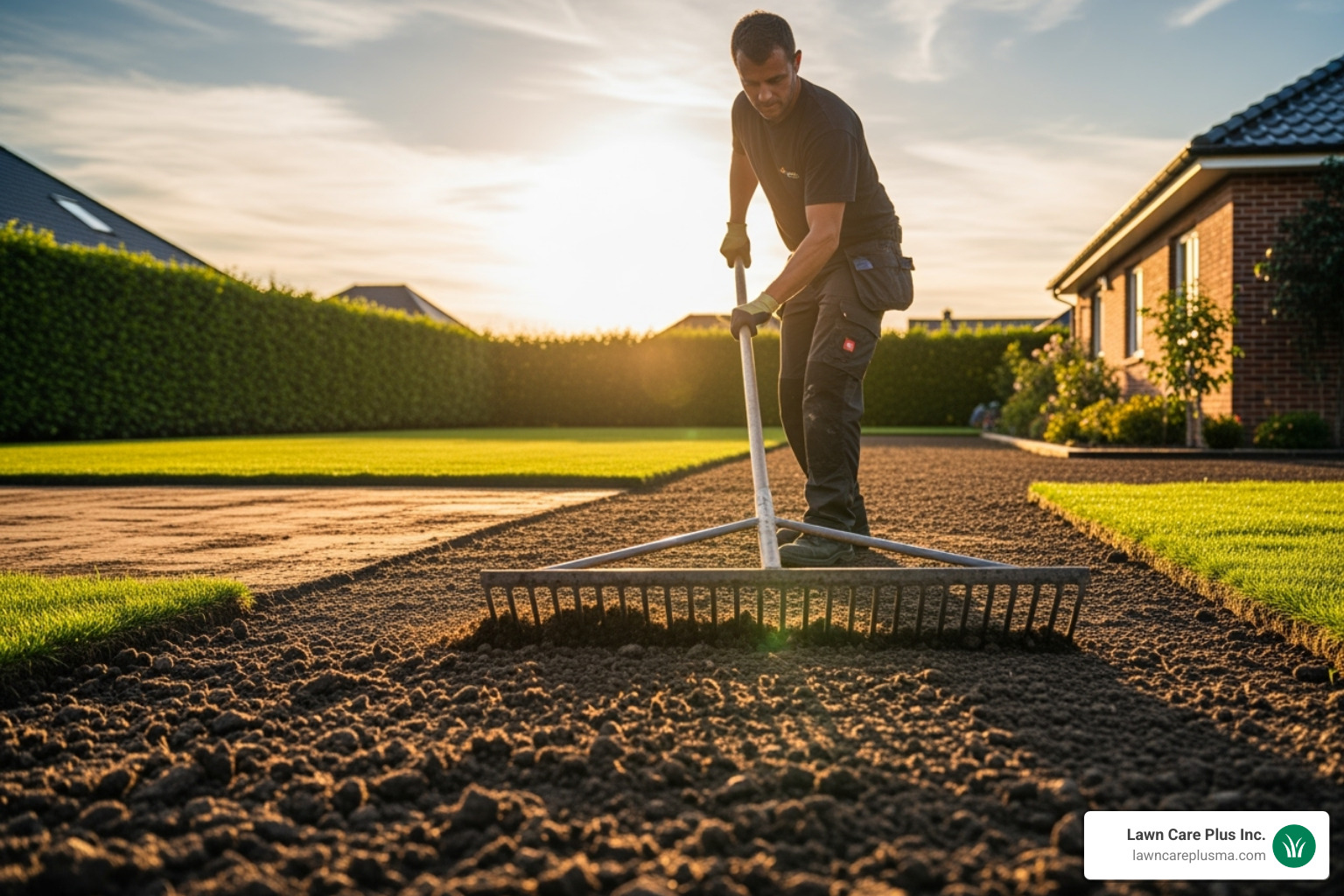
Ground preparation is the most critical stage for your new lawn’s success. Start by clearing the area of old grass, weeds, large rocks, and debris. A sod cutter is effective for removing existing turf.
Soil preparation is where the paths for sod and turf diverge. For natural sod, tilling the soil to a depth of at least six inches is vital. This breaks up compaction, improves drainage, and gives new roots room to grow. Installing sod on compacted, untilled soil often leads to poor drainage, shallow roots, and a lawn that struggles with drought and disease.
For natural sod, testing your soil is a valuable step. A simple soil test from a local extension service reveals your soil’s pH and nutrient content. Grass thrives in a pH between 6 and 7.5. Adding organic matter like compost improves soil structure for both drainage and water retention.
Grading and leveling are important for both lawn types. The area should be graded to slope away from structures, preventing water issues. For artificial turf, this stage also includes creating a specialized base layer of compacted aggregate to ensure stability and drainage.
For more detailed guidance on this crucial phase, visit our complete guide on how to prepare ground for sod.
Step-by-Step Guide to Laying Your New Lawn
With the ground prepared, it’s time to lay your lawn. First, calculate your area’s square footage and order 5-10% extra material to account for cuts and adjustments.
Timing is everything with natural sod. It’s a living product that deteriorates quickly, especially in summer heat. Plan to install sod within hours of delivery for the best results.
Key steps for installing natural sod:
- Start along the longest straight edge, like a driveway or fence.
- Lay sod in a staggered brick pattern to hide seams.
- Keep joints tight but don’t overlap the pieces.
- Use a water-filled lawn roller after laying to ensure firm soil-to-sod contact and remove air pockets.
- Use a sharp utility knife to cut and fit sod around curves and landscape features.
Artificial turf installation involves rolling the synthetic material over the prepared base, securing seams with specialized tape and adhesive, and trimming the edges. The final step is applying and brushing in an infill material (like sand) to help the blades stand upright and add stability.
For professional insights into the complete installation process, explore our complete pro guide to a sod lawn installation.
Key Decision Factors: Timing, Types, and Cost
Choosing the right sod and turf installation requires aligning your decision with your lifestyle, budget, and property conditions in Massachusetts. Factors like our local climate, your yard’s sun exposure, and expected foot traffic all play a role. We’ve helped countless homeowners steer these decisions, and we’re here to break it down for you.
For more inspiration on creating your perfect outdoor space, check out our ultimate guide to designing your dream lawn.
Choosing the Right Grass Type for Massachusetts
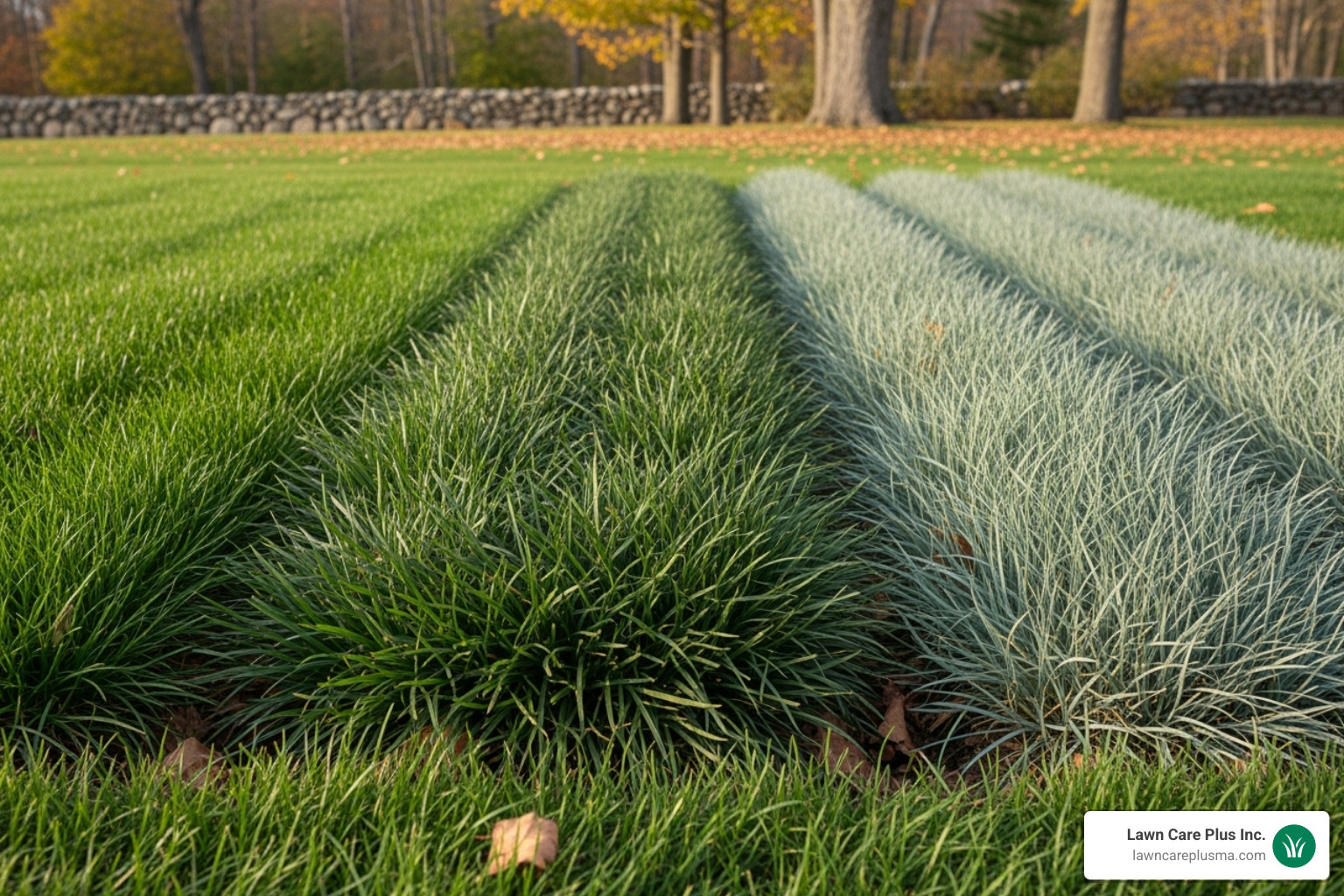
For natural sod, selecting the right cool-season grass is crucial for success in New England.
- Kentucky Bluegrass: The standard for a picture-perfect lawn. It creates a dense, dark green, self-repairing turf that thrives in sun but needs consistent water.
- Fescue Blends: These are the workhorses. Tall fescue is tough and drought-tolerant, great for high-traffic areas. Fine fescue is a champion in shady spots where other grasses fail.
- Perennial Ryegrass: Often included in blends, it establishes quickly and handles wear well.
For artificial turf, the choice is about synthetic materials. Polyethylene is popular for its soft feel and realistic look. Nylon is a heavy-duty option for high-use areas, while polypropylene is a more budget-friendly choice.
The Best Time of Year for Installation
Timing your sod and turf installation is critical, especially for natural sod.
For natural sod in Massachusetts, there are two ideal windows. Spring (mid-April to early June) uses moderate temperatures and rain to help roots establish before summer heat. Fall (late August to October) is often considered the best time, as cooler air and warm soil are perfect for root development with less watering required.
Artificial turf offers more flexibility. It can be installed almost any time of year, as it doesn’t need to establish roots. We only need to avoid extreme weather for the safety and efficiency of our installation crew.
For detailed seasonal guidance, visit our guide on the best time to install new lawn.
Analyzing the Cost of Sod and Turf Installation
Budget is a major factor in your decision. Natural sod has a lower upfront cost but requires ongoing maintenance expenses. Artificial turf has a higher initial investment but minimal long-term costs.
Based on general industry data, professional sod installation can range from $1.80 to $12.00 per square foot, including materials and labor. For a 1,000 sq. ft. lawn, this could be $1,800 to $12,000.
Artificial turf installation generally ranges from $5.00 to $20.00+ per square foot, making the same project cost between $5,000 and $20,000 or more. The final price depends on turf quality, base preparation, and site complexity.
Long-term, natural sod requires annual costs for water, fertilizer, and mowing ($200-$1,000+), while artificial turf maintenance is minimal ($50-$200). Over 10-15 years, the savings on turf maintenance can offset its higher initial cost.
Please note: These are average costs based on general internet data and industry estimates. Your actual project cost will depend on many factors specific to your property. We provide personalized quotes after an evaluation.
For a comprehensive breakdown of what influences pricing, check out our detailed guide on the cost of new lawn installation.
Post-Installation Care and Long-Term Maintenance
Your sod and turf installation is complete, but now the care begins. Natural sod requires dedicated attention to establish, while artificial turf needs only simple upkeep. With proper care, both will provide years of enjoyment. Our comprehensive guide on lawn care and maintenance offers valuable insights for any lawn.
Caring for New Sod: The First 30 Days

The first month is when your new sod is most vulnerable as its roots establish.
- Immediate Watering: Water new sod within 30-60 minutes of installation. It is dehydrated and needs immediate moisture.
- First Week Watering: Keep the sod and the soil beneath it consistently moist. This often means watering 3-5 times daily for 10-15 minutes each time. Pay extra attention to edges and slopes.
- Weeks 2-3: Gradually reduce watering frequency to encourage deeper root growth. By week two, watering every other day is often sufficient. Check that the soil is moist 3-4 inches deep.
- First Mowing: Mow after 7-10 days, when the grass is about 3 inches tall. Set your mower high (to cut to 2 inches) and use a sharp blade to avoid tearing the grass.
- Fertilizer: Apply a starter fertilizer around the 3-4 week mark to replenish nutrients and support root development.
- Foot Traffic: Keep all traffic off the lawn for the first week. Limit use for at least three weeks to allow roots to anchor firmly.
For more detailed guidance, see our article on how to care for new sod.
Long-Term Maintenance and Common Issues
After the establishment period, maintenance becomes more routine.
Natural sod maintenance involves a predictable rhythm. Water established lawns with about 1 inch of water per week, applied deeply and infrequently to encourage strong roots. Mow regularly, never removing more than one-third of the blade height at a time. Follow a seasonal fertilization and aeration schedule to keep the lawn healthy.
Artificial turf care is much simpler. Use a hose for occasional rinsing to remove dust and debris. Use a stiff brush for regular brushing to keep fibers upright and prevent matting in high-traffic areas.
Common issues like dry patches on new sod usually point to a lack of water or poor soil contact. Yellowing can mean overwatering or a nutrient deficiency. For turf, regular brushing prevents most matting issues, and damage can often be professionally repaired.
Remember sod’s short shelf life; it must be installed the same day it’s delivered, as it can die on a pallet in just 6-12 hours in hot weather.
Frequently Asked Questions about Lawn Installation
We hear many of the same questions about sod and turf installation. Here are answers to the most common ones.
How long before you can walk on new sod?
Keep all foot traffic off new sod for at least one week. This initial period is critical for the roots to anchor into the soil. For the best results, we recommend avoiding heavy use for two to three weeks. This allows the lawn to become strong and resilient enough to handle regular activity.
Can you install sod without tilling?
While technically possible, we strongly advise against it. Tilling soil to a depth of at least six inches is crucial for breaking up compaction, improving drainage, and allowing new roots to grow deep. Skipping this step often results in a shallow-rooted, weaker lawn that struggles long-term.
How long does sod last on a pallet before it needs to be installed?
Sod is a living, perishable product that must be installed the same day it is delivered. In summer heat, sod on a pallet can begin to yellow and deteriorate in as little as six hours. This urgency is why we carefully coordinate delivery and installation to ensure your new lawn gets the best possible start.
Conclusion: The Perfect Lawn for Your Massachusetts Home
Choosing between sod and turf installation means picking the solution that best fits your lifestyle and goals for your Boston Metro-West property. There’s no single right answer, only the one that’s right for you.
Natural sod offers the instant change of a lush, living lawn that becomes part of your property’s ecosystem, producing oxygen and providing a natural cooling effect. It requires a commitment to watering, mowing, and fertilizing, a routine many homeowners find rewarding.
Artificial turf is the ultimate problem-solver for those seeking a low-maintenance lifestyle. It provides a consistently green lawn year-round with incredible durability for active families and pets, all while conserving water.
The best choice depends on what you value most: the authentic beauty of a natural lawn or the convenience of a maintenance-free one.
Whatever you decide, proper installation is the key to success. The experienced team at Lawn Care Plus Inc. understands the unique challenges of Massachusetts soil and climate. We provide professional lawn sod installation and high-quality synthetic turf services to help you achieve your dream lawn.
Ready to transform your outdoor space? Explore our full range of landscaping services and let’s create the perfect lawn for your lifestyle.
