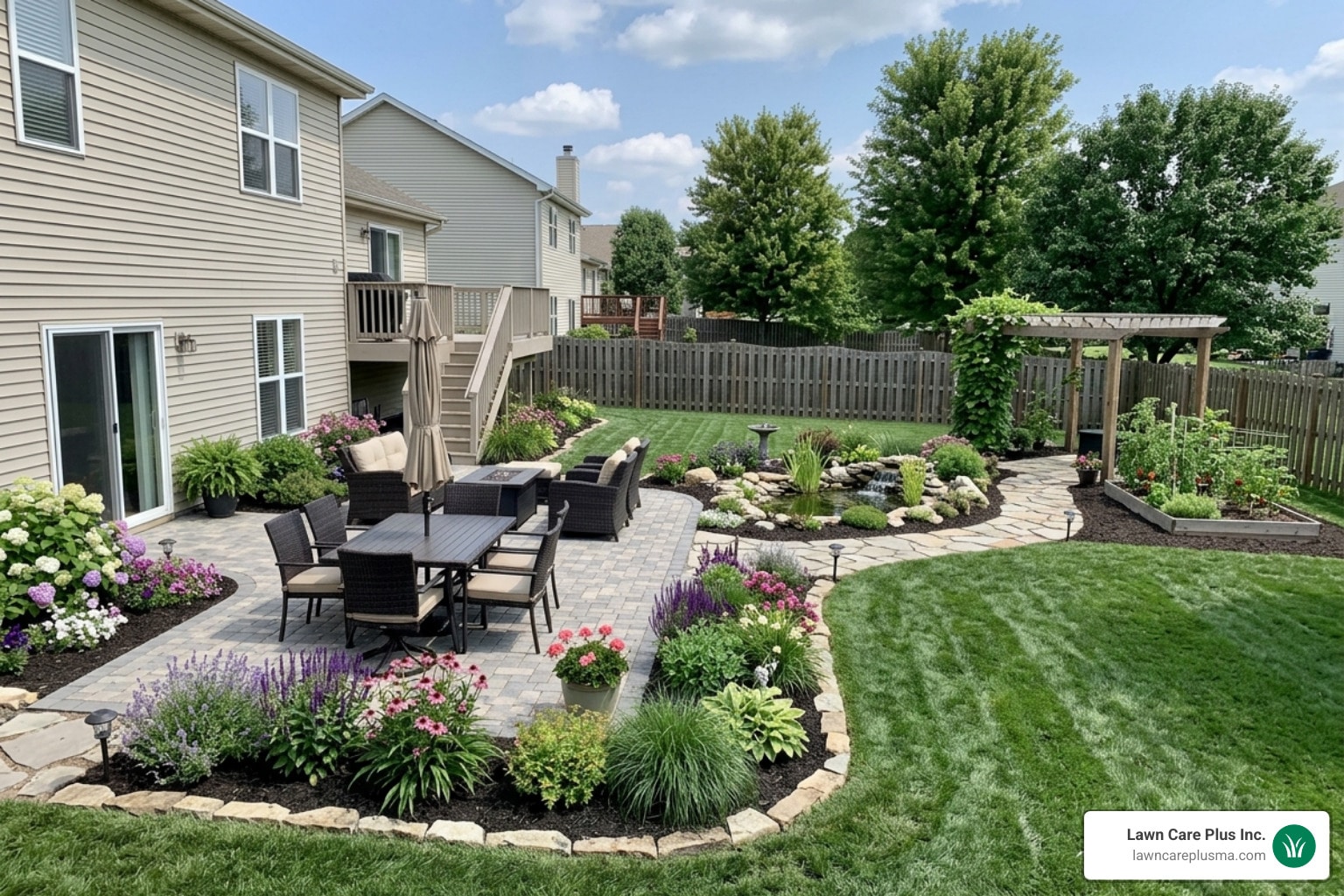
What are the primary options for transforming my yard?
Homeowners in the Boston Metro-West area typically choose between sod, traditional seeding, and artificial turf. Each method offers unique benefits regarding installation speed, cost, and maintenance. For a detailed look at purchasing options, you can check out this sod buying guide.
What is sod and how does it differ from seeding or artificial turf?
Sod is pre-grown grass harvested in rolls with an established root system. When we perform a lawn sod installation, we transplant a mature lawn onto your soil for instant results. Sod roots in about two weeks and provides immediate erosion control, making it ideal for sloped properties.
In contrast, seeding involves planting seeds directly into the soil. It is cost-effective but requires months to mature. Artificial turf is a synthetic surface made from polyethylene or nylon. It offers a low-maintenance, evergreen look but lacks the natural cooling and ecological benefits of living grass.
What are the benefits and drawbacks of traditional seeding?
Traditional seeding is the most budget-friendly option for large areas. It allows for custom grass mixes tailored to specific light and soil conditions. Over time, seeded lawns develop deep, resilient root systems. However, seeding requires patience; full establishment takes 6-8 weeks. During this time, sprouts are vulnerable to birds, weeds, and rain. For faster results, hydroseeding uses a slurry of seed and mulch to accelerate growth. You can learn more about hydroseeding cost and hydro grass seed on our site.
Why consider artificial turf for your yard?
Artificial turf is popular for its minimal upkeep. It eliminates mowing, watering, and fertilizing. Modern synthetic grass looks remarkably natural and lasts 15-20 years. It is an excellent choice for pet runs or high-traffic areas where water conservation is a priority. While the initial cost is higher, it saves significant time and resources over its lifespan.
Which option is best for my yard?
| Feature | Sod | Seed | Artificial Turf |
|---|---|---|---|
| Appearance | Instant lawn | Gradual growth | Instant, manicured |
| Establishment | 2 weeks to root | 2-3 months | Instant |
| Cost | Moderate | Lowest | Highest |
| Maintenance | Moderate | Moderate | Very low |
| Erosion Control | Excellent | Poor until grown | Good |
| Durability | Good | Strong roots | Excellent |
How do I select the ideal lawn type for my specific conditions?
Choosing the right grass is vital for long-term success. In Massachusetts, our climate and soil dictate which varieties will thrive. See our guide on how to choose the best type of grass for more details.
What climate considerations impact grass selection?
Massachusetts is best suited for cool-season grasses that grow vigorously in spring and fall. Common types include:
- Kentucky Bluegrass: Lush and dense; prefers full sun.
- Fine Fescues: Excellent for shade and dry conditions.
- Tall Fescue: Heat and drought-tolerant with good wear resistance.
- Perennial Ryegrass: Establishes quickly; often used in mixes.
How important is soil analysis for a new lawn?
Soil analysis is the most critical pre-installation step. A test identifies pH levels and nutrient deficiencies, allowing us to apply the right amendments. Most grasses prefer a pH between 6.0 and 7.5. We also assess drainage; organic matter can be added to improve clay or sandy soils. Proper preparation is key to preparing ground for sod.
What role do sunlight and foot traffic play in grass choice?
- Sunlight: Kentucky Bluegrass needs sun, while Fine Fescues handle shade. Matching the variety to your light levels prevents thinning.
- Foot Traffic: For play areas or commercial paths, durable varieties like Tall Fescue or Perennial Ryegrass are recommended to withstand wear.
What are the essential steps for a successful sod installation?
Proper execution is vital for sod to thrive. For a comprehensive look at the process, refer to this step-by-step guide.
What tools and materials are needed for a DIY sod installation?
- Tools: Sod cutter, rake, rototiller, water-filled lawn roller, utility knife, and garden hose.
- Materials: Fresh sod (order 5-10% extra), topsoil, compost, and starter fertilizer.
How do I properly prepare the soil before laying sod?
- Clear Vegetation: Remove all weeds and old grass.
- Grade: Ensure the soil slopes away from foundations and sits 1-2 inches below hardscapes.
- Till: Loosen soil to 4-6 inches to alleviate compaction.
- Amend: Add compost or lime based on soil tests.
- Level: Rake the surface smooth and firm.
- Pre-irrigate: Lightly moisten the soil the night before.
What are the step-by-step instructions for laying sod?
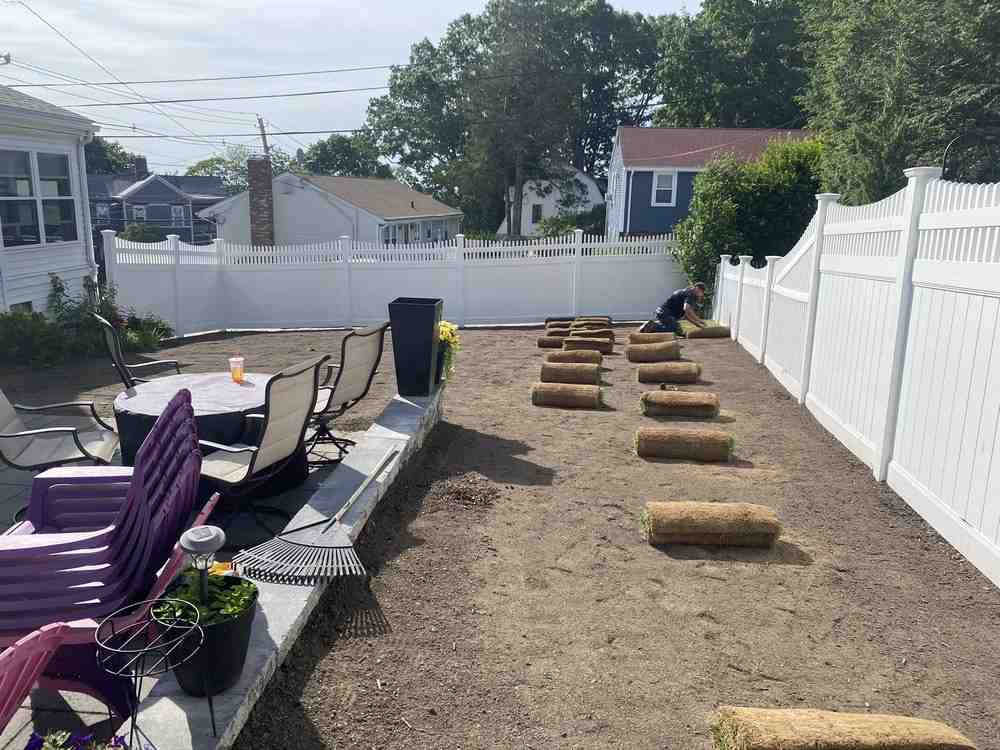
- Schedule Delivery: Install sod within 24 hours of delivery.
- Straight Edge: Start along a driveway or fence.
- Butt Tightly: Unroll pieces and press edges together without overlapping.
- Stagger Joints: Use a brick-like pattern to avoid long seams.
- Trim: Use a utility knife for curves and obstacles.
- Roll: Use a lawn roller to eliminate air pockets.
- Water: Irrigate immediately to rehydrate the roots.
How do I properly care for my new sod after installation?
The first month is critical for establishment. Learn more about how long the installation process takes on our blog.
What is the optimal watering schedule for new sod?
- Immediate: Water for 40-60 minutes right after installation.
- Weeks 1-2: Water twice daily for 15-20 minutes. In extreme heat, increase to 3-4 times daily.
- Weeks 3-4: Transition to every other day for longer durations to encourage deep roots.
- Established: Aim for one inch of water per week in early morning sessions.
When should I mow new sod for the first time?
Wait 3-4 weeks until the grass is 1/2 to 1 inch taller than the target height. Ensure it is firmly rooted by gently tugging a corner. Use a sharp blade and never remove more than 1/3 of the blade height.
How and when should I fertilize new sod?
Apply a starter fertilizer 30-60 days after installation. For established lawns, fertilize every 6-8 weeks during the growing season. This ensures your new grass installation remains healthy and vibrant.

What common problems might arise and how can I troubleshoot them?
What are common mistakes to avoid?
- Poor Soil Prep: Skipping tilling or leveling leads to poor rooting.
- Installation Delays: Letting sod sit on pallets for over 24 hours.
- Underwatering: The most common cause of sod failure.
- Overlapping: Creates uneven surfaces and suffocates the grass.
How do I troubleshoot common issues?
- Brown Patches: Usually caused by water deprivation or poor soil contact. Check irrigation and re-roll the area.
- Yellow Spots: Often due to pet waste or over-fertilization. Flush the area with water.
- Poor Rooting: Increase watering frequency and ensure the sod is pressed firmly against the soil.
Can sod be installed on slopes or uneven ground?
Sod is excellent for slopes because it provides immediate erosion control. Use sod staples to prevent sliding. For uneven ground, proper grading is essential. In some cases, using a ground grid can provide structural support for the soil beneath the sod.
What are the cost considerations and benefits of professional yard installation?
How much does sod installation cost?
Based on internet data from April 2026, here are the average cost ranges:
- DIY Sod Installation: Typically ranges from $0.30 to $2.10 per square foot for materials.
- Professional Sod Installation: Generally ranges from $0.80 to $5.50 per square foot, including labor and prep.
Please note: These are average costs based on internet data and not actual costs for Lawn Care Plus Inc. Prices vary based on location, grass type, and site conditions. Check our lawn installation price page for more info.
What are the advantages of hiring professionals?
- Expertise: We understand Massachusetts soil and climate nuances.
- Equipment: We use professional-grade sod cutters and heavy rollers for a flawless finish.
- Efficiency: A pro team can prep and lay 1,000 square feet in a single day.
- Warranties: Many professional services come with guarantees.
Lawn Care Plus Inc. provides new lawn installations across the Boston Metro-West area, including Newton, Wellesley, and Needham. We handle the labor-intensive process so you can enjoy a perfect result.
Frequently Asked Questions about Yard Installation
When is the best time of year to lay sod?
Early autumn or early spring are ideal. Cooler temperatures and natural rainfall help roots establish without the stress of summer heat.
How long does it take for sod to become usable?
Sod typically roots for light foot traffic in 2-4 weeks. Full establishment for regular use and mowing takes 6-8 weeks.
Can I lay sod over an existing lawn?
No. Existing grass prevents the new sod from making contact with the soil, leading to root failure. Proper removal and soil preparation are required for success.
Conclusion
Embarking on a yard installation project can significantly enhance your home’s curb appeal and functionality. By understanding the differences between sod, seeding, and artificial turf, carefully selecting the right grass for your environment, and following proper installation and care guidelines, you can achieve a beautiful and thriving outdoor space. Whether you choose a DIY approach or opt for professional assistance, a well-executed yard installation is an investment that pays dividends for years to come.
For expert guidance and professional yard installation services in the Boston Metro-West area, consider reaching out to Lawn Care Plus Inc. Our experienced team is ready to help you transform your vision into a lush reality. Contact us today for a consultation!