
Why Choose Sod for an Instant Lawn?
Lawn sod installation is the fastest way to get a lush, green lawn. Unlike seeding, which takes months, sod provides an instant change, boosting curb appeal in a single day. Key benefits include immediate erosion control, natural weed prevention, and a durable lawn ready for light use in just a few weeks.
Sod vs. Seed Quick Comparison:
| Factor | Sod | Seed |
|---|---|---|
| Time to green lawn | 1 day | 2-4 months |
| Initial cost | Higher | Lower |
| Weed resistance | Excellent | Poor initially |
| Erosion control | Immediate | Takes months |
| Installation difficulty | Moderate | Easy |
Sod is mature grass grown on a farm for 12-18 months, then harvested with roots and soil. Installing it gives you a head start that would otherwise take over a year to achieve from seed. The process involves preparing your soil, laying the sod, and caring for it during the first few weeks. While it requires physical effort, it’s a manageable project for many homeowners.
For more comprehensive information about establishing new grass, check out our new grass installation services.
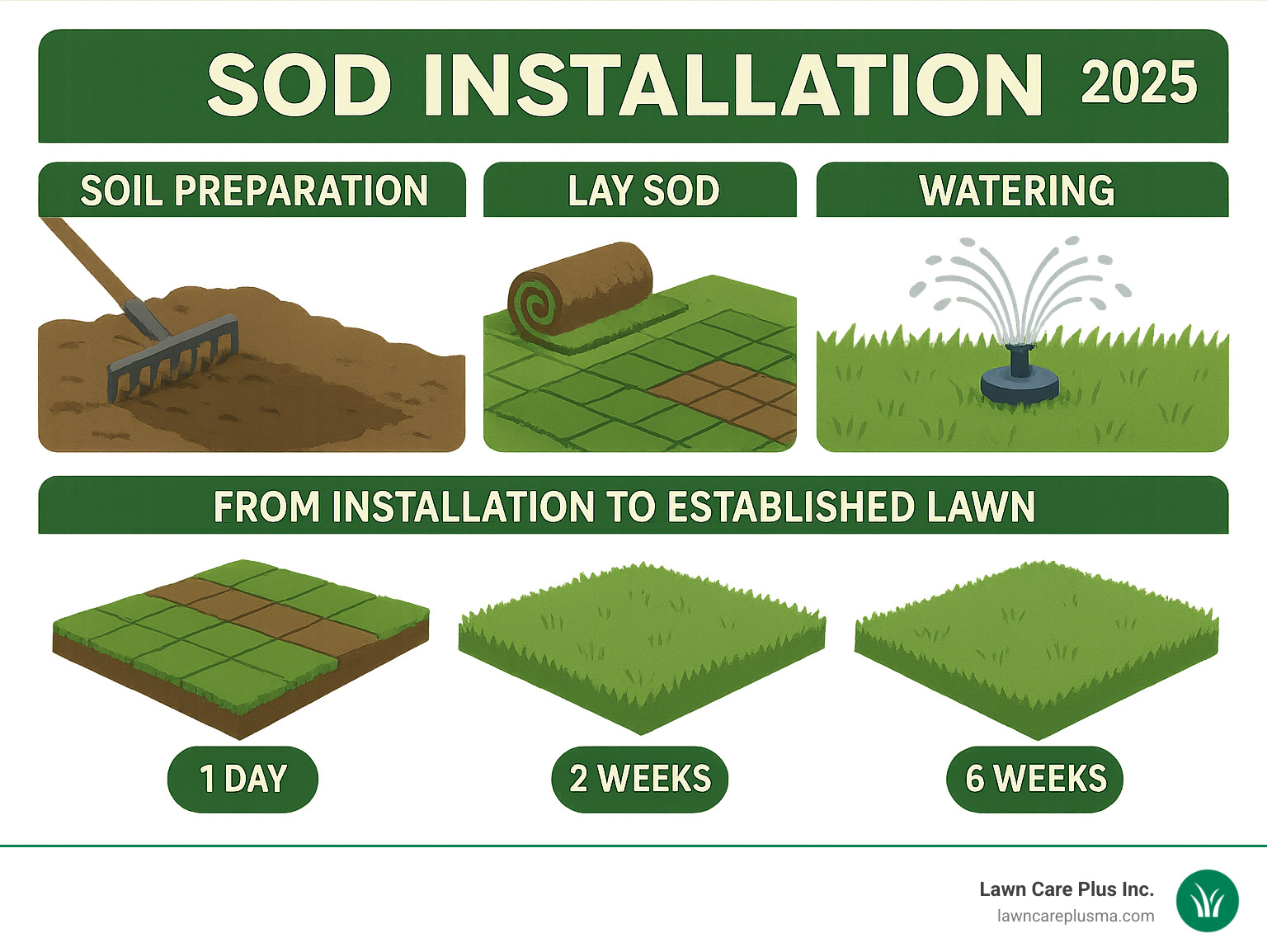
Key terms for lawn sod installation:
Pre-Installation Prep: Setting the Stage for Success
Thorough preparation is the secret to a successful lawn sod installation. A strong foundation is everything. Neglecting this phase can lead to a struggling lawn and wasted effort.
Measuring Your Lawn and Ordering Sod
First, measure the square footage of the area you plan to sod. For rectangles, multiply length by width. For irregular shapes, break the area into smaller sections, calculate each, and add them together. A Lawn Area Calculator can help. Always order about 5% more sod than you calculated to account for trimming and fitting around curves. Plan for delivery, as a single pallet of sod can weigh over a ton.
Soil Preparation: The Unsung Hero of a Healthy Lawn
Proper soil preparation is the most critical factor for your new sod. It ensures the roots can establish themselves deeply and quickly.
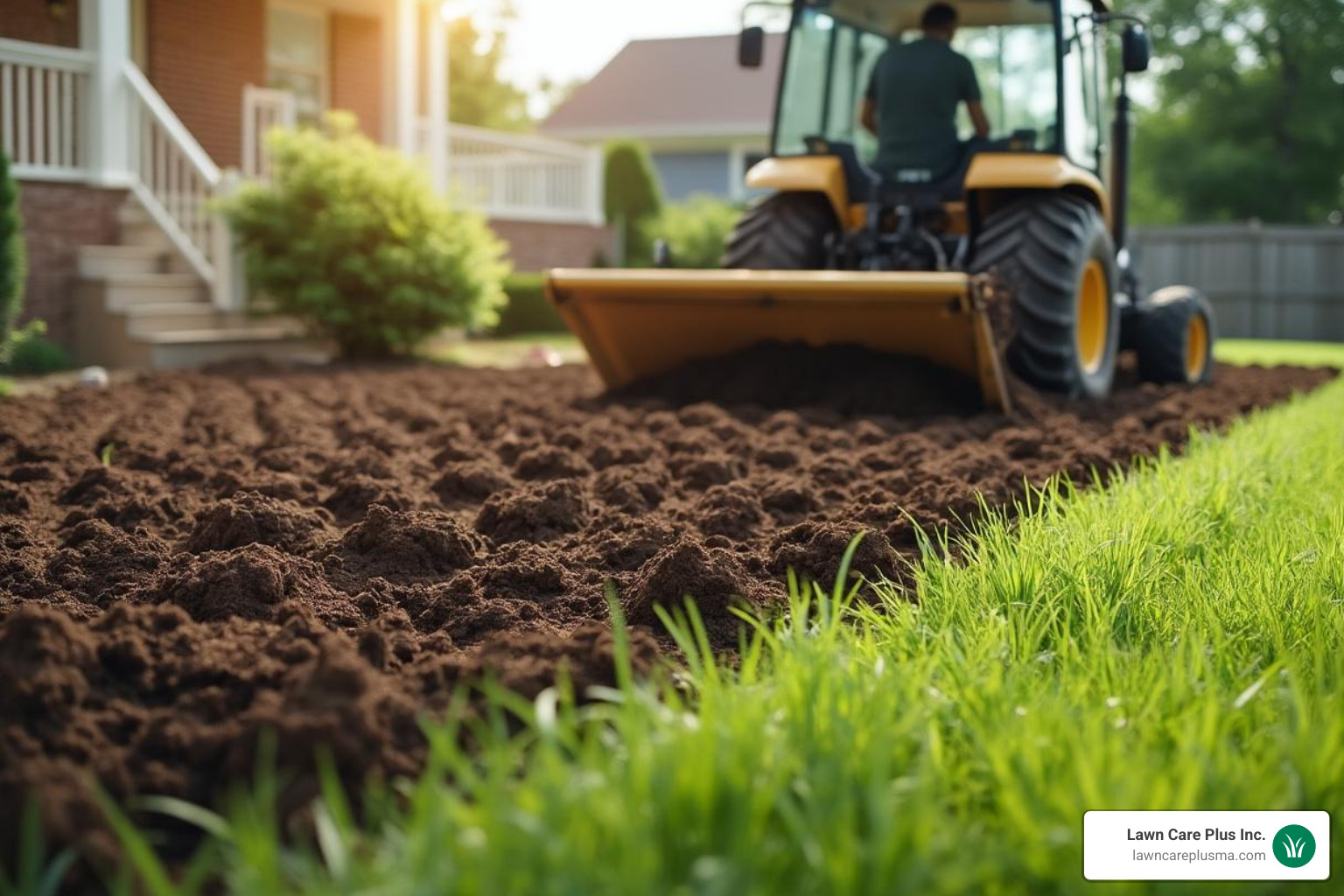
- Remove Old Lawn and Debris: You must remove any existing lawn. Never lay new sod over old turf. This prevents roots from connecting with the soil and creates a bumpy surface as the old grass decomposes. Use a sod cutter or grub hoe to strip away the old turf and clear away any rocks or debris.
- Till the Soil: Tilling loosens compacted soil, allowing roots to grow deep. Till the soil to a depth of at least six inches, or eight inches for heavy clay. A rototiller makes this job much easier.
- Test and Amend the Soil: A soil test is essential. It reveals your soil’s pH and nutrient deficiencies. Turfgrass prefers a pH between 6.0 and 7.5. Based on the results, amend the soil. Add two inches of compost or organic matter to improve drainage in heavy clay or water retention in sandy soil. Use lime to raise pH in acidic soil or sulfur to lower it in alkaline soil. Mix in three cubic yards of high-quality topsoil per 1,000 square feet to add vital nutrients.
- Grade for Drainage: Create a smooth, level surface. The final grade should be about one inch below adjacent paved areas to account for the sod’s thickness. Ensure a slight slope away from your house to prevent water from pooling near the foundation. A smooth, properly graded lawn is safer and requires less water.
For more detailed guidance, visit our page on how to prepare ground for sod.
Choosing the Right Sod and the Best Time to Install
Picking the right sod type for your climate and sun exposure is crucial for long-term success.
- Cool-season grasses: Ideal for Massachusetts, these include fescues, Kentucky bluegrass, and perennial ryegrass. Bluegrass and ryegrass thrive in sun, while fine fescues are better for shady areas.
- Warm-season grasses: These are suited for southern states and include bermudagrass, zoysia, and St. Augustine.
Ideal Seasons for Sod Installation
Spring and fall are the best times for lawn sod installation in cooler climates. Moderate temperatures and rainfall help roots establish quickly. Summer installation is possible but requires more diligent watering.
Late-season (late fall/early winter) installation, or dormant sodding, can also be successful. As long as the ground isn’t frozen, the sod’s roots can slowly establish over the winter with less watering, greening up quickly in the spring.
For more information, check out our guide on the best time to install a new lawn.
The Complete Lawn Sod Installation Process
With your soil prepped and sod delivered, it’s time to lay your new lawn. This is the most satisfying part of the process.
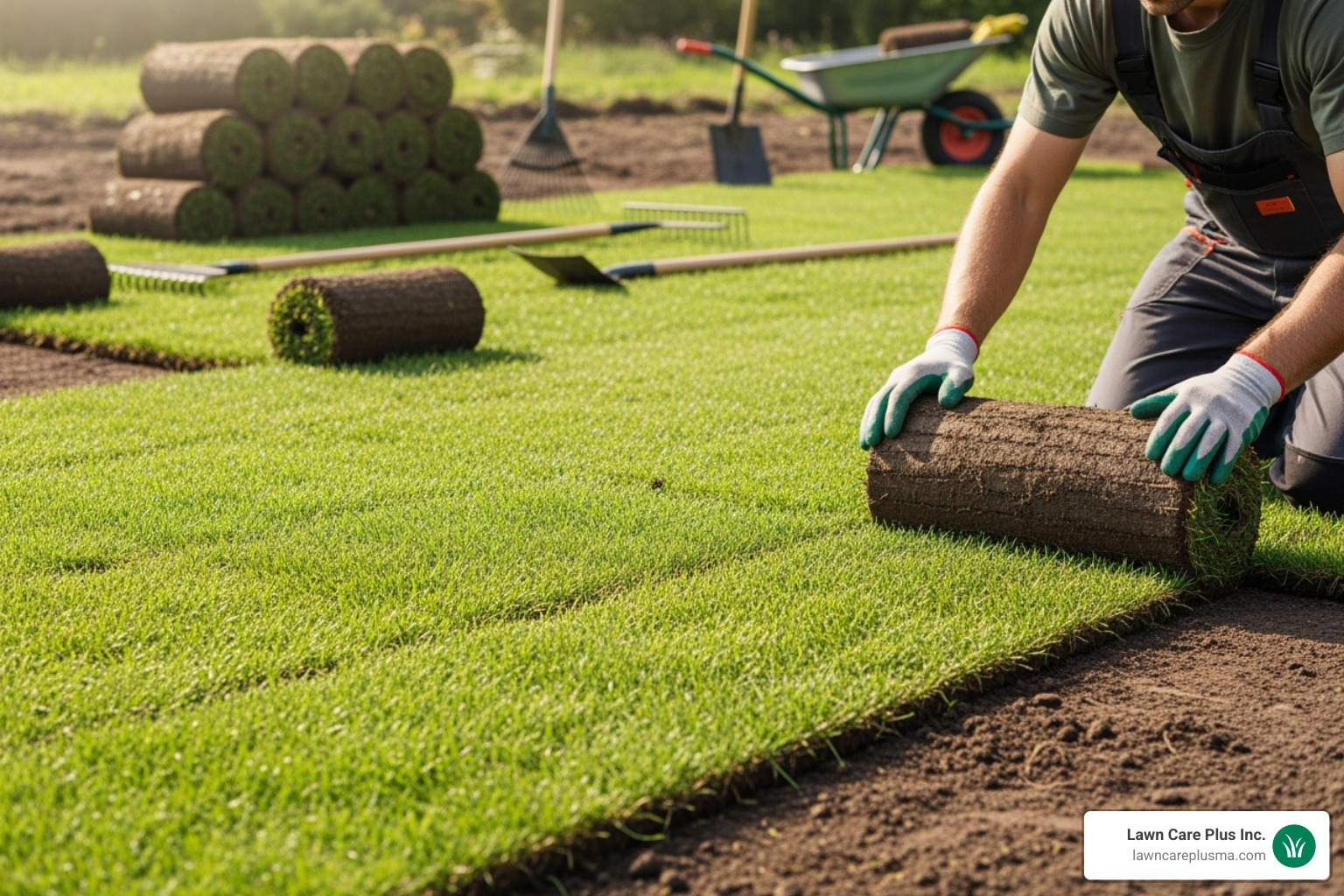
Gather your tools: a sharp utility knife, a lawn roller, a bow rake, and gloves. Sod is perishable and should be installed the same day it’s delivered. If you must wait, keep it shaded and lightly misted. Just before you begin, lightly water the prepared soil to prevent it from drawing moisture from the new sod.
Step 1: Laying the First Row
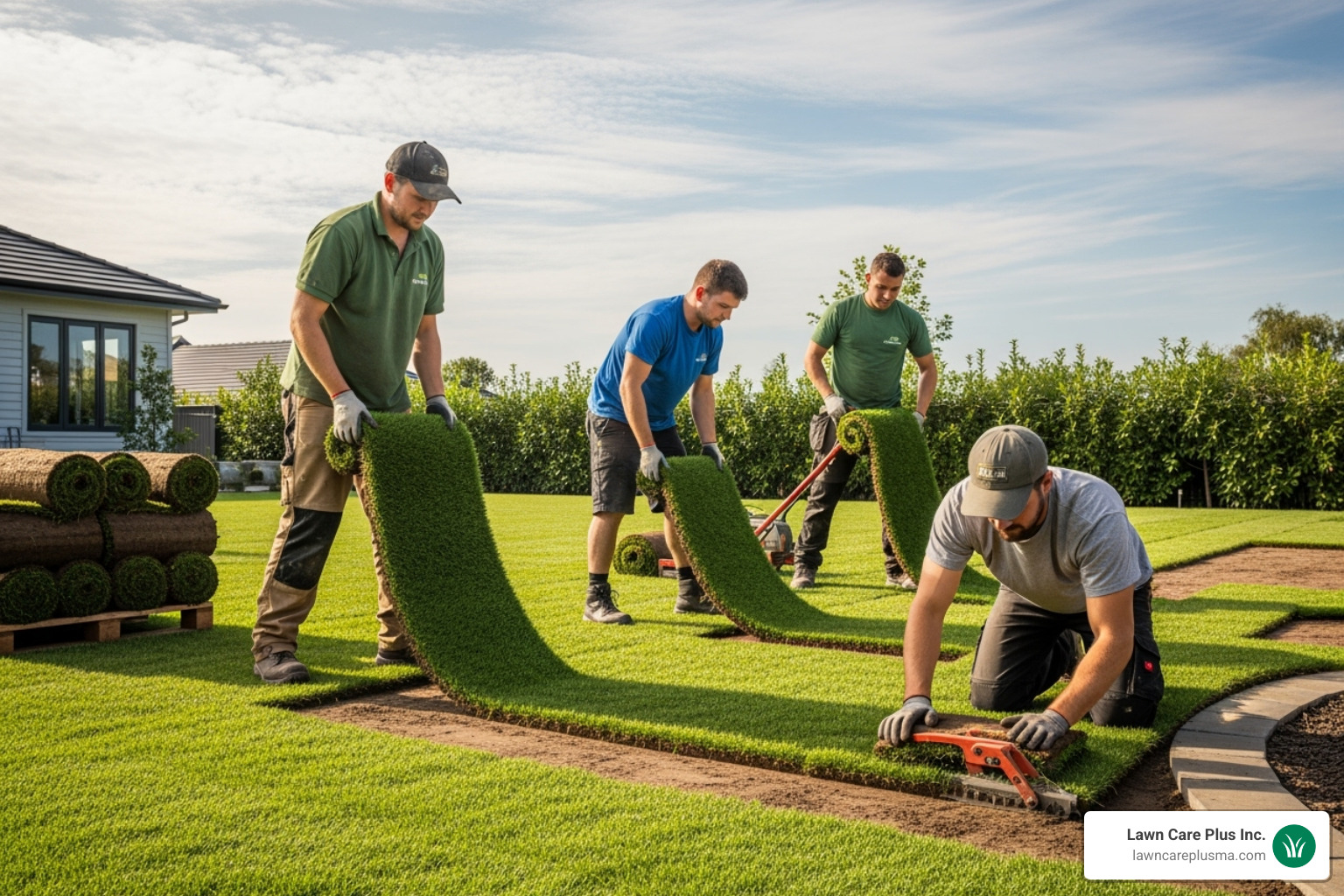
Begin your lawn sod installation along the longest straight edge available, like a driveway or sidewalk. This ensures a neat, professional look with fewer cuts. Unroll the first strip, ensuring it lies flat with no air pockets. Butt the ends of each piece together tightly, but do not overlap them.
Step 2: Creating a Staggered Pattern
For a seamless look, lay subsequent rows in a staggered, brick-like pattern. The seams of one row should not line up with the seams of the row next to it. To do this, simply cut the first piece of your second row in half. This also helps prevent the edges from drying out.
Step 3: Ensuring Tight Seams and Edges
As you lay each piece, push the edges together snugly. The goal is no overlapping and no gaps. Gaps allow weeds to grow and cause the soil to dry out, while overlapping creates an uneven surface and hinders root growth. Fill any small gaps with topsoil.
For more detailed instructions, visit our guide on how to lay sod.
Step 4: Cutting Around Obstacles
Use your utility knife to cut sod to fit around curves, sprinkler heads, and garden beds. For gentle curves, make small triangular cuts to help the sod bend smoothly. Avoid cutting sod into thin strips, which dry out easily. Lay sod over sprinkler heads and then cut a hole around them. When laying sod on a slope, place the strips horizontally across the slope, not vertically, to improve water retention and prevent erosion.
Step 5: Rolling the New Sod
Once all the sod is laid, this final step is critical. Use a lawn roller to press the sod firmly against the soil. Roll the entire area twice in different directions. This eliminates air pockets and ensures excellent root-to-soil contact, which is essential for the sod to establish quickly.
Critical First Weeks: New Sod Care and Maintenance
Congratulations on your lawn sod installation! The care you provide in these first few weeks is critical for establishing a healthy, thriving lawn for years to come. Your new sod is vulnerable and depends entirely on you for water and care as it establishes new roots.
The Ultimate Watering Schedule for New Sod
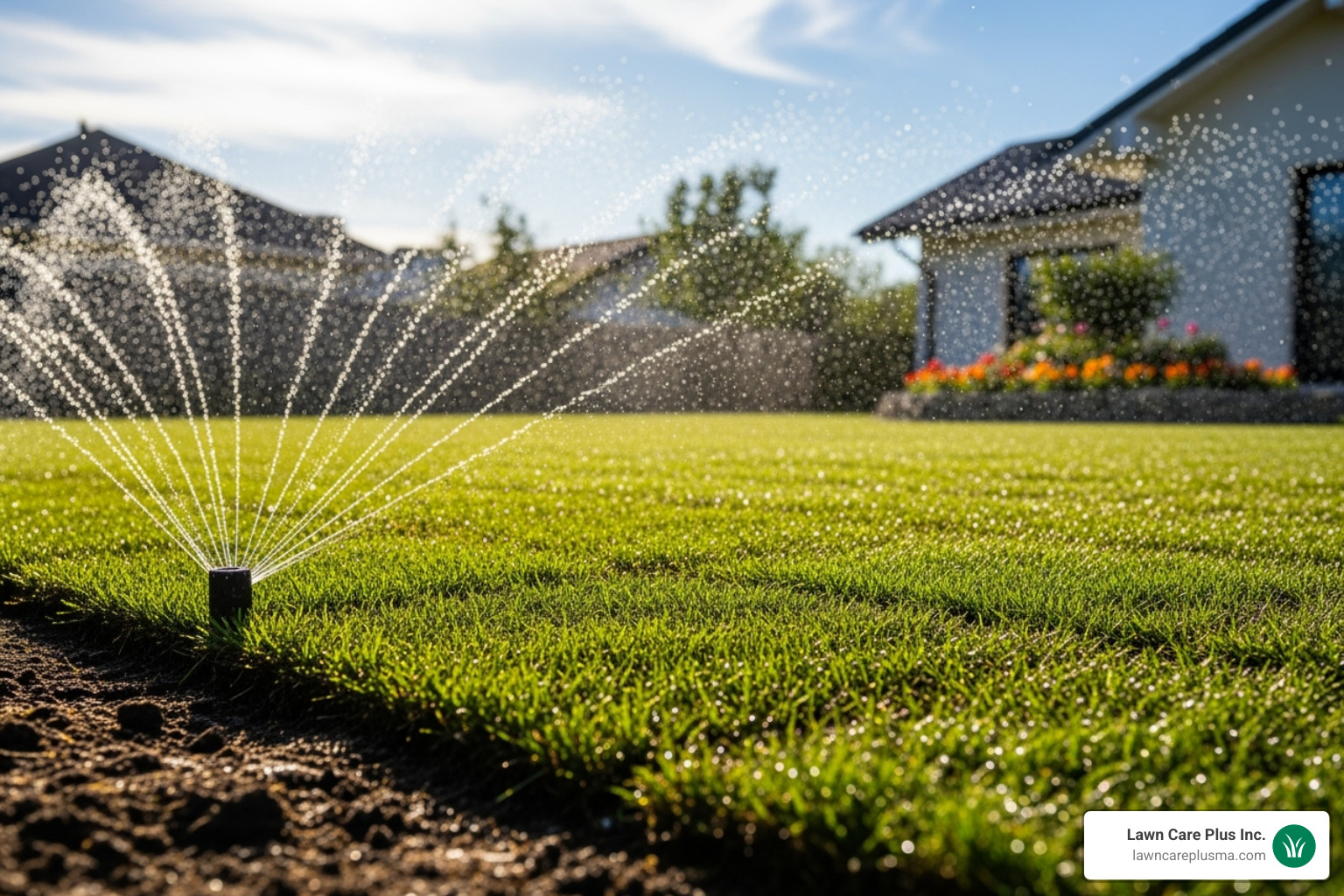
Watering is the most important part of new sod care. The goal is to keep the soil consistently moist but not waterlogged. Too little water will kill the sod, while too much can cause disease and shallow roots.
- Day 1: Within 30-60 minutes of installation, water deeply until the soil is moist 3-4 inches down.
- First 9 Days: Water twice daily (early morning and late afternoon), applying about a quarter-inch of water each time. The shallow roots need constant moisture. Pay extra attention to edges and seams.
- Days 10-15: Reduce to once-daily watering, ensuring the soil remains moist.
- Day 16 and Beyond: Transition to a standard watering schedule of one inch per week, applied over one or two sessions. This encourages roots to grow deeper in search of water.
Check moisture by lifting a corner of sod or probing the soil with a screwdriver. The soil should be damp, not soggy. If you see puddles, reduce watering.
When to Walk On and Mow Your New Sod
Keep foot traffic off your new lawn for at least two weeks. Walking on it can shift the sod and disrupt rooting. After two weeks, you can perform the “tug test.” Gently lift a corner of sod; if it resists, it has started to root and is ready for its first mow.
For the first mow (usually 2-3 weeks after installation), set your mower to its highest setting. Never remove more than one-third of the grass blade’s length. Use a walk-behind mower and ensure your blades are sharp to avoid tearing the grass.
Best Practices for Fertilizing New Sod
Proper nutrition helps develop a strong root system. Before installation, apply a starter fertilizer high in phosphorus to the prepared soil. Apply your first post-installation feeding 4-6 weeks later, once the sod is well-rooted. After 6-8 weeks, you can begin a regular fertilization program. Wait for at least three or four mowings before applying any weed control products, as new sod is sensitive to herbicides.
For more guidance, visit our detailed guide on how to care for new sod.
DIY vs. Professional: Costs, Problems, and Solutions
Now for the big question: should you install sod yourself or hire an expert? Understanding the costs and challenges can help you decide.
The Average Cost of Lawn Sod Installation
Cost is a major factor. The following prices are averages based on online data and may not reflect actual costs from Lawn Care Plus Inc. or in your specific market. Prices vary based on location, lawn size, sod type, and job complexity.
- DIY Installation: Your main costs are materials and equipment. Sod itself can range from $0.35 to $1.10 per square foot, with specialty varieties costing $3.50 or more. Tool rentals (sod cutter, tiller, roller) can add $100 to $300+. Soil amendments could add another $50 to $500+. A 1,000 sq. ft. DIY project could cost between $400 and $2,000+.
- Professional Installation: You’re paying for expertise and efficiency. Professional installation typically falls between $1.75 and $5.00+ per square foot, but complex projects could reach $15.00+ per square foot. This price usually includes sod, labor, equipment, and initial care. For a 1,000 sq. ft. area, professional services could range from $1,750 to over $5,000.
For more detailed cost information, check out our page: cost for new grass.
Common Sod Installation Problems and How to Avoid Them
Knowing what to watch for can prevent common issues.
- Gaps Between Seams: Gaps dry out and invite weeds. Solution: Push sod edges together snugly in a brick-like pattern.
- Drying Out / Brown Spots: This indicates a lack of water. Solution: Water immediately after installation and follow a consistent watering schedule.
- Poor Root Contact: Air pockets prevent roots from accessing soil and moisture. Solution: Use a lawn roller after laying the sod to ensure firm contact.
- Disease from Overwatering: Too much water can cause fungus and rot. Solution: Follow a tapering watering schedule. Aim for moist, not soggy, soil.
- Uneven Ground: An improperly graded base results in a bumpy lawn. Solution: Spend adequate time on soil preparation and grading before laying sod.
Deciding Between DIY and a Professional Service
The choice depends on your budget, time, and physical ability.
A DIY approach can save on labor costs but is physically demanding and time-consuming. It requires renting equipment and carries the risk of costly mistakes. A single roll of sod can weigh 30-40 pounds, making it a serious workout.
Hiring a professional service like Lawn Care Plus Inc. provides expertise, efficiency, and guaranteed results. We have the experience to handle Massachusetts’ specific soil conditions and the heavy-duty equipment to do the job flawlessly, often in a single day. This saves you from back-breaking labor and gives you peace of mind. Professional landscaping can also increase a home’s resale value.
Lawn Care Plus Inc. offers comprehensive landscaping services throughout the Boston Metro-West area, including Belmont, Boston, Brighton, Brookline, Canton, Chestnut Hill, Dedham, Hyde Park, Jamaica Plain, Mattapan, Medfield, Milton, Needham, Newton, Norwood, Randolph, Readville, Roslindale, Walpole, and Watertown.
Frequently Asked Questions about Sod Installation
Here are answers to the most common questions we receive about lawn sod installation.
How soon can you walk on new sod?
Keep foot traffic to an absolute minimum for the first two weeks. This allows the fragile roots to establish without being disturbed. After two weeks, light, occasional traffic is okay. Wait a full four to six weeks before resuming regular activities like playing or hosting events. Once the sod resists a gentle tug (the “tug test”), it is well-rooted and ready for normal use.
What happens if you lay sod on top of existing grass?
We strongly advise against this. Laying sod over existing grass is a critical mistake. The new roots cannot penetrate the old turf to reach the soil, preventing proper establishment. The grass underneath will decompose, creating a lumpy, uneven surface and a breeding ground for fungal diseases and pests. Always take the time to remove the old lawn completely for a healthy, even result.
Can you overwater new sod?
Yes, you can absolutely overwater new sod. While consistent moisture is vital initially, too much water can be just as harmful as too little. Overwatering leads to several problems:
- Shallow Root Development: If water is always at the surface, roots have no reason to grow deep, creating a weak lawn that is not drought-tolerant.
- Fungal Diseases: Constantly soggy conditions are ideal for diseases like brown patch and root rot.
- Root Suffocation: Saturated soil lacks oxygen, which can cause roots to rot and die.
The goal is moist soil, not a swampy lawn. After the first two weeks, taper your watering to encourage deep, healthy root growth.
Conclusion: Enjoy Your Beautiful, Instant Lawn
We’ve covered the entire lawn sod installation process, from careful ground preparation to the critical first weeks of aftercare. Each step brings you closer to the lush, green lawn you’ve been dreaming of.
The best part of sod is the instant gratification. It transforms bare dirt into a beautiful lawn overnight, providing immediate erosion control and a dense, weed-resistant turf. It’s an investment in a healthy, beautiful outdoor space for years to come.
While a DIY lawn sod installation can be rewarding, it is a demanding job that requires time, effort, and the right equipment. If you’re in the Boston Metro-West area and want a flawless result without the heavy lifting, our team at Lawn Care Plus Inc. is here to help. We specialize in expert lawn installations and a full range of landscaping services, bringing the experience and efficiency to get the job done right.
Ready to enjoy a picture-perfect lawn? Explore our expert new lawn installation services and let us help you create the lawn you deserve!
