
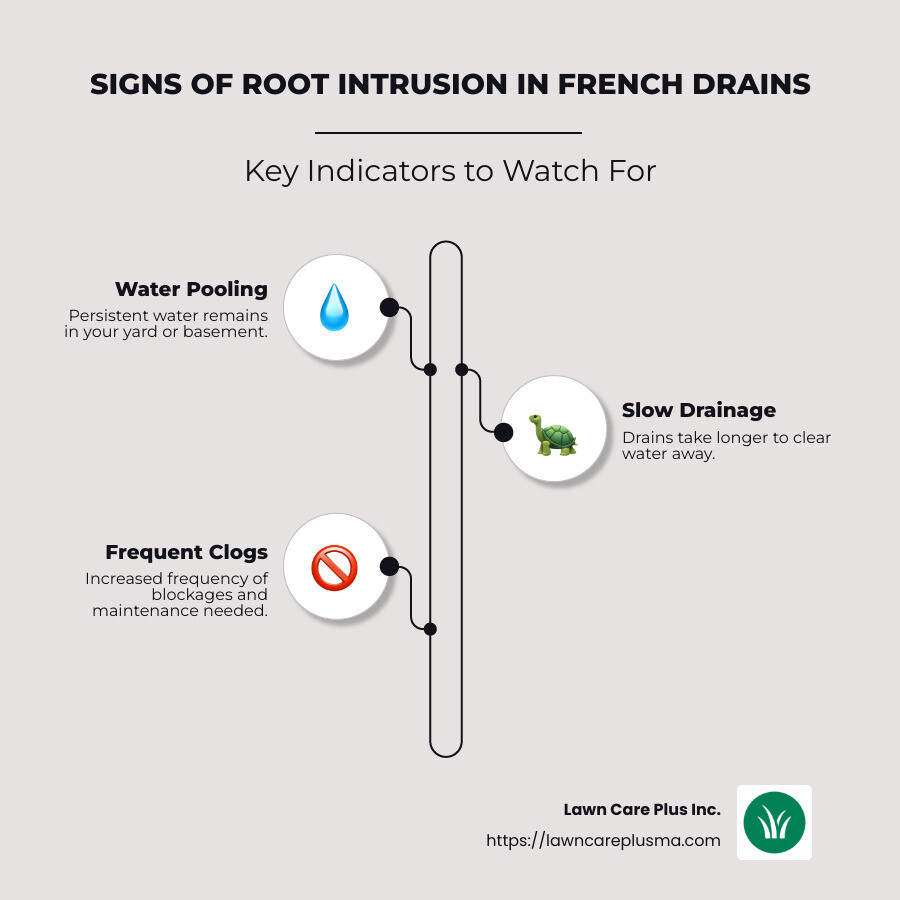
Roots in french drain systems can cause significant drainage issues, leading to water back-up and potential property damage. Imagine rain falling on your yard, only for the water to slow down or even stop because those pesky roots have infiltrated your drainage system. If you’re noticing signs of blockage, it’s time to act.
Here’s a quick breakdown for those looking for the essentials:
- Roots can intrude your French drain, especially if it’s an older installation or inadequately maintained.
- Water logging and landscaping changes increase the risk of roots finding their way into the drains.
- Preventive care, like strategic planting and regular inspections, can protect against root intrusions.
French drains, a popular method for redirecting water away from structures, are not immune to root invasion. Due to their subterranean nature, these drains are particularly susceptible when large root systems search for moisture, thus intercepting their underground paths.
It’s crucial for homeowners and property managers in the Boston Metro-West area to recognize this threat and take proactive steps to secure their drainage systems. Effective management and preventive strategies can save money and hassle in the long run. Stay tuned as we dig deeper into understanding roots in French drains and how to tackle them.
Understanding Roots in French Drains
Roots in French drains are more than just a nuisance—they’re a significant threat to your drainage system. To effectively combat this issue, understand the behavior of roots and why they’re so attracted to these systems.
Root Behavior: The Quest for Water
Roots are like nature’s detectives. They’re constantly on the hunt for water and nutrients to sustain the plant above ground. This quest leads them to explore every nook and cranny underground. When they sense moisture, they grow towards it, a process known as hydrotropism.
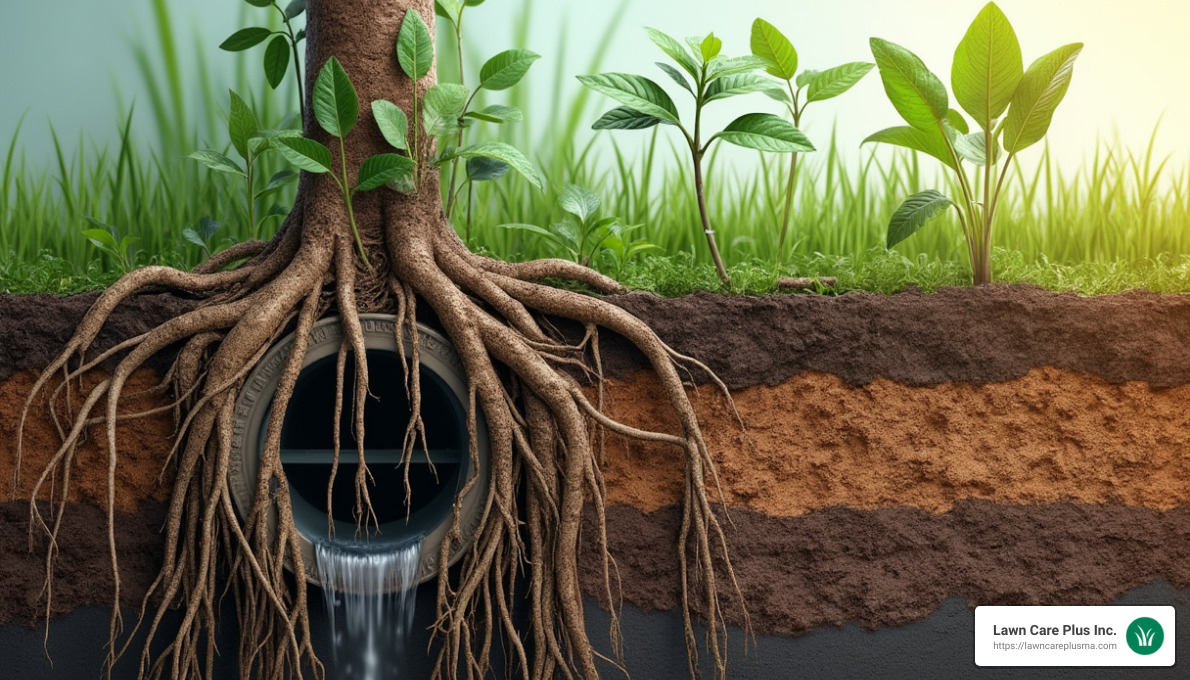
Hydrotropism is the reason roots are drawn to French drains. These drains are designed to carry water away from your property, creating a perfect moisture-rich environment for roots to thrive. Once roots find an entry point, they can quickly expand, causing blockages and disrupting the flow of water.
“Roots can be highly resourceful. They sense moisture from downspout drains and grow towards it.”
The Attraction of Moisture
French drains, by their very nature, are prone to attracting roots due to their consistent moisture levels. This is especially true in areas with a lot of vegetation, where roots are actively seeking out water sources. When roots encounter the moisture in a French drain, they see it as an opportunity to access a steady water supply.
This attraction can lead to significant problems. Roots can infiltrate the drain pipes, causing clogs and potentially leading to water back-up or even flooding.
Key Takeaways
Understanding root behavior and their attraction to moisture is the first step in addressing the problem of roots in French drains. By recognizing the signs of root intrusion early, you can implement effective preventative measures and solutions to keep your drainage system running smoothly.
In the next section, we’ll explore preventative measures you can take to protect your French drains from root intrusion and maintain a healthy drainage system.
Preventative Measures for French Drains
To keep roots in French drains at bay, proactive strategies are essential. Let’s dig into some key preventative measures that can help safeguard your drainage system.
Root Barriers: A Physical Defense
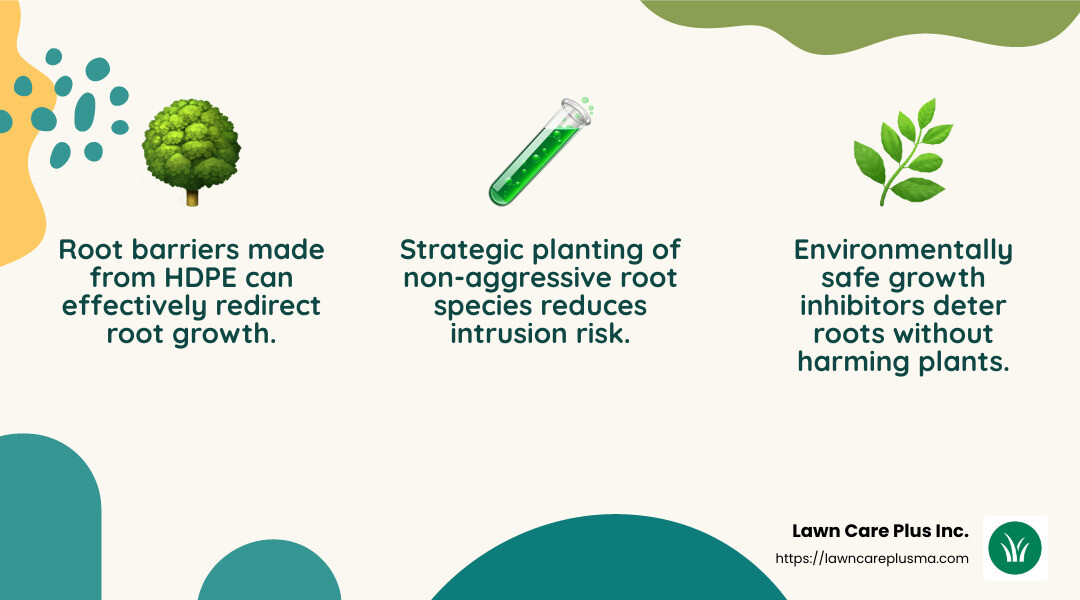
One of the most effective ways to prevent root intrusion is by installing root barriers. These barriers act as a protective shield around your French drains. Made from durable materials like high-density polyethylene (HDPE), they are placed vertically in the ground to redirect root growth away from your pipes. By steering roots in a different direction, these barriers help maintain the integrity of your drainage system.
Growth Inhibitors: Chemical Deterrents
Growth inhibitors are another line of defense against root intrusion. These natural or chemical substances can be applied around your drainage system to make the soil less attractive to roots. By discouraging root growth near your pipes, growth inhibitors can help prevent roots from breaking through and causing blockages. It’s important to choose inhibitors that are safe for the environment and won’t harm your plants.
Strategic Planting: Smart Landscaping
Strategic planting is all about choosing the right plants and placing them wisely. When planning your landscape, consider planting trees and shrubs with less aggressive root systems away from your drainage lines. Consult with a landscaping expert to select species that are less likely to interfere with underground utilities. By making informed planting decisions, you can significantly reduce the risk of root intrusion.
Regular Inspections: Stay Ahead of the Game
Routine inspections are crucial for early detection of potential root problems. By regularly checking your French drains, you can spot signs of root intrusion before they become major issues. Early intervention can save you time and money in the long run, ensuring your drainage system remains effective and efficient.
Educate Yourself: Know Your Local Flora
Understanding the types of plants and trees in your area can help you make better decisions about your landscape. Some species have more aggressive root systems than others. By familiarizing yourself with local flora, you can devise effective root management strategies and minimize the risk of root intrusion.
By implementing these preventative measures, you can protect your French drains from root intrusion and maintain a smooth-running drainage system. In the next section, we’ll explore effective solutions for removing roots when prevention isn’t enough.
Effective Solutions for Removing Roots
When prevention isn’t enough and roots have already found their way into your French drain, it’s time to take action. Here are some effective solutions to tackle roots in French drains.
Copper Sulphate: A Chemical Solution
Copper sulphate is a popular choice for dealing with root intrusion. It’s a chemical root killer that can be flushed down the drain, where it works to stop root growth. Copper sulphate doesn’t harm surrounding plant life, making it a safe option for your landscape. However, it should be used carefully and according to instructions to avoid any potential damage to your drainage system.
Mechanical Cleaning: The Power of Tools
Sometimes, a more hands-on approach is necessary. Mechanical cleaning involves using tools to physically remove roots from the pipes. This can be done with a plumber’s snake or an electric auger, which can break up and pull out root masses. Mechanical cleaning is effective but may require professional assistance to ensure the job is done without damaging the pipes.
Homemade Tools: DIY Solutions
For those who prefer a do-it-yourself approach, homemade tools can be an economical option. Creating a tool that can grab and pull out roots might involve attaching hooks or claws to a flexible rod. This DIY method can be effective for smaller root obstructions, but it requires caution to avoid damaging the pipe or leaving root fragments behind.
By employing these solutions, you can effectively manage root intrusion in your French drain. In the next section, we’ll dive into installation best practices to prevent root problems from the start.
Installation Best Practices for French Drains
Installing a French drain correctly is crucial to prevent issues like root intrusion and ensure efficient water management. Let’s explore the best practices for trench preparation, pipe materials, slope, and connection techniques.
Trench Preparation
Start by digging a trench, which is the backbone of your French drain. The trench should be at least 12 inches deep, but this can vary based on your specific needs and local regulations. The depth helps keep the pipe below the frost line, reducing the risk of freezing and other weather-related issues.
Make sure the trench is wide enough to accommodate the pipe and any additional materials like gravel. A well-prepared trench sets the stage for a successful installation.
Pipe Materials
Choosing the right pipe material is essential for durability and performance. High-density polyethylene (HDPE) pipes are a popular choice due to their strength and flexibility. They resist crushing and clogging, ensuring water flows smoothly through the drain.
Consider using perforated pipes, which are designed to allow water to enter from the surrounding soil. This is particularly beneficial in areas with high water tables or frequent rainfall.
Slope
The slope of the pipe is critical for effective water drainage. A general rule of thumb is to have a slope of 1 inch for every 10 feet of pipe. This ensures that water flows naturally toward the designated discharge area, preventing pooling and potential water damage.
Connection Techniques
Secure connections are vital to prevent leaks and maintain the integrity of the system. Use solid fittings to join pipes and consider using a high-quality tape, like a 200-year tape, to seal connections. This ensures a watertight system that can withstand environmental stresses.
By following these best practices, you can install a French drain that not only handles water efficiently but also stands up to the challenges posed by root intrusion and other potential issues.
Next, we’ll address some frequently asked questions about dealing with roots in French drains.
Frequently Asked Questions about Roots in French Drains
How to keep roots out of a French drain?
Keeping roots out of your French drain is crucial to maintaining its efficiency. One effective strategy is using growth inhibitors. These can be natural or chemical substances applied around your drainage system to deter roots from growing near the pipes. Growth inhibitors make the soil less attractive for root growth without harming the plants or the ecosystem.
Another essential method is installing root barriers. These are physical barriers made from materials like HDPE, designed to redirect root growth away from your drainage pipes. By steering roots in another direction, you help protect your French drain from potential blockages.
How to stop roots from growing into drains?
Preventing roots from infiltrating your drains often requires a combination of strategies. Pruning trees and shrubs near your drainage system is a straightforward method. By regularly trimming these plants, you limit the growth of aggressive root systems that could threaten your pipes.
Additionally, consulting a surveyor can provide valuable insights. A professional surveyor can assess your property and recommend the best locations for planting trees or installing drainage systems to minimize root intrusion risks.
Can a French drain be unclogged?
Yes, a French drain can often be unclogged using mechanical methods. One popular tool is an electric snake, a flexible auger used to remove blockages from pipes. It’s inserted into the drain and can clear roots or debris causing the clog.
Mechanical cleaning is another effective solution. This involves using specialized equipment to physically remove roots from within the pipes. While it might require professional help, it’s a reliable way to restore your French drain’s functionality.
By understanding these strategies, you can effectively manage and prevent root-related issues in your French drain system. Next, we’ll dig into some proactive maintenance tips to keep your drainage system in top shape.
Conclusion
Maintaining a French drain system isn’t just about installing it correctly; it’s about proactive strategies to ensure its long-term efficiency. At Lawn Care Plus Inc., we understand the challenges roots present to French drains, and we’re here to help you tackle them.
Regular Maintenance is key. Just like any other part of your landscape, your French drain requires regular check-ups to ensure it’s functioning as it should. Inspect your drain periodically for signs of root intrusion or blockages. This simple step can save you from bigger headaches down the road.
Proactive Strategies like using growth inhibitors and installing root barriers can prevent roots from becoming a problem in the first place. These measures don’t just protect your French drain but also maintain the health of your entire landscape.
When it comes to keeping your drainage system free from roots, prevention is better than cure. By taking steps now, you can avoid costly repairs and ensure that your French drain continues to work efficiently.
For expert advice and services in maintaining your landscape, including drainage solutions, reach out to Lawn Care Plus Inc.. Our team is ready to help keep your property looking its best and functioning flawlessly. Let us handle the hard work so you can enjoy a beautiful, root-free landscape.
