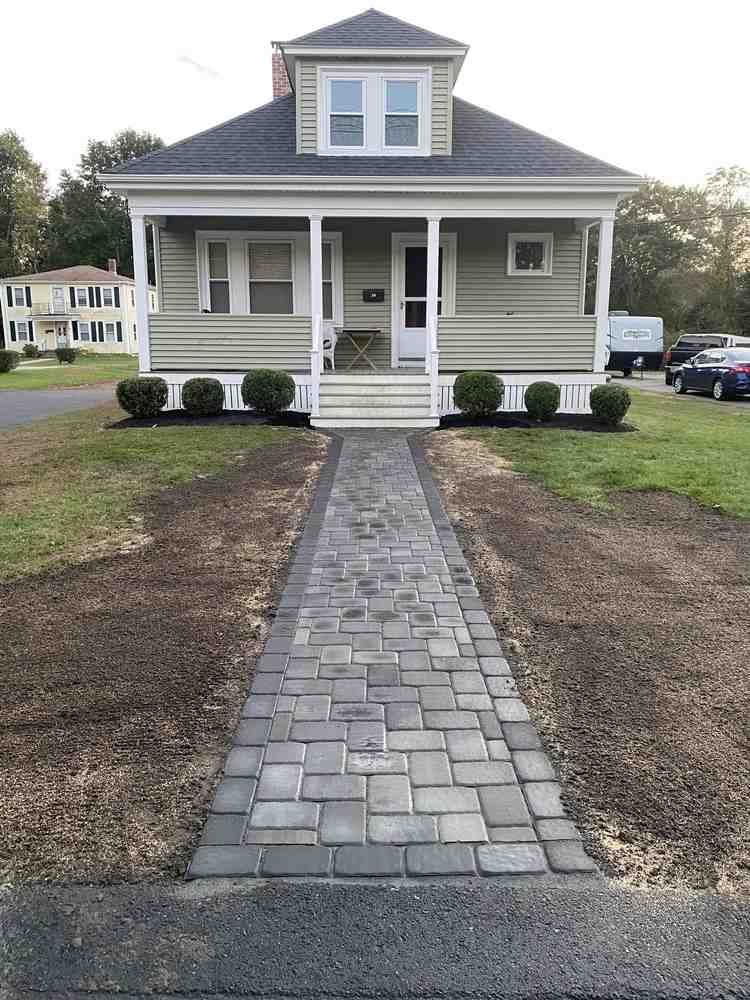
Why a Paver Walkway Transforms Your Property
Walkway Installation is a practical home improvement project that creates a durable, attractive path connecting different areas of your property. Whether you’re building a front entrance walkway, a garden path, or a connection between your driveway and backyard, a well-installed paver walkway improves both function and curb appeal.
Quick Overview: What’s Involved in Paver Walkway Installation
- Planning & Design – Choose materials, determine path layout, and calculate dimensions
- Site Preparation – Mark the area, excavate 8-12 inches deep, and compact the subgrade
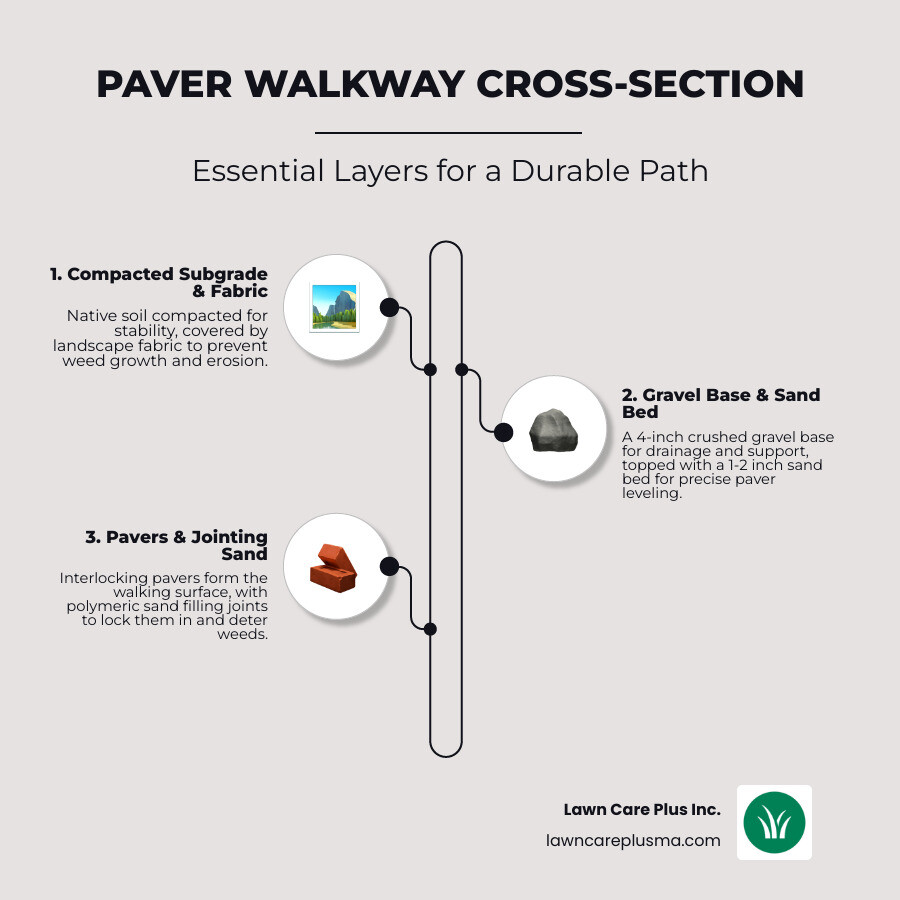
- Foundation Layers – Install landscape fabric, 4-inch gravel base, and 1-2 inch sand bed
- Paver Installation – Lay pavers in your chosen pattern, maintaining consistent gaps
- Finishing – Cut pavers to fit edges, compact surface, and fill joints with polymeric sand
- Timeline – Most standard walkways take 2-5 days to complete from excavation to final compaction
A properly installed paver walkway offers significant benefits beyond just a pretty path. It provides safe, stable footing through your outdoor areas, turning what might be a muddy or uneven route into an all-weather passage. The design versatility means you can create straight, formal entrances or meandering garden paths that add creative flair to your landscape.
From a financial perspective, a quality walkway is an excellent investment. It can significantly boost your property’s resale value while providing immediate functional benefits. Unlike poured concrete, pavers are flexible enough to accommodate natural ground movement, reducing crack risk. And if damage does occur, you can replace individual pavers rather than demolishing an entire section.
I’m Tim DiAngelis, owner of Lawn Care Plus, Inc., and over the past decade, our team has completed countless Walkway Installation projects throughout Greater Boston and Metro-West, from simple front paths to complex multi-level designs with steps and curves. Whether you’re considering a DIY project or professional installation, understanding the fundamentals ensures a beautiful, lasting result.
Quick look at Walkway Installation:
Planning Your Project: Design, Materials, and Costs
Before we even think about digging, a successful Walkway Installation starts with meticulous planning. This section will cover the essential upfront decisions, from aesthetic choices to budget considerations, ensuring your new walkway perfectly complements your property in Massachusetts.
Choosing Your Walkway Materials
The material you select for your walkway profoundly impacts its durability, appearance, maintenance, and overall cost. While there’s a wide variety of materials out there – from natural stone to gravel – interlocking pavers are often our top recommendation for their superior benefits.
Let’s compare some common choices for walkways:
| Material | Durability | Cost | Maintenance | Design Versatility |
|---|---|---|---|---|
| Interlocking Pavers | Extremely long-lasting (25-30+ years), resistant to cracks | Moderate to High | Low (sweeping, occasional polymeric sand refill, sealing) | High (various shapes, colors, textures, patterns) |
| Brick | Durable, classic look, good lifespan | Moderate to High | Moderate (weed control, potential for shifting) | Moderate (traditional patterns, limited color palette) |
| Poured Concrete | Strong, durable | Low to Moderate | Moderate (prone to cracking, difficult repairs) | Moderate (can be stamped/stained, but less flexible) |
| Natural Stone | Very durable, unique aesthetic, long lifespan | High | Moderate (moss/weed growth, can be uneven) | High (irregular shapes, various stone types) |
| Gravel | Very durable | Low | High (tracking, weed growth, requires regular raking) | High (natural look, flexible paths) |
As you can see, interlocking pavers truly shine. They offer a perfect harmony between form and function, providing superior durability, design versatility, and ease of maintenance compared to materials like poured concrete or asphalt. Their flexibility allows them to accommodate the natural expansion and contraction caused by temperature changes, which is a huge advantage in our Massachusetts climate, reducing the risk of unsightly cracks. If a paver does get damaged, it can be easily replaced without tearing up an entire section, making repairs economical.
We use only the finest interlocking stones and materials, ensuring your walkway is not just beautiful but built to last. For even more options in changing your outdoor space, explore our hardscaping services.
How to Design the Perfect Walkway
Designing your walkway is where your creativity truly comes alive! This is a chance to turn a dull expanse of space into an outdoor landscape with allure and creative flair. We’ll work closely with you to create a custom solution that reflects your personal style and complements your home’s architecture.
Here are key design considerations:
- Walkway Width: A comfortable width is crucial for both aesthetics and functionality. For two people to walk side-by-side comfortably, we recommend a width of 48 inches. A 36-inch width is considered standard for single-file paths.
- Wheelchair Accessibility: If accessibility is a priority, a pathway at least 36 inches wide is needed, with a 60-inch turnaround area where necessary.
- Straight vs. Curved Paths: The shape of your walkway should complement your landscape. If your yard features geometric lines, a straight path might be more appealing. For curved garden areas or a more natural flow, a winding or meandering path can add charm and invite exploration. We can even create detailed 2D and 3D renderings to help you visualize your design before any work begins!
- Slope and Drainage: Proper drainage is non-negotiable, especially here in Massachusetts where we see all four seasons. Your walkway should always slope away from your house at a rate of 1/8 to 1/4 inch per foot to prevent water pooling and potential flooding. This thoughtful planning ensures a stable, sure-footed way to traverse your outdoor areas, even after a heavy rain.
- Paver Patterns: The versatility of pavers means you can choose from a wide array of patterns to add visual interest. Some popular designs include:
- Herringbone: A classic, strong pattern often used for driveways but beautiful for walkways.
- Basket Weave: Creates a charming, traditional look.
- Running Bond: A straightforward, neat pattern that’s easy to install.
- Random Stone: Uses various sizes of pavers for a natural, organic feel.
Walkways can also serve as an artistic element, tying together different features of your yard that might otherwise feel like “separate islands.” Imagine a path artfully leading from your front door to a garden, or connecting a patio to a fire pit. Our masonry services can help you achieve these intricate designs.
Factors Influencing Walkway Installation Costs
The cost of installing a new walkway is as varied as the designs themselves. It depends on several factors, and understanding these will help you plan your budget.
Please note: The following prices are based on general industry data and are intended for informational purposes only. Actual project costs will vary significantly depending on specific site conditions, material availability, and design complexity. These are not Lawn Care Plus prices.
- Size and Length: Naturally, a longer and wider walkway will require more materials and labor, increasing the overall cost.
- Design Complexity: A simple, straight path will be less expensive than one with intricate curves, multiple patterns, or integrated steps. Our team excels at crafting unique designs, but complexity adds to the project’s scope.
- Material Choice: As discussed, materials like natural stone are generally more expensive than concrete pavers. The specific type, color, and texture of the pavers or stone chosen will also impact the price.
- Site Preparation Needs: Extensive excavation, significant grading for drainage, or the removal of existing structures (like an old, cracked concrete path) will add to the labor and equipment costs.
- Labor Costs: The skill and experience of the installation team play a significant role. A professional team like ours ensures meticulous installation and a durable result, which is an investment in your property’s longevity.
Here’s a general idea of average walkway costs based on internet sources:
- Basic Paver Walkway (up to 125 sq ft): $7,000 – $12,000
- Average Paver Walkway (larger, connecting to backyard): $10,000 – $18,000
- High-End Paver Walkway (complex design, steps, premium materials): $15,000 – $25,000+
A walkway is an excellent investment that provides a great return and can significantly boost your home’s resale value. It’s not just an expense; it’s an improvement to your property.
The Step-by-Step Paver Walkway Installation Process
For the hands-on homeowner in Massachusetts looking to undertake a DIY Walkway Installation, or simply curious about what goes into a professional job, here’s a detailed guide. While we always recommend professional installation for optimal, guaranteed results, understanding the process is key!
Step 1: Site Preparation and Excavation
This is where the magic (or rather, the hard work) begins! Proper site preparation is critical for a long-lasting and stable walkway.
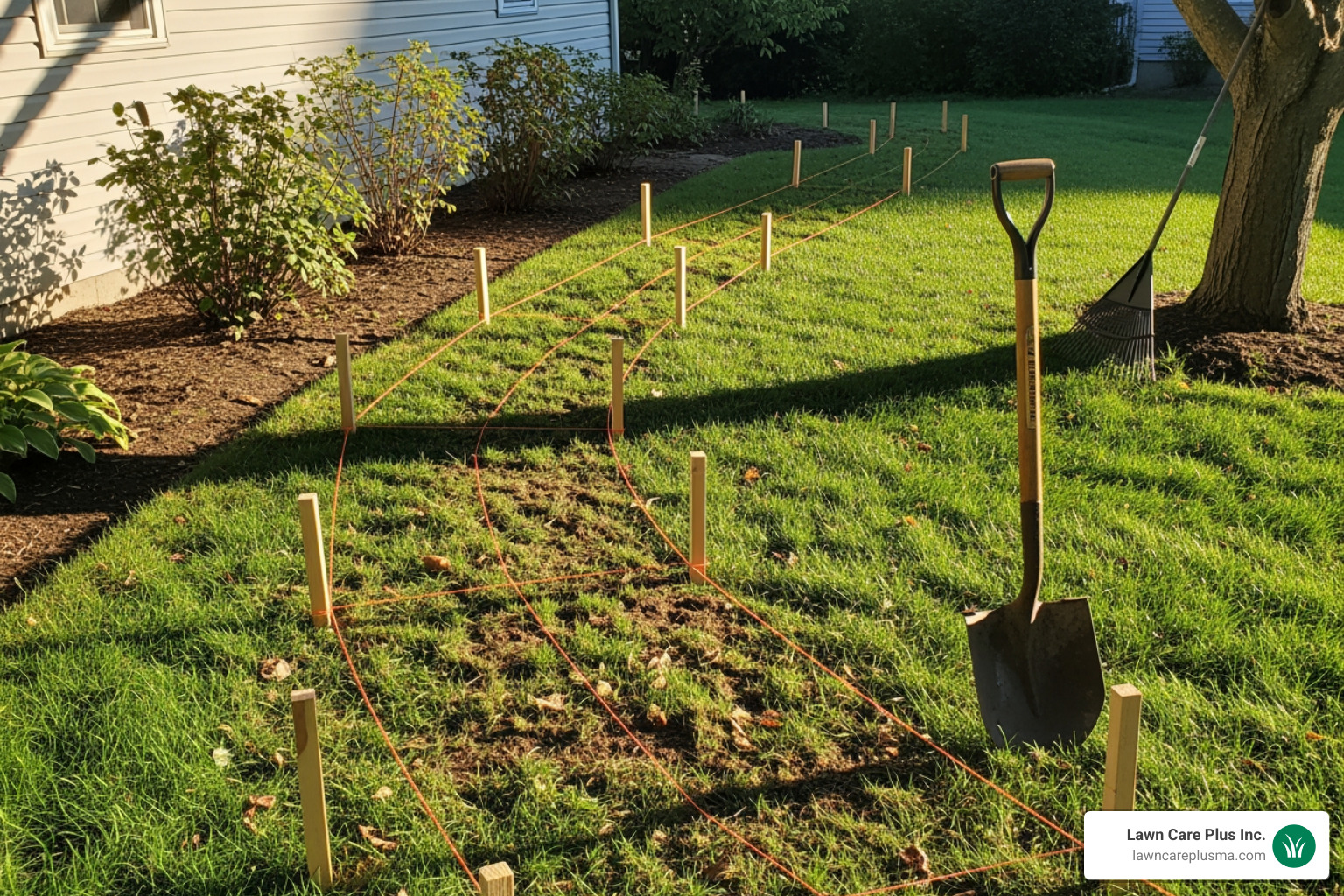
- Tools and Materials List: Before you start, gather your supplies:
- Shovel, pickaxe, and wheelbarrow for digging
- Rake for leveling
- Stakes and mason’s line for marking
- Measuring tape, line level, and speed square
- Plate compactor (can be rented from places like Lowe’s or hand tamper
- Safety equipment: gloves, safety glasses, dust mask, knee pads
- Spray paint or marking chalk
- Calling 811: This is a crucial first step! Before any digging, always call 811 (or your local dig safe number) to have underground utilities marked. This prevents accidental damage to water lines, gas lines, electrical cables, or other buried infrastructure, which can be dangerous and costly.
- Marking the Layout: Use stakes and mason’s line to carefully outline your desired walkway path. For straight lines, ensure the layout is square by measuring the diagonals; they should be equal. For curves, use a garden hose to lay out the shape, then mark it with spray paint. 1/8 to 1/4 inch per foot slope away from your house for proper drainage.
- Excavating the Trench: Dig out the marked area to the appropriate depth. The general rule of thumb is to excavate 8-12 inches deep. This depth accounts for the paver thickness, the sand bed, and the gravel base. If using paver base panels, the excavation might be shallower (around 3-10 inches). Ensure the bottom of your trench follows your planned slope for drainage.
- Tamping the Subgrade: Once excavated, compact the exposed soil (the subgrade) thoroughly with a plate compactor or hand tamper. This prevents future settling, which can lead to an uneven walkway.
Step 2: Building a Solid Foundation
The foundation is the unsung hero of your walkway. A strong, well-prepared base ensures your pavers remain stable and level for decades.
- Landscape Fabric: Lay down a layer of high-quality geotextile landscape fabric across the entire excavated area. This fabric serves multiple purposes: it separates the gravel base from the subgrade (preventing the gravel from sinking into the soil), stabilizes the soil, helps with drainage, and acts as a weed barrier. Overlap pieces by 12 to 18 inches.
- Gravel Paver Base: Spread a 4-inch layer of crushed gravel (also known as “paver base” or “aggregate base”) over the landscape fabric. Rake it level, maintaining your desired slope. Then, compact this layer thoroughly with your plate compactor. For best results, add the gravel in 2-inch lifts, compacting each lift before adding the next. This creates a dense, stable base that won’t shift over time.
- Sand Bed: On top of the compacted gravel, spread a 1 to 1.5-inch layer of coarse, sharp-edged sand (often called bedding sand or concrete sand). This layer provides a cushion for the pavers and allows for fine adjustments during installation.
- Screeding: This is how you achieve a perfectly level (or uniformly sloped) sand bed. Place two PVC pipes (usually 1-inch diameter) parallel to each other, resting on the compacted gravel base at the correct height for your sand bed. Fill the area between them with sand, then use a straight 2×4 (a “screed board”) to drag across the pipes, leveling and smoothing the sand. Remove the pipes and fill the voids with sand.
- Edge Restraints: Install metal or plastic edge restraints along the perimeter of your walkway. These are critical for preventing the pavers from shifting outwards over time, maintaining the integrity of your beautiful design. Secure them with spikes every 12 inches.
Step 3: Laying the Pavers and Finishing
With your meticulous preparation complete, it’s time for the rewarding part: laying your pavers and seeing your vision come to life!
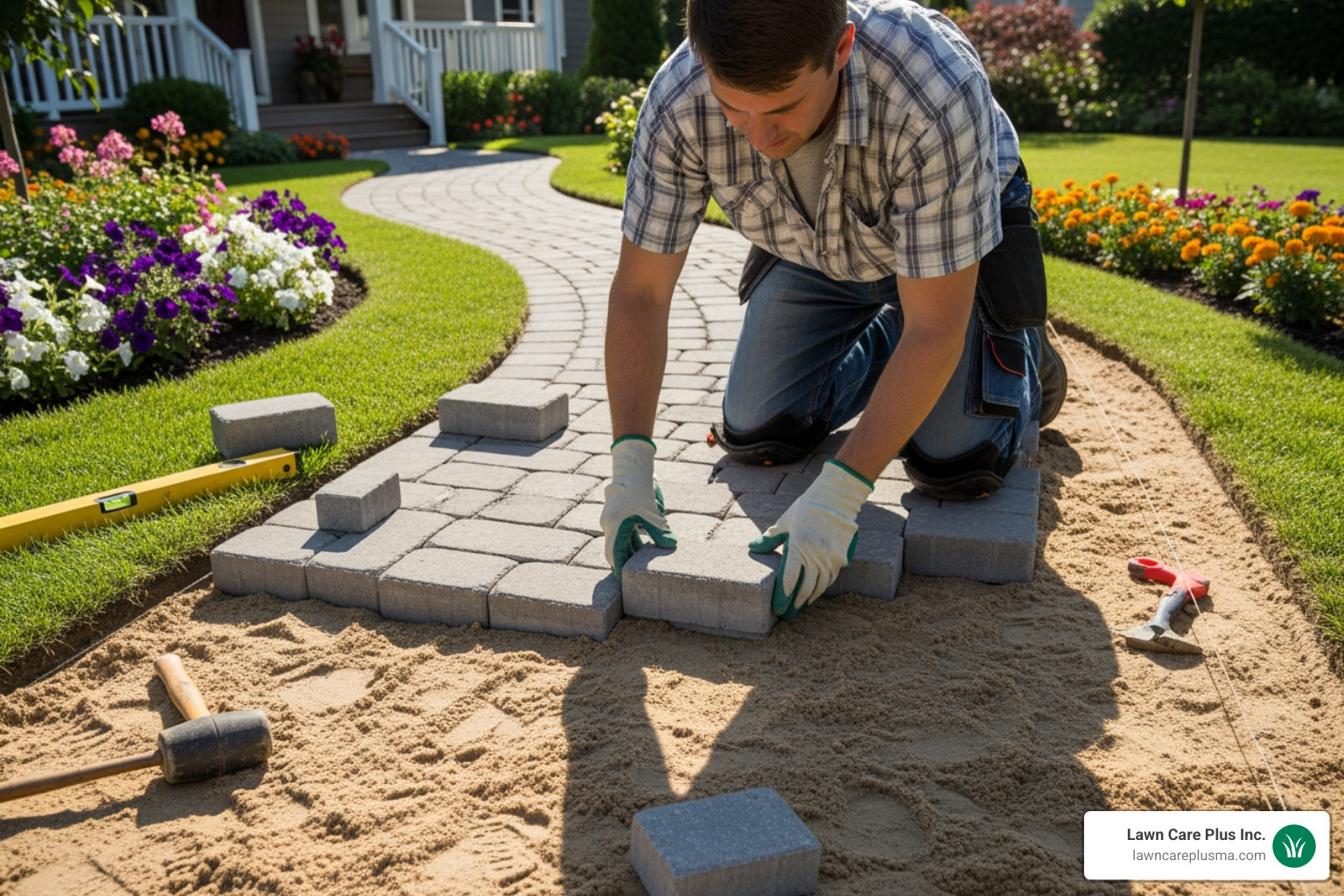
- Laying the First Paver: Begin laying your pavers in a corner, ideally against a straight edge like a house foundation or an existing patio. Gently place each paver onto the sand bed – avoid pushing or twisting them, as this can disturb the screeded sand.
- Maintaining Gaps: Aim for consistent 1/4-inch gaps between your pavers. This space is essential for the jointing sand to properly interlock the system. Use guidelines stretched across the walk every 10 pavers to help maintain alignment and prevent your pattern from veering off course.
- Cutting Pavers: As you reach curves or edges, you’ll need to cut pavers to fit. A circular saw with a diamond blade or a wet saw is typically used for this. Always wear appropriate safety gear (eye protection, hearing protection, dust mask, gloves) when cutting pavers. For tight curves, you might need to custom-rip boards or use a jigsaw.
- Compacting the Surface: Once all pavers are laid and cut, and the edge restraints are secured, run your plate compactor over the entire surface. This settles the pavers firmly into the sand bed, locking them in place and creating a stable, even surface.
- Applying Jointing Sand: Spread polymeric sand generously over the entire walkway surface. This special sand contains additives that, when activated by water, harden to create a strong bond between the pavers. This helps to secure the stones, prevent weeds from growing through the cracks, and deter insect infestations.
- Curing Process: Sweep the excess polymeric sand into the joints with a stiff broom until they are full. Then, run the plate compactor over the walkway again to ensure the sand settles deep into the joints. Sweep off any remaining loose sand thoroughly. This step is critical; if excess polymeric sand is left on the paver surface and gets wet, it can create a permanent white haze. Finally, lightly mist the entire walkway with water to activate the polymeric sand. Allow it to cure for at least 24 hours (or as per manufacturer instructions) before heavy use or traffic.
- Finishing Touches: Once the polymeric sand has cured, backfill the edges of your excavation with topsoil and plant grass seed or add mulch and decorative garden beds. Consider adding landscape lighting to illuminate your beautiful new path. For more inspiration, check out our patio and fire pit installation services.
Walkway Longevity: Maintenance and Professional Help
Your new paver walkway is a significant investment, and with proper care, it will serve you beautifully for decades. Let’s talk about keeping it looking its best and when it might be time to call in the professionals.
How to Maintain Your Paver Walkway
Maintaining your paver walkway is much simpler than you might think, especially compared to the ongoing patching and sealing often required by asphalt or concrete.
- Regular Sweeping: Simply sweeping or blowing off leaves, dirt, and debris regularly will keep your walkway looking tidy and prevent organic matter from breaking down in the joints, which can encourage weed growth.
- Weed Prevention: While polymeric sand significantly helps prevent weeds, a stubborn few might still pop up. Address them promptly by pulling them or using a targeted weed killer. Re-sanding the joints with polymeric sand every few years can refresh the look and reinforce weed prevention.
- Stain Removal: Accidents happen, but most stains on pavers are manageable:
- Oily Stains: For fresh oil, generously apply kitty litter to absorb it. Let it sit overnight, then sweep it up. For stubborn or set-in stains, a degreasing product specifically designed for pavers can work wonders.
- Rust Stains: These can be tricky. Avoid harsh acids, which can damage pavers. Look for specialized rust removers formulated for pavers. To prevent future rust, ensure metal furniture or decorations have rust inhibitors on their feet.
- Paint Stains: For small paint drips, paint thinner on a rag can carefully wipe them away, followed by a good wash of the area.
- Re-sanding Joints: Over time, some jointing sand may erode or wash away. Periodically sweeping fresh polymeric sand into the joints and reactivating it with water will maintain the integrity of your walkway.
- Sealing the Walkway: After a thorough cleaning and ensuring the pavers are completely dry, consider applying a paver-specific sealer. Sealing helps protect the pavers from weathering, improves their color, and makes them more resistant to stains. Always allow the sealed area to cure fully before resuming traffic.
For help with seasonal cleanups that can protect your walkway and entire landscape, explore our spring and fall clean-ups services.
DIY vs. Hiring a Professional for Your Walkway Installation
Building a paver walkway can be a rewarding DIY project, but it’s important to be realistic about the undertaking.
- Time Commitment: A standard paver walkway installation can take a dedicated DIYer multiple days, often stretching into a weekend or more, purely for the laying of paving stones. This doesn’t include the time for planning, material acquisition, or unexpected delays.
- Physical Labor: Excavation, moving heavy gravel and sand, and compacting layers are physically demanding tasks. It’s truly a “backbreaking” endeavor!
- Required Tools: As we’ve seen, specialized tools like plate compactors and wet saws are often necessary, which means either renting or purchasing them.
- Skill Level: While straightforward in concept, achieving a perfectly level, properly sloped, and aesthetically pleasing walkway requires attention to detail, precision, and a good understanding of the process. Small mistakes in the base can lead to significant problems down the line, such as uneven settling or poor drainage.
When should you consider hiring a professional? If you’re looking for an optimal, long-lasting result with a beautiful, custom design and minimal hassle, professional installation is invaluable. Our team at Lawn Care Plus Inc. brings skill, knowledge, and specialized tools to every project. We handle everything from the initial consultation and detailed design (including 3D renderings!) to permit acquisition and the meticulous 12-step installation process. We ensure proper drainage, a stable foundation, and visually stunning results that will improve your property for decades. For complex projects, intricate patterns, or if you simply want the peace of mind that comes with a quality guarantee, choosing a professional for your Walkway Installation in the Massachusetts area is the best decision.
Frequently Asked Questions about Walkway Installation
How long do paver walkways last?
A properly designed and installed interlocking paver walkway is incredibly durable and built to withstand the test of time, even with our New England weather. With minimal maintenance, you can expect your paver walkway to last for 25 to 30 years or even more. This superior longevity makes them an excellent long-term investment for your property.
Will weeds grow between the paving stones?
While it’s tough to guarantee a completely weed-free existence (nature always finds a way!), using polymeric sand in the joints during installation significantly helps prevent weed growth. This special sand hardens when wet, forming a strong barrier. We recommend regular sweeping and occasional reapplication of polymeric sand to maintain this barrier and keep your walkway looking pristine.
What are the advantages of interlocking pavers over poured concrete?
Interlocking pavers offer several distinct advantages over poured concrete, making them a popular choice for homeowners in the Boston Metro-West area:
- Design Versatility: Pavers come in a vast array of shapes, sizes, colors, and textures, allowing for endless design possibilities and patterns that can be customized to your home’s unique style. Concrete, while it can be stamped or stained, offers less flexibility.
- Durability & Flexibility: Unlike rigid concrete slabs that are prone to cracking due to temperature fluctuations and ground movement, interlocking pavers are designed to flex. Their individual units move slightly, accommodating these shifts without cracking.
- Easier Repairs: This is a huge benefit! If a paver gets damaged or stained, you can simply remove and replace that single unit. A cracked concrete slab, however, often requires extensive and costly demolition and re-pouring of a much larger section.
- Drainage: Many paver systems, especially permeable ones, allow water to drain through the joints and into the ground below, reducing surface runoff and helping to replenish groundwater.
Conclusion: Take the First Step Towards a Beautiful Walkway
A thoughtfully designed and expertly installed walkway is more than just a path; it’s a statement. It transforms your outdoor space, providing safe and inviting access while significantly boosting your property’s curb appeal and value. From guiding guests to your front door to creating a serene garden stroll, the benefits of a well-executed Walkway Installation are undeniable.
We hope this guide has provided you with a solid foundation of knowledge, whether you’re planning a DIY project or considering professional help. While the DIY route can be rewarding, for guaranteed quality, durability, and a truly customized design that will stand the test of time, expert help is invaluable.
Ready to transform your outdoor space with a stunning new walkway? Let us bring our expertise and refined craftsmanship to your home in Massachusetts.
Contact us for your walkway and stairs installation needs and let’s start building your dream path today!