
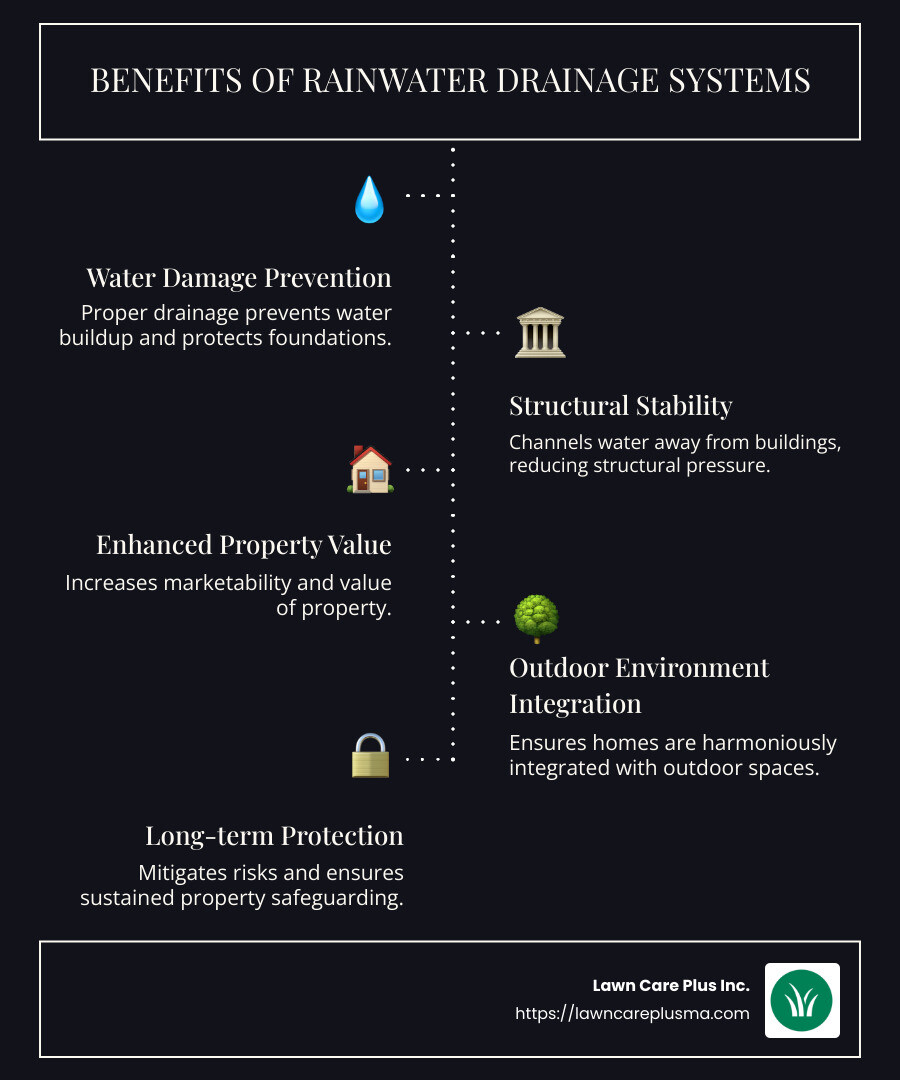
When it comes to protecting the investment of your home or commercial property, understanding domestic rainwater drainage systems is crucial. Effective drainage:
- Prevents costly water damage
- Maintains your property’s structural stability
- Improves real estate value
Poor drainage can lead to serious water damage and compromise the structural integrity of your home. Installing a well-designed rainwater drainage system can mitigate these risks and ensure long-term protection.
Why focus on drainage?
- Water Damage Prevention: Proper drainage prevents water buildup that can erode foundations and seep into basements.
- Structural Stability: By channeling water away, you reduce the pressure on building structures.
- Improved Property Value: A robust drainage system can increase home marketability and value.
As homes become more integrated with their outdoor environments, a focus on effective water management becomes essential. In this guide, we’ll explore the systems that can safeguard your property, starting with an understanding of their importance in maintaining a secure and orderly environment.
By the end of this journey, you’ll appreciate how these systems not only protect but also improve your outdoor spaces.
Key domestic rainwater drainage systems vocabulary:
– domestic drainage system
– inside basement drainage systems
– roots in french drain
Understanding Domestic Rainwater Drainage Systems
Domestic rainwater drainage systems are vital for managing water flow around your home. They handle surface water drainage, stormwater management, and even rainwater harvesting. Let’s explore these components and see how they work together to keep your property safe and efficient.
Surface Water Drainage
Surface water drainage is all about managing rainwater that lands on your property. This includes water from roofs, driveways, and other hard surfaces. Without proper drainage, this water can pool, leading to flooding and water damage.
- Surface Drains: These are shallow channels that collect water and direct it away from buildings. They prevent water from accumulating in unwanted areas.
- Catch Basins: These are like mini reservoirs that collect surface water and help remove debris, ensuring that the drainage system doesn’t clog.
Stormwater Management
Stormwater management is crucial, especially during heavy rainfalls. It involves controlling and using rainwater to prevent flooding and erosion.
- Sustainable Drainage Systems (SuDS): These systems mimic natural processes to manage water close to where it falls. They include features like permeable pavements and green roofs.
- Swales: These are shallow, vegetated channels that slow down and filter stormwater, allowing it to soak into the ground.
Stormwater runoff can carry pollutants into waterways, so managing it effectively is essential for environmental health.
Rainwater Harvesting
Rainwater harvesting is a smart way to collect and use rainwater for non-potable purposes like irrigation. This not only conserves potable water but also helps manage stormwater.
- Rain Barrels and Cisterns: These are simple storage solutions for collecting rainwater from roofs. They can be connected to downspouts to capture runoff efficiently.
- Underground Tanks: These provide larger storage capacities and can be integrated with your irrigation system for garden and landscape use.
Benefits of Rainwater Harvesting:
– Reduces water bills by providing an alternative water source.
– Decreases stormwater runoff, minimizing flood risks.
– Lowers the demand on municipal water supplies.
By understanding these components, you can better appreciate the role of domestic rainwater drainage systems in protecting your home and the environment. Next, we’ll explore the various types of rainwater drainage systems available.
Types of Rainwater Drainage Systems
When it comes to managing rainwater around your home, several systems work together to ensure effective drainage. Let’s explore these domestic rainwater drainage systems and see how each plays a role in keeping your property safe from water damage.
Precast Concrete Covers
Precast concrete covers act like sturdy lids for underground drainage systems. They protect pipes and ditches, keeping debris out while allowing water to flow freely. These covers are factory-made, so they save time and effort during installation.
Catch Basins
Catch basins, often called “yard drains,” are essential for capturing surface water. They collect runoff during heavy rains and channel it into an underground basin. This prevents soil erosion and flooding by diverting water away from your property.
Surface Drains
Surface drains are shallow channels designed to redirect water away from areas like patios, driveways, and walkways. They help keep these spaces dry and safe, reducing slip hazards and enhancing the overall functionality of your outdoor areas.
Downspout Systems
Downspouts are a common feature in most homes. They connect to gutters and direct rainwater from the roof to the ground. By channeling water away from the foundation, they help prevent water pooling and potential damage.
Sump Pumps
Sump pumps are vital for homes with basements or crawl spaces. They pump out excess water, reducing the risk of flooding and mold growth. These pumps are usually found in a sump basin and work to keep your home dry, especially during heavy rains.
Swale Drains
Swale drains are shallow, grassy depressions that help manage rainwater in your yard. They guide water away from your home and other structures, minimizing the risk of water damage and promoting natural absorption into the ground.
Subsurface Drainage
Subsurface drainage, or French drains, are installed beneath the soil’s surface. They remove excess water at the root level, preventing waterlogging and protecting plant health. These systems require underground pipes to direct water to a larger collector drain.
Slope Drainage
Slope drainage systems use gravity to move water away from your home. By installing pipes on a slope, water flows naturally through the pipe and away from the structure. This method is effective for areas with natural inclines.
Each of these systems plays a crucial role in managing rainwater effectively. By choosing the right combination for your property, you can protect your home from water damage and maintain a safe, dry environment.
Next, we’ll discuss the steps to install a rainwater drainage system, guiding you through the process to ensure a successful setup.
Steps to Install a Rainwater Drainage System
Installing a domestic rainwater drainage system might seem like a daunting task, but breaking it down into manageable steps makes it simpler. Here’s a straightforward guide:
Locating Drainage Runs
Before you start digging, it’s crucial to locate existing drainage runs. Check your property deeds for a layout of any underground drainage systems. This helps avoid damaging existing pipes and ensures your new system integrates smoothly. You might need to notify your building’s management department about your plans and provide them with detailed drawings.
Choosing the Right Pipes
Selecting the appropriate pipes is vital for the efficiency and durability of your system. In Phoenix, options include concrete, vitrified clay, asbestos, and UPVC. Each material suits different environments, so consider your local conditions. A quick tip: underground drainage pipes are usually brown, while above-ground pipes are grey.
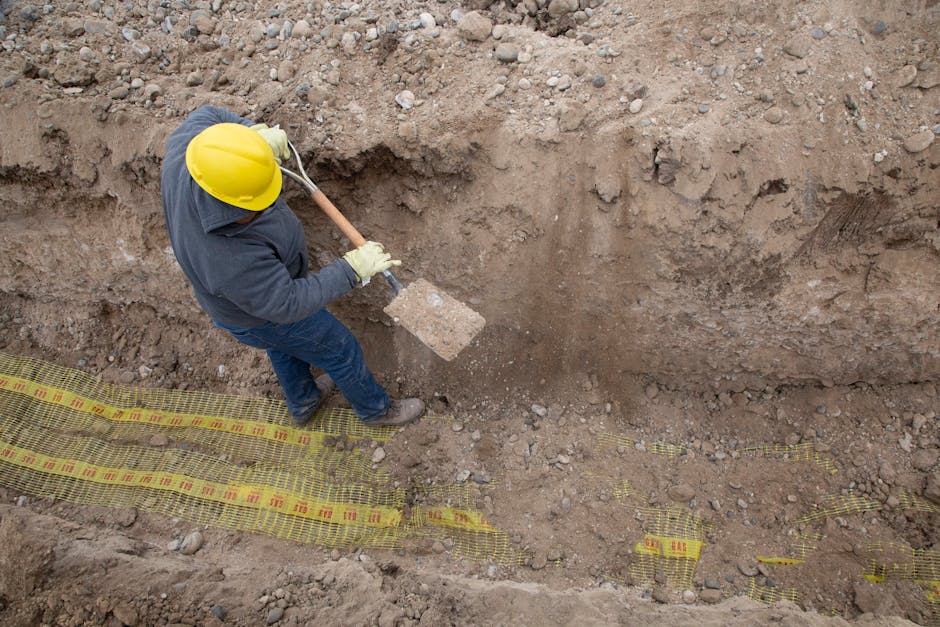
Trench Digging
Once you’ve chosen your pipes, it’s time to dig the trench. Keep it under 4 feet deep to prevent collapse in case of rain. Use a string line to ensure a straight path and consistent depth for your pipes. Remember to fence off the area for safety, and consider current weather conditions to avoid unnecessary delays.
Gutter Sizing
The size of your gutters is crucial for an effective drainage system. Larger gutters handle more water, reducing overflow risks during heavy rains. Position your gutters correctly, using a plumb line for accuracy. Secure them with supportive brackets and check for watertightness by performing a water test.
Maintenance Tips
Regular maintenance ensures your system remains efficient. Clean gutters and downspouts to prevent clogs. Inspect pipes and connections for leaks or damage. Consider seasonal checks, especially before the rainy season, to catch any issues early.
By following these steps, you’ll be well on your way to installing a reliable rainwater drainage system. Next, we’ll explore the benefits of rainwater harvesting, showing how it can serve as an alternative water source and contribute to environmental conservation.
Benefits of Rainwater Harvesting
Rainwater harvesting offers a multitude of benefits that extend beyond just collecting water. It’s about making the most of a natural resource while promoting sustainability and efficiency.
Alternative Water Source
One of the primary benefits of rainwater harvesting is providing an alternative water source. This is especially valuable in areas where water scarcity is a concern. By capturing and storing rainwater, households can reduce their reliance on municipal water supplies. This not only conserves potable water but also cuts down on utility bills.
Pollution Reduction
Rainwater harvesting plays a significant role in reducing pollution. When rainwater flows over surfaces like rooftops and streets, it picks up contaminants such as oils, metals, and fertilizers. By capturing this water before it enters storm drains, we can prevent these pollutants from reaching natural water bodies. This helps maintain cleaner rivers, lakes, and oceans.
Stormwater Management
Effective stormwater management is crucial in urban areas to prevent flooding and erosion. Rainwater harvesting systems help by decreasing the volume and speed of runoff. This is key in reducing stream bank erosion and minimizing flood risks during heavy rain events. In fact, rainwater harvesting systems with greenspace can be particularly effective, as they combine water collection with natural infiltration methods.
Landscape Irrigation
Harvested rainwater is perfect for landscape irrigation. Plants thrive on rainwater because it’s free of the salts and chemicals often found in treated water. This not only supports healthier plant growth but also reduces the need for additional irrigation. Plus, using rainwater for irrigation helps conserve treated water for more critical uses.

Incorporating rainwater harvesting into your domestic rainwater drainage system is a smart move for both your home and the environment. Next, let’s address some common questions about these systems to further explain the process.
Frequently Asked Questions about Domestic Rainwater Drainage Systems
What are the different types of rainwater drainage systems?
Rainwater drainage systems are essential for managing surface water runoff and preventing water damage. Here are the main types:
- Surface Drains: These systems collect rainwater from surfaces like driveways and patios. They help channel water away quickly, reducing the risk of flooding.
- Downspout Systems: These connect to gutters and direct rainwater from roofs to a safe discharge point. This prevents water from pooling around the foundation.
- Subsurface Drainage: Often referred to as French drains, these systems are installed underground to remove excess water at the root level, protecting landscaping.
- Slope Drainage: This uses pipes on sloped terrain to channel water downhill, efficiently preventing erosion.
- Catch Basins and Sump Pumps: These are used in areas with heavy rainfall to collect and pump water away from critical areas.
Each of these systems plays a role in stormwater management and helps maintain the structural stability of a home.
How deep should a rainwater drain be?
The depth of a rainwater drain is crucial for effective water management. Here’s what you need to know:
- Minimum Depth: Typically, rainwater drains should be buried at least 18 inches deep. This depth protects the pipes from damage and ensures proper flow.
- Granular Material: When installing a drain, use granular material like gravel or crushed stone around the pipes. This aids in water filtration and prevents pipe clogging.
Proper installation and depth help avoid issues with water backup and ensure the system functions efficiently.
Can you run rainwater into the sewer?
Connecting rainwater to the sewer system is a common question, but it’s not always advisable:
- Gutter Connections: Gutters should direct rainwater to a designated drainage system, not the sewer. This prevents overload during heavy rains and reduces the risk of sewage backups.
- Wastewater Pipes: Mixing rainwater with wastewater can lead to pollution. Rainwater should be kept separate to maintain clean water systems and avoid contaminating natural waterways.
In many areas, regulations require separate systems for rainwater and wastewater to ensure effective stormwater management and environmental protection.
Understanding these aspects of domestic rainwater drainage systems will help you make informed decisions about installation and maintenance. Next, we’ll explore more on how these systems contribute to overall water conservation.
Conclusion
Domestic rainwater drainage systems offer significant benefits, from water conservation to protecting your property from water damage. At Lawn Care Plus Inc., we are committed to providing professional installation services to ensure your drainage system is both effective and efficient.
Why Choose Professional Installation?
Installing a rainwater drainage system involves careful planning and execution. Our experienced team understands the intricacies of each system type, whether it’s surface drains, downspout systems, or subsurface drainage. We ensure that every component is correctly installed and suited to your specific landscape needs. This expertise not only prevents potential issues but also optimizes the system’s performance.
Water Conservation Benefits
Rainwater harvesting is a key element of these systems. By capturing and reusing rainwater, you can significantly reduce your reliance on municipal water supplies. This practice not only conserves a precious resource but also lowers your water bills. Moreover, using rainwater for landscape irrigation supports healthier plant growth and reduces the risk of erosion.
Partner with Lawn Care Plus Inc.
Choosing Lawn Care Plus Inc. means investing in quality and sustainability. Our comprehensive services extend beyond installation to include ongoing maintenance and support. We’re here to help you master the flow of rainwater on your property, ensuring both functionality and environmental responsibility.
For more information on how we can assist with your drainage and landscaping needs, visit our hardscape and landscape services page. Let us help you create a system that not only protects your home but also supports a greener future.
