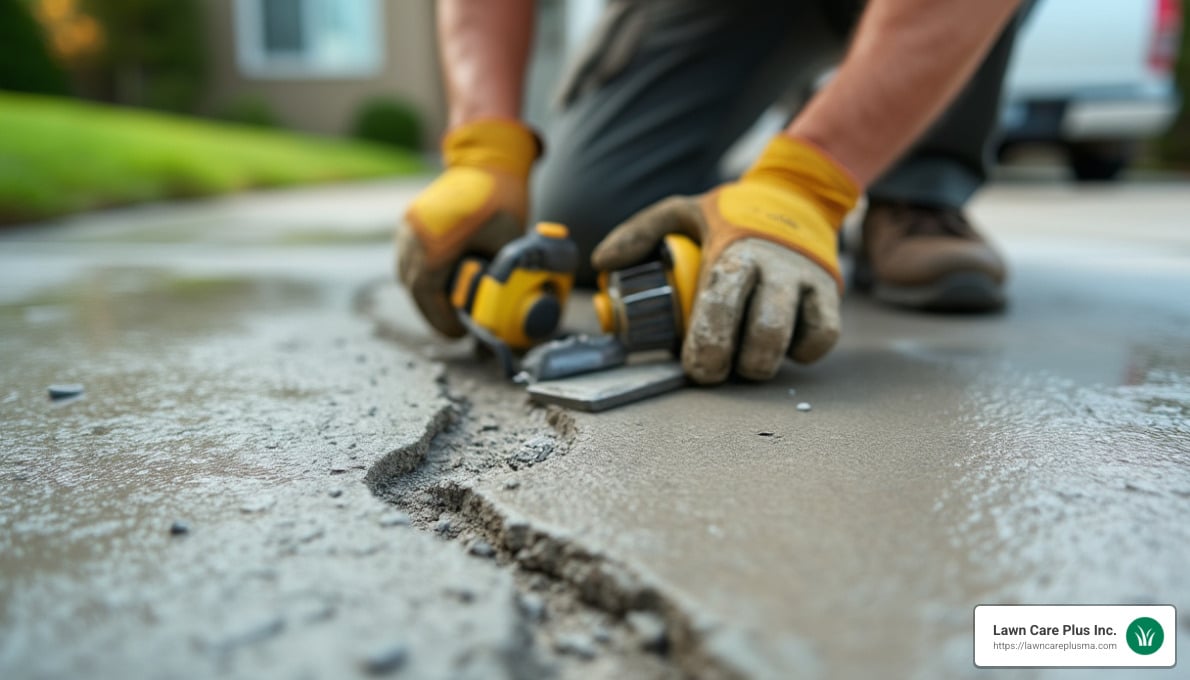
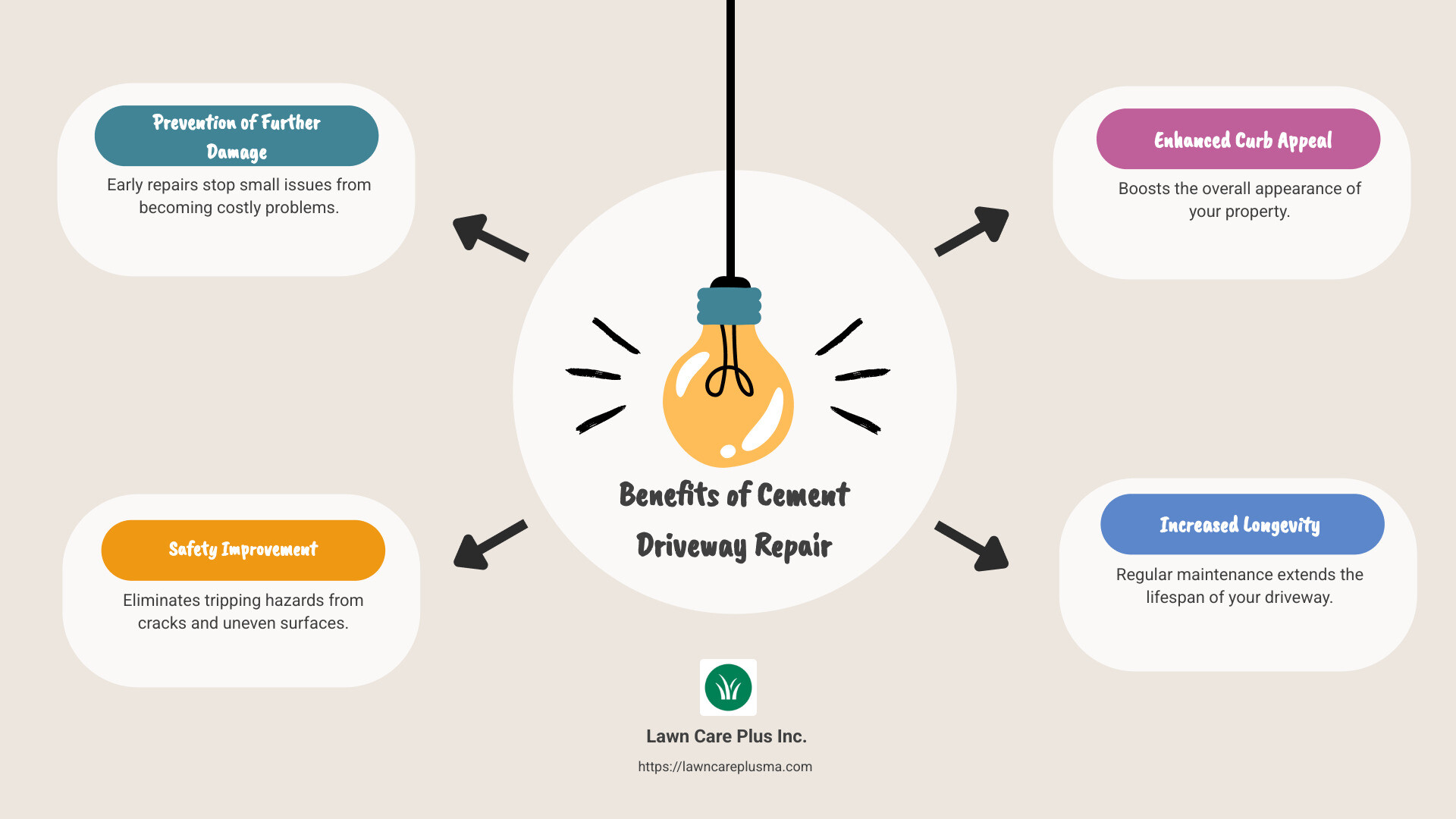
Cement driveway repair is crucial for maintaining the safety and appearance of your property. Here’s a quick overview of why it’s important:
- Prevention of Further Damage: Addressing issues early prevents larger, costlier problems down the line.
- Safety Improvement: Repairs eliminate tripping hazards from cracks and uneven surfaces.
- Improved Curb Appeal: A well-maintained driveway boosts the overall look of your home.
- Increased Longevity: Regular maintenance extends the life of your driveway, saving money long-term.
Concrete driveways are known for their durability and strength, but even the sturdiest surfaces need upkeep. Over time, factors like weathering, improper installation, and heavy usage can lead to cracks, discoloration, and other issues. Regular maintenance, including timely repairs, helps preserve the structure and appearance of your driveway. Whether you’re fixing small cracks or tackling major repairs, keeping your driveway in good condition improves curb appeal, ensures safety, and provides an overall smooth and reliable surface.
Explore further to understand how you can keep your cement driveway in optimal condition with proper repair methods and preventive maintenance.
Relevant articles related to cement driveway repair:
– repair concrete driveway
– driveway crack repair
– asphalt driveway repair
Assessing the Damage
When it comes to cement driveway repair, the first step is always assessing the damage. Understanding the condition of your driveway helps determine the appropriate repair methods and prevents future issues.
Common Signs of Damage
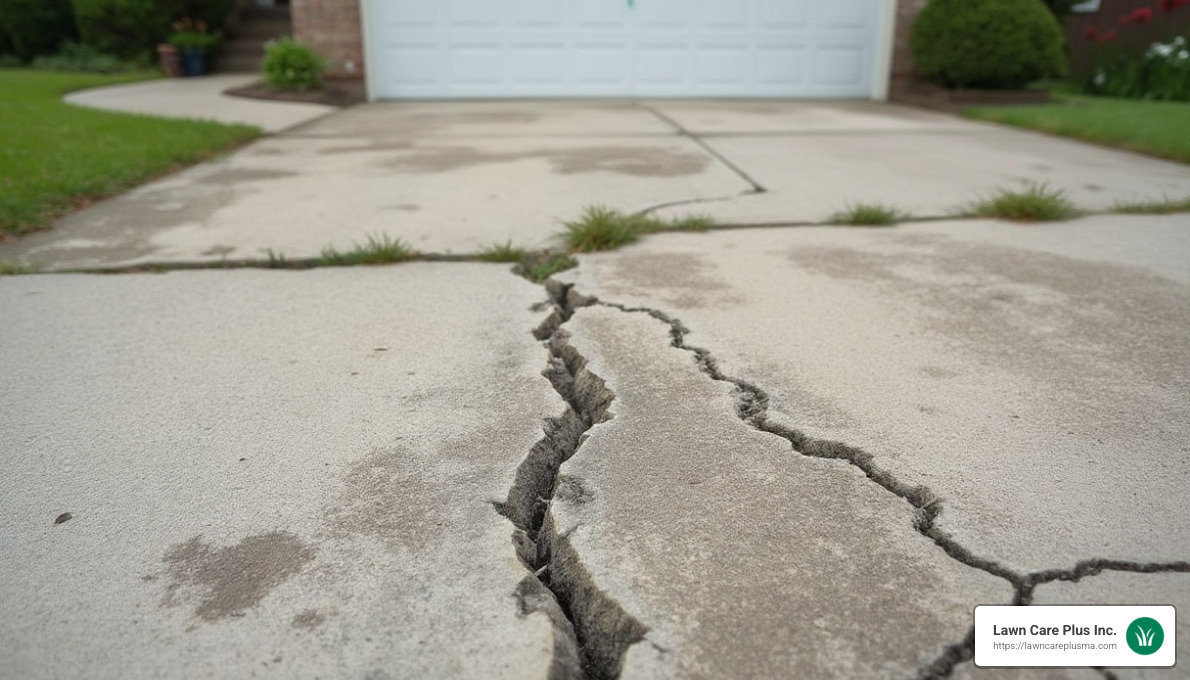
- Cracks: These are the most obvious signs of damage and can appear as hairline fractures or wide gaps. Cracks can worsen over time, especially if water seeps in and freezes.
- Discoloration: Over time, exposure to the elements can cause your driveway to fade or develop dark spots, which might indicate underlying issues like water damage.
- Sunken Spots: These occur when parts of your driveway sink below the original level, often due to soil erosion or improper compaction during installation.
- Uneven Sloping: This can lead to water pooling on your driveway, which can cause further damage and create safety hazards.
- Standing Water: Puddles that don’t drain properly can indicate drainage issues or uneven surfaces that need leveling.
Causes of Damage
Understanding the root causes of driveway damage is crucial for effective repairs and prevention.
- Weathering: Exposure to sun, rain, and freeze-thaw cycles can weaken the concrete over time, leading to cracks and surface deterioration.
- Improper Installation: If the driveway wasn’t installed correctly, issues like insufficient base preparation or poor concrete mix can cause premature damage.
- Heavy Loads: Driveways are designed to handle a certain weight. Exceeding this can cause stress and lead to cracks or sunken spots.
- Tree Roots: As trees grow, their roots can push up against the driveway, causing cracks and uneven surfaces.
Regular inspection of your driveway is essential. Look for these common signs of damage and assess the severity. For minor issues like small cracks or slight discoloration, a DIY approach might suffice. However, for more severe problems like sunken spots or widespread cracking, consulting a professional is advisable to ensure comprehensive repair and long-term durability.
DIY vs. Professional Repair
When it comes to cement driveway repair, deciding whether to tackle it yourself or hire a professional can significantly influence both cost and outcome. Here’s a breakdown to help you decide.
DIY Repair
Pros:
– Cost-Effective: One of the main advantages of DIY repair is saving money. You won’t pay for labor, which can be a significant part of repair costs. For minor issues like hairline cracks or small patches, DIY can be quite economical.
- Immediate Action: You can address problems as soon as they arise without waiting for a contractor’s schedule. This can prevent minor issues from becoming major headaches.
Cons:
– Limited Expertise: DIY repairs come with the risk of lacking the precision and knowledge that professionals bring. This can lead to temporary fixes that may not last.
- Risk of Mistakes: Without proper skills, you might make errors that worsen the damage. For example, using the wrong materials can lead to ineffective repairs or further deterioration.
- Time Investment: DIY requires time to research methods, source materials, and execute the repairs. This can be a significant commitment, especially for larger projects.
When to DIY: Consider DIY for small, non-structural issues like hairline cracks or minor discoloration. If you’re handy and enjoy tackling home projects, this might be a good option for you.
Professional Repair
Pros:
– Expertise and Quality Workmanship: Professionals bring years of experience and specialized tools to the job. They can diagnose issues accurately and provide solutions that are both effective and long-lasting.
- Comprehensive Solutions: Hiring a pro means you get a full assessment of your driveway’s condition, ensuring that all issues are addressed, not just the surface ones.
Cons:
– Higher Cost: Professional services cost more upfront. However, the investment can be worth it for the quality and peace of mind they provide.
When to Hire a Professional: For significant issues like sunken slabs, extensive cracking, or when the driveway’s structural integrity is at risk, it’s best to call in the experts. Their expertise ensures the job is done right the first time, potentially saving money in the long run.
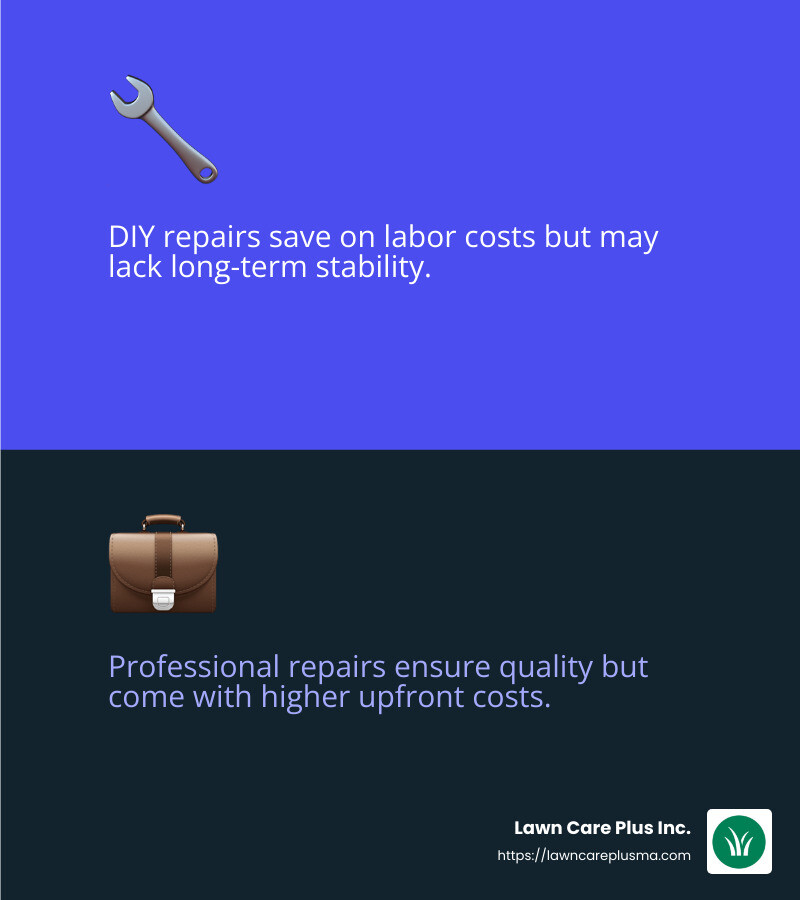
In summary, your choice between DIY and professional repair should depend on the damage’s nature and severity, your budget, and your comfort level with home improvement tasks. For minor fixes, DIY might suffice. For more serious issues, professional help is advisable.
Cement Driveway Repair Methods
When dealing with cement driveway repair, several methods can be applied depending on the type and extent of damage. Each method has its own materials, processes, and costs. Here’s a breakdown of the most common repair techniques:
Patching and Sealing Cracks
Materials Needed: Concrete-specific caulk, crack filler, trowel, and a wire brush.
Step-by-Step Guide:
1. Clean the Area: Use a wire brush to remove any debris from the crack. This ensures proper adhesion of the repair materials.
2. Apply the Filler: Squeeze the crack filler into the crack, using a trowel to smooth it out evenly.
3. Seal the Surface: Once the filler has dried, apply a sealant to prevent moisture from seeping in.
Cost: DIY crack repair can be as low as $5-$15 for materials for a couple of cracks. Professional repair costs can start at $100 for smaller repairs.
Resurfacing
Materials: Resurfacer mix, squeegee, pressure washer.
Process:
1. Prepare the Surface: Clean the driveway thoroughly using a pressure washer.
2. Mix and Apply: Mix the resurfacer according to instructions and spread it evenly using a squeegee.
3. Decorative Options: For a more aesthetic finish, consider adding color or patterns during the process.
Cost: DIY resurfacing may cost around $80 for a small area. Professional resurfacing can range significantly higher.
Leveling Uneven Slabs
Methods: Mudjacking and foam jacking.
Mudjacking:
– Process: Small holes are drilled, and a cement slurry is pumped under the slab to raise it.
– Pros: Cost-effective and suitable for larger areas.
– Cons: May not be as precise as foam jacking.
Foam Jacking:
– Process: Similar to mudjacking, but uses a polyurethane foam.
– Pros: More precise and less invasive.
– Cons: Generally more expensive than mudjacking.
Cost: DIY leveling is not recommended due to safety concerns. Professional leveling can range from $500 to $6,000 depending on the method and extent of the issue.
Replacing Damaged Slabs
Materials: New concrete, reinforcing materials, formwork.
Process:
1. Assess: Determine if the slab is beyond repair.
2. Remove: Break and remove the damaged slab.
3. Pour New Concrete: Prepare the base and pour new concrete to form a new slab.
When to Replace: If cracks are deep or the slab is severely compromised, replacement is the best option.
Cost: Professional replacement can be costly due to labor and materials.
Cleaning and Sealing
Pressure Washing: Essential for removing dirt, stains, and mildew from the surface.
Sealing:
– Benefits: Protects against moisture, stains, and weather damage.
– Frequency: Seal every two to three years for optimal protection.
Cost: Pressure washing and sealing are relatively affordable DIY tasks, but hiring professionals ensures thoroughness and quality.
By understanding these cement driveway repair methods, you can choose the best approach for maintaining your driveway’s integrity and appearance. Next, we’ll explore the cost factors in these repairs to help you budget effectively.
Cost Factors in Cement Driveway Repair
Understanding the cost factors involved in cement driveway repair is crucial for budgeting and planning. Several elements influence the total expense, including the size of the driveway, materials and equipment, labor costs, the extent of the damage, and any optional features you might want to add. It’s important to note that these are average costs based on internet data and not actual costs for Lawn Care Plus.
Size of the Driveway
The size of your driveway directly impacts the cost of repairs. Larger driveways require more materials and labor, leading to higher costs. Conversely, smaller driveways will typically be less expensive to repair. If you are considering a uniform look across the entire driveway, larger areas will require more extensive work. Average costs can vary widely, with larger driveways potentially costing up to three times more than smaller ones.
Materials and Equipment
The choice of materials significantly affects the repair cost. Common materials include concrete, gravel, and reinforcing elements like rebar or fiberglass. Each has its own price range, with concrete typically being more expensive. Additionally, the tools and equipment needed for the repair, such as mixers and trowels, add to the cost. Sometimes, renting equipment can be a cost-effective solution if you’re considering a DIY approach. Prices for materials and equipment can range significantly, with high-end options costing up to three times more than basic choices.
Labor Costs
Labor is a significant portion of the repair budget. Professionals charge based on the complexity and duration of the job. Hourly rates can vary, and there might be project minimums. Site preparation, such as clearing debris and leveling, also contributes to labor costs. Hiring experienced professionals ensures quality workmanship but comes at a higher price. Labor costs can vary widely, with more complex jobs potentially costing up to three times more than simpler tasks.
Extent of Damage
The severity of the damage dictates the repair method and cost. Minor repairs, like filling small cracks, are less expensive. Major issues, such as structural damage or large sunken areas, require more intensive repairs, possibly involving slab replacement. These extensive repairs often mean higher costs due to the materials and labor involved. Repair costs can range significantly, with extensive repairs potentially costing up to three times more than minor fixes.
Optional Features
Adding optional features like staining, stamping, or decorative finishes can improve the visual appeal of your driveway but will increase costs. These features require additional materials and labor, and costs can vary widely based on the complexity of the design. Optional features can range in price, with more elaborate designs potentially costing up to three times more than basic enhancements.
Understanding these cost factors helps in planning and budgeting for cement driveway repair. By evaluating each aspect, you can make informed decisions that align with your needs and budget. Next, we’ll discuss preventive maintenance tips to extend the life of your driveway.
Preventive Maintenance Tips
Keeping your cement driveway in top shape is not just about repairs; it’s about preventing damage before it starts. Here are some essential tips to help you maintain your driveway and avoid costly repairs down the line.
Regular Inspection
Frequency and What to Look For
Inspect your driveway regularly—about once every season. Look for common signs of damage such as cracks, discoloration, and uneven spots. Pay attention to areas where water tends to pool, as standing water can lead to further damage. Early detection of these issues allows for timely repairs, preventing them from becoming larger problems.
Sealing the Driveway
Benefits, How Often, and Types of Sealers
Sealing your driveway is a simple yet effective way to protect it from the elements. A good sealer prevents water from seeping into the concrete, which can cause cracks and other damage. Aim to reseal your driveway every two to three years. There are different types of sealers available, such as acrylic, epoxy, and penetrating sealers. Choose one that suits your local climate and driveway conditions for the best protection.
Proper Drainage
Importance, Solutions, and Cost
Proper drainage is crucial to prevent water accumulation on your driveway. Poor drainage can lead to erosion and structural damage over time. To ensure effective drainage, consider adding slopes or installing drainage systems like French drains. While these solutions involve an upfront cost, they can save you from expensive repairs in the future by protecting your driveway from water damage.
Avoiding De-Icers
Impact on Concrete and Alternatives
De-icers can be harsh on concrete surfaces, causing scaling and spalling over time. Instead of traditional salt-based de-icers, opt for alternatives like sand or kitty litter, which provide traction without damaging the concrete. If you must use a de-icer, choose one labeled as safe for concrete and use it sparingly.
By incorporating these preventive maintenance tips, you can extend the life of your cement driveway and keep it looking great. Regular inspections, sealing, and ensuring proper drainage are key steps in maintaining your driveway’s durability. Avoiding harmful de-icers will also help preserve the concrete surface.
Next, we’ll address some frequently asked questions about cement driveway repair.
Frequently Asked Questions about Cement Driveway Repair
Can I DIY cement driveway repair?
Yes, you can DIY cement driveway repair for minor issues like small cracks or surface stains. Small repairs often involve patching and sealing, which are relatively simple tasks. You’ll need basic materials like a concrete patching compound, a trowel, and a sealer.
However, DIY repairs come with risks. Without proper knowledge, you might not address the root cause of the problem. This can lead to recurring damage. If you’re unsure or the damage seems extensive, it’s best to consult a professional. Professionals have the expertise and tools to ensure a lasting repair.
When is my driveway too far gone for repair?
Your driveway might be beyond repair if you notice:
- Numerous Large Cracks: If cracks are wider than 1/4 inch, they may indicate serious structural issues.
- Crumbling or Spalling: Extensive surface damage or crumbling concrete is often a sign that the driveway needs replacement.
- Severe Unevenness: Large sections that have sunk or shifted due to poor installation or tree roots might require more than a simple fix.
In these cases, replacing the driveway is usually more cost-effective in the long run. A professional assessment can help determine the best course of action.
How much does professional cement driveway repair cost?
The cost of professional cement driveway repair varies widely based on factors like the extent of damage, driveway size, and local labor rates. On average, resurfacing a concrete driveway can start at around $4 per square foot, but more complex repairs, like replacing slabs or adding decorative finishes, can increase costs significantly.
These are average costs based on internet data and not specific to Lawn Care Plus. For a precise estimate, it’s best to get a detailed quote from a local contractor who can assess your specific needs.
Next, we’ll wrap up our discussion with a summary of the key points and how Lawn Care Plus Inc. can assist with your driveway repair needs.
Conclusion
In summary, cement driveway repair is crucial for maintaining the safety and aesthetics of your property. Regular inspections and timely repairs can prevent minor issues from escalating into major problems. Whether it’s patching small cracks or replacing entire slabs, addressing these issues promptly is key to extending the lifespan of your driveway.
Timely repair not only improves curb appeal but also prevents more costly repairs down the line. Ignoring damage can lead to structural issues, increased deterioration, and potential safety hazards. Therefore, stay proactive in maintaining your driveway.
For those in the Boston Metro-West area, Lawn Care Plus Inc. offers professional services to ensure your driveway is in top condition. Our team is equipped with the expertise and tools needed to handle any driveway repair, from minor patching to complete replacements. We are committed to providing quality workmanship and comprehensive solutions custom to your needs.
If you’re considering a driveway repair or need advice on the best course of action, don’t hesitate to reach out to us. Visit our hardscaping services page to learn more about how we can help you with your hardscaping needs. Let Lawn Care Plus Inc. be your trusted partner in maintaining a beautiful and durable driveway.