
Why Commercial Landscape Architects Transform Properties and Profits
Commercial landscape architects are licensed professionals who design outdoor spaces for businesses, institutions, and public areas. They blend creative vision with technical expertise to create functional, beautiful, and sustainable environments that improve property value and support business goals.
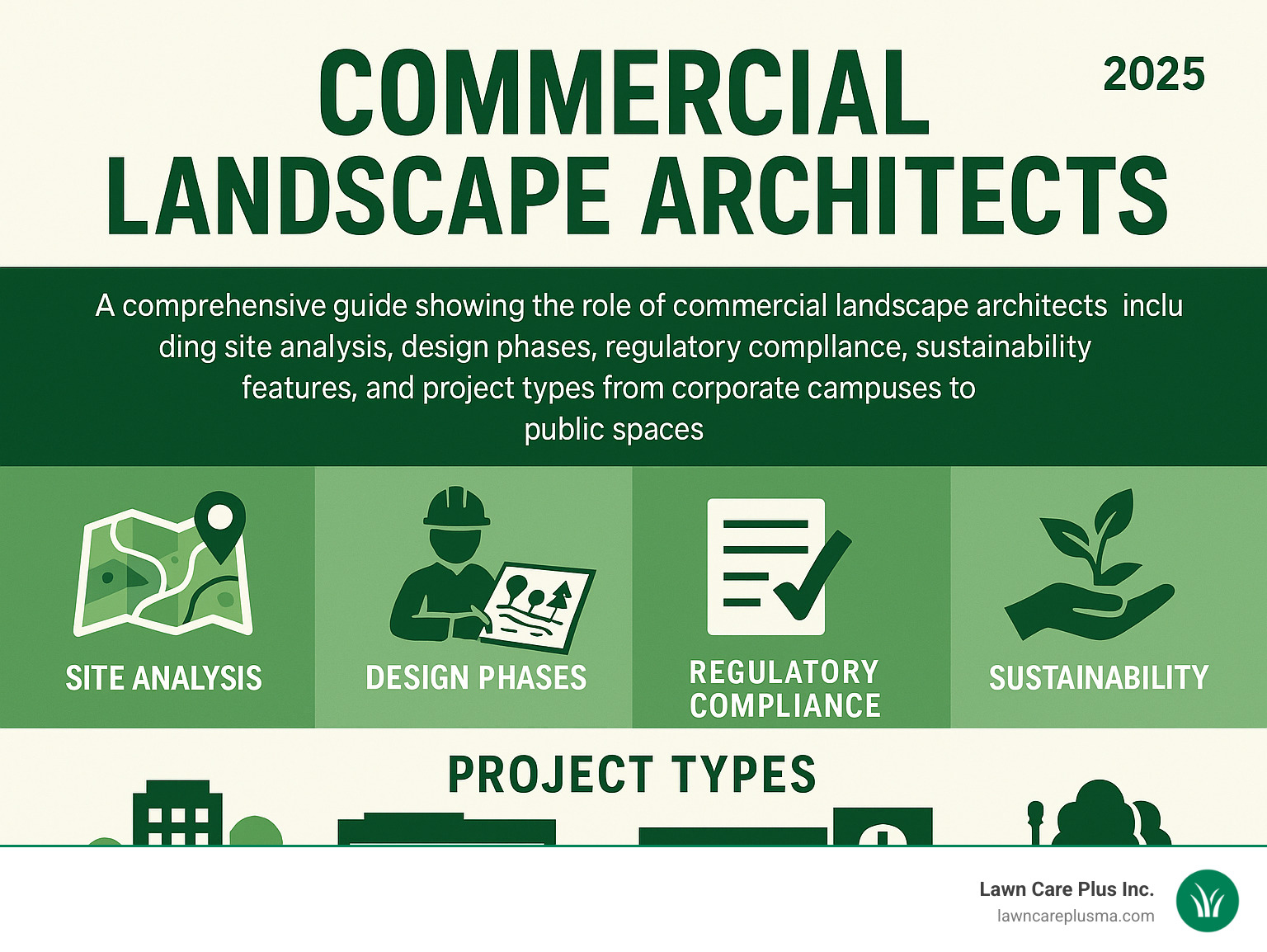
Their work involves a comprehensive process, from initial site analysis and master planning to ensuring regulatory compliance and implementing sustainable design. They manage projects from concept to completion, changing spaces like corporate campuses, retail centers, healthcare facilities, public parks, and hotels.
Unlike landscape contractors who focus on installation and maintenance, commercial landscape architects possess advanced education, state licensing, and expertise in complex site challenges. Their work can yield impressive results, such as green roofs that produce organic food or the restoration of large-scale wildlife sanctuaries.
Investing in professional design pays dividends through increased property value, reduced long-term maintenance costs, and an improved brand identity. As one industry expert notes, “Landscape architecture activates and enables life to happen in the spaces between buildings.”
What is Commercial Landscape Architecture?
Commercial landscape architecture is the professional practice of designing outdoor spaces for businesses and public areas. It’s a blend of art and science that aims to create environments that are not only beautiful but also functional, sustainable, and reflective of a business’s identity. Commercial landscape architects analyze, plan, and manage outdoor areas, considering everything from circulation and grading to drainage and how the space integrates with the surrounding urban design.
Their focus on placemaking helps create unique, inviting spots that encourage community gathering. By prioritizing native ecosystems, sustainability, and resiliency, they design spaces that benefit clients, the community, and the environment.
Want to dive deeper into how strategic design can transform your business’s outdoor areas? You can find more info about commercial landscape design services on our website.
The Core Services Provided
Commercial landscape architects offer a full suite of services to guide a project from concept to completion:
- Site Analysis and Assessment: A deep dive into the property’s topography, soil, climate, and existing conditions to understand its potential and challenges.
- Master Planning: Creating a comprehensive blueprint for the entire property that unifies layout, circulation, and overall vision.
- Grading and Drainage Plans: Essential for managing water flow, preventing erosion, and protecting buildings.
- Planting Design: Strategic selection of plants that suit the climate, require specific maintenance, and support branding or local wildlife.
- Hardscape Design: Designing the non-living elements like patios, plazas, walkways, retaining walls, and outdoor amenities that provide structure and function.
- Irrigation and Lighting Design: Creating efficient systems to conserve water, keep plants healthy, and ensure the space is safe and beautiful after dark.
- Stormwater Management: Implementing solutions like rain gardens and bioswales to manage runoff, prevent flooding, and reduce pollution.
- Construction Documentation & Administration: Preparing detailed plans for contractors and overseeing the construction process to ensure the design is executed perfectly.
As a landscaping and hardscaping company, we understand the critical role these services play. We’re proud to offer a wide range of hardscaping services that can bring these designs to life. Find more info about hardscaping services on our site.
Landscape Architect vs. Landscape Designer vs. Landscaper
Knowing the difference between these roles is key to choosing the right professional for your project.
| Feature | Landscape Architect | Landscape Designer | Landscaper (Contractor) |
|---|---|---|---|
| Licensing | State-licensed (required in most states) | Generally no state license required (may have certifications) | Often licensed as a contractor (e.g., home improvement, construction) |
| Education | Bachelor’s (BLA/BSLA) or Master’s (MLA) degree from accredited program | Varies widely: certifications, courses, self-taught | Varies: vocational training, apprenticeships, on-the-job experience |
| Scope of Work | Large-scale, complex projects; public safety implications; site analysis, master planning, grading, stormwater management, environmental impact, regulatory compliance | Residential or smaller commercial projects; focuses on aesthetics, planting plans, hardscape layout | Installation, maintenance, and construction based on existing designs; lawn care, planting, hardscape construction, snow removal |
| Technical Expertise | High: hydrology, ecology, engineering principles, urban planning, complex site challenges | Moderate: plant knowledge, aesthetic principles, basic construction techniques | High: construction methods, plant installation, equipment operation, material handling |
| Professional Organizations | ASLA (American Society of Landscape Architects), CLARB (Council of Landscape Architecture Registration Boards) | APLD (Association of Professional Landscape Designers) | NALP (National Association of Landscape Professionals), state-specific associations |
Commercial landscape architects are the only professionals legally permitted to use that title in most states, a protection earned through extensive education, rigorous exams, and licensure. Their expertise is crucial for complex projects involving public safety and regulatory compliance like ADA guidelines.
Here at Lawn Care Plus Inc., we operate as a landscape contractor. We are the experts who take the detailed designs created by commercial landscape architects and bring them to life. Our team handles the hands-on installation, hardscaping, and ongoing maintenance, turning the architect’s vision into a stunning, high-quality commercial landscape.
The Tangible Benefits of Investing in Professional Design
Investing in professional landscape architecture is a strategic business decision that yields significant returns. A thoughtfully designed outdoor space can transform a property, its occupants, and its bottom line.

Boosting Your Bottom Line and Brand
Your property’s exterior is the first impression you make. A well-designed landscape directly translates into tangible business benefits:
- Improved Brand Identity: A unique landscape can visually communicate your company’s values and create a memorable image.
- Increased Property Value: High-quality landscaping significantly boosts property value, commanding higher rents or sale prices.
- Attracting and Retaining Tenants/Customers: Inviting outdoor spaces encourage longer visits and repeat business, and serve as a key amenity for office tenants.
- Improved Customer and Employee Experience: Pleasant green spaces reduce stress, boost morale, and improve the overall experience for visitors and staff.
- Placemaking: Commercial landscape architects transform generic areas into vibrant destinations that foster community and social interaction.
We understand the importance of a strong first impression. Our commercial property maintenance services ensure your investment continues to pay dividends. Find more info about commercial property maintenance on our site.
Creating Sustainable and Resilient Environments
Beyond financial gains, professional landscape architecture is crucial for environmental stewardship. Modern designs prioritize sustainability and resilience.
- Effective Stormwater Management: Innovative strategies like rain gardens, bioswales, and permeable paving manage runoff, which reduces the burden on municipal storm drains and prevents pollution.
- Reducing the Heat Island Effect: Strategic planting and green roofs mitigate urban heat, leading to cooler environments and reduced energy costs for adjacent buildings.
- Promoting Biodiversity: Incorporating native ecosystems and diverse plant palettes supports local wildlife, contributing to ecological health.
- Water Conservation: Water-wise design is essential. This includes selecting drought-tolerant native plants and implementing smart irrigation and rainwater harvesting systems.
- Sustainable Certifications: Commercial landscape architects are integral to achieving green building certifications like LEED through their sustainable design practices.
Our team at Lawn Care Plus Inc. is committed to sustainable practices in our commercial plantings. Find more info about commercial plantings we offer.
The Comprehensive Role of Commercial Landscape Architects
Commercial landscape architects are strategic partners who guide complex projects from the initial idea to final implementation. Their role is a blend of creative collaboration, technical expertise, and careful project management. They work with clients, engineers, and community groups to ensure the design meets all needs. Critically, they steer regulatory compliance, ensuring designs follow all local laws, environmental rules, and accessibility standards like the ADA, preventing costly delays.
While they don’t manage construction budgets directly, they design with long-term costs in mind, aiming for solutions that offer lasting value. This comprehensive approach is why they are essential for any major commercial development. You can learn more info about commercial landscaping on our website.
What Types of Projects Do Commercial Landscape Architects Handle?
The work of commercial landscape architects is incredibly diverse, shaping the public and commercial spaces we use daily.
- Corporate Campuses: They design inviting walking paths, outdoor meeting areas, and green spaces that boost employee wellness and productivity.
- Retail Centers and Mixed-Use Developments: Their designs create lively plazas and pedestrian-friendly zones that attract shoppers and define a district’s character.
- Public Parks and Plazas: They design large-scale community spaces with playgrounds, amphitheaters, and green infrastructure to manage stormwater.
- Healthcare Facilities and Healing Gardens: They craft therapeutic outdoor environments at hospitals and clinics that offer calming spaces for patients, visitors, and staff.
- Hospitality and Resorts: They develop luxurious and functional landscapes, including pool areas and grand entrances that improve the guest experience.
- Educational Institutions: They design campuses for universities and schools, focusing on outdoor learning spaces, athletic fields, and sustainable landscapes.
- Green Roofs: They design vegetated roof systems that provide insulation, manage stormwater, and can even be used for urban agriculture.
- Ecological Restoration: They lead projects that transform degraded land, like former industrial sites or farms, into thriving natural habitats and wetlands.
- Transportation Corridors: They plan and design landscapes along roads and bike paths, often incorporating green infrastructure to create linear parks.

The Design and Implementation Process Explained
Working with commercial landscape architects follows a clear, phased process. We at Lawn Care Plus Inc. often implement these carefully crafted plans, so we appreciate the detailed journey.
- Initial Consultation and Site Analysis: The process begins with sharing your goals. The architects then conduct a thorough site investigation to understand existing conditions and opportunities.
- Conceptual Design and Master Planning: Architects develop “big idea” sketches and diagrams, creating a master plan that provides an overall vision for the project.
- Design Development and Construction Documents: The approved concept is refined into highly detailed drawings and technical specifications. These documents are the blueprint for contractors.
- Bidding and Contractor Selection: The project is opened for bids. The architect can help you review bids and select a qualified contractor (like Lawn Care Plus Inc.!) to build the project.
- Construction Administration and Oversight: The architect remains involved during construction, visiting the site to ensure the project is built according to the plans and quality standards.
- Post-Construction and Maintenance Planning: After completion, the architect may do a final walk-through and provide a long-term care plan to ensure the landscape thrives, which leads perfectly into the maintenance services we provide.
We are ready to assist with the ongoing care of your new landscape. You can find more info about commercial landscape maintenance services on our website.
Sustainability: The Green Heart of Modern Landscape Architecture
For commercial landscape architects, sustainability is a core principle, not an add-on. They lead the way in blending nature with the built environment to benefit both people and the planet. Their designs focus on ecological balance, resource efficiency, and long-term resilience. This is achieved through the use of sustainable materials, smart water management, native plantings, and ecological restoration. They champion green infrastructure, using natural systems to manage rainwater and moderate temperatures.

Innovations in Eco-Friendly Design
Commercial landscape architects use many innovative, eco-friendly solutions:
- Green Roofs: These vegetated roofs insulate buildings, manage stormwater, reduce pollution, and create habitats.
- Rain Gardens and Bioswales: Specially designed landscape features that collect, filter, and absorb rainwater, reducing runoff and pollution.
- Permeable Paving: Pavement that allows water to seep through into the ground, replenishing groundwater and reducing runoff.
- Water Harvesting Systems: Rain barrels and cisterns collect rainwater for irrigation, reducing reliance on municipal water.
- Wildlife Habitats: Using native plants to provide food and shelter for local wildlife, or even restoring wetlands.
- Adaptive Reuse: Reusing materials from old sites and repurposing existing structures to reduce waste and preserve history.
How Sustainable Design Saves Money
While sustainable design can have upfront costs, it delivers significant long-term savings. Commercial landscape architects design with both beauty and your budget in mind.
- Reduced Water Bills: Water-efficient plants, smart irrigation, and rainwater harvesting dramatically lower water consumption and costs.
- Lower Energy Costs: Green roofs and shade trees help cool urban areas, reducing the need for air conditioning in adjacent buildings.
- Decreased Stormwater Fees: On-site stormwater management can reduce or eliminate municipal fees related to impervious surfaces.
- Less Intensive Maintenance: Landscapes with native, climate-appropriate plants are more resilient and require less water, fertilizer, and pruning, saving on long-term care.
- Fewer Replacement Costs: High-quality, sustainable materials and robust design principles create durable landscapes that require fewer repairs and replacements over time.
Our commercial lawn service is custom to maintain these sustainable landscapes efficiently. Learn more info about commercial lawn service on our website.
Frequently Asked Questions about Commercial Landscape Architects
It’s natural to have questions when considering a significant outdoor project. Here are answers to some of the most common inquiries we hear from commercial clients.
How much does commercial landscape architecture cost?
The cost of commercial landscape architecture varies widely, as it depends on several key factors. The project’s scale and complexity are the biggest drivers; a master plan for a large corporate campus will cost more than a simple design for a retail storefront. The firm’s reputation and experience also influence fees, as do geographic location and regional economic factors.
While we at Lawn Care Plus Inc. do not provide design services, we can share general information based on online data. Design fees can range from a few thousand dollars for a small, straightforward project to hundreds of thousands or even millions for large-scale, multi-phase developments. As a general guideline, design fees might represent 5% to 15% of the total construction budget. The high end of these projects can easily be at least three times the average starting costs, reflecting the vast spectrum of project types. This is an investment in your property’s long-term value, brand identity, and functionality that often provides a significant return.
How long does a commercial landscape project take?
Like cost, the timeline depends heavily on the project’s size and complexity. A small update might take a few weeks for design and installation. However, a large-scale project like a public park or corporate campus can span several years from concept to completion.
Several factors influence the timeline:
- Permitting Process: Navigating local zoning laws and securing permits can add months to a project.
- Design Phases: The multi-stage design process—from conceptual to detailed construction documents—requires time for development and client approval.
- Construction Timeline: The physical installation can take anywhere from several months to over a year, depending on the extent of hardscaping, planting, and other features.
- Weather Delays: Outdoor work is always subject to weather, which can cause unforeseen pauses.
- Phased Implementation: Many large projects are built in phases, which can extend the overall timeline but allows for earlier use of completed sections.
What qualifications should I look for in commercial landscape architects?
Choosing the right commercial landscape architect is crucial for your project’s success. Here’s what to look for:
- State Licensure: This is non-negotiable. In most states, only licensed individuals can legally use the title “landscape architect.” This license ensures they have met rigorous education, experience, and examination requirements.
- Professional Memberships: Involvement in organizations like the American Society of Landscape Architects (ASLA) shows a commitment to professional standards and continuing education.
- Relevant Project Portfolio: Review their past work to ensure they have experience with projects similar in scope and type to yours. This demonstrates their capabilities and aesthetic range.
- Sustainable Design Accreditation: Credentials like LEED accreditation indicate expertise in environmentally responsible design practices that can add value to your project.
- Strong References: Speak with past clients to gauge their experience with the firm’s communication, budget adherence, and overall project management.
- Collaborative Approach: A great architect will work closely with you, engineers, and contractors to ensure a cohesive and successful outcome.
Your Partner in Creating Lasting Commercial Landscapes
We’ve explored commercial landscape architects—the visionaries who craft outdoor spaces that are functional, sustainable, and a true asset to any business. They bring an essential mix of creativity, technical skill, and environmental knowledge to every project.
At Lawn Care Plus Inc., we value the profound impact these professionals have. While they create the master plans, we are the trusted partners who bring those green dreams to life and maintain them for years to come.
As the hands-on team, we turn the architect’s blueprint into a vibrant, living reality. We offer comprehensive landscaping and hardscaping services for commercial clients throughout the Boston Metro-West area, including towns like Belmont, Boston, Brighton, Brookline, Canton, Chestnut Hill, Dedham, Hyde Park, Jamaica Plain, Mattapan, Medfield, Milton, Needham, Newton, Norwood, Randolph, Readville, Roslindale, Walpole, and Watertown.
Our experienced team handles everything from landscape installation and hardscaping—including patios, retaining walls, walkways, and masonry—to lawn care, yard cleanups, and snow removal. We ensure the architect’s vision is executed flawlessly and cared for with the highest standards, protecting your investment and ensuring your property always makes the best impression.
Ready to discuss your commercial property’s needs? You can find more info about commercial property maintenance on our website.
