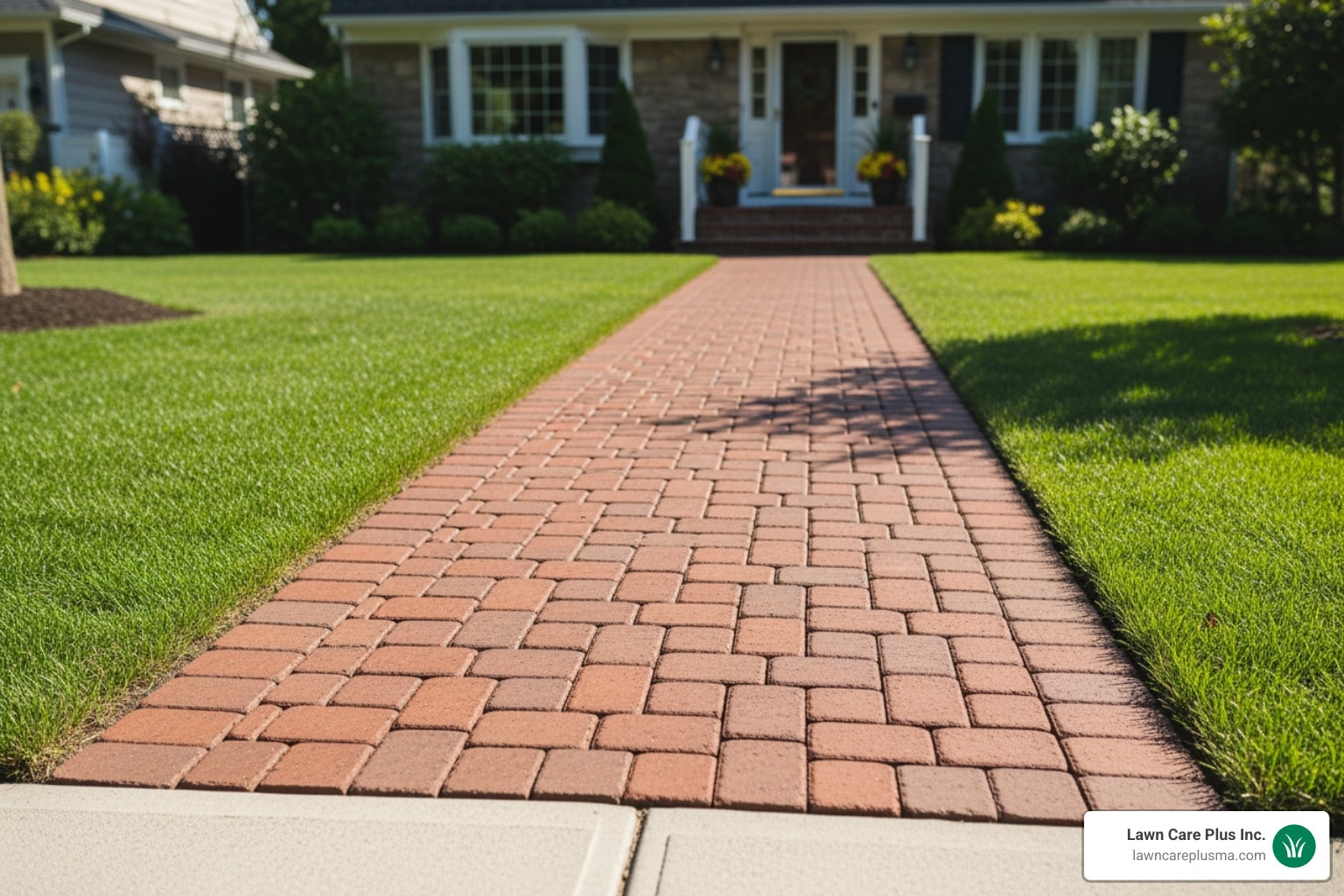
Why Building a Brick Walkway Is One of the Best Weekend Projects You Can Do
Building a brick walkway is a straightforward DIY project that can transform a muddy, worn path into a durable, beautiful feature of your yard. Here’s a quick overview of what the process involves:
- Plan and design your path — choose width, pattern, and layout
- Excavate a trench 6–8 inches deep along the path
- Lay a gravel base (4 inches) and compact it in layers
- Add a 1-inch sand bed and screed it level
- Lay bricks in your chosen pattern, tapping into place
- Install edging to keep bricks from shifting
- Fill joints with polymeric sand and compact the surface
Most homeowners complete a 20-foot path in a weekend, with results that can last decades when built correctly.
A brick path does more than connect two points in your yard. It adds structure, curb appeal, and a sense of permanence to your outdoor space. Whether you’re replacing a muddy trail through the garden or creating a welcoming front entrance, brick is one of the most durable and visually timeless materials you can choose. And unlike poured concrete, a sand-set brick walkway is forgiving — individual bricks can be lifted and reset if the ground shifts or a repair is needed.
The project does take some muscle and patience. But the payoff — a path that looks professional, holds up through New England winters, and genuinely adds value to your property — is hard to beat.
I’m Tim DiAngelis, owner of Lawn Care Plus Inc., a full-service landscaping and hardscaping company based in Roslindale, Massachusetts, with over a decade of experience in building a brick walkway and other hardscape installations across Greater Boston and Metro-West. In this guide, I’ll walk you through everything you need to know to get it done right.
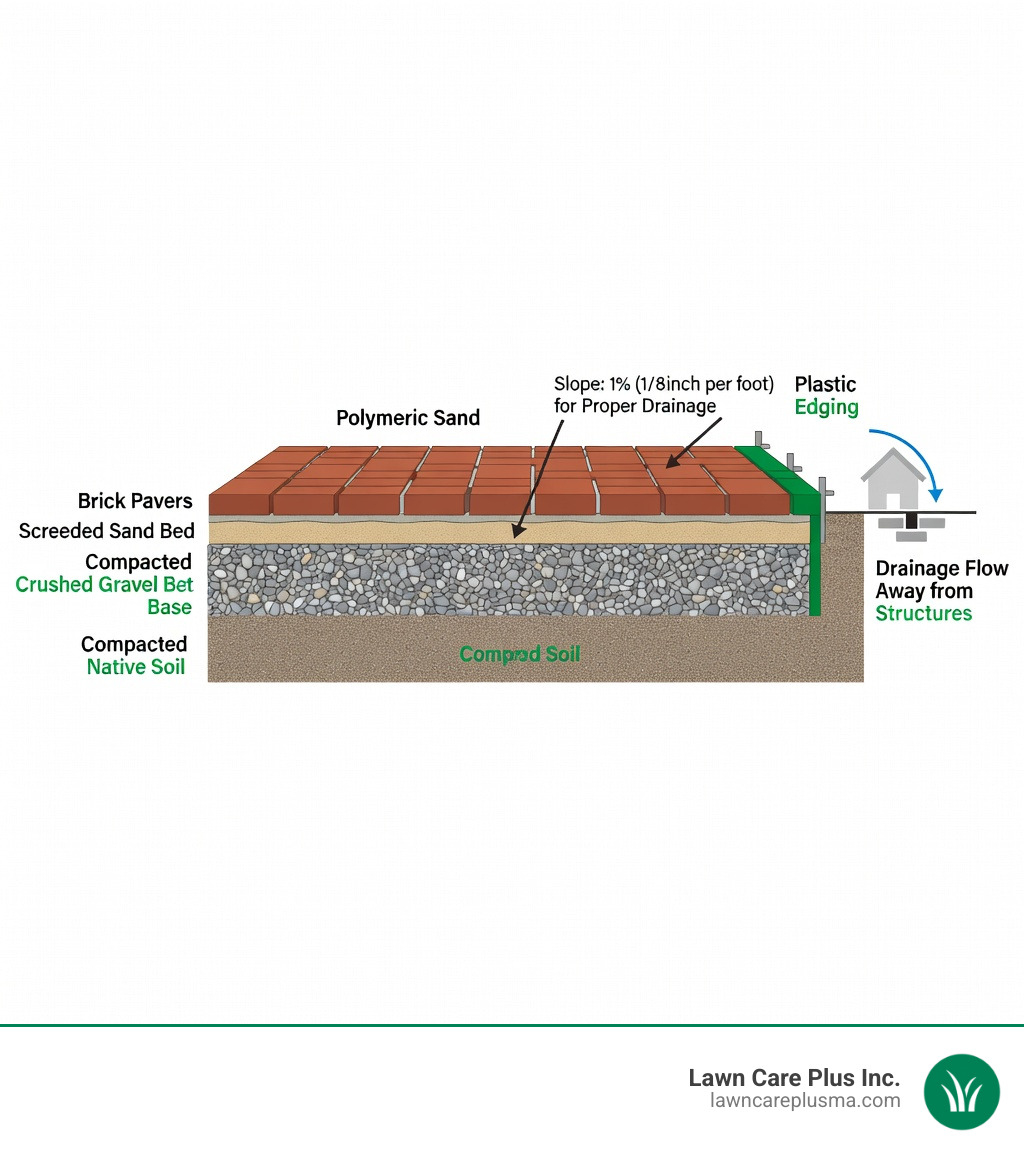
Terms related to building a brick walkway:
Planning and Designing Your Walkway
Before you pick up a shovel, you need a solid plan. In Massachusetts, we deal with significant freeze-thaw cycles, which means a poorly planned path will quickly become a roller coaster of shifting bricks. We always recommend starting with a visual layout.
One of our favorite pro tips for homeowners in areas like Newton or Needham is to use garden hoses to layout path curves. Hoses allow you to visualize the flow of the path and make adjustments easily before any dirt is moved. If you prefer straight lines, wood stakes and mason’s string are your best friends.
When considering the width, think about how the path will be used. A main entrance walkway should be 3 to 4 feet wide to allow two people to walk side-by-side comfortably. For a more intimate garden path, 2 to 3 feet is usually sufficient. Your walkway width will also be dictated by the size of your bricks; it is often easier to design a width that uses full brick increments to minimize the amount of cutting you’ll have to do later.
For more detailed advice on layout, check out our guide on the-dos-and-donts-of-walkway-design.

Choosing the Right Materials for Building a Brick Walkway
Not all bricks are created equal. When building a brick walkway, you must use paving bricks (often called pavers) rather than standard wall bricks. Paving bricks are fired at higher temperatures, making them denser and less porous. This is critical in our local climate because porous wall bricks will absorb water, freeze, and eventually shatter.
You can also explore how-to-choose-the-right-walkway-material-for-your-home if you are debating between brick and other stones.
Here is what you will need for your material list:
- Paving Bricks: Plan on roughly 4.5 to 5 bricks per square foot.
- Gravel Base: Use 3/4-inch minus crushed limestone or “process” gravel. This material contains varying sizes of stone and “fines” (dust) that allow it to pack down into a rock-hard surface. Avoid smooth river rocks or pea gravel, as they won’t compact.
- Bedding Sand: Coarse concrete sand is ideal. This provides the final leveling layer for your bricks.
- Joint Material: We strongly recommend polymeric sand. It contains a binder that hardens when misted with water, locking the bricks together and preventing weeds.
Popular Brick Patterns
The pattern you choose affects both the look and the difficulty of the project:
- Running Bond: The easiest for beginners. Bricks are laid in rows, with joints offset by half a brick. It requires minimal cutting on straight paths.
- Basketweave: Bricks are laid in pairs at right angles. This is a classic look that requires almost no cutting if your path width is planned correctly.
- Herringbone: Bricks are laid at 45 or 90-degree angles to each other. This is the most stable pattern for heavy traffic but requires significantly more cutting.
Step-by-Step Guide to Building a Brick Walkway
Once your plan is set, it’s time for the “fun” part: excavation.
Excavation and Site Prep
The longevity of your walkway depends entirely on the hole you dig. For a standard residential path, you should dig a trench approximately 7.5 to 8 inches deep. This allows for:
- 4 inches of compacted gravel
- 1 inch of sand
- The thickness of the brick (usually about 2 1/8 to 2 1/2 inches)
We recommend digging the trench about 6 inches wider than the actual path. This extra space provides room for your edge restraints and ensures the base is stable right up to the very edge of the bricks. As you dig, remove all grass, sod, large roots, and rocks.
For a deeper dive into the technical requirements of base preparation, the Building Brick Walks and Patios guide provides excellent engineering insights.
Preparing the Base and Laying Bricks
Now we start building back up. First, lay down a layer of heavy-duty landscape fabric. This keeps your gravel from sinking into the native soil over time.
- The Gravel Base: Pour your crushed limestone in 2-inch “lifts.” After each layer, use a plate compactor (which you can rent) or a hand tamper to pack it down. A solid base should feel like concrete when you’re done. We typically use 1 cubic yard of gravel for every 50 square feet of walkway.
- The Sand Bed: Once the gravel is level and compacted, lay down two 1-inch thick pipes (PVC works well) to act as guides. Pour your sand between them and use a straight 2×4 board to “screed” the sand flat. This creates a perfectly smooth surface. Do not walk on the sand once it is screeded!
- Laying the Bricks: Start at a fixed point, like a driveway or a doorstep. Lay the bricks according to your chosen pattern. Place each brick straight down onto the sand — don’t slide them, or you’ll ruin your level surface. Use a rubber mallet to tap them into place and check frequently with a level.
If you find a brick is too high, tap it down. If it’s too low, lift it up, sprinkle a little sand underneath, and reset it. This process is much easier than it sounds, and you’ll find it quite satisfying once you get into a rhythm. You can see more on this in our guide to installing-a-paver-walkway.
Finishing Touches for Building a Brick Walkway
With the bricks in place, you need to lock them in so they don’t go wandering across your lawn.
Edge Restraints: Install plastic or metal edging along the sides of the bricks. Secure these with 10-to-12-inch landscaping spikes driven into the gravel base. This prevents “creeping,” where the bricks slowly spread outward over time.
Polymeric Sand: This is the secret to a professional-looking, low-maintenance path. Sweep the sand into the joints until they are full. Then, run a plate compactor (with a protective mat) over the bricks to shake the sand down into the gaps. Add more sand and repeat. Finally, blow off any excess sand from the surface and mist the path with a garden hose. The water activates the polymers, turning the sand into a flexible “glue” that resists weeds and ants.
For more on the final steps, visit our page on walkway-installation.
Essential Considerations: Drainage, Cost, and Safety
In Massachusetts, we can’t talk about building a brick walkway without talking about water.
Drainage and Slope: Never build a perfectly flat walkway. You need a slight slope to ensure water runs off the surface rather than pooling or soaking into the base. The rule of thumb is a 1/4-inch drop for every foot of width, sloping away from your home’s foundation.
Frost Heave: This is the enemy of all hardscaping in the Boston area. When water trapped under your bricks freezes, it expands and pushes the bricks up. The best defense is a thick, well-compacted gravel base (up to 6 inches in particularly wet or clay-heavy soils) and proper drainage.
Safety First: Before you stick a shovel in the ground, call 811 to have your utility lines marked. It’s free, and it prevents you from accidentally finding your gas or power lines the hard way. When cutting bricks with a saw or a brick chisel, always wear safety goggles and gloves.
Estimated Project Costs and Time
Based on internet data, the cost of materials for a DIY brick walkway can vary significantly. That these are average costs and not the actual costs for a project through Lawn Care Plus Inc.
For a typical 20-foot path, you might see a wide range of pricing:
- Low End: $200 (using salvaged bricks or basic pavers)
- Average: $500 – $900
- High End: $2,700+ (using premium reclaimed bricks or complex patterns)
The high end of professional or premium material costs can often be 3x or more than the average DIY budget, especially when you factor in tool rentals (plate compactors, masonry saws) and high-quality polymeric sands.
In terms of time, we suggest setting aside a full weekend. A 20-foot path usually takes about 8 to 10 hours of active labor. Always buy about 10% more bricks than you think you need to account for cuts and accidental breakage.
Frequently Asked Questions about Brick Walkways
What is the difference between a brick paver and a wall brick?
This is the most common mistake we see. Wall bricks are designed for vertical structures. They are porous and “soft.” If you lay them on the ground in Massachusetts, the first winter will likely destroy them. Paving bricks are much denser, have lower porosity, and are specifically manufactured to withstand foot traffic and the freeze-thaw cycle. If you hit a paving brick with a hammer, it should “ring” with a metallic sound; a wall brick will give a dull thud.
How do I prevent weeds from growing between bricks?
Weeds don’t actually grow up through the bricks from the soil if you’ve used a proper base and landscape fabric. Instead, seeds blow into the cracks from above. The best prevention is using polymeric sand in the joints. This creates a hard barrier that seeds can’t penetrate. If you do see a weed, pull it immediately before its roots can get established.
Can I use old or salvaged bricks for my path?
Absolutely! We love the antique character of salvaged bricks, especially for older homes in Brookline or Cambridge. However, make sure they are “paving” grade. If they were originally used for a chimney or a wall, they might not hold up. If you use salvaged bricks, you’ll need to spend extra time cleaning off old mortar so they sit flush against each other.
Conclusion
Building a brick walkway is a rewarding way to add beauty and function to your home. It’s a project that rewards patience and proper preparation — especially when it comes to that all-important gravel base. By following these steps, you’ll create a path that remains stable and beautiful for decades.
If you’re ready to transform your yard but the thought of digging out 2.5 cubic yards of dirt feels a bit daunting, we’re here to help. At Lawn Care Plus Inc., we specialize in professional walkway-installation across Massachusetts. Whether you are looking for a simple garden path or a complex reclaimed brick entrance, our team has the experience to handle the unique soil and climate challenges of the Boston area.
Ready to take the next step? You can find brick-walkway-installers-near-me or contact us directly to discuss your vision. We serve residential and commercial clients in Belmont, Boston, Brighton, Brookline, Canton, Chestnut Hill, Dedham, Hyde Park, Jamaica Plain, Mattapan, Medfield, Milton, Needham, Newton, Norwood, Randolph, Readville, Roslindale, Walpole, Watertown, and West Roxbury.
Let’s build something beautiful together!