Why Commercial Snow Removal is Critical for Your Business
Commercial Snow Removal is a professional service that keeps business properties safe, accessible, and operational during winter weather. Here’s what every property manager and business owner needs to know:
- Safety First: Professional snow removal prevents slip-and-fall accidents that can cost businesses thousands in liability claims
- Business Continuity: Clear parking lots and walkways ensure customers and employees can access your property
- Legal Protection: Many jurisdictions require businesses to maintain safe premises, making snow removal a legal obligation
- Equipment & Expertise: Professional services use specialized equipment like plow trucks, skid steers, and commercial-grade snow blowers
- Service Options: Choose from seasonal contracts, per-push agreements, or per-inch pricing based on your needs
When winter storms hit, the stakes are high for commercial properties. As one property management expert noted: “Cold weather brings with it its own set of problems—with slippery sidewalks and icy stairs, business owners run the risk of a nasty accident, should a potential client or passerby take a tumble due to the wintry conditions.”
The commercial snow removal market is growing rapidly, valued at $10.5 billion in 2023 and projected to reach $15.8 billion by 2030. This growth reflects how critical these services have become for business operations.
The real cost of poor snow management goes far beyond the service fee. Businesses face potential lawsuits, lost revenue from inaccessible premises, and damaged reputation when winter weather isn’t properly managed. Professional snow removal isn’t just about moving snow—it’s about protecting your business, your customers, and your bottom line.
Research shows that businesses investing in professional snow removal services can reduce operational downtime by up to 15% during severe winter weather. That’s the difference between staying open for business and watching competitors serve your customers while your parking lot remains impassable.
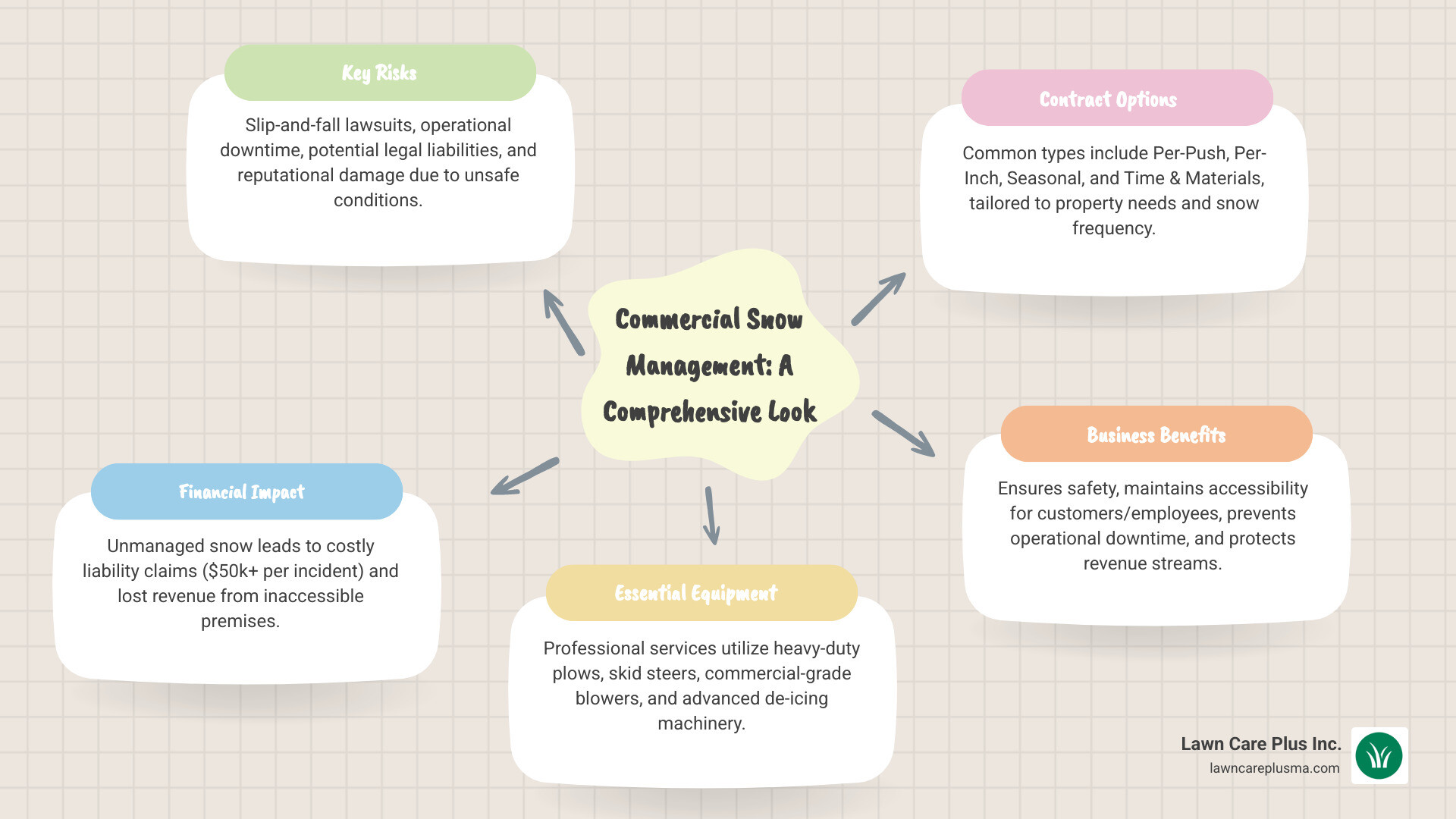
Common Commercial Snow Removal vocab:
The High Stakes of Winter: Why Professional Snow Management is Non-Negotiable
When winter hits Massachusetts, especially here in the Boston Metro-West area, it’s like nature decides to test every business owner’s resolve. Those picturesque snowfalls that look so beautiful on holiday cards? They can quickly turn into your business’s worst nightmare if you’re not prepared.
Commercial Snow Removal isn’t just about keeping your property looking neat – it’s about protecting everything you’ve worked to build. Your customers, your employees, your reputation, and yes, your wallet, all depend on how well you handle those snowy months.
Ensuring Safety and Reducing Liability
Picture this: A loyal customer hurries across your parking lot on a snowy Tuesday morning, slips on a patch of ice you didn’t know was there, and ends up in the emergency room. Suddenly, you’re not just dealing with concern for their wellbeing – you’re facing a potential lawsuit that could cost thousands of dollars.
Slip-and-fall accidents are no joke. They happen more often than most business owners realize, and when they do, the legal consequences can be severe. Under premises liability law, you have a legal responsibility to keep your property safe for everyone who steps foot on it. That means clear walkways, accessible entrances, and parking lots that don’t double as ice rinks.
The peace of mind that comes with professional snow management is invaluable. When you know your property is being maintained by experts who understand both the technical and legal aspects of winter safety, you can focus on running your business instead of worrying about liability claims. Reduced insurance claims and fewer legal headaches are just the beginning – you’re also protecting your reputation as a business that cares about its customers’ safety.
Maintaining Business Continuity and Accessibility
Nothing says “we’re closed” quite like a snow-covered parking lot and blocked entrances. Even if your doors are technically open, if customers can’t safely reach you, you might as well have stayed home.
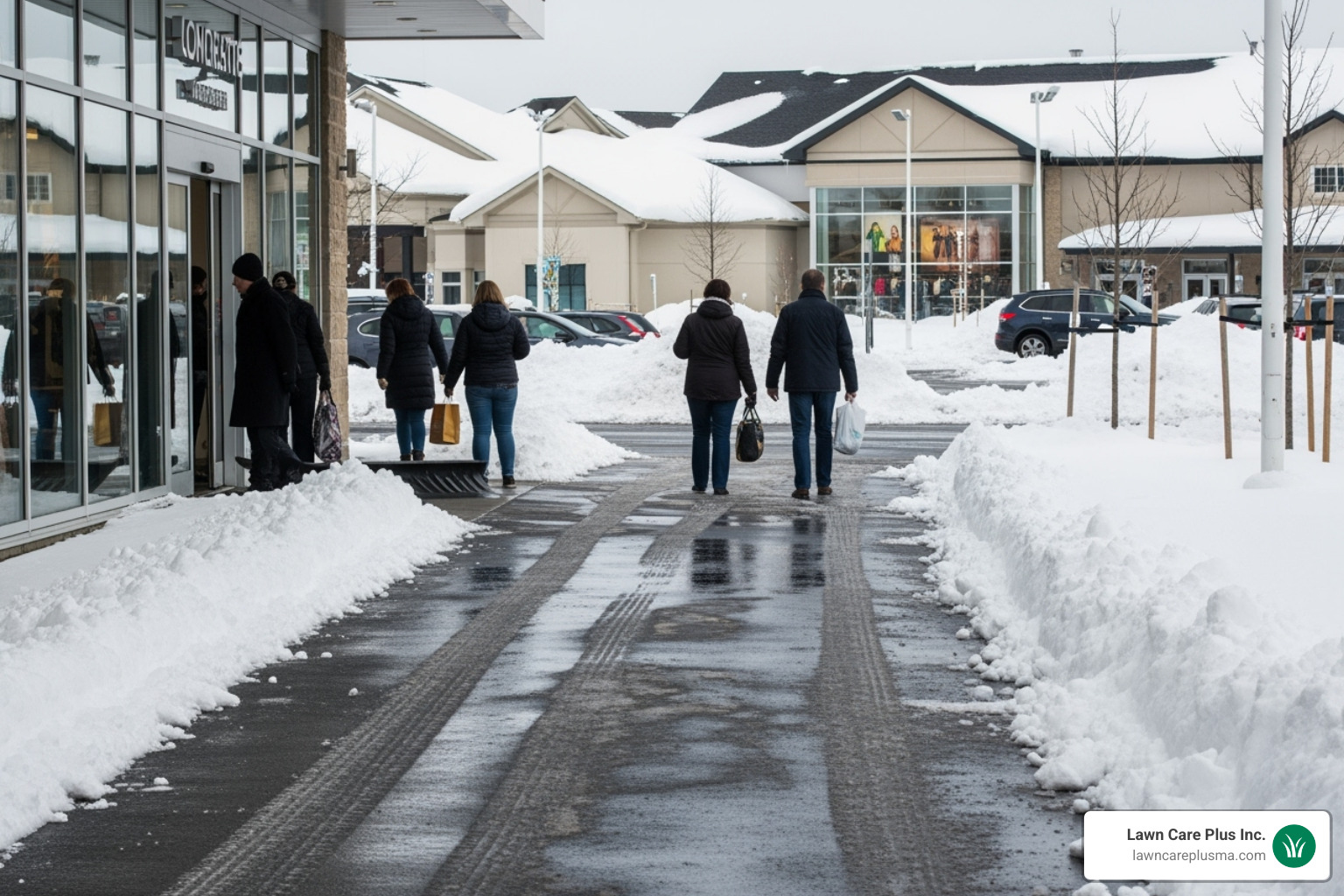
Preventing operational downtime is where professional snow removal really proves its worth. Your employees need to get to work safely, your customers need to reach your business, and those important deliveries and shipments need to keep flowing. Every hour your business is inaccessible due to snow is money walking out the door – often straight to your competitors who were better prepared.
Smart businesses understand that uninterrupted access protects revenue streams. When you invest in comprehensive Commercial Property Maintenance, you’re not just buying a service – you’re buying insurance for your business continuity. Studies show that businesses with professional snow management reduce operational downtime by up to 15% during severe weather. That’s the difference between thriving through winter and just surviving it.
Common Challenges and How to Overcome Them
Let’s be honest – we’ve all heard the horror stories. The contractor who promised the world but disappeared during the first big storm. The plow operator who left massive snow piles blocking half your parking spaces or creating blind spots that would make a driving instructor cry. The de-icing job that was so ineffective, your parking lot turned into an Olympic-worthy skating rink.
Unreliable contractors are unfortunately common in this industry. Some take on more properties than they can handle, others lack the proper equipment for commercial jobs, and some simply don’t understand the unique challenges that businesses face during winter weather.
Property damage from inexperienced plows is another frequent headache. Curbs get damaged, landscaping gets destroyed, and sometimes even building structures suffer when operators don’t know what they’re doing or haven’t properly surveyed the property beforehand.
The solution lies in doing your homework upfront. Clear contracts that spell out exactly what services you’ll receive, when you’ll receive them, and what happens if expectations aren’t met are absolutely essential. Pre-season site walks allow both you and your contractor to identify potential problem areas, plan snow pile locations, and establish clear communication protocols.
Professional services like our Snow Removal Service understand that effective de-icing requires the right materials applied at the right time with the right technique. It’s not just about throwing salt around and hoping for the best – it’s about understanding how different materials work at various temperatures and weather conditions.
When you partner with experienced professionals who take the time to understand your property’s unique needs, these common challenges become non-issues. The key is starting your search early and choosing a company that views your success as their success.
Decoding Your Commercial Snow Removal Contract
Your Commercial Snow Removal contract isn’t just paperwork gathering dust in a filing cabinet – it’s your winter survival plan written in legal language. Think of it as the instruction manual for keeping your business accessible when Mother Nature decides to dump her frozen fury on Massachusetts.
Getting this document right means the difference between smooth winter operations and frantic 3 AM phone calls wondering why your parking lot looks like an arctic wasteland while your competitors’ lots are crystal clear.
Types of Snow Removal Contracts
Choosing the right contract is like picking the perfect winter coat – what works for your neighbor might leave you out in the cold. The Commercial Snow Removal industry offers several contract structures, each with its own personality and price tag.
Per-Push contracts work exactly like they sound: every time the plow truck shows up, you get charged. This approach works beautifully for businesses in areas with unpredictable snowfall or smaller properties that don’t need extensive service. You know exactly what each visit costs, making budgeting straightforward. However, during heavy snow years, those charges can pile up faster than snow drifts, and you might find yourself wishing you’d locked in a seasonal rate.
Per-Event (Per-Inch) contracts offer a middle ground that many businesses find appealing. You pay based on actual snowfall measurements, typically with different rates for different accumulation levels. A 2-inch snowfall might cost one amount, while a 6-inch storm commands a higher price. This structure feels fair because you’re paying for what actually happened, not what might happen. The downside? You’re still at the mercy of weather patterns, and calculating costs can get complicated when storms dump varying amounts across your property.
Seasonal contracts are the all-you-can-eat buffet of snow removal. Pay one upfront fee, and your contractor handles everything winter throws at you, regardless of whether you get three storms or thirty. This approach offers budget predictability that financial managers love – you know exactly what winter will cost in October. The trade-off comes in light snow years when you might feel like you’re paying for service you didn’t fully use.
Time & Materials contracts give you maximum flexibility but minimum predictability. Your contractor charges for actual time spent and materials used, adjusting for each storm’s unique challenges. This works well for properties with complex needs or businesses that want complete transparency in billing. However, costs can vary dramatically from storm to storm, making budget planning nearly impossible.
| Contract Type | Best For | Pros | Cons |
|---|---|---|---|
| Per-Push | Small businesses, areas with light or unpredictable snowfall | Clear per-service pricing, pay only when service is provided, easy to understand billing | Costs can escalate quickly during heavy snow years, no budget predictability |
| Per-Event (Per-Inch) | Businesses in areas with varying snowfall, looking for a balance between seasonal prep and paying for actual service | Pay based on actual snowfall amounts, more fair than flat fees, some cost predictability | Still weather-dependent, can be complex to calculate, costs vary by storm |
| Seasonal | Businesses wanting budget certainty, areas with consistent heavy snowfall | Complete cost predictability, comprehensive coverage, no surprise bills | May overpay in light snow years, large upfront investment |
| Time & Materials | Complex properties, businesses wanting complete billing transparency | Maximum flexibility, pay for exactly what you get, transparent pricing | Highly unpredictable costs, difficult budget planning, potential for disputes |
Essential Elements of an Ironclad Commercial Snow Removal Contract
A bulletproof Commercial Snow Removal contract reads like a detailed battle plan, leaving nothing to chance or interpretation. These documents should answer every possible “what if” scenario before the first snowflake falls.
Detailed Scope of Work forms the heart of any solid contract. This section should spell out exactly what happens when: plowing areas, shoveling walkways, de-icing applications, and snow hauling if needed. Vague language like “clear parking areas as needed” invites trouble. Instead, look for specifics: “Plow all designated parking spaces, drive lanes, and loading zones. Hand-shovel all walkways, building entrances, and emergency exits within 2 hours of storm completion.”
Service Triggers eliminate the guesswork about when your contractor springs into action. Most professional contracts specify accumulation depths – commonly 2 inches – that automatically trigger service. Some contracts include time-based triggers for lighter snowfalls that create hazardous conditions. The best agreements also address ice-only events, ensuring you’re covered even when temperatures drop without significant snowfall.
Site Maps and Diagrams might seem excessive, but they’re worth their weight in rock salt. These visual guides show exactly which areas get plowed, where snow gets piled, and which walkways require hand-shoveling. Clear site documentation prevents disputes and ensures consistent service, especially when different crew members handle your property.
Service Timeframes set expectations for when your property returns to normal operations. Professional contracts specify completion times relative to storm end – for example, “All designated areas cleared within 4 hours of snowfall cessation” or “Parking lot accessible by 6 AM following overnight storms.” These timelines should align with your business needs, not just the contractor’s convenience.
Insurance and Indemnification clauses protect everyone involved when things go wrong. Your contractor should carry comprehensive general liability coverage, auto insurance for plow vehicles, and workers’ compensation. The contract should require current certificates of insurance and specify how coverage applies to your property. Indemnification language determines who pays if accidents occur during service.
Payment Terms deserve careful attention beyond just the dollar amounts. Look for details about invoicing schedules, payment deadlines, and late fees. Seasonal contracts might require partial payment upfront, while per-service agreements typically allow monthly billing. The best contracts also address what happens if payments are delayed and how service continues during billing disputes.
Additional contract elements worth negotiating include material specifications (what type of salt or ice melt gets used), equipment standards (minimum plow sizes for your property), and communication protocols (how you get notified about service completion or weather-related delays). Forbes provides additional insights into contract considerations that can help you make informed decisions.
Strategies for Successful Contract Negotiation
Smart Commercial Snow Removal contract negotiations begin long before the first frost warning hits your weather app. The most successful business owners treat contract discussions like strategic planning sessions, not last-minute scrambles.
Start early – ideally during summer months when contractors have time to think and aren’t fielding panicked calls from unprepared businesses. July and August conversations lead to better terms, more competitive pricing, and thorough planning. Contractors appreciate clients who plan ahead and often reward that foresight with preferential treatment.
Define expectations clearly from your first conversation. Explain your business hours, customer traffic patterns, and critical access areas. A retail store needs customer parking cleared first, while a medical facility requires emergency vehicle access above all else. The more your contractor understands your business, the better they can tailor their service approach.
Ask detailed questions about equipment and manpower before signing anything. How many trucks can they deploy during major storms? What happens if their primary plow breaks down? Do they have backup equipment and additional crew members for extended weather events? Reliable contractors welcome these questions and provide specific answers.
Clarify all costs and potential extra charges upfront to avoid winter sticker shock. Beyond basic service fees, ask about charges for ice melt, snow hauling, additional visits during extended storms, and emergency callouts. Some contractors charge extra for unusually heavy snow events or for spreading sand versus salt. Get these details in writing.
Request and check references from similar businesses in your area. A contractor might excel at residential driveways but struggle with commercial parking lots. Ask references about response times, communication, property damage issues, and overall satisfaction. Pay particular attention to how contractors handled challenging weather events or service problems.
Document everything in writing throughout the negotiation process. Email summaries of phone conversations, keep notes from in-person meetings, and ensure all agreements make it into the final contract. This documentation protects both parties and prevents misunderstandings when winter weather tests everyone’s memory and patience.
The goal isn’t to create an adversarial relationship with your contractor, but rather to establish clear expectations that lead to successful long-term partnerships. The best Commercial Snow Removal relationships develop when both parties understand exactly what success looks like and how to achieve it consistently.